
Agricultura
El Niño Causes One Death And Affects Over 2,000 People In The Galápagos

Lightning began to light up the sky at the port on Friday night. There were intense flashes that blinked on and off, but the thunder could not be heard. The rain, which had started in the highlands of Santa Cruz island in the afternoon, was increasing in intensity.
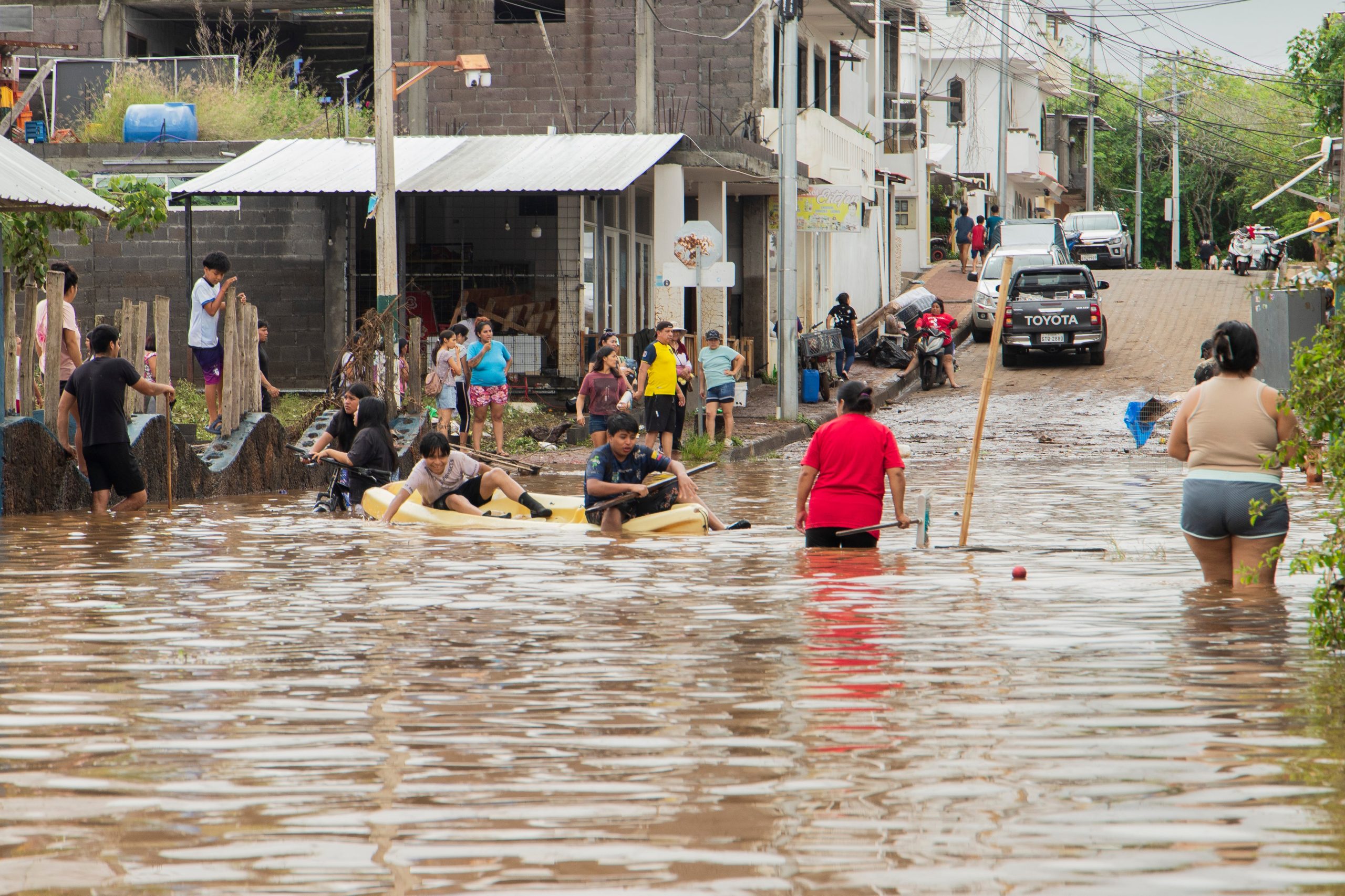
In Santa Cruz, an island of 15,000 inhabitants located 620 miles from mainland Ecuador, two very different ecosystems coexist. The port lies in the coastal zone: an arid, salty environment dominated by mangroves. The highlands are covered by an exuberant cloud forest with dense vegetation. Both areas meet in a gorge into which water drains. In the early morning of November 1, after 10 hours of heavy rain, that point turned into a huge waterfall. Water rushed down toward populated areas and unleashed a mudslide that caused one death and affected more than 2,000 people, according to Santa Cruz Mayor Fanny Uribe. This is one of the consequences of the El Niño phenomenon, which has affected the continent unevenly.
Freddy López, commander of the Santa Cruz Fire Department, estimates the water reached up to three meters high in the La Cascada and La Unión neighborhoods. “Rescues were carried out using kayaks and zodiacs, and most people were brought to safety,” the colonel explains.
At midnight many residents were still asleep. There were no alarms to warn them of what was happening. In the darkness, firefighters, the Red Cross, and young people from the community began knocking on doors to wake people up and help them get out. Virna Rosas, a resident of La Unión, was one of those who were warned. “Around one in the morning I had to leave my house after hearing knocks on my door. A young man carried my granddaughter, another carried my dog, and I was able to get out. All my things stayed under the water,” she says.
The emergency forced many people to abandon their homes by swimming. Some families tied children, older adults, and pets with ropes to prevent the water from carrying them away. Most of those affected headed to the Puerto Ayora Coliseum sports complex, which opened its doors to provide shelter from the water.
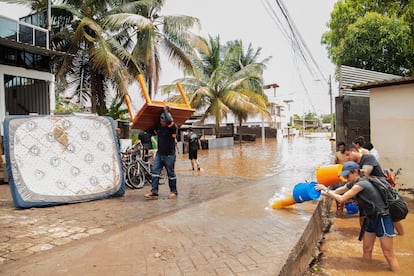
Although official figures of those affected hover around 2,000, the Un Cambio por la Vida Foundation has identified at least 500 people on the ground who are not included in that register and who are staying with relatives.
On the morning of October 31, a day after the disaster, the port woke up underwater. The sun came out for a few hours and the tourist area began to regain its pace. At first glance, some restaurants appeared to have resumed activities, but their kitchens had become community spaces from which food was prepared for affected people.
One of the kitchens providing aid is the La Torreja Fishing Foundation, which has delivered three meals a day to about 1,200 affected people. Cristina Zambrano, president of the foundation, lives in La Cascada, so named because of its proximity to the drainage point and one of the hardest-hit areas. “Although we were not affected because we are on the second floor, we mobilized because our neighbors need help,” she explains.
The kitchen operates thanks to a network of collaboration among island residents, who have organized in a WhatsApp group. These have become key coordination spaces: to clean homes and to call meetings or convene community work parties to remove large items from affected houses.
Through social media, youth leaders have made their bank accounts available for the emergency and, from mainland Ecuador, dozens of people have joined the effort with donations. Community support also extends to animals, with initiatives to care for dogs and cats that have been lost or injured during the emergency. Despite the crisis, the Ministry of Environment and Energy said that so far no giant tortoises or wild birds have been reported dead because of the rains.
Geographic distance and biosecurity restrictions to protect the Galápagos’ unique ecosystem also complicate sending donations. In light of these limitations, money transfers to relatives or youth leaders have become a fast alternative to buy protein, groceries, hygiene products, and everyday medicines within hours and without bureaucratic delays.
Local and national authorities have toured the affected areas to identify needs and coordinate actions. Measures announced include repairing the road that connects the airport with the town and removing debris with heavy machinery. However, as of the time this report was filed, the president, Daniel Noboa, had not spoken publicly about the emergency.
Santa Cruz Mayor Uribe said she is in talks with the government to activate housing vouchers for families who lost their homes and that they are seeking to finalize other medium-term actions. Uribe also told EL PAÍS in an interview that the next delivery of 1,000 basic food kits is being coordinated and that the possibility of relocating the La Cascada neighborhood will be studied, although no destination has yet been decided.
Most people affected returned to their homes to clean and recover their belongings. Walking through La Cascada, one sees narrow streets, barely three meters wide, with very little drainage space.
Grimelda Fuente, a neighborhood resident, says that despite the scare and the loss of some belongings, she has returned home and remains ready to evacuate if a new alert is declared.
Torrential rains put agriculture in jeopardy
The effects of the intense rains could also extend beyond homes. In the highlands, the farming community faces the consequences of the precipitation. The accumulated water could affect crops in the medium term. Agricultural production in Santa Cruz is crucial for the island’s food security, as 90% of what is grown is used for self-consumption, according to the Santa Rosa Farmers Association.
On September 29, the National Secretariat for Risk Management (SNGR) declared a red alert across Ecuador because of the El Niño phenomenon. That decision corresponds to the highest level within the alert system and responds to technical evidence confirming the phenomenon is underway, with oceanic and atmospheric conditions that could intensify over the coming months. The worst impact is expected to arrive in December.
Carmen Ramón, an organic farmer from Santa Rosa, one of the highland areas affected on the island, says the emergency was foreseeable. “A few months ago we knew this would happen and the streams were not cleared. My farm has been affected, the crops were carried away by the water and we are asking for assistance both with machinery to clear the gullies and for construction of greenhouses that would allow us to secure food production for island residents,” she says.
Sign up for our weekly newsletter to get more English-language news coverage from EL PAÍS USA Edition












Hackers Tried To Turn Blood Bank Fridges Into Ovens In Chilling Cyberattack

Malaga Rallies Around Evicted Pensioner Sleeping In Doorways With An Oxygen Mask As Stranger Buys Her Furniture For New Council Home

Las ‘midterms’ 2026, En Vivo | El Vicepresidente J. D. Vance Culpa A La Guerra En Irán Por La Estrepitosa Derrota Republicana

Un Ataque De Los Hutíes Contra El Aeropuerto De Riad Causa Al Menos 12 Muertos Y Más De 300 Heridos
Viral video in Spain sparks fury over drivers who ‘have no idea how to drive’

Spanish House Prices Rise 9pc But Market Growth Stalls In H1 2026


-
 Arabia Saudí4 weeks ago
Un Ataque De Los Hutíes Contra El Aeropuerto De Riad Causa Al Menos 12 Muertos Y Más De 300 Heridos
-
DGT3 weeks ago
Viral video in Spain sparks fury over drivers who ‘have no idea how to drive’
-
 House prices4 weeks ago
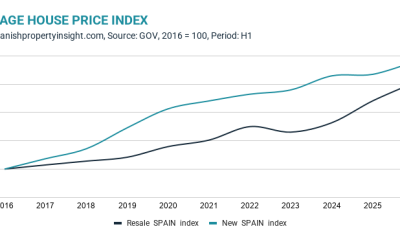
Spanish House Prices Rise 9pc But Market Growth Stalls In H1 2026
-

 America4 weeks ago
Un Tirador Mata A Ocho Personas En Una Vivienda En Pensilvania
-
Costa Blanca North4 weeks ago
Jávea opens historic lighthouse to the public with a new whale-watching viewpoint
-

 America4 weeks ago
Trump Llega A Un Acuerdo Con Putin Para Que Rusia Libere Miles De Barriles De Diésel En Los Mercados Mundiales
-

 Uncategorized3 weeks ago
Williams F1 driver caught up in four-car pit lane pileup
-
 %4 weeks ago
Concrete Balcony Slabs Collapse Onto Marbella Street