
ElPais
Eva Millet, Writer: ‘The Constant Pursuit Of Perfection Is A Recipe For Guilt, Frustration And Unhappiness’



Donald Trump
Honduras Under Nasry Asfura: State Cuts, Violence And The Shadow Of Juan Orlando Hernández

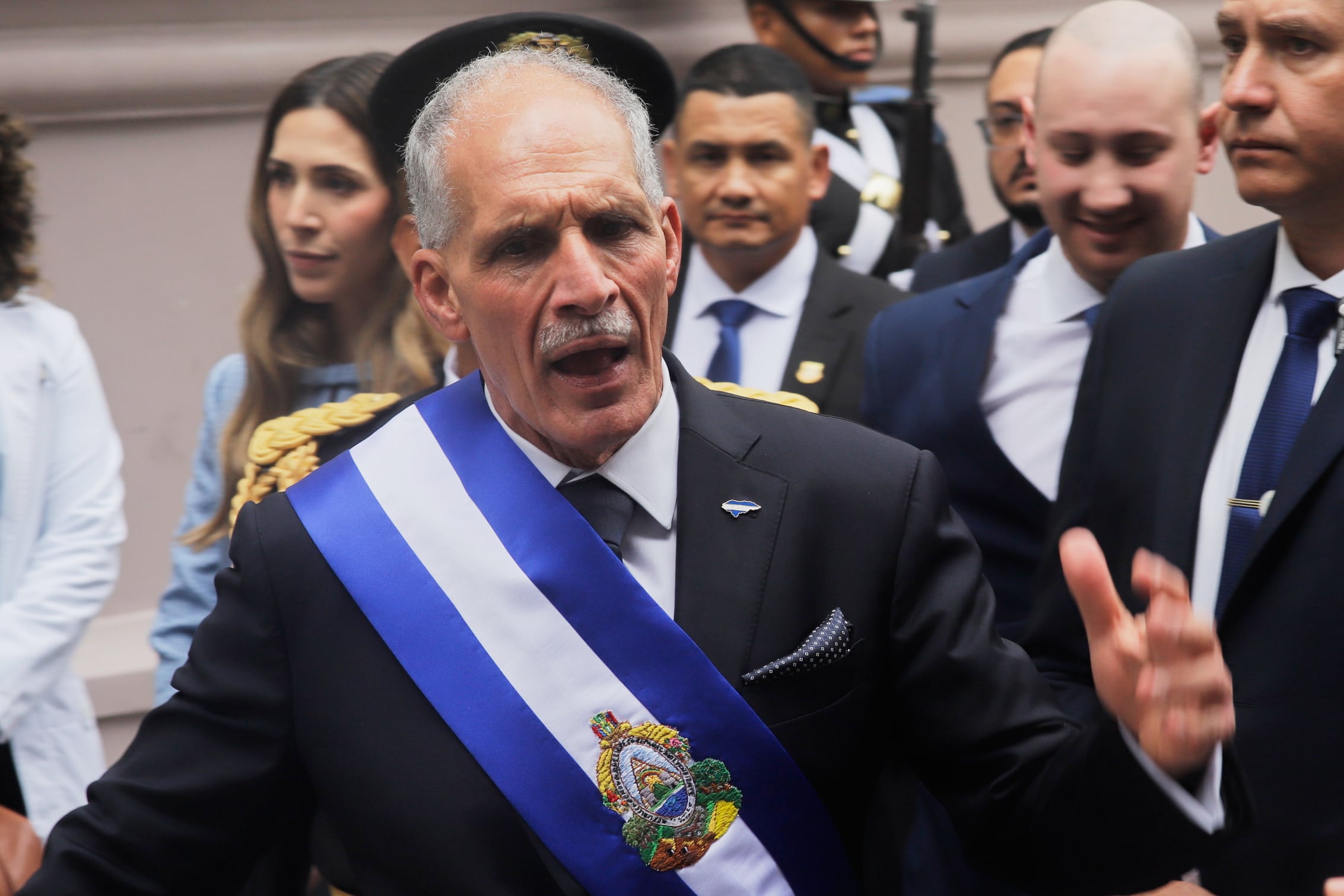
Nasry Asfura came to Honduras’s presidency with a promise that would define the course of his administration: to shrink the State to make it leaner and more “efficient” in a country of 11 million people. At a modest inauguration ceremony on January 27, following elections marred by allegations of irregularities, the new president, backed by U.S. President Donald Trump, asked to be judged by his actions and pledged to get to work immediately. Six months later, with a record tarnished by inefficiency and public dissatisfaction, his government is preparing to confront the return of former president Juan Orlando Hernández, who was convicted of drug trafficking in the United States and later pardoned by Trump.
The austerity drive began almost immediately. In less than a month, the new administration cut staff at 113 institutions and abolished 10 of them entirely. Those eliminated included the National Housing and Human Settlements Commission (Convivienda), the Secretariat for Transparency and the Fight Against Corruption, and the Program for Memory, Truth, Reparation, Justice and Non-Repetition for victims of serious human rights violations.
The first major test came in the healthcare system. During his first month in office, Asfura personally took charge of the portfolio and appointed himself minister of health. Under a declared state of emergency and through an exceptional regime, he approved a trust fund worth 500 million lempiras (about $18.7 million) to address the health crisis. According to the executive branch, the measure was intended to solve medicine shortages, reduce the surgical backlog, estimated at between 13,000 and 20,000 patients waiting for procedures, and restore the operational capacity of public hospitals.
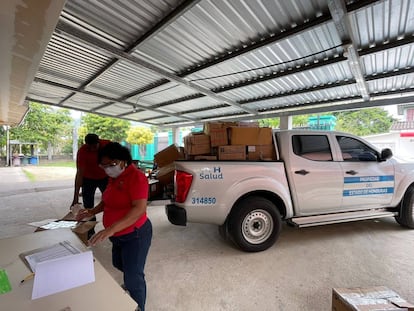
That, however, quickly drew criticism. Various sectors warned that the scheme favored the contracting of private services through a health trust fund and extraordinary agreements. Rather than providing an effective solution, critics argued, it opened the door to the privatization of healthcare.
“Public healthcare has been at the core of corruption in Honduras, and I think that is one of the reasons why the president himself took on that role. But so far, the public perception remains that the fundamental problems persist. Hondurans who depend on public healthcare have seen very few changes,” says Agresio Girón, a political analyst and master’s graduate in political science from the University of Utah.
Four months on, the results have been limited. Hospitals continue to face complaints over shortages and operational deficiencies. In late May, the government itself acknowledged delays in the disbursement of funds and reported that only 227 surgeries had been carried out. Local newspaper La Prensa reported at the end of June that the government had spent 10 million lempiras (about $372,000) on 154 surgeries, at an average cost of $2,400 per procedure.
Beyond the debate over its effectiveness, the decision cemented Asfura’s governing style: a reliance on states of emergency, trust funds, and extraordinary executive powers.
Benefits for the private sector and closer ties with Israel
Not all of the extraordinary measures have advanced at the same pace. While the healthcare emergency has stalled, other decisions by the executive branch and Congress have been implemented swiftly.
In its first six months, the government not only benefited the private healthcare sector through multimillion-dollar contracts. It also approved the Law for the Strengthening and Protection of the Agro-Industrial Sector, which requires the Public Attorney’s Office and the police to act immediately in cases of land occupations affecting agro-industrial projects. Its implementation has already led to the forced eviction of three communities, including a Garífuna community on the Caribbean coast whose land rights are protected by the Inter-American Court of Human Rights (IACHR). At the same time, Congress is considering amendments to the General Energy Law that would privatize electricity distribution.
“These three facts tell us who Asfura is governing for: he is governing for the private sector. By contrast, he has shown himself incapable and negligent toward the rest of the population,” says Lucía Avilés, a researcher at the Center for the Study of Democracy (CESPAD). According to Avilés, the situation is further complicated by the fact that, six months into his term, Asfura still faces allegations of electoral irregularities which, she says, undermine the legitimacy of his administration.
Israel Melo, a Jesuit priest and director of the Reflection, Research and Communication Team (ERIC-Radio Progreso), says: “One of Asfura’s biggest mistakes upon taking office is that his only interlocutors have been big business, Donald Trump, Javier Milei and Benjamin Netanyahu. He has remained disconnected from the population when his main challenge is to rebuild the legitimacy that was lost from the very beginning.”
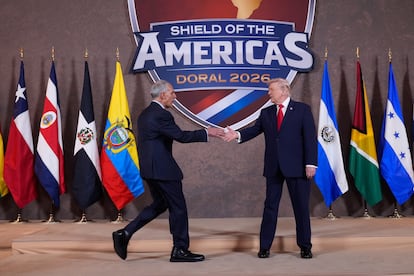
Even before taking office, Asfura signaled a dramatic shift in foreign policy when he traveled to Jerusalem in January 2026 to meet Israeli Prime Minister Benjamin Netanyahu, describing Israel as a “true friend” of Honduras. Under his administration, the Honduran government has forged a close political and strategic alliance with the Israeli government, reopening what both countries have described as a “new era” in bilateral relations.
Anti-corruption efforts in a country long plagued by that scourge have also lost momentum under Asfura. The establishment of the International Commission against Corruption and Impunity in Honduras (CICIH), one of his flagship campaign promises, quickly stalled. The president acknowledged that launching it during his first year in office would be “very difficult” and instead replaced it with a national anti-corruption policy whose results have yet to become visible. By contrast, the abolition of the Transparency Secretariat moved ahead without delay, and its functions were transferred to an attorney general’s office headed by Dagoberto Aspra, a former lawyer who represented Asfura in cases involving alleged corruption.
Security: The unraveling promise
The fight against crime has also deteriorated significantly. During the first quarter of 2026, homicides rose by 5.65% compared with the same period the previous year, and at least 18 massacres have been reported so far this year.
With a homicide rate of 26.6 per 100,000 inhabitants, Honduras remains the most violent country in Central America and the third most violent in Latin America, behind only Haiti and Ecuador. Despite this, the Asfura administration has yet to present a National Security Plan.
In mid-May, two massacres in the Caribbean region left 24 people dead, including five police officers. Although the government dismissed two senior police commanders and assembled an emergency interagency task force, more than two months later there has been no significant progress in the investigation.
This has been compounded by a rise in extortion and disappearances. Local media report that nearly 300,000 Honduran households pay the so-called “war tax,” a form of criminal extortion. The government responded by claiming, without providing evidence, that 80% of extortion complaints are false.
The situation surrounding gender-based violence is equally alarming. As of 16 July, women’s rights organizations had recorded 150 femicides, equivalent to one killing every 31 hours. The Visitación Padilla Women’s Movement for Peace has denounced the fact that 95% of these cases remain unsolved.

The shadow of Juan Orlando Hernández
Asfura’s first six months in office have also been shaped by the geopolitical context. His arrival in power coincided with Donald Trump’s support and with the U.S. pardon granted to former president Juan Orlando Hernández (JOH), who was convicted on drug-trafficking charges and remains a key figure within the ruling National Party.
According to analysts, Hernández’s return, which took place last Sunday, threatens to undermine the government’s ability to govern.
“In Honduras, there is a ‘deep state,’ a real power behind the formal power. There is Asfura’s power in the presidency and Tomás Zambrano’s in Congress, but also a structure entrenched within government and in organized-crime networks that answers to Juan Orlando Hernández,” says sociopolitical analyst Eugenio Moreno.
Although Washington maintains close ties with the current administration, concerns have emerged in the U.S. Congress over worsening security conditions, human rights violations and some of the government’s reforms. At the same time, relations with China have cooled, while Honduras has signalled a willingness to strengthen ties with other actors, including Russia.
For Asfura, the pressure stems not only from criticism of his administration but also from the challenge of governing in the shadow of his predecessor. Hernández returned on Sunday after a local court quashed the arrest warrant against him, while his supporters organized a nationwide welcome that threatens to overshadow a president who came to office promising security, efficiency and zero tolerance for crime and corruption.
Sign up for our weekly newsletter to get more English-language news coverage from EL PAÍS USA Edition


Spider-Man is always present. The philosopher Grafton Tanner coined the term “foreverism” to refer to phenomena like the Star Wars saga (which never ceases to explore its own intricacies), or those veteran rock bands that never stop reuniting and never quite break up.
These are cultural expressions that have transcended their era. They remain relevant, generation after generation, making nostalgia impossible (and business always possible). Such is the case with Spider-Man: the industry surrounding this character continually offers products for people of all ages and backgrounds. He’s still, quite literally, a kid at heart. And to demonstrate his enduring appeal, the latest installment in the franchise, Spider-Man: Brand New Day (2026), is premiering between July 29 and July 31 around the world.
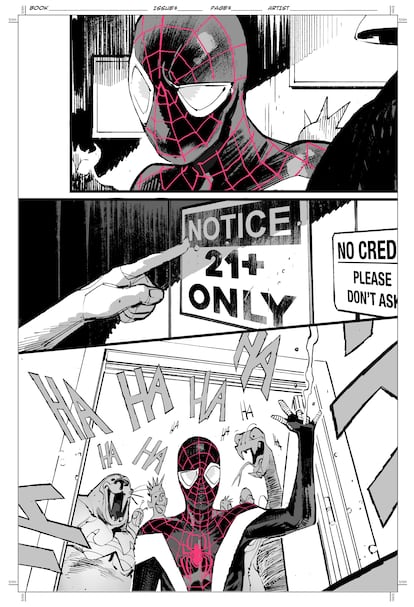
“What’s interesting is that he’s a character who feels timeless,” says Julián M. Clemente, author of the seminal book Untold Tales Of Spider-Man (2015), published in Spanish by Panini Comics. “If you’re a kid from the 1970s or 1980s, if you grew up with the cartoons from the 1960s, you’ll see him as someone who’s always been around. But a kid carrying a Spider-Man backpack today sees him as something very current. He’s managed to metamorphose; he doesn’t seem outdated to the new generations.”
The infinite comic book
An X-ray of the superhero helps contextualize his unstoppable success. Spider-Man was created by Stan Lee and Steve Ditko in issue #15 of Amazing Fantasy, published in the United States in August of 1962. It told the story of young Peter Parker, who, after being bitten by a radioactive spider (it was the era of nuclear fervor and terror), acquired strange powers that were inspired by the abilities of these arachnids.
One of the novelties of the character was that he was an adolescent with limited social skills. And, with the comic books featuring a teenage protagonist (who wasn’t merely the sidekick to an adult hero), many readers were able to identify with him.

The Spider-Man franchise just kept getting bigger and bigger. The 1980s and 1990s saw numerous milestones, including the black suit, the appearance of Venom, as well as the 1994 animated series. And, in the 21st century, he would be embodied by another character who wasn’t Peter Parker (something previously unthinkable): in 2011, after Peter Parker’s death in a branch of the Marvel Universe, writer Brian Michael Bendis and artist Sara Pichelli created Miles Morales, a young man of color. Half African-American and half Puerto Rican, he resonated with the era’s focus on diversity.
Later, in 2014, writer Dan Slott came up with a wild idea: the Spider-Verse comic book series, which also focused on diversity. Spider-Men of all kinds emerged, from a Spider-Punk to the futuristic Spider-Man 2099. One version was inspired by cowboys of the Wild West, while another was inspired by 1930s film noir. There was even a Spider-Ham (Peter Porker)!
“These [were] fresh ideas that worked out really well; they led to a series of highly-original animated films. [The many versions] demonstrated the character’s resilience, allowing him to reach another generation,” Clemente explains.
While there’s a wide variety of Spider-Man stories aimed at younger audiences, there are also options for those in middle age: Dan Slott’s Renew Your Vows series focuses on a 40-something-year-old Peter Parker’s married life with Mary Jane Watson. In that parallel universe, they have two children together, a situation also found in Jonathan Hickman’s recent Ultimate Spider-Man comic book series. “[This scenario] really connects with the audience that came to Spider-Man in the ’80s and ’90s,” Clemente points out. Going even further, Spider-Man: Reign shows an older, gray-haired Peter Parker, who’s around the age of 70. His eternal love, Mary Jane, has already died. He now lives under the rule of an authoritarian regime, in an atmosphere of darkness that seems inspired by Frank Miller’s aged Batman in The Dark Knight Returns.
A spider on screen

“Spider-Man’s audiovisual situation has always been peculiar. The film rights still belong to Sony, even though Marvel Studios has managed to integrate the character into its universe, thanks to agreements between the two companies,” says Jorge Iván, co-director of the Celsius 232 comic book festival in Avilés, Spain.
The truth is that Spider-Man is, by a long shot, the superhero who has best conquered cinema. While Superman certainly paved the way for major adaptations — and even though Batman influenced several generations — the wall-crawler is the character who has been consistently successful for more than two decades.
Sam Raimi’s 2002 film, Spider-Man, was a turning point for modern superhero cinema: it demonstrated that a comic book hero could become a global phenomenon, paving the way for the genre’s explosion in the following years. Since then, few characters have amassed so many cinematic versions: Tobey Maguire, Andrew Garfield and Tom Holland have all portrayed Peter Parker at different stages in his life, culminating in Spider-Man: No Way Home (2021), an event that brought all three generations together on screen and became one of the franchise’s biggest hits. Together, these films have grossed over $7 billion. And, in addition to that figure, we can add the animated saga that began with Spider-Man: Into the Spider-Verse (2018), considered by many to be one of the best superhero movies ever made, with its revolutionary visual style and a story that turned Miles Morales into yet another icon of the franchise.
“Spiderman has managed to adapt to each generation, without losing his essence. In recent years, the biggest success has been Miles Morales, born in the Ultimate Universe (an imprint created by Marvel Comics) and firmly established through the Spider-Verse films,” Iván explains. He maintains that this so-called “Spider-Verse” is the most interesting aspect of the Spider-Man franchise today. “Its success lies in the fact that it presents complex storylines, while respecting both veteran fans and new generations.”
The truth is that Spider-Man’s dominance in film goes far beyond the character’s movies. For years now, Sony, which owns the film rights to the character, has tried to build a parallel universe, starring some of the villains and supporting characters (without including the hero himself). The result has been mixed: productions like Morbius (2022), Madame Web (2024) and Kraven the Hunter (2024) have received a lukewarm reception from critics and audiences alike. However, there is one major exception: Venom, the oil-like symbiote that bonds with people and grants them powers similar to Spiderman’s. The version starring Tom Hardy resonated with audiences, thanks to its more irreverent tone. It was so popular that it became a highly-successful trilogy.
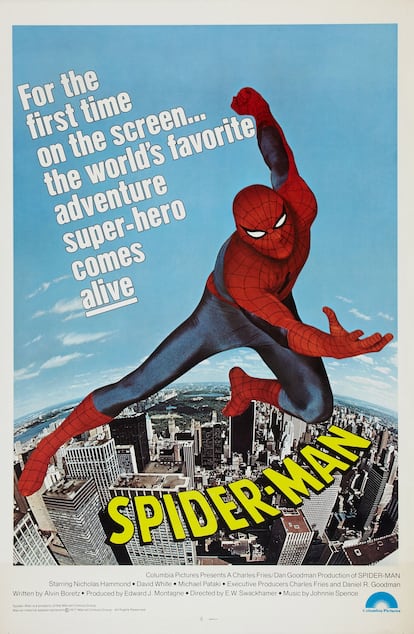
And then, of course, there are the numerous TV series. From the 1977 live-action series to the recent Spider-Noir (starring Nicolas Cage and featuring a film noir aesthetic), the hero has appeared in numerous television productions for audiences of all ages. In fact, in recent years, the children’s series have become a global phenomenon, such as Spidey and His Amazing Friends, a show for young viewers that breaks ratings records and fuels a vast merchandising ecosystem.
Web-swinging through New York
Spider-Man’s capacity for reinvention is also evident in another of the most successful facets of the Marvel Universe: video games, where the superhero stars in some of the industry’s most ambitious productions.
After decades of adaptations (of varying quality), the character found his definitive consecration with the saga developed by Insomniac Games for PlayStation. Since 2018, Marvel’s Spider-Man (2018), Marvel’s Spider-Man: Miles Morales (2020) and Marvel’s Spider-Man 2 (2023) have put together a spectacular web-swinging system through New York City, with visually stunning combat scenarios and a narrative on par with the best films. Their commercial success (analysts indicate that these three games have grossed over $3 billion) has made the franchise one of PlayStation’s cornerstones, further bolstered by budgets worthy of a cinematic blockbuster (close to $250 million were spent in the case of the second installment).
Few characters can boast of performing equally well across such diverse types of media. Spider-Man demonstrates that his popularity transcends formats, generations and technologies. So, with all this dominance across popular culture, what, then, is the superhero’s great secret?
“Spiderman triumphs because the true protagonist isn’t the superhero: [in fact], it’s Peter Parker. There [have been] many superheroes, but people became fans of the person beneath the mask,” Jorge Iván concludes. “He’s a profoundly human character: he’s constantly worried that his Aunt May will discover his identity, he has precarious jobs and he barely makes ends meet. Unlike other heroes, his everyday problems are just as important as the villains [he faces]: if he gets fired, he doesn’t have money for food.”
Ultimately, deep down, he’s not a hero. He is, as the wall-crawler reminds us, just “your friendly neighborhood Spider-Man.”
Sign up for our weekly newsletter to get more English-language news coverage from EL PAÍS USA Edition

Lance Stroll hints Aston Martin issues after summer break:

Spain PM Pedro Sanchez Slams ‘selfish’ European Allies After Schengen Suspension – As 22 EU Leaders Issue Damning Joint Letter Over Ceuta Crisis
Eva Millet, Writer: ‘The Constant Pursuit Of Perfection Is A Recipe For Guilt, Frustration And Unhappiness’
Plaza Mayor unveils magical summer show bringing nature to life in Malaga
The last cigarette by the sea Murcia faces a major anti-smoking revolution
Feel the rhythm and experience the magic of Havana in Estepona


-
Costa del Sol2 weeks ago
Plaza Mayor unveils magical summer show bringing nature to life in Malaga
-
Costa Calida2 weeks ago
The last cigarette by the sea Murcia faces a major anti-smoking revolution
-
Bernaldez Latin Jazz Orchestra2 weeks ago
Feel the rhythm and experience the magic of Havana in Estepona
-
Costa del Sol2 weeks ago
Marbella’s Family Dog Day is back with fancy dress contest, live music and Triple A Charity fundraising
-
Cafe Sala2 weeks ago
La Sala Group welcomes riverside venue with the brand new opening of Cafe Sala in Puerto Banus
-
barcelona el prat2 weeks ago
Passengers’ terror as British Airways flight to Barcelona declares mid-air emergency
-

 Latest1 week ago
Can Spanish Property Owners Cut Off Utilities To Squatters?
-

 Copa del Mundo2 weeks ago
Resumen Y Goles Del Francia – Inglaterra Por El Tercer Lugar Del Mundial 2026