
Uncategorized
Christian Horner return to F1 back on as perfect opportunity opens up

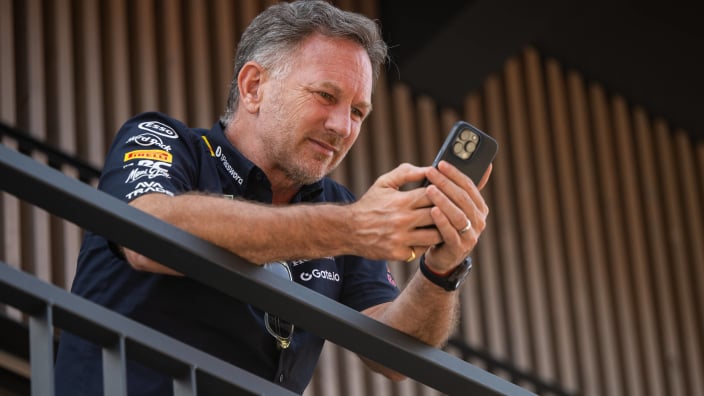
Christian Horner‘s F1 return options have looked pretty limited in recent months but that is set to change.
The former Red Bull team principal of 20 years has been out of F1 since being sacked by the Milton Keynes team following the 2025 British Grand Prix last summer.
Horner insists he will never return as a team principal only, and is only interested in roles where he would be able to have a stake in the team – a thought process that helped him out of the door at Red Bull.
The one exception Horner has hinted he would make is a role at the legendary Ferrari team. After all, the man who helps make the Italian team winners again in a championship has immortality status at Maranello.
There is no obvious path to that right now, but Horner’s ambition has been met with few opportunities.
A move to buy Otro’s stake in Alpine was vetoed by Renault, with his old F1 rival Toto Wolff also looking to block his route to the team with a bid of his own.
There was flirtation with BYD over their proposed F1 entry, which has since gone cold.
Williams also looked like an excellent fit for Horner, but although he was known to have contacted every F1 team about a working opportunity, no wheels look in motion at Williams.
F1 HEADLINES: Ferrari inquest starts over Hamilton and Leclerc as F1 boss drops huge hint on 2027 lineup
Horner to Cadillac now on
Now though there looks to be a new prospect for Horner to return to F1, where he could really have a huge influence on proceedings.
Mark Walter is the owner of TWG Global who effectively run the Cadillac operation and is reportedly looking to sell the team less than a year into their first season.
He isn’t selling cheap. The reports claim that £3bn is the asking price, which is around the average for an F1 team, and Cadillac are still very much still in the teething stage when it comes to being a functioning F1 operation.
So potential is added on to the price but if there is one man who knows how to build a team from the bottom it’s Horner.
Ok, not quite so much from the bottom but the team Horner walked into in 2005 was in far from a good place.
Red Bull had only just bought the operation from Ford, who from 2000 to 2004 ran the Jaguar team.
It flopped badly, a big budget that never achieved more than being a midfield team. Much of it was blamed on processes with decision making at Ford HQ boardroom in the United States claimed to have been pivotal in slowing down operations.
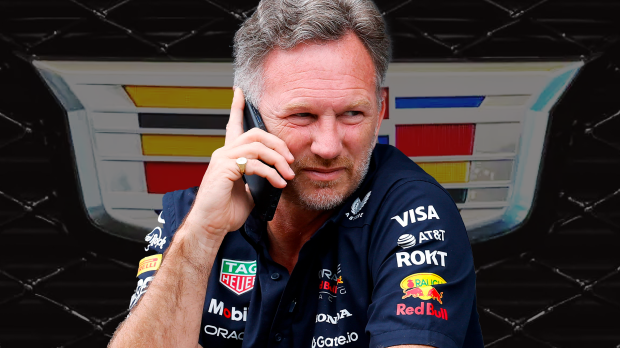
Horner knows how to turn a team around
But Horner came in and slowly turned the team around. Signing Adrian Newey was key of course but within four years Red Bull had arguably the best car on the grid in 2009 even if they didn’t win the championship.
I don’t need to go into too much detail on what happens next with Sebastian Vettel and Max Verstappen, only that the championships racked up.
That’s not to say he could do the same at Cadillac in just four years. That’s a huge project to get off the ground given they are dead last in the championship, but he would be pivotal in getting the team to run in an optimal manner with key personnel. Horner after all is a winner.
There are reportedly seven bidders looking to buy Cadillac, and it really wouldn’t be a surprise if Horner with a consortium was one of them.
It’s a hard but almost perfect project for him. He would have the ownership, the influence, and in likelihood the budget to fill a void and build a successful US F1 team.
READ MORE: Lewis Hamilton demands Ferrari showdown talks after Leclerc drama
READ MORE: Ferrari launch Hamilton vs Leclerc investigation after ‘huge disrespect’
I’ve been a massive F1 fan since the mid 1990s and continue to study the history of the sport long before that. As an experienced motor sport reporter covering F1, MotoGP and the LeMans 24 Hour race, being part of GPFans has allowed me to work with a diverse team with all sorts of different backgrounds in watching the sport and given me a greater appreciation of F1.








F1 could be set for a huge shakeup ahead of the 2029 season, with the return of a legendary manufacturer.
The tyre company Bridgestone are plotting an F1 comeback having left the sport after the 2010 season following 14 consecutive seasons.
F1 offer exclusivity on tyres in the sport which is currently held by Pirelli, who have been providing the tyres to all the F1 team’s cars since the 2011 season.
Back in July, F1 activated a one-year extension to their contract with the Italian brand which will take them to the end of the 2028 season.
The contract for F1 is then offered through a tender process, where F1’s governing body the FIA selects a winner before finalising the deal with the sport.
F1 HEADLINES: Ricciardo reveals ‘humiliation’ as F1 team confirms driver decision
Bridgestone have ‘strong’ bid to challenge Pirelli
According to RacingNews365, Bridgestone is preparing to return to F1 with a technological, business and commercial package that succeeds its previously strong bid in 2023, where they beaten by Pirelli to the contract – and report they have a ‘strong chance’ of winning.
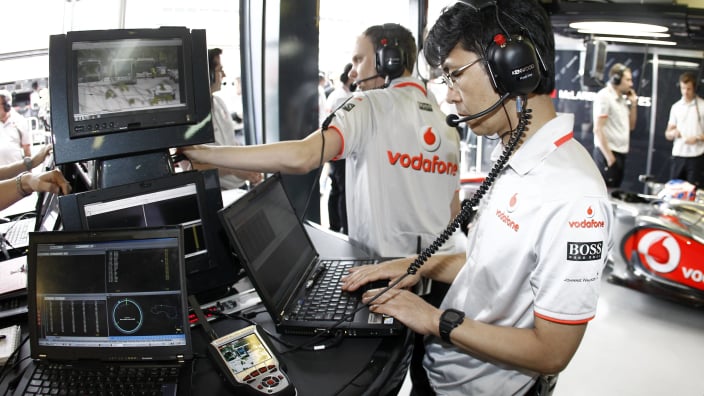
Hiroshi Imai, who left McLaren after 15 years in 2024, returned Bridgestone where he worked between 1990 and 2008 in 2025 and is leading the mission to get back into F1, and is a member of the Bridgestone delegates that reportedly were at recent races including the US Grand Prix.
Bridgestone came back to the sport in 1997 with its Potenza tyre alongside previous sole supplier Goodyear and despite having the slower slick tyre in its first year, rapidly improved to force Goodyear out by the end of 1998.
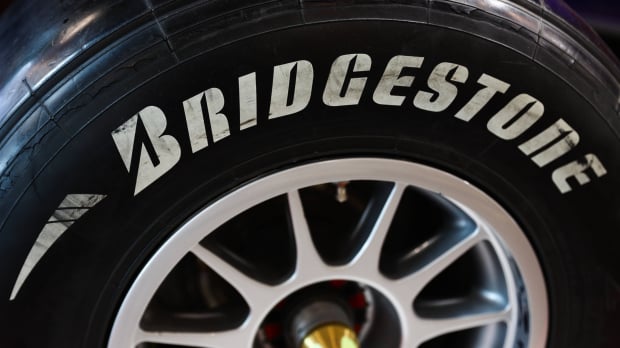
The next two years saw Bridgestone act as sole supplier before Michelin entered F1 in 2001 and started the era’s famous tyre war.
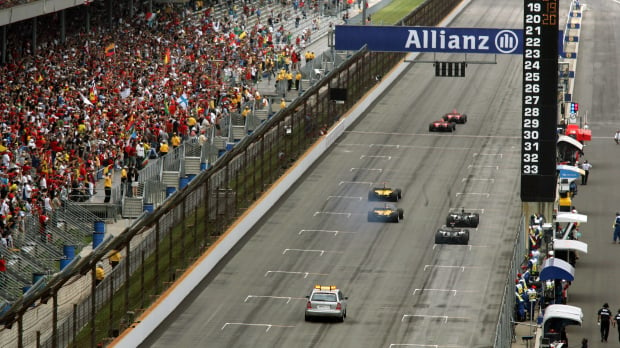
This erupted at the 2005 US Grand Prix, when the Michelin tyres were found to not be safe to tackle the track’s diamond cut tarmac on a steep bank, resulting in just the six Bridgestone runners, including Ferrari and race winner Michael Schumacher to compete.
Michelin then left the sport at the end of 2006 and F1 has intentionally kept just one tyre supplier in the sport ever since, with Bridgestone’s 2010 exit leaving them with 175 wins from 244 races after their 1976 debut.
Pirelli’s excellent F1 record
Pirelli’s exclusive deal is a record for F1, indicating that F1 have been extremely happy with their 16 seasons in the sport.
While their work on producing different compounds with various degrees of degradation to keep the pit-stop strategies interesting, there has been criticism of the Pirelli’s full wet tyre.
It is though to be far inferior to even the intermediate tyre, which is best suited to a slightly wet or even drying track and as a result has rarely been seen on an F1 track under green flag racing.
This has led to wet races being more likely to be run under safety car conditions or even red flagged, although this is in conjunction with F1 cars providing even more spray, making visibility for drivers even harder to contend with.
READ MORE: Brundle makes ‘painful’ admission about Piastri F1 decline
READ MORE: F1 insider makes shocking Aston Martin Honda ‘scapegoat’ claim

Christian Horner return to F1 back on as perfect opportunity opens up

United Nationalities Of Marbella Summit – “We Are Here For You”

Police Open Probe Into Death Of Tenerife Striker Jesus De Miguel As Distraught Goalkeeper Shuts Down Social Media After Abuse


-

 Arabia Saudí3 weeks ago
Un Ataque De Los Hutíes Contra El Aeropuerto De Riad Causa Al Menos 12 Muertos Y Más De 300 Heridos
-
DGT2 weeks ago
Viral video in Spain sparks fury over drivers who ‘have no idea how to drive’
-

 %4 weeks ago
Spain Payslip Change Coming In January 2027
-

 America3 weeks ago
Un Tirador Mata A Ocho Personas En Una Vivienda En Pensilvania
-
 House prices4 weeks ago
Spanish House Prices Rise 9pc But Market Growth Stalls In H1 2026
-
Costa Blanca North4 weeks ago
Jávea opens historic lighthouse to the public with a new whale-watching viewpoint
-

 America4 weeks ago
Trump Llega A Un Acuerdo Con Putin Para Que Rusia Libere Miles De Barriles De Diésel En Los Mercados Mundiales
-
News from Spain3 weeks ago
Spain police warn parents over WhatsApp scam that uses their children’s real accounts