Recently, U.S. Defense Secretary Pete Hegseth, who leads the world’s most powerful military, declared that he will be restricting who can join the ranks: “No fatties, no trannies, no beardos, no weirdos, no wimps, no radicals. Just warriors.” And, not long before that, Trump proclaimed that there are only “two sexes, male and female. These sexes are not changeable.”
This is binary thinking, which, despite the radical diversity of life – demonstrated time and time again by science, biology, the humanities and anthropology – only allows for two categories. The feminist Gloria Steinem jokingly wrote: “Sometimes I think the only real division into two is between people who divide everything into two and those who don’t.”
Well, that’s certainly where we are as a society.
In the United States, in Russia and in Argentina – and in far-right projects everywhere – there’s backlash against the LGBTQ+ movement and against the inclusion revolution, which has been breaking down hierarchies and privileges for decades now.
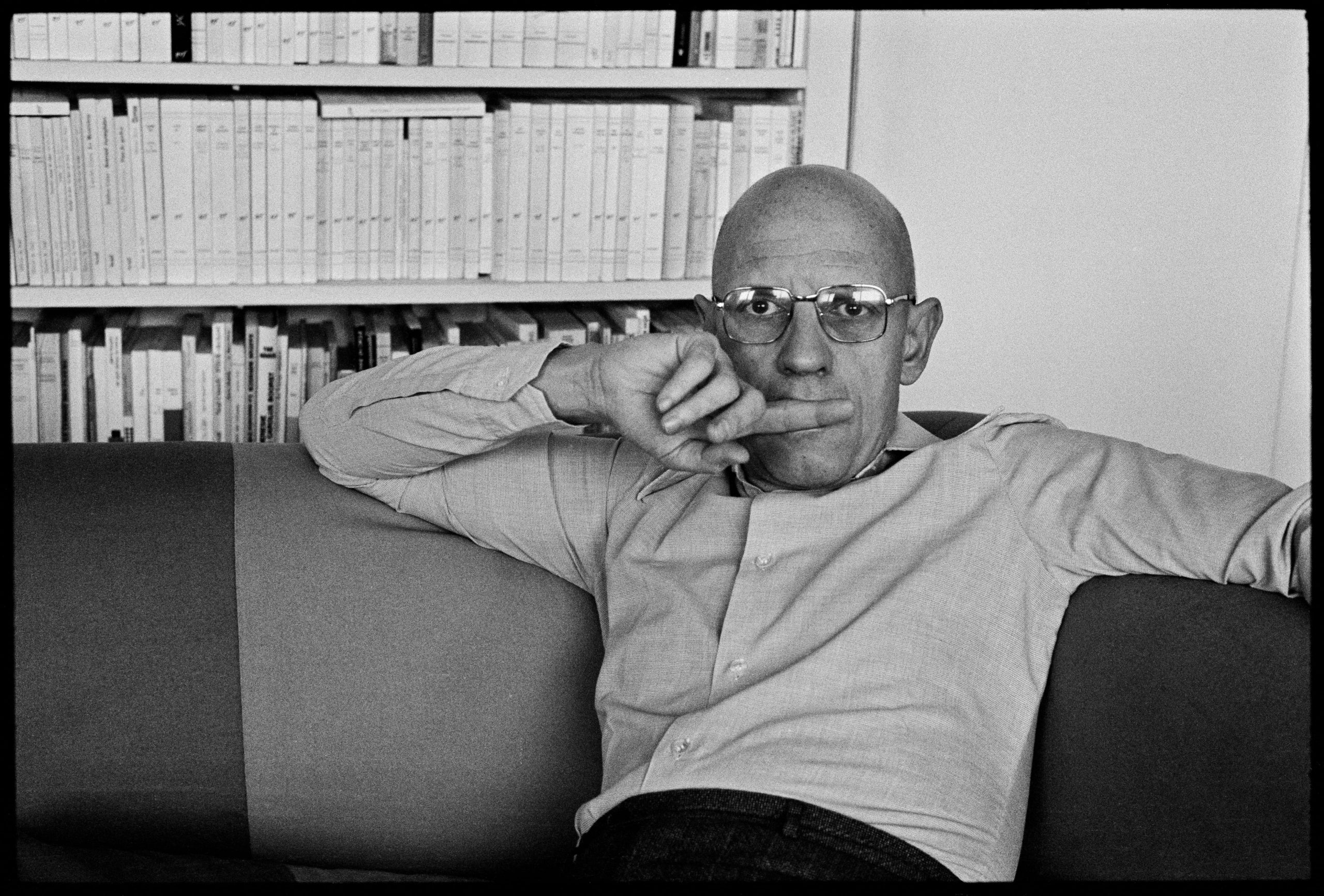
Given this reality, it’s not a bad idea to turn to Michel Foucault (1926-1984), one of the intellectual bêtes noires of the right. October 15 marks the centenary of his birth. Among other fields of knowledge, Foucault – who was born in Poitiers and died in Paris – provided the theoretical foundation for gender studies and queer theory, later developed by Judith Butler. This, coupled with his studies on power, has placed him at the forefront of contemporary culture wars.
Foucault argued that power doesn’t exist as an essence, but that it’s actually fluctuating. There are simply people exercising it and trying to maintain it, meaning that it can be seized.
The Foucauldian works released between 2022 and 2024 include some of the thinker’s previously-unpublished works and lectures, such as La question anthropologique (“The Anthropological Question”), Le Discours philosophique (“The Philosophical Discourse”) and Nietzsche.
One unpublished work – written in 1978 – was intended to be a chapter in Foucault’s four-volume The History of Sexuality. Released in 2025 as a single book, it is titled Les hermaphrodites (“The Hermaphrodites”).
The book is important because it develops the crucial distinction between anatomical sex and sexuality. This is explained by Arianna Sforzini – who co-edited the original French manuscript of The Hermaphrodites – in an email to EL PAÍS. The text re-examines issues “related to sexual differences, gender-based power relations, as well as denaturalized and historicized perspectives on sex, gender and sexuality.”
In contrast to the relative autonomy of intersex people in earlier times, while looking through the medical-legal archives of the 19th century (the century of taxonomies), Foucault discovered a process of pathologization directed at them. Perhaps this was because they were figures who challenged the prescribed order, double agents who broke the accepted connection “between anatomical sex, legal sex and social sex.”
“These [different facets] of sex have to coincide and place us in one of the two pillars of society,” the French philosopher points out in the text. He was referring to the case of Herculine Barbin, an intersex person. In 1860, following a medical examination, Barbin was legally and socially forced to change her identity from female to male, which eventually led her to suicide.
With this and other works, Foucault – whose father was a surgeon and professor of anatomy – broke with the tradition of Western thought, centered on ideas, in order to study the body as a guide to knowledge.
“His fundamental contribution lies in understanding that power permeates the body,” explains Paul B. Preciado, a philosopher, in a telephone interview with EL PAÍS. The author of the Countersexual Manifesto (2002), Preciado emphasizes the importance of Foucault’s investigation into the history of sexuality. This wasn’t done from the perspectives of medicine or psychology, but rather by “considering the technologies of power and how these define certain forms of subjectivation, some considered normal and others pathological. It marked a turning point for what would later become queer and gender theories.”
The paradox lies in the fact that Foucault (who was gay) shied away from the notion of identity – “do not ask who I am and do not ask me to remain the same,” he wrote, in The Archeology of Knowledge (1969) – and didn’t delve deeply into the question of gender. “And he gave little thought to women,” Preciado points out. “The question of sexual reproduction in the organization of power completely eluded him.”
With all his contradictions, the author of Discipline and Punish (1975) demonstrates that desire and pleasure are controlled by what a strictly binary identity says is legal and legitimate. “We are what has been said,” Foucault warns. That is, we’re the result of what words, norms and institutions say about us.
Based on this, the Frenchman’s research – undertaken by someone who considered himself more of an “artificer “ or “pyrotechnician” than a philosopher – is based on a novel approach: understanding our society through its systems of exclusion, rejection and denial.
“It seemed to me interesting to try to understand our society and civilization in terms of its system of exclusion, of rejection, of refusal, in terms of what it does not want, its limits, the way it is obliged to suppress a certain number of things, people, processes,” is how he explained his process to French professor John K. Simon, in 1971.
In his work, Foucault dissects the shameful aspects of power, showing how it constructs and alters supposedly “natural” models of human behavior (which aren’t natural at all), consisting of the “normal” and the “abnormal.” Driven by his three fundamental values – refusal, curiosity and innovation – his work paves the way for other ways of being and existing in the world. In fact, for Foucault, we live “in a legal, social, and institutional world, where the only possible relationships are extremely scarce, schematized and impoverished.”
By studying social exclusion, Foucault revealed the dynamics of conflict. “He’s the thinker of possibility, resistance and emancipation,” reflects Rodrigo Castro, a Foucault specialist who holds a PhD in Philosophy from the Complutense University of Madrid. “He leads us to consider freedom in the face of power structures that aspire to domination… something that’s highly relevant today.”
Castro reveals that “like Nietzsche, Foucault believes that ‘Truth’ with a capital ‘T’ does not exist. [And], just like the German philosopher, he reflects on the consequences of the nonexistence of truth.” Therefore, the work of both philosophers goes beyond mere decoding: it involves “a search for a life-affirming philosophy.”
Foucault’s work also paved a new way forward for the left, which had long been monopolized by Marxism. And, Preciado points out, in the manner of Marx – who popularized terms like surplus value, capital and class struggle – the Frenchman created and redefined certain concepts, such as dispositif, episteme and heterotopia. The author of The Order of Things (1966) – who saw philosophy as a workshop – considered these concepts to be tools. He would use them to examine and hammer away at the source of so much suffering and thus be able to change it.
Today, as we’re faced with anti-gender campaigns and an epidemic of transphobia, the duty is to resist. “Everything is connected. The rights of trans people also transform the rights of the entire population,” Preciado warns, emphasizing the importance of another of Foucault’s beliefs: no struggle is more important than another. All must take place, simultaneously, everywhere.
Sign up for our weekly newsletter to get more English-language news coverage from EL PAÍS USA Edition








 Uncategorized3 weeks ago
 Uncategorized2 weeks ago
 Foreign demand3 weeks ago
 New Developments3 weeks ago
 Housing access / crisis / affordability2 weeks ago