Connect with us

%

Fuengirola Residents With 300 Metres Of Vertical Gardens

Published

on

fuengirola-residents-with-300-metres-of-vertical-gardens

Council shows off plan for vertical gardens in Fuengirola.

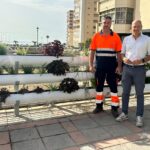
Locals in Fuengirola asked for greener bridges over the Arroyo Pajares, and the town hall has delivered exactly that. Councillor for Urban Ecology José Sánchez confirmed this week that work has wrapped up on a fresh set of vertical gardens stretching 300 linear metres across the bridges that cross Avenida de Los Boliches and Avenida Jesús Cautivo.

Workers from the council’s own Operative Services team, together with staff from Urban Ecology and Events, handled every stage. They fabricated the metal structures and planters, painted everything, fitted the units and put the plants in the ground. No external contractors needed.

Neighbours’ requests turned into reality

Sánchez pointed out that the idea came straight from residents during the regular neighbourhood meetings the town hall holds around Fuengirola. “We keep working to make Fuengirola a more pleasant, green and well-looked-after place,” he said. “We listened to what neighbours suggested, and, whenever we can, we turn those ideas into something real. In this case they asked us to spruce up these bridges, and now that request is done.”

The project sits inside the wider municipal Plan de Embellecimiento, which focuses on adding plants to everyday public spaces so the streets feel more inviting for both residents and visitors. Ordinary concrete bridges have been given a proper landscape boost with colour and nature, all while sticking to sensible upkeep and water-saving principles.

Tough plants and clever watering keep costs down

Perennial species that need very little water went into the planters. Staff chose them for toughness and simple care so the gardens stay looking good without constant attention. A drip irrigation system runs the full length of both installations, delivering water exactly where it is needed and keeping waste to a minimum.

Sánchez summed it up neatly: “Jobs like this let us lift the look of the town in a sustainable and efficient way. We make the most of our own resources and back up our promise of a greener, friendlier Fuengirola.”

This latest effort continues a long-running push to bring more greenery into the urban set up. Earlier projects have already given the town vertical gardens in Los Pacos and other spots, plus xeriscaping schemes that cut water use across hundreds of planters. Readers can catch up on those earlier moves in our pieces on urban ecology and xeriscaping in Fuengirola, the expansion of the Los Pacos vertical garden and the ongoing beautification work in green areas.

For the official council announcement, see the full details on the Fuengirola town hall website.

Anyone strolling or driving through Los Boliches or past Jesús Cautivo will now notice a much softer, greener skyline where grey concrete once dominated. Small changes like these add up, and Fuengirola keeps showing it is listening when residents speak up.

%

Hospital Visitors Left Terrified After Grim Reaper Figure Spotted On Roof

Published

on

hospital-visitors-left-terrified-after-grim-reaper-figure-spotted-on-roof

The figure remained on the roof for around 50 minutes. Photo credit: Chawranphoto/Shutterstock

For patients arriving at hospital, the last thing anyone expects to see is a hooded figure resembling the Grim Reaper watching from above. But that’s exactly what unfolded at a North Wales hospital, leaving visitors, staff and families shaken before police were called to the scene. What should have been a routine day at Ysbyty Glan Clwyd Hospital in St Asaph quickly turned into an unsettling spectacle after reports of a dark-clad figure standing on the roof overlooking the hospital entrance.

The incident sparked concern among those arriving for appointments and visiting loved ones, with emergency services responding after the figure refused to come down. The bizarre episode has since ended in court, where the man admitted causing a nuisance on NHS premises. While no one was physically harmed, the incident has raised questions about security at hospitals and the impact such stunts can have on vulnerable patients already dealing with illness, anxiety and grief.

Hooded figure spotted on hospital roof

The man was later identified as 26-year-old Leon Gillespie, from Deganwy, North Wales. Witnesses reported seeing Gillespie dressed in a long black hooded outfit while carrying what appeared to be a large scythe. Standing high above the hospital entrance, the figure immediately drew comparisons with the Grim Reaper, a symbol traditionally associated with death.

According to reports presented in court, Gillespie remained on the roof for around 50 minutes, overlooking the entrance as patients, visitors and NHS staff looked on. The unusual sight prompted an emergency response, with four police vehicles and a fire service crew attending the hospital before officers eventually persuaded him to come down.

Claimed it was meant to be a crow

Despite the widespread reaction, Gillespie later claimed the outfit had been misunderstood. Appearing before Llandudno Magistrates’ Court, he said the costume was intended to resemble a crow rather than the Grim Reaper. However, prosecutors said the appearance of the figure, combined with the object he was carrying, caused genuine alarm among people at the hospital.

The court heard that officers instructed Gillespie to leave the premises, but he failed to comply before eventually being removed from the roof. He later pleaded guilty to causing a nuisance on NHS premises and refusing to leave when directed by police.

Court hands down fine

Magistrates fined Gillespie £200 and ordered him to pay £50 in compensation along with £100 in prosecution costs. During the same hearing, he also admitted two unrelated shoplifting offences.

While the financial penalty was relatively modest, the case has attracted widespread attention because of the unusual nature of the incident and the location where it took place. Hospitals are places where many people are dealing with life-changing diagnoses, serious illness or the loss of loved ones. Seeing a figure widely associated with death overlooking the entrance was understandably distressing for many who witnessed it.

Why the incident struck such a nerve

Although there is no suggestion Gillespie intended to physically harm anyone, the symbolism of the costume made the incident particularly unsettling. Hospitals are environments where patients and families are often experiencing some of the most emotional moments of their lives. For those arriving for cancer treatment, emergency care or to visit critically ill relatives, the appearance of a figure resembling the Grim Reaper was bound to provoke concern.

The incident also draws attention the challenges hospitals face in protecting large, open sites that welcome thousands of visitors each week while maintaining public safety. Fortunately, the situation was brought under control without injury, and emergency services were able to resolve the incident peacefully.

For those who witnessed it, however, it is unlikely to be forgotten anytime soon. What began as an ordinary day at one of North Wales’ busiest hospitals ended with police, firefighters and a court appearance, after a rooftop stunt left patients wondering whether what they were seeing was real.

Continue Reading

%

Costa Del Sol Sound Alarm After Family Hit By Summer Tyre Scam

Published

on

costa-del-sol-sound-alarm-after-family-hit-by-summer-tyre-scam

Local residents, long-term expats and holidaymakers on the Costa del Sol can only get a better picture and real protection when everyone shares warnings and reports every incident quickly. Awareness stops travelling gangs from treating our towns and visitors like easy pickings each summer. Reporting builds police records, insurance claims go smoother, and neighbours look out for one another. Simple habits can keep families safer without spoiling the lifestyle so many of us chose here.

One British woman and her family drove down from the UK for a well-earned family break near Marbella, as thousands do every year. After the long trip with three sons and a dog, they parked outside the Marbella Beach Club for a quick swim and snack. Minutes after starting to leave, the tyre went flat hard. Her husband pulled over to change it. A man in a yellow high-vis jacket, appearing to be a parking attendant, with orange trim on his jacket appeared almost at once, spoke English, and offered help with the promise of tools he could use, as a favour. The woman even called him an “angel” for offering to help them like a good samaritan.

Meanwhile, while he jacked up the car, she briefly walked the dog up and down the shady side of the road. Then, suddenly, another separate man on her side of the street pointed to crisp new banknotes on the ground. She picked them up and handed them over, thinking he looked poor and they were his find really. But this was just a distraction. When she returned to the car, the “helper” at the car was nowhere to be seen. Her handmade Italian straw bag with cards and passports in had disappeared from inside the car. Later that night they found more was missing, such as a canvas tote missing from the boot too, with wet swimming costumes and some beads she loved. Reading glasses and prescription items had also disappeared with the bag.

“I looked into his eyes and called him an angel,” she said. “At that point you’re so grateful someone’s going to help you that immediately you see friend, not foe.” Police later took a statement, but, as she put it, “They don’t really care.” Beach club staff were not much more help and offered little more than a quiet “Be careful; we know it happens.”

How these gangs operate on the Costa del Sol

Criminals arrive for the summer season in places like Marbella, Estepona and Mijas. They sabotage cars, such as by knifing a tyre and letting air out, or worse, and then pose as helpful parking attendants or roadside good Samaritans in high-vis gear. While the driver focuses on the problem, or managing pets and children, an accomplice lifts bags, wallets or phones. Victims are usually on holiday for a week or two and will never see the faces again. Locals rarely recognise the faces either because the crews move on to other towns. People from the actual town would never do this. Holidaymakers are their bread and butter, and they know it.

Similar distraction tactics turn up across the coast. National Police in Estepona recently arrested two men using the classic “bird poo” method on elderly residents and visitors. Officers in Torremolinos also rounded up suspects behind jewellery snatches directed towards holidaymakers. Earlier cases of tyre puncture scams have already been reported in Calahonda and Mijas.

Spain still feels safer than many European countries, yet these summer crews from elsewhere exploit exactly that trust. They prey on Spanish good nature and the relaxed and distracted mood of people on holiday. The woman put it plainly: “Everyone’s on holiday, everyone’s relaxed, the sun’s shining… you’re in a bubble. Perfect for gangs.”

Why reporting and community action matter

These thieves give the Costa del Sol a bad name and cost ordinary families time, money and peace of mind. The woman’s bag held everyday items, perfume, makeup, earpods, and sunglasses – “nothing flashy”, as she puts it. She keeps a low profile and lives in the countryside. Still, the crew chose her car near the Beach Club, where she thought she and her family would be safe to leave their car for a short time.

Police need detailed statements to spot patterns. Call 091 for the National Police in urban areas or 112 in any emergency. File a “denuncia” quickly, as it helps insurance and builds the case file. Apps such as AlertCops let you contact officers with location data. Leave nothing visible in parked cars, keep bags cross-body and closed, and never leave valuables unattended while dealing with a sudden flat tyre.

As one Euro Weekly News reader from Calpe said recently, “Car parks need to have CCTV. Not all do!” We leave our cars parked and locked up, and we think they are safe, but these criminals who come from outside of town exploit places where there are no CCTV cameras.

Practical steps expats and visitors can take together

Keep a small “go” bag for beach days with only essentials. Park in busier, well-lit spots when possible. If a stranger offers help after a sudden tyre problem, stay with the car and call official roadside assistance instead of accepting the free offer. Photograph any suspicious person if it feels safe. Share clear descriptions with neighbours and local WhatsApp groups.

She says she wants the story out there so others avoid the same shock. “I would just like to really warn someone else… it makes it feel okay somehow if I could have helped some other people be made aware.” More voices reporting the same pattern force attention. Local businesses lose too when word spreads of easy targets outside their doors.

Costa del Sol life still offers the countryside calm and coastal fun that drew so many of us. Gangs that arrive every summer to exploit that openness can be pushed back when residents, visitors and police work from the same page. Stay alert, report every case, and look after one another. That shared effort keeps the place worth living in for everyone.

Continue Reading

%

The Hunt After The Ceuta Invasion Leads To 86 Suspected Organisers

Published

on

the-hunt-after-the-ceuta-invasion-leads-to-86-suspected-organisers

Spanish authorities have also reinforced security on their side of the frontier. Photo credit: JUAN ANTONIO ORIHUELA/Shutterstock

When thousands of people converged on Ceuta in one of the largest irregular crossings ever witnessed on Spain’s southern border, the images dominated headlines across Europe. Rescue teams pulled people from the sea, security forces struggled to contain the flow and families were left searching for loved ones who never made it home. Yet long after the beaches emptied and the emergency response began to wind down, one question refused to disappear. Who organised it?

For days, Spanish and Moroccan officials pointed towards criminal networks that had exploited vulnerable people with promises of an easy route into Europe. There was speculation, accusations and rumours, but little indication that those allegedly responsible had been identified. Now, Morocco says that has changed.

Prosecutors move against alleged organisers

Moroccan judicial authorities have opened proceedings against 86 people accused of organising and facilitating the mass crossings towards Ceuta, describing the arrests as part of a wider operation targeting the networks believed to have coordinated the movement of thousands of migrants. According to the Moroccan Association for Human Rights (AMDH), the suspects appeared before courts in Tetouan and Nador, two of the areas where investigators believe much of the planning and organisation took place before the attempted crossings.

The largest group of defendants is facing accusations linked to organising irregular migration, transporting migrants illegally and public disorder. Others have been charged with assaulting members of the security forces, damaging public property and refusing to comply with police orders during the operation.

Investigators believe false promises fuelled the crossings

The investigation centres on claims that organised groups encouraged migrants to travel towards Ceuta by spreading misleading information about what would happen if they reached Spanish territory. According to Moroccan authorities, rumours circulated through social media and messaging platforms suggested that anyone who managed to enter Ceuta would automatically be allowed to remain in Spain. Investigators believe those claims, combined with the work of people-smuggling networks, convinced thousands that the crossing offered a realistic chance of reaching Europe.

Officials argue that the movement was far from spontaneous. Instead, prosecutors believe groups of organisers helped coordinate transport towards the border, directed people to crossing points and exploited the desperation of migrants who were prepared to risk everything for the possibility of a better future. The allegations will now be tested in court, where prosecutors are expected to present evidence gathered during the investigation.

Some defendants have already been sentenced

While many of the cases are only just beginning, Morocco’s courts have already handed down the first convictions connected to the operation. Eleven defendants have received prison sentences of up to six months, together with fines that can reach €1,000. Dozens of other suspects remain before the courts, with further hearings expected in the coming weeks as investigators continue examining the evidence.

Among those prosecuted are five minors, who were referred to child protection services rather than being dealt with through the adult criminal courts after allegations they were involved in acts of violence and vandalism during the unrest. The legal action represents Morocco’s clearest attempt yet to show that its response is focused on those accused of organising irregular migration rather than the migrants themselves.

A tragedy that claimed at least 141 lives

The prosecutions come after one of the deadliest migration disasters ever recorded on the western Mediterranean route. Rights organisation Caminando Fronteras estimates that at least 141 people died attempting to reach Ceuta during the crisis. Bodies were recovered from both Moroccan and Spanish waters in the days that followed, while families continued searching for relatives who disappeared during the crossings.

Although different organisations have published varying death tolls, there is little dispute over the scale of the tragedy. The events have intensified calls for stronger action against trafficking networks that profit from vulnerable migrants while exposing them to extreme danger.

The investigation is far from over

Moroccan authorities insist the operation remains active and have not ruled out further arrests as investigators continue tracing the networks they believe orchestrated the crossings. The prosecutions are also intended to counter claims that Morocco deliberately relaxed border controls during the crisis. Rabat has repeatedly rejected those accusations, maintaining that organised criminal groups exploited the situation by spreading false information and encouraging large numbers of people to head towards Ceuta simultaneously.

A crackdown, but no easy answers

Whether the 86 prosecutions will dismantle those networks remains to be seen. Human rights organisations have called for every defendant to receive a fair trial and proper legal representation, while warning that prosecuting organisers alone will not address the poverty, conflict and lack of opportunity that continue to drive migration towards Europe.

For Spain, the court cases may provide the first detailed picture of how one of the most dramatic border crises in recent years was organised.  For the families who lost loved ones, however, identifying those accused of orchestrating the crossings cannot undo the human cost. What the prosecutions may do is reveal how a tragedy that claimed more than a hundred lives was able to gather momentum in the first place, and whether similar networks are still operating today.

Continue Reading

Trending

Copyright © 2017 Spanish Property & News