Connect with us

%

Hospital Visitors Left Terrified After Grim Reaper Figure Spotted On Roof

Published

on

hospital-visitors-left-terrified-after-grim-reaper-figure-spotted-on-roof

The figure remained on the roof for around 50 minutes. Photo credit: Chawranphoto/Shutterstock

For patients arriving at hospital, the last thing anyone expects to see is a hooded figure resembling the Grim Reaper watching from above. But that’s exactly what unfolded at a North Wales hospital, leaving visitors, staff and families shaken before police were called to the scene. What should have been a routine day at Ysbyty Glan Clwyd Hospital in St Asaph quickly turned into an unsettling spectacle after reports of a dark-clad figure standing on the roof overlooking the hospital entrance.

The incident sparked concern among those arriving for appointments and visiting loved ones, with emergency services responding after the figure refused to come down. The bizarre episode has since ended in court, where the man admitted causing a nuisance on NHS premises. While no one was physically harmed, the incident has raised questions about security at hospitals and the impact such stunts can have on vulnerable patients already dealing with illness, anxiety and grief.

Hooded figure spotted on hospital roof

The man was later identified as 26-year-old Leon Gillespie, from Deganwy, North Wales. Witnesses reported seeing Gillespie dressed in a long black hooded outfit while carrying what appeared to be a large scythe. Standing high above the hospital entrance, the figure immediately drew comparisons with the Grim Reaper, a symbol traditionally associated with death.

According to reports presented in court, Gillespie remained on the roof for around 50 minutes, overlooking the entrance as patients, visitors and NHS staff looked on. The unusual sight prompted an emergency response, with four police vehicles and a fire service crew attending the hospital before officers eventually persuaded him to come down.

Claimed it was meant to be a crow

Despite the widespread reaction, Gillespie later claimed the outfit had been misunderstood. Appearing before Llandudno Magistrates’ Court, he said the costume was intended to resemble a crow rather than the Grim Reaper. However, prosecutors said the appearance of the figure, combined with the object he was carrying, caused genuine alarm among people at the hospital.

The court heard that officers instructed Gillespie to leave the premises, but he failed to comply before eventually being removed from the roof. He later pleaded guilty to causing a nuisance on NHS premises and refusing to leave when directed by police.

Court hands down fine

Magistrates fined Gillespie £200 and ordered him to pay £50 in compensation along with £100 in prosecution costs. During the same hearing, he also admitted two unrelated shoplifting offences.

While the financial penalty was relatively modest, the case has attracted widespread attention because of the unusual nature of the incident and the location where it took place. Hospitals are places where many people are dealing with life-changing diagnoses, serious illness or the loss of loved ones. Seeing a figure widely associated with death overlooking the entrance was understandably distressing for many who witnessed it.

Why the incident struck such a nerve

Although there is no suggestion Gillespie intended to physically harm anyone, the symbolism of the costume made the incident particularly unsettling. Hospitals are environments where patients and families are often experiencing some of the most emotional moments of their lives. For those arriving for cancer treatment, emergency care or to visit critically ill relatives, the appearance of a figure resembling the Grim Reaper was bound to provoke concern.

The incident also draws attention the challenges hospitals face in protecting large, open sites that welcome thousands of visitors each week while maintaining public safety. Fortunately, the situation was brought under control without injury, and emergency services were able to resolve the incident peacefully.

For those who witnessed it, however, it is unlikely to be forgotten anytime soon. What began as an ordinary day at one of North Wales’ busiest hospitals ended with police, firefighters and a court appearance, after a rooftop stunt left patients wondering whether what they were seeing was real.

%

The Hunt After The Ceuta Invasion Leads To 86 Suspected Organisers

Published

on

the-hunt-after-the-ceuta-invasion-leads-to-86-suspected-organisers

Spanish authorities have also reinforced security on their side of the frontier. Photo credit: JUAN ANTONIO ORIHUELA/Shutterstock

When thousands of people converged on Ceuta in one of the largest irregular crossings ever witnessed on Spain’s southern border, the images dominated headlines across Europe. Rescue teams pulled people from the sea, security forces struggled to contain the flow and families were left searching for loved ones who never made it home. Yet long after the beaches emptied and the emergency response began to wind down, one question refused to disappear. Who organised it?

For days, Spanish and Moroccan officials pointed towards criminal networks that had exploited vulnerable people with promises of an easy route into Europe. There was speculation, accusations and rumours, but little indication that those allegedly responsible had been identified. Now, Morocco says that has changed.

Prosecutors move against alleged organisers

Moroccan judicial authorities have opened proceedings against 86 people accused of organising and facilitating the mass crossings towards Ceuta, describing the arrests as part of a wider operation targeting the networks believed to have coordinated the movement of thousands of migrants. According to the Moroccan Association for Human Rights (AMDH), the suspects appeared before courts in Tetouan and Nador, two of the areas where investigators believe much of the planning and organisation took place before the attempted crossings.

The largest group of defendants is facing accusations linked to organising irregular migration, transporting migrants illegally and public disorder. Others have been charged with assaulting members of the security forces, damaging public property and refusing to comply with police orders during the operation.

Investigators believe false promises fuelled the crossings

The investigation centres on claims that organised groups encouraged migrants to travel towards Ceuta by spreading misleading information about what would happen if they reached Spanish territory. According to Moroccan authorities, rumours circulated through social media and messaging platforms suggested that anyone who managed to enter Ceuta would automatically be allowed to remain in Spain. Investigators believe those claims, combined with the work of people-smuggling networks, convinced thousands that the crossing offered a realistic chance of reaching Europe.

Officials argue that the movement was far from spontaneous. Instead, prosecutors believe groups of organisers helped coordinate transport towards the border, directed people to crossing points and exploited the desperation of migrants who were prepared to risk everything for the possibility of a better future. The allegations will now be tested in court, where prosecutors are expected to present evidence gathered during the investigation.

Some defendants have already been sentenced

While many of the cases are only just beginning, Morocco’s courts have already handed down the first convictions connected to the operation. Eleven defendants have received prison sentences of up to six months, together with fines that can reach €1,000. Dozens of other suspects remain before the courts, with further hearings expected in the coming weeks as investigators continue examining the evidence.

Among those prosecuted are five minors, who were referred to child protection services rather than being dealt with through the adult criminal courts after allegations they were involved in acts of violence and vandalism during the unrest. The legal action represents Morocco’s clearest attempt yet to show that its response is focused on those accused of organising irregular migration rather than the migrants themselves.

A tragedy that claimed at least 141 lives

The prosecutions come after one of the deadliest migration disasters ever recorded on the western Mediterranean route. Rights organisation Caminando Fronteras estimates that at least 141 people died attempting to reach Ceuta during the crisis. Bodies were recovered from both Moroccan and Spanish waters in the days that followed, while families continued searching for relatives who disappeared during the crossings.

Although different organisations have published varying death tolls, there is little dispute over the scale of the tragedy. The events have intensified calls for stronger action against trafficking networks that profit from vulnerable migrants while exposing them to extreme danger.

The investigation is far from over

Moroccan authorities insist the operation remains active and have not ruled out further arrests as investigators continue tracing the networks they believe orchestrated the crossings. The prosecutions are also intended to counter claims that Morocco deliberately relaxed border controls during the crisis. Rabat has repeatedly rejected those accusations, maintaining that organised criminal groups exploited the situation by spreading false information and encouraging large numbers of people to head towards Ceuta simultaneously.

A crackdown, but no easy answers

Whether the 86 prosecutions will dismantle those networks remains to be seen. Human rights organisations have called for every defendant to receive a fair trial and proper legal representation, while warning that prosecuting organisers alone will not address the poverty, conflict and lack of opportunity that continue to drive migration towards Europe.

For Spain, the court cases may provide the first detailed picture of how one of the most dramatic border crises in recent years was organised.  For the families who lost loved ones, however, identifying those accused of orchestrating the crossings cannot undo the human cost. What the prosecutions may do is reveal how a tragedy that claimed more than a hundred lives was able to gather momentum in the first place, and whether similar networks are still operating today.

Continue Reading

%

120 People Stung In One Day

Published

on

120-people-stung-in-one-day

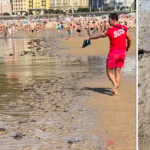
Beachgoers on Spain’s northern coast have been warned to stay out of the water after a sudden influx of Portuguese man o’ war forced the temporary closure of several popular beaches and left more than 120 people needing treatment for stings in a single day.

The marine creatures, often mistaken for jellyfish but considerably more dangerous, have washed ashore across Gipuzkoa, prompting lifeguards to raise red flags and restrict swimming at some of the region’s busiest beaches.

Authorities say the situation has been driven by persistent north-easterly winds combined with unusually warm sea temperatures, creating ideal conditions for the organisms to drift towards the coastline.

More than 120 stings reported

San Sebastián has been among the worst affected areas. On Tuesday August 4, lifeguards recorded around 120 sting incidents across the city’s beaches, although officials stressed that the overwhelming majority were minor.

The most serious cases occurred earlier in the week, including a regular swimmer who was taken to hospital after reportedly being stung several times while swimming near Getaria. Another woman also required ambulance treatment following a sting at Zarautz.

Elsewhere, lifeguards responded to numerous incidents at beaches including Zurriola, Mutriku and Zumaia, although most victims were treated on site and did not require hospital care.

Popular beaches temporarily closed

As the number of Portuguese man o’ war increased, authorities temporarily prohibited bathing at San Sebastián’s famous La Concha, Ondarreta and Zurriola beaches.

In some locations, sections of beach were able to remain open where no specimens had been spotted, but restrictions changed throughout the day as lifeguards monitored conditions.

Officials emphasised that closures are introduced only when the risk becomes significant, with decisions based on the number, size and location of the marine creatures, together with advice from rescue teams. Beaches can reopen quickly if conditions improve.

Why they have arrived

Experts believe the recent invasion has been caused by a combination of favourable winds and warmer-than-average coastal waters.

Sea temperatures along the Gipuzkoa coastline have been hovering at around 24.8C, helping these floating colonies survive as they are carried closer to shore.

Authorities also noted that larger specimens have begun appearing in recent days, increasing concern because bigger Portuguese man o’ war generally carry longer tentacles capable of delivering more painful stings.

What to do if you see one

Health officials are reminding beach users never to touch a Portuguese man o’ war, even if it appears dead on the sand. Its tentacles can remain venomous long after the animal has washed ashore.

Anyone stung should leave the water immediately and seek assistance from the nearest lifeguard. The affected area should be rinsed with seawater rather than fresh water, which can worsen the sting, and cold packs may help reduce pain while waiting for medical advice.

Visitors are also urged to pay close attention to beach flags and follow instructions from lifeguards, as conditions can change rapidly throughout the day depending on tides, wind and the movement of the organisms.

Continue Reading

%

AP-7 Theft: How A Toll Booth Employee Allegedly Diverted Company Cash

Published

on

ap-7-theft:-how-a-toll-booth-employee-allegedly-diverted-company-cash

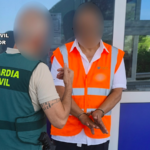
According to the investigation, officers found two separate tickets during the arrest. Photo credit: Guardia Civil/Ministerio del interior

Every day, thousands of motorists stop at toll booths on Spain’s AP-7, hand over their cash and continue their journey without giving the transaction a second thought. But on one section of the motorway, Guardia Civil investigators say part of that money never reached the company responsible for collecting it.

The arrest of a toll booth employee has exposed an alleged fraud that investigators believe relied on something as simple as swapping tickets. Drivers paid the correct amount for their journeys, but officers say the cash recorded by the system told a different story. The investigation began only after the motorway concessionaire noticed unexplained discrepancies in its accounts and alerted the Guardia Civil.

Operator’s checks trigger Guardia Civil investigation

The investigation, named Operation Enlazado, began in June after the company operating the AP-7 toll road between Cartagena and Vera detected irregularities in cash collections. The inconsistencies could not be explained through routine accounting checks, prompting the concessionaire to report its findings to the Guardia Civil.

Traffic officers and members of the Judicial Police launched a joint investigation to determine where the missing money was going. Their enquiries focused on one toll booth, where they believe the discrepancies repeatedly occurred during cash transactions. According to investigators, the employee is suspected of diverting more than €1,200 from the motorway operator. The alleged fraud did not affect motorists directly, as drivers always paid the correct toll for the journeys they made.

Investigators say tickets were swapped

The Guardia Civil believes the fraud depended entirely on motorists paying in cash rather than by bank card or electronic toll devices. Investigators say the employee would collect the correct payment from the driver before registering a different ticket in the toll system. Instead of entering the customer’s actual journey, officers allege he used a ticket from a previous vehicle that carried a lower toll charge. The reduced fare was recorded electronically, while the difference between the two amounts was allegedly kept by the employee.

Because the customer had already paid the correct amount and received a valid receipt, motorists had no reason to suspect anything unusual had happened. Investigators believe the fraud remained hidden because the electronic records appeared legitimate unless they were compared with the cash collected at the toll booth.

Arrest made while employee was working

After weeks of enquiries, Guardia Civil officers moved in while the employee was working at the toll booth. According to the investigation, officers found two separate tickets during the arrest. One belonged to the customer who was being served at that moment, while the second related to a cheaper journey.

Investigators believe the lower-value ticket was about to be used to register another transaction using the same method uncovered during Operation Enlazado. The employee was arrested at the scene and is now under investigation for an alleged offence of continuous fraud.

Cash payments made the alleged fraud possible

Investigators say the alleged scheme depended on cash transactions because electronic payments automatically generate a record matching the amount paid. Cash allowed the employee to receive the correct payment from the driver while entering different journey details into the system.

The Guardia Civil has not indicated how long the fraud may have been taking place, although investigators believe the method was repeated often enough for the concessionaire’s internal controls to identify a pattern of missing money. The amount allegedly diverted exceeded €1,200, but investigators say the significance of the case lies less in the total involved than in the method used to obtain it.  By recycling tickets from previous journeys, officers believe the employee was able to conceal the discrepancies until the company’s financial controls exposed the irregularities.

Investigation remains open

The case has been referred to the competent judicial authority, while investigators continue examining the evidence gathered during Operation Enlazado. The Guardia Civil has not ruled out further enquiries as officers analyse the toll records and documentation seized during the investigation. It has not disclosed whether additional transactions could form part of the case.

For the motorway operator, the investigation has highlighted the importance of routine financial controls in detecting irregularities that would otherwise have remained hidden. For the Guardia Civil, the case marks the end of an investigation that began with unexplained accounting discrepancies and ended with an arrest inside an AP-7 toll booth.

Continue Reading

Trending

Copyright © 2017 Spanish Property & News