Connect with us

%

Future Of UK Retirees: Tony Blair Institute Wants Triple Lock Pensions Scrapped

Published

on

future-of-uk-retirees:-tony-blair-institute-wants-triple-lock-pensions-scrapped

Tony Blair, ex UK Prime Minister. Credit: Georg Schmidt – Shutterstock

UK pensioners face a period of uncertainty as influential voices call for a dismantling of the current retirement system. Financial pressures from global conflicts and a rapidly ageing population have led the Tony Blair Institute (TBI) to label the state pension “unaffordable” in its current form. Although he has not been in government since 2007, he continues as a lobbyist and indirect advisor.

Keir Starmer has publicly praised Blair as a “great leader” and has consulted him informally on various issues. However, Starmer often keeps a degree of “political distance” from his predecessor to avoid the baggage associated with the Iraq War and to maintain his own distinct political identity.

While the government currently maintains its support for the Triple-Lock policy, the proposed changes represent a radical departure from the security millions of retirees have come to expect.

End of the Triple Lock guarantee?

Triple lock protections currently guarantee that the state pension increases each April by whichever is highest: inflation, average wage growth, or 2.5 per cent. This mechanism has been a lifeline for many during recent price hikes. However, the Tony Blair Institute argues this pledge was “built for a different era” and should be removed after the next general election.

Ending this guarantee would likely mean pension increases are tied solely to smoothed earnings. For those living on fixed incomes, this change carries the risk that their purchasing power will erode during periods of high inflation. Without the 2.5 per cent safety net, the gap between the cost of essentials and the state’s support could widen, leaving many elderly people to face a more precarious financial future.

Introducing the “Lifespan Fund”

Radical reform is being suggested by the Blair Institute in the form of a “Lifespan Fund” to replace the standard state pension by 2030. Rather than receiving a set payment from a certain age, individuals would, under this proposal,  build a notional pot through work, study, or caring. This fund would be capped at providing 20 years of support, roughly equivalent to the value of today’s state pension.

Flexibility is the main selling point of this model, as it would allow people to draw down funds early for retraining or periods of unemployment. However, critics warn this creates a “drawdown debt” for later life. Pensioners who used their funds during their working years would have to pay higher National Insurance contributions later to rebuild their pots, potentially delaying their final retirement or reducing their monthly income in old age.

Personalised retirement ages based on health

Linking retirement age to individual health records is the most controversial element of these proposals. Instead of a fixed state pension age, the TBI suggests access to support should be personalised and judged by a civil servant. Former pensions minister Steve Webb has described this prospect as “intrusive” and “deeply troubling”, saying he has massive concerns over data privacy and the complexity of predicting life expectancy.

For future retirees, this could mean that your exit from the workforce is determined by a digital health assessment rather than a clear age milestone. Webb worries that such a “fiendishly complex” system would make it impossible for people to plan their futures with any certainty, turning retirement into a bureaucratic hurdle rather than a hard-earned reward.

Potential impacts on long-term financial security

Total state spending on pensions is projected to rise in the UK from 5 per cent of GDP to 7.8 per cent by 2070, an increase of roughly £85 billion annually. While Blair, who earns a flat £115,000 per year for being an ex-PM, insists change is unavoidable to prevent tax hikes, so the burden of this adjustment falls squarely on the individual.

Industry experts suggest that if the state pension is scaled back, minimum automatic enrolment contributions must rise towards 12 per cent to make sure people do not fall into poverty. For those already in or near retirement, these debates signal that the “gold-standard” era of predictable state support may be drawing to a close.

%

What Do Paintings Really Mean?

Published

on

what-do-paintings-really-mean?

The Arts Society Costa del Sol closes its 2025/2026 season with a compelling illustrated lecture on the secret symbols hidden in centuries of great art masterpieces, open to non-members for just €10. 

Art: A Detective Story Decoding Symbols in Painting

The final lecture of the season takes place on Monday, May 11 at the Salon Varietes Theatre, Fuengirola, doors open from 4pm, with the talk beginning at 4:30pm. The lecture is titled Art: A Detective Story – Decoding Symbols in Painting, and it promises to change the way you look at every painting you will ever see again.

The premise is simple and fascinating. Paintings are silent, yet they are designed to communicate. Sometimes the message is obvious. More often it is layered, encoded in objects, gestures, colours and figures that carried specific meaning to the audiences of their time. 

From medieval altarpieces and Renaissance portraits to Dutch still lifes, Baroque ceiling paintings and Victorian genre scenes, the lecture traces the rich tradition of symbols, emblems and allegories that artists used to elevate, educate, warn and criticise,  communicating far more than the eye first registers.

Lydia Bauman the lecturer

The talk is delivered by the incredibly impressive Lydia Bauman, a highly experienced art educator working in the field today. Born in Poland, she completed her BA in Fine Art at the University of Newcastle-upon-Tyne, where she was awarded both the John Christie Scholarship and the Hatton Award. She then studied at the Courtauld Institute of Art, London, earning an MA in History of Art with a Distinction for her thesis on Matisse’s Illustrations to Poetry.

Her talents don’t end there, Lydia has taught at London’s National Gallery for more than 35 years, and has lectured intermittently at the Tate Gallery, the National Portrait Gallery, the Boston Museum of Fine Arts, the Hermitage, and the Van Gogh Museum in Amsterdam. Since March 2020 she has delivered more than 180 online lectures through her own programme, Art For The Uninitiated. She is an accredited lecturer with The Arts Society.

Ticket information and how to attend

Admission is free for members of The Arts Society Costa del Sol, whose membership covers the full lecture season. Members of other Arts Society societies are welcome at a discounted rate of €8, payable at the door. Non-members are invited to attend for a donation of €10, also payable on arrival.

The Salon Varietes Theatre is centrally located in Fuengirola. Arriving from 4:00pm allows time to take your seat before the lecture begins at 4:30pm.

More about the society

Founded in 1988 as the Costa del Sol Decorative and Fine Arts Society (DFAS), The Arts Society Costa del Sol was the first society of its kind in Spain and remains part of a global network of Arts Society chapters. The society has members from a number of different nationalities all united by a shared love and interest in art and culture. 

Monthly illustrated lectures run from October to May, covering painting, architecture, history, and cultural heritage, with particular attention to the artistic legacy of Spain. Members have a full social calendar including after-lecture drinks and dinners, a Christmas lunch, an end-of-season dinner dance, a Members’ Forum, and carefully researched cultural day trips to destinations across Spain and Europe.

New members are encouraged and always welcome. For more information visit The Arts Society Costa Del Sol website. 

If you have an interest in art, would like to learn something new, or have a painting in your house that you believe has an inner meaning then this event is perfect for you. 

Art: A Detective Story  – Decoding Symbols in Painting. Monday, May 11, 4:30pm. Salon Varietes Theatre, Fuengirola. Non-members €10, pay at door.

Continue Reading

%

Southern Blues Legends The Gangberries Are Back

Published

on

southern-blues-legends-the-gangberries-are-back

Blues Trio, The Gangberries. Credit: Clarence Jazz Club

Fans of authentic rhythm and soul are in for a treat this month as Southern Spain’s blues favourites, the Gangberries, are returning to Almuñecar. This well-seasoned band brings a wealth of experience to the coast, promising a night that honours the very best of the Southern blues tradition.

Veteran musicians bring decades of mastery

Experience and a history of collaborations with the best define this ensemble. Formed in 2012, the group consists of musicians who have spent over twenty years touring with iconic Spanish bands such as Tabletom, Mama Kin, and the Lito Blues Band. Their deep-rooted connection to the genre guarantees a performance that is both technically flawless and emotionally charged.

The audience can expect a foot-tapping journey through the annals of music history, delivered by professionals who live and breathe the blues. These artists have shared stages with the likes of the Richard Ray Farrell Band, honing a craft that translates perfectly to the intimate setting of a concert hall.

A tribute to rock and blues giants

Reverence for the greats sits at the heart of their setlist. Their repertoire serves as a powerful tribute to legendary figures including B.B. King, Muddy Waters, and Johnny Winter. Listeners will be treated to masterful renditions of classic tracks and the soaring guitar harmonies reminiscent of the Allman Brothers Band. Every note played reflects a dedication to the raw energy of rock ‘n’ roll, making this a must-see event for anyone who appreciates guitar-driven excellence.

The performance will no doubt revive the spirit of the Mississippi Delta and the Georgia woods right here in Almuñécar.

La Cochera Producciones is hosting this cultural event, guaranteeing a high-quality production for all attendees. Early booking is advised as local interest remains high for this specific tour date. Residents from across the province are expected to travel for this display of musical prowess.

Event details:

Continue Reading

%

Spanish Prime Minister Forced To Land In Turkey After Aircraft Problem Mid-Flight

Published

on

spanish-prime-minister-forced-to-land-in-turkey-after-aircraft-problem-mid-flight

The aircraft experienced a technical malfunction mid-flight. Photo credit: Pool Congreso/Congreso de los Diputados

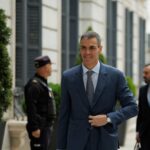
A technical issue involving the Airbus 310 carrying Spain’s Prime Minister Pedro Sánchez led to an unscheduled landing in Turkey while he was travelling to Armenia for a European summit. The incident occurred during an official trip linked to the European Political Community meeting.

According to reports, the aircraft experienced a technical malfunction mid-flight, prompting the crew to divert as a precautionary measure.  The landing took place in Ankara, where the delegation remained overnight before continuing their journey to Armenia the following day. The stopover interrupted the planned travel schedule but did not affect Sánchez’s participation in the summit. The aircraft was operating as part of an official government flight, with security and technical protocols activated once the issue was identified.

Diversion decision and landing in Ankara

The decision to divert to Ankara was taken after the crew detected a technical problem during the flight. Safety procedures required an immediate assessment of the situation, and the landing in Turkey was carried out as a precaution rather than an emergency descent. Once on the ground, checks were carried out on the aircraft while arrangements were made for the delegation to remain in Turkey overnight.

No injuries were reported among those on board, and there was no indication of any security threat linked to the incident. The following day, alternative arrangements were made to continue the journey to Armenia so that Sánchez could attend the planned European Political Community summit. The meeting brings together leaders from across the continent to discuss political, economic and security issues.

Official trip to Armenia

The visit to Armenia forms part of Spain’s participation in European discussions involving heads of state and government. These summits are designed to provide a forum for coordination between European countries on shared challenges, including international security, energy policy and regional stability.

Despite the disruption caused by the aircraft issue, the Spanish delegation proceeded with the programme once travel resumed. The stopover did not result in any changes to the agenda in Armenia.

Aircraft safety procedures

In cases involving official government flights, strict protocols are in place to deal with technical irregularities. When a fault is detected, crews are trained to prioritise landing at the nearest suitable airport where maintenance and safety checks can be carried out. The diversion to Ankara followed standard aviation procedures designed to ensure the safety of passengers and crew.

Such measures are routine in civil and government aviation when technical concerns arise, even if the issue does not constitute a critical emergency. Once grounded, aircraft undergo inspection by technical teams to determine the cause of the fault and whether repairs are required before further travel. In this case, the delegation waited overnight while arrangements were made for continuation of the trip.

No reported impact on delegation

There were no reports of injuries or medical incidents among those on board. The delegation, which included officials accompanying the Prime Minister, remained in Turkey during the overnight stop without further complications.

Press reports indicate that the situation was managed in coordination with aviation authorities and relevant government services. The aircraft later continued its journey once the necessary arrangements were completed.

Context of European Political Community summit

The European Political Community summit, which was the destination of the trip, brings together leaders from across Europe to discuss cooperation on political and strategic issues. It has become a regular forum for dialogue between European Union and non-EU countries.

Spain’s participation in the summit reflects its role in broader European discussions on regional stability and policy coordination. The event typically includes bilateral meetings and multilateral sessions between attending leaders.

Travel disruption resolved

Although the technical fault led to an unexpected interruption in travel, the situation was resolved without further incident. The aircraft diversion to Turkey ensured safety procedures were followed, and the delegation was able to continue its journey to Armenia once conditions allowed.

Continue Reading

Trending

Copyright © 2017 Spanish Property & News