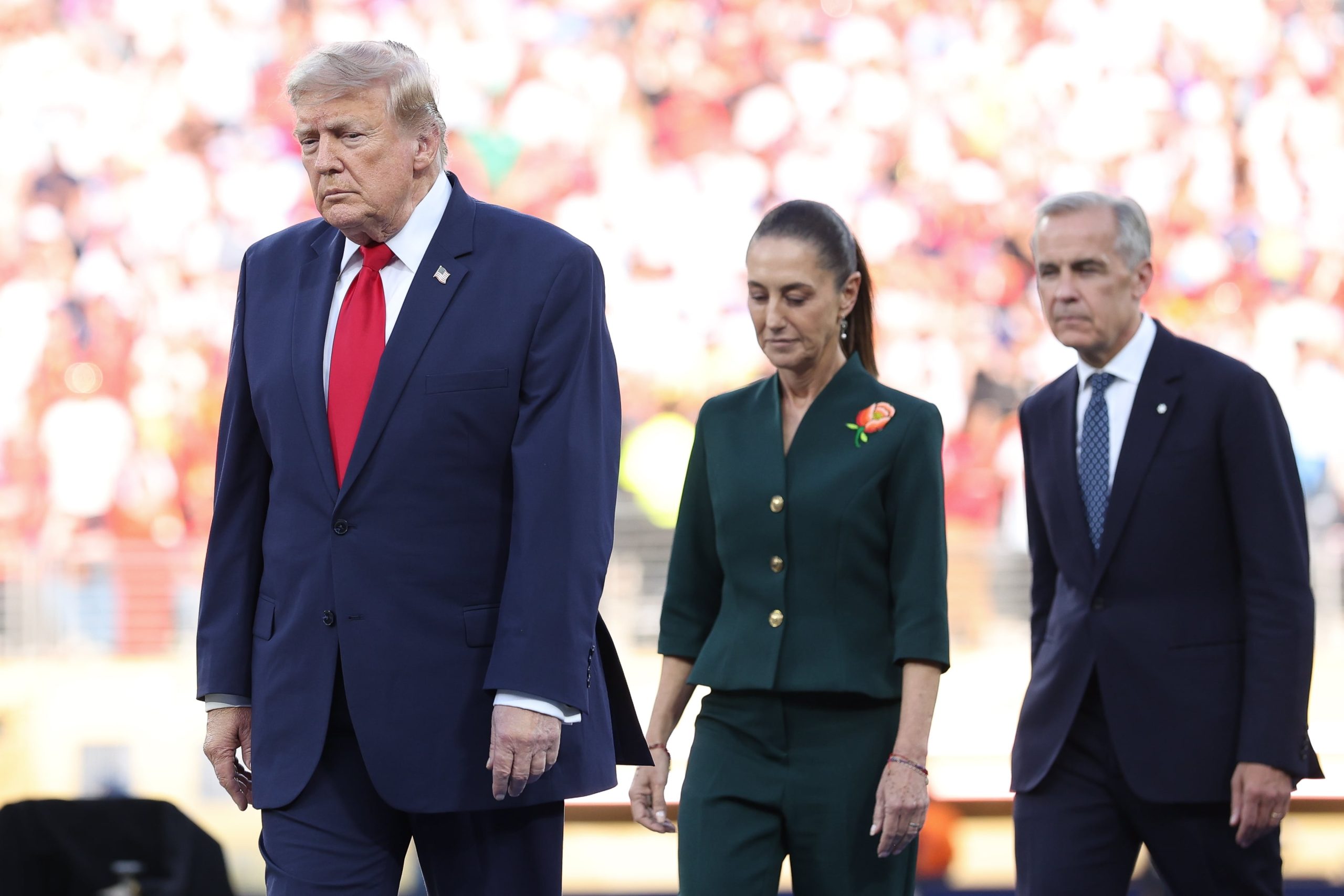
Claudia Sheinbaum
Half A Year Of Terror For Mexico’s Press
Published
24 hours agoon
By
ERIKA ROSETE
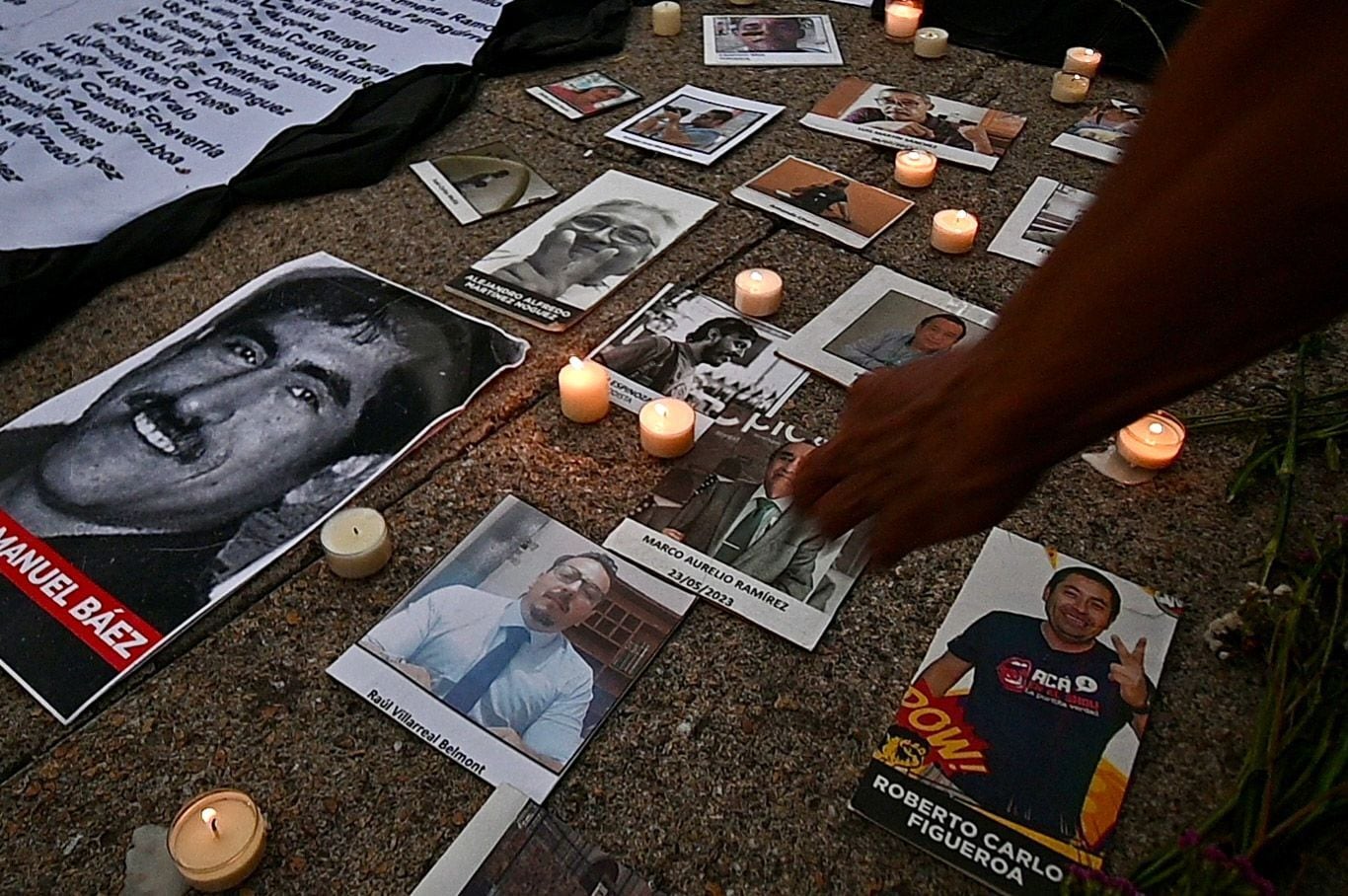
The press in Mexico is working under a climate of fear and terror following at least seven journalist murders recorded in the first six months of 2026. The latest victim was Francisco Alejandro Leyva Aguilar, who was killed on Wednesday while eating at a taco stand.
His murder comes just days after Josué Martínez Contreras, 39, was killed on July 16 in the community of San Lucas Atoyatenco, in the municipality of San Martín Texmelucan, Puebla. His 13-year-old son was with him when gunmen riding a motorcycle opened fire. The boy was the one who called emergency services, but there was nothing they could do when they arrived at the scene.
These killings add to the murders of independent journalist and environmental activist Manuel Alejandro Moreno Serna, murdered on July 3 in Zihuatanejo, Guerrero; Veracruz journalist Roxana Berenice Guzmán, who recorded her own kidnapping weeks before her body was found; Luis Ángel López Valdez, murdered on June 11 in Poza Rica, also in Veracruz; Juan David Gámez, killed in Nuevo León in March; and Carlos Castro, who died on January 8, also in Poza Rica.
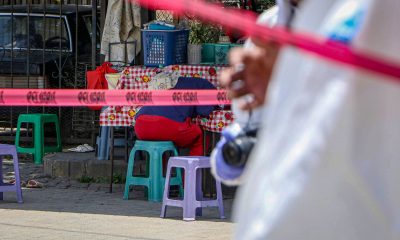
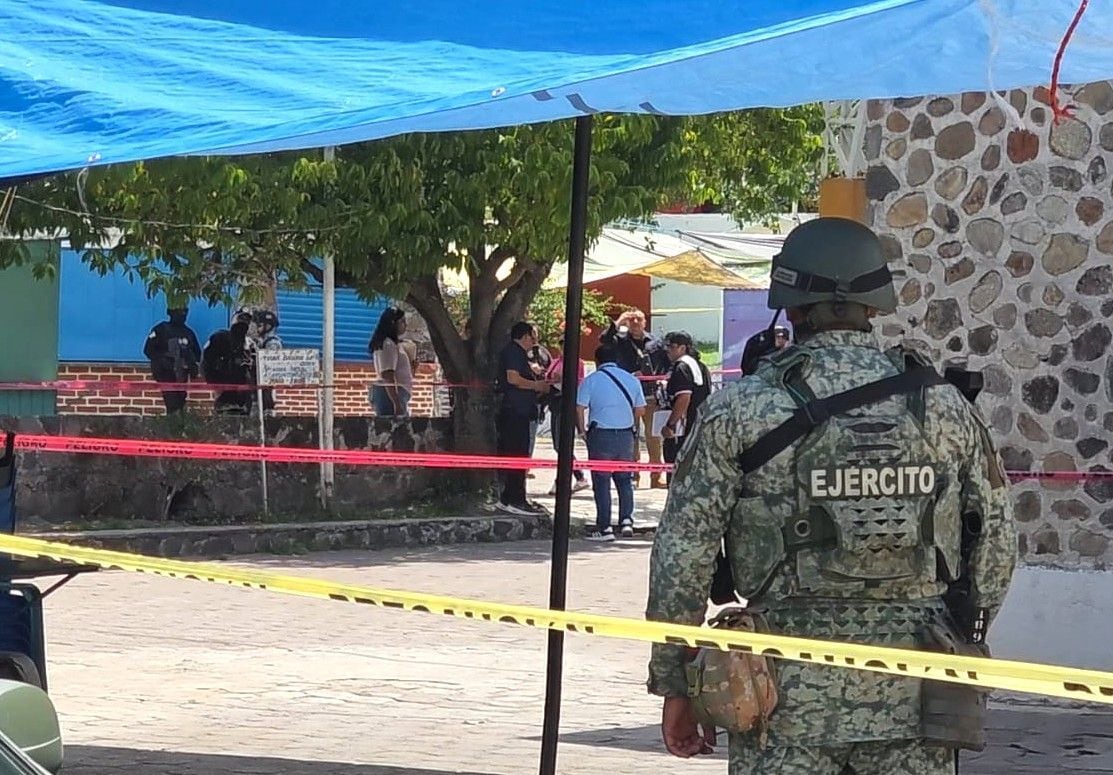
Oaxaca journalist Francisco Alejandro Leyva Aguilar became the seventh reporter killed in Mexico this year after gunmen shot him dead at a roadside food stall in San Pablo Etla. Leyva, a veteran columnist known for his criticism of the state government, had reported receiving death threats to both state and federal authorities in 2025, but no protective measures were implemented. Press freedom groups have since questioned why officials failed to act despite being aware of the risks he faced
Meanwhile, investigations into the Martínez Contreras case have already begun, according to the Puebla State Attorney General’s Office. However, a video he uploaded to social media last November already showed the harassment he was experiencing from local authorities after he reported the existence of unauthorized connections to the municipal water system and the lack of transparency regarding public funds collected through water-service fees.
According to the recording by the journalist, who was also an academic and lawyer, the municipal president and personnel from Mexico’s National Water Commission (Conagua) came to his home and accused him of failing to pay several water bills. Martínez Contreras showed the camera receipts proving payment and stated that, although he had clarified the situation and presented the documentation, he was still forced to pay what amounted to a “fine” of 6,000 pesos (about $350).
“The crux of this whole matter is that we have not allowed them to run a lucrative business from the water supply […] What they want is to get rid of me, push me aside,” he says in the video.
The video, which lasts just over five minutes, ends with the following statement: “Remember that it is better to die with the strength of the people than to die on your knees. I tell you this: we are going to fight for our people and for our municipality.”
Following his murder, Reporters Without Borders (RSF) in Latin America raised new questions for the Mexican government regarding the dangers faced by the press in the country: “How many have to die for the authorities to realize their response remains clearly insufficient? Opening an investigation after each murder is simply not enough,” said Artur Romeu, RSF’s regional director. “The Mexican government must be held accountable for the failures in prevention and protection that have allowed these crimes to recur, and present concrete measures to keep these killings from happening.”
The attack on journalist Roxana Berenice Guzmán was also captured on video. Guzmán was the founder of Pulso Informativo del Sureste, a Facebook news page she managed from Nanchital, in southeastern Veracruz, where she lived with her family. The footage revealed the terrifying moments she faced when several armed men, dressed entirely in black, smashed down her front door, pointed assault weapons into the house, and abducted her.
A month later, her remains were found on a ranch in Moloacán, about 30 kilometers (19 miles) from where she had been taken. Eight people have been arrested in connection with the case. Four of them are municipal police officers from the municipality of Ixhuatlán del Sureste.
The brutality of these crimes, in a country numbed by everyday violence, is not the only cause for concern among international organizations. Equally troubling is the message of impunity these incidents send and the vulnerability in which journalists continue to work. Of the seven cases documented so far in 2026, only in Roxana Guzmán’s case have suspects been detained.
The governor of Veracruz, Rocío Nahle of the ruling Morena party, whose state was the scene of the murders of Carlos Castro and Luis Ángel López Valdés, has repeatedly insisted that their deaths were unrelated to their journalistic work.
“Regardless of the profession they practiced, the investigations are being carried out by the prosecutors’ offices. There are several lines of investigation already made public by the state prosecutor, and it is not specifically because of their journalistic work. In my administration there is absolute freedom of expression, absolute freedom,” she said on June 15 during a press conference in which she referred to the murdered journalists simply as “the man from Poza Rica” and “the woman from Nanchital.”
Mexican President Claudia Sheinbaum, meanwhile, has been brief whenever she is questioned about a new journalist killing in the country, generally instructing her cabinet to ensure that the cases are addressed.
“This morning it was presented to the cabinet and they are under investigation,” she said on July 17 regarding the Martínez Contreras case.
The Inter American Press Association (IAPA/SIP) condemned Martínez Contreras’s murder, stating that “impunity in these crimes encourages further attacks against the press.”
Documented attacks
The situation is far from easy for local media outlets outside the Mexican capital. In addition to the co-optation of media organizations by governments in power, and in some cases by organized crime, journalists also contend with increasingly precarious working conditions.
It is no coincidence that the vast majority of local journalists, communicators, and reporters have additional professions or jobs to support themselves and their families. Salary levels vary across states, but a Mexican government labor category that groups authors, journalists, and translators places the average monthly wage at about 8,000 Mexican pesos (approximately $456) for work averaging 37.9 hours per week.
Dozens of attacks against journalists have also been documented so far this year. On July 17 alone, in Culiacán, the home of César Millán Lafarga, the general director of Grupo Adiscusión, was riddled with bullets by armed men.
Another case documented by Reporters Without Borders (RSF) occurred in March. Óscar Merino Ruiz, director of the digital news outlet OM Noticias, was shot on March 16 in Santiago Pinotepa Nacional, a city in southern Oaxaca. He survived the attack after spending several days in critical condition.
On May 24 in Sinaloa, Juan Manuel Partida Valdez, president of the state’s Journalists’ Association and author of the Altoparlante column, received death threats against his family and was targeted by stigmatizing comments from anonymous Facebook accounts. The harassment came after the journalist published information concerning alleged opacity and nepotism involving Rubén Rocha Moya, the governor of Sinaloa, who is on a temporary leave of absence.
On June 10, personnel from Mexico’s Navy Ministry (Semar) deleted photographic material and threatened legal action against journalists Karen Salas and Óscar Ramos of the Tamaulipas-based digital outlet Elefante Blanco after they documented an alleged fuel spill in the Pánuco River near Petróleos Mexicanos’ (Pemex) Francisco I Madero refinery.
Another case is that of journalist Marcos Ramos in Cintalapa, Chiapas, who survived a shooting attack. Ramos is the director and editor of Real Cintalapa, a news platform with nearly 150,000 followers that publishes information about the region.
“Sources close to the case indicated that Marcos, like other journalists in the region, had decided to stop publishing information about violent incidents as a form of self-censorship to protect himself,” the organization Article 19 reported.
Just a few days ago, on July 13, independent journalist Ángel Maldonado in Coahuila survived an attempted break-in at his home. Several men threw rocks and tried to force their way inside. The attack occurred shortly after he covered a protest over a sexual abuse case.
In states such as San Luis Potosí and Campeche, authorities have adopted measures aimed at restricting freedom of expression by applying or modifying existing laws. Journalists and international organizations have denounced these actions, citing cases in which media workers have been jailed on allegations related to terrorism or even simply for using artificial intelligence.
Sign up for our weekly newsletter to get more English-language news coverage from EL PAÍS USA Edition
You may like
-
Siete Periodistas Asesinados En Siete Meses En México: “Los Matan Porque Se Puede”
-
Mexico Has Seen 14 Mayors Killed Since Sheinbaum Took Office
-
United States Identifies The Inner Circle Of R3, The New Leader Of The Jalisco New Generation Cartel
-
Asesinado A Balazos El Periodista Francisco Alejandro Leyva En Oaxaca
-
US And Mexico Kick Off USMCA’s First Annual Review
-
EE UU Sube La Apuesta Y Asegura Que Su Cruzada Contra Narcos Y Políticos Corruptos De México No Termina Con La Condena Al Mayo
Andrés Manuel López Obrador
Mexico Has Seen 14 Mayors Killed Since Sheinbaum Took Office
Published
2 days agoon
July 24, 2026
The fatal shooting of Valentín Lavín Romero, the mayor of Temoac, a municipality in the eastern Mexican state of Morelos, inside town hall on Wednesday has once again drawn attention to a stark indicator of violence and insecurity in Mexico, where municipal officials are increasingly targeted by organized crime.
With Lavín Romero’s killing, 14 mayors have died violent deaths so far during President Claudia Sheinbaum’s administration, a figure that already exceeds the toll recorded over some previous presidential terms in their entirety. According to Víctor Sánchez, a scholar at the Autonomous University of Coahuila, the trend points to a broader and more troubling phenomenon: the growing capture of municipal governments by criminal organizations.
Oaxaca, with five cases, has recorded the highest number of killings of sitting mayors over the past 18 months, followed by Michoacán with four. Lavín Romero had already survived a similar attack in January, when gunmen opened fire on his vehicle along the Mexico-Oaxaca highway. He took a leave of absence after that first attack.
His death adds to a grim tally that began with three cases in 2024, rose to eight in 2025 and has already reached three so far this year. Besides the mayor of Temoac, Eduardo Saavedra López, who was killed on July 12, and Joel Ángel Bravo Martínez, murdered on June 13, were both shot dead this year. They were the mayors of Miahuatlán de Porfirio Díaz and San Miguel Amatitlán, respectively, in the state of Oaxaca.
Sheinbaum’s administration took office on October 1, 2024, and has been in office for just one year and nine months. With four years still remaining in her term, the number of mayors killed during her presidency is already approaching the total recorded under her predecessor, Andrés Manuel López Obrador, when 26 mayors were murdered over six years.
The figure remains below the toll recorded during the administrations of Felipe Calderón, when 37 mayors were killed, and Enrique Peña Nieto, whose presidency was the deadliest on record for local elected officials, with 42 murdered mayors, according to data compiled by nongovernmental organizations and local media.
One of the most high-profile attacks was the killing of Carlos Manzo, the mayor of Uruapan, Michoacán, who was shot dead in November 2025 by the Jalisco New Generation Cartel (CJNG). The murder shocked the country and prompted the federal government to deploy additional security forces to the state.
Another case that drew national attention was the murder of Alejandro Arcos Catalán, the mayor of Chilpancingo, Guerrero, who was beheaded on October 6, 2024, just six days after taking office.
Mayors killed since Sheinbaum took office
- Alejandro Arcos Catalán. Chilpancingo, Guerrero (October 6, 2024)
- Román Ruiz Bohorquez. Candelaria Loxicha, Oaxaca. (October 15, 2024)
- Jesus Franco Lárraga. Tancanhuitz, San Luis Potosí. (December 15, 2024)
- Mario Hernández García. Santiago Amoltepec, Oaxaca. (May 15, 2025)
- Isaías Rojas Ramírez. Meltratónoc, Guerrero. (June 2, 2025)
- Yolanda Sánchez Figueroa. Cotija, Michoacán. (June 3, 2025)
- Salvador Bastida García. Tacámbaro, Michoacán. (June 5, 2025)
- Lilia Gema García Soto. San Mateo Piñas, Oaxaca. (June 15, 2025)
- Martha Laura Mendoza Mendoza. Tepalcatepec, Michoacán. (June 17, 2025)
- Miguel Bahena Solórzano. Pisaflores, Hidalgo. (October 20, 2025)
- Carlos Alberto Manzo Rodríguez. Uruapan, Michoacán. (November 1, 2025)
- Joel Ángel Bravo Martínez. San Miguel Amatitlán, Oaxaca. (June 13, 2026)
- Eduardo Saavedra López. San Miguel Yogovana, Oaxaca. (July 12, 2026)
- Valentín Lavín Romero. Temoac, Morelos. (July 22, 2026)
Mario Vázquez, a senator from the conservative National Action Party (PAN) representing the northern state of Chihuahua, has described the situation as the result of the federal government’s abandonment of municipalities, arguing this neglect is costing lives.
“They [municipal governments] have been left to face organized crime on their own, in a failure so grave that its consequences are themselves criminal,” he said in a statement issued at the end of June. “A mayor is the leader of a community. When a mayor is murdered, the goal is to instill fear in an entire town and demonstrate that criminal organizations can prevail over public institutions.”
EL PAÍS sought comment from Mexico’s Interior Ministry regarding those claims, but had received no response by the time this article went to press.
Sánchez, who is also a security and organized crime specialist, argues that the ability of criminal groups to exert such an impact on local politics is further evidence of their growing grip on municipal governments. According to him, municipalities serve multiple purposes for criminal organizations. Control over local authorities can ensure cooperation from police forces, advance warning of federal security operations, and even intelligence on rival criminal groups.
“That’s why we see these conflicts where organizations get involved politically, finance campaigns, cause violence and intimidate candidates,” Sánchez explains by phone. “In other words, the attacks against mayors hide a bigger problem than the struggle for territorial control by the organizations themselves. Political violence is a symptom of the fight between two or more organizations to control an area.”
Erubiel Tirado, a professor at the Ibero-American University and an expert on national security, argues that despite the Mexican government’s claims that high-impact crime has fallen by 31% since October 2024, the federal security strategy is not being implemented evenly across the country.
“Municipal governments are the first level of government people come into contact with, but the security strategy has not been applied uniformly in terms of building capacities and containing violence,” he says.
Sánchez is realistic and believes confronting organized crime is impossible, especially given these organizations’ military capacity. In that context, he says, only sustained support from the federal government can enable municipalities to push back against criminal organizations.
“The abandonment of municipal governments in the face of organized crime is a chronic problem. The same reflection applies to when the PRI [Institutional Revolutionary Party] and PAN governed, but I agree that it must be addressed by the federal executive and that now, with the Morena party leading the government, it is their responsibility.”
The Ibero-American University scholar notes that the municipalities where these killings occur are “almost always” small jurisdictions. “That is, the ones that are hit hardest,” he says. “Larger municipalities are left alone for political reasons. Take into account that of the more than 2,500 municipalities in the country, 500 of them have very few police officers. Some have between three and 10 officers.”
Next year, Mexico will head to the polls to elect 17 governors, as well as mayors, state lawmakers and federal legislators. During the 2024 election cycle, 37 aspiring pre-candidates and official candidates were murdered, the vast majority of them seeking municipal offices such as mayor, council member and municipal trustee.
Tirado notes that less than a year remains before the elections, yet violence against elected officials is already escalating, much as political parties have begun their campaigns ahead of schedule.
Sign up for our weekly newsletter to get more English-language news coverage from EL PAÍS USA Edition
Claudia Sheinbaum
United States Identifies The Inner Circle Of R3, The New Leader Of The Jalisco New Generation Cartel
Published
2 days agoon
July 24, 2026
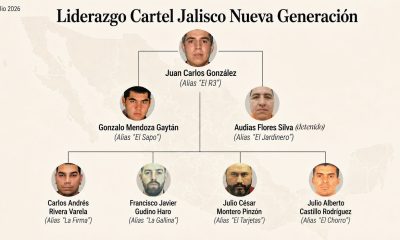
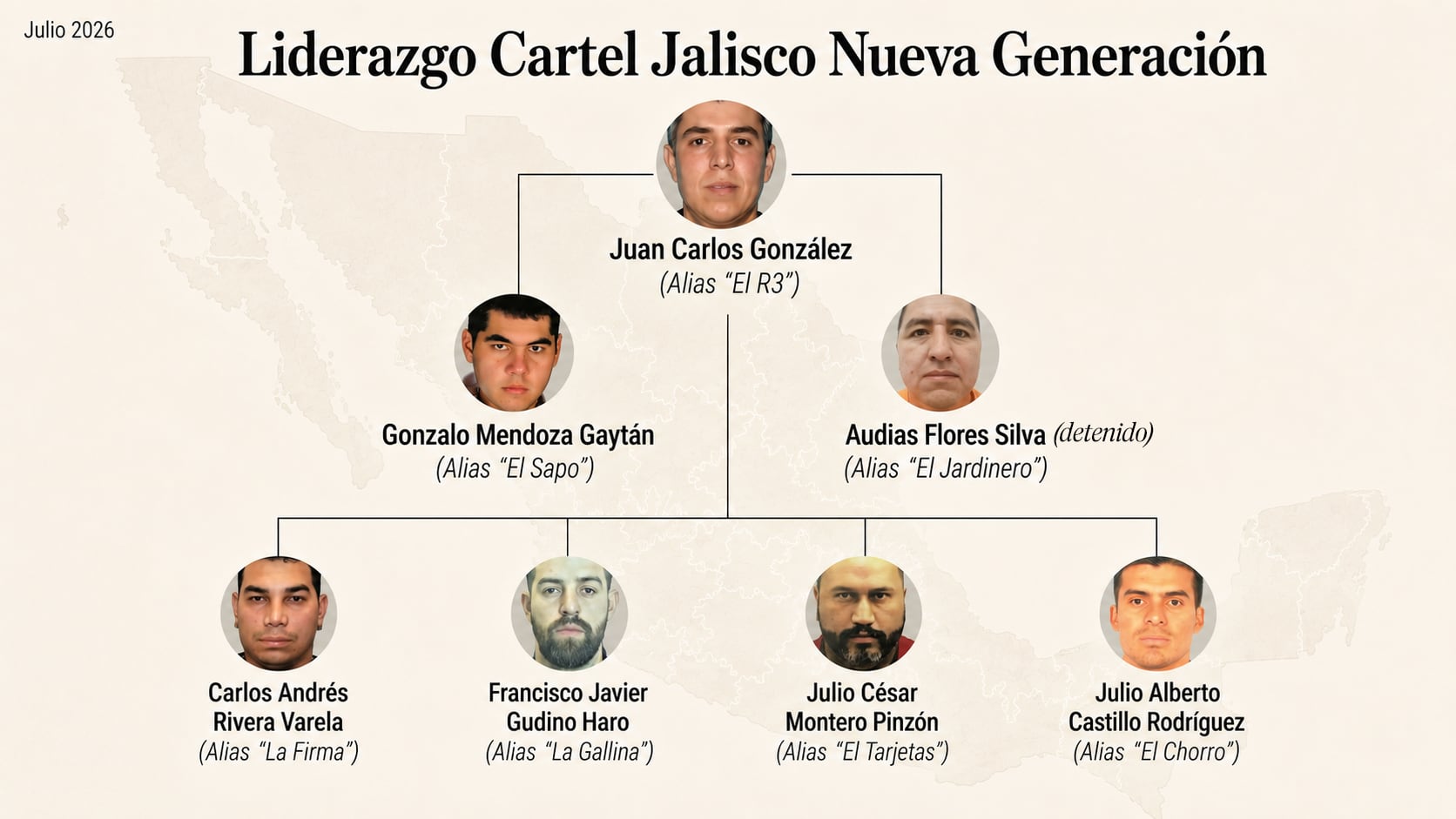
The succession at the helm of the Jalisco New Generation Cartel (CJNG) following the death of Nemesio Oseguera, alias “El Mencho,” appears settled. Leadership of the organization has fallen to Juan Carlos Valencia González, known as “R3,” one of the kingpin’s stepsons. That became clear after sanctions announced Thursday by the U.S. Treasury Department, in coordination with Mexico’s Finance Ministry, against 55 individuals and entities linked to the powerful criminal organization.
Washington has identified the core group of men supporting Valencia in running the cartel. They are longtime CJNG operatives who held strategic positions under El Mencho and have now sworn allegiance to R3. With the exception of one figure who has already been arrested, the group consists of five senior leaders who remain at large and active in Mexico.
Until a few months ago, there was widespread speculation about who would inherit El Mencho’s position, with several names emerging as possible successors alongside Valencia. In the organizational chart released by U.S. authorities, some of those same figures now appear beneath R3. Valencia, also known as “El Pelón,” comes from a family with deep criminal roots. Beyond his relationship to El Mencho, his mother and uncle, Rosalinda González Valencia and Abigael González Valencia, are linked to the Los Cuinis criminal network, which has strong ties to the state of Michoacán. Washington is offering a $5 million reward for information leading to Valencia’s capture.
Gonzalo Mendoza Gaytán, alias “El Sapo,” is the highest-ranking member of Valencia’s new inner circle and effectively serves as his right-hand man. Valencia’s other key lieutenant, Audias Flores Silva, alias “El Jardinero,” was arrested in April. El Sapo, 37, has served as CJNG’s regional boss in Puerto Vallarta, the jewel of Jalisco’s coastline, and has overseen the cartel’s forced recruitment operations in the state. Jalisco prosecutors have identified him as being responsible for the Izaguirre ranch in Teuchitlán, the notorious training camp where the CJNG allegedly trained and tortured recruits, many of whom were forcibly enlisted.
El Sapo has a reputation for extreme violence. He has been linked to the disappearance of five young men in Lagos de Moreno in 2023, a case that shocked Mexico after a video surfaced showing CJNG gunmen forcing the victims to kill one another. He has also been connected to the 2020 assassination of former Jalisco governor Aristóteles Sandoval and is accused of orchestrating a 2015 ambush on state police officers that left 15 officers dead.
The organizational chart also includes Francisco Javier Gudiño Haro, alias “La Gallina,” 38, who was likewise identified by Jalisco prosecutors as one of those responsible for the Izaguirre ranch alongside El Sapo. U.S. authorities also identified Gudiño Haro and Carlos Andrés Rivera Varela, alias “La Firma” — another member of Valencia’s inner circle — as leaders of “a CJNG repression group based in Puerto Vallarta that orchestrates the assassinations of rivals and politicians with high-caliber weapons.”
According to the Trump administration, both La Gallina and La Firma had long answered to orders from El Sapo. Rivera Varela, 40, a Colombian national, was also involved in the murder of former Jalisco governor Aristóteles Sandoval.
An investigation by The Washington Post, drawing on findings from Mexican prosecutors, identified La Firma as the alleged mastermind behind the 2020 assassination attempt on Omar García Harfuch, then Mexico City’s security chief and now the country’s federal security minister. The newspaper also described him as the architect of the CJNG’s territorial expansion. U.S. authorities also accuse him of laundering money to finance the cartel’s illicit activities.
The Washington Post reported that while La Firma planned the attack on García Harfuch, the man who oversaw its execution on the ground, in broad daylight in the heart of Mexico City, was Julio César Montero Pinzón, known as “El Tarjetas.” The gunman, who that day commanded a heavily armed team of hitmen, played another pivotal role within the CJNG: generating revenue for the organization. Washington has accused El Tarjetas of obtaining $350 million through a timeshare fraud scheme that defrauded roughly 6,000 U.S. citizens between 2019 and 2024.
The third member of the Valencia clan is Julio Alberto Castillo Rodríguez, alias “El Chorro,” whom U.S. authorities identify as El Mencho’s son-in-law. According to Washington, El Chorro controls the port of Manzanillo, in the western state of Colima, from where he “has facilitated the procurement of precursor chemicals used for the manufacture of fentanyl and other illicit drugs trafficked into the United States.”
As early as July 2025, the U.S. government had described El Chorro as a “potential successor to Oseguera,” a prospect that now appears, at least for the time being, to have been set aside. Mexican authorities arrested him twice, in 2015 and 2016, but judges ordered his release on both occasions, allowing him to continue his criminal career a decade later.
The Trump administration designated the Jalisco New Generation Cartel (CJNG), along with several other Mexican criminal groups, as a Foreign Terrorist Organization in February 2025. The move was part of a new approach to combating drug trafficking, one that places cartels in the same category as threats such as ISIS and other Islamist militant groups.
“President Trump has made clear that terrorist cartels will be dismantled,” Treasury Secretary Scott Bessent said in a statement on Thursday. “Today’s action strikes Jalisco New Generation Cartel’s leadership, financiers, and criminal networks, denying the cartel the resources it uses to traffic fentanyl, terrorize communities, and threaten American lives.”
In the often fraught relationship between Washington and Mexico City, Mexican President Claudia Sheinbaum has in recent months chosen to cooperate with U.S. authorities on security matters. On Thursday, the two governments were also engaged in trade talks aimed at defining a new framework for their bilateral relationship, with the future of the USMCA trade pact increasingly uncertain amid Trump’s continued attacks on the agreement.
Sign up for our weekly newsletter to get more English-language news coverage from EL PAÍS USA Edition
Claudia Sheinbaum
US And Mexico Kick Off USMCA’s First Annual Review
Published
4 days agoon
July 21, 2026
Mexico and the United States are preparing for a new trade showdown. President Claudia Sheinbaum’s government will receive a delegation from the Trump administration this week to begin the first annual review of the USMCA, after Washington declined to renew the North American trade pact for another 16 years.
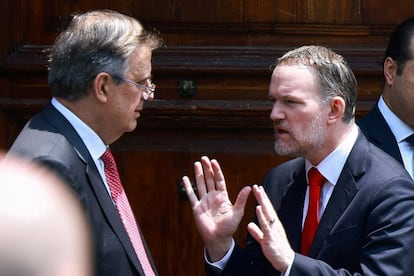
Work sessions with technical teams from both countries will begin on Tuesday, and a meeting at the National Palace between President Claudia Sheinbaum and the United States Trade Representative (USTR), Jamieson Greer, is scheduled for Wednesday. According to the U.S., discussions will cover economic security as well as labor issues, electronic payment services and trade in automobiles, steel, aluminum and agricultural products.
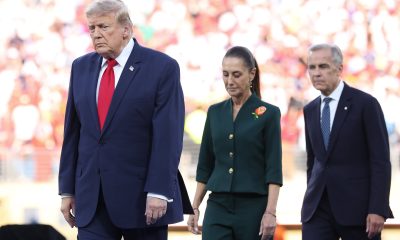
Given the importance of the USMCA, Sheinbaum accepted Trump’s invitation to attend the World Cup closing ceremony in New York last Sunday. After her brief trip, the Mexican president said the meeting was short but that she had the opportunity to speak with both the U.S. president and Canadian Prime Minister Mark Carney about the trade issue. “Our goal is that in this first year of review we can reach agreements so that in subsequent years it will just be a checklist, so to speak, a verification that what we agreed to this year is being complied with, and not a review every year that helps neither the United States, nor Canada, nor Mexico,” the president said at her regular morning press conference.
The meeting marks the start of a new phase in commercial integration between Mexico and the U.S. With a shared border of 1,954 miles, both countries recognize their economic interdependence; however, while Sheinbaum’s government sought to keep the current framework in place, Trump has aimed to change the rules of the game since his first day in the White House. This third round of negotiations in Mexico City aims to be a decisive step to clear up uncertainties about North America’s trade future, which has effectively shifted from a trilateral negotiating framework to bilateral talks.
Last week at an economic forum, Greer sounded optimistic about progress in talks with Mexican authorities. The U.S. official focused his concern on the United States’ trade deficit with Mexico. “Having a structural trade deficit like the one we have had for so long makes no economic sense and that is why, even with Mexico, we need to ensure that the trade deficit is under control,” he said. Greer said the order from the White House is to find, in any agreement reached with Mexico—whether through tariffs or quotas—a way to control the trade imbalance. The mission is not expected to be easy. In the first five months of the year alone, the United States’ trade deficit with its southern neighbor exceeded $81 billion, a 2.7% increase compared with the imbalance recorded in the same period of 2025.
In this new roadmap, the United States has set the pace for its North American partners. Hours after Trump welcomed his neighbors and trading partners to the VIP box at the World Cup, the US announced it will impose 50% tariffs on most Canadian products, alleging that Canada has discriminated against American cars, alcoholic beverages and dairy products. The tariffs, which take effect in 30 days, will exclude energy products, potash, fish and critical minerals, but will hit products that were previously exempt from tariffs under the USMCA.
In Mexico’s case, the debate has focused on Washington’s requests to raise the U.S. content of cars assembled in the region, as well as other labor and critical‑minerals rules. Although President Sheinbaum and her economic cabinet have insisted that relations with the U.S. remain in good shape and that there is no uncertainty, Mexican business leaders remain on edge about the direction of these talks in the face of a U.S. president who threatens to undermine the USMCA and exerts pressure through his tariff wall. Despite the treaty’s existence, Mexico pays tariffs to Washington under section 232 on its exports of steel, aluminum, copper, automobiles and other goods.
Ignacio Martínez Cortés, coordinator of the Laboratory for Analysis in Trade, Economics and Business at UNAM, says this meeting is a turning point because it marks the start of the USMCA’s first annual review and, at the same time, begins the countdown for the agreement’s future; if the partners fail to reach consensus, the pact will end in 2036. “Mexico will try to preserve preferential access and, if possible, secure a tariff preference—not necessarily 100%, but a significant percentage,” he predicts.
For the Latin American country, the trade agreement has been the cornerstone for supporting U.S. investment on its soil and the flow of exports that, despite Trump’s current protectionist measures, continues to break records month after month. Mexico is the United States’ top trading partner with nearly $900 billion in annual trade. More than 80% of Mexican exports end up in the U.S. market, which is why the uncertain outlook for the agreement complicates Mexico’s economic activity amid a slowdown, already weighed down by sectoral tariffs imposed by Trump on key products such as cars, steel, minerals and tomatoes.
Thirty years after North America’s economic integration, Mexico, Canada and the United States now face an unprecedented process that stretches the seams of the USMCA. Faced with a blunt and unpredictable negotiator in Trump, Mexico will have to negotiate uphill to keep afloat and even extend trade advantages while trying to contain uncertainty among businesses and investors. This new phase of the treaty will be a test for Sheinbaum’s government on the economic, political and diplomatic fronts—an intense exam that promises to be long, winding and surgical.
Sign up for our weekly newsletter to get more English-language news coverage from EL PAÍS USA Edition
Heartbreak Turns To Disbelief As Abandoned Dog Case Takes Shocking Twist
Keyboard Anger Could Lead To A €600 Fine After Facebook Insult To Police
El Incendio De La Vall D’Uixó (Castellón), Originado En Varios Focos, Obliga A Evacuar Unos 8.000 Habitantes De Ocho Municipios
Stylish 3-Bedroom Apartment With Panoramic Sea Views – Benalmádena
Axarquia wildfire cause emergency response across Archez, Competa and Canillas de Albaida
Spain is about to get a rare six planet show and most people won’t even know it’s happening
Tags
Trending
-
New Developments2 weeks agoStylish 3-Bedroom Apartment With Panoramic Sea Views – Benalmádena
-
andulacia wildfires1 week ago
Axarquia wildfire cause emergency response across Archez, Competa and Canillas de Albaida
-
News from Spain2 weeks ago
Spain is about to get a rare six planet show and most people won’t even know it’s happening
-

Amazon1 week agoEl Escurreplatos De Dos Niveles Que Libera Espacio En La Cocina Está Rebajado Más De Un 50%
-
Bet2 weeks ago
Norway lost the match, but won the internet with airline Instagram bet
-
Air passenger rights2 weeks ago
Booked your flight through an online travel agency? New EU rules could make refunds much easier
-
House prices1 week ago
Buyers are pushing back against high house prices in Spain
-

%2 weeks agoWatch The Bizarre ‘Joker’ Stunt That Disrupted Pamplona’s Bull Run