Connect with us

Caracas

E

Published

on

Bogotá

‘Have You Been To Caracas Yet?’: The Question Investors Are Asking About Venezuela

Published

on

By

‘have-you-been-to-caracas-yet?’:-the-question-investors-are-asking-about-venezuela

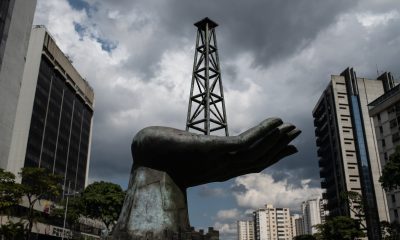
At an elite club in northern Bogotá, some fifty Colombian investors listened last Tuesday to a statement that sums up Venezuela’s current economic situation better than any report. It was uttered by Ángel Cárdenas, infrastructure manager at CAF, the Development Bank of Latin America and the Caribbean: “Among investors in the region, the debate is no longer whether the country represents an opportunity or a risk. The question is whether or not you’ve already been to Caracas.” After years of freefall, the country with the world’s largest oil reserves has returned to the global radar.

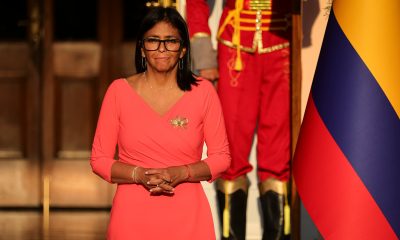
Venezuela, which lost up to 70% of its GDP under Chavismo, is undergoing a phase of economic liberalization directed from Washington and implemented in Caracas by interim president Delcy Rodríguez. Oil is the driving engine, but the train it pulls is long: from energy to tourism, including logistics, finance, and agro-ports. Six general operating licenses are active, along with dozens of individual ones, and foreign entrepreneurs are filling Caracas hotels. Doubts remain—these are partial flexibilizations, not full elimination of sanctions, and any political shift could reintroduce uncertainty—but most observers are optimistic. Or even very optimistic.

“In the worst-case scenario, we will double the profits from our oil production,” the Venezuelan economist Luis Vicente León announced to investors at the club. If you add the end of the 30-40% discount that Caracas applied to China and the bonus resulting from the conflict with Iran, revenue could almost triple. Production currently hovers around one million barrels per day, and the government projects reaching 1.3 million by the end of 2026. Oil already finances more than half of the state budget, and February’s exports—788,000 barrels—doubled those of January.

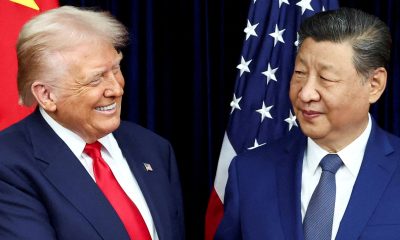
Things had begun to shift before January 3, when the Americans abruptly removed Nicolás Maduro from power. Faced with an unprecedented military deployment in the Caribbean, the Chavista leader had spent weeks negotiating with the White House an economic opening and a package of reforms to facilitate the entry of foreign capital. He had accepted the roadmap, except for one item: the demand that he had to leave. Faced with Maduro’s refusal to do so, Trump sent dozens of planes to capture him and handed the reins of power to the then Vice President, Delcy Rodríguez, a skilled and technically adept economist. The same person who for years designed the financial architecture to evade sanctions is now in charge of lifting them. “Delcy Rodríguez is doing a great job working with us,” Trump declared in March.

“Venezuela’s greatest opportunities aren’t in oil,” León noted. “They’re in everything needed to produce oil.” It’s not just equipment, technology, and specialized services: it’s the thousands of workers who will demand housing, food, transportation, and healthcare; the agro-port supply chains, logistics, financial services, and the reactivation of the hotel industry. And tourism—Margarita Island is back in the plans—supported by a little-known fact: today, it’s safer to walk around Caracas than in most other Latin American capitals.

At another event, this time in Caracas, also on Monday, Juan Carlos Andrade, president of the consulting firm Araya Energy Group, addressed an audience of about a thousand people. “We’re no longer talking about expectations; there’s tangible results,” he said to the new U.S. Chargé d’Affaires, John Barrett. “In the last three months, we’ve signed 13 contracts with companies from Europe, Asia, and the United States. It’s a unique opportunity. And perfection shouldn’t be the enemy of good.”

Oil production cycles, however, are longer than the enthusiasm suggests. Smaller companies have the flexibility to generate quick returns, but large ones need years of exploration, investment committees, and internal capital reallocation before committing billions of dollars. Furthermore, the oil reform of January won’t fully adapt all contracts to the new framework until July. “Maintaining current levels is already a feat. Fields lose between 2% and 20% annually due to natural decline,” warns an industry source who requests anonymity. Chevron has committed to doubling its production “in 18 months, not 18 days,” the source points out.

The new oil cycle that is inevitably beginning in the country has also raised some concerns. Depending—once again—on oil revenues is a risk. “Putting all the levers for economic recovery on the intensive exploitation of oil and minerals will not stimulate diversification or economic development,” warns economist Víctor Álvarez, former Minister of Basic Industries and Mining under Hugo Chávez. “On the contrary, it will deepen the regression toward an extractive model, to the detriment of agriculture, industry, and other productive sectors. And we will continue importing what we should be producing.”

Meanwhile Chavismo, along with opposition leader María Corina Machado, are promoting the country’s extractive potential in international forums. Venezuela also faces enormous bottlenecks: an electrical system operating at only 30% of its capacity, an external debt of over $180 billion awaiting restructuring, and a diaspora of some eight million people that has swept away the managerial class, engineers, and professionals.

While investors are organizing trips to Caracas to explore opportunities, in the south of the country, criminal groups are extracting gold anarchically and illegally in the Orinoco Mining Arc, a vast expanse where no one knows for sure what is being produced or who is exploiting it. This is the worst image of the second major front open in Venezuela: the minerals front. Because the focus on natural resources isn’t just on crude oil. The government has also opened up gas, gold, tantalum, and rare earth elements. In March, U.S. Interior Secretary Doug Burgum landed in the capital accompanied by 20 mining executives, and the Dragón platform—the large gas field that Venezuela will exploit jointly with Trinidad—is back in the spotlight. With these strategic minerals at stake, a U.S. withdrawal is less likely.

But turning the rare earth elements that Trump so desperately wants into a real business will require time and investment. “There are people watching, there are always opportunists,” says Luis Rojas, president of the Venezuelan Mining Chamber, a sector that floundered after the 2012 nationalizations. “The world’s major mining companies still view this from afar. It’s a sector that traditionally exercises caution because all investments are long-term.” The industry supports the new mining law as an important step, but warns that “governance” remains the biggest obstacle. “If someone wants to go to southern Venezuela, it won’t be easy. Transparency is essential,” he insists.

Chavismo is seeking economic recovery to regain lost popularity, while the opposition insists there will be no real recovery without democracy and clear rules. The question circulating in Caracas is: what should come first, money or elections? León settled the matter unequivocally in Bogotá by separating the economic and political perspectives: “No one who wants to invest is asking when a democratic regime will return to Venezuela. There is no relationship between democracy and oil. You can’t go and produce oil in Bern, Switzerland. It’s beautiful, democratic, stable, but there’s no oil. You have to produce it where it is,” he said to laughter from the audience. The source in the sector who requested anonymity added: “Investors do ask about the elections, about Trump, or about the opposition’s position on signed contracts. But they incorporate these as a risk factor, not as a prerequisite.”

Sign up for our weekly newsletter to get more English-language news coverage from EL PAÍS USA Edition

Continue Reading

America

Los Gremios Retan A Delcy Rodríguez Y Se Concentran Para Exigir Mejoras Económicas En Venezuela

Published

on

los-gremios-retan-a-delcy-rodriguez-y-se-concentran-para-exigir-mejoras-economicas-en-venezuela

El anuncio de la presidenta de Venezuela, Delcy Rodríguez, de que ampliará el salario mínimo por primera vez en una década a partir del 1 de mayo, entre otras medidas, no ha aplacado el malestar de los gremios del país que han convocado para este miércoles una serie de protestas y que ha llevado al chavismo a contraprogramarlas con una movilización que no estaba prevista.

“Los factores políticos estamos apoyando a los trabajadores. Exigimos un salario digno, la libertad de los presos políticos y elecciones”, comentó María Escalona, dirigente del partido Alianza Bravo Pueblo, parte de la coalición que respalda a la líder opositora María Corina Machado. Un hueso de res pelado es el símbolo común de las protestas. Para comprar esa pieza, un trabajador necesita tres salarios mínimos de 130 bolívares, que se mantiene en el mismo monto desde hace cuatro años.

Las promesas de mejora de la mandataria han sido interpretadas como un intento de poner paños calientes a una crisis más grande y aun reclamo que no es solo laboral. “Nosotros no queremos a los Rodríguez”, comentó José Oropeza, un jubilado de 70 años. “Y llegaremos a Miraflores”, agregó mientras esperaba para arrancar la caminata.

DIRECTO | Trabajadores de VENEZUELA protestan por AUMENTOS SALARIALES | EL PAÍS

Un manifestante durante la protesta de este jueves.

A menos de 500 metros, el chavismo organizó una concentración para celebrar 20 años de la aprobación de la Ley de Consejos Comunales. A primera hora de la mañana estaba visiblemente más llena que la de los opositores, con empleados públicos y militantes del PSUV movilizados en autobuses desde el interior del país. Por años, cada vez que la oposición ha anunciado una movilización, Diosdado Cabello, como jefe del partido de Gobierno, ha convocado una contramarcha. Esta también tiene como destino ir a Miraflores, donde ya se ha instalado una tarima para recibirlos y que por décadas ha estado vetado a las protestas opositoras.

La manifestación se ha mantenido pese a los anuncios de la noche anterior por parte de la presidenta. Delcy Rodríguez aseguró que habrá un incremento del salario mínimo a partir del 1 de mayo que no concretó, pero lo calificó de “responsable”. Rodríguez intenta rebajar un malestar creciente ante las expectativas de mejoras económicas que trajo la intervención estadounidense después del pasado 3 de enero y que no se han visto reflejadas en los bolsillos de los ciudadanos.

Rodríguez reconoció por primera vez la responsabilidad del Gobierno en la debacle de la hiperinflación y el desabastecimiento del país —vocablos que el alto gobierno chavista evita—, e incluso la emigración que ha sacado del país a cerca de ocho millones de venezolanos, la cual calificó de “inducida”. También reconoció las debilidades. Para Rodríguez, el comentado desplome venezolano de estos años es responsabilidad del “bloqueo económico”. La mandataria encargada reconoció —acaso, también, por primera vez en 12 años— “la política equivocada en materia de aumentos salariales”, que produjo enormes distorsiones monetarias y fiscales.

Continue Reading

Trending

Copyright © 2017 Spanish Property & News