Connect with us

%

Italian Shepherd Disputes Grazing And Dogs

Published

on

italian-shepherd-disputes-grazing-and-dogs

A multi-year feud over ruined gardens, biting sheepdogs, and unpaid fines in the Italian Alps has culminated in a legal standoff that brings attention to the tricky balance between traditional pastoral life and modern community boundaries. it started off as a local dispute in Val di Zoldo, but has now escalated into a regional logistical task: ensuring a shepherd, his dogs, and a 400-strong flock clear out of the area without just passing baton of the problem along to the next valley.

Shepherd banned from Val di Zoldo for four years

Luciano Varago, 66, has been ordered by Belluno police headquarters to leave Val di Zoldo, in the northern Italian province of Belluno, and is reportedly barred from returning to the area for four years.

Varago, originally from Farra di Soligo, has travelled with his flock through forests and mountain pastures across the Belluno area for years. Local reports say his presence in Val di Goima has caused repeated friction with residents for more than two years, ranging from unauthorised grazing on private land to sheep entering residential gardens and causing damage.

Residents have also reported incidents involving Varago’s sheepdogs, including allegations that dogs had bitten people. Local authorities previously ordered the seizure of ten dogs considered dangerous, but officers were able to seize only one because the other nine were moved before police arrived.

Hundreds of sheep now have to move

Mayor De Pellegrin has given Varago until Sunday to move his flock, granting him temporary permission to return with the dogs needed to manage the transfer.

Local station Radio Piu has said that Varago expects to reach the Duran area by Sunday evening. His flock—numbering around 400 sheep, goats, and lambs—normally travels towards Valbelluna for the winter anyway, particularly around Sedico and Sospirolo.

Authorities are taking the move seriously, it has brought together mayors, police, health officials, and veterinary services to coordinate the flock’s trek towards Valbelluna. Concerns centre not only on managing such a large herd along public routes, but also on keeping track of the shepherd’s dogs and preventing similar disputes from developing elsewhere.

Italian mountain communities face an unusual dilemma

Varago’s case has drawn attention to an awkward legal limitation for local authorities: issuing fines or banning grazing does not automatically give a local council the authority to remove a shepherd or his livestock.

De Pellegrin stated that numerous penalties had already been issued to Varago, but claimed they remained unpaid, and health authorities found insufficient grounds to classify the situation as animal mistreatment.

For residents of Val di Zoldo, the four-year exclusion order could finally bring relief after years of complaints. Neighbouring communities, however, may now be watching the flock’s journey with considerably more interest than usual.

%

Locals Alert Speed Traps Increasing In Alhaurin De La Torre

Published

on

locals-alert-speed-traps-increasing-in-alhaurin-de-la-torre

Drivers in Alhaurin de la Torre are being warned of a new fixed speed camera roughly 200 metres from the Rotonda del Encuentro, in the direction of the prison.

The alert comes from the local social-media account Fuengirolasequeja, which says that the warning sign is already up on the roundabout itself. The Rotonda del Encuentro, on Avenida Ciudad de Ceuta, is the junction most people know as the one next to the Shell service station.

The appearance of the camera has prompted discussion about who installed it. Several recent fixed units in the area, including the one on the A-404 between Alhaurin el Grande and Coin near Miralmonte, and others on the A-7 near Puerto Banus, share a similar design and have been linked to the DGT’s wider programme of new cinemómetros on secondary roads. The Rotonda del Encuentro lies on the A-404, a regional road that already appears on DGT mobile-radar maps.

Alhaurin de la Torre’s own council has installed a number of municipal cameras in recent years (on Avenida de las Americas, Europa, Democracia, Ceuta and elsewhere), typically TRUCAM systems operated by the Policia Local. The newly reported unit has not been confirmed by either the Ayuntamiento or the DGT.

Social-media reaction has been hugely sceptical. Commenters have accused the authorities of prioritising revenue, joked about the copper content of the equipment (as a light-hearted hint to thieves), and argued that money would be better spent repairing roads and adding cycle lanes. Others simply listed copious amounts of other speed cameras already operating nearby (near the Mercadona roundabout, past the technology park towards Malaga and Cartama, etc.). A smaller number of responses defended enforcement, saying careful drivers have nothing to fear.

No official statement has yet confirmed the exact location, operator or activation date. Drivers using the Rotonda del Encuentro and the road towards the prison are advised to watch for the warning sign and observe the posted limit.

Continue Reading

%

Ryanair Ibiza Flight Fight Sparks Chaos

Published

on

ryanair-ibiza-flight-fight-sparks-chaos

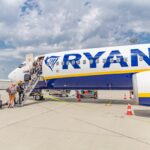
Ryanair flight to Ibiza disrupted by a passenger fight before landing. Credit : icemanphotos, Shutterstock

A Ryanair flight from London Stansted to Ibiza descended into chaos when a dispute over a passenger using the toilet escalated into a physical fight shortly before landing. Cabin crew were forced to intervene as passengers clashed in the aisle, with Spanish police called to meet the aircraft on arrival.

The incident took place on October 5, but footage of the confrontation attracted widespread attention after emerging online on October 15. The video shows chaotic scenes inside the cabin, with passengers standing in the aisle as crew members attempt to restore order.

The disturbance reportedly delayed the aircraft’s arrival at Ibiza Airport. Ryanair has confirmed that police assistance was requested and that a disruptive passenger was removed after landing.

Fight breaks out on Ryanair flight approaching Ibiza

The confrontation began during the final stages of a Ryanair flight from London Stansted to Ibiza, as the aircraft was preparing to land on the Spanish island.

According to Need To Know, the dispute started when a passenger got up to use the toilet while the seatbelt sign was illuminated.

Other passengers reportedly challenged the man over his decision to leave his seat during the descent. What began as a verbal disagreement quickly escalated into a physical confrontation involving several people.

The situation became increasingly tense as passengers exchanged blows and others attempted to separate those involved.

Video footage recorded inside the aircraft shows passengers confronting one another in the aisle, while cabin crew repeatedly instruct them to return to their seats.

At one point, a female crew member can be heard ordering a passenger to sit down as she attempts to bring the disturbance under control.

The confrontation unfolded at a particularly sensitive stage of the flight, when passengers are normally required to remain seated with their seatbelts fastened in preparation for landing.

The incident disrupted what should have been a routine arrival at one of Spain’s busiest holiday destinations.

Chaotic scenes reportedly delay landing at Ibiza Airport

The disturbance continued as the aircraft approached Ibiza, creating further difficulties for the crew during the final stages of the journey.

According to an eyewitness account published by Need To Know, the confrontation was serious enough to delay the landing, with the aircraft reportedly remaining airborne longer than originally planned.

Passengers were left waiting as efforts continued to restore order inside the cabin. The footage captures the tense atmosphere, showing several travellers standing or turning towards the confrontation while others remain seated.

Cabin crew can be seen and heard attempting to calm those involved and prevent the situation from escalating further.

Ryanair has not confirmed the length of any delay or provided details of changes to the aircraft’s landing approach. The airline has, however, acknowledged that a disruptive passenger was involved and that police were requested to attend the aircraft on arrival.

Spanish police called to meet Ryanair aircraft after fight

The confrontation ended with police intervention when the aircraft reached Ibiza Airport. Ryanair confirmed that its crew had contacted the authorities to request assistance following the disruptive behaviour on board.

Officers met the aircraft after landing and the passenger involved was removed. The man was handcuffed and arrested by police. However, Ryanair’s statement confirmed only that the passenger was removed, and no official details of possible charges or subsequent legal proceedings have been established.

The airline reiterated its zero-tolerance policy towards disruptive behaviour, stressing that incidents of this nature can affect the safety and comfort of passengers and crew.

The confrontation comes amid continuing concerns within the aviation industry about unruly passenger behaviour, particularly on busy leisure routes.

Ryanair has previously taken legal action against passengers responsible for serious disturbances.

In an unrelated incident on the London Stansted to Ibiza route in May 2025, a Ryanair aircraft carrying 184 passengers was diverted to Toulouse following disruptive behaviour by two travellers.

The airline announced in May 2026 that the two passengers had subsequently been convicted by a French court, receiving suspended prison sentences and financial penalties.

In the latest incident, the aircraft reached Ibiza and police removed the disruptive passenger. No further official information has been released confirming whether criminal charges were brought following the October 5 confrontation.

Continue Reading

%

Dublin Airport Ruling: Spain Flights At Risk?

Published

on

dublin-airport-ruling:-spain-flights-at-risk?

EU court ruling raises uncertainty over future flights from Dublin Airport. Credit : Tupungato, Shutterstock

Irish holidaymakers and home-owners heading to Spain could face uncertainty over their future flight options after a major European ruling on Thursday, 15 October. The ruling could reduce the take-off and landing slots that airlines, such as Ryanair and Aer Lingus, have available, though at present no flight is expected to be cancelled as a result.

The Court of Justice of the European Union has ruled that Dublin airport’s annual limit of 32 million passengers must be taken into account when allocating slots to airlines. It also confirmed that carriers do not have an automatic right to keep their old slots.

This question is being asked by the Irish with a home in Spain, and the people who are going to Spain on holiday or have regular visits to Spain. Will it in any way affect their future travel between Ireland and Spain?

Why the EU court ruling could affect flights from Dublin Airport

It’s a dispute about passenger limits imposed in the planning permission for terminals of Dublin Airport, which was granted in 2007 and 2008, in an effort to regulate how many people could pass through them.

Under these conditions the airport was restricted to handling a maximum of 32 million passengers a year, though the demand for flights continued to grow.

According to the Irish Times, the airport has already exceeded that limit, handling about 36.4 million passengers in 2025.

The Irish Aviation Authority, which allocates the slots, has previously sought to impose seasonal restrictions in order to ensure the airport’s compliance with the planning restrictions.

Nevertheless, these decisions were challenged by the operator of the Dublin airport, the Daa, as well as several airlines, leading Ireland’s High Court to seek clarification from the European court.

In its judgment of 15 October the Court held that legally binding passenger restrictions can be taken into account when determining the operational capacity of an airport.

The ruling also addresses so-called historic slots, which normally give airlines priority to retain take-off and landing times they have regularly used in previous seasons.

However, the court confirmed that this priority is not an absolute right. In exceptional circumstances, airlines could lose previously allocated slots if the airport’s available capacity is insufficient.

This could affect the future routes of the aero-liner, especially in the case of those that intend to maintain existing connections or to establish new ones.

This decision, however, does not imply that the aircraft must be immediately cancelled.

What the decision means for Ryanair, Aer Lingus and travellers to Spain

As for travellers flying between Ireland and Spain, they are mainly concerned that the ruling could mean a restriction of the routes that are available, especially during the busy holiday periods.

Ryanair and Aer Lingus have direct connections between Dublin and Spanish tourist centres, and it is to them that the prospect of increased airport facilities is of the greatest interest.

If the limit of passengers continues to restrict the number of available slots, it may prove difficult for the companies to maintain or extend their schedules.

It might well influence future route-plans, though the Court has not ordered the discontinuance of any service.

Ryanair has strongly criticised the passenger cap.In a statement issued after the verdict, the Irish government was called upon to lift the cap, with the airline arguing that the second runway gives the airport enough infrastructure to handle significantly more passengers.

The company contends that the present regulation is out of date and prevents the full use of the airport’s capacity.

However, there is a very important difference between the verdict and the consequences it might have for travellers.

This decision sets out the criteria that are to be taken into consideration in the allocation of air-slots. It does not specify which routes the companies are to operate, or whether flights to Spain should be reduced.

Those who have already booked flights must not expect their flights to be affected.

Could Ireland remove the passenger cap before flights are affected?

Despite this verdict, the future of the passenger limit in Dublin airport remains uncertain. The Irish government has already taken steps towards changing the restriction.

By legislation dated 2026, the Minister for Transport is empowered to change or cancel the ceiling, subject to the relevant legal and environmental procedures.

Minister of Transport Darragh O’Brien announced his intention to increase the capacity of the airport, which would allow up to 40 million passengers to be handled per annum.

RTE reports that significant reductions in air traffic are not expected as a result of the decision, in part because the government has already established a mechanism to modify the cap.

Irish Times also reports that the ruling will not affect plans to allow up to 28 additional daily take-off and landing slots at Dublin Airport for summer 2027.

However, lifting the restrictions or increasing the passenger limit is not a matter of course. The government must, before the change can be made, go through all the usual formalities and must make the necessary studies.

The underlying case will be sent back to Ireland’s High Court, which will be required to give effect to the interpretation made by the European Court of Justice.

For now, travellers planning journeys between Ireland and Spain can continue booking flights as normal.

The longer-term implications will depend on how quickly the Irish government acts, whether the existing passenger cap remains in place and how future airport capacity is allocated.

Although the ruling raises questions about future airline schedules, no reductions in flights between Dublin and Spain have been confirmed as a direct result of the judgment.

Continue Reading

Trending

Copyright © 2017 Spanish Property & News