
ElPais
Jack Antonoff: ‘I Don’t Give A Shit About Radio Or Sales Or Anything. I’m Only Trying Do Something Great’

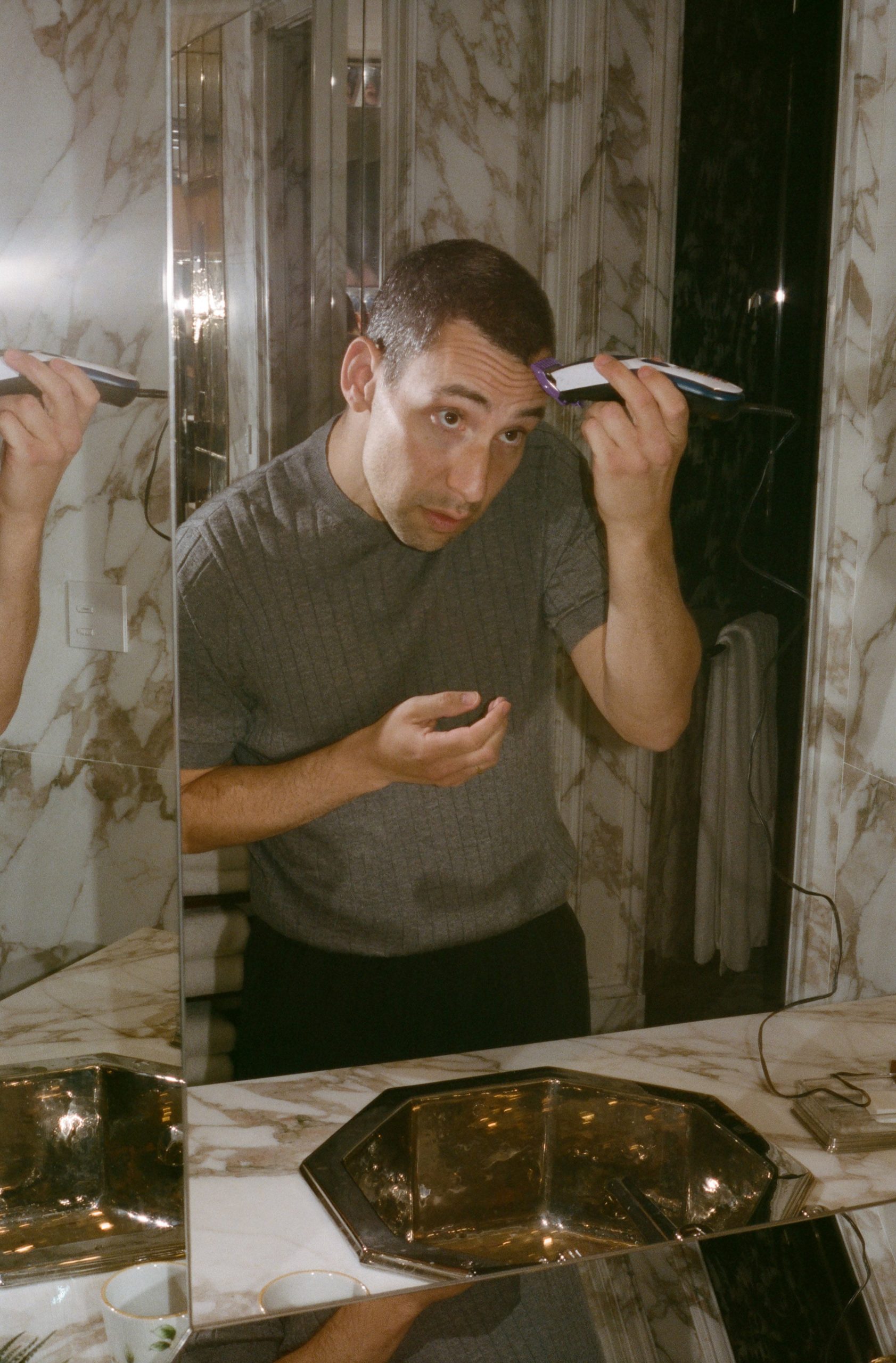
“I don’t give a shit about radio or sales or anything. I’m only trying do something great,” says Jack Antonoff. Despite what it may seem, the tone isn’t aggressive. The New Jersey native is direct and elaborates on his answers, but he’s a nice, polite guy. And the day of the interview, March 31, happened to be his birthday. The busiest man in the music industry was turning 42, and instead of celebrating with his wife, the actress Margaret Qualley, he was at the Rosewood Hotel in London granting this interview to EL PAÍS’ fashion supplement ICON under heart-shaped balloons brought by his team. “Don’t worry, this isn’t a part of the job I dislike,” he replies to apologies for spoiling such a special day.

Slim, wiry, and youthful-looking, he maintains that nerdy indie-boy look he’s always cultivated: glasses he’s constantly taking on and off, a cat-print shirt, jeans… He jokes that he looks like Bad Bunny. “He looks like my cousin or something,” he laughs, pointing to his face. ”Okay, he’s much more attractive than me, but don’t you see?” Since we’re on the subject, did he see his Super Bowl performance? He did, and really enjoyed it. “I think a lot of people have a lot of rage for good reason, but when you see someone who has a lot of joy performing, it’s very subversive nowadays”, he replies.
Good things inspire you. When I see Michael Jordan, I don’t feel like playing basketball, but to get better at what I do
So who is Jack Antonoff? None other than the person who has defined the sound of success in the last decade, especially his work with female artists. He has produced Sabrina Carpenter, Lorde, Lana Del Rey, St. Vincent, Clairo, FKA Twigs, and, above all, Taylor Swift. From her album 1989 (2014) to The Tortured Poets Department (2024), they were inseparable. After that, they each went their separate ways. The New Yorker magazine perfectly described Antonoff’s clientele, writing that “he has worked with not quite every pop star with artistic inclinations or artist with pop aspirations, but not far off.” In 2017, the website Stereogum ran an article with the headline: “In the future, all albums will be produced by Jack Antonoff.” It was a joke, but it had a certain depth: his influence has reached the point where there are artists who sound as if he produced them, even though he didn’t. Some even add him to their credits, just in case. The line between similarity and plagiarism is very thin. If the success of a formula is measured by the quantity and quality of its imitators, the Antonoff touch is the Coca-Cola of pop.
And that has made him the most awarded producer of this decade: Antonoff won the Grammy for Producer of the Year three times in a row (2022, 2023, and 2024), and in 2026, thanks to his work with Kendrick Lamar, he joined the exclusive “Big Four” club, the owners of all four major Grammys. It’s an achievement no other producer had accomplished—earning him a place in the Guinness Book of World Records—and only three artists: Adele, Billie Eilish, and Christopher Cross.

Antonoff began his journey to the Big Four in 2013 as a musician. His band at the time, Fun, won the awards for Best New Artist and Best Song for the hugely popular “We Are Young.” He has won Best Album not once, but three times, for three albums with Taylor Swift. The one award he was missing, Record of the Year, came in 2016 with “Luther” by Kendrick Lamar.
I like working on albums under pressure. For example, Melodrama by Lorde, or GNX by Kendrick Lamar
Today, however, we speak with him as the leader of Bleachers, his band since 2013, which will release its fifth album, the very Springsteen-esque Everyone For Ten Minutes, on May 22. The distance between Jack Antonoff the producer and Jack Antonoff the musician can be measured, albeit approximately: Bleachers is a band that fills Madison Square Garden, whose latest album reached number 5 in the U.K. and number 62 in the U.S., accumulating 6 billion streams. A more than respectable success, but it’s nothing compared to the stratospheric numbers he achieves with the stars he works with. According to conservative estimates, the music Antonoff has produced has sold close to 120 million records, or 90 billion streams.
But he insists that Bleachers is what makes him happiest. “When I play, I don’t think of anything else. All day long I think of so many things, I have so many anxieties and so many transient thoughts. And I think in life if you can find one thing that quiets all the noise, you’re really lucky. And when I play, I don’t think about anything.” His commitment to the band is total. He says he enjoys every second he spends with them. That’s why, he says, he plays every concert as if it were the last night of his life: “When I finish, everything hurts… Because I give it my all. I have scars on me from times I fucked myself up on stage. I don’t know any other way to do it, and that’s just how it’s gonna be.”
Beneath that demeanor lies a tireless worker. “One time when I was like nine years old, my family went on vacation to Florida, and I went to the gift shop and I just started helping out there, and I basically spent the whole vacation working at the gift shop. That’s just how I am,” he laughs. He started playing music at 15 in the New Jersey indie scene and spent many years struggling financially. Until the age of 27 he lived in the basement of his parents’ house, a well-to-do couple who, he says, always supported him. “When I was first starting out, they were sort of like, ‘try it for a year.’ But then when I was 18, my sister got sick and died. Then they didn’t give a shit about anything besides whatever made me happy. So that was an example of how sometimes the most real, terrible things in life lead people to really not give a shit about the small stuff.”

“The whole ancestral part of my life is to survive, to have a job and provide. My grandparents and great-grandparents, all of them, they were all European. They were all Polish and Russian, and their whole lives were about survival. That’s why they came to America, for survival. And then my parents’ generation was still very much about survival, getting a job, going to college to survive… And then I come along and I’m this generation where I just sort of severed the whole tie… I got in a van when I was 15. I stopped working hard at school. I didn’t go to college… and it was very powerful to me,“ he recalls. ”When I started, the job bubble hadn’t yet burst, and the approach was still to get a degree to get a good job and a nice house. I just remember thinking, this is bizarre. I’m not just leaving my home, I’m leaving this lineage…And it weighed heavily on me.”
When you have people’s attention, you can do whatever you want with it; you can talk to them, you can surprise them
You have to be really sure of yourself to make it in the music industry without a penny until you’re 27. Many quit before then. I earned some money for the first time when I was 26 or something, that was the first time that I made like a little bit of money touring. I remember at the end of that year I made a small salary, and I remember being so proud. It’s partially sweet and partially fucked up that American artists think that they don’t have the right to exist… me and my friends, the way we did it, sleeping on floors, playing to play, making no money, losing money. It wasn’t sad times, it was very powerful.
Aren’t you romanticizing precarity? when I was 15, I was in the van, I was the coolest. When I was 18, I was a loser because all my friends were going to college. When I was 21, I was the coolest because all my friends were fucking rotting in college. When I was 24, I was a loser because all my friends were moving out and having jobs, right? When I was 26, I was kind of cool again because all my friends realized that they hated their jobs and I was still in the van. But it— I’ve noticed that though, it’s like in different moments in life you’re kind of a loser or a hero based on your choices, and you can’t care, you know what I mean? I didn’t like it when I would come home from a tour and everyone in the neighborhood would be like, do you think you’ll ever make it? Yeah, it didn’t feel good, but it didn’t change me.
At 15, I got into a van, I didn’t go to college, I broke with all those things that were taken for granted. And it weighed heavily on me
But the current obsession is reaching the largest possible audience, filling stadiums, counting streams in the millions… It’s important that musicians can make a living, but we’ve reached a point where art has been so monetized that it’s become full of opportunists. When I see my favorite musicians play, they do it because it’s what they love. The musicians in my own band were struggling just two years ago, playing at weddings to make ends meet and record their albums. They lived like that because they love playing. Monetization complicates everything. How crazy is it that we live in a world where a lot of fan communities now talk about streams and who sells out what… And I just think we’re living in this transitional time where it shouldn’t be shocking to see someone who just loves playing music, but it fucking is.
How do you distinguish a true artist from an opportunist? Good things inspire you. You don’t want to imitate them, but rather improve what you do. When I watch Michael Jordan play basketball, I don’t want to play basketball, I want to be more great at what I do.

The history of popular music can be read, in part, as the story of the producers who captured the sound of their time. Take, for example, some of Antonoff’s favorites. George Martin, with the Beatles, built the language of the modern album. Brian Eno redefined what could be done in a studio with David Bowie, Talking Heads and U2. Jeff Lynne, with Electric Light Orchestra, created a sound so recognizable that it became the definitive reference point for the soundscape of the 1980s. Jack Antonoff is the heir to that tradition, that of the visionary producer. The idea is to take the essence of an artist and make it bigger, cleaner. He has absorbed the key elements of the American sound that has dominated radio stations since the 1980s and is able to adapt it to each of his clients. That’s why his influence is found on albums as diverse as Lorde’s Melodrama, Lana Del Rey’s Norman Fucking Rockwell!, and Kendrick Lamar’s GNX. But when his work is discussed, it’s emphasized that he doesn’t impose, he listens. Critic Rob Sheffield summed it up with a phrase that has resonated: while most top-tier super-producers are “pop scientists,” Antonoff is “a humanist.”
I met Lana Del Rey at a diner, we walked around the city and then she came over to my house and we made three songs, some of my favorite songs ever
How did you go from musician to producer? I always did both, it’s just that at first I didn’t know one of them was called “producing.” Singing and playing in a band and performing is one love. Touring is a different love. Recording music and being in the studio is a whole other love. They’re very different things, and I just always really enjoyed all of them. When I was young, we’d travel from place to place on tour, and then I’d record what we did. I also liked recording my friends. It came naturally to me to have ideas and want to develop them. At 15, I didn’t say “I’m a producer,” but deep down it’s not so different from my work now. I do the same things: help my friends, compose my own music, and play live.
How do you choose who you work with? There’s this idea of what the music industry is like, which is “get me Jack.” It’s not really like that. All the stuff I’ve ever done, there’s always a funny story behind it. I was downstairs at Electric Lady [studio in New York], Kendrick was upstairs, and my friend Soundwave was his producer. He said, come on up, let’s fuck around. I came up, started playing around and chatting, didn’t leave for three years… I met Lana Del Rey, we went to a diner, had coffee, and then walked around the city, and then she came over and we made three songs that day, some of my favorite songs ever. It’s very rare that I get a call and then someone calls me. If that does happen, then it’s usually like, oh fun, let’s meet for coffee… but it’s pretty quick that you understand if you can make something with someone, if you have that special thing, and it’s very strange how much it has nothing to do with how much you love their work. That’s why, when people ask me who I’d like to collaborate with, I don’t know what to say. With many of my favorite artists, I wouldn’t even know where to begin. You have to really get to know the person. I have a lot of respect for this, and I know I can’t work with just anyone. It’s like being in love. It works or it doesn’t. It’s like you can’t fake it.
Rosalía is brilliant and she’s also a friend of mine; I love her very much. I see her from time to time and she’s a wonderful person
Sometimes it seems like they seek me out for albums that, in principle, arrive at crucial moments for an artist: after a huge success or after a long hiatus. I like working on albums under high pressure. For example, Lorde’s Melodrama. There was tremendous pressure. Kendrick Lamar’s GNX was also crazy high pressure. With The Chicks it was the same, because they hadn’t released anything for ages. But I love that. When you have people’s attention, you can do whatever you want with it, you can talk to them, you can surprise them. And on top of that, I think it’s when you can take the most risks, when you have the most room to try something that nobody expects.
In a text about Bleachers that your team sent, it reads: “I have room for my wife, my family, my band, and my audience. If you’re not part of those groups, you’re nothing.” Yeah, well… I just want to be very focused on the people I’m focused on. Actually, these days nobody gives a shit about the rest of the world, because it’s not possible. Someone has to say it. There’s an amazing psychological study… it basically says that the human being, after about 125 people, can’t really have empathy beyond that. It’s fascinating, isn’t it? There are nuances, but if you think about humanity at its best, the most fulfilled people are people who have a small community. And this is the thing, all my life I’ve known that I belonged to a small community. Even if I play a concert for a lot of people, it’s still small. The problem is that, suddenly, the great lie of our time has emerged: that everything has to be for everyone. And it’s terrible. It damages the soul, it damages art, it’s complete nonsense. I have no problem saying it. I feel like I have to repeat it like a mantra: only my people can see me.

Is that what you mean by the album title Everyone For Ten Minutes? I read that it comes from the iPhone’s AirDrop setting, which lets you share files with “everyone” for 10 minutes before it closes. Yes, one day I saw “Gone now” in AirDrop and I thought it was really cool: I can’t be accessible to the whole world… if you’re walking around New York City and you have your whole Airdrop on, you will get so many dicks and swastikas. I’m obsessed with the question of what community means in the modern world. I’m just obsessed with what’s community in modernity? There’s no such thing as subculture anymore, right? It can’t exist because, when I was growing up and kids in the scene would tell me stories about GG Allin, I would sit there and just imagine it— or My Bloody Valentine— and be like, how loud was the show? Now I can just look it up. So there has to be a new kind of wonder. And it might be as simple as paying attention only to the people who matter to you the most.
Given that Jack Antonoff is one of the most sought-after brands in the industry, it sounds contradictory. Look, here’s the thing: while art has always been monetized—selling a painting, a book—this is the first time that every interaction with art is monetized. Every time you listen to my record, it makes them money. Every time you read a thing on your phone, it makes money— so it’s why I love the personal experience, like being in the water… the experience that what you’re doing is making someone else money is hard on the soul. I’m not prudish, I love playing big shows, I love it when people hear my music, but I just want to be clear, that just because I make these records that are in the mainstream and I have this band, it’s not for everyone. It’s for anyone, it’s not for everyone It’s for each individual, but not for everyone as a whole.
What do you think of Rosalía? She’s brilliant and she’s also a friend of mine; I love her. I just get to hang out with her every once in a while and she’s just wonderful. The way I interpreted her album was resetting to the most classic version of high art. So like all her imagery and the classical music and the almost Renaissance-ness of it all… it was like laughing in the face of everyone trying to take it short.
AI is going to be incredible. There will be many bad things, but in art… it’s going to be something else entirely
What do you think is going to happen with artificial intelligence in music? I know what’s going to happen. It’s going to be amazing… There’s going to be so many bad things, but the work is going to be incredible. I think there’s going to be a cliff and a lot of people are going to fall off it, and then what will be left will just be so many great artists boiling themselves down to the most visceral version of themselves. Let me give you an example. I like to watch people build, like lay bricks… when I watch someone build a house, I think that’s amazing that a person can do that… Recently I got shown a video of a robot doing it, and I felt nothing. I think the meaning of being alive is to create things. There’s going to be a lot of socioeconomic destruction because of AI. But in art… it’s going to be something else. In fact, it already is. No one gives a fuck when they hear Tupac’s voice remade. No one cares.
Sign up for our weekly newsletter to get more English-language news coverage from EL PAÍS USA Edition












Amazon
Amy Odell, Anna Wintour Biographer: ‘Her Driving Force Is Amassing Power, Consolidating Her Power’

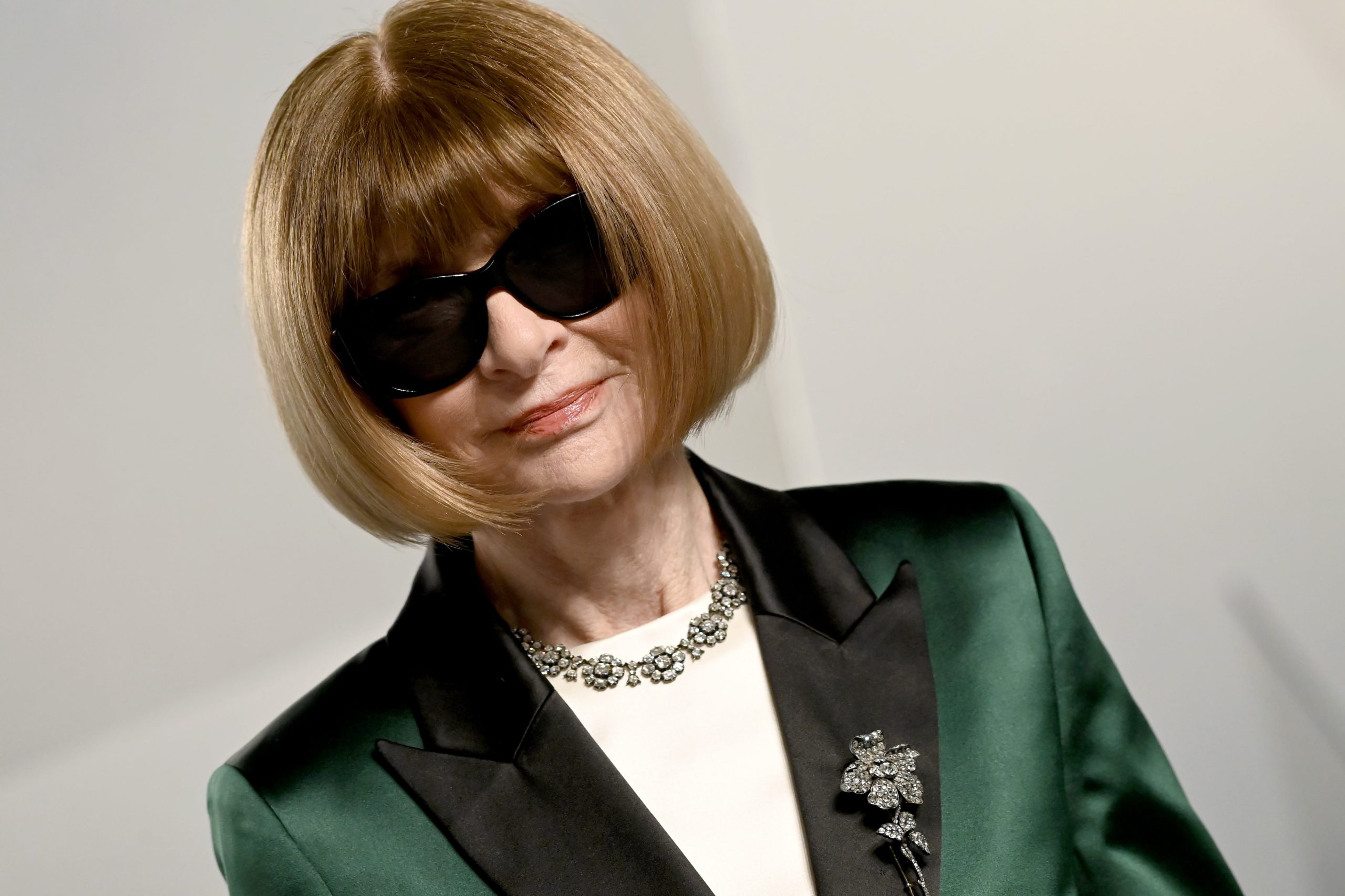
The day after Donald Trump’s victory in the 2016 election, legendary and feared editor-in-chief of Vogue Anna Wintour arrived early to work, as always, and called an emergency meeting. While addressing her team, something unprecedented took place: she broke down in tears. The episode opens Anna: The Biography, a new release from journalist Amy Odell that focuses on the powerful editor who for decades has decided what’s hot and what’s not.
That anecdote heralds the book’s mission statement. Based on more than 250 interviews, it sets out to humanize the sphinx, to reveal the person hiding behind that iconic bob and the most recognizable sunglasses in fashion. The pages of Anna are sprinkled with a wealth of juicy details: how, during her time at New York Magazine, she was known for throwing pennies in the trash, and for infuriating her bosses by featuring a $9,000 goatskin trunk in the publication. That after the 9-11 attacks, she returned to work immediately. How, on one occasion, she asked for the neck fat in a baby’s photograph to be retouched. That she banned garlic, onions, and chives from the dinner menu at the exquisite Met Gala because they give people bad breath. Beyond industry gossip, the book looks to explain the origin of Wintour’s influence, while highlighting the leadership of a woman who has unapologetically exercised power, despite the double standards by which she has been judged. EL PAÍS interviewed Odell from New York.

Question. At the beginning of the book, you mention that many of the 250 people you interviewed found it quite difficult to explain why Wintour is so powerful and what exactly her power consists of. I would love for you to elaborate on your own conclusion.
Answer. I think that the key lies in the fact that her influence truly transcends the limits of the industry. Her tentacles reach into infinitely different areas. I was reflecting on that, thanks to the premiere of The Devil Wears Prada 2, and recalled the interviews I did with the movie’s director, who also did the sequel, as well as with its screenwriter, who also participated in the second installment. They filmed the Met Gala scene in the American Museum of Natural History, because it was the only place in the city where Anna had no influence. In any other place, people were afraid of offending her. And even though she couldn’t have cared less about the movie, that episode serves as an excellent metaphor for her influence.
She has had a decisive voice in technology, fashion, entertainment, and sport, and it goes without saying, in the publishing world and media industry. I asked André Leon Talley to describe her power, and he told me that her ability consists of making someone say “yes” when what they really want to say is “no.” That is influence. He offered me an example related to Karl Lagerfeld; the exact situation had to do with a Met Gala, the year that the theme was dedicated to Chanel. Lagerfeld had been doubtful about participating; he was no fan of the combination of clothing and museums. Still, she managed to convince him to accept. In fact, there are some very colorful stories out there about how he had to keep his strict diet a secret during the event.
Q. What drives her? What is the motivation behind that driving force?
A. Power. Amassing power, consolidating her power. If you look at Vogue, it’s more of a brand than a magazine. She has delegated the editorial side of the magazine. That way, she can dedicate herself to Vogue World, she can organize the Met Gala. She can attend Haute Couture Week. That’s how she spends her time.
Q. Let’s take a step back. After years of speculation, Vogue finally announced at the end of last year that the magazine would have a new editor, Chloe Malle. What do you think led Wintour to step aside?
A. It’s merely a way to consolidate her power. She doesn’t have to deal with the magazine anymore. Directing a website is actually a truly arduous job: you have to manage the YouTube channel, Instagram, TikTok, Facebook, create videos for each platform, promote your links everywhere to redirect traffic to your site, generate revenue through affiliations and advertising, keep up with the daily news cycle, optimize for SEO, produce original reporting, and carry out exclusive photoshoots… It’s a huge amount of work, but with much fewer resources. So Anna, in a certain way, has washed her hands of all of that. And now, we see her sitting in the front row alongside Gavin Newsom and Baz Luhrmann, at the Vogue World Los Angeles event.

Q. Do you think she just can’t cope with the magazine anymore, that she doesn’t care, or that it has simply become too difficult for her?
A. I think she doesn’t feel it’s worth investing her time in it. Anna believes, and one has to laud her for it, that giving back is important. She believes in charitable work. She thinks that Vogue should give back to society, and she has had a great philanthropic career: not just supporting people with mental health conditions, but also in the area of adolescent mental health and the fight against AIDS. That is a subject that really matters to her. She wants to be remembered for her philanthropy.
Q. I was surprised to discover that in your book, some of the canonical aspects that today we take for granted in magazines were invented by Wintour. For example, putting celebrities on the cover. What other things did she establish that eventually became the norm?
A. I don’t know if she invented it, but I think she proved that it was the future. It seems to me that what Wintour is really good at is contextualizing fashion within the world of culture. If you look at old issues of Vogue, from the 1960s and 1970s, you’ll see a lot less of that. They focus more on fantasy. They sent a photographer and a model with a trunk full of clothes to Hawaii for weeks. And it was like, “Come back with something spectacular.” And sometimes, they came back with truly extraordinary material.
With Anna, that dynamic changed. She said, “Madonna is interesting right now, she’s a controversial figure. Let’s put her on Vogue. Let’s change the perception of who Madonna is and what Vogue represents by putting her in the magazine.” One of Anna’s first big hits as an editor took place when she worked at New York Magazine. There, she did an editorial report that was inspired by art. She contacted the New York designers of the moment, the coolest ones, and got several artists to create works inspired by their collections. And then they shot the results together. That was what led her to be hired at Vogue.
And she repeated that formula when she became the head of the magazine. I think that’s a perfect example of how to contextualize fashion. It is not just a catalogue, nor is it only about showing the garments we see in the front row of a runway show. It’s about the place that fashion occupies in culture, and about how culture and fashion converge.
Q. You mention Madonna in your book. You describe how a man sat next to Wintour on an airplane and told her, “Madonna will never appear in Vogue.” And Wintour thought, “Well, now I’m going to feature her.”

A. Now she’s doing the same thing with Lauren Sánchez [the wife of Jeff Bezos]. I don’t think many people believe that Sánchez is Vogue’s style.
Q. If you had to choose three emblematic or defining moments from her time as Vogue editor that were similar to the Madonna episode, what would they be? In terms of editorial and cover decisions.
A. I think that her first cover is historic, it’s a slice of fashion history [it was the first time the magazine featured jeans on the cover, signaling that Vogue was looking to become a more accessible product]. The Madonna cover is important. The Ivana Trump cover is too. At the same time, I think her great mistake, probably the biggest of all, was that puff piece on Asma al-Assad [wife of Syrian dictator Bashar al-Assad]. A lot of people have forgotten that one. There are people who warned her, “Hey look, I don’t know if this is a good idea.” And she didn’t pay any attention. I think that her leadership style gives good results the vast majority of the time, but this case in particular is an example of when it doesn’t work.
Q. We often focus on Wintour’s career in the fashion world, but your book also highlights her general business insight. Do you think she would have had as much success in a different industry, like finance or politics, or do you consider her power inextricably linked to luxury and fashion?
A. It’s hard to say. She’s always been very smart, she’s always been very well connected. That being said, her career began at the end of the 1960s and the beginning of the 1970s, and I don’t know how many industries were open to women truly reaching great success during that time. That is the only reason why I question how to respond. It’s true that she loves fashion. She knows that world inside and out, better than anyone; she has a true passion for it. That being said, observing her today and seeing what she’s become, there’s no doubt she could head Net-a-Porter or a non-profit; she could direct the LACMA [Los Angeles County Museum of Art].
Q. Your biography covers decades of massive change in fashion and consumer behavior. What did Wintour understand from the beginning about staying relevant that others perhaps did not?
A. She always talks about looking to the future, of not getting left behind. I think that there are examples of how that philosophy has done wonders for her. Examples in which she acted on it, and examples in which she did not. I find it interesting to see how the people blame her for how Condé Nast was left behind when it came to the internet. I don’t think that was her fault — she was the one who, back in 1998 or 1999, asked designers to post their catwalks online. They didn’t want to, because they were worried about knock-offs and piracy. And she wrote them a letter begging them, “Please, do it.” And they did it, because she asked them to. And that was how she managed to turn a “no” into a “yes.”
Q. In fact, she is one of the first old-guard editors of the time who survived the total collapse of print publication. Why did she manage to hold on as all her contemporaries left or were fired?
A. She knew how to manage and avoid obstacles, especially because she was creating revenue. And it’s true that she has the power to call advertisers and tell them, “Buy an ad.” Plus, she wanted to be there. She may be the last to abandon ship.
Q. The film The Devil Wears Prada has turned Wintour into the incarnation of a certain kind of tyrant boss who imposes a toxic work environment. What did you discover from speaking with her assistants?
A. A large part of what the movie shows, judging from my research, seems very close to reality. She’s not rude; in fact, she assigns great importance to manners. And yet, there are people whose names she never bothered to learn. In fact, she didn’t remember Lauren Weisberger, the author of The Devil Wears Prada.
Q. I loved the end of the chapter where Wintour, after reading the book, says something like, “As much as I try, I’m incapable of remembering that person.” Where do the myth and story depart from reality?
A. [When you’re Wintour’s assistant], you’re always available, always on alert. She sends you emails at any hour, and you have a duty to respond. When she gets to the office, just like in the movie, she comes in talking endlessly. It’s like a stream of consciousness, an uninterrupted list of things she needs them to do. The assistants are ready to start taking notes the second she arrives. That coldness, that icy distance, and that cutting sharpness… Meryl [Streep] has said that she based the character on Clint Eastwood, but a large part of it turns out to be very true to life. People felt like they were forced to wear high heels.
Q. You allude to coldness, but in the book you suggest — and it seems to me to be a very good point — that gender influences the way we perceive her.
A. As a woman who has worked and read countless studies on the differences between men and women in the work environment, I think that women are expected to adopt a more affectionate, maternal attitude. One factor that has helped her career enormously is the fact that in the world of fashion, there is an abundance of highly creative minds, but they’re not always very adept at business meetings. And she has both sides: she’s a businesswoman, but also a creator.
Q. Was there any specific anecdote or moment in your process of documentation that humanized her in a way you didn’t expect?
A. Imagining her as a grandmother. I asked her friend Anne McNally about it. She remembered an occasion in which they were babysitting one of her grandchildren together. And I asked her, “Did she change diapers?” And Anne said, “If she had to, she did it.”
Q. I think she is likely still judged differently than her male counterparts, don’t you?
A. Oh, without a doubt. Just look at Steve Jobs and his behavior… did you read Walter Isaacson’s biography? He screamed and shouted at people in the office, but the central premise of the book is that he was a genius. No one would have written The Devil Wears Prada about Steve Jobs. I think it’s fair to say that, because she’s a woman and her field of innovation is fashion, a traditionally feminine industry, she’s not taken as seriously.
Jeff Bezos has been the head of Amazon for less time than she has led Vogue. Her staying power is truly extraordinary. She isn’t given the credit she deserves for that. I know it’s a complicated subject, and that not everything she has done has been incredible or popular. What is happening right now with Bezos is, for example, extremely controversial.
Sign up for our weekly newsletter to get more English-language news coverage from EL PAÍS USA Edition


A year after staying in a nice hotel, you’ll have forgotten almost everything except the smell. That fragrance, designed to make you feel, for a while, slightly superior to the rest of humanity, will have been stored somewhere in your hippocampus with 65% accuracy, according to some studies. The day you return, you’ll immediately recognize the feeling: you’ve arrived at a place that smells expensive.
The creation of this fragrance, which is usually made to order, can take between six months and a year, and follows the hotel’s instructions to the letter. I have in my email the briefing that the Mandarin Oriental Ritz Madrid sent to a perfumer in 2020 to create its fragrance. Six pages with all sorts of historical and architectural details about the building, illustrious guests, garden vegetation, emblematic aromas of the capital, and the requirement that it be “a unique perfume, exclusively designed” for the hotel. The document explains that the goal is for the visitor to perceive, upon arrival, “a unique, clear yet subtle aroma that accompanies them throughout their stay.” The resulting fragrance for this legendary Madrid hotel is a musky floral with top notes of mandarin, lemon, and freesia, and a base of musk, cashmere, amber, and patchouli. But if you don’t have a trained nose, you won’t recognize that olfactory pyramid.
Meanwhile, at the five-star hotel La Mamounia, the fragrance is a balm for the senses, especially if you enter after wandering through the narrow streets of Marrakech’s Medina, filled with the scents of spices and incense. Its fragrance, created by perfumer Olivia Giacobetti, is a true classic: a blend of date and cedarwood. You can take it home in a candle, diffuser, or perfume bottle sold at the hotel itself (also online).

George Orwell said in The Road to Wigan Pier (1937) that smell is the deepest cause of classism: “For no feeling of like or dislike is quite so fundamental as a physical feeling.” And Karl Schlögel, in his book The Scent of Empires: Chanel No. 5 and Red Moscow, recounts “the olfactory class struggle” that broke out in the theaters of Moscow and St. Petersburg after the Russian Revolution.
“Theatre performances are no longer reserved for an exclusive and educated audience which has internalized the rules of such events, with their intervals, applause and moments of silence,” he writes. “The odour of the front lines and the bivouac, the sweat of factory work, the stench of overcrowded train carriages – it all forces its way into the perfumed and deodorized realm of high culture, bringing new sounds and new smells perceived by the usual bourgeois and aristocratic audiences as being unpleasant, uncultivated, repellent, repugnant – indeed, barbaric.”
There is nothing innocent about a designed scent, and its impact on memory — through the amygdala and the hippocampus — will last far longer than visual or auditory stimuli.
Sumptuous fragrances not only give shape and coherence to the experience of luxury; they cast a certain spell over the guest who, according to figures cited by companies and hotel chains, will likely spend 20% more time in a hotel with the right scent — and spend more money. At global luxury fairs, insiders insist that aromas “are not decoration but hotel infrastructure,” and high‑end hospitality groups take them very seriously. Just look at the value of the global ambient‑fragrance industry: in 2025, it stood at $1.5 billion, and it is expected to grow by 30% by 2028.

In reality, the hotel industry hasn’t discovered anything new. According to Clara Buedo, perfume researcher and author of El perfume en España (Perfume in Spain), Disney began dispersing specific scents throughout its theme parks in the mid‑20th century to create immersive experiences.
“They used the smell of popcorn and freshly baked cookies to make the visit to the park more enticing and to draw people into the shops to buy food,” says Buedo. “To do this, they used a device called the Smelltizer, a kind of cannon that released bursts of aroma at specific moments and locations, creating a sort of olfactory soundtrack (instead of a musical one) that, in some way, would remain imprinted in visitors’ memories.”
Buedo says this was the precursor to the strategy later perfected by airlines, clothing stores, and hotel chains. “Using scent as an additional layer of the experience to influence consumer behavior,” she summarizes, citing olfactory‑neuroscience expert Laura López‑Mascaraque.
If you walk through Madrid’s Plaza de las Descalzas and approach the former Monte de Piedad building — now the Edition Madrid hotel — you’ll smell it: the signature fragrance used in every Edition around the world, created by Le Labo with the personal involvement of Ian Schrager, the hotel’s founder and the mind behind the legendary Studio 54. The scent, built on notes of black tea, Sicilian bergamot, cedar, and musk, leaves a strong impression on guests. Legend has it that the formula was designed specifically to be a nightmare for anyone trying to copy it. The Black Tea, as it’s called, is as recognizable an element as the iconic white staircase that leads into the hotel.
“It was created to encapsulate the Edition style worldwide,” says Beatriz Medina, the marketing director. Anyone who wants to bring the sophisticated fragrance home can do so without even setting foot in the hotel: the brand’s website sells the home diffuser for €136 ($160) and the candle for €56 ($66).

“The wisdom of perfumers and the use of noble materials create an olfactory narrative that accompanies the space without trying to become the protagonist,” Medina explains.
One of the key challenges for the noses who craft the scent of luxury is finding an aroma that is culturally neutral — neither masculine nor feminine, unobtrusive, and unlikely to interfere with the creation of a positive memory. Experts note that negative associations form more quickly with unpleasant smells, which makes this a high‑risk practice.
“How we perceive scents depends on the baggage carried by our olfactory memory,” Buedo says, adding that for her, the smell of luxury is that of leather or fine suede, the notes that often perfume Hermès or Loewe boutiques. “But for others, the smell of leather can be overwhelming,” she acknowledges.
The perfumers behind the great temples of luxury avoid creating fragrances with notes that might clash with a specific culture, and they tend to work with fresh citrus essences and floral notes they consider universal. They know, for instance, that vanilla resonates strongly with U.S. customers, while sandalwood appeals to Indian consumers, or that people born before the 1940s prefer natural aromas such as grass, whereas younger generations are more attuned to synthetic notes. With all that information, they must build a fragrance that everyone will perceive as expensive.
“A scent that makes a guest feel it’s worth paying $800 or $1,000 to spend the night there,” says Marcelo Díaz, a nose who has created several hotel fragrances.
“Rare and high‑priced aromatic materials — such as iris pallida rhizomes, damask rose, or natural ambergris — also trigger that perception of luxury, perhaps even more so for experienced users who understand how difficult they are to obtain,” Buedo adds.

Experts describe a recurring olfactory pattern in these kinds of fragrances, where white tea is almost always present — a molecule researchers associate with sensations of calm, cleanliness, and refinement. The intuition of money, elegance, and grandeur — that unmistakable “rich” smell — is built with notes of oud, amber, leather, or patchouli. Then comes the challenge of distributing it effectively across large, high‑ceilinged spaces. Typically, a diffuser is connected to the ventilation system to ensure that the scent quite literally follows the guest everywhere.
Smell is the most primal of the senses, and you will never know whether you’re fixated on that scent because it reminds you of a hotel, or because you want to relive that fleeting feeling of being the VIP of the universe that the hotel made you feel. And in that ambiguity lies the power of the smell of luxury.
Sign up for our weekly newsletter to get more English-language news coverage from EL PAÍS USA Edition
Carl Sagan
Ewine Van Dishoeck, Astronomer: ‘We Are The First Generation Who Can Bring The Question Of Life On Other Planets From The Realm Of Philosophy Into Real Science’

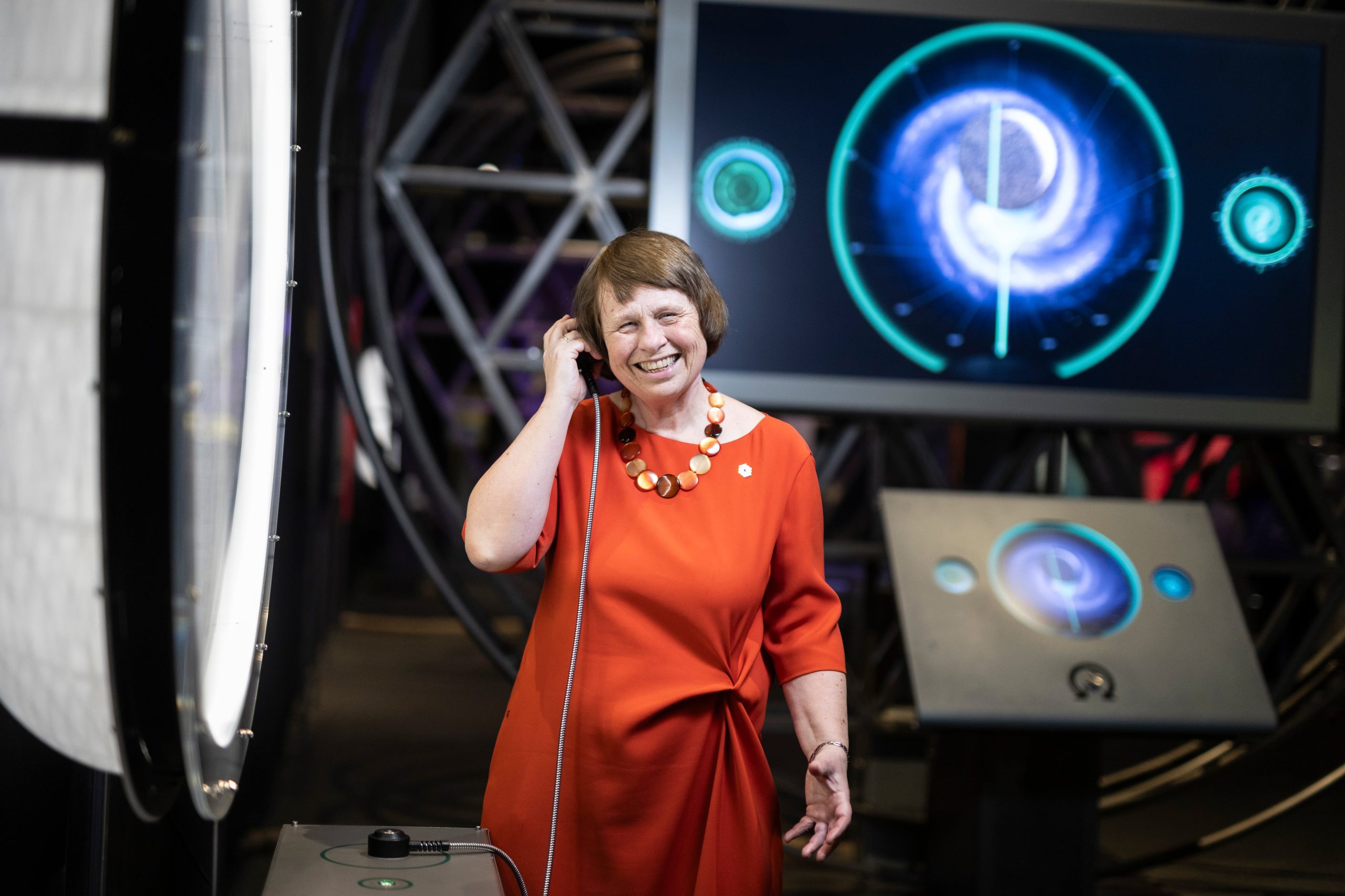
Astrochemist Ewine van Dishoeck’s laboratory is the universe, where chemical reactions take place that would be impossible on Earth. She calls herself a fan of interstellar dust and believes that as a woman, college was easier for her because “the professors noticed you.” Among her other honors, Van Dishoek won the Kavli Prize in astrophysics in 2018 “for her combined contributions to observational, theoretical, and laboratory astrochemistry, elucidating the life cycle of interstellar clouds and the formation of stars and planets.”
When she left her hometown of Leiden in the Netherlands in 1968 to travel to San Diego, where her father — an ENT specialist — had been invited to a six-month stay, she couldn’t have imagined that it was there that her interest in science would spark. “My parents always had this ambition that I would go into medicine, because my whole family were doctors,” says the 70-year-old Van Dishoeck. “And so here I was in San Diego in a public high school, and there was this fantastic female African American teacher that was so inspiring in science. It didn’t occur to me that this was special. In the Netherlands, I had lots of Latin and Greek and mathematics, but I’d had nothing of science yet.”
EL PAÍS took advantage of her trip to Barcelona to take part in Cosmocaixa’s “Greats of Science” series in order to speak with the scientist. Van Dishoeck’s orange-colored outfit immediately reminded one of her country of origin. She wore a pin of 19 golden hexagons representing the James Webb Space Telescope, which she helped develop.
Question. What most fascinated you in your youth was chemistry.
Answer. I was in quantum chemistry, hard stuff. And then the professor died, and as it goes with universities, they said, “You have very good grades, but you better start looking elsewhere.”
Q. How did you wind up getting interested in astronomy?
A. I started my PhD, and then it was my then-boyfriend and now-husband [Tim de Zeeuw, director of the European Southern Observatory from 2007 to 2017], who was an astronomer and very renowned. He actually said, “You know, I just saw this lecture about molecules in space. Isn’t that something for you?” And that’s how it all began.
Q. Chemists usually carry out experiments in a laboratory. How do you do chemistry in space?
A. The big advantage of having a lab on Earth is that you can turn the knob and you can study things under controlled conditions. In space, we don’t have any control. But it’s so empty there, and so cold, that certain types of reactions can take place that you normally wouldn’t have on Earth. You also see molecules there that are very stable under these cold conditions. That’s what I like; you basically study chemistry under exotic conditions.
Q. In space, we know that the building blocks are mainly hydrogen and a little bit of helium, as a result of the Big Bang. How do all the other elements form?
A. It starts with the first generation of stars, which carry out nuclear combustion. It is the nuclear fusion in the cores of the first stars that produces elements like carbon, nitrogen, and oxygen we have in our bodies. They do this over time. You need several generations of stars to build up the more chemically interesting elements in the universe. But what we are learning now, also from the data from the James Webb telescope, is that it is actually happening faster than we thought. Our universe is 13.7 billion years old, but already within the first one or two billion years, you have significant abundances of these heavy elements.

Q. How are the more complex molecules formed?
A. So you have this very diluted gas, a million times more empty than an ultra-high vacuum in a laboratory here on Earth. Say you want to make water. What you need to do is bring together hydrogen and oxygen, and form a bond. On Earth, the density is always so high that it carries off extra energy and you must get rid of about four electron volts. In space, that’s not happening, the only way to get rid of it is by emitting a photon. And that’s a slow process, it’s one of these types of reactions that are different in space than they are on Earth. The other way is to use these tiny little dust grains, sand that is in space, micron size, sub micron size, formed in the outflows from dying stars. So again, you need the first few generations of stars to build up the dust content in the universe. My colleagues will say they hate dust, because it obscures their vision of stars.
Q. But I hear you are a fan of dust.
A. I love it, because it helps us make molecules. These sand grains act as a place where — as one of my colleagues once put it — atoms and molecules can meet and greet. That is how we think a lot of the molecules are made, on the surfaces of these interstellar dust grids.
Q. How many generations of stars do we need to get enough material to build planets like ours?
A. It depends on the kind of star. The more massive stars burn the brightest, but also lift the fastest. They produce certain types of elements. For example, they’re good at making oxygen. Carbon, iron, if they go supernova. But a lot of carbon is made in the lower-mass stars, which live for a very long time, so they have fewer generations, but there are many more of them.
Q. And that is how elements are created. And then what happens?
A. You make simple molecules, like water. Most of the water that we have here was made on the surfaces of these gas grains. You can make carbon monoxide — you just add four hydrogens on it, and you have methanol and alcohol. And then sometimes with a little bit of heat, you will find that some of the radicals and the molecules become more mobile on the surfaces. There’s a sweet spot at 68 to 86 degrees above absolute zero [-459.67 degrees Fahrenheit], that you all of a sudden have even more chemical complexity building up. That can actually go quite far, to sugars and so on. It’s just impressive to see how far, with just a few ingredients like carbon monoxide and hydrogen, you can go all the way to glycoaldehydes, glycerol and more complex molecules.
Q. Do all planetary disks that form around stars have more or less the same ingredients?
A. We really needed the ALMA, the Atacama Large Millimeter Array, and the James Webb, in order to answer that question. In terms of star-forming regions, regions where new stars are being born, we see more or less similar compositions. We see water everywhere, in sufficient amounts to make a new solar system. I see enough organic molecules there. But then, how it makes its way to the planetary construction zones, that is still a different question, and that is only what we are trying to find now. We already see a large diversity with the Webb. Some of the planet-forming regions turn out to be very rich in water, others turn about to be rather poor in water. Some of them are rich in carbon dioxide, yet others are very rich in hydrocarbons.

Q. If we were to observe our planet from the outside, would it be rich or poor in water?
A. That’s a good question. Of course, as we see it now, it is already very evolved. But what we know of the water content in our solar system, on Earth, it’s almost nothing. If you were to put it in a volume, it wouldn’t be much more than the state of Colorado. The Earth is certainly in a rather water-poor region. Here, the snow line is very important, where a molecule goes from the solid state into the vapor phase. In our solar system, the snow line is approximately at the orbit of Jupiter, between Jupiter and Mars. Beyond that, water is almost equal amounts of rock and ice, but inside it starts to drop enormously, because it is basically vaporized and leaves the system. There’s one theory that Venus, Earth, and Mars were actually born with the same amounts of water, but then they evolved differently, and on some, it vaporized completely.
Q. Based on our solar system, it would seem that water is a necessary condition for the formation of life.
A. Water is still one of the best solvents that we know for bringing molecules together. I often get the question, “Why not ammonia or methanol?” That’s simply because there’s 10 times more water available than ammonia or methanol. And it’s just a very good solvent. So, why would you go to another? It’s the most logical one. So water has to be there for life, but then other things have to be there. You need to have at least some base of carbon and some nitrogen to get there. They could be relatively simple molecules, like formaldehydes and hydrogen cyanides with liquid water and a little bit of energy, and you get already very complex chemistry. The next step, how it all becomes life, that is a subject for my astrobiologist colleagues.
Q. You are skeptical that it will be easy to find the “signature of life,” chemical proof that life exists in other solar systems.
A. Some of my colleagues are very optimistic that the James Webb will find proof that there is life on other planets, as you can see from the detection of dimethyl sulfide. But I think that paper was much more balanced than its press release actually was — there is abiotic production of dimethyl sulfide in the universe, so you cannot be sure that it really needs life. I’m a little bit more cautious than some of my colleagues. We need at least the Extremely Large Telescope, which is being built in Chile by the European Southern Observatory. And perhaps the next space mission, the successor of James Webb, but that is going to take still another few decades. The technology has really been developed. It may be exciting that we are the first generation of humans that can bring the question of life on other planets from the realm of philosophy into real science. But we have to calm down.
Q. With the tools at hand, like the James Webb, what do you hope to be able to study?
A. First of all, that we can now study the chemistry in the planet-forming zones, close to the stars. We see a lot of chemical diversity there. You really need to build up statistics, because in astronomy you cannot go there, you cannot follow planet formation in time, because it takes a million years. So I’m looking at regions where planets are forming at this very moment. They are, for the first time, able to probe the composition of the atmospheres of giant exoplanets. They’re also starting to get the statistics on the Earth-like planets, though they still have difficulties even detecting an atmosphere.
Q. There was a lot of controversy surrounding the decision to name the telescope after James Webb, due to his alleged homophobia. What’s your opinion on that?
A. I think that was very well investigated by NASA. I really don’t buy into all of these arguments. In fact, he has been a proponent of a lot of human rights and diversity in NASA. I don’t want to go into details, but what I know is that it has been very well-researched and that he came out with shining colors.
Q. You were the president of the International Astronomical Union between 2018 and 2021. Do you think the role of science diplomacy in a world like the one that we have today is more important than ever when it comes to calming international tensions?
A. I really see astronomy as building bridges, rather than splitting us. If you look from space, we don’t see any borders. It’s just one beautiful Earth. Astronomy gives us perspective. We are just a pale blue dot, as Carl Sagan says.
Q. Do you think there is a problem with authoritarianism in academics, particularly for young female researchers?
A. I’ve been in physics departments, I’ve been in chemistry departments, I’ve been in astronomy departments, I’ve been in geology departments. The ones that have the most flat structure, in terms of hierarchy, is astronomy. As a PhD student in Leiden, we were treated already as young staff members. Personally — but again, my experience is probably different from that of other women — the fact that I was the only woman at that time in a class with men, the professors noticed you. If you did just a little bit, they recognized you. When I look at the classes that we have now, women make up 50%. Our PhD and postdoc populations have been at 35%, 40% female for quite some time. What has always been the problem is the leaky pipeline; as careers advance, there are fewer women. But that has always been the problem.
Q. Even so, do you think there is a structural issue for women in academics?
A. I really don’t see that. They are actually very well supported. I think the people who have it the hardest at the moment are some of the young men — just my personal opinion.
Sign up for our weekly newsletter to get more English-language news coverage from EL PAÍS USA Edition

S

Spanish Foods May Worsen Allergies

ITV Prices Rise Sharply Across Spain

Dinero En Efectivo Guardado En Casa Y La Devolución De Los Gastos Del PSOE: La Expareja De Koldo Protagoniza La Cuarta Jornada Por El ‘caso Mascarillas’

Mercedes F1 star Kimi Antonelli feeling the pressure after Italian heartbreak
DGT launches week-long speed crackdown on Spanish roads


-
 Caso Koldo4 weeks ago
Dinero En Efectivo Guardado En Casa Y La Devolución De Los Gastos Del PSOE: La Expareja De Koldo Protagoniza La Cuarta Jornada Por El ‘caso Mascarillas’
-
 Uncategorized4 weeks ago
Mercedes F1 star Kimi Antonelli feeling the pressure after Italian heartbreak
-
DGT4 weeks ago
DGT launches week-long speed crackdown on Spanish roads
-

 New Developments3 weeks ago
How To Get A Tourist Rental Licence In Andalusia (Spain) – Step-By-Step Guide 2025
-

 Uncategorized3 weeks ago
Max Verstappen Nurburgring LIVE: NLS5 Schedule, start times and free live streams
-

 Andalucia4 weeks ago
La Policía Detiene A Un Hombre En Córdoba Por El Asesinato De Su Pareja
-
cabin crew4 weeks ago
Spain’s Supreme Court rules EasyJet must reveal cabin crew identities
-
Asia4 weeks ago
Al Menos Cuatro Muertos, Tres De Ellos Niños, En Un Tiroteo En Un Colegio Del Sur De Turquía