Connect with us

Donald Trump

Judge Orders Return Of Mexican Cartel Witness Deported Three Times By ICE

Published

on

judge-orders-return-of-mexican-cartel-witness-deported-three-times-by-ice

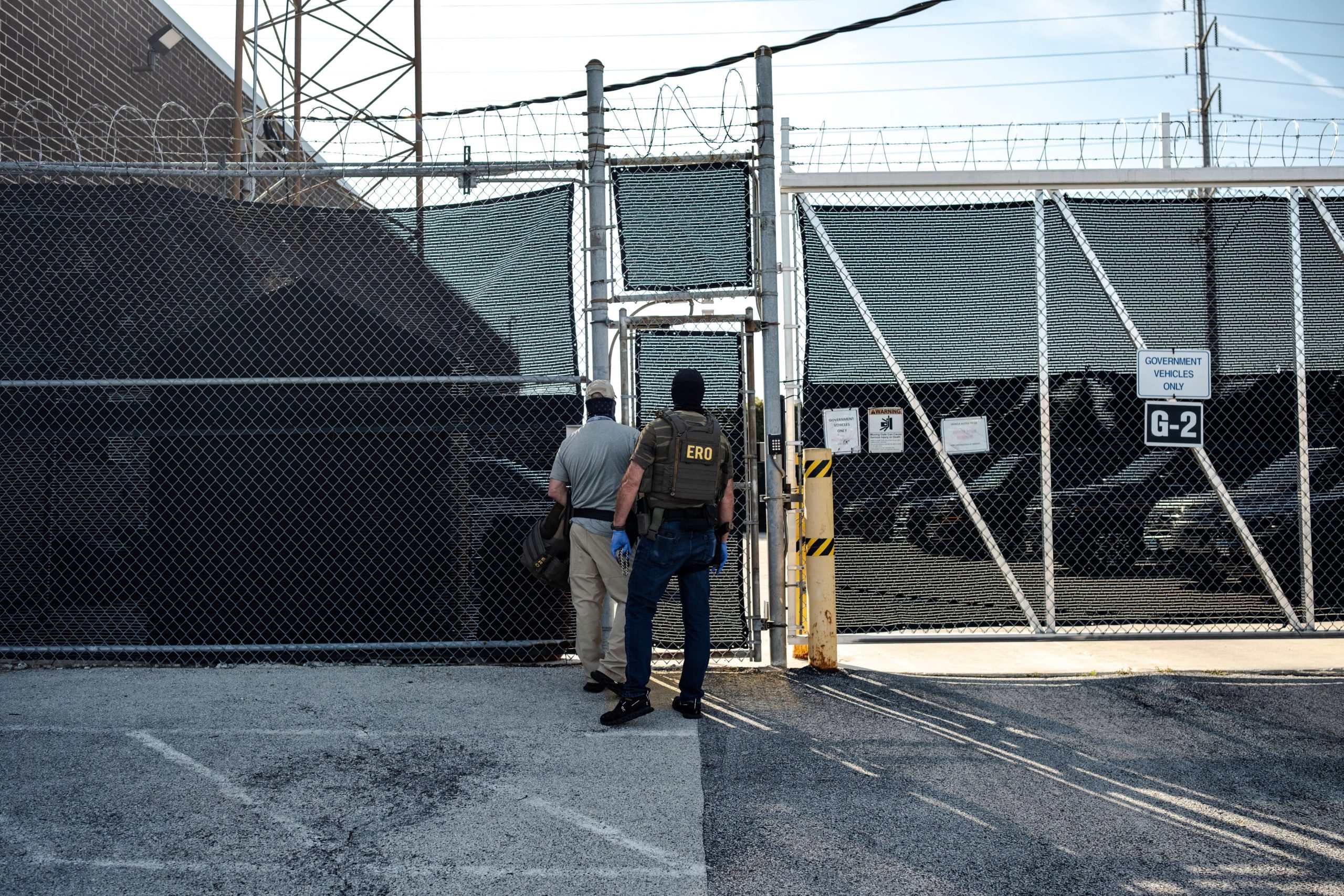
The fact that a Mexican migrant had risked his life by providing information to the U.S. government and testifying against cartel members did little to help him. U.S. Immigration and Customs Enforcement (ICE) nevertheless held him in custody for six months and then deported him three times: first to Guatemala and then twice to Mexico, most recently to an area with significant drug-trafficking activity, according to a lawsuit filed in a Maryland court.

The Justice Department cooperating witness, identified in court filings under the standard pseudonym “John Doe,” was removed to Mexico in early August. “He has been in hiding since that date, fearing that the cartels that he provided information against will find him and torture or kill him before he can return to the United States,” according to a memorandum issued by U.S. District Judge Stephanie A. Gallagher.

On August 21, a day after John Doe sued Trump administration officials in federal court in Baltimore, Gallagher found that the witness faced a substantial risk in Mexico and gave the government 14 days to “take active steps […] to facilitate Doe’s return to the United States.”

“There is an immense public interest in ensuring that persons who risk their personal safety to assist the government in prosecuting wrongdoing are not placed in harm’s way by the very entity they assisted,” Gallagher wrote in the 16‑page memorandum.

Attorneys for John Doe were not available to say whether the court order has already been carried out. The Department of Homeland Security (DHS), meanwhile, did not respond to a request for comment.

People who cooperate with U.S. authorities may receive a range of benefits, depending on the circumstances and the value of the information they provide: from reduced sentences and avoiding prison time, to obtaining immigration status or entering the witness protection program, which relocates them to safe sites within the United States, provides temporary financial support and gives them new identities. Family members may also be included in the protection measures.

The government has relied on such programs for decades to encourage cooperation from individuals who assist in investigations and prosecutions involving drug traffickers, organized crime figures and gang leaders.

An odyssey across three countries

John Doe, the father of two children, provided testimony “against defendants affiliated with Mexican drug cartels,” according to the lawsuit. In July 2024, an immigration judge granted him protection from removal under the Convention Against Torture (CAT) after finding it was possible that he “was more likely than not to be tortured by the government or by individuals acting with the acquiescence of the government if he were returned to Mexico.” The court filings do not specify the criminal cases in which he cooperated or why Mexican authorities might be involved.

ICE released him at the end of that year. But in January 2026, when he appeared for a routine immigration check-in, the agency took him back into custody. He spent six months in a Louisiana detention center, during which his attorney filed a habeas corpus petition requiring the government to justify his continued detention before a judge. The effort proved futile.

What followed was an odyssey through three countries and a series of detention cells. Without prior notice, he was deported to Guatemala on July 10. Guatemalan authorities refused to accept him and turned him over to Mexican officials for transfer to Mexico. But after John Doe’s attorney informed them that his client was protected under the Convention Against Torture, Mexican authorities decided to return him to the United States.

Upon arriving at an airport in Texas, he was again taken into custody without being allowed to speak to either his family or his attorney. On July 15 or 16, he was deported for a second time, this time to Mexico. Mexican authorities again refused to accept him and sent him back to the United States. He then spent 10 days in detention before being taken to the Texas border on August 1 and deported to Mexico for a third time, “without his phone or other personal belongings.”

The lawsuit argues that the Trump administration placed him in extreme danger. John Doe “was sent to a region of Mexico where there is cartel activity, without any of his money […] reliant on the help of strangers while attempting to remain in hiding,” the filing says.

Judge Gallagher ordered that if John Doe is detained again, he must be held at a facility no more than 200 miles from Baltimore and be given access to his attorney.

Sign up for our weekly newsletter to get more English-language news coverage from EL PAÍS USA Edition

Despido

La Marcha Del Secretario Del Ejército Descabeza Una Fuerza Clave Del Pentágono En Plena Guerra De Irán

Published

on

la-marcha-del-secretario-del-ejercito-descabeza-una-fuerza-clave-del-pentagono-en-plena-guerra-de-iran

El secretario de Defensa de Estados Unidos, Pete Hegseth, afianza su posición al frente del Pentágono. A costa, eso sí, de una avalancha de salidas de mandos y altos cargos que ha precipitado, según sus críticos, una grave pérdida de talento y una sensación de descontrol en la institución responsable de las fuerzas armadas más poderosas del mundo. La marcha más reciente representa un triunfo personal para el antiguo presentador de la cadena de televisión Fox: su archirrival, el secretario del Ejército de Tierra, Dan Driscoll, de quien se había llegado a conjeturar que podría sustituirle en el cargo, presentó su dimisión este lunes al presidente Donald Trump. El portazo de ese veterano de guerra se suma al cese en abril del jefe militar del Ejército, el general Randy George, quien aún no tiene sustituto, para dejar esa fuerza descabezada en plena guerra con Irán.

Seguir leyendo

Continue Reading

Donald Trump

Afghanistan, Somalia And Yemen Disappear From The Latest US Famine Reports: ‘Trump Is Politicizing The Analysis’

Published

on

afghanistan,-somalia-and-yemen-disappear-from-the-latest-us-famine-reports:-‘trump-is-politicizing-the-analysis’

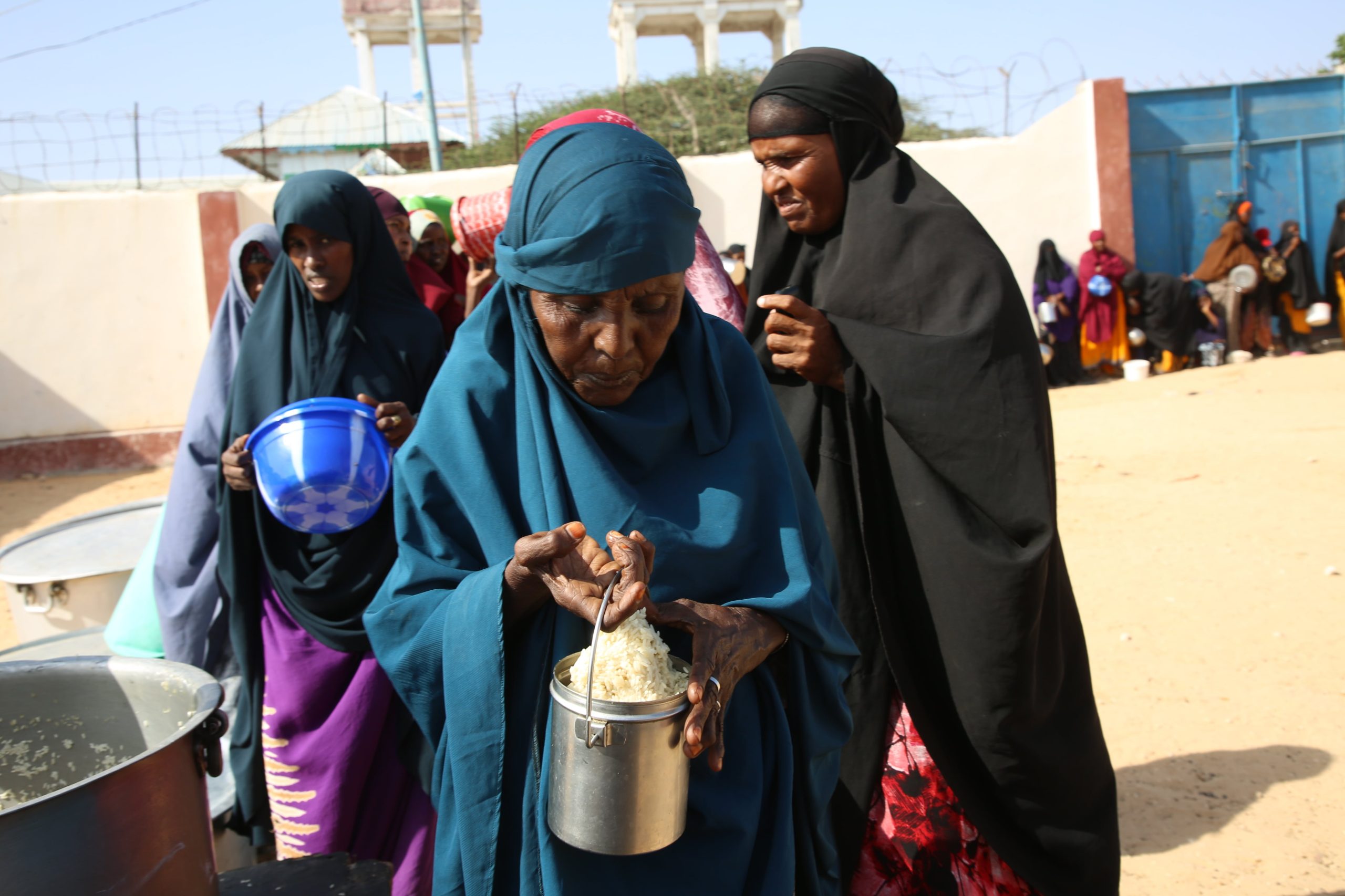
The threat of an information blackout is looming over the Famine Early Warning Systems Network (FEWS NET), one of the world’s leading data-monitoring systems for anticipating food crises and planning humanitarian responses. Created by the now-dismantled U.S. aid agency USAID and currently overseen by the U.S. State Department, the platform has weathered interruptions and political controversies before. Alarm bells rang again this summer after Afghanistan, Somalia and Yemen disappeared from both the annual Peak Food Assistance Needs Outlook and the monthly Food Assistance Outlook reports.

During the online presentation of its latest monthly report, FEWS NET acknowledged that it “no longer publishes information on several countries that were previously included in this product.” The map displayed during the session omitted those three countries. Ethiopia and El Salvador were also missing. Afghanistan, Somalia and Yemen nevertheless are still among the countries with the greatest food needs in the world.

FEWS NET has become a global benchmark because its reports combine meteorological, agricultural, economic and conflict data gathered from satellites and local sources. That body of information makes it possible to forecast trends in food insecurity six to 12 months in advance. The system publishes regular reports and maintains an open-access database that anyone can consult.

Concern intensified after Devex, a news outlet focused on international development, reported the changes, prompting alarm among humanitarian organizations and former USAID officials. USAID, which was dismantled by the Trump administration, created FEWS NET in 1985 and funded and oversaw the program until February 2025.

The platform, which now operates under the supervision of the U.S. State Department, referred all questions about changes to its reporting to the department. A State Department spokesperson neither confirmed nor denied the reported changes. The spokesperson told EL PAÍS, however, that “FEWS NET is a U.S. government-funded contract” that produces information used to guide the department’s food-assistance decisions. It does so, the spokesperson added, by “focusing on countries that align with the secretary’s overall policy priorities.”

But on Tuesday, a State Department official told EL PAÍS that “FEWS NET’s public reports on Somalia, Afghanistan and Yemen will resume starting in September.” The spokesperson added in an email, however, that “the Department will continue to assess whether all programs are making appropriate use of limited resources to advance foreign policy priorities.”

Jeremy Konyndyk, president of Refugees International and a former director of USAID’s Office of U.S. Foreign Disaster Assistance, believes there are enough warning signs to fear another blow to the monitoring system. “If they have stopped reporting on certain countries, the only reason is that the State Department has instructed them to do so,” he said in a video-call interview. “The Trump administration is increasingly politicizing famine analysis. The State Department does not want its own information system to reveal the consequences of its policy decisions.”

Alex de Waal, one of the world’s leading experts on famines and food crises, shares that assessment. “The Trump administration has essentially decided that some countries do not count,” he told this newspaper by email.

Political pressure

Simon Winter, vice president for Humanitarian Nutrition Security at RF Catalytic Capital, an organization affiliated with the Rockefeller Foundation, says agencies such as the World Food Programme (WFP), UNICEF and the U.N. Refugee Agency (UNHCR) rely on FEWS NET to anticipate food emergencies, decide where to deploy resources such as food assistance and cash transfers, and assess the risk of famine. “FEWS NET has become a global public good,” he said by video call.

Although other early-warning systems track food insecurity, including the Integrated Food Security Phase Classification (IPC), which issues official famine determinations, and the WFP’s HungerMap, FEWS NET plays a distinctive role. Konyndyk explains that the U.S.-run platform serves as an independent complement to those systems. “Countries are part of the [IPC reporting] process, and there is often political pressure to avoid a famine declaration. That is why it is important for FEWS NET to conduct a credible, independent analysis in parallel.” The concern now, he adds, is that if the platform stops reporting on Afghanistan, Somalia and Yemen, it may become more difficult to document famine conditions in those countries.

This is not the first time FEWS NET has been targeted by Donald Trump. In 2017, his administration proposed eliminating the system as part of a broader package of cuts to foreign aid. Although it survived that attempt, during Trump’s second term the network was temporarily paralyzed after USAID was dismantled. In February 2025, its website was taken offline and remained inaccessible until June, when it was restored after a strong backlash from humanitarian organizations.

But tensions surrounding FEWS NET have extended beyond budget cuts. During the Biden administration, the system became embroiled in controversy when, in December 2024, it withdrew an alert about the risk of famine in Gaza following pressure from Washington. FEWS NET has not published data or reports on the Gaza Strip since late 2025.

There are now fears that the information blackout could widen further. Rajiv J. Shah, president of the Rockefeller Foundation and a former USAID administrator under Barack Obama, warned in a statement that halting data collection on Afghanistan, Somalia and Yemen “means the world will lose access to information on a total of 38.1 million people who are expected to face food crisis or more severe forms of hunger this year.” “We cannot prevent the world’s hungriest people from starving if we are flying blind,” he added.

A critical moment

The disappearance of Afghanistan, Somalia and Yemen from some of the world’s key food-security reports has raised particular concern because of the context in which it is happening. All three countries have been hit by cuts to humanitarian aid following the suspension of USAID and subsequent reductions in aid budgets by several European governments. By mid-2025, the Trump administration had terminated all foreign-aid awards involving activities in Afghanistan, according to a U.S. congressional report. Médecins Sans Frontières has also warned that Washington excluded Yemen from humanitarian food-assistance funding and that the number of malnourished children is soaring.

Konyndyk, who was in Somalia when he learned of the changes to FEWS NET, says the country has experienced “a complete withdrawal” of U.S. support. “It used to provide about three-quarters of food assistance. When that disappears abruptly, the number of people the WFP supported went from two million to barely 350,000. People are forced to eat only a few days a week,” he said.

Making matters worse is the emergence of a much stronger El Niño event. Indeed, FEWS NET’s July Food Assistance Outlook warned that Somalia could face extreme flooding, major crop losses and the isolation of entire communities between now and January 2027, potentially pushing some regions into famine.

“This is precisely the kind of situation for which FEWS NET was created,” said Konyndyk. “This is the time to prepare for that scenario. But instead of doing that analysis and acting accordingly, the U.S. government is simply nipping the analysis in the bud.”

Furthermore, a week ago, the U.N. warned that current armed conflicts and the blockade of the Strait of Hormuz were threatening global food security like never before. During the Security Council debate, leaders of humanitarian organizations and delegates from various countries stressed the urgency of prevention. “Waiting for famine to be declared is a complete dereliction of duty,” said WFP Director Carl Skau.

As questions continue to surround FEWS NET’s future, philanthropic organizations such as the Rockefeller Foundation are working on a backup plan. A year ago, following the system’s temporary suspension, the foundation launched the Reimagining Humanitarian Nutrition Security initiative, which aims to create a “Data Community” bringing together information from major humanitarian organizations and using artificial intelligence to build early-warning systems that are both more robust and less vulnerable to shifts in international funding.

The initiative is helping expand NASA’s RAAPID system in order, as Winter explains, to make it “less dependent on the U.S. government” and to strengthen the use of satellite data for rapid agricultural assessments. It has also launched pilot local early-warning projects in Somalia, Haiti and the Philippines.

Sign up for our weekly newsletter to get more English-language news coverage from EL PAÍS USA Edition
Continue Reading

Arizona

Trump Administration Battles In Court To Make Undocumented Students Pay Up To Three Times More For College

Published

on

trump-administration-battles-in-court-to-make-undocumented-students-pay-up-to-three-times-more-for-college

Four states (Arizona, New Mexico, Oregon and Washington) joined last week the 17 others already facing lawsuits from the Donald Trump administration for allowing undocumented students to access public universities without being excluded from resident tuition rates. As part of its aggressive immigration agenda, the administration has targeted states that permit students to pay in-state tuition regardless of their immigration status.

In a country where the cost of higher education is so high that many families struggle to afford it, access to in-state tuition rates, which are substantially lower than those charged to out-of-state students, can determine whether a student is able to continue their studies. This is especially true for families of undocumented migrants, who tend to accept lower-paid jobs.

“Washington state won’t be bullied into changing how we provide opportunities for young people in our state. We’ll see them in court, and we expect to win,” Washington Governor Bob Ferguson responded on social media.

The gap between resident and nonresident tuition rates at public universities in the four states is significant. According to the lawsuit, for the 2026-27 academic year, Washington residents would pay $13,406 at the University of Washington, compared with $44,460 for out-of-state students.

The laws in the states being sued allow students without legal immigration status to qualify for in-state tuition if they meet certain requirements, many of them similar across states. In most cases, students must have graduated from a high school in the state, in addition to meeting conditions such as residing there for a specified period and committing to apply for permanent residency once they become eligible.

Several governors, state lawmakers and attorneys general in the affected states have denounced what they see as federal interference in an area under state jurisdiction. They have also argued that denying students access to higher education on the basis of their immigration status would amount to discrimination.

“The federal government has now sued 21 states for letting Dreamers who attended school in places like Arizona be able to afford a college education at our state’s community colleges and universities,” said Arizona Attorney General Kris Mayes in a statement. “Fundamentally, this is about state’s rights and I will vigorously defend Arizona’s right to set its own rules, especially ones that are passed by voters themselves.” In Arizona, Proposition 308, which was approved by voters, ties a student’s eligibility to where they attended and graduated from high school, rather than to their place of residence.

The Trump administration argues that states that have adopted similar policies give foreign nationals access to public benefits at the expense of U.S. citizens. “As of today, we have now sued 21 states who we allege were thwarting Congress’s clear prohibition on placing aliens over citizens. Our efforts will not cease until President Trump’s promise is fulfilled: illegal aliens will not receive benefits denied to American citizens,” Associate Deputy Attorney General Stanley E. Woodward Jr. said in a statement.

Since 2001, nearly half of U.S. states, along with the District of Columbia, have enacted some form of tuition equity policy and, in some cases, financial aid programs. Many states do not ask students to verify their immigration status, but others, including Georgia and South Carolina, bar students who are neither U.S. citizens nor permanent residents from attending public institutions of higher education.

Not all states have been willing to defend their policies. Some have received adverse court rulings and subsequently abandoned the programs they had in place. That has been the case in Nebraska, Oklahoma, Texas and Illinois. In Kentucky, a judge also sided with the federal government, although the Latino civil rights organization MALDEF has appealed the ruling. By contrast, in March, a federal judge dismissed a similar lawsuit against Minnesota, a decision the Justice Department is appealing.

The Trump administration argues that, under a federal law enacted in 1996, states that offer in-state tuition to undocumented immigrants on the basis of state residence must make the same rates available to all U.S. citizens. The states, for their part, contend that their policies do not violate federal law because eligibility for reduced tuition is based on where students attended high school, not simply where they live.

Many of the students whose access to higher education depends on the outcome of this dispute are so-called Dreamers, who arrived in the United States as children and have completed their schooling in what they consider their home country despite lacking legal immigration status.

“Ending in-state tuition is a deliberate and wicked effort to keep predominantly Black and brown immigrant students in a permanent caste in society where they are underpaid and exploited,” said advocacy group United We Dream.

Other states sued by the Trump administration include Connecticut, New York, Vermont, Virginia, California, New Jersey, Kansas, Massachusetts, Rhode Island, Colorado and Maryland.

Sign up for our weekly newsletter to get more English-language news coverage from EL PAÍS USA Edition

Continue Reading

Trending

Copyright © 2017 Spanish Property & News