
Columnists
Lexus LBX – small, economical and practical in a premium package

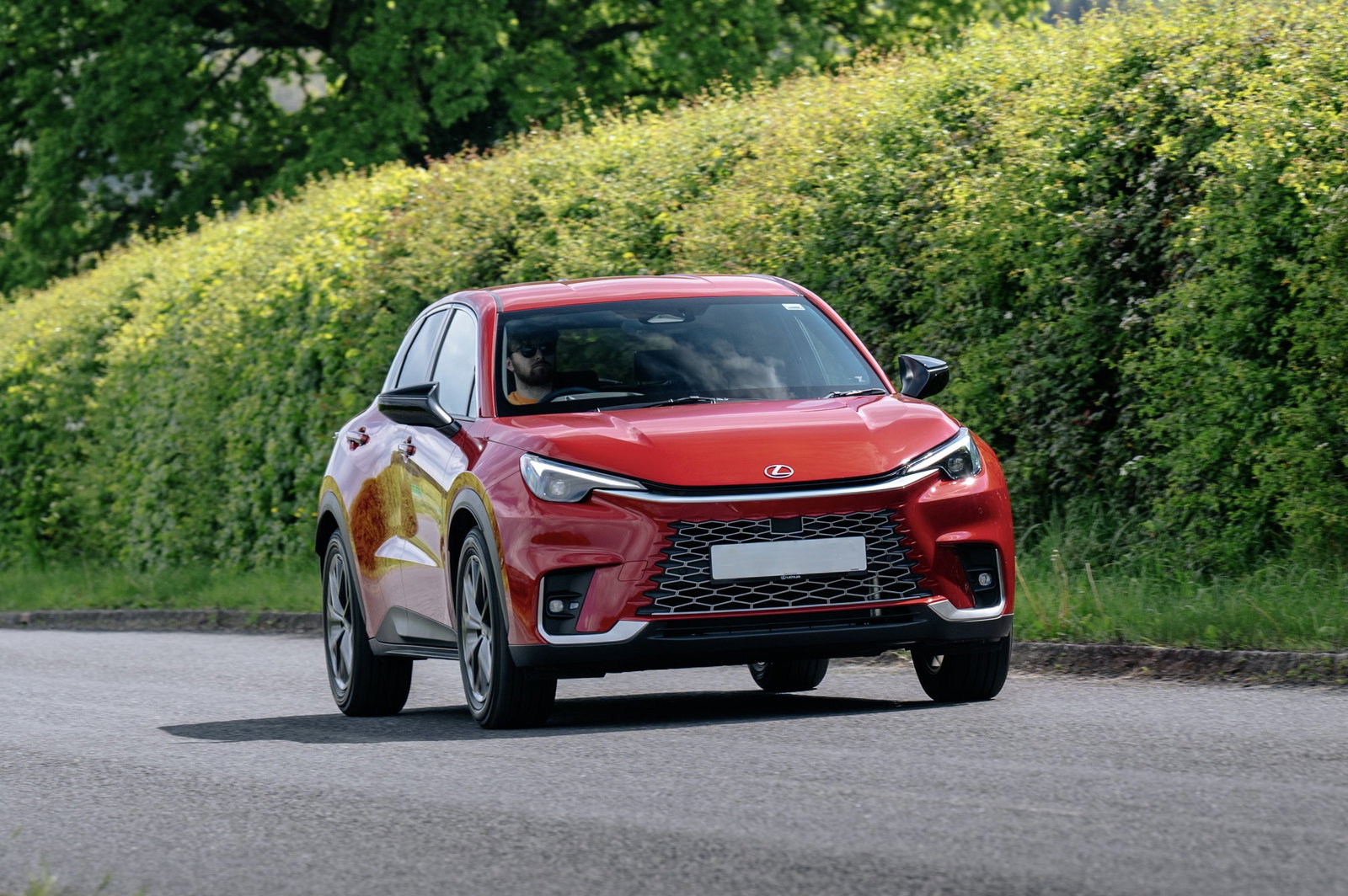
Lexus LBX Premium Plus. Credit: Lexus
Having been writing about all things automotive for a very long time I have been lucky enough to attend many press launches. I well remember the launch of the Lexus LS400, which was the first Lexus to arrive in the UK, back in 1990. It was a revelation in so many respects due to the power, smoothness and refinement of its engine, the luxury and the impeccable build quality. It was no understatement to say it shook the established European premium car makers.
For those not aware Lexus is the upmarket arm of Toyota and over 35 years since it launched Lexus remains a top flight player in terms of quality and reliability. Their range has expanded somewhat and now encompasses a broad range of models including the small, premium LBX SUV.
It carries the underpinnings of the Toyota Yaris Cross and designed to be both an entry point to Lexus and also attract younger buyers. It is more than a mere re-badge though, as can be seen from its quality and more sophisticated look and feel, both inside and out.
Prices start from €34,710/£29,995 with all models in the line-up being self-charging hybrids with a 136 bhp, 3-cylinder, 1.5-litre petrol engine and a choice of either front or all-wheel-drive. Standard fare across the range includes high beam assist, tyre pressure monitoring system, heated, powered and folding door mirrors, front and rear parking sensors, keyless entry and start, dual-zone climate control and Apple Car Play and Android Auto. The higher-level models can increase the specification to luxury car level standards.
On the road the Lexus is a smooth and refined drive, unless you push it hard when the usual CVT automatic gearbox characteristics (any CVT not just Lexus) of briefly high revs, before everything catches up and calmness resumes, rears its head. It is most un-Lexus-like. The secret is smooth and progressive acceleration, you soon pick up the knack, and when you do it’s a nice drive. There’s a lot of seamless switching between electric and petrol power and a lot of the time it’s difficult to tell whether the engine has actually kicked in such is the refinement, especially at low speed.
It’s no sports SUV but you can enjoy a brisk drive along mildly twisty cross-country routes and in normal daily use it’s a nice place to be whether commuting, doing the shopping, the school run or a long-distance holiday drive. If you want small, economical and premium, then the LBX might just be the answer.
Facts at a glance
- Model: Lexus LBX Premium Plus
- Engine: 1.5-litre, 3-cylinder, petrol self-charging hybrid developing 134 bhp/100kw
- Gears: e-CVT automatic
- Price: €40,728/£35,195
- Performance: 0-62mph/100kph 9.2 secs 106 mph maximum speed
- Economy: 61.4mpg/3.83 litres per 100km
- Emissions: 103 g/km
Model tested was UK-specification and equipment levels and prices may vary in other markets






Marbella Old Town. Credit: MaraZe / Shutterstock.com
Have you ever felt like you’re fighting a losing battle? Well, that’s what I’m feeling lately when I see the changes in our city.
At no time have I ever envisioned Marbella to be the new Miami, nor have I ever wanted it to be, however this does seem to be the objective of many a new arrival.
Investors come with new expectations and I’m not sure that I’m sharing the same vision as lately the words Marbella 2.0 and “the new Miami” are being brandished far too often for my liking.
“Mi Marbella”, my Marbella, is cute and quaint and historically we promote our Andalucian charm, five star luxury, Mediterranean peace and elegance, our climate, gastronomy, golf, nature and quality of life rather than a fast paced business hub. It’s our home.
Since I moved back full-time 14 years ago and have been involved with the media I have done my upmost to encourage us foreigners to foster a community spirit and to be more connected with our town hall; to take pride in the city we call home.
Nowadays it’s hard for us “mere mortals” to find a home we can afford as our city is increasingly promoted to large, international investors. While some see it as a symbol of Marbella’s growing prosperity, international prestige and luxury appeal, others fear it represents a loss of the town’s human scale, local culture and authentic Mediterranean identity and potentially, our ability to even live here. The world is changing so fast; I do so hope we can all keep up.
I suppose we shall just have to wait and see what we shall see.

Madrid is thriving once more. Credit: Songquan Deng / Shutterstock
Madrid, one of Europe’s largest capitals, has long been oddly overlooked – rather like the quiet guest at a dinner party who ends up being the most interesting person there. Rome has basked in admiration for millennia, London and Paris for centuries, Berlin for decades. Madrid, though, is a comparatively recent arrival to the limelight, now nudging confidently towards Europe’s top tier.
Unlike its grander rivals, Madrid is not the ancient soul of its nation. It only became the capital in 1561, when King Felipe II rather abruptly set up court there. His reasoning remains a mystery: maybe because of its central position and lack of troublesome local power – very little helps!
Early Madrid was dismissed as little more than a provincial outpost, yet it teemed with life – from medieval peasants rinsing offal in streams in the 13th century to King Felipe IV travelling by gondola through underground waterways for secret trysts in the 17th.
The old accusation that Madrid merely lives off the rest of Spain is equally misleading. As Spain’s empire expanded, so did Madrid’s cultural brilliance. Its golden age produced extraordinary talent (Velázquez, Cervantes, Lope de Vega) and even as Spain’s global influence waned, the city continued attracting remarkable figures like Goya.
Today, Madrid’s thriving once more, drawing tourists, talent and ambition – and quietly asserting itself as the capital of the Spanish-speaking world.
Thanks for emails to my website below! Thrilled you enjoy my novels too!
Nora Johnson’s 14 critically acclaimed psychological suspense crime thrillers, including the latest ‘The House of Secrets’ (www.nora-johnson.net), all available online at Amazon etc. Profits to Cudeca cancer charity.

A middle-aged woman inherits her father’s state in Spain, consisting on a modest apartment worth 150.000€. She is relieved to have received something valuable. Two weeks later, she receives a phone call from a law firm. Her father had taken out a loan for 100.000€, still outstanding. Within days, other creditors emerge. Medical bills. Credit card debts. A contractor her father hired years ago, now demanding payment. Etc.
Unfortunately, this scenario plays out more often than people realize. In Spain, when someone dies, their debts don’t disappear – they pass to their heirs. Understanding how this works, and what choices you have, is critical.
The core principle: heirs inherit obligations, not just assets
In most cases, the heirs accept the inheritance without fully understanding the deceased’s financial situation. Once you accept pure and simple (which is the standard and default way of accepting an inheritance in Spain) you become personally liable for all debts. Not just those listed in the estate – any debts that surface later. Your personal assets become exposed. If debts exceed the inherited estate value, creditors can pursue your own wealth to satisfy what is owed. This unlimited liability is the default position under Spanish law.
And what happens with the legatees?
By contrast, legatees do not take on the general position of the deceased. They receive specific assets or rights individually allocated in the will – such as a property, a sum of money, or a particular asset. As a general rule, they are not liable for the inheritance. However, the is an exception. If there are not enough assets in the inheritance to cover the debts, the creditors can also go against the legacies. And those would be reduced, if necessary, so that the debts are paid.
The alternative exists, but few know about it
Spanish law allows heirs to accept the inheritance “with benefit of inventory” – a formal process that limits your liability to the inherited assets. Your personal wealth, as heir, remains protected. However, this requires documenting everything the deceased owned and owed. The unfortunate reality: most people don’t learn about this option until after they’ve already accepted outright.
Before you make any decision
When facing an inheritance process, it is essential to understand the legal and economic situation of the estate before taking any step. If you are dealing with a potential inheritance involving debts, at White-Baos Lawyers we can assist you in assessing the risks and determining the most appropriate course of action. Reach out to us today.
You may be interested in the following services and articles:
Legacy claim. Court action against the heir for the handing over of the legacy.
Carlos Baos (Lawyer)
White & Baos.
Tel: +34 966 426 185
E-mail: info@white-baos.com
White & Baos 2026 – All Rights Reserved.
The Killer Rockets get ready to rip up Sala Rockefeller
New app alerts Spain drivers before traffic fines become more expensive
Farewell to a true gentleman, Frankie Valentine


-

 New Developments3 weeks ago
How To Get A Tourist Rental Licence In Andalusia (Spain) – Step-By-Step Guide 2025
-

 Uncategorized3 weeks ago
Max Verstappen Nurburgring LIVE: NLS5 Schedule, start times and free live streams
-

 Competiciones2 weeks ago
E
-
Asia4 weeks ago
Al Menos Cuatro Muertos, Tres De Ellos Niños, En Un Tiroteo En Un Colegio Del Sur De Turquía
-
cabin crew4 weeks ago
Spain’s Supreme Court rules EasyJet must reveal cabin crew identities
-

 Uncategorized4 weeks ago
Lando Norris unleashes F1 2026 criticism after Nurburgring test
-
Costa Blanca South4 weeks ago
Fire forces evacuation of six-storey building in Torrevieja
-

 Carles Puigdemont4 weeks ago
El Supremo Autoriza A Los Mossos A Destruir Las Pruebas Del Referéndum Del 1-O, Pero Ordena Conservar Una Muestra De Cada Una