
America
Matt Barreto: ‘More Than A Reversal Or A Shift In Voting Trends, The Latino Vote Is A Repudiation Of Trump’


Matt Barreto has spent years studying the Latino vote and advising the Democratic Party on an electorate whose support, while often taken for granted, is far from guaranteed, as became clear in 2024 when Latino voters helped propel Donald Trump to victory. Barreto worked on Hillary Clinton’s 2016 presidential campaign, Joe Biden’s 2020 campaign, and Kamala Harris’s 2024 bid. He also led Latino outreach for the Senate campaigns of Catherine Cortez-Masto in Nevada and Michael Bennet in Colorado. Between 2021 and 2025, during the Democratic administration, he served as a White House adviser.
He is currently a professor of Political Science and Chicana/o and Central American Studies at UCLA and president of BSP Research, the polling and research firm he co-founded. His latest polling for the November 3 midterm elections points to a return to the Democratic Party among Latino voters who backed Trump two years ago, helping Democrats regain control of the House of Representatives. However, he warns that this does not reflect growing support for Democrats so much as a rejection of President Trump. He believes that while both parties have begun to rethink how they engage with Latino voters, this remains an electorate that, despite being the fastest-growing voting bloc in the country, still does not receive the attention it deserves.
Question. You have worked on several election campaigns. What are the differences between presidential elections and midterms in terms of voter turnout and motivation?
Answer. Presidential elections always have the highest motivation and the highest enthusiasm for all Americans, and this is especially true for racial and ethnic minorities. Some people just don’t feel as connected, especially if they’re in a state that maybe doesn’t have an exciting election contest. We know there will be a drop-off this year compared to 2024, but the question will be whether or not it is a large drop-off or a small drop-off. Some states like Texas are running very close to presidential-level turnout.
Q. Early voting has increased in these midterm elections, even setting records in some places compared with 2022. What do you think is driving that trend?
A. Latino voters are very frustrated about the lack of economic recovery. Trump came into office on a campaign promise of economic recovery. He talked about his business experience and said he would understand how to manage the economy. But the economy has gotten worse, especially for Latino and working-class voters. This is the single biggest factor that is holding him back, and the entire Republican Party: voters are frustrated with grocery prices, gas prices, and tariffs. What’s more, health care costs have gone up because they’ve canceled the Affordable Care Act subsidies, and they’ve canceled Medicaid expansion. Everything is expensive, and when you’re the incumbent, you have to answer to the voters. And so that’s what is motivating the election far and wide for Latino voters.
Q. Polls are showing now that the Democratic Party has an advantage over the Republican Party. How reliable are the surveys? Could there be any surprises?
A. I don’t think there’s going to be any major surprises this year. Almost every single survey is showing that Democrats are on pace to win back the House, with seven points on average; I think that is almost a certainty. The Republicans have a lot of negative ratings, by the fact that they haven’t differentiated themselves from Trump. The Senate is definitely much more up for grabs.
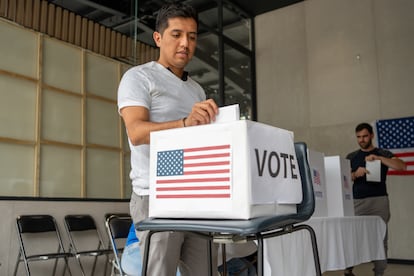
Q. Are we truly seeing a return of Latinos to the Democratic Party, or is it rather a move away from Trump?
A. It is a sharp move away from Trump. And because we have a two-party system in the United States, Latino voters are going to the Democrats. I wouldn’t say it’s a reversal; I would say it’s a repudiation of Trump. It’s definitely not a trend. It’s one data point, and that’s what we said in 2024. What happened in 2024 wasn’t a trend — although a bunch of people thought it was — and now here we are looking at the opposite.
But the Democrats will need to have a message after this election about why Latinos should continue to support them, and they will need to have some deliverables. This is part of the reason that the Latino vote looks as though it swings back and forth: there’s no overarching partisan alignment among Latinos, so each party always needs to make their case every two years.
Q. Why is the Latino vote so relevant this year?
A. Because it has appeared to shift between Democrats and Trump for the last three or four elections. Democrats had a very good election in 2018, the first time Trump was president during that midterm. The Democrats took the House back, and Latinos voted pretty heavily Democratic. But then, in the next few elections, Republicans started to get more votes, especially in 2024. And now in 2026, it looks like the Latino vote is shifting back.
The other factor is that the Latino vote is growing faster than any other vote. Latinos are now an important voting bloc, not just in Texas, but in North Carolina, in Georgia, and in a number of states. The Senate race in Iowa might be decided by two or three percentage points and Latinos are up to about five or six percent in that state.
Q. Latino voter turnout has traditionally been lower than that of other voter groups. What accounts for this?
A. Historically, there has not been a lot of party outreach, and so if the candidates don’t come knock on your door or call you, then you’re less likely to vote. And the candidates focus on people who they think are likely voters, and so if they don’t think you’re a likely voter, they don’t call you.
There has been a long history of under-mobilization of the Latino community, and that’s the primary reason, not because Latinos don’t care about politics. That’s starting to change. We are seeing a big change in places like Texas. There’s lots of outreach and lots of ads in English and Spanish. There is a Latina running for governor. It’s a very exciting time to be seeing this dramatic increase in Latino voter outreach.
Q. Which groups of Latinos are more likely to abstain from voting?
A. Younger people. And part of the reason that Latinos appear to have lower voter turnout is that we’re the youngest group. So the same trend exists for young white voters, young Black voters, young Asian voters, especially in a midterm. And for Latinos, our largest demographic segment is voters under 40, while for white voters, their largest demographic segment is voters over 60. People who are over 60 — whether they are Latino, Black, or white — vote at super high rates because they’ve been around, they see the political system, and understand why their vote can influence things. Whereas younger people don’t have as much faith in the system.
Q. There are around four million Latinos who can vote for the first time because they turned 18 years old. Is there anything that defines them?
A. They are very concerned about getting a good-paying job and being able to afford a place to live. They want to make sure they have health care. They are just starting out in their careers, and typically the political parties and the established politicians don’t do a good job of talking to younger voters, especially younger Latino voters. So if they don’t hear from the political parties and the candidates, they’ll probably vote at low rates. And this is a very, very important group because it’s substantial in size.
Q. The first concern of the Latinos is the economy. That is also the main concern of all citizens. Is it right to keep speaking about them as a separate group?
A. All Americans have the same worries this election: the cost of living, affordability, gas prices, and the war in Iran, which has very low support. So there are a lot of similarities. There is also a sense of anti-establishment, anti-incumbent sentiment that we’re seeing across the board. At the same time, all voters want to feel like the politicians care about their community. Latinos might have the same concerns, but if the politicians never show up in the Latino part of town, or they never air any ads in Spanish, or they don’t have any Latinos on their staff, then it doesn’t matter if you have the same concerns because you feel left out.
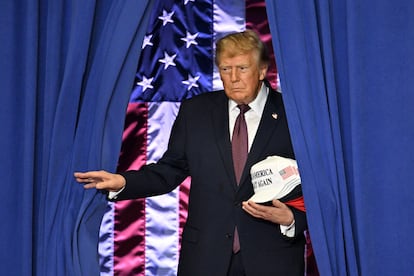
Q. Latino organizations insist that Hispanics do not vote as a monolithic bloc. Does it still make sense, then, to study them as a single electoral group?
A. Most Latinos agree that they have a lot in common with other Latinos. However, you shouldn’t think of them as a cohesive unit. Do all 40 of them like the same food, music, and candidates? No. So the diversity doesn’t mean that Latinos aren’t a voting bloc; they are, but they still have diversity in the same way that all groups do. If you think about the groups that have gotten other attention — such as working-class white men — they don’t all vote the same, they don’t all vote 100% Republican, and they don’t all have the same issues. But they’re an interesting demographic group because they do have a lot in common, and that’s the same with Latinos.
Q. Beyond the economy, Latinos are the group most affected by this administration’s aggressive immigration policies. To what extent does this influence whether Latino voters change their vote?
A. Immigration is not the number one issue for Latinos, but it is the number one anger issue. And anger leads to mobilization. Many people are very upset; they didn’t think Trump would be as extreme. They thought he was only going to be finding these so-called criminals, but he’s not. So when you have an economy that’s not recovering, and you have your immigration police in the streets — literally shooting people —, it’s a terrible situation. That’s why you see people like María Elvira Salazar in Florida and others distancing themselves from Trump. It’s a double negative in the same cycle. If the economy was doing amazing and everyone was making $300,000, people would still be mad about immigration, but the economy always drives people’s vote.
Texas barometer
Q. The race for the Senate seat in Texas between Democrat James Talarico and Republican Ken Paxton has attracted enormous attention and campaign spending. Trump has been more involved there than in other contests. Will it serve as a barometer for the supposed shift in the Latino vote?
A. Texas is interesting, and we need to look at the results by region. We have the South Texas Rio Grande Valley region that has gotten a lot of attention because it has voted heavily Democratic and more 50-50 for Trump in recent years. That is a very interesting region because it is very working class, it’s lower income, less educated, and near the border. That’s the first region to pay attention to because it does send a signal, not just for Latinos, but for its large rural areas.
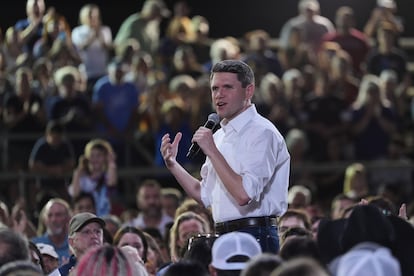
Given Trump has generally done very well with rural voters and Republicans, it tells us something not just about Latinos down there, but about rural Americans, working-class Americans in general, as well as Latinos in the rest of the country who might be in a similar situation. And then you have the cities, which tend to be much more democratic. In the past, they have not been a particularly strong electoral force, because they haven’t had high voter turnout. Houston, for example, has one of the lowest voter turnout rates of any big city in America. Definitely, there are a lot of clues in Texas that we’ll get as we get the data.
Q. Beyond Latino voters, is there another group that could drive a shift into Congress?
A. We’re seeing similar trends with Asian Americans, another group that is very immigrant-heavy and also shifted in 2024. We’re seeing similar shifts back: this group, which is also very economy-oriented, thought that Trump was going to recover the economy; however, they are very upset about the cost of living and the lack of progress on affordability.
Q. Republicans have made a major effort to redraw electoral districts in ways that reduce the influence of minority voters, a practice known as gerrymandering. What impact will this have on the election results?
A. They drew these districts based on the 2024 vote, where Trump did much better with Latinos, but now he’s doing much worse. In states such as Texas and Florida, the districts that got redrawn may not perform for Republicans. They made some wrong assumptions by only looking at the 2024 data.
Sign up for our weekly newsletter to get more English-language news coverage from EL PAÍS USA Edition










America
‘Theft, Deception, And Concealment’: Other Industrial Espionage Scandals That Echo The Nvidia Case

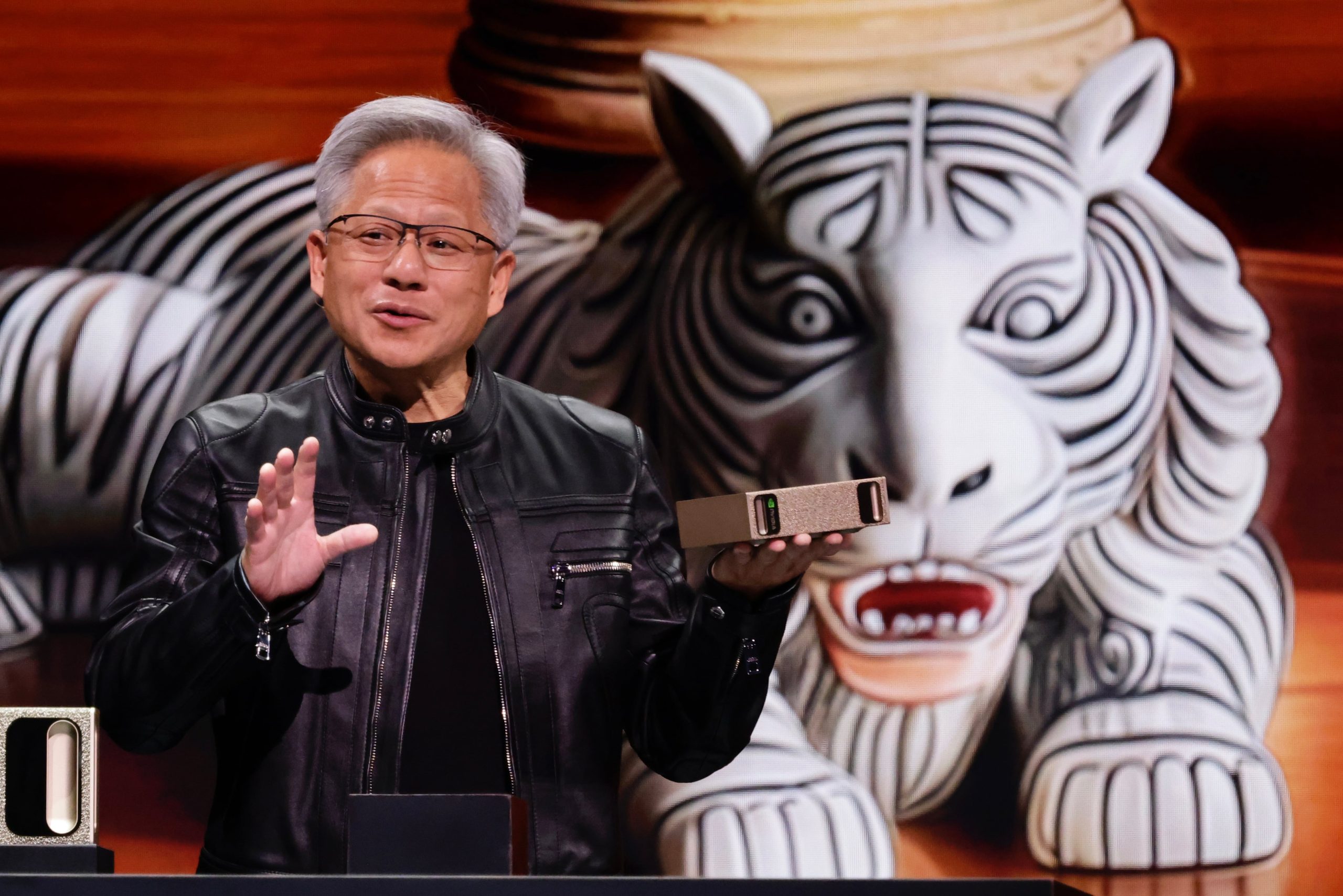
Behind the sensational details surrounding Nvidia CEO Jensen Huang’s admission of an extramarital affair is an alleged Chinese espionage plot to gain access to the technology giant’s most advanced chips.
The United States has been investigating the powerful executive, who is close to President Donald Trump, for nearly a year. But it was a letter from Huang that brought the matter into the headlines last Sunday. The 63-year-old admitted in a letter to Nvidia’s board that he had been unfaithful to his wife with a woman named Alice Huang, who is suspected of being a Beijing spy. The Chinese government has denied the allegations, and Trump himself weighed in, saying the FBI was investigating the matter but that he did not believe the head of the world’s largest chipmaker had any reason to worry.
The alleged scheme recalls other industrial espionage cases that have rocked prominent companies. This week, a case in which the United States government accuses Chinese company Huawei of being a “criminal” enterprise that “stole” from American companies to establish itself as a telecommunications giant was heard in court.
US accuses China’s Huawei of theft
“Theft, deception, and concealment” were three words used by Justice Department attorney Taylor Stout during a November 9 hearing in a New York court.
“For 20 years, that’s how Huawei, a massive Chinese telecommunications company, victimized American companies and abused the American financial system, all in an effort to dominate the telecommunications industry around the world,” Stout argued, according to Reuters. The alleged misconduct attributed to Huawei by the United States included a conspiracy to steal trade secrets from several American companies, including Cisco Systems and T-Mobile.
The company’s defense rejected the allegations. “It’s about competition, not conspiracy. Innovation, not theft. Ordinary business dealings, not criminal conduct,” attorney Brian Heberlig said, according to Reuters.
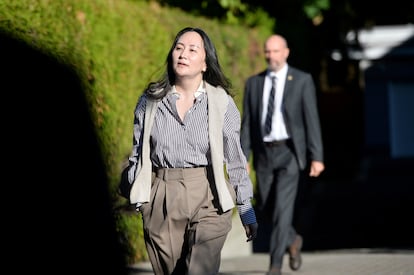
The case dates back to 2018, when the United States accused Huawei and its chief financial officer, Meng Wanzhou, of fraud and alleged violation of U.S. sanctions. Prosecutors said the company had misrepresented its business dealings in Iran to circumvent the sanctions and move money through the U.S. financial system. The allegations later expanded to include the alleged theft of trade secrets, which Huawei maintains was limited to “actions by individual employees” that were addressed at the time.
The case also made headlines in 2018 when Wanzhou was arrested in Vancouver at the request of the United States. The executive fought extradition for three years and was able to return to China following a diplomatic agreement among the three countries involved. The charges against her were dismissed in 2022 as part of an agreement, but her statements are expected to be used as evidence in the current case against Huawei.
Wind turbine manufacturer nearly bankrupted after losing its technology
When wind turbine manufacturer AMSC did business with Chinese company Sinovel Wind Group, it could not have foreseen an outcome that would bring it to the brink of bankruptcy. In 2018, Sinovel was found guilty in a U.S. court of stealing trade secrets from AMSC and was handed the maximum fine allowed by law: $1.5 million. That figure was negligible compared with the more than $550 million in losses AMSC suffered, according to a court in Madison, Wisconsin.
“Rather than pay AMSC for more than $800 million in products and services it had agreed to purchase, Sinovel instead hatched a scheme to brazenly steal AMSC’s proprietary wind turbine technology, causing the loss of almost 700 jobs,” the U.S. Department of Justice said in a statement at the time.
The scheme was carried out with the help of Dejan Karabasevic, the former head of the engineering department at an AMSC subsidiary in Austria. Two executives from Sinovel’s research and development division persuaded him to join their company and take with him the source code used in AMSC’s turbines.
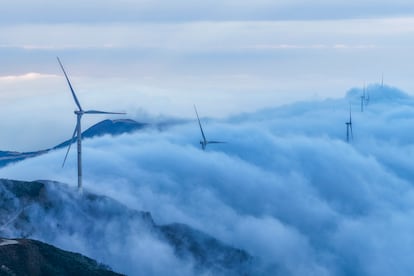
Karabasevic downloaded the code from a computer in Wisconsin, United States, onto a computer in Klagenfurt, Austria. Sinovel subsequently commissioned several wind turbines from AMSC and copied the stolen code into them, completing the theft for which it was later held responsible in a U.S. court.
The ‘Spygate’ scandal that rocked Formula One
In this case, the fine was considerably higher: $100 million. The penalty was imposed on McLaren in 2007 after the team was found to possess confidential information belonging to its competitor, Ferrari.
At the home of Michael Coughlan, McLaren’s chief designer at the time, investigators found a dossier of approximately 780 pages containing detailed technical information about the design, engineering, construction, testing, and development of a Ferrari Formula One car. The dossier also included information about the vehicle’s weight distribution, aerodynamics, and fuel systems, according to a document outlining the decision by the International Automobile Federation (FIA).
The investigation also found that Coughlan had held dozens of telephone conversations and exchanged more than 100 text messages with Nigel Stepney, who was then employed by Ferrari.
P&G contractors rummage through Unilever’s trash
The two consumer goods giants became embroiled in a dispute in 2001 after Procter & Gamble acknowledged that contractors had searched through and taken documents from Unilever trash bins outside its offices in Chicago, Illinois.
Procter & Gamble agreed to pay nearly $10 million and allowed an independent auditor to monitor the company, assuring its competitor that it would not use the nearly 80-page hair-care business plan that the contractors had retrieved from the trash.
No further details of the out-of-court settlement were disclosed at the time. Procter & Gamble said the contractors had not broken the law but had violated the company’s ethical policies. The company itself informed Unilever that the contractors had improperly obtained the plan related to its hair-care division, according to an article in The New York Times.
America
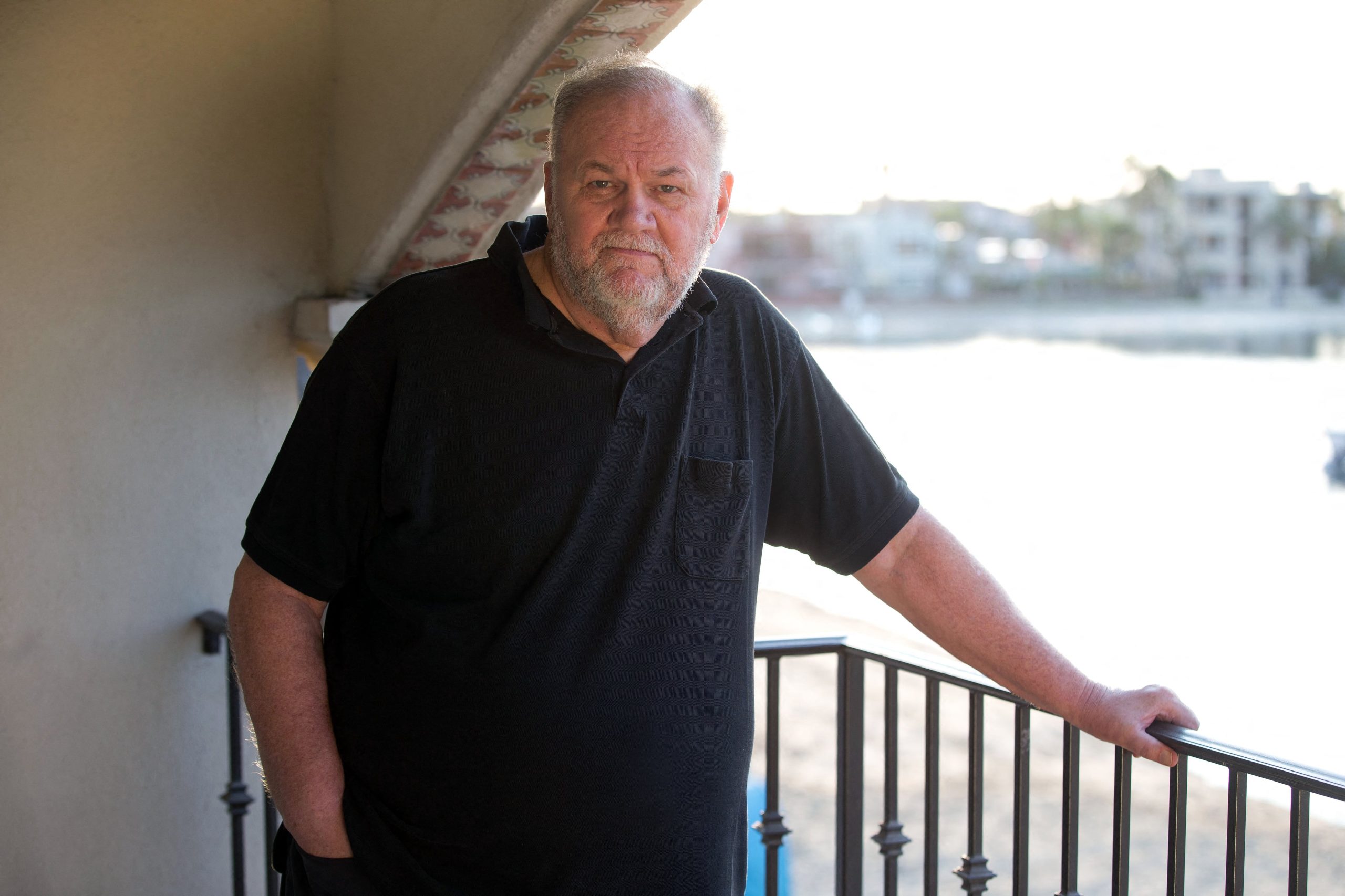
Thomas Markle Se Corta La Pulsera Electrónica De Vigilancia Y La Jueza Decide Meterlo En Prisión Sin Fianza


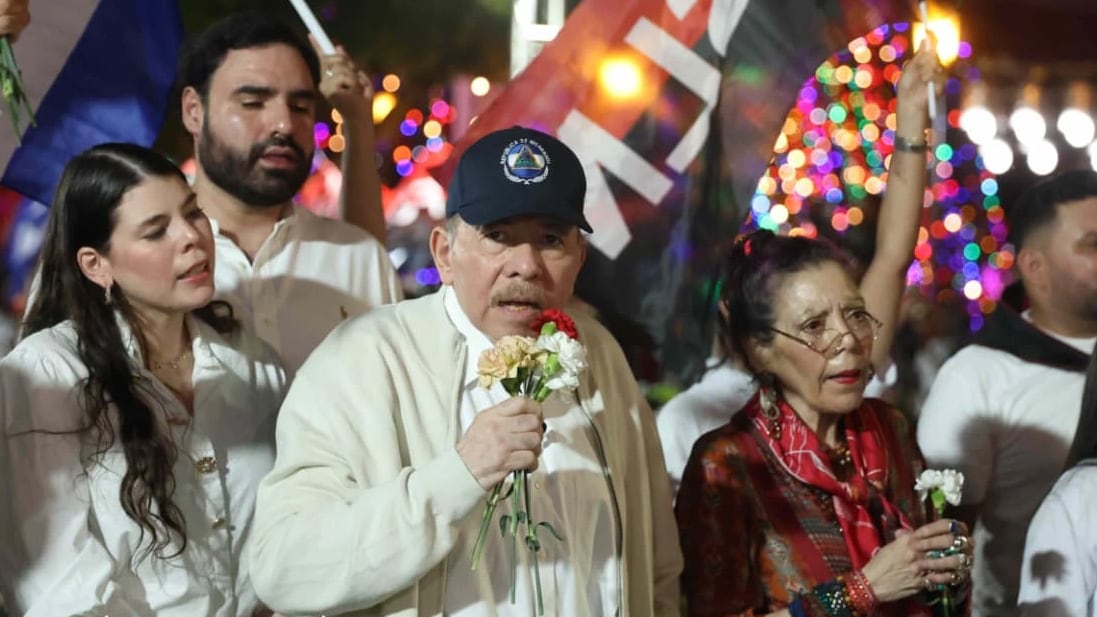
Daniel Ortega reappeared in public on the night of Monday, November 9 after 68 days of uncertainty about his health. He was seen in the old Plaza de la Revolución in Managua, the capital of Nicaragua, to preside over a tribute to Carlos Fonseca, one of the founders of the Sandinista National Liberation Front (FSLN), the party he controls. The president appeared visibly weakened: the Nicaraguan strongman, who will turn 81 this Wednesday, walked extremely slowly, with short steps, his complexion pale and expression somewhat disoriented, at one point holding a bouquet of flowers up to his mouth as if it were a microphone, despite already wearing one on his jacket lapel.
At an event announced the afternoon before by his wife, co-president Rosario Murillo, amid growing rumors about his health, Ortega made a brief reappearance. He arrived at the square accompanied by dozens of members of the Sandinista Youth, one of his daughters and other relatives, who surrounded him during a short walk around Fonseca’s mausoleum, whose anniversary is one of the regime’s main annual commemorations.
However, there was no speech this time. Ortega barely managed a few disjointed sentences while Murillo watched him constantly, her expression at times appearing anguished. ‘Carlos, here are the young people, those who will never forget you, those who will never betray you, those who will always be loyal to you, to the death,’ Ortega said in a voice slower than usual, while the official broadcast avoided close-ups and favored aerial drone shots and wide framings.
Record absence
Ortega had not appeared in public since September 2, when he presided over an event marking the 47th anniversary of the Nicaraguan Army. Since then, his absence became the longest since he returned to power in 2007, surpassing his own record of 61 days, set in 2024 and repeated in 2026. The leader’s disappearances have become increasingly frequent and prolonged: before 2020 his absences did not exceed 37 days, but later reached periods of 52, 55 and 61 days, culminating in the 68 days of this latest absence. His public appearances have also collapsed.
According to a tally by the newspaper Confidencial, Ortega had appeared only 11 times in 2026 up to that point, compared with an average of 26 appearances between January and October of each year from 2018 to 2025. The prolonged absence of the strongman also kept him away from events he traditionally attended. For the patriotic holidays in September, Murillo announced that the presidential couple would receive, as in most years, the Central American torch, but the September 12 ceremony ended up taking place without either of them. Their children Maurice and Camila Ortega Murillo showed up in their place.

But beyond his physical absence, Ortega’s unusual political silence stood out amid a succession of international events that in earlier times would have prompted fiery speeches against the United States and other adversaries. During these 68 days, the regime refused to receive Natasha Franceschi, the ambassador-designate sent by Donald Trump, prompting Washington to recall its top diplomat in Managua, Elias Baumann, for consultations. Neither Ortega nor Murillo have offered public explanations for a decision announced by Washington itself, which deepened the bilateral diplomatic crisis.
They also did not respond to statements by Colombian president Abelardo de la Espriella, which reignited tensions over sovereignty of Caribbean waters, the subject of a historic dispute between the two countries. Murillo, who effectively handles the regime’s daily communications by herself, considerably toned down her usual confrontational rhetoric toward Washington, while continuing her attacks on the Nicaraguan opposition.
State secrecy
Ortega’s health is managed with total secrecy and repeatedly fuels intrigue about his condition. The regime never releases medical bulletins about the leader nor explains his prolonged public absences. The secrecy extends to his inner circle and has turned any change in his physical appearance or Murillo’s political moves into grounds for speculation about his ailments and a potential succession.
This time, suspicions intensified particularly after — during Ortega’s disappearance — the National Assembly unexpectedly approved a new constitutional reform that eliminated the vice presidency and established so-called ‘presidential designates,’ just 20 months after the reform that created the co-presidency. Opposition analysts interpreted the move as another attempt by Murillo to reorganize power shares among family members and close allies to shield a dynastic succession in case of her husband’s definitive absence.
The uncertainties also have a medical backdrop. An investigation published last May by the outlet Divergentes revealed that Ortega has a VIP suite set up to treat his ailments at the Carlos Roberto Huembes Hospital, the National Police’s medical center. Hospital sources and people close to the power circle confirmed he suffered a relapse in mid-2025, was hospitalized for at least five days between September and October that year and, during the first quarter of 2026, visited the hospital once or twice a week to receive medical attention and preventive care under strict security measures.
Sign up for our weekly newsletter to get more English-language news coverage from EL PAÍS USA Edition
Mensaje Enviado
Spain Under Weather Warning For Storms And Hurricane-Force Winds

False Leads And Road Checks: Search Continues For Fugitive Responsible For Explosive That Killed A Police Officer In Spain
Viral video in Spain sparks fury over drivers who ‘have no idea how to drive’
Spain’s pet owners face fines of up to €200,000 for animal welfare offences
Barcelona plans 150% property tax increase on tourist flats ahead of 2028 ban


-
DGT4 weeks ago
Viral video in Spain sparks fury over drivers who ‘have no idea how to drive’
-
Keeping cats and dogs outside4 weeks ago
Spain’s pet owners face fines of up to €200,000 for animal welfare offences
-
Council tax (IBI)4 weeks ago
Barcelona plans 150% property tax increase on tourist flats ahead of 2028 ban
-
Consumer Rights Spain3 weeks ago
EU offers extra year of warranty on phones, but Spain faces delays
-
Age Concern Marbella - San Pedro2 weeks ago
Halloween lunch sells out as 51 join Marbella get-together
-
airports4 weeks ago
Travelling between Spain and Italy? The extra border checks could soon end
-

 %4 weeks ago
Santa Pola Museo Del Mar
-

 New Developments2 weeks ago
How To Get A Tourist Rental Licence In Andalusia (Spain) – Step-By-Step Guide 2025