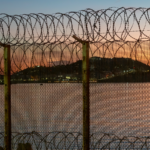
Spanish authorities have also reinforced security on their side of the frontier. Photo credit: JUAN ANTONIO ORIHUELA/Shutterstock
When thousands of people converged on Ceuta in one of the largest irregular crossings ever witnessed on Spain’s southern border, the images dominated headlines across Europe. Rescue teams pulled people from the sea, security forces struggled to contain the flow and families were left searching for loved ones who never made it home. Yet long after the beaches emptied and the emergency response began to wind down, one question refused to disappear. Who organised it?
For days, Spanish and Moroccan officials pointed towards criminal networks that had exploited vulnerable people with promises of an easy route into Europe. There was speculation, accusations and rumours, but little indication that those allegedly responsible had been identified. Now, Morocco says that has changed.
Prosecutors move against alleged organisers
Moroccan judicial authorities have opened proceedings against 86 people accused of organising and facilitating the mass crossings towards Ceuta, describing the arrests as part of a wider operation targeting the networks believed to have coordinated the movement of thousands of migrants. According to the Moroccan Association for Human Rights (AMDH), the suspects appeared before courts in Tetouan and Nador, two of the areas where investigators believe much of the planning and organisation took place before the attempted crossings.
The largest group of defendants is facing accusations linked to organising irregular migration, transporting migrants illegally and public disorder. Others have been charged with assaulting members of the security forces, damaging public property and refusing to comply with police orders during the operation.
Investigators believe false promises fuelled the crossings
The investigation centres on claims that organised groups encouraged migrants to travel towards Ceuta by spreading misleading information about what would happen if they reached Spanish territory. According to Moroccan authorities, rumours circulated through social media and messaging platforms suggested that anyone who managed to enter Ceuta would automatically be allowed to remain in Spain. Investigators believe those claims, combined with the work of people-smuggling networks, convinced thousands that the crossing offered a realistic chance of reaching Europe.
Officials argue that the movement was far from spontaneous. Instead, prosecutors believe groups of organisers helped coordinate transport towards the border, directed people to crossing points and exploited the desperation of migrants who were prepared to risk everything for the possibility of a better future. The allegations will now be tested in court, where prosecutors are expected to present evidence gathered during the investigation.
Some defendants have already been sentenced
While many of the cases are only just beginning, Morocco’s courts have already handed down the first convictions connected to the operation. Eleven defendants have received prison sentences of up to six months, together with fines that can reach €1,000. Dozens of other suspects remain before the courts, with further hearings expected in the coming weeks as investigators continue examining the evidence.
Among those prosecuted are five minors, who were referred to child protection services rather than being dealt with through the adult criminal courts after allegations they were involved in acts of violence and vandalism during the unrest. The legal action represents Morocco’s clearest attempt yet to show that its response is focused on those accused of organising irregular migration rather than the migrants themselves.
A tragedy that claimed at least 141 lives
The prosecutions come after one of the deadliest migration disasters ever recorded on the western Mediterranean route. Rights organisation Caminando Fronteras estimates that at least 141 people died attempting to reach Ceuta during the crisis. Bodies were recovered from both Moroccan and Spanish waters in the days that followed, while families continued searching for relatives who disappeared during the crossings.
Although different organisations have published varying death tolls, there is little dispute over the scale of the tragedy. The events have intensified calls for stronger action against trafficking networks that profit from vulnerable migrants while exposing them to extreme danger.
The investigation is far from over
Moroccan authorities insist the operation remains active and have not ruled out further arrests as investigators continue tracing the networks they believe orchestrated the crossings. The prosecutions are also intended to counter claims that Morocco deliberately relaxed border controls during the crisis. Rabat has repeatedly rejected those accusations, maintaining that organised criminal groups exploited the situation by spreading false information and encouraging large numbers of people to head towards Ceuta simultaneously.
A crackdown, but no easy answers
Whether the 86 prosecutions will dismantle those networks remains to be seen. Human rights organisations have called for every defendant to receive a fair trial and proper legal representation, while warning that prosecuting organisers alone will not address the poverty, conflict and lack of opportunity that continue to drive migration towards Europe.
For Spain, the court cases may provide the first detailed picture of how one of the most dramatic border crises in recent years was organised. For the families who lost loved ones, however, identifying those accused of orchestrating the crossings cannot undo the human cost. What the prosecutions may do is reveal how a tragedy that claimed more than a hundred lives was able to gather momentum in the first place, and whether similar networks are still operating today.









 New Developments2 weeks ago
 Latest2 weeks ago
 Amazon2 weeks ago
 Barcelona2 weeks ago
 New Developments2 weeks ago