Connect with us

%

More Than 400 Customers Hit By Travel Scam As Families Lose Up To €9,000

Published

on

more-than-400-customers-hit-by-travel-scam-as-families-lose-up-to-e9,000

Victims want to know whether their money can be recovered. Photo credit: neme_jimenez/shutterstock

Some Spanish families are currently living a nightmare after realising they have been scammed out of their holiday and are now facing the possibility of telling their children that their dream Disneyland trip is not happening after paying thousands of euros for holidays they say were never properly booked.

More than 400 customers have now joined together after claiming they were left without their trips and without the money they had paid to a travel agency in L’Escala, Girona. Some families say they handed over more than €9,000 for their holidays, others had been saving for months, even years or had bought trips as Christmas or Three Kings presents for their children, only to discover that the flights, hotels or attraction tickets they believed they had paid for were never made and were nonexistent.

Families arrive at departure date without bookings

Several customers say they only realised something was wrong when their travel dates approached, one of the most painful parts of the situation has been the effect on children who had been promised a special family holiday. For some parents, the Disneyland Paris trip was intended as a Christmas present. Their children were expecting to visit the theme park, stay away from home and enjoy a holiday that their parents had carefully planned and paid for.

Instead, families were left trying to establish whether their reservations actually existed. One customer contacted the airline directly to check her booking and was reportedly told that she was not the airline’s customer, the travel agency was. That left her with a simple question: if she had paid the agency for the trip, where were her tickets?

Some families paid more than €9,000

The amounts involved vary between customers, but some families say they paid several thousand euros for their holidays. One family had paid around €3,070 for a Disneyland Paris trip, others say they paid more than €9,000.

For most families paying these amounts, replacing a cancelled holiday at short notice may be impossible, particularly during school holidays when flights and hotels can cost considerably more. The money may also represent months of savings, parents who had organised trips around their children’s birthdays or Christmas presents are now having to deal with a situation they never expected when they made the booking.

More than 400 customers join forces

As complaints mounted, more than 400 people affected by the situation connected through social media. The groups have allowed customers to compare what happened with their own bookings and discuss how much they paid. Some say they received explanations or assurances before eventually discovering that their travel arrangements were not in place.

The customers are also trying to establish how many bookings were affected and how much money was handed over in total. The number of people involved means the dispute extends far beyond one family’s cancelled holiday.

Customers paid before receiving their travel documents

According to customers affected by the case, they were expected to pay the full cost of their holidays to the agency. Tickets and other travel documents were then supposed to arrive shortly before departure, with some customers expecting to receive them around a week before they were due to travel. That meant some people had already paid thousands of euros before discovering a problem.

By the time they began contacting airlines, hotels or other companies directly, their departure dates could be only days away. For a family travelling abroad, that leaves very little time to arrange a replacement holiday. One customer who contacted her airline directly was told that she was not its customer because the booking had been made by the travel agency. The discovery left her having to find out whether the reservation she believed she had paid for actually existed.

Disneyland dreams become a financial problem

Disneyland Paris is among the trips booked by affected families. For children, a Disneyland holiday can be one of the most anticipated presents they receive, for parents, it can involve a substantial financial commitment. One family had planned its trip as a Christmas present for the children.

Instead of preparing for the journey, the family was left trying to establish what had happened to the holiday and the money paid for it. For the affected customers, the immediate concern is no longer simply whether they will get to Disneyland or take their planned holiday. They want to know whether their money can be recovered.

Investigation into suspected fraud

The situation is being investigated as a suspected fraud, while affected customers are seeking answers and trying to recover the money they paid. The full financial value of the bookings has not yet been established. More than 400 people have now connected over the case, with individual losses ranging from thousands of euros to more than €9,000 for some families.

For parents who had promised their children a few days at Disneyland Paris, the disappointment is heartbreaking, for those who handed over thousands of euros that they had spent years saving, there is another concern that is harder to put aside: whether the holiday money they gave for will ever come back.

%

Balearics Ban Energy Drink Sales To Under 18s

Published

on

balearics-ban-energy-drink-sales-to-under-18s

The Balearic Islands have approved new public health measures aimed at protecting young people by restricting the sale of energy drinks to under-18s and tightening controls on recreational use of nitrous oxide, commonly known as laughing gas.

The regional government says the measures are designed to address growing concerns about the impact of certain substances on children and teenagers. The new rules, approved on Friday August 7, form part of a wider effort to prevent risky consumption habits and improve protection for minors.

Energy drink sales to minors banned

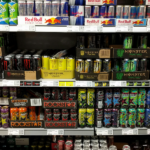
Under the new regulations, shops and retailers in the Balearic Islands will no longer be allowed to sell energy drinks to people under the age of 18. The government has highlighted concerns over the high caffeine content found in many of these products and their increasing popularity among teenagers.

Health officials have warned that frequent consumption can be associated with problems including sleep disruption, anxiety, increased heart rate and raised blood pressure. Authorities have also raised concerns about young people mixing energy drinks with alcohol, which can affect perceptions of intoxication.

The measures distinguish energy drinks from sports or isotonic beverages, which serve different purposes and are not included in the same restrictions.

Crackdown on recreational nitrous oxide use

The new decree also introduces restrictions on the sale of nitrous oxide for recreational purposes. While the gas will continue to be permitted for legitimate medical, dental, food and industrial uses, authorities are targeting its use as an intoxicating substance.

Officials say the substance can appear harmless because of its short-term effects, but repeated or excessive use can lead to serious health consequences, including neurological problems linked to vitamin B12 deficiency.

Fines for breaking the new rules

Businesses that ignore the restrictions could face significant penalties, with fines ranging from thousands of euros to as much as €60,000 depending on the offence.

The government argues that stronger controls are needed because young people may underestimate the risks associated with both energy drinks and recreational nitrous oxide use.

Health protection placed at the centre of policy

The Balearic Islands’ decision reflects a growing debate across Spain and Europe about how authorities should respond to products that are widely available but may pose risks to younger consumers.

Officials say the priority is prevention, with the aim of reducing exposure among teenagers and encouraging healthier choices. The measures will now move through the required legislative process as part of the region’s public health strategy.

Continue Reading

%

Why Mijas Road Markings Wear Out So Quickly

Published

on

why-mijas-road-markings-wear-out-so-quickly

Drivers and walkers across Mijas Pueblo and Mijas Costa keep noticing the same thing: white lines, zebra crossings and parking bay markings fade, flake or vanish far sooner than expected. Fresh paint appears, only for tyres, weather and cleaning crews to take their toll again within months. It’s a frequent complaint among local residents. Local operational services are now rolling out a fresh round of on-street signage upgrades to keep traffic and pedestrians safer.

Work has already transformed the parking layout at El Bombo beach on Avenida de El Descubrimiento. New markings are also reorganising existing spaces, freeing up extra bays and the smooth the flow of cars heading to the sand. Similar jobs have refreshed pedestrian crossings in La Ponderosa and Polarsol, while Calahonda has gained clearer motorcycle parking, vehicle entrances and spaces reserved for people with reduced mobility. Crews will next turn their attention to areas around schools ahead of the new term, then move into important spots in Mijas Pueblo near Plaza Virgen de la Peña. A specialist contractor will soon join the in-house teams so the programme can cover more ground.

Steep slopes put constant stress on the paint

Mijas Pueblo, clinging to a steep mountainside, means that cars accelerate hard uphill and brake sharply on the way down. Those repeated horizontal forces scrape paint off the surface much faster than on flat coastal roads. Narrow lanes full of tourist buses, delivery vans and everyday traffic only speed up the grinding process.

Smooth stones and tiles refuse to hold the coating

Many streets still use polished stone, traditional cobbles or tiles instead of open-textured asphalt. Paint sits on top rather than keying into the surface. Once tyres roll over it day after day the film lifts, cracks and peels away. Rough asphalt grips better; the older materials in the pueblo simply do not.

High-pressure cleaning keeps the village white but strips the lines

Mijas takes pride in its pueblo blanco look. Regular street washing with powerful jets, degreasers and industrial cleaners is part of that effort. The same pressure that shifts dirt also blasts road paint off the ground. Clean streets come at a cost to the markings.

Southern sun and heat finish the job

Intense ultraviolet light and high summer temperatures break down the polymer binders in both standard and thermoplastic paints. The coating turns brittle, loses colour and starts to crack. Research into pavement markings shows UV exposure and heat accelerate yellowing and loss of visibility, especially on lighter-coloured lines that need to stay bright for safety.

Traffic density across the municipality adds the final pressure. Narrow lanes see a constant mix of private cars, heavy vehicles and foot traffic that grinds the surface further.

Ongoing work and bigger plans for safer streets

The current programme forms part of routine maintenance carried out with local resources and coordinated with traffic and public-way teams. A new contract for specialised signage work is due shortly, allowing faster coverage of more neighbourhoods and urbanisations. Similar safety improvements have featured in earlier municipal efforts, including earlier road-safety packages and larger infrastructure packages that tackle parking shortages and street repairs across Mijas.

Drivers can expect clearer lines around school zones first, then improved visibility in the historic centre. Pedestrians will benefit from better-marked crossings and reserved bays. While the combination of slopes, surface materials, cleaning routines, strong sun and modern paint rules means the markings will never last forever, regular repainting remains the practical answer. Residents and visitors alike should find the roads easier to navigate as the teams continue their rounds through the rest of the summer and into the school year.

Continue Reading

%

Wild Boars Race Along A-7 Motorway Edge In Mijas

Published

on

wild-boars-race-along-a-7-motorway-edge-in-mijas

Boars attempting to cross busy A-7 motorway in Mijas. Credit: FsQ FB

Mijas locals have filmed a group of wild boars racing along the dry verge of the A-7 motorway in Mijas Costa on Thursday 6 August 2026.

Footage taken from the pedestrian footbridge near La Vida Loca bar, opposite the Mijas nudist beach at Playa Marina, shows the animals moving freely with no protective fencing between them and the fast-moving traffic of the narrow A-7 motorway. A resident posted the clip online and tagged Mijas Town Hall, calling for barriers to go up quickly before someone gets seriously hurt.

Missing fence leaves motorway open to animals

In this stretch of Mijas Costa the A-7 sits right next to urbanisations, service roads and the Bluecare Partners veterinary hospital. Boars have been coming down from the hills for years, looking for easy food from bins, gardens and leftovers. Without a fence they can step straight onto the carriageway at any moment.

Drivers already know this section of the A-7 for its narrow, twisting layout and heavy traffic that produces almost daily bumps and smash-ups. A collision with even one heavy boar would kill the animal outright and could easily send cars or motorbikes out of control, putting dozens of road users at risk of serious injury or worse.

Leaving food and water only makes matters worse

Council rules ban putting out food or water for the animals, and police have already dished out fines of €250 to €750 when people ignore the ban. Still, some residents continue the habit. Every open rubbish bag or bowl of scraps left outside teaches the boars that the roadside is a free meal. That draws more of them away from their natural habitat and keeps the numbers climbing in a deadly spot.

Mijas Town Hall has previously tried live-capture contracts and archer programmes. Regional emergency hunting rules also allow wider control measures. Animal-welfare groups say some of those approaches can push the animals toward roads rather than keep them in the hills. Fencing a national motorway remains mainly the job of the Spanish Ministry of Transport, so local pressure needs to reach higher levels too.

Disease risk adds to the danger

A recent study of about 80 urban and suburban specimens from nearby towns found more than 90 per cent carried at least one pathogen and roughly 86 per cent tested positive for agents that can pass to people, including hepatitis E and various parasites. Full details appeared in an Euro Weekly News report on the disease findings.

Earlier reporting has already covered collisions on the same motorway, including a night-time A-7 crash involving two boars, plus repeated warnings from Mijas Council against feeding the animals.

Action needed before tragedy strikes

Drivers using the A-7 through Mijas Costa already face tight bends and dense traffic most days. One sudden group of boars crossing the tarmac could produce total carnage in seconds. Officials at local and national levels need to move faster on fencing this particular stretch and on measures that keep the animals in the hills rather than on the roadside.

Until proper barriers appear, the safest advice for anyone living or travelling through the area is simple: never leave food or water out, keep rubbish bags secured, and stay alert near the motorway edges. A serious smash involving these animals is only a matter of time unless action follows the latest video warning.

Continue Reading
Advertisement
Advertisement

Spanish Real Estate Agents

Tags

Trending

Copyright © 2017 Spanish Property & News