Connect with us

%

Mortgage Revisions In Spain Are Landing €65 A Month Higher As Euríbor Nears 3%

Published

on

mortgage-revisions-in-spain-are-landing-e65-a-month-higher-as-euribor-nears-3%

Variable mortgage payments in Spain are rising again as the Euríbor climbs. Credit: mehaniq / Shutterstock

The same loan that cost €845 a month a year ago now costs €910, and nothing about it has changed except the index it is tied to. Spain’s Euríbor has risen almost a full percentage point in 12 months and is closing in on 3 per cent for the first time since 2024.

Eight months of increases have taken the index to a two-year high

The 12-month Euríbor stood at 2.913 per cent on Tuesday August 11, leaving the provisional average for the month at 2.914 per cent. That is the highest the index has been since September 2024. The month-by-month record explains why revisions are stinging now rather than earlier in the year. In January the average was 2.245 per cent and in February 2.221 per cent, both slightly below where they had been 12 months before.

Every month since has been higher than the last. By August the gap against the same month in 2025, when the average was 2.114 per cent, had widened to 0.8 percentage points, the largest of the current cycle.

What the increase adds to a €150,000 loan

Banks do not use the daily figure. They take the monthly average for whichever month is named in the mortgage contract and add the diferencial, the fixed margin agreed when the loan was signed.

On a €150,000 mortgage over 25 years at Euríbor plus 1 per cent, an annual revision using August’s provisional average lifts the monthly payment from €845.24 to €909.65, according to calculations published by El Blog del Euríbor. That is €64.41 a month difference, or roughly €773 across the year. Loans revised every six months move in smaller steps, rising from €853.68 to €909.65, a little under €56.

On Spain’s average mortgage of around €167,000, the gap between a revision taken a year ago and one taken now works out at about €66 a month. 

Why energy costs are showing up on Spanish mortgage bills 

The European Central Bank raised its three key interest rates by 25 basis points on Thursday June 11, the first increase since 2023. The deposit rate rose to 2.25 per cent, the main refinancing rate to 2.40 per cent and the marginal lending rate to 2.65 per cent, all with effect from June 17.

In the projections published alongside that decision, the bank put average eurozone inflation at 3 per cent for 2026, up from earlier estimates, and said the war in the Middle East was generating inflationary pressures. Energy carried the highest annual inflation rate of any category at 8.7 per cent.

Rates were then left unchanged at the meeting on Thursday July 23. The Euríbor has carried on climbing regardless, because it reflects what banks expect the ECB to do next rather than what it has already done. 

The diferencial decides which of the three routes is worth taking

Nobody with a variable mortgage has to sit still, but which option makes sense depends on the terms that have already been signed. A subrogación moves the loan to a different bank willing to improve the margin or the term, without cancelling the mortgage and starting again. A novación renegotiates with the existing lender, which is faster and cheaper but only works if that bank agrees to move. ActuallSwitching to a fixed rate removes the link to the index altogether, at the cost of giving up any future falls. 

Brokers advise comparing offers on the TAE (the annual equivalent rate, which includes fees and charges) rather than the headline interest rate, and doing it before the revision date rather than after. Valuation and arrangement costs have to be recovered out of whatever the change saves, so the fewer years left to run, the harder that becomes.

Thursday September 10 is the date that shapes the rest of the year

The next ECB decision falls on Thursday September 10, with updated economic projections published alongside it. Financial markets are pricing in a further quarter-point rise, which would take the deposit rate to 2.5 per cent.

Most forecasters do not expect the Euríbor to run far beyond 3 per cent even so. CaixaBank Research has the index near 2.89 per cent by December, while comparison site HelpMyCash expects it to sit between 2.6 and 3 per cent for the rest of the year.

The past two years have shown how quickly the assumptions behind the projections can shift, so for anyone with a revision date approaching, the number that decides the new payment is the monthly average for the month written into the contract, not the daily figure in many headlines.

%

Michael Ruiz Molina Photography Estepona

Published

on

michael-ruiz-molina-photography-estepona

Something worth pausing for is arriving in Estepona’s old town this August, giving residents and visitors a chance to take in a fresh photography exhibition in the heart of the historic centre as you take a walk through the town.

Photography exhibition comes to Plaza de las Flores

Visitors and locals in the Costa del Sol can take in a new exhibition as Estepona-based photographer Michael Ruiz Molina prepares to display his work in the town centre. Covering a range of portraits, wildlife, event photography, landscapes, and commercial projects, the exhibition offers residents and holidaymakers a chance to see a body of work spanning several genres.

Ruiz Molina brings twelve large-format prints to one of the town’s popular cultural venues, with each image reflecting a different strand of his photographic practice, from portraiture to nature to commercial work. Born in Germany and raised in Spain, Ruiz Molina has developed a versatile approach over years of working behind the camera, moving between different subjects and styles.

See the exhibition inside Casa de las Tejerinas

Casa de las Tejerinas, located on the bustling Plaza de las Flores in Estepona, hosts the exhibition in Sala 1. This is a new show, a separate exhibition of his work was previously displayed in Sala 2 of the same venue in July 2025.

Visitors can see the collection from Thursday, August 13 right through until Wednesday August 26 2026. The central location is easy to reach during a morning or evening stroll through the old town when you fancy a stop off to see something new and escape the heat.

Opening hours run Tuesday through to Friday between 9am and 8pm. Saturday viewing times are 9am to 2pm and 4pm to 8pm, with the gallery closed on Sundays and Mondays.

Admission is free, allowing anyone to step inside without charge. It’s a wonderful addition to a mid-August visit for anyone spending time in the old town. For more information visit the Estepona Town Hall website.

Continue Reading

%

Cadiz Horse Rescue Centre To Hold Open Day Fundraiser On August 20

Published

on

cadiz-horse-rescue-centre-to-hold-open-day-fundraiser-on-august-20

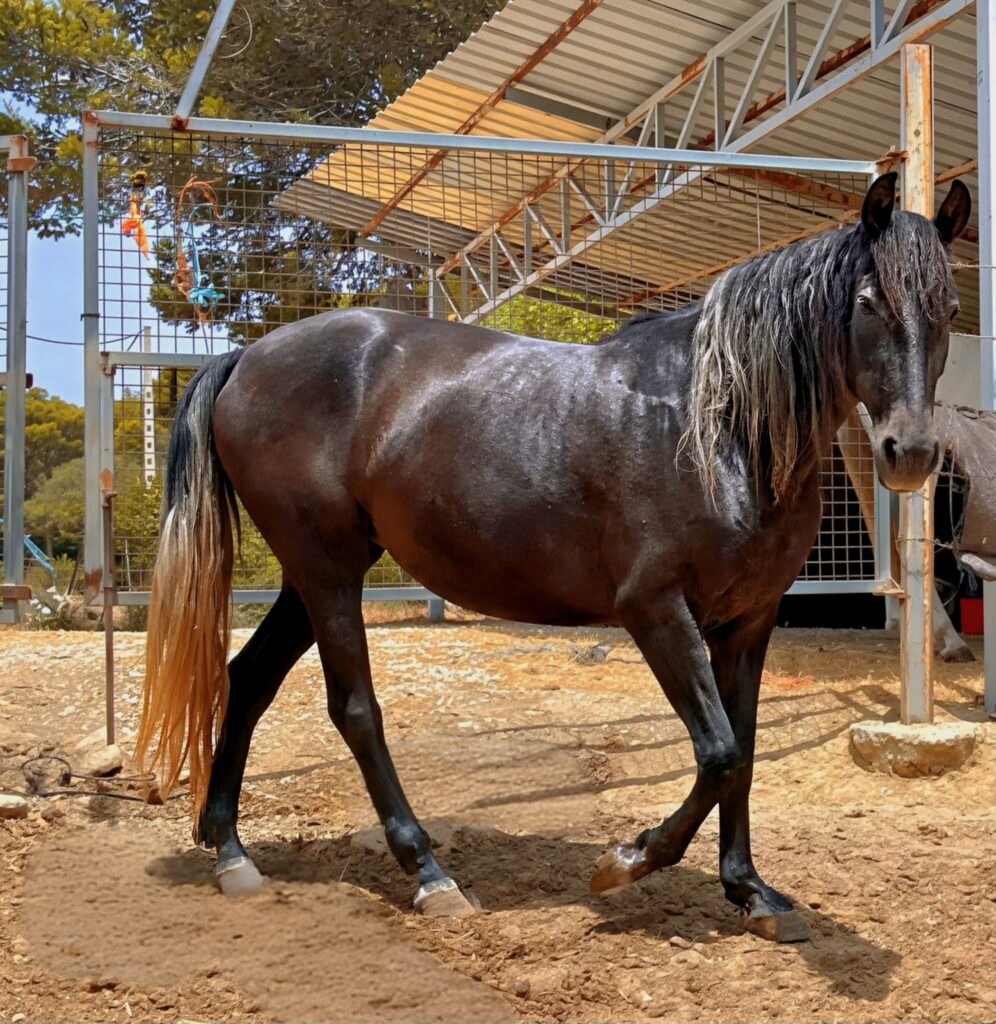
A horse shelter hosts an open day to raise vital funds. Photo Credit: Molly Grace

A horse rescue shelter based in Vejer de la Frontera, the Asociación Equiscire Centre, is sending out an announcement for kind-hearted animal lovers in Spain: the shelter will host an open day on Thursday, August 20 to give the public an opportunity to see the incredible rescue work that takes place there firsthand, as well as raise funds for the gentle animals that call it home.

Raising funds, learning about equine care and meeting the herd

The Cadiz horse rescue centre is opening its doors in late August so curious visitors can meet the herd of rescue horses, get involved with some of the daily chores and tasks at the shelter, and learn about horse care through a short educational seminar that covers equine nutrition and health.

The horses.
Photo Credit: Molly Grace

The main attraction: Five gentle and friendly animals to interact with

The horses themselves will be the main attraction of the day, however. “We currently care for five rescued equines: a 28-year-old pony, a 24-year-old pony, a 21-year-old horse, a 7-year-old horse, and a 3-year-old filly,” stated the owner of the Asociación Equiscire Centre and lifelong animal lover, Molly Grace. “Every one of them has a story, and every one of them deserves the chance to live a life free from fear and neglect.”

Rising feed and veterinary expenses put significant strain on shelter

The open day’s charitable heart is another main driver of the initiative. Increasing veterinary costs required by the incredible animals at the shelter have made the shelter experience significant strain and pressure.

Additionally, one of the largest ongoing expenses is hay, which this year increased in price. Currently, eight of the horses at the shelter rely on this hay as their daily feed, and rising costs have exponentially spiked the shelter’s monthly expenses.

“To feed our five rescues throughout the year, we need between 80 and 90 bales of hay,” stated Molly Grace. “At €55 per bale, we need to raise €4,000 to cover our annual hay supply.”
The horses.
Photo Credit: Molly Grace

How to support the sanctuary’s ongoing rescue mission: Every donation matters

As more and more neglected, abused, and abandoned horses are brought to the shelter as a safe place to stay, Equiscire has advised that it can no longer meet these increasing costs alone. Therefore, the shelter is appealing not only for financial donations through the official GoFundMe, but for support from hay producers, feed suppliers, equestrian businesses and individuals. Donations of hay, horse feed, and other supplies could change the lives of the horses, as well as the dedicated people caring for them.

With the open day, the public can do its part to raise much-needed funds, and get a real insight into the realities of rescuing and rehabilitating abused and neglected horses. The August 20 open day will not only be an opportunity for local horse lovers to meet the animals and discover more about this local shelter’s hard work, but to make a real difference in the lives and futures of the animals being nursed back to health.

“Every donation, whether financial or in the form of hay, feed or essential supplies, can help provide a rescued horse with the food, treatment and safe environment it needs,” stated Molly Grace.

The horses.
Photo Credit: Molly Grace

About the Asociación Equiscire Centre and its promise to abandoned horses

The Asociación Equiscire Centre has been in operation since 2021. Originally, it was set up as a centre that educates locals about horse care, nutrition, welfare, and behaviour. When the population of neglected and abandoned horses began to spike and news reached the centre, it dedicated itself to taking the animals in, helping them recover and rehabilitate, and rehome them.

“Every horse and pony that comes through our gates receives the same promise: they will be cared for for the rest of their lives, regardless of their age, health or what they can no longer do.”

Continue Reading

%

Polish Swimmer Conquers Baltic After 55 Hours Then Doctors Make Strange Request

Published

on

polish-swimmer-conquers-baltic-after-55-hours-then-doctors-make-strange-request

Bartłomiej Kubkowski had spent more than two days in open water. Photo credit:Bartłomiej Kubkowski on Instagram

What would happen to your body after almost 55 hours swimming through the Baltic Sea without sleep? One Polish athlete has now given scientists a rare chance to find out, after an extraordinary request was made following his latest challenge. Bartłomiej Kubkowski had spent more than two days in open water during his attempt to swim from Sweden to Poland. The request came after he finally reached the Polish coast, following a journey of more than 160 kilometres.

Doctors asked if they could freeze samples of his blood for scientific research, Kubkowski agreed. The unusual request followed a feat that pushed him through exhaustion, sleep deprivation, cold water and difficult conditions. He completed the crossing on his fifth attempt, becoming the first person to swim from Sweden to Poland across the Baltic Sea. 

A fifth attempt finally succeeds

Kubkowski set off from Kåseberga in southern Sweden and reached Dziwnów on Poland’s Baltic coast. The journey covered just over 160 kilometres and took around 55 hours. Reports put his completion time at approximately 55 hours and 10 minutes. 

He remained in the water throughout the crossing, a support boat accompanied him, but he was not allowed to touch it. Food and drinks could be provided from the boat, meaning he had to keep swimming rather than climbing aboard to rest. He also went without sleep during the crossing. 

The achievement came after four previous attempts over five years. His previous effort ended when he was only around 11 kilometres from the Polish coast. Exhaustion and worsening conditions forced him to stop before reaching land. This time, he made it all the way to Dziwnów. 

His body became the next question

After the swim, medical staff carried out tests on Kubkowski, the results prompted the unusual request to preserve his blood for research. The samples could give scientists an opportunity to examine the physical effects of an endurance effort lasting more than two days. Kubkowski’s experience is particularly unusual because the crossing combined prolonged physical exertion with a lack of sleep and exposure to open water.

According to reports, the head doctor told Kubkowski that his blood results resembled those of someone who had just completed a marathon. That comparison came after a swim roughly four times the distance of a standard marathon, performed continuously through the Baltic. The samples will now be frozen rather than simply discarded after routine medical testing, allowing them to be used for further scientific work.

The final kilometres were the hardest

Getting to the Polish coast was not simply a matter of continuing at the same pace until the finish. Kubkowski said that around 11 kilometres from the end, he began losing consciousness and became unsure of where he was. A change in the weather added another difficulty during the final part of the crossing.

After spending more than two days awake and swimming, he still had to maintain enough concentration and strength to complete the remaining distance. He eventually reached the beach at Dziwnów, where supporters were waiting. The finish marked the end of a challenge that had occupied him for years.

The swim also raised money

Kubkowski’s Baltic challenge was linked to a fundraising campaign for Cancer Fighters, a Polish foundation supporting children with cancer. The campaign had raised more than one million Polish złoty by the time of the latest reporting.  That means the crossing was not solely a personal sporting challenge. Money was being raised for children receiving cancer treatment while Kubkowski attempted a route that nobody had previously completed in the same way.

Now the achievement has another potential legacy. The frozen blood samples could allow researchers to study what happens inside the body after an extreme endurance effort lasting almost 55 hours. Kubkowski set out to conquer the Baltic Sea after four failed attempts, He succeeded on the fifth.  But after 160 kilometres in the water, the most unusual part of the story may only just be beginning, because scientists now want to see what his body went through.

Continue Reading

Trending

Copyright © 2017 Spanish Property & News