Connect with us

%

Ozone Hole Bigger Than North America Hits A 10-Year High: What NASA Says Happens Next

Published

on

ozone-hole-bigger-than-north-america-hits-a-10-year-high:-what-nasa-says-happens-next

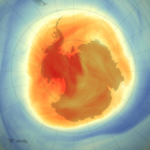
The Antarctic ozone hole on September 18, the day it reached its peak size. Credit: NASA Earth Observatory / Lauren Dauphin

The hole in the ozone layer above Antarctica has grown to its biggest size in 10 years, covering an area larger than the whole of North America at its peak. NASA and NOAA have now laid out what caused it, how scientists measured it and how far the long road to recovery has come.

The ozone hole peaked at 27.1 million square kilometres

Scientists at NASA and the US National Oceanic and Atmospheric Administration (NOAA) said the hole over the South Pole reached its maximum on Friday September 18, covering 27.1 million square kilometres (10.5 million square miles). That’s bigger than the whole of North America, and it makes this the largest ozone hole for a decade. 

Across the whole stretch from September 7 to October 13, it averaged 25 million square kilometres (9.6 million square miles), which is more than twice the size of the United States. At its peak it reached about 90 per cent of the biggest hole ever recorded, which came on September 9, 2000.

It’s now the seventh biggest in 48 years of monitoring, though it wasn’t as deep as the record holes of 10 to 20 years ago. It’s also a sharp jump from last year, when the hole ranked as the fifth smallest since 1992, so the swing has been enough to catch plenty of people off guard.

How scientists keep watch from the bottom of the world 

Teams at the South Pole Baseline Atmospheric Observatory launch weather balloons carrying ozone-measuring instruments, known as ozonesondes, up through the sky, with one such launch carried out on October 18. A Dobson spectrophotometer, an optical instrument, also measures the total amount of ozone overhead.

Scientists count the hole as the area where ozone falls below 220 Dobson units, which is why the map NASA released shows it in warm colours against the paler surroundings. 

Satellites have been tracking the ozone layer since 1979, with NASA’s Aura, NOAA-20, NOAA-21 and the joint NASA and NOAA Suomi NPP satellite among those named in the latest findings.

Those readings showed the thinnest point directly above the pole was 105 Dobson units on October 17. That’s the scientists’ standard measure, where 100 units would squash all the ozone overhead into a layer just one millimetre thick at ground level, and it sits well above the lowest value ever recorded over the South Pole, 92 units in October 2006. 

Weather helped the hole stay open

Every southern spring a hole opens in the ozone layer above Antarctica, and this year scientists say it simply refused to close up as quickly as usual.

The damage starts with human-made chemicals containing chlorine and bromine, which drift up into the stratosphere (the layer of atmosphere high above the weather). There, ultraviolet light breaks them down, and the freed atoms attack ozone on the surface of clouds that form in the freezing Antarctic air.

Paul Newman, a longtime leader of NASA’s ozone research team, said an unusually powerful polar vortex had “extended ozone depletion in the Antarctic this season”. NOAA’s Amy Butler explained that weak weather waves in August and September kept the strongest winds several degrees of latitude further from the pole, which let the vortex stay large and widened the area where ozone is destroyed.

Newman added that the hole could have been 1 to 2 million square miles bigger still if ozone-damaging chemicals were as common as they were at their peak in 2000.

The long-term recovery is still on track

So why aren’t scientists sounding the alarm? Because the chemicals behind the damage, including chlorofluorocarbons (CFCs) once used in aerosols, fridges and air conditioners, were replaced under the 1987 Montreal Protocol, an international treaty. NOAA‘s Stephen Montzka said chlorine from those chemicals in the Antarctic atmosphere has now fallen by about a third from its 1980s peak.

NASA and NOAA say the layer is still expected to recover by the 2070s. That long wait is down to how stubborn the old chemicals are, as they can linger for decades in the atmosphere and inside old products and landfills. Newman also pointed out that in recent years the hole has been forming later in the season, which he said shows the ozone layer is healing. Last year’s fifth-smallest hole and this year’s big one show how much a single season’s weather can swing the picture, even as the chemistry underneath keeps improving. 

Why the ozone layer is worth guarding

High up in the stratosphere, the ozone layer acts as a shield that soaks up much of the sun’s harmful UV radiation before it reaches the ground. Thinner cover lets more through, which raises the risk of skin cancer and cataracts in people, and of damage to animals, plants and crops. That’s why scientists track the hole’s size every year, and why a swing as big as this year’s gets so much attention.

It’s also worth knowing this is a different thing from the ozone that turns up in air pollution reports. Ozone in the stratosphere protects life, while ozone at ground level is a pollutant, so the two shouldn’t be mixed up.

The findings from NASA and NOAA concern the Antarctic and don’t address any change in UV levels elsewhere. So the next test comes when the hole reforms next southern spring, when scientists will be watching to see whether it starts forming later in the season again.

%

Meghan Markle’s Estranged Father Arrested After Child Abuse Material Investigation

Published

on

meghan-markle’s-estranged-father-arrested-after-child-abuse-material-investigation

The allegations have caused distress for Meghan. Photo credit: FiledIMAGE/Shutterstock

Thomas Markle, the estranged father of the Duchess of Sussex, has been arrested in Florida and charged with possessing child sexual abuse material after investigators searched two storage units in California. The case began with a disturbing discovery among his belongings in the Philippines, reportedly made by a family member, and has now become a federal investigation involving the FBI.

Markle, 82, was taken into custody on Friday, November 6, and faces one federal count of possession of child pornography. Prosecutors say officers seized around 78 items from the two storage units, including slides, film negatives and books containing suspected abuse material. The allegations have caused further distress for Meghan, who has previously said she kept her father away from her children to protect them. 

FBI traced the investigation to two storage units

According to the criminal complaint, US investigators received information in October from witnesses about suspected material among Markle’s possessions in the Philippines. One person had signed an affidavit describing its discovery, while another told the FBI that Markle rented a storage unit in the Los Angeles area. Agents obtained search warrants and examined two units registered to Markle. He had rented both since 2008 and had continued paying for them, with the latest payments made in October this year, according to the Justice Department.

The FBI seized approximately 27 items from one unit and 51 from the second. The materials included slides, film negatives and books. The affidavit says investigators identified suspected child sexual abuse images among the film negatives and describes photographs which they allege show Markle with prepubescent girls. A witness who had known him since the 1970s identified the adult man in two images as Markle, according to the court document.

The investigation is continuing and the material has not all been reviewed. The affidavit says agents had identified around 18 suspected images in one collection of film negatives at the time it was prepared. The 78 items seized should not be mistaken for 78 confirmed images. The criminal complaint sets out allegations supporting the charge; it is not a finding of guilt.

Arrested at Florida care facility

Markle was arrested in Lakeland, Florida, where he had been living after returning from the Philippines earlier this year. He appeared before a federal magistrate in Tampa on Friday and did not enter a plea. He was released on bond and returned to his assisted-living facility under home detention and electronic monitoring. Conditions also restrict his travel and access to internet-connected devices, according to reports of the court hearing.

He is required to undergo health evaluations. The case is expected to proceed in California, where the charge was filed.  If convicted, Markle could face a maximum sentence of 20 years in federal prison. He is presumed innocent unless and until proven guilty in court. The US Department of Justice has stressed that the complaint contains allegations only.

Meghan said she kept her children away to protect them

The arrest follows weeks of reports about the investigation in the Philippines, where Markle had been living. The Associated Press reported that Meghan’s half-brother, Thomas Markle Jr, found a collection of suspected abuse images while clearing out their father’s former home in Cebu City and contacted police and the FBI. Markle previously denied the accusations, describing them as “sick lies”, according to Reuters. Meghan said she was “deeply distressed” by the allegations and referred to a letter sent to London police in 2018 which contained what she described as troubling claims about her father.

She said she had been assured the allegations were being investigated. Meghan also addressed years of speculation about the estrangement, saying her decision to keep her father away from her and her children had been made to protect them.  There has been no public comment from Meghan’s representative on Friday’s arrest. The FBI investigation remains active, while the criminal case will determine whether the allegations can be proved in court.

Continue Reading

%

FBI Warns Of Cyber Threats As Spain Raises Hybrid War Fears

Published

on

fbi-warns-of-cyber-threats-as-spain-raises-hybrid-war-fears

FBI cyber investigators as the agency warns of threats to essential services across Europe. Credit: AI generated illustration.

American investigators warn of growing cyber threats to essential services as bomb alerts reach British broadcasters and Spain’s Foreign Minister raises concerns about psychological warfare across Europe.

Passengers have faced flight diversions, television staff have been evacuated and businesses across Europe are being warned that hackers could interfere with equipment protecting food and medical supplies. Now the FBI has issued an international cybersecurity warning, while Spain’s Foreign Minister, José Manuel Albares, has suggested that the wave of disruption could be part of a wider campaign of hybrid aggression and psychological warfare. With Britain’s Sky among the broadcasters receiving threats on Friday, November 6, the concerns extend well beyond airports and computer networks.

FBI warns hackers could disrupt essential services


In an official warning issued on November 5, FBI Cyber Division chief Brett Leatherman urged businesses to strengthen security around industrial refrigeration and temperature monitoring systems used to protect food, medicine and other essential supplies. Investigators highlighted outdated equipment, exposed internet connections and unchanged factory passwords as weaknesses that could allow attackers to manipulate temperatures remotely, potentially destroying valuable stock and disrupting vital services.

The warning follows attacks already affecting European businesses and medical facilities, including the incident involving three French blood service sites previously covered in Euro Weekly News’ investigation into the blood bank cyberattack. Rather than focusing on that incident again, the FBI’s latest message is about prevention, urging organisations to restrict remote access, update vulnerable equipment and ensure temperature alarms can alert staff before serious damage occurs.

Bomb threats spread to British and European broadcasters

The cybersecurity warning comes as European authorities investigate a separate wave of bomb threats that has disrupted passenger flights and reached television stations. On Friday, Ireland’s RTÉ, Britain’s Sky and Bulgaria’s Nova TV received threats, prompting evacuations and security investigations. According to Reuters, RTÉ temporarily suspended normal programming, while the alerts followed several days of aviation disruption involving flight diversions and emergency security checks. No explosives were discovered in the reported incidents, and investigators have not established who was responsible.

Spain’s Foreign Minister raises fears of psychological warfare

Spain’s Foreign Minister José Manuel Albares has raised the possibility that the bomb threats are part of something more deliberate. Speaking to Spanish broadcaster RTVE on November 6, he described the aviation alerts as a possible form of hybrid aggression and psychological warfare, suggesting that spreading fear and disrupting everyday life could be among the objectives. His remarks, reported by Reuters, come as European authorities investigate whether the incidents share a common origin.

The developments add urgency to concerns previously examined in Euro Weekly News’ report on hybrid warfare and security threats across Europe. However, the FBI has not established any connection between the refrigeration attacks and the bomb alerts, and investigators have not identified a government or organisation responsible for the wider incidents.

For people living in Britain, Spain and elsewhere in Europe, the immediate concern is how quickly everyday services can be disrupted, whether through hackers exploiting vulnerable technology or security threats that force authorities to take precautionary action. The FBI’s warning is a reminder that protecting essential infrastructure is no longer just a concern for governments and major corporations, but also for the businesses and services millions of people depend on every day.

Continue Reading

%

Marbella’s Allotments Open Their Gates

Published

on

marbella’s-allotments-open-their-gates

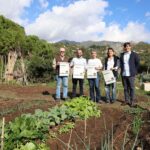
Marbella’s ecological allotment association. Credit: Ayto

People in Marbella will get their first chance to explore Marbella’s urban ecological gardens when the Asociación de Huertos Ecológicos Urbanos Marbella Verde holds an open day on Saturday, 14 November.

The event runs from 10am to 4pm at Huerta del Prado on Avenida Diego Jiménez Lima and is backed by Marbella Town Hall. It marks the association’s first “jornada de puertas abiertas” and is designed to let families see the work carried out across the site, which currently has around 76 plots of roughly 40 square metres each and close to 100 members.

Best start with tradition and culture in food

The morning begins with a Mediterranean breakfast of mollete with locally produced extra virgin olive oil for the first 150 arrivals. From 11am onwards visitors can join workshops on composting, tile painting, sowing and identifying aromatic plants and the small wildlife that lives among the plots. Traditional craft demonstrations will include pottery on the wheel, wood carving and basketry, the last led by Francisco Rubio, one of the few remaining artisans of the trade in the province, who comes from Genalguacil.

A market of proximity products will feature honey, olive oil, cheeses, bread and preserves, while a food area will serve paella and other Mediterranean dishes. Additional activities include sound therapy, a photo call and “El árbol de los deseos”, with the programme arranged so children and adults can take part together.

Inviting neighbours back to nature

Association spokesperson María José Villanueva said the aim is to open the facilities so families can see the work first-hand. Councillor for Citizen Participation Enrique Rodríguez described the day as an example of neighbour-led involvement in caring for the environment and promoting sustainable habits, noting that it is supported through council subsidies.

The gardens, which have operated for around 15 years, are managed by the non-profit association formed in 2024. They focus on natural growing methods without chemicals and have previously donated produce from a solidarity plot to the Red Cross for local families in need (as covered in Marbella’s harvest of hope). Organisers present the site as a green space close to the town centre that combines community growing with practical education on sustainability.

The open day is free to attend and requires no registration. Full details are available from the association and Marbella Town Hall.

Continue Reading

Trending

Copyright © 2017 Spanish Property & News