Connect with us

ElPais

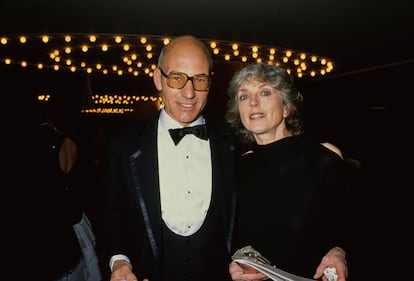
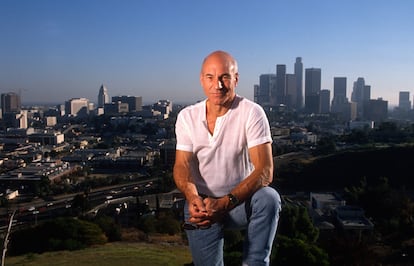
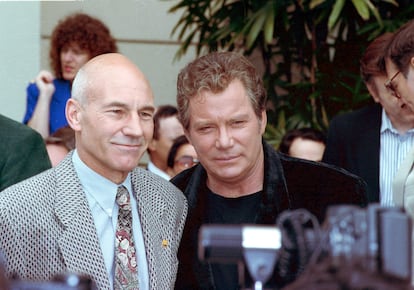
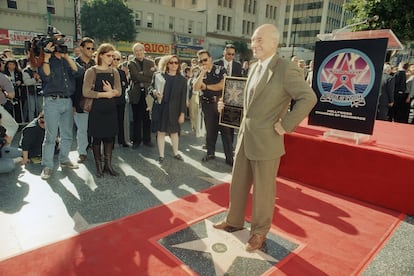
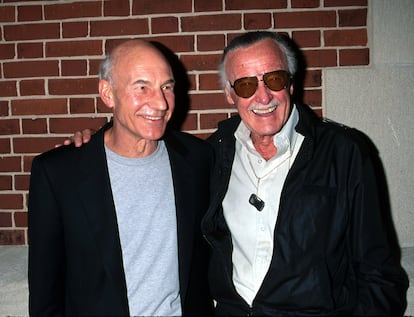
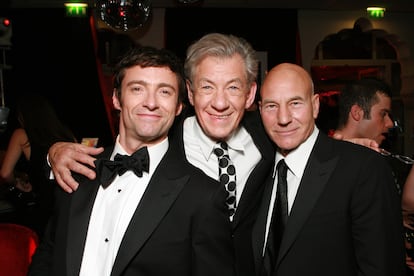
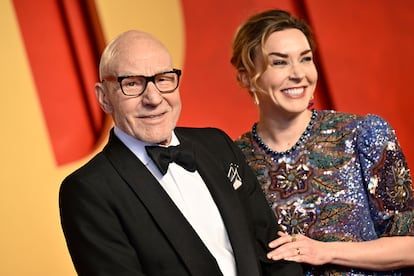
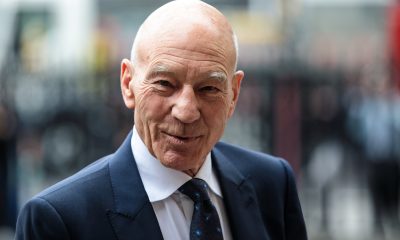
Patrick Stewart Dies: The Iconic Actor’s Career In Pictures

Published

on

patrick-stewart-dies:-the-iconic-actor’s-career-in-pictures
Patrick Stewart en Los Ángeles, en 2023.

9 fotos

The British actor passed away at the age of 86 at his home in Los Angeles. He will be remembered by generations for his roles as Captain Jean-Luc Picard in ‘Star Trek: The Next Generation’ and Professor Charles Xavier in the ‘X-Men’ saga


El País

Donald Trump

How The US Midterms Could Reshape The Outlook For The Dollar, Bonds And Wall Street

Published

on

how-the-us-midterms-could-reshape-the-outlook-for-the-dollar,-bonds-and-wall-street

The United States heads to the polls on November 3 for the midterm elections, in which all seats in the House of Representatives and one-third of the Senate are up for grabs. The vote is shaping up as a referendum on U.S. President Donald Trump, now at his lowest ebb and with approval ratings at their weakest since returning to the White House, including during his first term.

Polls suggest Democrats are poised to regain control of Congress and point to a closely contested battle for the Senate that Republicans could also lose. The midterms therefore appear likely to usher in a new political landscape in the United States, one in which Trump’s policies could face greater legislative scrutiny — although he would retain both his veto power and his ability to govern through executive orders. The outcome is also expected to reverberate through financial markets.

Investors’ attention is currently focused on the steady rise in U.S. Treasury yields and concerns that the artificial-intelligence boom — the main driver of Wall Street’s rally — could falter. Fiscal consolidation in a country running a budget deficit of more than 6% of GDP and carrying over $40 trillion in debt is not a priority for either Republicans or Democrats. As for artificial intelligence, a Democratic victory is unlikely to result in sweeping regulation, although opposition is growing to a technology that could eliminate jobs and requires enormous quantities of water and energy to run data centers.

Nothing suggests a major disruption to the status quo of the U.S. economy. Depending on the election result, however, there could be policy shifts that become apparent later, particularly when Congress next confronts the debt ceiling and as investors begin to read Democratic legislative proposals as a preview of the party’s platform for the 2028 presidential election.

At Goldman Sachs, analysts say that “investors are expected to focus on what the results could signal for the 2028 presidential election and future policy direction.”

Analysts at Citi, meanwhile, note that the S&P 500 would be higher were it not for tariffs and the conflict with Iran, two headwinds that have accumulated under the current administration.

Impact on Wall Street and AI

Trump’s policies have undoubtedly proved less market-friendly than investors had anticipated when he returned to power. With Democrats widely expected to win the midterms — at least retaking the House of Representatives — analysts foresee both positive and negative implications for Wall Street.

Citi believes a decisive Democratic victory could prompt markets to start factoring in the political risks associated with the 2028 election cycle, particularly the prospect of higher corporate taxes and greater oversight of AI infrastructure. At the same time, the bank argues that any move to curb the president’s powers over tariffs and military action could be viewed positively by investors.

Any shift in the balance of power on Capitol Hill would likely have a greater impact on specific sectors than on a broad index such as the S&P 500. A Democratic-controlled Congress, for instance, could restore subsidies that help Americans obtain health insurance coverage, providing direct support to hospitals and insurers. It could also revive debate over higher taxes on top earners, capital gains and large corporations.

“Such proposals would not necessarily become law, but they could influence investor expectations and corporate behaviour,” says Michaela Huber, multi-asset strategist at Vontobel.

For Huber, however, the greater risk is that the honeymoon with artificial intelligence may begin to fade. “If voters increasingly associate AI with job losses, rising energy demand and limited benefits for the average worker, rather than with broad-based prosperity, policymakers could face mounting pressure to regulate aspects of the technology more aggressively,” she warns.

George Brown, senior economist at Schroders, agrees that Democratic control of both chambers would allow the party to intensify investigations, increase scrutiny of politically sensitive sectors and exert greater influence over appointments and nominations. Even so, he notes that President Trump would retain his veto power and broad executive authority.

“Democratic control of both chambers would therefore constrain the administration, but it would be unlikely to alter the overall direction of its policies,” he adds.

Republicans lost control of the House of Representatives in the 2018 midterm elections, during Trump’s first term. In the aftermath, the president made extensive use of his executive powers, escalating the trade dispute with China and stepping up his attacks on then-Federal Reserve chair Jerome Powell.

More recently, Trump has repeatedly said that the war with Iran will end after the election, even though the conflict is currently at a stalemate. The president therefore retains the levers most capable of moving markets quickly and decisively.

“Political uncertainty could simply take a different form. With Congress acting as a check, the White House could rely more heavily on executive orders, regulatory measures and foreign-policy initiatives,” Huber says.

Bonds: The key factor

Trump’s attacks on the Federal Reserve, for now defused by the appointment of Kevin Warsh, have contributed to a deterioration in confidence in U.S. institutions. That erosion in trust is reflected in the political risk premium now embedded in long-term U.S. Treasury yields and the dollar.

Underlying that risk premium is the absence of any credible fiscal-consolidation strategy aimed at reducing the budget deficit and public debt, something that is not expected from Democrats either. There is virtually no debate over the continued reliance on borrowing, whether to channel spending toward defense, as Republicans favor, or toward healthcare and the energy transition, as Democrats advocate. There are, however, important differences that bond investors are unlikely to overlook.

In principle, a Democratic victory could lead to lower bond yields. A divided government, whether because the White House loses control of both chambers or only of Congress, would make it harder to pass large new spending packages or tax cuts. That could provide some short-term relief for Treasury bonds. Such a reaction would be consistent with historical precedent and could also weigh on the dollar, as a weaker fiscal impulse would imply slower economic growth.

As George Brown points out, however, this time may be different. “The most important implications for markets are likely to stem not from the election result itself, but from the political confrontations that follow,” he warns.

The first major obstacle will be the debt ceiling, the maximum amount of borrowing authorized by Congress, which could be reached sometime between late winter and mid-summer 2027. It is currently set at $41.1 trillion, while federal debt has already surpassed $40 trillion.

According to Brown, “investors should avoid assuming that a political deadlock automatically implies fiscal austerity.” Thus, when negotiations on the debt ceiling begin, it is possible that neither side will be willing to make significant concessions. “Therefore, a last-minute compromise could end up incorporating the demands of both sides rather than forcing one side to back down. According to our estimates, this could increase the deficit by around 1% of GDP.”

For the dollar, the result would be depreciation as investors reassess their exposure to an economy facing even greater fiscal risks. The U.S. currency is currently supported by higher oil prices, since crude is traded in dollars, as well as by its traditional safe-haven status. But longer-term structural forces point in the opposite direction. Chief among them is the persistent budget deficit.

Raphaël Gallardo, chief economist at Carmignac, also expects higher public spending as a result of a new balance of power between the two parties, a development that would benefit equities but not bonds. “If the additional spending is largely unfunded, stronger growth would come hand in hand with wider fiscal deficits and increased issuance of U.S. Treasury debt,” he says.

In other words, more upward pressure on U.S. bond yields, leading the firm to adopt a cautious stance toward longer maturities. “Resilience may matter more than conviction: maintaining liquidity, avoiding excessive leverage and diversifying exposure across regions and currencies should leave investors better placed to withstand sudden policy shifts,” Brown adds.

Sign up for our weekly newsletter to get more English-language news coverage from EL PAÍS USA Edition

Continue Reading

David Bowie

Jon Savage, Music Critic: ‘Being A Straight Man Seemed Boring To Me, Hence My Interest In Punk’

Published

on

jon-savage,-music-critic:-‘being-a-straight-man-seemed-boring-to-me,-hence-my-interest-in-punk’

Jon Savage is an absolute musical icon. This 73-year-old journalist, critic and writer is a key figure in the history of British (and global) punk, as demonstrated by his book, England’s Dreaming: Sex Pistols and Punk Rock (1991), which delved into the pioneers of the genre.

The London-born Savage is also gay. And, in his latest and most impressive book — The Secret Public: How LGBTQ Resistance Shaped Popular Culture (1955-1979), published in 2024 — he brings together his deep knowledge of music, his own identity, LGBTQ+ experiences and the struggle for equal rights.

“This book has been on my mind for decades,” the author tells EL PAÍS in a video conference, “but when you get older, you want to get things done.”

Although he identified as gay at the age of 20, it took him some time to come out. “When I was young, being gay was marginal. And, you know, it still is for a lot of people. Gay people were treated like shit — that’s something that scars you,” explains Savage, who admits that it took him a long time to overcome all that negativity.

Growing up, Savage liked Del Shannon’s melodramatic pop. The Beatles’ long hair also made an impression on him. He was captivated by The Rolling Stones’ aesthetic. And he was fascinated by The Kinks, particularly Dave Davies and his androgynous style. “I was very attuned to that kind of gender divergence. Partly because I thought being a normal heterosexual man just looked really boring.”

Q. How did being gay fit into the music press of the late-1970s?

A. I was always clear that I wasn’t going to pretend to be straight, but I also didn’t live as a gay person. Keep in mind that it’s been about 50 years. A good friend in the industry, Jane Suck, was a lesbian. We were quite close, [but] we never talked about our sexuality. It wasn’t easy back then. But I think if you regard writing as the expression of a person, then of course, your sexuality is going to be involved with it. I mean, how can it not be? And so, it made me take a different path from all of my contemporaries [on the punk scene]. I always wanted to go deeper. I was always interested in the marginal.

Q. In your book, you write about a queer subtext in music. How did the LGBTQ+ audience decipher it?

A. In the 1950s, it was difficult to establish this. [But] in the first chapter, which is about [Andy] Warhol — where I mention [the covers of] his records — I discuss [how, in the 1960s, he tried] to establish a kind of queer aesthetic of pop culture, the earliest that we’ve really been able to find out about. Before that, we can talk about Elvis and his imitators, a bit of doo-wop, as well as some Black music.

I connected the dots by talking to my friends: Robert liked soul and girl bands; James, early Motown. My friend Michael Peter Burton, who’s now dead, ran a gay bar called The Deuce that had a jukebox. One day, I asked him what was playing on it: it was all Motown [Records] and Dusty Springfield. Motown was, obviously, very good for dancing — it was the precursor to disco, with melodramatic lyrics. That went down very well with gay people, who liked a bit of melodrama, heightened emotion.

Springfield, of course, was the leading lesbian pop singer of the day. And, more important than that, she was a truly wonderful, wonderful artist.

Q. You start things off by looking for hidden connections in the song Tutti Frutti, before arriving at the homoeroticism of the Village People…

A. You have to be careful about this, because Victor Willis’ wife sues anybody who hints that the Village People were gay. They were conceived by a gay businessman, Jacques Morali and it shows. Felipe Rose, the one who dressed as a [Native American], walks into a gay bar and starts dancing in front of a cowboy. And the first LP has a cover that’s set in the entrance of a gay bar. There are no women and all the men who appear are stereotyped as gay: they’re clones. They became a gay caricature.

The more successful they became, the more they disavowed those references. When In the Navy [from their fourth album, Go West in 1979] was released — following YMCA [from their third album, Cruisin’, in 1978] and Macho Man [from their second album, which also came out in 1978] — they’ve almost completely disavowed any kind of gay content. Even though they’d built a following among gay audiences, they were now appealing to the mass market, to the mainstream.

Sylvester did make a statement about diversity: he was completely out and fabulous. He was the first openly gay singer to have a big hit: You Make Me Feel (Mighty Real) is a wonderful and important song in its own right, because it’s all about being gay. It’s about people being real, as opposed to having to hide in the closet.

Q. And what are your thoughts on David Bowie?

A. Bowie became an overwhelming cultural force that facilitated the expression of LGBTQ+ diversity and visibility, but he was never an activist like Tom Robinson was. Even though he may have had some activist effect, Bowie was mischievous and calculating: he realized that he could make an impact and wanted to foster cultural change. He played a benefit for the Gay Liberation Front, but then, when he came out as gay — with that famous 1972 line, “I’m gay and always have been” — he didn’t say that he was a member. He never officially aligned himself with it. Personally, Bowie had a great impact on me, particularly the song Queen Bitch (1971). It was a Velvet Underground tribute and I’m a huge Velvet Underground fan.

Q. Your book is about music, but also about history, about rights and about struggle.

A. I’m not interested in talking about music in terms of personal experience. So many people who write about music do that and it’s really tedious. You can talk about music in more gossipy terms. A book about the Rolling Stones practically writes itself, thanks to all the scandals surrounding them.

In The Secret Public, I don’t just tell a story: I describe a time and place through music and specific bands. That’s why it seemed crucial to include the entire political, social and legal context in the U.K. and the U.S. It’s more or less the same thing I did when I wrote the book about Joy Division [This Searing Light, The Sun and Everything Else: Joy Division, The Oral History, published in 2019]. All that context enriches the book.

Jon Savage at the British Pop Archive, where he curated an exhibition, on May 18, 2022, in Manchester.

Q. At one point, you explain how white boys felt intimidated by the “insidious and unconventional sexuality of disco music.” Is something similar happening now with feminism and LGBTQ+ rights?

A. Yes. Any gain made by LGBTQ+ people provokes a backlash. It’s always been that way. We’ve seen enormous gains during the last 20 years, and now, we’ve got a fierce reaction. To be honest, it’s really pathetic. LGBTQ+ people are a reality. Deal with it. All the backlash seems unpleasant to me; it reveals a lot of insecurity. And it’s dangerous.

Nobody takes into account the overwhelming privilege that a lot of white people have. Obviously, if you’re poor, you have less. But generally speaking, a white man always enjoys more privilege than a woman, a person of color, or an LGBTQ+ person.

It’s foolish to think that expanding rights can harm anyone. That kind of backlash is being fueled by dictatorial regimes, like Putin’s Russia, or Trump’s USA. All Americans have internalized homophobia, a certain fear of homosexuality. If someone is so worried about seeing two men or two women kissing, they shouldn’t look. If they’re afraid that seeing a gay or lesbian couple will turn their children gay, they shouldn’t worry, because they will see many more heterosexual couples doing it and they can become straight again. Those arguments are complete nonsense.

Q. What would be your current LGBTQ+ musical reference?

A. I have to qualify this by saying that I’m no longer, you know, on the ground. But the kind of music I listen to is electronic music. I really enjoy what [the German record label] Kompakt releases and I love Pet Shop Boys.

When I was 16, I was a rock fan. I moved on to the Velvet Underground and also to hippie groups. And I think that I’ve come to appreciate disco much more, because, back in the day, you weren’t supposed to like disco if you were a punk rocker.

In 1977, I was writing about punk every week. And, at one point, it all seemed a bit repetitive to me. But then, I listened to two albums that blew me away: I Remember Yesterday (1977) — a masterpiece by Donna Summers and one of the greatest albums of the 20th century — and Magic Fly (1977) by [the French band] Space. That’s how I started writing about the beginnings of disco.

The problem was that a lot of the disco you heard, particularly in 1978, had already become very formulaic. And it was the electronic disco that was becoming interesting. Patrick Cowley was a genius: he has a megamix of I Feel Love [by Donna Summers] that’s incredible.

Q. You also write about the invisibility of lesbians. Do you think that has changed?

A. Young women — and women in general — are much more at the forefront of the music scene than they were, say, 50 years ago. But there’s also a backlash against this. In the book’s title, I refer to the entire community, because lesbians, gay men, trans people, bisexuals, queer people, all of them appear in the book.

One of my greatest sorrows today is how trans people are being attacked, especially in the U.S., but also in the U.K. It reminds me of what they did to gay people [during the AIDS crisis]. It’s disgusting and there’s no excuse for it.

Q. The book ends in 1979, dancing with Sylvester, “with no thought of what is to come.” It was the prelude to the AIDS epidemic and the conservative backlash against sexual liberation. Why did you stop there?

A. I didn’t want to write about AIDS, because it was a horrible and dark time. When you write a book, you have to focus on the subject. I decided to end the book with Sylvester and the National March on Washington for Lesbian and Gay Rights. The story could continue into the 1980s, which was a very rich decade: you had Culture Club, Bronski Beat, Soft Cell, the Pet Shop Boys… but that’s for another book.

If the ending leaves you wanting a bit more, maybe it’s a beautiful ending.

Portada de 'El público secreto', de Jon Savage.

Sign up for our weekly newsletter to get more English-language news coverage from EL PAÍS USA Edition

Continue Reading

Dislexia

Neurodivergent: The Trendy Label For Brains That Depart From The Norm 

Published

on

neurodivergent:-the-trendy-label-for-brains-that-depart-from-the-norm 

Paloma was told that her highly intelligent daughter was neurodivergent. Shortly afterwards, it was suggested that her hypersensitive son might also fall into that category. This sounded mysterious to Paloma, even slightly exclusive. The news in both cases was delivered to her during meetings with the psycho-pedagogy team at the school where she takes her children. Paloma then told her psychologist, who provided further food for thought: with two children like this, it was most likely that she, as the mother, was also neurodivergent.

But it’s not just among professionals that this label is liberally applied. At 20, Elvira is a brilliant university student. She gets excellent grades and is a fast thinker. Years ago, she was diagnosed with ADHD. No expert has yet hinted that she is neurodivergent, although she wonders if the label fits. She says that is how many of her friends describe themselves. They have been told as much by a specialist, or have simply identified with posts on social media. “It’s a word we use frequently,” she confirms.

Halfway between a euphemism and a minority struggle, the concept of neurodivergence is in fashion. It is sweeping the internet and bookstores. It is the focus of events and a thousand conversations about the heterogeneity of the human mind. It has already become commonplace; another sociolinguistic trend on the rise in psychology, another neologism that is here to stay, especially for the younger generations. Inclusion policies of companies and institutions are taking it on board. But as the bubble grows, a fundamental question has surfaced: does the label help or hinder individuals with an unusual brain?

Like so many ideas with a fragile scientific base and strong popular pull, the label originated in the U.S. and has gone viral on a global scale. As a concept, it was coined by two autistic women: Judy Singer, who began talking about neurodiversity at the end of the 1990s, and Kassiane Asasumasu, who at the beginning of the century came up with the term neurodivergence.

In theory, Singer and Asasumasu were talking about different things, which has caused confusion. Singer stated the obvious: each brain is unique. In our neurological systems, no two brains are identical. Singer added that it was time to stop considering our differences from a medical perspective. Asasumasu went further: within a diverse spectrum, there are people who are not neurotypical and fall outside the norm in terms of cognitive processes. These people would be the neurodivergent ones. In short, we are all neurodiverse, but only some of us are neurodivergent.

Today, these concepts overlap. The neurodiversity movement — so-called by activists — is supposed to defend neurodivergent people; it is an apparent contradiction that has contributed to confusing an already slippery field of study: vague in its definition, plagued by demands that often clash, and with science and ideology in a permanent tug-of-war.

But Singer and Asasumasu did share one goal: that autism stop being viewed in pathological terms. Originally, the labels neurodiverse and neurodivergent arose to refer to people with autism spectrum disorder (ASD). Singer and Asasumasu wanted the disorder taken out of the equation. “The message was clear: we don’t want a cure, but rights and integration; we don’t have a mental illness, but an atypical condition in neurodevelopment,” explains Francisco Ortega, from the Catalan Institution for Research and Advanced Studies, who has followed the movement since its beginnings. Ortega adds, “It has spread massively, partly because autistic people, who are often socially challenged, are very active on the internet, where they feel comfortable.” The message started getting through to other communities which bought into the basic premise: where there used to be illness, there is now simply difference.

Currently, no one knows exactly where the limits of divergence lie regarding neurological issues. Nor what such a concept means or indeed implies. Besides ASD and ADHD, the term also covers Tourette’s syndrome and dyslexia. Some, such as the Cleveland Clinic, extend the term to Down syndrome, OCD, bipolar disorder and social anxiety. These conditions may have genetic roots or could simply be due to nurture and circumstances. Intellectual disability and psychiatric diagnosis coincide. The illness — as it is contemplated by the scientific community — and the simply different now coexist.

Neuro Pride

The British researcher Nancy Doyle’s data suggests the label applies to a third of the population. In her opinion, the term refers above all to spiky profiles: people who excel in certain areas and have difficulties in others. That, according to Doyle, would apply to approximately half of neurodivergent people. The paradigm would be Sheldon Cooper from the sitcom The Big Bang Theory: an autistic person with a high IQ. Doyle admits that “it seems that everyone is neurodivergent nowadays” and that this open-ended application, added to the “identity element, could distort the movement.” Without clear limits or diagnostic requirements, nothing prevents someone from perceiving themselves as neurodivergent. Even if they clearly have a very ordinary brain.

The tension between identity — there is already Neuro Pride Day, on June 16 — and actual illness has generated the main controversy around neurodiversity. On the one hand, there are the most radical members of the movement, most of them people with highly functional ASD. At the other end of the spectrum, there are families with autistic children “who reproach these activists, some of whom are going to university while their children cannot speak, bang their heads against the wall or have urinary incontinence,” says Ortega. In these cases, he says, they are more concerned about finding treatments than with neuro pride.

Alfonso Troisi, who published a scientific article on the illness vs divergence debate in 2025, goes further by warning of a certain glamorization surrounding divergence. “There’s something cool about considering yourself neurodivergent, as if you were special, different from others. Nobody wants to be schizophrenic, but bipolar may not sound so bad. Van Gogh was bipolar!” Both Troisi and Ortega have known cases of people who, without any indication of ASD or Tourette’s syndrome, insisted on claiming such diagnoses.

With the unorthodox as a banner for battling the stigma of mental illness, there are those who warn that the fight to normalize neurodiversity could, paradoxically, undermine the rights of some demographics. Ortega says that Steve Silberman, an expert who published Neurotribes, pointed out that if autistic people were no longer classified as disabled, they would lose protection. Troisi, meanwhile, draws a parallel with the so-called deaf movement: “In the United States, there are people who advocate for deafness to cease to be considered an illness and become the trait that unites a cultural minority.”

For Doyle, these controversies — almost always nurtured by digital polarization — take us away from the main goal of the movement which is to make life a little easier for people who do not have a standard mind; to ease the problematic aspect of cognitive anomalies due to “rigid education systems, inflexible work environments and overwhelming public places.” Doyle encourages us to rethink how we study, work and live so that “these divergences are less disabling.”

According to Doyle, the U.K. has been at the forefront of creating neuro-inclusive spaces. For example, decompression rooms with low-intensity visual and auditory stimuli in companies. And autistic-friendly movie and theater sessions in which it is not frowned upon for people to move around or make noise. “We need more studies on what type of interventions are most beneficial,” she explains.

According to Alfonso Troisi, these changes to the environment, which are necessarily limited, should be accompanied by a reflection on what we consider acceptable; a judgment that is “always a construct influenced by ethical and cultural values.” Often the challenge of integration has less to do with the neurological itself, and more to do with certain behaviors that we label as strange, extravagant or even reprehensible, he argues. “Society can be very repressive if you do something that the majority does not like,” he concludes.

Sign up for our weekly newsletter to get more English-language news coverage from EL PAÍS USA Edition

Continue Reading

Trending

Copyright © 2017 Spanish Property & News