Connect with us

%

Petrol Thieves In Spain See Their Getaway Go Spectacularly Wrong

Published

on

petrol-thieves-in-spain-see-their-getaway-go-spectacularly-wrong

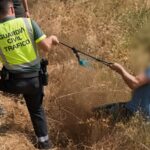
One of the occupants allegedly jumped from the moving car. Photo credit: Guardia Civil/Ministerio de Interior

Doing a runner without paying for your petrol is already a fairly questionable life choice. Doing it in a stolen car, fleeing for more than 100 kilometres and then ending up needing rescuing from a patch of brambles takes it to another level.

 That is exactly what happened in Cáceres this week, when three people allegedly drove away from a petrol station without paying and turned what might normally be a relatively straightforward theft into a police chase stretching across the province. But there is another reason this latest case will strike a chord with people filling their cars in Spain right now: petrol and diesel are becoming painfully expensive again, with the cost of a full tank now well over €100.

Filling the car now costs more than €100

The average price of petrol in Spain reached €1.928 a litre this week, according to the latest figures from the European Commission’s Oil Bulletin. That represents the twelfth consecutive weekly increase and a 30 per cent rise since the end of June. Diesel has also climbed sharply, reaching €1.918 a litre. Filling an average 55-litre diesel tank now costs around €105.49, while the same petrol tank costs approximately €106.04.

That means putting a normal tank of fuel into the car is now costing around €25 to €28 more than it did a year ago.  For someone on a tight household budget, that is not pocket change. Spain’s 2026 minimum wage is €1,221 a month, paid over 14 instalments. The Government says around 2.5 million workers benefit from the increase. 

Once rent or a mortgage, food, electricity, water, insurance and other everyday expenses have been paid, finding another €100 simply to fill the car can be a serious hit. And for many people, not using the car is not necessarily an option. Getting to work, taking children to school, travelling to medical appointments or reaching services outside larger towns can all depend on having fuel in the tank.

One unpaid fill-up becomes a 100-kilometre chase

Against that backdrop, the Cáceres incident began with what is described as a simpa,  the colloquial Spanish term for leaving without paying. The three suspects allegedly filled up at a petrol station in Sierra de Fuentes before driving away without paying. The problem for them was that the car they were travelling in had already been reported stolen in Madrid.  The Guardia Civil obtained the registration number and alerted patrols in the area. When officers attempted to stop the vehicle, the driver did not pull over. Instead, the pursuit continued for more than 100 kilometres towards Guadalupe.

Things became considerably more dangerous when the driver encountered police on the A-5 and reportedly reversed before continuing in the opposite direction. Eventually, officers managed to intercept the vehicle near Guadalupe. Then came the part that sounds almost too ridiculous to be real. One of the occupants  jumped from the moving car and tried to disappear into a dense area of brambles. He did not exactly choose an easy hiding place. According to the Guardia Civil, officers eventually had to rescue him from the brambles before they could arrest him. 

The suspects face more than a fuel bill

The three detainees, two men and one woman aged between 19 and 26, are being investigated for a string of alleged offences. These include using a stolen vehicle, dangerous driving, driving without a licence in the case of the driver, an attack on officers, fraud and theft at the petrol station. Investigators are also looking into their possible connection with a petrol-station robbery in Toledo on the night of September 21-22. The three reportedly have previous records connected with property offences, while the investigation remains ongoing. 

It would be wrong to assume that the suspects stole the fuel simply because they could not afford it. The authorities have not said that was their motive, and the stolen vehicle and other offences make this far more complicated than somebody simply being unable to pay for a tank of petrol. But the incident does illustrate just how uncomfortable the cost of getting around Spain has become.

Could more petrol thefts follow?

There is a big difference between saying rising prices caused a particular crime and recognising that rising prices can put greater pressure on households already struggling to make ends meet. Fuel is not an optional luxury for many workers. When the price of filling a car rises by around €25 in a year, while wages do not rise at anything like the same rate for everyone, the squeeze is felt every time the fuel warning light appears. And petrol is only one part of the problem. Food, housing, energy and other basic household expenses have all been putting pressure on family budgets, leaving less money available for the things people cannot easily avoid paying for.

The latest fuel figures show that Spain’s petrol and diesel prices are once again approaching the record levels seen in 2022. Petrol reached €2.141 a litre that summer, while diesel hit €2.10. If prices continue climbing while incomes fail to keep pace for people on the lowest wages, there will inevitably be concern about more people reaching the point where they simply cannot afford essential costs. That does not make stealing fuel acceptable, and it certainly does not explain a stolen car, a 100-kilometre police chase or somebody getting stuck in a hedge. But it does raise a much bigger question: how many more people can keep paying for the basics when even filling the family car now costs more than €100?

%

Spain Banned Circus Lions And Tigers, But Other Animals Are Still Performing

Published

on

spain-banned-circus-lions-and-tigers,-but-other-animals-are-still-performing

Spain’s circus ban covers wild animals, but others can still perform. Credit: SviatlanaLaza / Shutterstock

Buying circus tickets for the children or grandchildren this winter? Spain’s ban on wild animals doesn’t mean every show is animal-free. Horses, llamas and camels can still appear, and a disputed Christmas circus in Valencia has raised questions about whether they should.

Does Spain’s circus ban cover every animal?

Spain’s national animal welfare law, passed in March 2023, prohibits wild species in circus performances, and circus owners were given a transition period that ended in March 2024. Using wild species in circus shows is classed as a very serious infringement, carrying fines of between €50,001 and €200,000.

Domestic species are not covered by that blanket prohibition, although regional and municipal restrictions may go further. Welfare obligations still apply though: the national law also prohibits animal performances that cause anguish, pain or suffering.

Valencia’s Christmas circus brought animals back

Valencia authorised animals at its Circ de Nadal, or Christmas circus, in December 2025 after changes to regional legislation. Animal welfare charity FAADA said this marked the return of animals to an authorised circus show after around a decade without them in the Valencian Community. The organisation listed equids, cattle, llamas, camels and birds among the animals participating. Permission did not extend to wild species such as pythons, boas or crocodiles.

Prominent animal protection and advocacy organisations FAADA, ANDA and AnimaNaturalis criticised the decision, arguing that circus entertainment should rely entirely on human performers. They also highlighted opposition from the Valencian circus professionals’ association, APCCV, which considered the authorisation a backward step for the sector.

A limping camel prompted a formal complaint

The controversy extended beyond the question of which species could legally perform. In January, Qué! reported that a video shared by activists had exceeded 500,000 views. The activists alleged that animals were pushed towards the performance area and that handlers used whips. They also relayed a spectator’s account of a camel struggling to walk. The newspaper reported that the circus’s programme allowed for changes for organisational or animal welfare reasons. That general notice preceded the subsequent formal complaint.

On April 8, AnimaNaturalis, AAP Primadomus, ANDA and FAADA, announced a joint complaint to Valencia City Council over alleged mistreatment of the camel.

They said recordings from December 2025 and January 2026 showed the animal continuing to perform despite a visible limp. The organisations requested protective measures and the opening of sanction proceedings. Their allegations should not be confused with a finding by the authorities that an offence occurred.

Should domestic animals still perform?

For the charities, the concern is also the life behind the ring. They argue that transport, confinement and training can compromise animals’ welfare even when the species is legally permitted.

The Valencia dispute leaves families with two separate questions: whether an animal can legally appear, and whether they even want to support a show that uses animals.

Spain’s wild-animal ban does not guarantee an animal-free show, and permission to use domestic animals does not remove the obligation to protect their welfare.

Continue Reading

%

Spain’s Traffic-Light Revolution Hits A Roadblock

Published

on

spain’s-traffic-light-revolution-hits-a-roadblock

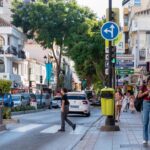
Fuengirola’s traffic lights to change. Credit: Irik Bik – Shutterstock

Spain’s traffic-light revolution has officially begun, but there is already a question hanging over it about how far it will actually go in reality.

New rules came into force on October 1 preventing vehicles from being shown a flashing amber light at the same time as pedestrians have a fixed green signal at a controlled crossing. Instead, when pedestrians have a green light, vehicles should have a fixed red light. That sounds simple enough. Making it happen across Spain’s thousands of junctions is another reality. The wider October road-rule changes are also bringing new requirements for cyclists, motorcyclists and electric scooter users.

Not every traffic light will be replaced

Drivers should not expect councils to rip out their existing traffic lights and install completely new systems. In many cases, the change can be made by altering the timing and sequence of existing signals. Fuengirola, for example, says it is reviewing and adjusting its traffic lights as part of an adaptation period rather than switching every junction overnight.

Its computerised traffic-light system should allow the town to make the changes relatively quickly. Other towns and cities face a more complicated job, particularly where changing the sequence could affect traffic flow.

Barcelona has 1,550 junctions in the spotlight

Barcelona has already raised one of the biggest practical problems facing the DGT. Around 1,550 intersections in the city currently have the type of traffic-light arrangement affected by the new rule, with a further 500 junctions involving flashing amber signals for bicycles also potentially affected.

Barcelona says that simply imposing the new system could reduce road capacity, increase congestion and require longer traffic-light cycles and additional phases. The city has been seeking a delay while the impact is assessed.

That raises an obvious question for the rest of Spain: how many junctions will eventually need changing, and who will pay for the work? No nationwide figure for the number of affected junctions has been published.

DGT has already opened the door to “exceptions”

This is where the story gets particularly interesting. DGT director Pere Navarro has defended the new system, arguing that it removes uncertainty by making the arrangement much clearer: when pedestrians have green, vehicles should have red. But he has also acknowledged that exceptions could be possible.

Speaking about the Barcelona dispute, Navarro said a junction could potentially retain flashing amber if a strong technical report showed that changing it would create more problems than benefits.

That means October 1 is not necessarily the day every affected traffic light in Spain changes. It could instead be the beginning of a much longer process in which individual councils review their junctions, change some signals and potentially argue to keep others.

Could drivers in Spain see a messy patchwork?

For drivers, that could create an unusual situation. A familiar junction might operate differently after being reprogrammed, while another junction a few kilometres away could retain its existing arrangement if it qualifies for an exception.

Navarro himself has admitted that the new rules could cause some initial confusion because drivers are not used to them. (Confusion? Like that of the introduction of the V-16 beacons?) He expects the new system to become normal over time, but says there is a major job ahead to explain the changes to the public.

For British residents and other foreign drivers, there is another complication. Traffic-light arrangements are not identical across Europe, so visitors cannot necessarily assume that a signal they recognise from another country has exactly the same meaning in Spain.

What happens next?

The legal requirement is now in force. The bigger question is how quickly Spain’s councils can put it into practice. Some, such as Fuengirola, have already started adapting their systems. Barcelona is arguing that a strict application could damage traffic flow, while the DGT has indicated that technically justified exceptions may be possible.

For drivers, the safest rule is also the simplest: follow the signal in front of you rather than assuming that a familiar junction still works in exactly the same way. Has Spain’s traffic-light revolution has started? Whether every affected traffic light actually joins it is another question.

In any case, seeing is believing. Let’s see what happens.

Continue Reading

%

Flying To The Middle East Or Asia? Europe Tells Airlines To Avoid Parts Of Saudi Skies

Published

on

flying-to-the-middle-east-or-asia?-europe-tells-airlines-to-avoid-parts-of-saudi-skies

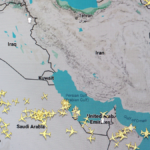
Flights over the Middle East are increasingly steering clear of conflict-hit airspace. Credit: IgorGolovniov / Shutterstock

The route many travellers take across the middle east could be about to change after Europe’s air safety agency has told airlines to keep clear of parts of Saudi Arabia’s airspace, which may mean longer journeys for passengers heading east.

Why European airlines are being told to steer clear

The European Union Aviation Safety Agency (EASA) issued the advice on Wednesday September 30, and it runs until at least Monday November 16. It covers parts of the Jeddah Flight Information Region, the stretch of sky managed by air traffic controllers in western Saudi Arabia. 

The reason is a rise in Houthi missile and drone attacks on targets deep inside Saudi Arabia. EASA said the dangers for aircraft include civil planes being mistaken for threats, missiles and drones passing overhead, interception activity and falling debris.

Now, it’s important to know this is guidance rather than a legal closure of the airspace. It applies to EU-regulated airlines and others operating under EASA approval, so some non-European carriers may keep flying the same routes. 

Why the map keeps shrinking for flights heading east

This isn’t the first warning of its kind. EASA already tells airlines to avoid the airspace of Bahrain, Kuwait, Qatar, the UAE and Oman, and has extended its advice on Jordan, Lebanon, Iran and Iraq until the same November date.

Some European airlines have been using southern routes over Saudi Arabia to skirt the central Gulf, which is why the latest advice matters. However, it’s not yet clear which airlines will change their routes, or by how much.

Earlier detours around the Gulf have added an hour or more to some flights between Europe and Asia, so longer journeys and changed schedules are possible.

Some airlines had already pulled back before this week. As of mid-September, KLM had suspended flights to Dubai, Riyadh and Dammam until October 24, while British Airways was offering rebooking or refunds on some Gulf routes through October 31.

The advice also comes a day after a flydubai flight from Dubai to Tel Aviv made an emergency landing at Tabuk in Saudi Arabia after a violent incident in the cockpit. Israeli authorities are investigating the first officer on suspicion of trying to crash the plane, and flydubai has suspended its Israel flights while the incident is looked into.

What you’re entitled to if your flight is cancelled

If an airline cancels your flight, EU passenger rights rules and its UK equivalent give you the choice of a refund or being rerouted. However, airlines can point to conflict as ‘extraordinary circumstances’, which usually means no extra compensation on top.

That’s why it pays to act early. If you’re booked on a flight to the Middle East or Asia before mid-November, check the latest status with your airline rather than relying on a booking site, and allow extra time on any connection. Keep checking right up until you leave for the airport.

Continue Reading
Advertisement
Advertisement

Spanish Real Estate Agents

Tags

Trending

Copyright © 2017 Spanish Property & News