Connect with us

%

Salobreña Unveils Major €1 Million Transformation

Published

on

salobrena-unveils-major-e1-million-transformation

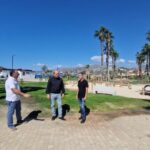
Salobreña updates its image. Credit: Ayto

Salobreña has officially opened a transformed section of its seafront after almost €1 million was spent turning a 338-metre stretch into a more pedestrian-friendly coastal space.

Work between the Salomar 2000 development and Calle Oleaje has removed much of the wall separating the promenade from the beach, creating a more open area with gardens, seating and new sports facilities.

Covering around 18,500 square metres, the project has changed an area previously more affected by an enormous amount of traffic. Visitors can now use spaces for beach volleyball, beach football and calisthenics, while new benches and bins, a stage and landscaped areas have also been installed.

The project forms part of Salobreña’s Plan for Tourism Sustainability at Destination and was paid for using Next Generation EU funding. Spain’s tourism ministry says these plans are designed to support more sustainable and higher-quality tourism infrastructure.

Road access still needs sorting

Mayor Javier Ortega said one of the first jobs now is to control access for service vehicles. Deliveries and rubbish collection lorries could cause damage if their movements are not properly managed. Local Police have been asked to prepare a report, with the council expecting to decide how access will work shortly.

More work is also planned to connect the promenade more effectively with cycling routes and public transport. Automatic public toilets are being decorated by local artists to make them less visually intrusive.

More changes planned for Salobreña coast

Salobreña Council sees the completed section as a model for extending similar improvements along the seafront towards the TH1 area. Official tourism information already describes Playa de La Charca-Salomar as Salobreña’s main urban beach, with its promenade, restaurants and visitor facilities.

Funding delays have caused some controversy, with the council insisting Salobreña will not have to repay the full €2.5 million PSTD allocation because the promenade works were around 80 per cent complete by the original deadline.

A further project planned for the Peñon will now be paid for by council funds after delays in obtaining the required permissions. In the words of one local resident, “It looks lovely, but it would have been nicer if they had completed it before the summer.” Another called for more shaded areas.

%

This Dinosaur Was Only Supposed To Exist In North America — So Why Is It In Spain?

Published

on

this-dinosaur-was-only-supposed-to-exist-in-north-america-—-so-why-is-it-in-spain?

The fossils were discovered at the La Tejería site in El Castellar, Teruel. Photo credit: Gorodenkoff/Shutterstock

For millions of years, scientists have pieced together the movements of dinosaurs from fossils scattered across the planet. But every so often, a discovery turns up that makes them rethink where an animal could actually have lived, and one such find in Spain has raised a particularly intriguing question.

Because this time, the fossils don’t belong to an obscure creature that few people have heard of. They belong to one of the most recognisable dinosaurs ever to walk the Earth, and its presence here is forcing scientists to reconsider the prehistoric connection between two continents. So how did it get here? That question takes us back around 150 million years, when today’s continents looked very different and the Atlantic was still taking shape.

Meet Teruel’s 150-million-year-old giant

The fossils were discovered at the La Tejería site in El Castellar, Teruel, by researchers from the Fundación Conjunto Paleontológico de Teruel-Dinópolis. They include 14 remarkably well-preserved tail vertebrae and several chevrons, the small bones attached to the underside of the tail vertebrae. The remains date back around 150 million years, to the Late Jurassic. This was a very different Spain, long before humans, modern cities or anything resembling today’s landscape existed.

The animal represented by the fossils could have reached around 25 metres in length, making it roughly the length of two-and-a-half buses. Until now, Diplodocus fossils had only been identified in North America, particularly in the famous Morrison Formation in the western United States. Detailed comparisons and evolutionary analysis have now established that the Teruel fossils belong to the same genus.

So how did a Diplodocus end up in Spain?

This is where the discovery becomes considerably more interesting than simply finding another dinosaur fossil. There was no modern Atlantic Ocean separating Europe and North America in the way there is today. Around 150 million years ago, the continents were still shifting, and the geography of the planet was dramatically different. North America and Europe were gradually pulling apart as the Atlantic opened, but the two landmasses were not yet as isolated as they are now.

Changing sea levels and temporary land connections or island chains may have allowed animals to move between areas that would eventually become separated by a vast ocean. The Teruel discovery provides evidence supporting the idea that Diplodocus was able to reach Europe during this period. In other words, this wasn’t a dinosaur somehow making an extraordinary modern-style transatlantic journey. It was living in a world where the route between North America and Europe was very different from the one we know today.

Why is the discovery so important?

Diplodocus has been one of the easiest dinosaurs to recognise since its fossils were first discovered in the United States in the 19th century. Its extraordinarily long neck and tail have made it a fixture of museums, books and dinosaur documentaries for generations. But scientists had always had a rather significant hole in its geographical story: every known Diplodocus fossil came from North America. The Teruel remains extend the known range of the genus into Europe and provide new evidence about how dinosaurs moved between continents during the Late Jurassic.

They also add to scientists’ understanding of the prehistoric ecosystems that existed across the Iberian Peninsula. Teruel was already an important area for dinosaur research, with numerous remains of giant sauropods discovered there. This latest find adds another enormous herbivore to the region’s prehistoric cast and gives researchers fresh evidence about how its ancient animal populations were connected to those elsewhere in the world.

What does Diplodocus actually mean?

The dinosaur’s name sounds suitably grand, but its meaning is surprisingly straightforward. Diplodocus means “double beam”, referring to the unusual double-beamed structures found on the underside of its tail vertebrae. The name comes from Greek and was chosen when the genus was described in the late 19th century.

Those distinctive bones were one of the features that helped scientists recognise what they were looking at when Diplodocus fossils were first studied in North America. The name has since become almost as famous as the animal itself, although the dinosaur that inspired it was rather more complicated than the museum models might suggest.

A very different map of the world

The discovery is a reminder that prehistoric geography cannot be read using today’s map. Around 150 million years ago, the continents were moving, seas were opening and closing, and animals could occupy areas that would eventually find themselves thousands of kilometres apart. What is now Teruel was part of that constantly changing world.

The Diplodocus fossils have survived all that geological upheaval, leaving researchers with a small but remarkably important piece of its enormous tail. And that is the real surprise from Teruel: a dinosaur that scientists had spent generations thinking of as a North American giant has now turned up in Spain, giving its prehistoric travels a much bigger map.

Continue Reading

%

Plane Ceiling Collapses Mid-Flight: Are Recent Incidents Making Flying Less Safe?

Published

on

plane-ceiling-collapses-mid-flight:-are-recent-incidents-making-flying-less-safe?

The Sepehran Airlines Boeing 737 was travelling from Mashhad to Kermanshah. Photo credit: AirportHaber on X

If you regularly fly between Spain and the UK, or rely on a plane to get you home for a few days, you probably don’t give much thought to what could go wrong once you take your seat. Most flights are so uneventful that you barely notice them: you put your bag away, fasten your seatbelt, settle in and wait for the drinks trolley.

That is why the latest footage from inside a Boeing 737 is so unsettling. Passengers have been left terrified after part of the cabin ceiling came down during a flight in Iran, forcing the aircraft to return to the airport. It is also the latest in a series of alarming aviation incidents to make headlines, from smoke-filled cabins to a passenger being pulled towards a shattered aircraft window.

Cabin ceiling collapses during flight

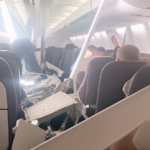
The Sepehran Airlines Boeing 737 was travelling from Mashhad to Kermanshah (Iran) on Tuesday, September 15, when problems developed shortly after take-off. Initial reports suggested turbulence had caused part of the cabin ceiling to collapse, although subsequent reports said the aircraft had lost a tyre and suffered severe vibrations, with possible engine damage also reported. The pilot turned the aircraft around and returned to Mashhad, where the Boeing landed safely. Footage reportedly filmed inside the cabin shows ceiling panels and fittings hanging down while passengers look on in alarm.

No injuries have been reported, and passengers were reportedly transferred to another aircraft to continue their journey. The incident is certainly frightening, but it also comes at a time when several other aviation incidents have caught the public’s attention. For anyone who spends a lot of time flying, that inevitably raises the question of whether these events are becoming more common.

Yolcu uçağında türbülans paniği: Kabin tavanı çöktü!

İran’da Meşhed–Kirmanşah seferini yapan Sepehran Airlines’a ait Boeing 737’de, türbülans sırasında kabin tavanının bir bölümünün çöktüğü ve yolcular arasında büyük panik yaşandığı bildirildi. Uçak, Meşhed’e dönerek emniyetli… pic.twitter.com/MNY36vTX45

— AirportHaber (@AirportHaber) September 15, 2026

Are more flights going wrong?

The reassuring answer is that there is currently no evidence of a general deterioration in airline safety. More than five billion passengers travelled on commercial flights during 2025, with around 35.2 million flights operated, while global safety figures show that commercial airliner accidents actually fell compared with the previous year. That does not make individual incidents any less frightening, particularly now that passengers can record what is happening and footage can be shared around the world almost immediately. A frightening event that might once have been reported briefly can now become an international news story within hours.

One of the most alarming recent examples involved a Ryanair flight travelling from Greece to Germany. An engine failure shortly after take-off caused debris to hit the aircraft and shatter a passenger window, with the man sitting beside it pulled towards the opening. His family said he was partially sucked out of the aircraft and had to be pulled back by his wife and other passengers, although Ryanair has disputed that account, saying he was pulled towards the window but did not actually leave the aircraft. The incident remains under investigation by the US National Transportation Safety Board.

Smoke and fumes force flights to divert

Smoke and fumes have also featured in several recent incidents . Two Delta flights in the United States were affected by fumes or unusual smells within days of one another, with one returning safely after fumes were detected and another diverting after passengers reported an unusual odour. Another Delta Boeing 757 had to be evacuated using emergency slides after smoke and fumes entered the aircraft, while an IndiGo flight travelling from Agartala to Delhi was diverted to Lucknow after a smoke warning in the cargo area.

All 109 people on board the IndiGo flight were reported safe, but for passengers, seeing smoke inside an aircraft or being told that a flight needs to turn around is understandably alarming. For pilots and cabin crew, however, returning to the departure airport or diverting to another airport is an important safety measure when a potential problem develops.

What should passengers do?

There is one simple precaution that passengers can take on every flight: keep the seatbelt fastened whenever you are sitting down. Turbulence remains a significant cause of injuries in commercial aviation, and someone who is unrestrained can be thrown from their seat during a sudden change in altitude or unexpected turbulence.

Passengers do not need to remain rigidly strapped into their seats throughout a flight, but keeping the belt loosely fastened while sleeping, reading or watching a film provides an extra layer of protection if the aircraft suddenly encounters turbulence.

If smoke, unusual fumes, mechanical problems or severe turbulence occur, passengers should follow the instructions of the cabin crew. A diversion or emergency landing can look frightening from inside the aircraft, but getting the plane safely onto the ground is precisely what those procedures are designed to achieve.

No need to worry…yet!

So while the latest videos may give the impression that something is constantly going wrong in the skies, the wider safety statistics tell a different story. Millions of flights operate safely every month, and the overwhelming majority of passengers reach their destinations without anything more dramatic happening than a delayed drinks trolley.

For British expats living in Spain and travelling regularly between countries, the recent incidents are therefore less a reason to fear flying and more a reminder of why basic precautions such as wearing your seatbelt and listening to the crew still matter.

Continue Reading

%

Magenta Slipperz Brings Hilarious Music Bingo Bango Night To Puerto De Mazarron

Published

on

magenta-slipperz-brings-hilarious-music-bingo-bango-night-to-puerto-de-mazarron

Magenta Slipperz hosts a lively coastal Music Bingo Bango party. Photo Credit: La Sal Music Bar / Facebook

Residents and visitors on the Costa Calida should get ready for an extraordinary evening of music, laughter, and interactive entertainment as the iconic drag performer Magenta Slipperz brings the ever-popular Music Bingo Bango Night to El Puerto de Mazarron on the evening of Saturday, October 3, 2026. Organised by Hartley Hartley Music, this highly anticipated event turns a classic pub game into a vibrant and hilarious party, taking over the La Sal Music Bar for a coastal night out that promises non-stop fun along the coastline.

Music Bingo Bango in Puerto de Mazarron: A fresh spin on a traditional pub classic

Music Bingo Bango completely does away with the quiet halls and numbered balls. Instead, bingo players tune in to song snippets, recognisable chorus lines, and famous dance anthems across multiple musical eras. As each track plays through the sound system, participants identify the song and check off matching titles on their customised game cards, with the chance to win prizes.

The experience is a mix of lively music trivia and an interactive stage show. Driven by Magenta Slipperz’s quick-witted banter, unexpected sing-alongs, and spontaneous audience participation, the event caters equally to music lovers, casual game players, and group outings simply looking for something beyond a standard weekend night out.

Quick-witted humour and stage presence with Magenta Slipperz

At the heart of the show is the unmistakable stage presence of Magenta Slipperz, whose sharp humour and dazzling hosting style keep the crowd laughing and the energy high all throughout the night.

Unwind at La Sal Music Bar by the marina

La Sal Music Bar provides the ideal setting for the occasion, situated right along the waterfront at Puerto Deportivo in El Puerto de Mazarron. Known for its welcoming atmosphere, great drinks menu, and prime marina views, the venue offers a relaxed Mediterranean backdrop for an evening of friendly competition and lots of laughs. With doors open prior to the official 7:00pm start time, attendees are encouraged to arrive early, grab a drink, and secure their seats before the party begins.

Whether a bingo buff or a curious newcomer, Music Bingo Bango Night in Puerto de Mazarron will be a memorable night, with a very memorable host.

Continue Reading
Advertisement
Advertisement

Spanish Real Estate Agents

Tags

Trending

Copyright © 2017 Spanish Property & News