
ElPais
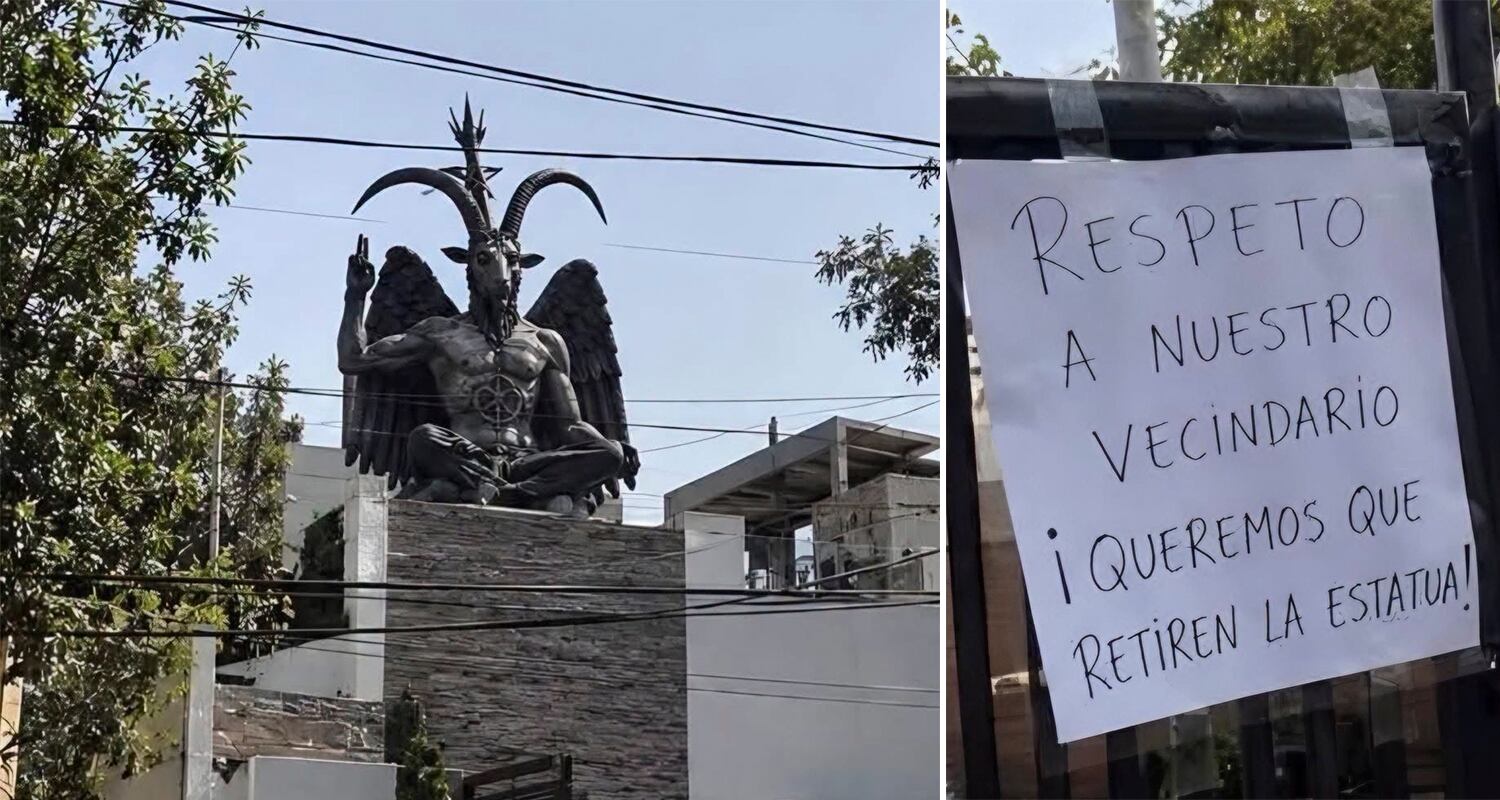
Searching For Baphomet One Block From The Legionaries Of Christ











ElPais
Medellín Begins Demolition Of A House Owned By Pablo Escobar Where Alleged ‘satanic Rituals’ Took Place

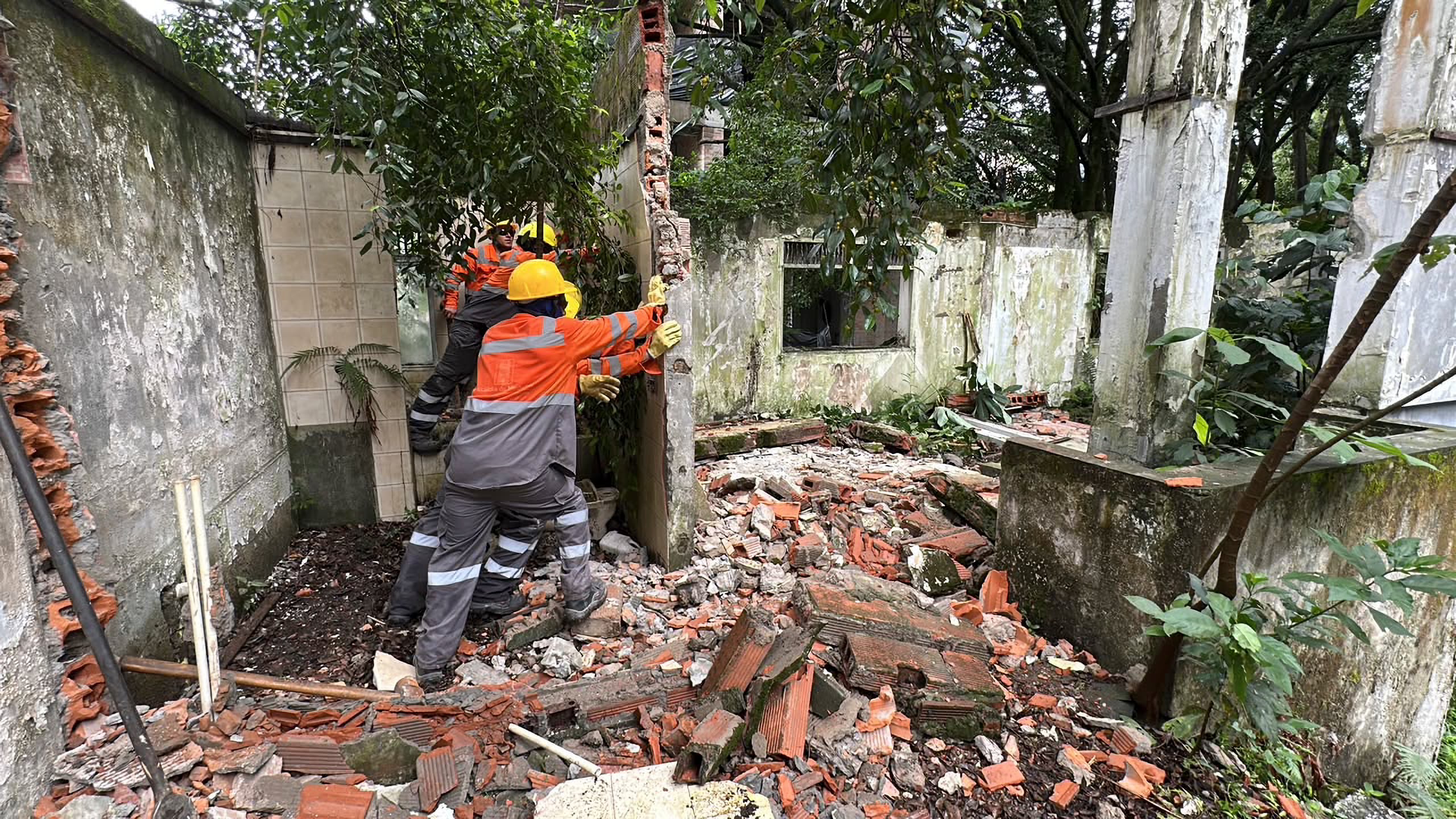
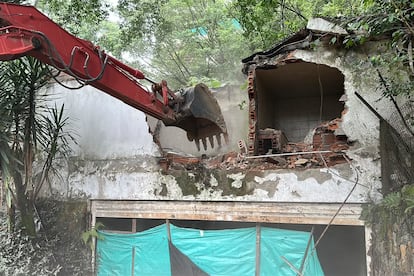
Medellín city hall has begun demolishing a house that once belonged to drug lord Pablo Escobar in the Diamante 2 neighborhood of the El Poblado district in the capital of Antioquia. The property, one of the many owned by the head of the Medellín Cartel, who was killed in 1993, had been abandoned, although authorities say it was being used to hold satanic rituals, for sexual activity, and for drug use. It had also become a security problem in one of the city’s most tourist-heavy neighborhoods. On Tuesday, the local administration began intervening on the site.
The property covers a total of 1,854 square meters and was acquired in 1979 by Escobar’s wife, Victoria Eugenia Henao. In 2004, 11 years after the criminal leader’s death in Medellín, it entered an asset-forfeiture process with the Prosecutor’s Office and, in 2018, it was transferred to the Fund for Rehabilitation, Social Investment and the Fight Against Organized Crime (FRISCO), managed by the Special Assets Society (SAE). Because the site was abandoned, it began to be used for activities that alarmed residents in that part of the city.
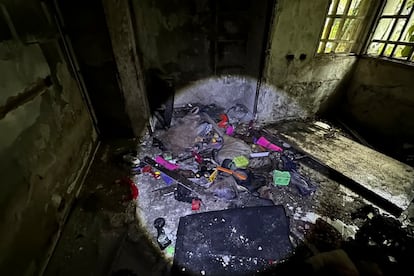
At the time of the intervention, authorities found inside the building remnants of damaged children’s toys, old shoes, used pillows, masks, a decapitated doll and pieces of wood and metal. The interior spaces of the house were for the most part eaten away by damp and filth, while the exterior areas were dominated by weeds and vegetation. On one wall there was a six-pointed star with a cross in the center, spray-painted in red. There was also a phrase, in the same color, that read: “Si lo miro, lo mato (If I look at him, I’ll kill him).” The severely degraded condition of the house and the misuse of the property led residents to repeatedly ask city authorities to intervene.
After demolition began, Medellín’s acting mayor and secretary of Security and Citizen Coexistence, Manuel Villa Mejía, said the intervention is another step by the city administration against places that recall and glorify its criminal past. “We are reclaiming the city and closing the door to any expression that seeks to turn our narcotrafficking past into an object of admiration,” he said. Villa Mejía added later: “We will not allow these places to continue serving as settings for activities that undermine the community’s peace.”
The demolition of Escobar’s house in El Poblado adds to other interventions at his properties in the city in recent years. One of the most notable was the destruction by implosion of the Mónaco building, also in El Poblado, in February 2019 during Federico Gutiérrez’s first term as mayor. That building, associated with the worst years of violence and drug-related crime in Colombia, served as Escobar’s residence in the city and was the target of an attack by the Cali Cartel in 1988. In its place the Parque Inflexión was built, in memory of the victims of narcotrafficking.
In 2023, under Mayor Daniel Quintero, the city ordered the demolition of the Pablo Escobar museum in the Loma del Indio area, which was run by Roberto Escobar, the drug lord’s brother. The intervention was ordered by a judge because the building did not have the permits required for a two-story structure. Underlying it all, however, was the city administration’s goal of eradicating so-called “narco-tours” and any form of tourism that glorifies the figure of the most notorious criminal in Colombia’s history — a case that, nonetheless, still has several unresolved issues.
Sign up for our weekly newsletter to get more English-language news coverage from EL PAÍS USA Edition
Ceuta
King Of Spain In Ceuta: ‘Sovereignty And Territorial Integrity Are Not Negotiable, And Faced With Any Risk, Our Duty Is Their Defense’

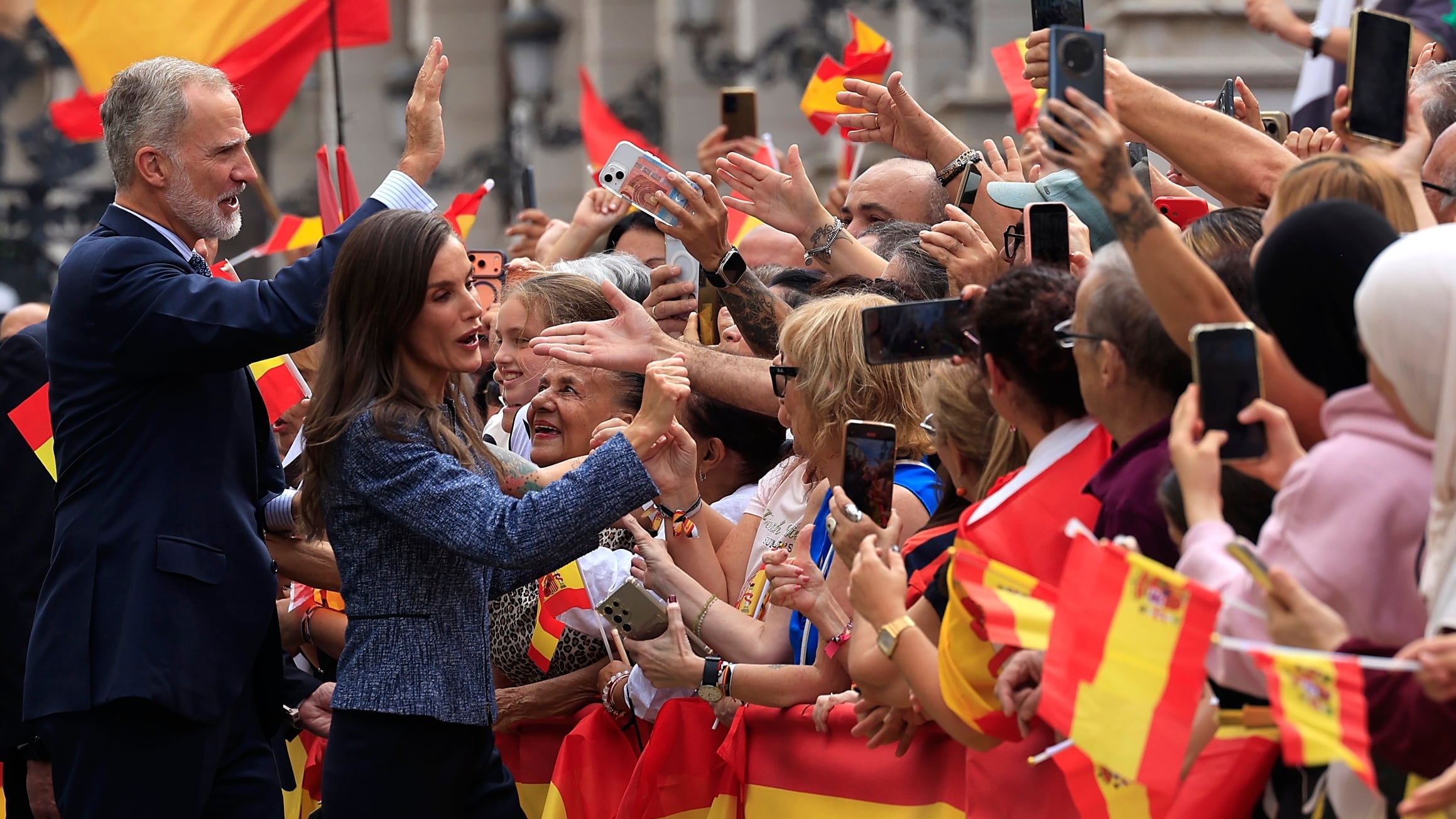
In a remarkably forceful address, Felipe VI of Spain on Tuesday asserted Ceuta’s ‘sovereignty’ and ‘territorial integrity,’ two and a half months after more than 80,000 people crossed illegally from Morocco in an unprecedented mass incursion into the Spanish exclave city in northern Africa.
Speaking from Ceuta in his first official visit since his accession to the throne in 2014, the monarch underscored his role as ‘head of state’—something he does not often invoke in this type of speech—and said that ‘the breach of our border continues to have an enormous impact on all of Spain.’
The king mentioned Morocco, saying Spain bore ‘the responsibility of maintaining a good neighborly relationship,’ but one based on ‘mutual respect’ between the two countries. EL PAÍS recently revealed that on July 30 and 31, besides the tide of migrants who walked or swam into Ceuta, several Moroccan war ships also entered Ceuta territorial waters repeatedly and without authorization, and only retreated after the Spanish Navy deployed vessels in the area as well as high-level involvement by the Defense Ministry. On Tuesday Morocco appeared to be officially ignoring the Spanish royals’ visit to the city, which it claims historical sovereignty over.
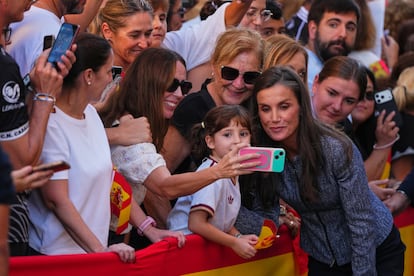
‘That breach of our border by a vast crowd of people was a shock for everyone, especially for you, and it continues to have an enormous impact—social, political, economic and psychological—on your lives, on the city and, to a large extent, on all of Spain, even though since then the majority of those who entered have returned and many others have been placed in reception centers,’ the king told a crowd of local residents in a speech just after 7.30 pm at Parador Las Murallas.
‘Ceuta and Melilla [another exclave city in northern Africa] are an indispensable part of the political and national reality that is Spain. The sovereignty and territorial integrity of our country are not negotiable: they are indisputable. And faced with any risk, our duty is their defense and preservation,’ he added.
‘Ceuta is Spain…, and Ceuta is Europe. Therefore, its border—as Melilla’s—is a border of the Union. Any threat it suffers is a threat to the entire EU,’ he stressed. This part of the speech drew sustained applause from the crowd.
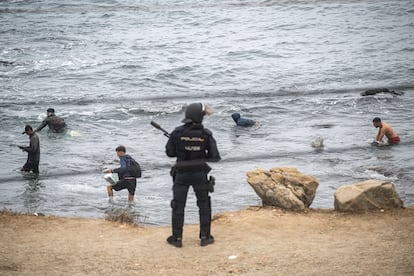
Two and a half months after the sudden influx, the central government of Spain is housing thousands of migrants in 10 improvised facilities with room for 7,400 people. Around 12,000 people have returned to Morocco, the vast majority voluntarily via the El Tarajal border crossing. ‘Those who entered our country irregularly must—as a rule—return to their place of origin as soon as possible and by the legally established channels. While they remain among us they must always be treated with dignity and humanity, and with all the guarantees provided by our laws,’ Felipe VI said. ‘But they must also be required to show scrupulous respect for the rules of civic coexistence and for the rights and freedoms of Ceuta’s residents. So that when we look back on these very difficult days, we can do so with the calm and satisfaction of having done things right.’
Support in Brussels
The Ceuta crisis is still fresh in Brussels, the heart of the European Union. Ursula von der Leyen, the president of the European Commission, the EU’s executive arm, on Tuesday supported “reinforcing” cooperation with Morocco on immigration issues, and said that “lessons” should be learned from the late July incident. Von der Leyen also reiterated support for Spain in achieving the rapid return of undocumented migrants to Morocco.
Von der Leyen also insisted on the need for an “emergency response network” that will enable migration rules to be “flexibilized” in the event of a crisis or weaponization of migration flows by third countries.
With additional reporting by Silvia Ayuso, Miguel González and Juan Carlos Sanz.
Sign up for our weekly newsletter to get more English-language news coverage from EL PAÍS USA Edition

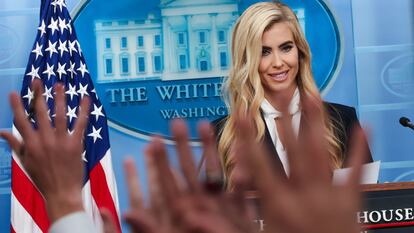
On Tuesday, three weeks before the midterms, the White House went back to its news conferences after a 47-day hiatus following the departure of former press secretary Karoline Leavitt. Her successor, Katie Zacharia, made a very brief appearance in which she only took three questions and fell short of the cool aplomb with which Leavitt made a name for herself defending the policies of her boss, President Donald Trump, resorting to lies when necessary.
Perhaps to honor that tradition, Zacharia, who made up for her lack of poise with a great deal of loyalty for Trump (whom she apparently got confused with her husband at one point), began the briefing with a falsehood and ended it with a piece of news.
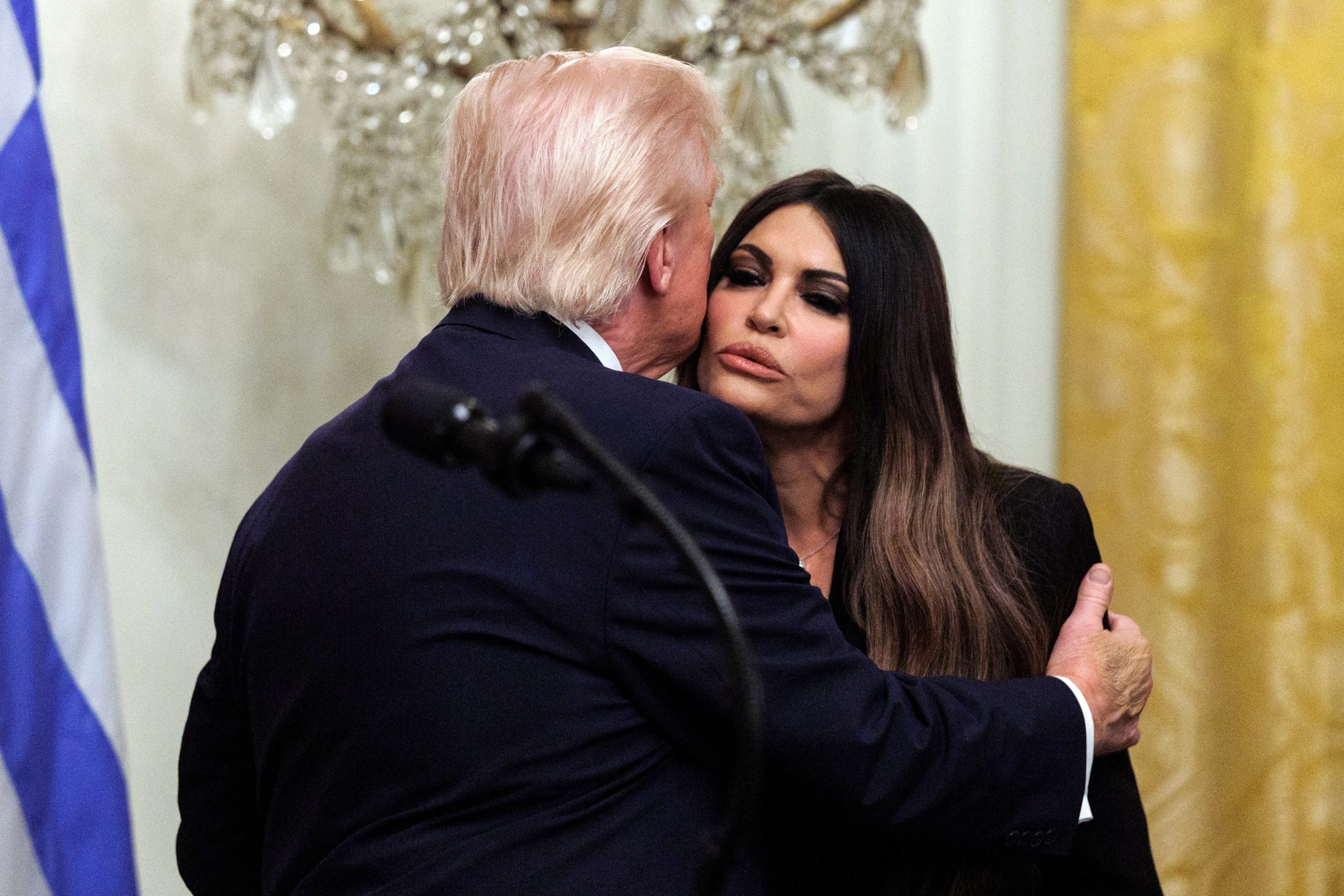
The news is that the White House has asked the United States ambassador to Greece, Kimberly Guilfoyle, to resign following corruption allegations revealed by The Wall Street Journal. The new press secretary did not provide any additional details about a scandal allegedly involving the ambassador asking a Republican donor to pay off her $100,000 credit card bill ahead of her Senate confirmation. In exchange, she promised political favors.
“Serving as the United States ambassador to Greece has been the honor of my life,” Guilfoyle said on her X account, calling the “recent allegations” against her “false.” “I intend to vigorously defend my name, my reputation and my integrity.”
After his return to power, Trump appointed Guilfoyle — who was engaged to the president’s eldest son, Donald Trump Jr., for four years — to the ambassadorship. The scandals unearthed by the Journal began last month, when the newspaper reported that the ambassador had boasted in a private conversation about plotting to force the fall of the four-party government led by liberal Ilie Bolojan in early May in Romania. According to that investigation, Guilfoyle also threatened Greek Energy Minister Stavros Papastavrou with doing the same to his country.
The influence of a ‘lobbyist’
The Journal also reported on the controversial influence of a Greek ‘lobbyist’ named Christos Marafatsos over the ambassador, saying he had flown her on his private plane on multiple occasions.
This administration has provoked more corruption complaints than any in decades. It is also notable that Trump, who became famous on a television reality show shouting “You’re fired,” forced Guilfoyle’s resignation publicly through Zacharia rather than dismissing her himself.
Sign up for our weekly newsletter to get more English-language news coverage from EL PAÍS USA Edition

Roma – Real Madrid En Directo | Comienza El Partido En El Olímpico De Roma

Medellín Begins Demolition Of A House Owned By Pablo Escobar Where Alleged ‘satanic Rituals’ Took Place

Spanish Police Files Could Be Crucial In Trial Of Irish ‘cartel Boss’ Daniel Kinahan As He Seeks Bail In Dublin


-

 Uncategorized2 weeks ago
F1 Bahrain Grand Prix will be live and FREE on TV this weekend
-
Latest2 weeks ago
Why You Can’t Donate Blood In Spain If You Don’t Speak Spanish
-

 Foreign demand3 weeks ago
Market Snapshot: German Market In Q2 2026
-
Blackout preparedness2 weeks ago
Brussels takes action against Spain over failure to update blackout plan
-
Latest2 weeks ago
Spain’s Government Dealt Huge Blow As MPs Reject Housing Crisis Laws
-

 Uncategorized2 weeks ago
Lewis Hamilton F1 wish could come true as stunning plans for new track revealed
-

 Housing access / crisis / affordability2 weeks ago
Radical Housing Decrees Defeated As Snap Election Talk Grows
-
Enzo Maresca3 weeks ago
Manchester City found guilty on 114 of 115 charges that could send them down