
ElPais
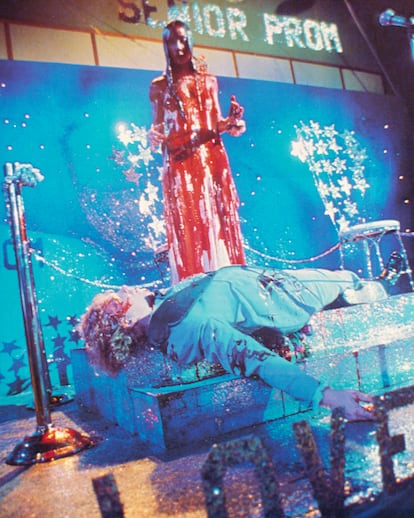
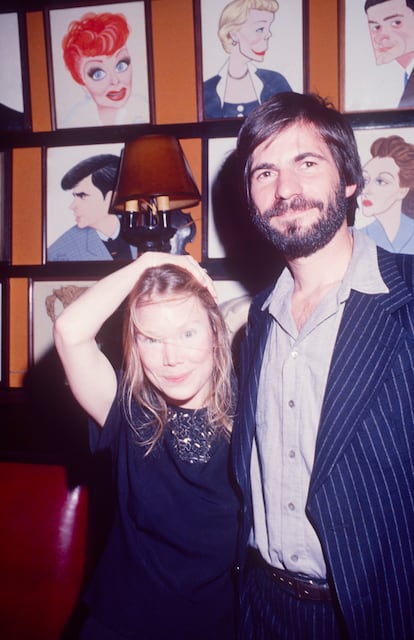
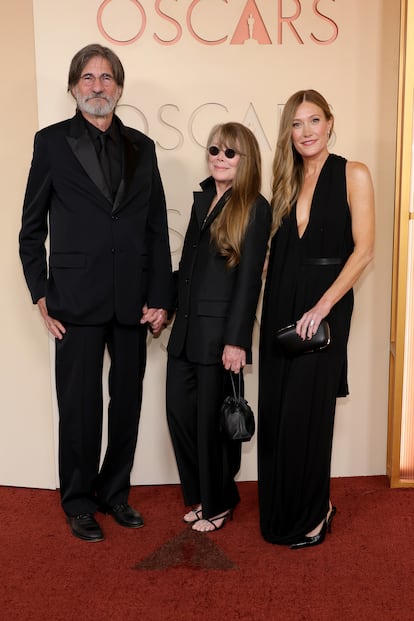
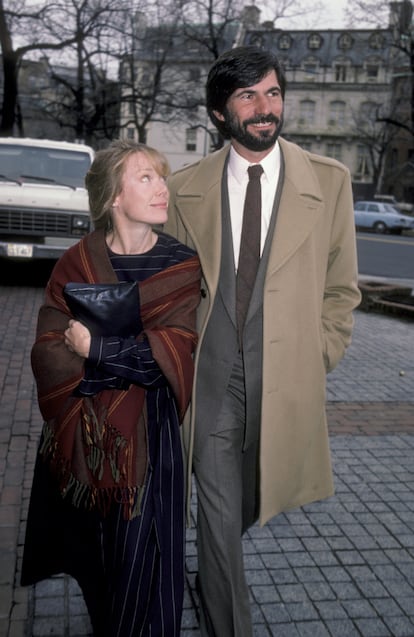
Sissy Spacek Was More Than Carrie: A Life Of Love, Loss And Acclaim



17 fotos
The new series based on the Stephen King book brings back the character that defined the 76-year-old actress’s career. Yet beyond the troubled teen is a life marked by Oscar success, an enduring marriage and dreams of a music career

























This past summer has been, for Europe, “the summer of truth,” as Ursula von der Leyen said a couple of weeks ago in her State of the Union debate speech. The president of the European Commission was warning about the consequences of global warming, which has again struck the continent hard. And the Copernicus Climate Change Service quantifies this sweltering summer in its seasonal assessment, published on October 2. The season in Europe was marked by heatwaves that were unusually intense and early (the first arrived in May). Across the continent this was the third-warmest summer on record. But focusing on western Europe, the summer of 2026 was the worst on record. It surpassed 2003, which shocked many EU countries with tens of thousands of deaths linked to extreme heat.
Pending a detailed accounting of heat-related deaths in Europe, Copernicus experts highlight the situation in the continent’s major rivers, which had serious consequences for power supplies and trade. “Prolonged and severe drought conditions across Europe set the stage for the summer with the lowest river flows on the continent since records began at the European Flood Awareness System in 1992,” they note. They also point out that many of Europe’s main rivers — including the Rhine, Danube, Po, Loire, Rhône and Seine — recorded simultaneous record low flow levels during July and August.
The Copernicus report focuses on 12 of the continent’s major rivers. Many of them play a key role in, for example, freight transport or cooling nuclear plants, such as the Danube or the Rhine. Experts analyzed mean discharge at the rivers’ mouths for June, July and August since 1992 and conclude that this summer’s levels were the lowest on record.
“Since the mid-2010s we have seen summer river flows well below average across Europe, especially in eastern Europe,” said Samantha Burgess of the European Centre for Medium-Range Weather Forecasts, which oversees Copernicus. “And we also know,” she added, “that southeastern Europe is warming faster than the European average.” Burgess thus points to climate change as a key driver of this trend, although she cautions that their dataset starts in 1992, making it harder to firmly establish the relationship. “It is a short-term dataset for truly analyzing long-term trends,” she admits.
Regarding the direct influence of climate change, Burgess said Copernicus has not yet carried out an attribution study for the summer of 2026. For that reason they cannot “directly quantify the role of climate change.” But it is well established that the high temperatures associated with this crisis increase “evaporation and soil moisture loss,” which exacerbates droughts. In addition, climate projections have for years pointed to “a reduction in river flows in summer across many parts of Europe,” as is already happening.
Beyond impacts on biodiversity, the drop in river flows caused “major disruptions” in many industrial sectors, including “cargo transport, which affected supply chains,” Copernicus noted, and it also listed the “cooling” problems experienced by several nuclear reactors, the fall in hydropower generation and restrictions on drinking water in multiple cities. “This highlights the close link between climate change and geopolitical challenges such as energy security,” the European service added.
Freight transport
The drop in flow of major rivers had significant impacts in western European Union states, where inland waterway freight traffic is intense. In August, for example, vessels departing Rotterdam (the Netherlands) or Antwerp (Belgium) could navigate the Rhine with only 15% of their normal loads to avoid running aground. “Similarly, on the Danube, barge-carrying capacity was reduced to around 30% of its usual level,” notes another recent report by the International Transport Forum (ITF) at the OECD. “As a result, inland waterway freight rates have risen,” the analysis center explains, “at times doubling transport prices.”
In 2018, during a similar Rhine low-flow episode, GDP in Germany dropped by up to 0.4%, according to a scientific study on the impacts of that drought. “Similar economic effects could be expected with the current low water levels,” the ITF adds.
The organization’s experts warn that “as droughts become more frequent and severe in many parts of the world, navigation on rivers that carry vital goods becomes increasingly difficult.” Among the consequences of lower water levels are “supply chain disruptions” and higher “logistics costs.” Spain, although it also suffers recurring drought problems, is less exposed in this case because inland waterway freight transport is practically nonexistent. But in countries such as Belgium, the Netherlands, and Romania, inland waterways account for between 15% and 45% of total freight traffic, the ITF summarizes.
Nuclear power
Another collateral impact of low river levels in Europe has been on energy, specifically nuclear plants that rely on river water for cooling. In some cases, such as in France, plants were affected this summer by water temperatures that were too high to be used at certain facilities, which had to shut down under national environmental regulations.
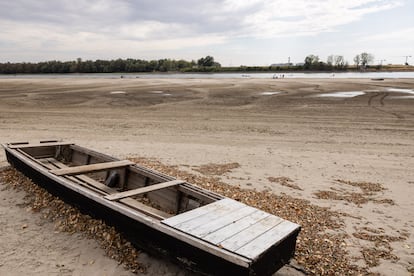
In other cases, the problem was falling water levels. Hungary’s Paks nuclear plant, on the banks of the Danube and which produces over 40% of the country’s electricity, had to scale back operations because the river could not provide enough cooling water. Hydropower production in the Alps was similarly affected: Austria generated only 51% of its usual output and Switzerland 26%.
“These are not isolated incidents but early warning signs of a systemic challenge to how billions of people access energy,” said another study by the Organization for Security and Co-operation in Europe (OSCE). “Industrial activity slowed as power supplies became less stable, and wholesale prices surged amid rising demand,” the study on this summer’s impacts notes. “It was necessary to activate emergency protocols across energy infrastructure, revealing pressure on national security,” it warns as a caution about what could happen in coming years.
Sign up for our weekly newsletter to get more English-language news coverage from EL PAÍS USA Edition

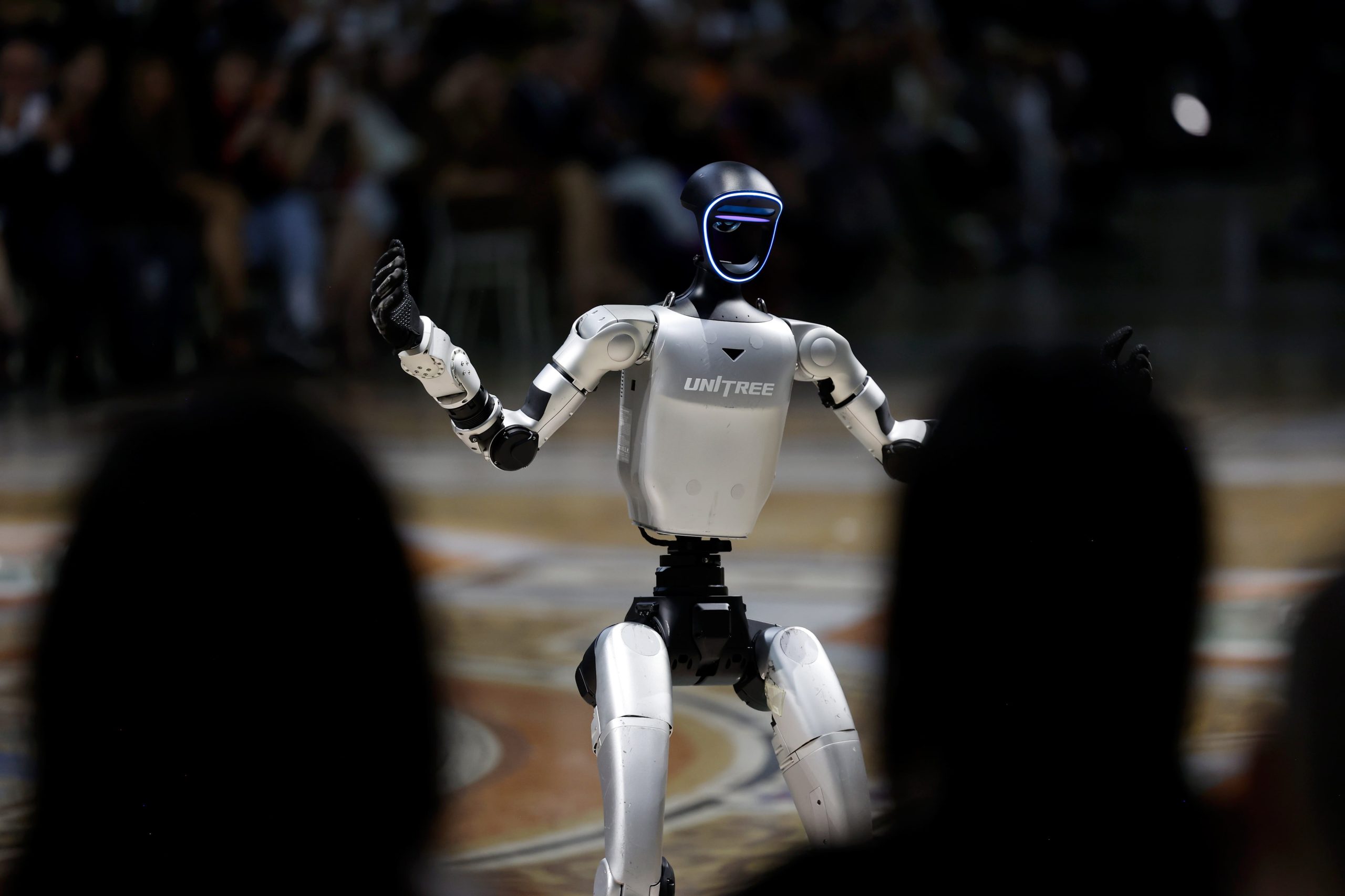
Yumi Nu is one of the world’s most sought-after models. An American citizen of Dutch and Japanese descent, and the niece of DJ Steve Aoki, she has appeared on the cover of Sports Illustrated and walked for L’Oréal and Victoria’s Secret. On September 22, at Vogue World in Milan, Nu shared the runway with a group of inexperienced intruders: four humanoid robots built by the Chinese company Unitree Robotics.
The mechanical brutes were the highlight of a special segment called The Age of Intelligence, with which Vogue set out to celebrate the embrace of technology by an industry accustomed to preserving its traditions. Yumi Nu and the other two elite human models who took part in the show, Ruth Deng and Alex Consani, watched their new competitors with resigned curiosity. After all, if artificial intelligence is going to replace three out of four flesh-and-blood workers in the next decade, why would fashion models be an exception?
Juan Costa Paz, Vogue’s creative director, wrote in a later piece for the magazine that parading a quartet of androids down the catwalk of the historic Galleria Vittorio Emanuele II was not merely a disruptive prank. “Robots are here to stay,” Costa said. If they still seem clumsy, ugly and unsuited to a runway, it’s because we are at the dawn of the robotic revolution. “They’re still very clunky, like how the first cellphones were suitcase-sized, but the robots are meant to be an inflection point in human history,” Costa added: “It’s fun to watch them. Although, at the same time, it’s like confronting something terrifying: AI is here to stay, robots are here to stay.”
Do androids dream of mechanical runways?
Not everyone shares the enthusiasm of Anna Wintour’s current right-hand man. In his Washington Post column, Shane O’Neill lambasted the “stupid, ugly robots” that barged into a high-level celebration and turned it into a sad charade. He was particularly horrified by the clapping and absurd dances the androids performed to liven up the audience and by the “odd cameo” of a robot dog that thus became not only one of the first professional robotic models but perhaps the first four-legged one.

The magazine TechCrunch highlights the very adverse reaction of Alessandro Michele, Valentino’s creative director, who seemed to take the stunt as a personal affront, and questioned why the androids walked “naked” (albeit without genitalia they don’t need) if the aim was to demonstrate their capacity to showcase clothing.
D’Scene adds to the debate that we already knew modern robots can “walk, gesture and move their hands.” The only novelty is that we now know they can also move their feet to the rhythm of Gigi D’Agostino’s L’amour toujours. It notes that Boston Dynamics’ robots already showed, a couple of years ago in a Coperni show, that they have basic skills that can be very useful on a catwalk, such as “putting on and taking off a jacket,” skills that Unitree Robotics’ models apparently lack. More than an evolutionary leap promising a splendid future for the cyber-mannequins, what happened in Milan was a step back into the caves.
Aiyana Ishmael, in Cosmopolitan, adopted an ironic tone. In her view, Milan’s show of “the children of ChatGPT” did not go entirely well. Although presented as heralds of the age of intelligence, the nude robots proved to be rather “silly.” Finally, CyberNews highlights how the world’s top designers reacted to Vogue’s stunt. Pierpaolo Piccioli gave a polite but awkward smile. Donatella Versace hesitated for a moment but eventually applauded. Miuccia Prada put on her best aristocratic look of indifference.
What have the androids done for us?
It’s clear that robots are no longer amusing to everyone. As we grow accustomed to encountering them and as they infiltrate more and more spheres once reserved for humans, the rejection they provoke increases — and yet they have never been so useful.

If we are willing to allow it, this new generation of androids is capable of running our factories like a quantum clock, guarding our homes, performing surgery, feeding us, driving our vehicles with astonishing precision, caring for (and educating) our children, painting a picture, or writing us a poem.
Perhaps, step by step, together with other machines endowed with some kind of intelligence, they are approaching the theoretical threshold of the singularity — the moment they begin to develop a firm consciousness and their own agenda, realize we are in their way, and decide to destroy us. But that possibility has been present for decades; science fiction warned us of impending disaster as early as the late 19th century, and yet real androids (hypothetical ones are another matter) didn’t necessarily make us dislike them.
On the contrary, our ancestors found the first automatons charming, even when they were frauds like The Mechanical Turk, a supposed mechanical chess player with an elegant turban that in reality concealed a human chess player inside. The myth of the good robot, as cultural anthropologist Giles Crouch explains, has accompanied us for centuries and survived tests such as the emergence, in the 20th century, of evil robots in literature and film. For every HAL 9000, the most polite and intelligent serial killer in history, there was a WALL-E, a GORT (from The Day the Earth Stood Still) or a robotic butler like the one in Woody Allen’s Sleeper — so clumsy, so inefficient, so delightfully human.
But the trend seems to be shifting. Gone are the years when we named our Roombas and dressed them in knitted sweaters as if they were clever poodles rather than gadgets that merely move dust around. As early as 2017, the journalist Sherry Turkle reported that a new line of “sensitive and empathetic” toy robots (Jibo and Cozmo were the most famous) was failing spectacularly with American children despite offering intelligent conversation and showing an interest in their problems.

Children found it distressing to talk to a creature that moved back and forth and looked at them with lamb-like eyes. For conversation, they already had Alexa or Siri. You expect a robot with arms and legs to be able to play games that involve destroying things, not to have it psychoanalyze you or pretend your feelings matter. Turkle ended her article with advice to parents in that pre-pandemic, carefree society of nine years ago: “Don’t accustom your children to the idea that robots are their friends.” They already have dogs and stuffed animals for that. Or other children.
Another example: in 2022 the Mutua Madrid Open became the first Spanish tennis tournament to use robots as security guards. Yellow, an elegant AI device with a vaguely canine appearance, patrolled the courts throughout the tournament, helping its human supervisors detect incidents and potential threats.
Some attendees said its presence intimidated them — they thought it might harm them. It’s curious, because almost no one distrusts the Argentine mastiffs or German shepherds used as security aides at other tournaments. They wear muzzles, we assume they are well-trained, and a human holds their leash. But an Argentine mastiff does have willpower, can get nervous, responds to stimuli, and can react unpredictably. Robots do not. True to their name (derived from the Czech word robota, meaning slave), they lack true will and do strictly what we order. Yet it is they who frighten us.
Perhaps the watershed moment came when we realized that, rather than destroying us in the medium term, what androids are likely to do tomorrow or the day after is ally with their cousins, the computers, and leave us unemployed. Transhumanism (any evolutionary horizon that leads to some form of human-machine synthesis) seems a poor consolation. We want to remain carbon creatures, as the robots in Alien called us. And it irritates us that the only reasonable alternatives emerging from technological forecasts seem to be that robots will transform us or replace us.
Although another explanation is possible. As the D’Scene article cited above suggests, the modern antipathy toward androids may be aesthetic, technological and practical. In an era that talks so much about AI’s transformative potential, how can humanoid robotics still be so precarious, so unaesthetic, so shabby, despite the undeniable progress of some pioneering firms? Why, in automated Japanese restaurants in Madrid or Barcelona, are the tray robots that bring you sushi still metal drawer-like contraptions that stumble over tables and bump into customers? “Are those dreadful clanking robots that clap and dance the future of our industry?” Miuccia Prada and Alessandro Michele must have wondered. “Are those tin monstrosities going to put me out of work?” Yumi Nu must have thought. Maybe the androids of 2026 (at least Anna Wintour’s) are not what they were or what they have long promised to be. That’s why they freeze our smiles and why, for now, we don’t want to see them walk our runways.
Sign up for our weekly newsletter to get more English-language news coverage from EL PAÍS USA Edition
california
From Police Officer To Store Employee: The Life Change Of A ‘Dreamer’ Who Turned In His Badge

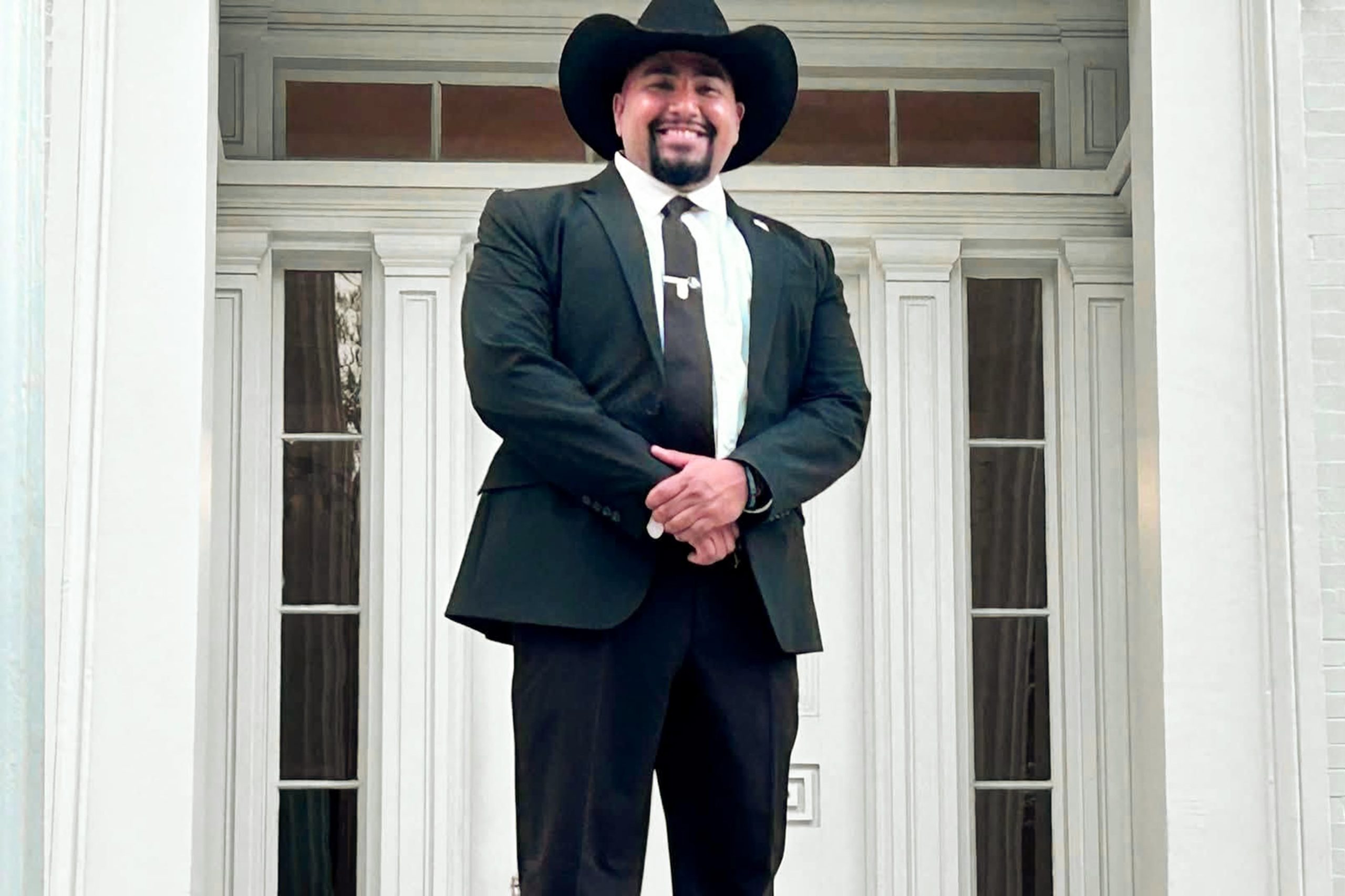
Édgar Vázquez Silva’s worst fears came true. His boss at the Stone County sheriff’s office in Mississippi called him and asked him to turn in his badge and uniform. The order was clear: all department officers had to be U.S. citizens or, at minimum, permanent residents.
Born in Mexico and brought to the United States without papers by his mother as a child, Vázquez Silva held neither status. For several years he had relied solely on a work permit obtained under DACA, the immigration program enacted by then-president Barack Obama to shield from deportation those who arrived in the country as minors without authorization.
“I felt awful. I held back the tears, but I went into the department and handed everything over,” Vázquez Silva recalls about the moment he returned his badge and uniforms, which he kept in a purple plastic bag. It was a quick procedure, and he was accompanied by his young son. There were no farewells, hugs or words of encouragement: none of his colleagues were at the station. “You have a dream and they take it away from you,” he laments.
Vázquez Silva is not the only one in this situation. Several officers in California have had to surrender their badges and guns or been placed on unpaid administrative leave because they could not renew their DACA status in time. The process has become increasingly complex and slow; it must be completed every two years and affects about 500,000 beneficiaries.
Those affected worked in the police departments of Los Angeles and Santa Ana. Others, like Vázquez Silva, lost their jobs after supervisors imposed stricter requirements on immigration status.
Amid the campaign against the DACA program under the Trump administration, processing times have increased and, for some, submitting a renewal months in advance was not enough. Average wait times rose from 15 days in 2025 to 70 days this year, an increase of more than 360%, according to data from U.S. Citizenship and Immigration Services (USCIS).
The end of a police career
Vázquez Silva had spent months lobbying for a green card that would allow him to keep his job at the Stone County sheriff’s office. He thought going public with his case might help. He gave interviews to several media outlets, met with the governor of Mississippi and with a congressman, and maintained an active presence on social media under the name “Deputy Dreamer.” Nothing worked.

The order to require immigration status for all law enforcement officers came directly from Amy Vanderford, head of the State Department of Public Safety. “The sheriff told me he was very sorry, but there wasn’t much he could do. He told me he needed me to hand over the badge,” he recalls.
That ended a five-year law enforcement career in Mississippi, which he had managed to extend despite losing authority and ending up in a part-time role where he couldn’t even carry a firearm. He now works as an assistant manager in a store. “They paid me well and I have benefits. But it’s very different compared with being a police officer,” he says.
Vázquez Silva was born 36 years ago in the border state of Tamaulipas. He has no memories of Mexico. He was only three when his mother crossed with him into Texas, without documents. His stepfather’s construction work moved the family from state to state until they finally settled in Mississippi. When he was 12, his mother told him something that would change how he saw himself. “Son, you don’t have papers,” she said. He understood the meaning of those words years later, in high school as he began to plan his life. “And now what am I going to do?” he recalls asking his mother.
After finishing school, he worked as a gardener, bricklayer, and gas station attendant. His prospects changed in 2012 with the introduction of DACA, and a chance encounter sealed his future. A police officer he met invited him to ride around the city in a patrol car. When the ride ended, Vázquez Silva had one certainty: “This is what I want to be.”
“We are not criminals”
In 2021 he graduated from the part-time officers’ academy and began patrolling the streets of Columbia. Three years later he was selected to enter the full-time academy. But midway through training he received devastating news: he had been disqualified because he was neither a permanent resident nor a citizen. “You can finish the academy, but we can’t give you the badge,” they told him.

From that moment he was not allowed to carry a firearm and his career was put on hold. For a time he was responsible for guarding a public school in Columbia, although he was forbidden from using the shotgun in his patrol car. “I never felt right because I didn’t have a weapon. They could kill me,” he says.
In 2023 he found a new opportunity at the Stone County sheriff’s office, where he worked part time transporting inmates to their court hearings. He did so without carrying a weapon, despite the risks. Although he renewed his DACA card in 2025, the requirement to have at least a green card prevented him from keeping the position.
Vázquez Silva says he will keep fighting to get his police badge back. He now believes one of his options is to meet President Trump in person. “I would tell him to look at my story, to invite me to the White House and give me a chance to be an American and be a police officer again,” he says. “To prove that we, the Dreamers, are not criminals; we love this country deeply and we want the American dream.”
Sign up for our weekly newsletter to get more English-language news coverage from EL PAÍS USA Edition

Students 65kg Waste Benajarafe Beach

GP De Singapur En Directo, La Carrera De Fórmula 1 En Vivo

Sissy Spacek Was More Than Carrie: A Life Of Love, Loss And Acclaim


-

 Uncategorized2 weeks ago
F1 Bahrain Grand Prix will be live and FREE on TV this weekend
-
Latest1 week ago
Spain’s Government Dealt Huge Blow As MPs Reject Housing Crisis Laws
-
Latest2 weeks ago
Why You Can’t Donate Blood In Spain If You Don’t Speak Spanish
-
 Foreign demand2 weeks ago
Market Snapshot: German Market In Q2 2026
-
Blackout preparedness1 week ago
Brussels takes action against Spain over failure to update blackout plan
-

 Housing access / crisis / affordability1 week ago
Radical Housing Decrees Defeated As Snap Election Talk Grows
-

 Uncategorized1 week ago
Lewis Hamilton F1 wish could come true as stunning plans for new track revealed
-
Latest1 week ago
Spain’s PM Welcomes Burnham’s Openness To UK Rejoining EU