Connect with us

Ceuta crisis

Spain ramps up Ceuta defences with nearly 300 riot cops and 2,000 troops as social media promotes August 15 migrant rush

Published

on

Spanish authorities are taking no chances after credible intelligence has pointed to a possible repeat of last month’s chaotic border breach, and perhaps even bigger. Interior and Defence ministries have steadily built up forces in the North African enclave following the July 30 incident that saw tens of thousands cross from Morocco.

Messages organising another push have flooded Facebook, Instagram and TikTok in recent days. Slogans such as “15/08” and “al-hajma” (the offensive) keep appearing, with the Moroccan border town of Fnideq (Castillejos) named as the launch point. Groups numbering up to 400,000 members have been sharing the calls. Guardia Civil and the CNI both rate the online activity as genuine, yet officials stress any fresh attempt is unlikely to match the scale of the previous one because of the heavy presence now in place.

Heavy security numbers already on the ground

Almost 300 anti-riot officers are now said to be stationed in Ceuta, with 45 more arriving only yesterday to join the 225 already sent from Andalucia units. Guardia Civil has added three platoons (60 officers) to its border reserve group, plus 160 extra personnel for public order duties drawn from southern commands. Two thousand Armed Forces members remain deployed and will stay for as long as Interior deems necessary. Their mere presence is expected to act as a strong deterrent even without a formal state of emergency.

Specialist support includes six officers from the Immigration and Borders unit for processing work and another six from the Information service. Two teams of divers (eight personnel) from the GEAS underwater unit, the vessel Duque de Ahumada with a 12-strong Guardia Civil crew, two medium patrol boats, four inflatable speedboats, a helicopter and a new drone surveillance group that began operating this weekend complete the package. A 500-metre maritime barrier now stretches from the Tarajal breakwater to block swimming approaches.

Ceuta president keeps pressure on Madrid and Brussels

Juan José Vivas, president of the autonomous city, has spoken of residents living with their “souls on edge”. Many locals still ask whether the scenes of a week earlier could return. After meeting King Felipe VI this week, he reminded everyone that the borders sit under the control of a third country that does not recognise Spanish sovereignty over the enclave. He expressed full confidence that state security forces and the army would stop any repeat.

Calm called for but early-week watch begins

Officials call for cool heads. A similar social media call last September 15 2025 came to nothing once proper coordination with Moroccan counterparts and a solid joint device were in place. Sources note that anyone planning another attempt might try to jump the gun this week, thinking the 15th will be the most heavily guarded day. Monitoring therefore starts in earnest from Monday.

Guardia Civil voices on the ground hope some of the extra resources will stay once the immediate risk fades. They want a permanent boost of at least 200 information officers in Ceuta, longer breakwaters at Tarajal and Benzú, clear written orders for mass-entry scenarios, and genuine European Union involvement. For now the message from Spain is straightforward: the city is locked down and ready.

Ceuta’s small size and position as one of the European Union’s only land borders with Africa mean any large movement quickly overwhelms local services. That reality explains the rapid and layered response now visible on the streets, at sea and in the air. Whether the online chatter turns into action or simply fades under the weight of the new deployments remains the question hanging over the coming days.

The question on critics’ minds today is “if Spanish intelligence has been monitoring Moroccan social media, then how did this happen last time?”

%

Spain Ramps Up Ceuta Defences As Moroccan Social Media Indicates More Incursions

Published

on

spain-ramps-up-ceuta-defences-as-moroccan-social-media-indicates-more-incursions

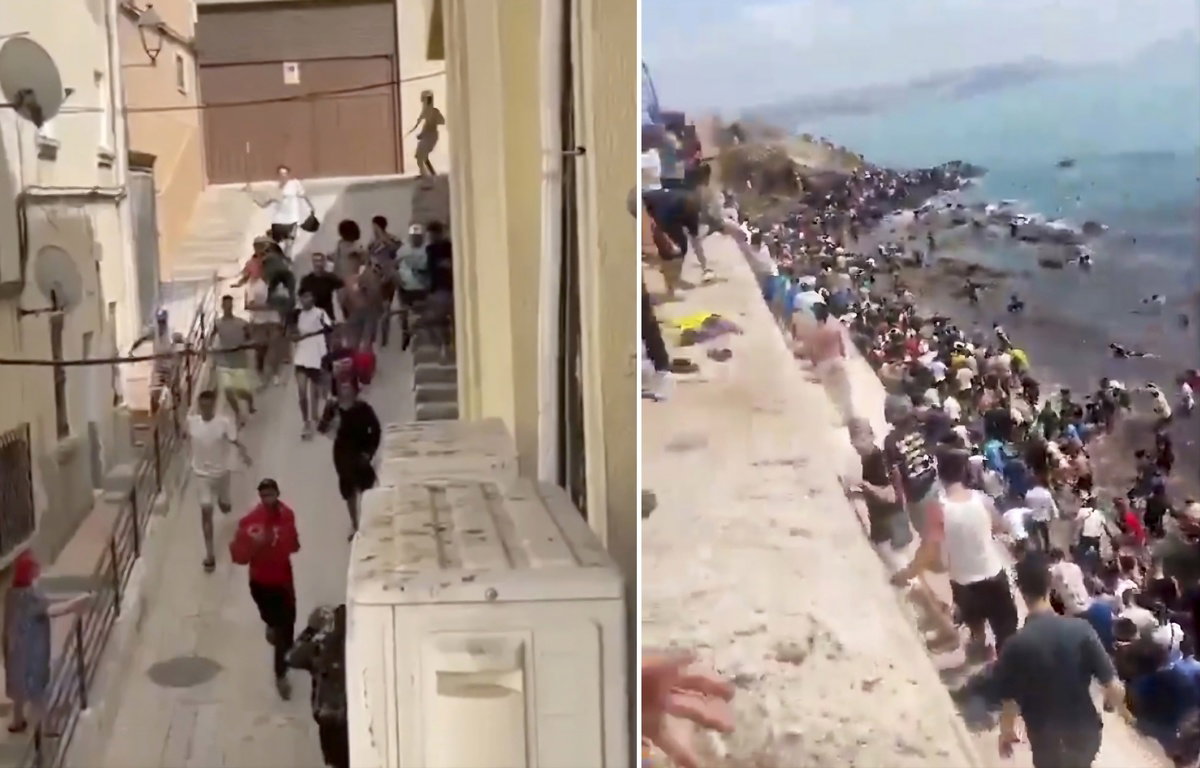
Hoards of young men run amok in Ceuta. Credit: Viral videos X

Spanish authorities are taking no chances after credible intelligence has pointed to a possible repeat of last month’s chaotic border breach, and perhaps even bigger. Interior and Defence ministries have steadily built up forces in the North African enclave following the July 30 incident that saw tens of thousands cross from Morocco.

Messages organising another push have flooded Facebook, Instagram and TikTok in recent days. Slogans such as “15/08” and “al-hajma” (the offensive) keep appearing, with the Moroccan border town of Fnideq (Castillejos) named as the launch point. Groups numbering up to 400,000 members have been sharing the calls. Guardia Civil and the CNI both rate the online activity as genuine, yet officials stress any fresh attempt is unlikely to match the scale of the previous one because of the heavy presence now in place.

Heavy security numbers already on the ground

Almost 300 anti-riot officers are now said to be stationed in Ceuta, with 45 more arriving only yesterday to join the 225 already sent from Andalucia units. Guardia Civil has added three platoons (60 officers) to its border reserve group, plus 160 extra personnel for public order duties drawn from southern commands. Two thousand Armed Forces members remain deployed and will stay for as long as Interior deems necessary. Their mere presence is expected to act as a strong deterrent even without a formal state of emergency.

Specialist support includes six officers from the Immigration and Borders unit for processing work and another six from the Information service. Two teams of divers (eight personnel) from the GEAS underwater unit, the vessel Duque de Ahumada with a 12-strong Guardia Civil crew, two medium patrol boats, four inflatable speedboats, a helicopter and a new drone surveillance group that began operating this weekend complete the package. A 500-metre maritime barrier now stretches from the Tarajal breakwater to block swimming approaches.

Ceuta president keeps pressure on Madrid and Brussels

Juan José Vivas, president of the autonomous city, has spoken of residents living with their “souls on edge”. Many locals still ask whether the scenes of a week earlier could return. After meeting King Felipe VI this week, he reminded everyone that the borders sit under the control of a third country that does not recognise Spanish sovereignty over the enclave. He expressed full confidence that state security forces and the army would stop any repeat.

Calm called for but early-week watch begins

Officials call for cool heads. A similar social media call last September 15 2025 came to nothing once proper coordination with Moroccan counterparts and a solid joint device were in place. Sources note that anyone planning another attempt might try to jump the gun this week, thinking the 15th will be the most heavily guarded day. Monitoring therefore starts in earnest from Monday.

Guardia Civil voices on the ground hope some of the extra resources will stay once the immediate risk fades. They want a permanent boost of at least 200 information officers in Ceuta, longer breakwaters at Tarajal and Benzú, clear written orders for mass-entry scenarios, and genuine European Union involvement. For now the message from Spain is straightforward: the city is locked down and ready.

Ceuta’s small size and position as one of the European Union’s only land borders with Africa mean any large movement quickly overwhelms local services. That reality explains the rapid and layered response now visible on the streets, at sea and in the air. Whether the online chatter turns into action or simply fades under the weight of the new deployments remains the question hanging over the coming days.

The question on critics’ minds today is “if Spanish intelligence has been monitoring Moroccan social media, then how did this happen last time?”

🚨#BREAKING: The Moroccan Muslims who have invaded the small Spanish city of Ceuta are now BREAKING INTO STORES by the HUNDREDS.

Police are completely overwhelmed.

Migrants can be seen running from one store to the next, grabbing items and running.

WHERE IS THE MILITARY?!!!!! pic.twitter.com/NjqQAI4zgD

— Matt Van Swol (@mattvanswol) July 31, 2026

Continue Reading

%

The Hunt After The Ceuta Invasion Leads To 86 Suspected Organisers

Published

on

the-hunt-after-the-ceuta-invasion-leads-to-86-suspected-organisers

Spanish authorities have also reinforced security on their side of the frontier. Photo credit: JUAN ANTONIO ORIHUELA/Shutterstock

When thousands of people converged on Ceuta in one of the largest irregular crossings ever witnessed on Spain’s southern border, the images dominated headlines across Europe. Rescue teams pulled people from the sea, security forces struggled to contain the flow and families were left searching for loved ones who never made it home. Yet long after the beaches emptied and the emergency response began to wind down, one question refused to disappear. Who organised it?

For days, Spanish and Moroccan officials pointed towards criminal networks that had exploited vulnerable people with promises of an easy route into Europe. There was speculation, accusations and rumours, but little indication that those allegedly responsible had been identified. Now, Morocco says that has changed.

Prosecutors move against alleged organisers

Moroccan judicial authorities have opened proceedings against 86 people accused of organising and facilitating the mass crossings towards Ceuta, describing the arrests as part of a wider operation targeting the networks believed to have coordinated the movement of thousands of migrants. According to the Moroccan Association for Human Rights (AMDH), the suspects appeared before courts in Tetouan and Nador, two of the areas where investigators believe much of the planning and organisation took place before the attempted crossings.

The largest group of defendants is facing accusations linked to organising irregular migration, transporting migrants illegally and public disorder. Others have been charged with assaulting members of the security forces, damaging public property and refusing to comply with police orders during the operation.

Investigators believe false promises fuelled the crossings

The investigation centres on claims that organised groups encouraged migrants to travel towards Ceuta by spreading misleading information about what would happen if they reached Spanish territory. According to Moroccan authorities, rumours circulated through social media and messaging platforms suggested that anyone who managed to enter Ceuta would automatically be allowed to remain in Spain. Investigators believe those claims, combined with the work of people-smuggling networks, convinced thousands that the crossing offered a realistic chance of reaching Europe.

Officials argue that the movement was far from spontaneous. Instead, prosecutors believe groups of organisers helped coordinate transport towards the border, directed people to crossing points and exploited the desperation of migrants who were prepared to risk everything for the possibility of a better future. The allegations will now be tested in court, where prosecutors are expected to present evidence gathered during the investigation.

Some defendants have already been sentenced

While many of the cases are only just beginning, Morocco’s courts have already handed down the first convictions connected to the operation. Eleven defendants have received prison sentences of up to six months, together with fines that can reach €1,000. Dozens of other suspects remain before the courts, with further hearings expected in the coming weeks as investigators continue examining the evidence.

Among those prosecuted are five minors, who were referred to child protection services rather than being dealt with through the adult criminal courts after allegations they were involved in acts of violence and vandalism during the unrest. The legal action represents Morocco’s clearest attempt yet to show that its response is focused on those accused of organising irregular migration rather than the migrants themselves.

A tragedy that claimed at least 141 lives

The prosecutions come after one of the deadliest migration disasters ever recorded on the western Mediterranean route. Rights organisation Caminando Fronteras estimates that at least 141 people died attempting to reach Ceuta during the crisis. Bodies were recovered from both Moroccan and Spanish waters in the days that followed, while families continued searching for relatives who disappeared during the crossings.

Although different organisations have published varying death tolls, there is little dispute over the scale of the tragedy. The events have intensified calls for stronger action against trafficking networks that profit from vulnerable migrants while exposing them to extreme danger.

The investigation is far from over

Moroccan authorities insist the operation remains active and have not ruled out further arrests as investigators continue tracing the networks they believe orchestrated the crossings. The prosecutions are also intended to counter claims that Morocco deliberately relaxed border controls during the crisis. Rabat has repeatedly rejected those accusations, maintaining that organised criminal groups exploited the situation by spreading false information and encouraging large numbers of people to head towards Ceuta simultaneously.

A crackdown, but no easy answers

Whether the 86 prosecutions will dismantle those networks remains to be seen. Human rights organisations have called for every defendant to receive a fair trial and proper legal representation, while warning that prosecuting organisers alone will not address the poverty, conflict and lack of opportunity that continue to drive migration towards Europe.

For Spain, the court cases may provide the first detailed picture of how one of the most dramatic border crises in recent years was organised.  For the families who lost loved ones, however, identifying those accused of orchestrating the crossings cannot undo the human cost. What the prosecutions may do is reveal how a tragedy that claimed more than a hundred lives was able to gather momentum in the first place, and whether similar networks are still operating today.

Continue Reading

Ceuta crisis

Spain Asks EU Allies To ‘stop Blaming Morocco’ For Ceuta Crisis As Spanish Court Investigates Whether Police Had Advance Warning

Published

on

spain-asks-eu-allies-to-‘stop-blaming-morocco’-for-ceuta-crisis-as-spanish-court-investigates-whether-police-had-advance-warning

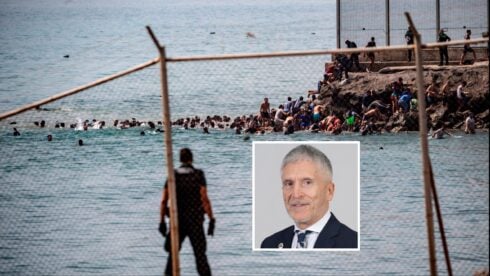
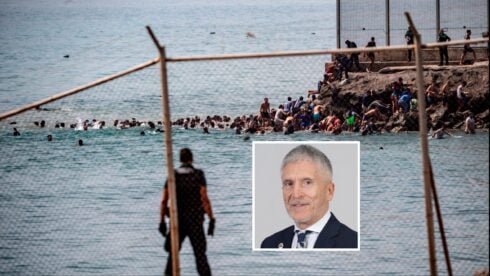
At an online meeting of EU interior ministers on Tuesday, Madrid asked its European partners to avoid publicly criticising Morocco

Continue Reading

Trending

Copyright © 2017 Spanish Property & News