
DGT
Spain’s new October road rules could catch out campo walkers after dark

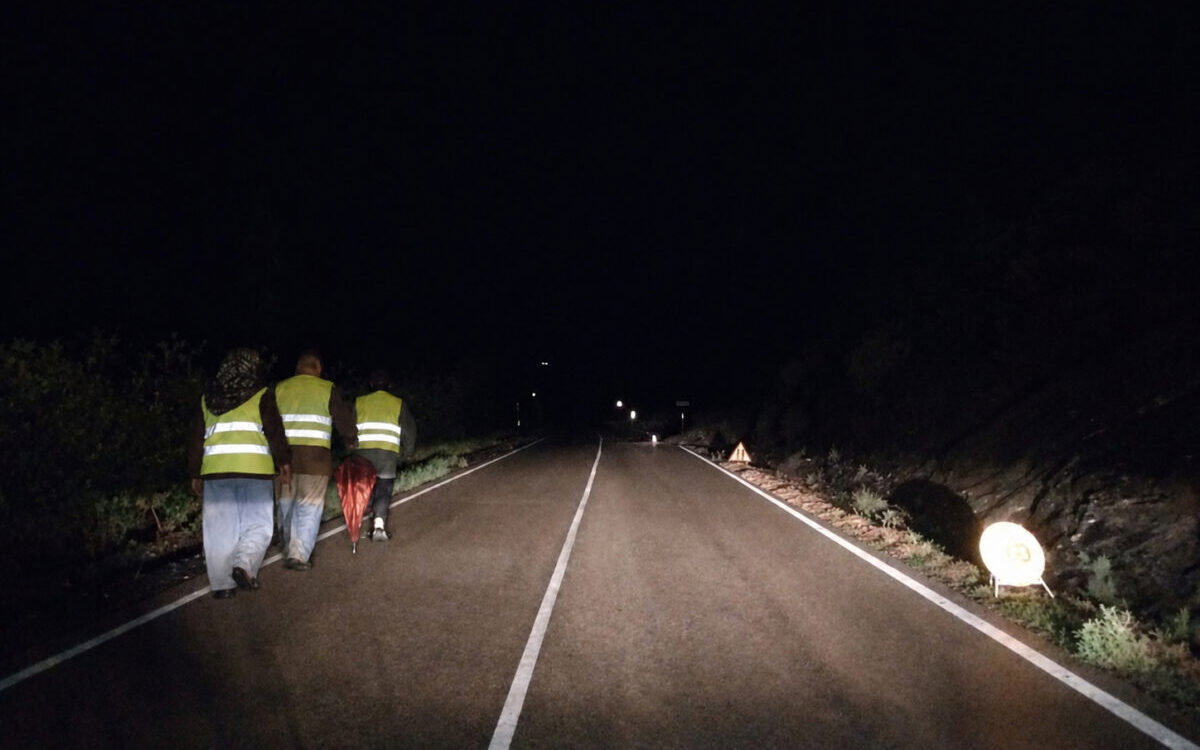
People living in Spain’s campo areas who regularly need to walk along roads without pavements are being reminded to check the rules before October, when a major package of road safety changes comes into force throughout Spain.
Spain’s new traffic regulations take effect on October 1, 2026, bringing changes for motorists, cyclists, motorcyclists, electric scooter users and even pedestrians. The reform is designed to give greater protection to vulnerable road users, with pedestrians specifically included in the new rules.
For residents in rural areas or golf resorts, the changes are particularly relevant. A walk to the nearest village, bar, bus stop or neighbour can mean sharing a narrow road with cars, often without a pavement, street lighting or even a proper hard shoulder.
New pedestrian rules coming into force in October
People who find themselves walking on the road because there is no usable pedestrian area will have a clearly defined set of obligations from October 1.
Under the new rules, pedestrians will be fined by the Guardia Civil or local police if they do not:
- Use the left-hand hard-shoulder, in the direction they are walking, where there is no practicable pedestrian area and a usable shoulder exists.
- If there is no usable hard-shoulder, they must walk on the carriageway while keeping as far away from vehicle traffic as possible.
- Walk one behind another rather than side by side when using the shoulder or road.
- Move to the right only in exceptional circumstances where safety reasons justify doing so.
- Anyone pushing or pulling a bicycle, two-wheeled moped, VMP or similar vehicle must use the opposite side, the right-hand side.
- Groups of pedestrians led by a person must also use the right-hand side.
(the size of group is yet to be defined by the DGT. We can expect this in September – So far the law says, “Todo grupo de peatones dirigido por una persona”, or in English,, “any group of pedestrians led by a person” — must walk on the right-hand side. - Avoid stopping on the road or shoulder when a refuge, pedestrian area or other suitable place is available.
- Move out of the way when an ambulance, police vehicle, fire engine or other priority vehicle approaches using its lights or siren.
Walking on the left is therefore not simply safety advice and common sense so that walkers can see oncoming vehicles. It will now form part of Spain’s traffic regulations, with the October wording making the requirements more detailed and carrying fines for non-compliance.
Walking after dark? Visibility matters
Anyone walking along a road between towns, villages, or golf resorts after sunset will need to pay particular attention to visibility.
From October 1, pedestrians using the carriageway or hard-shoulder between sunset and sunrise, or when weather or environmental conditions seriously reduce visibility, must have at least one approved luminous or reflective item that can be seen by approaching drivers from a minimum distance of 150 metres. The DGT, the government department that comes up with these rules, is expected to publish a list of approved reflective gear in September.
Big change for groups walking on roads
Groups will have extra requirements. When walking in conditions covered by the rules, groups must have lights on the side pointing towards the centre of the road, with white or yellow light facing forwards and red light facing backwards. Yes, you read correctly. A group, for example walking from a golf resort or urbanisation, with no pedestrian pavement to rely upon, will need to carry lights in future.
Some of these rules are not actually new. October’s changes could easily give the impression that Spain is suddenly telling pedestrians how to walk on rural roads. That would be misleading. Spain already requires pedestrians outside built-up areas to use the left-hand side where possible, and existing DGT guidance tells people walking on roads to use the hard-shoulder where one exists. At night or in conditions of poor visibility, pedestrians on the road or shoulder must already use an approved luminous or reflective element.
Could pedestrians be fined?
Yes. Pedestrians are not outside Spain’s traffic law simply because they are not driving a vehicle. Previous EWN reporting has already covered situations in which pedestrians can receive fines, including crossing roads incorrectly, walking on motorways or autovias and failing to follow certain pedestrian requirements. Previous EWN guide: pedestrians can receive fines in Spain
Individual fines depend on the offence and the circumstances, so walkers should not assume that a traffic rule applies only to drivers.
Police officers responsible for traffic enforcement, including the Guardia Civil and relevant local police forces, have powers to enforce traffic regulations. That means pedestrians should take the October changes seriously rather than assuming enforcement applies only to motorists.
Why campo residents should take notice
Rural living in Spain can make the pedestrian rules more complicated than walking around a town centre. A resident may have no pavement outside their property and be faced with a narrow road used by cars travelling considerably faster than walking pace. Some roads have bends, blind corners, weeds, poor lighting or little space between the carriageway and nearby walls.
DGT advice already stresses the importance of visibility, particularly because pedestrians and vehicles have such different speeds. DGT research has previously found that a very high proportion of pedestrians killed at night on interurban roads were not wearing reflective clothing.
For anyone living in a rural urbanisation or finca, the practical message is simple: if there is no pavement and you have to walk on the road, know which side to use and make yourself visible.
A whole package of new rules and guidelines is due to come in at the beginning of October covering pedestrians, car drivers, cyclists and motorcyclists, all in order to improve safety on Spain’s roads, and now is the time to make sure we are all on the same page.









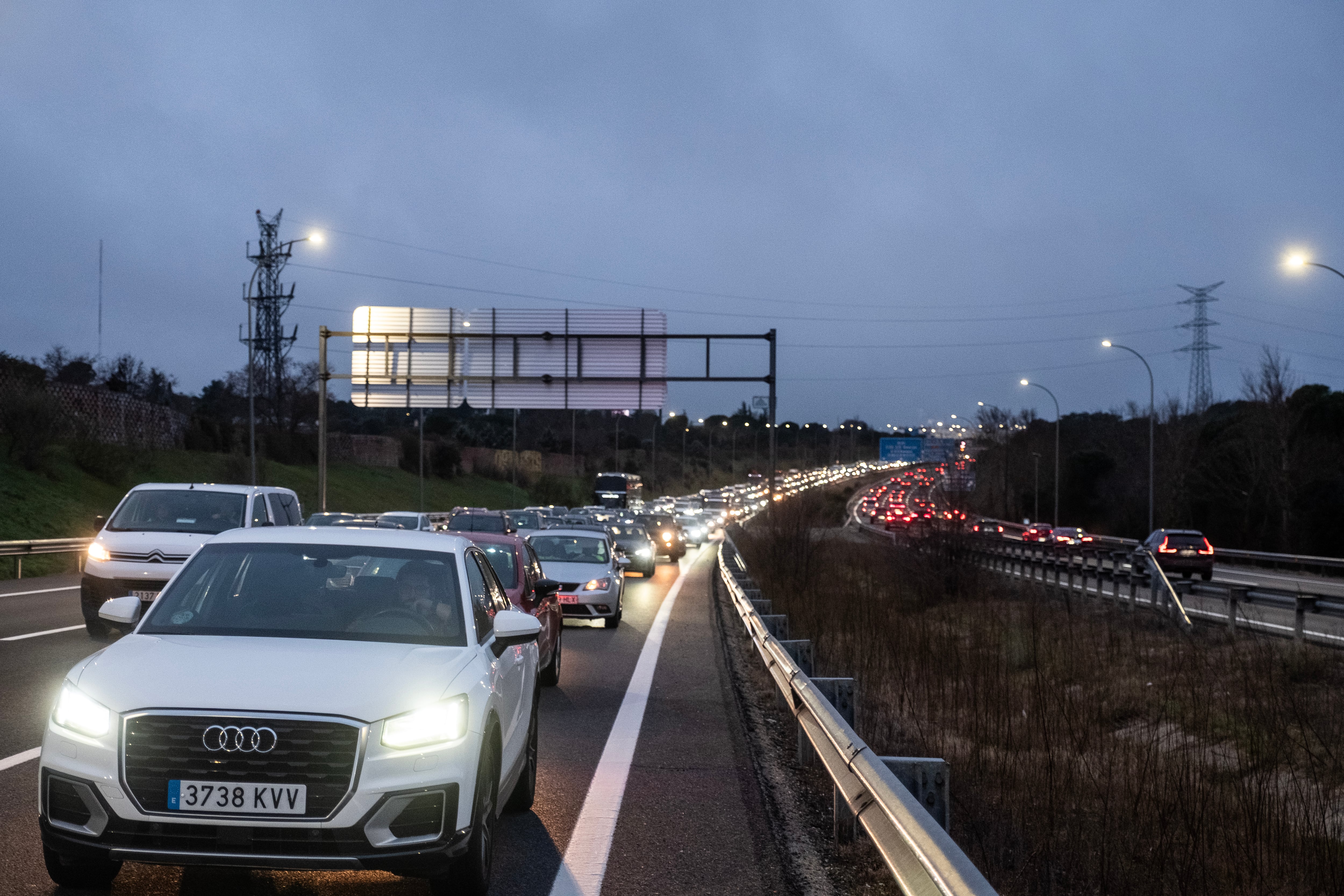
El fin de semana del 15 de agosto es uno de los que registran mayores movimientos de tráfico por carretera durante todo el año. Miles de conductores se lanzan al asfalto coincidiendo con el cambio de quincena festiva y las innumerables fiestas patronales que se celebran por todo el territorio español. A ello se unen los movimientos típicos de un fin de semana con traslados cortos a las segundas residencias o visitas de familiares y amigos. La Dirección General de Tráfico (DGT) prevé para esta fase de la Operación Especial de Verano que, entre las 15.00 de mañana viernes 14 y las 00.00 del domingo 16, se efectúen 5,6 millones de desplazamientos por carretera. Muchos de ellos se realizarán por carreteras secundarias —un solo carril de circulación por sentido— y durante la madrugada, con el consiguiente riesgo para los usuarios de estas vías.

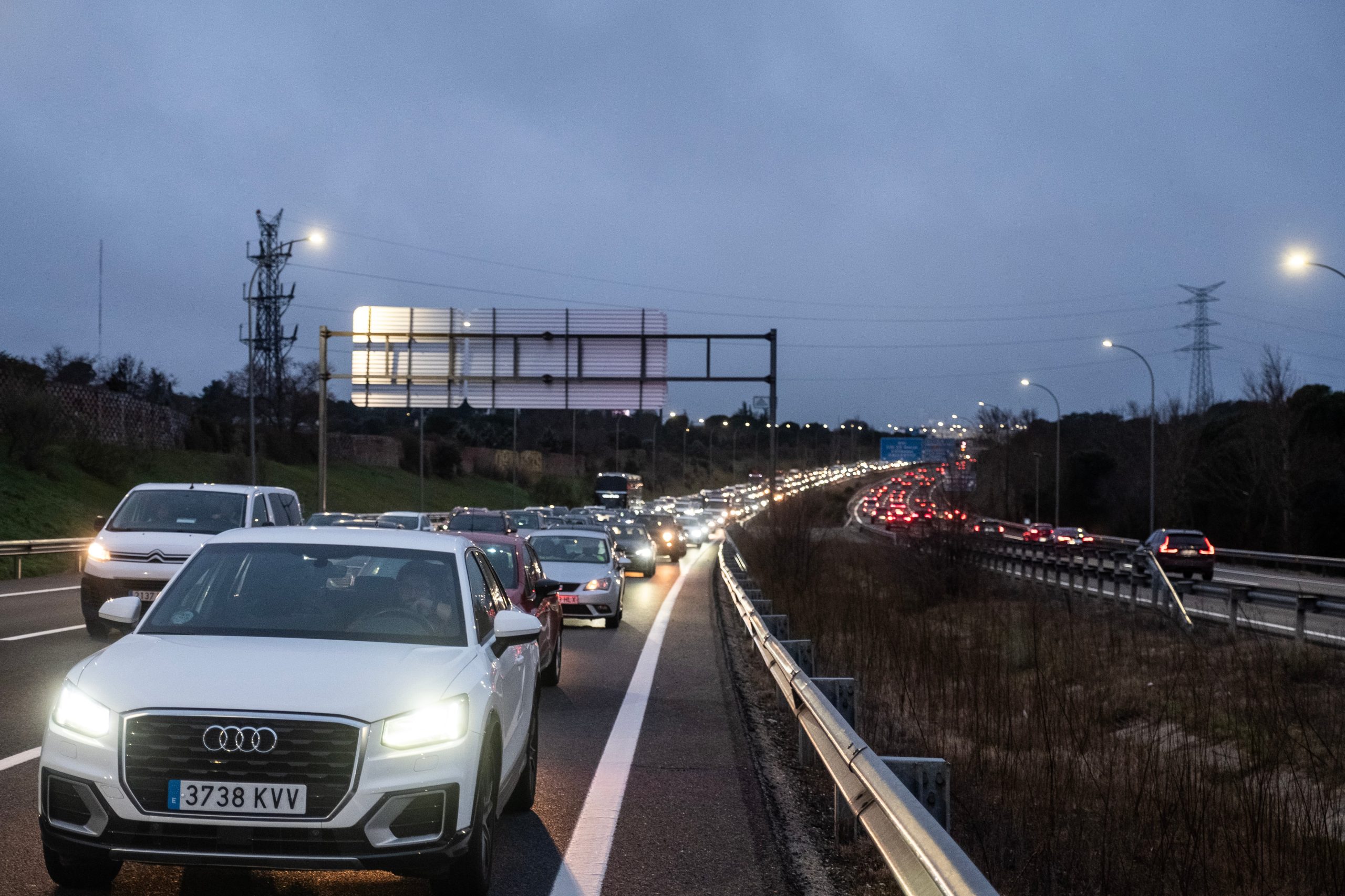
The growing congestion is an early warning for anyone planning to drive to an observation point. Photo credit: Jose Luis Carrascosa/Shutterstock
Drivers heading out to watch the total solar eclipse are already facing major delays, with kilometre-long queues forming on the main roads leaving Madrid and Barcelona several hours before totality. What was expected to be a difficult traffic day is now becoming a reality for motorists trying to reach viewing locations across Spain.
The first major problems were being reported from around 4:30pm, when traffic was already building on several routes out of Madrid. With people travelling towards areas where the eclipse will be total, motorists setting off later could find that journeys take considerably longer than normal.
Madrid roads already under pressure
For drivers in the capital, congestion has been reported on the A-1 around the Jarama Circuit and Venturada, the A-3 near Rivas-Vaciamadrid, the A-6 around El Plantío and the M-607 near Tres Cantos. An accident on the A-1 at Venturada has added to the disruption on one of the key routes out of Madrid.
The queues are forming as people leave the capital for locations offering better views of the eclipse. Anyone still deciding whether to drive should be aware that the traffic is already moving well beyond the usual rush-hour pattern, with delays affecting several of the main escape routes from Madrid.
Barcelona queues stretch for kilometres
The situation is also causing problems around Barcelona, where the AP-7 is seeing particularly heavy traffic as people head away from the city. Long stretches of congestion have been reported between Martorell and Subirats, while other sections of the AP-7 and nearby roads are also experiencing delays.
The pressure is particularly significant because the queues were already forming around three hours before the eclipse. That leaves drivers facing a difficult choice: continue towards their planned viewing location and risk longer delays, or reconsider their journey before the roads become even busier.
Traffic spreads across Spain
The disruption is not limited to Madrid and Barcelona. Live traffic monitoring is showing increased congestion on routes leading towards the eclipse’s path of totality, with motorists travelling towards northern and eastern parts of Spain. The east is particularly busy, with significant problems reported on the AP-7 in Catalonia and further south on roads through Valencia and Alicante.
These routes are carrying both ordinary holiday traffic and people travelling specifically to find a good position for the eclipse. The pressure is also being felt in Castilla y León, where routes towards the north are dealing with increased traffic. Across the country, the pattern is broadly the same: vehicles are leaving major population centres and heading towards places where the brief period of totality can be seen.
The journey home could be another problem
The traffic situation could become even more difficult after the eclipse. Thousands of motorists who have travelled to viewing locations will eventually need to make the same journey back, creating the possibility of another wave of congestion once totality ends.
The authorities have warned that the return journey could prove particularly difficult, especially on smaller roads serving popular observation points. Drivers who do not need to get home immediately may therefore be better off waiting rather than joining the rush as soon as the eclipse finishes.
Drivers face strict safety rules
Authorities are also warning motorists not to improvise their own viewing spots. Stopping on a motorway, road or hard shoulder to watch the eclipse is prohibited. Drivers must leave the traffic route completely and use a permitted parking or viewing area. Anyone who is already driving when the eclipse begins should concentrate on the road rather than attempting to watch or photograph it. The sudden change in light can become a distraction, making the combination of heavy traffic and reduced visibility particularly demanding.
The DGT’s live traffic information is being updated as conditions change, while traffic monitoring is also showing congestion across the country’s main routes. For drivers still planning to leave Madrid, Barcelona or another major city, today’s traffic is a clear indication of what is happening on the ground. The eclipse may last only minutes, but the journey to see it, and the trip home afterwards, could take hours

Morocco Stops Hundreds Of Migrants Near Ceuta Border
Local Mar Menor charity actively seeking new volunteers

Local Mar Menor Charity Actively Seeking New Volunteers


-

 Uncategorized1 week ago
Lewis Hamilton hits gold with $10bn jackpot but British star snubs Monaco move: F1 News Recap
-

 Uncategorized1 week ago
Racing star was destined for F1, now he
-
Latest2 weeks ago
Migrant Rush To Spain’s Ceuta: 72,000 Crossed, 2,000 Remain And 77 Died
-
Mallorca1 week ago
Palma mayor fights to keep TUI water bus project afloat
-
 Estepona2 weeks ago
WATCH: Fire Breaks Out At Entrance To Estepona Near A7 As Drivers Film The Flames And Two Helicopters Battle The Blaze
-
airport threat2 weeks ago
Explosive device on drone sparks major German airport investigation
-

 Uncategorized2 weeks ago
F1 star announces engagement with gorgeous proposal pictures
-

 Crime & Law2 weeks ago
Outrage In Granada After Tourist Defaces Historic 16th-Century Building With Bright-Pink Graffiti