
AVE
Survivors Of Spain Train Crash Reconstruct The Accident: ‘Your Life Flashes Before Your Eyes’


Jorge Guales saw the food cart arrive. He was in car 7 of the Iryo and the train had stopped. Staff passed by offering drinks and snacks. He felt relaxed. What came next was the impact: “The hit, the deafening crash.” He tries to reconstruct what happened afterward. It’s difficult for him. Some passengers were thrown against the seats and several objects fell to the floor. He saw and heard everything, but it’s blurry. He, a 53-year-old Colombian, looked out the window and saw smoke. He stood up. The door was open. He got out and helped others to exit the train. Once outside, they walked together along a ditch and several local residents broke down a fence so they could pass through. He turned and saw the wrecked carriages. He had just walked out of one of them unharmed.
Minutes earlier, Juliana Rozo, 33, was thinking on another train about the presentation she had to give in Seville. She was going over what she would say and how: beginning, middle, and end. Beside her, in car 2 of the AVE, she remembers several passengers were asleep and others, like her, were catching up on work: “The impact forced us to grab the seats. Some people hit the tray tables that were open.”
The same blow was felt by Inés Piñeros, who was standing on the train in front, the Iryo. She had changed seats a few moments earlier to the penultimate car of the stationary train. She was with two friends and wanted to be nearby to chat. “I have a wound on my abdomen and it is healing, but I’m still very shaken,” she said later from the Gregorio Marañón Hospital in Madrid.
Iñaki García, Andrea Martínez, Alberto Pérez and Juan Antonio Villanueva — the first two passengers from the Iryo and the latter two from the AVE — also describe the violent impact between the two trains. Each mentions a “boom” they can’t forget. It is the most-repeated detail in survivors’ accounts of the train crash in Toledo, which has so far left at least 68 people dead and more than 50 injured. It is a sensation etched into their heads and bodies. For many, reconstructing what they lived through is difficult; fragments of the minutes before the impact and the chaotic, fear-filled moments after it come back to them. Some struggle to put words to what they experienced and find it easier to recall sensations: a body brushing against them, a high-pitched screech, the light outside.
García, 60, was riding in Iryo’s car No. 2. He rolled across the ground and, suddenly, felt as if everything had come to a standstill. He opened his eyes and found himself face down. At that moment, he didn’t understand anything — not where his body was, nor what was around him. “You don’t know what’s happening, you don’t know what’s happened; you just know you’re spinning, and it’s all over in seconds. You don’t have time to think about anything. The only thing you want is to grab onto something so you can hold on somehow,” he recounts. A few minutes later, once outside, he was met with horror: “There were injured people walking around, dead people. In the car in front of us, there were quite a few dead people…”
At the same time, on a train that should have arrived in Seville a few minutes later, Pérez and Villanueva were traveling in the rear of Renfe’s AVE. The sequence they describe is similar, almost identical: a stationary train, an announcement over the PA that they would be held for a few minutes, the train starting to move again and, within seconds, collision, noise, screams, bodies, trampling. Martínez, 31, was traveling to Seville for work, drinking coffee and reviewing notes for a meeting. She wanted everything ready. She remembers little and finds it hard to follow the chronological thread of what happened next. “I was there… I saw it all. I’m still in shock,” she says. Volunteers took them all to the sports hall in the nearby town of Urda.
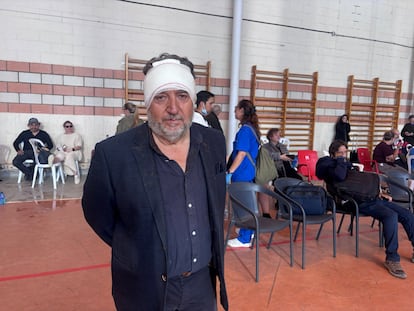
There, about five miles from the accident site, arriving passengers were identified. First: name and surname, national identity card number, train, and car. Then their psychological state and any injuries were assessed. “They triage them, then send them one way or the other depending on how serious the situation is,” explained Óscar Jiménez of the emergency services. Some 70 to 80 personnel from various Castilla-La Mancha response teams were deployed across several points.
The sports hall is a multi-use pavilion. It still has basketball hoops, a scoreboard, and stands, but the court was filled with white chairs for passengers and mats with blankets for those who needed to lie down. Along one wall there were long white plastic tables with bottles of water, bread, and other food. Emergency crews, the Red Cross and Civil Protection personnel moved among the affected people, back and forth, nonstop. Light came through the high windows of the building.
Juan Quesada, 65, sat waiting for his relatives to collect him. He had been traveling to Seville for work in car 6 of the AVE and suffered head injuries. A large white bandage covered his skull and he was a little dazed: “Your life flashes before your eyes in a second without you realizing it.” Also there was Mauro, 28, who had been traveling on the Iryo with his boss. His face was visibly swollen, bandaged and bloodied, and he was still in shock over what happened. According to his account, the train had been stopped for between 10 and 15 minutes when he felt a strong impact and the convoy began to twist. “I felt several blows,” he says, still affected by the violence of the crash.
From 11 a.m. until after lunch, hours passed in the sports hall between medical checks and waiting. Some survivors received IV fluids. Others were offered a sandwich or a coffee. Those who needed hospital care waited for transfers, while the rest, like Quesada, waited for someone to come pick them up. Still shaken, they looked for places to charge their phones, tried to contact their loved ones and to find out what had happened. They had lived through it, but seeing it on the news also affected them. Local residents rushed in with bottles of water and food.
Relatives who had not been able to contact their loved ones were also there. A man searched desperately for Almudena, his coworker. “I don’t know anything, I don’t know anything,” he kept repeating. He went to the sports hall hoping someone could help locate her, wondering if she might be in shock or had lost her phone. Nurses would occasionally climb onto chairs and call out names for people whose families could not be found. There were moments of restrained joy, happy reunions, and bitter ones.
Rosa María Domínguez, a local resident, learned of the crash around 9 a.m. when she went to the health center and found it empty. As soon as she heard what had happened, she went home to gather gauze, IV fluid and as much medical material as she could after hearing there was a shortage of medicines. “We all started coming to help and organized ourselves as best we could, bringing sheets, blankets, water… It was incredible, like a horror movie,” she says.
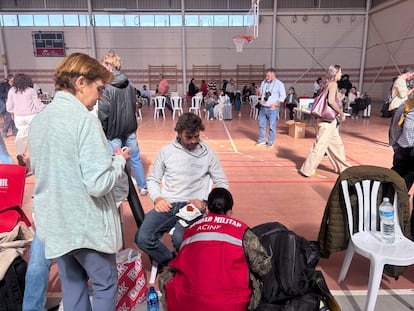
Between tears, scattered luggage and injured passengers, residents rallied to assist the victims, even though many had no medical experience. Domínguez tended, among others, to a woman, seven-months pregnant and traveling from Seville who had only suffered minor bruises. Because she couldn’t get home on her own, they gave her a phone to contact an acquaintance in the area who drove her back while her husband traveled from Seville to pick her up. Her children also joined the relief efforts: one helped at a restaurant and another acted as a translator for foreign passengers. “We’ve all done a lot together, helping the police as well.”
Arrival in Madrid
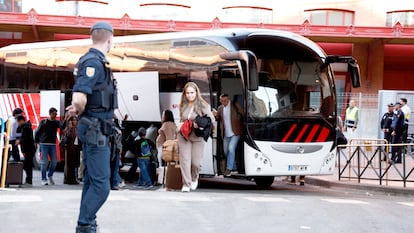
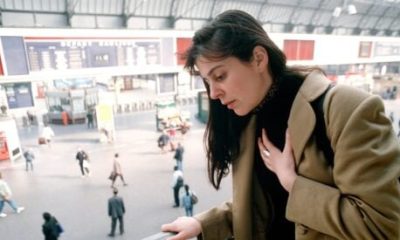
Some travelers left with relatives and others returned by bus to Madrid, where many had departed about eight hours earlier. For some the destination was Gregorio Marañón Hospital and for others Atocha station, where Madrid’s emergency medical service staff and a team of psychologists were waiting, having spent the day assisting relatives of the dead and the injured from both trains.
On one side of the building a care point was set up, cordoned off by police — up to six vans were guarding the area — and open 24 hours. It is the same protocol activated in January after the rail accident in Adamuz, Córdoba. Then, because of the time — the first buses arrived at dawn — the return of survivors was more chaotic. This time the operation ran like clockwork and access to the area was impossible. Some buses arrived with passengers from other trains not involved in the collision and others carried people who had been on the crashed trains, either lightly injured or unharmed.
Before the survivors’ return, relatives began to arrive little by little, not knowing whether their cousin, sibling, partner, father, daughter or friend would be on the bus they knew was heading to Madrid. As in Urda (Toledo), some wandered around the station, phone in hand, refreshing several newspaper websites at once.
Alejandra Arenas, one of the clinical emergency psychologists, explained it this way: “Patients are arriving nervous, but fairly composed. Some do come in with anxiety attacks, but they’re in the minority. In general, they’re quite withdrawn, eager to get home, to rest, and exhausted.” It will be in the coming hours that “the full emotional impact will become more apparent,” she explains: “We expect that in a few days they’ll be more emotional — perhaps crying, with more tears, more nightmares, or more flashbacks in some cases.”










Adamuz
Spain’s Transportation Minister Steps Down Over Train Crash To Try To Save The Socialist Campaign Ahead Of Elections

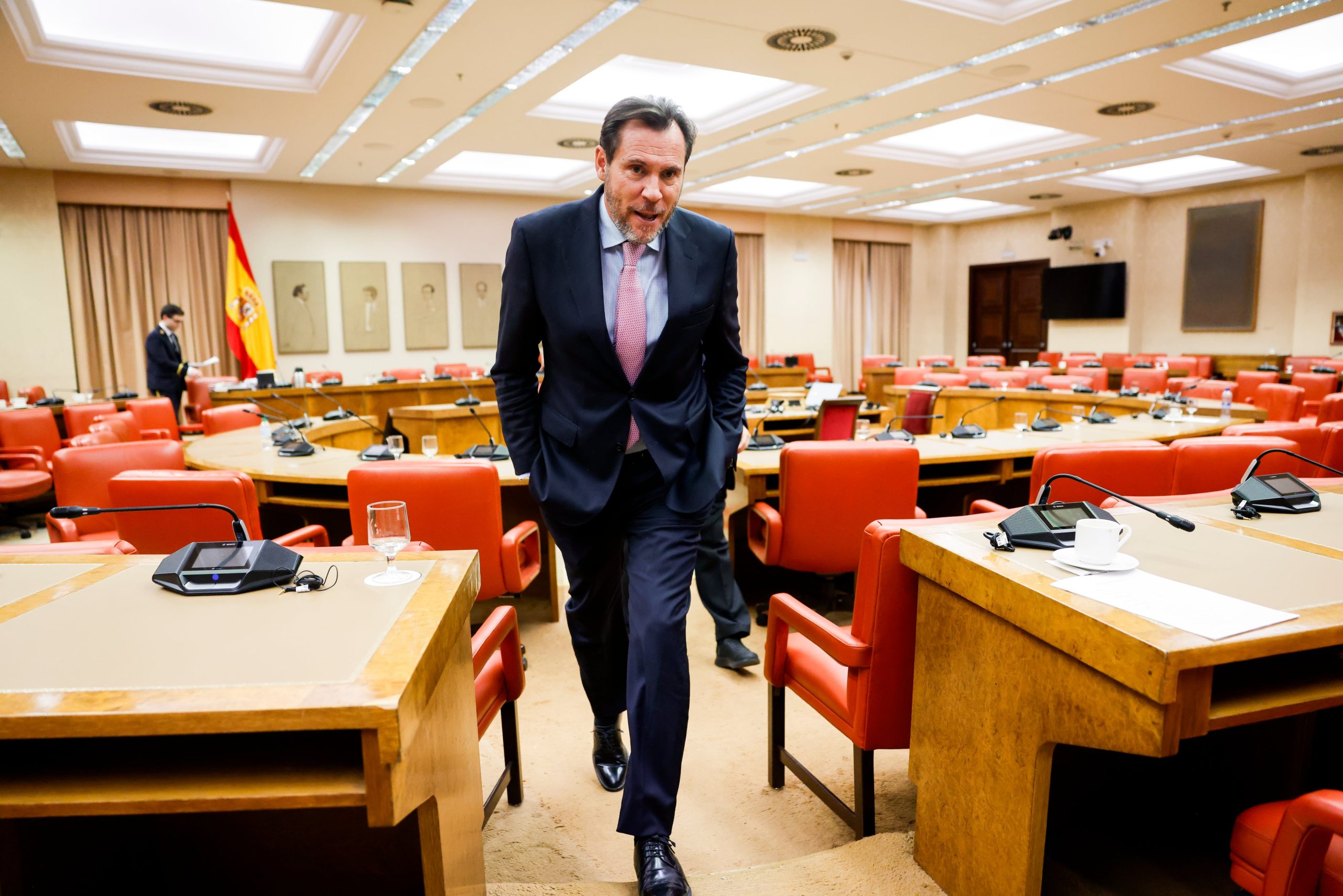
Óscar Puente finally decided to resign and leave frontline politics to try to save the Spanish Socialist Party (PSOE)’s election campaign, which was badly damaged after the second fatal high-speed rail accident in nine months. This is the interpretation most widely held within the government and the PSOE. Puente himself pointed to that idea: “No one is bigger than their organization. My ego has never been greater than my party.”
Spain is holding a snap general election on November 29. Prime Minister Pedro Sánchez, who is running for re-election, brought the date forward following a wave of social protest over the affordability of housing, itself sparked by the eviction of an elderly woman from her home.
But the train crash in Toledo province, which killed 69 people and came just nine months after a similar accident on the same high-speed line, has eroded support for the leftist government. The pre-campaign, which had been going well for the Socialists until Wednesday of last week, has taken a radical turn in which the mainstream conservative People’s Party (PP) and the far-right Vox increasingly seem convinced they have a landslide victory within reach.
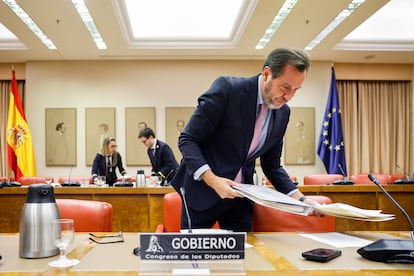
Those who had sought the resignation of Puente, who was in charge of the transportation portfolio during both accidents immediately welcomed the decision. “It cannot be that nothing happens after two fatal accidents in nine months,” said one minister.
Puente ultimately resigned after presenting a package of measures to improve transportation safety and enduring a gruelling parliamentary hearing. The railroad industry is denouncing a lack of investment and staff. The railway system, once a source of pride and a symbol of modernization thanks to its commitment to high-speed rail, faces an undeniable problem of wear and tear. Earlier this year Puente acknowledged a €30 billion ($35 billion) investment shortfall in rail and the need to renew up to 500 trains in the coming years.
Those who thought Puente should stay praised his decision to step down but were simultaneously concerned that this could now direct all the public anger at Sánchez, who reportedly learned of Puente’s resignation only minutes beforehand and had no chance to stop it. However, the prevailing feeling in the government is that this step could re-energize the campaign and revive a political left that has been very dispirited in recent days.
“Puente has stood up, provided solutions and then stepped aside. Out of dignity. Out of respect for the victims and for the progressive project. That shows not all politicians and not all parties are the same,” said the prime minister shortly after, endorsing the idea that Puente had tried to save the PSOE’s campaign ahead of November 29.
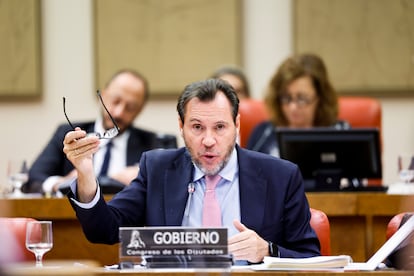
Demands for Puente’s resignation had been loud among the political right. As he did so, Puente also noted that nobody resigned when the PP was in government during some of Spain’s worst tragedies, including the train crash in Galicia in 2013 and the flash flooding in Valencia.
Asked why he didn’t resign on day one, Puente argued he wanted to do it after investigating the accident, finding where the problems were, proposing solutions and finally giving explanations before Congress.
Sign up for our weekly newsletter to get more English-language news coverage from EL PAÍS USA Edition
Accidentes ferrocarril
Renfe Elevará Sus Condiciones De Seguridad En La Línea Madrid-Sevilla Para Evitar Nuevos Siniestros

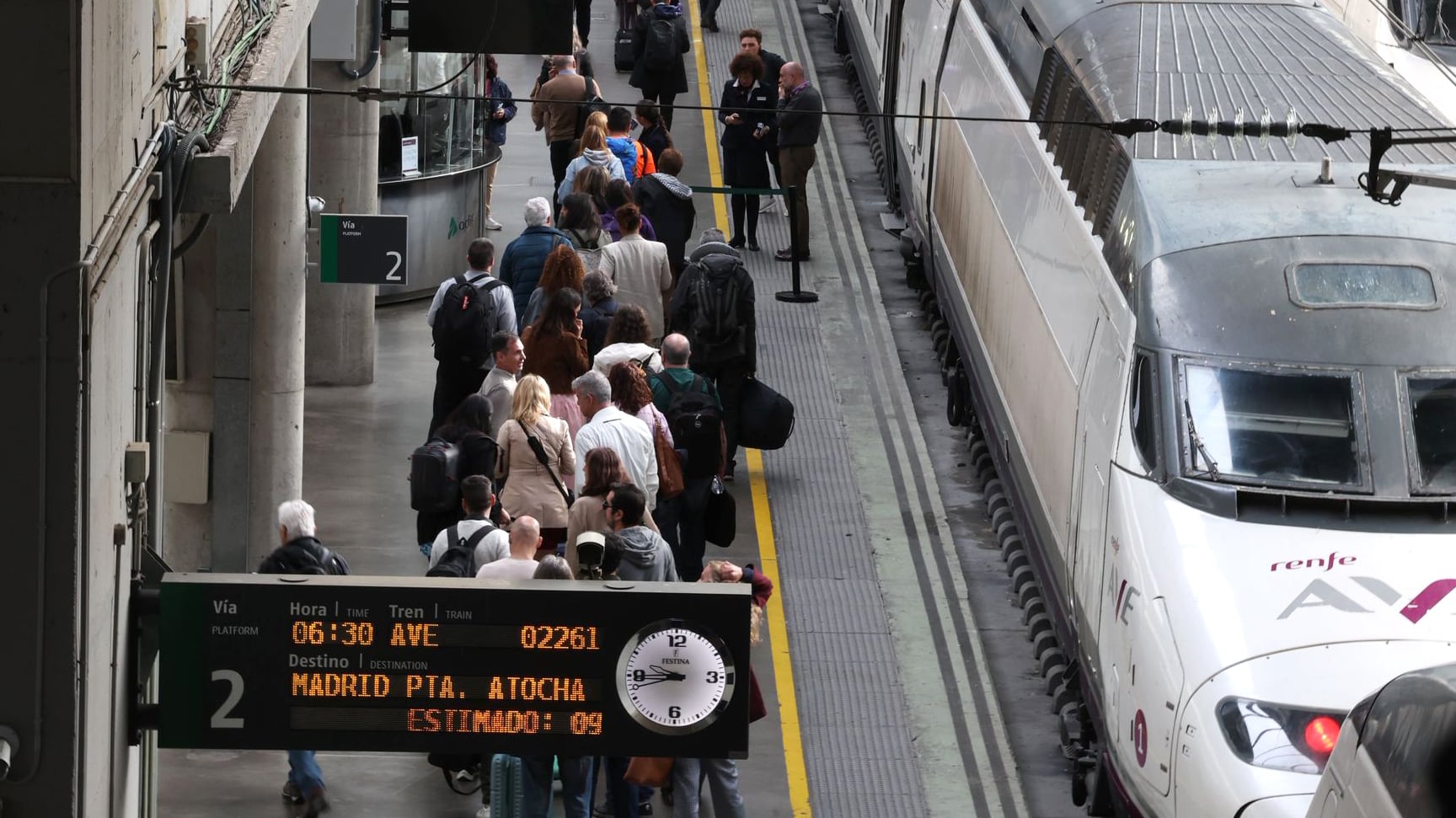
atocha
PICTURED: ‘Hero’ Driver, 36, Of Doomed Renfe Train In Toledo Rail Disaster Whose Last-Minute Actions ‘saved Hundreds Of Lives’

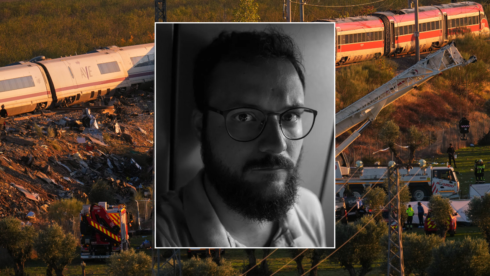
 His heartbroken family say he hit the emergency brake in the final moments before the collision, saving the lives of hundreds of passengers.
Spain’s November Doctors’ Strikes: What You Need To Know
Cómo La Televisión Española Se Convirtió En Una Tertulia Política Infinita

Los Sindicatos Se Preparan Para Un Seguimiento “desigual” De La Huelga Por Territorios, Sectores Y Edades


-
DGT3 weeks ago
Viral video in Spain sparks fury over drivers who ‘have no idea how to drive’
-
Automated supermarket4 weeks ago
Spain’s 24-hour shop with no tills expands to Barcelona Airport
-
News4 weeks ago
Hundreds evacuated as huge fire erupts on Spain high-speed train route
-
Council tax (IBI)3 weeks ago
Barcelona plans 150% property tax increase on tourist flats ahead of 2028 ban
-
Keeping cats and dogs outside3 weeks ago
Spain’s pet owners face fines of up to €200,000 for animal welfare offences
-
Age Concern Marbella - San Pedro2 weeks ago
Halloween lunch sells out as 51 join Marbella get-together
-
airports3 weeks ago
Travelling between Spain and Italy? The extra border checks could soon end
-
Axarquia4 weeks ago
Torrox Oktoberfest gets a 1,500sqm beer tent for four-day festival