
Donald Trump
Tanker Transits Through Strait Of Hormuz Approach Prewar Figures


The Strait of Hormuz is far from what it was before Donald Trump blew everything out of the water: a maritime route that, although located in a hotspot region, allowed the free and safe passage of huge volumes of oil and gas from the Middle East. However, something has been moving in recent days, with many more tanker transits than over the previous several months. Some analysts even place crude shipments through the area around the levels seen before last spring and near those recorded during the short-lived ceasefire in June.
“The export arteries for Middle East oil are flowing again,” JP Morgan analysts said on Tuesday. Their estimates point to a rebound to about 17.5 million barrels a day, 98% of what transited the area before the U.S. and Israel launched their war on Iran.
Analysis firm Vortexa, meanwhile, puts crude shipments through the strait at a six-month high: 14 million barrels a day. Another investment bank, Goldman Sachs, estimates total crude exports from Persian Gulf countries — via Hormuz or alternative pipelines — at more than 23 million barrels a day in the last week, similar to the 2025 average.
Putting the numbers aside, the evidence points in one direction: fossil fuel flows through Hormuz have risen substantially, helping clear a maritime route that has kept the world on edge since late February and has triggered a major energy crisis. It is the second such crisis in less than five years, after the one caused in 2022 by Russia’s invasion of Ukraine.
“Yes, Middle Eastern oil exports are much higher, [but] at a great cost,” wrote Rory Johnston, an oil sector analyst and author of the newsletter CommodityContext, on Wednesday. “But no, we are not ‘back to normal,’ for God’s sake.”
Saudi crude
The clearest proof that something has changed in Hormuz is that, far from causing a sudden collapse in Saudi exports, the two-week closure of the only pipeline that allowed Riyadh to bypass the strait resulted in a relatively manageable drop in shipments. Largely because Riyadh managed to push more crude through the traditional route: from the port of Ras Tanura, in the Persian Gulf, toward Hormuz before reaching the Indian Ocean. There were also ship-to-ship transfers.
Goldman Sachs’s estimates, which include activity by the so-called phantom fleet (with transponders switched off), suggest Saudi exports more than doubled in September, to 11.6 million barrels a day — higher than last year’s average.
If confirmed in the coming days and weeks, the gradual revival of oil transit through Hormuz carries an important geostrategic implication: Iran risks losing its greatest leverage over the United States and, more broadly, the West, both stunned by the second hydrocarbon price crisis in less than five years.
The greatest risk now is that Tehran feels cornered and responds by intensifying military escalation, directing attacks not only at vessels transiting Hormuz, as so far, but also at the origins of their cargo: ports, pipelines and even oilfields in Gulf states. As in the worst days of the war. If that happens, such an escalation would reverberate strongly on prices and could even affect the global supply of crude and gas.
A fall in prices will have to wait
On the purely economic side, what stands out is that oil prices have barely reacted to the growing traffic in the Gulf. Partly because crude is not only a physical commodity — measurable in millions of barrels sold and transported every day worldwide — but also a financial asset whose trading moves over half a trillion dollars daily, roughly equivalent to the GDP of Colombia, Norway, or the United Arab Emirates. And investors, like Rory Johnston, remain unconvinced that global supply is returning to normal, even if flows through Hormuz are recovering.
Brent crude remained above $100 a barrel on Wednesday, although the futures contract for December delivery already trades slightly below that level. Investors continue to apply a risk premium to crude that keeps prices elevated. “We remain concerned about a potential new escalation that could damage more energy infrastructure,” Goldman Sachs analysts wrote in their client note.
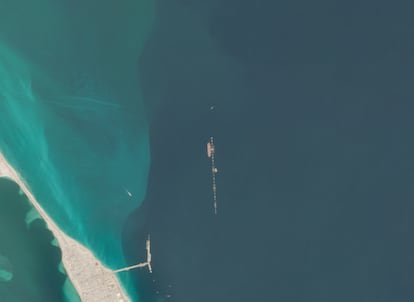
For now, these green shoots in Hormuz are not making crude — nor the main end product refined from it, fuel — cheaper; the real bottleneck is in refined products caused by the war. In fact, gasoline, diesel and jet fuel exports from Gulf countries remain about half the 2025 average, according to Goldman Sachs estimates.
The crude/refined fuels split has an explanation: several refineries were damaged and others have been underfed in recent months. While oil wells have largely escaped attacks, some refineries hit in the early days of the war have not fully resumed operations. In addition, transporting refined products is more costly and complex than moving crude. “They are more flammable than crude, so the physical risks when crossing the Strait of Hormuz are greater for product tankers than for crude tankers,” Goldman Sachs explains.
Pending consolidation, this nascent rebound in energy flows still looks largely cyclical rather than structural. But it appears to support the view that the U.S. Navy is exercising considerably more effective control of the area, allowing oil and LNG tankers to take the Oman route to leave the zone outside the reach of Iran’s Revolutionary Guard.
All the same, the risks remain very high. The UK Maritime Trade Operations agency reported three incidents in recent hours involving ships carrying fossil fuels — two oil tankers and one LNG carrier — that were struck by projectiles. If confirmed, it would be the most attacks recorded in a single day since July. Two opposing realities, face to face: Hormuz may be more porous, but not safer. “The increase in crossings should not be confused with greater safety; rather, it reflects the sector’s growing capacity to operate under sustained risk,” JP Morgan analysts concluded.
Sign up for our weekly newsletter to get more English-language news coverage from EL PAÍS USA Edition





Vente Venezuela, the party founded by María Corina Machado, is preparing again for the imminent return of its leader despite delays, skepticism, and uncertainty. Decisions within the organization are being made on the assumption of her return. Machado was unable to enter the country from Panama last week (the reasons are still unclear), but her definitive arrival in Venezuela, says Henry Alviarez, the party’s secretary of organization, “is a matter of days.”
Machado’s party is waiting on a plane, a boat, or a car to cross the border. The country’s main opposition party has organized its rebuilding, its mobilizations, and its messaging around the return of its leader, announced repeatedly as imminent and frustrated for the seventh time last week in Panama. There is great caution about the details and methods of her return, given what happened last week.
After the fierce repressive onslaught unleashed by Nicolás Maduro’s government between 2024 and 2025, which inflicted serious internal damage on the party’s structure and sent 200 of its activists to prison, Vente’s reconstitution is a work in progress: 10 of the regional coordinators who were in exile have already returned to their duties. Dozens more municipal activists have also come back. Two key leaders from the national leadership returned very recently. After Omar González, the return of Claudia Macero — the party’s head of communications and a close confidante of Machado — on September 27 has sparked enthusiasm among activists.
Omar González, one of Vente’s five national leaders who was granted asylum at the Argentine embassy in Caracas and returned to the country a month ago, confirms this: “The party’s entire national leadership is currently touring the country. Our first step has been to strengthen the Citizen Councils, which are our grassroots units. From the bottom up, we are preparing for María Corina’s return.”
The party senses social discontent and wants to speed things up. The slow pace the United States has set for giving a timeline to the proposed transition in Venezuela has made them impatient. The party says the country’s social crisis can no longer bear delays. Vente is working to rebuild popular protest and demand elections. An electoral date remains far from a zone of consensus. Last Friday, Jorge Rodríguez, head of the chavista negotiating team, declined to discuss electoral timetables in an informal meeting with the press, limiting himself to saying that there will be three elections before the presidency: parliamentary, municipal, and gubernatorial. A presidential contest, he said, will take place “within the timeframe established by the Constitution.” Moreover, the results achieved in terms of mobilizing support remain relatively modest: many citizens are still haunted by fears of the repression that took place in 2024 and 2025.
Vente Venezuela’s political agenda and reading of the country’s current situation now clashes markedly with the timetable imposed by the United States to implement its three-phase plan (stabilization, reconstruction, transition) for Venezuela.
Under the premise that Venezuela “is not ready” to organize institutional re-legitimization elections at this time, as President Donald Trump himself asserted, Washington has in recent months prioritized supporting governance, stability, and creating a climate for investment and business. At the same time, it has brought chavista and opposition political actors to the negotiating table to agree on an institutional arrangement that would open the door to democracy. An arrangement that excludes María Corina Machado.

But the public’s growing awareness of the mounting shortcomings they face every day is taking on concrete forms. Protests in Venezuela are not massive, but they are on the rise. The Venezuelan Observatory on Social Conflict recorded 4,656 protests in the country — almost all of them peaceful — in the first eight months of 2026, a figure that triples the numbers for all of 2025. Of these, according to the Observatory, 2,092 (45% of the total) were primarily motivated by demands for the exercise of civil and political rights. Interim president Delcy Rodríguez’s approval rating, meanwhile, fell to 24% in August 2026, according to the Latam Pulse poll, conducted by the Atlasintel-Bloomberg consortium.
“This is a party born out of the experience of civic work,” says Macero, who was greeted by a party rally at Maiquetía airport (an unthinkable scene a few months ago) when she returned from exile. “Our agenda now is very broad: from small, constant meetings in every parish and municipality across the country, to larger assemblies to speak with and listen to middle-ranking cadres, to demonstrations of mobilization capacity like the National Ride we organized,” Macero adds. “Venezuela lost its fear after January 3 [when U.S. forces captured Maduro]. This country is already mobilized. There is nothing more democratic than protesting. Here the most important things are shortages and the priorities of Venezuelans.”
Expansion process
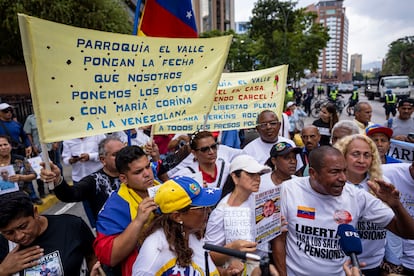
On September 27, Vente was able to organize its first simultaneous territorial activity in a long time: the Great National Ride, in which thousands of people gathered with bicycles and motorcycles at sites across the country to demand an electoral timetable. The outcome of that effort, replicated simultaneously in 12 of the country’s 24 states, left the organization energized.
“Vente is growing, but above all because it is María Corina’s party,” says Jesús Armas, a rising national leader who spent two years in prison. “We have launched a massive registration process for activists and volunteers. What we want to be is an institution, the country’s great liberal party. An organization that transcends María Corina’s leadership. We can already say we have leaders planted in every parish, every municipality, and every state of Venezuela. But the population still places somewhat blind faith in what she alone can do.”
“We’re working hard to train local leaders,” says Alviarez. “It’s a complex task that requires patience. There are people who have the motivation and the ability to inspire others, but then struggle to communicate effectively with others, for example. We place a lot of emphasis on training our activists.” Alviarez considers it premature to discuss electoral alliances: he states that the party is pursuing a change in the system. “We’re preparing for María Corina’s return, but also for the upcoming presidential elections and for governing this country. Twelve of our 24 national coordinators are under 35 years old.” Vente Venezuela is currently one of the parties that has not been able to register its existence with the National Electoral Council.
“I’ve been seeing a lot of outrage among people in recent weeks,” Armas says. “In the interior of the country, beyond Caracas, the situation is intolerable — it’s just too harsh. Power outages last six hours or more. In addition, there is frustration over the slow pace of political developments since January 3. It seems to me that people are pinning their hopes on María Corina’s arrival and tend to think that’s what’s needed for things to change. The important thing here, however, is that we need her presence to truly begin mobilizing the population.”
In recent weeks, Vente has organized popular tours in impoverished, densely populated areas of Caracas such as Petare and Propatria. Vente activists have gathered outside National Electoral Council offices in Maracaibo and Valencia to demand elections. There have also been demonstrations in Apure, Falcón, La Guaira and Barinas. There is a clear objective: that social demands and the economic improvements people seek are never separated from demands for the restoration of democracy.
Otherwise, although more spaced out and isolated than before, the chavista regime’s political police continue to closely — and silently — monitor any boastful statement, inconvenient procedure, or irregular circumstance occurring in everyday local politics. On September 17, Javier Oropeza, former mayor of Torres municipality and a Vente Venezuela activist, was intercepted by police officials and detained for 10 hours after giving an interview to a local news outlet. Oropeza had just returned from exile, and the day before he had appeared in court where a terrorism case opened against him two years earlier was dismissed.
Sign up for our weekly newsletter to get more English-language news coverage from EL PAÍS USA Edition
Donald Trump
Trump Rides To The Rescue For Republicans In The Midterms But Paxton Doubts His Effectiveness


President Donald Trump told reporters this week he would embark on a 32-day campaign tour to try to save Republican races ahead of the midterm elections. Texas, along with other traditionally Republican states such as Iowa, is on his must-stop list. But the state attorney general and the party’s Senate candidate, Ken Paxton, does not appear convinced the visit will help.
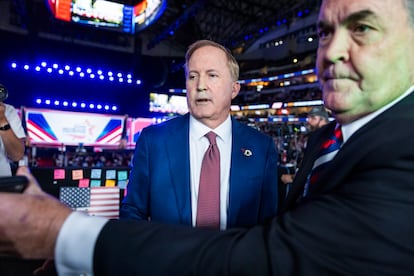
In a recording obtained by The New York Times, Paxton told a group of conservative donors and lobbyists last week in Washington that the unprecedented Republican convention held in Dallas in early September — “Trumpapalooza” — may have hurt him.
The audio, the Times reports, includes the moment when someone asks Paxton whether he feels “he’s a little bit of a drag,” although it is not clear whether that “he” refers to Trump. Two people told the newspaper they remember the question, and one confirmed it was about the negative consequences of Trump’s convention for Republican campaigns.
The Times says Paxton replied: “So to be honest with you, the numbers — when we did that convention — it dropped our numbers. Everybody’s numbers dropped. Right now, yeah, not good.”
At that two-day event in Dallas, Trump did not hold back on promises in his speeches, though it was unclear whether he could deliver. The biggest: he offered a $5,000 “Trump dividend” to all adult Americans, but only if Republicans win the midterms.
He also urged voters in the arena to think of him — rather than Paxton or any of the candidates — as the name on the ballot. He mocked and criticized Paxton’s dress, speech, and appearance while imploring Texas voters to elect him: “We have to make sure he wins.”
Paxton (and Trump), slipping
The Republican candidate for the U.S. Senate from Texas has failed to rebound in the polls. The most recent surveys put him slightly behind his Democratic challenger, James Talarico.
According to the RealClearPolitics polling average, if the election had been held on Monday, Talarico would have won the Senate race with 47.6% of the vote versus Paxton’s 44.7%. Other polls — such as Decision Desk HQ — showed an even wider gap and gave Talarico the edge, with a 56% chance of winning in November.
Despite Trump’s outsized support in sections of the party, the speeches do not appear to be generating a proportionate flow of money for Paxton. At the end of June, Talarico had more than $21.5 million available to spend on his campaign, while Paxton had less than $1.8 million on hand, Federal Election Commission data show. The national Republican Party, which has deep coffers, has had to spend significant money in Texas it had not planned for.
The race for that seat has drawn national attention not only because of doubts about the level of support Paxton will receive from Republicans, but also because the party could lose its first state election in Texas since 1994. The Texas Senate seat was one that the Republican establishment would hardly have considered at risk if the party’s candidate had been veteran Texas politician and Congressman John Cornyn. Since 2002, the Republican — who during the primaries boasted of having a record of legislative support for the president, even though he voted in favor of his impeachment following the 2021 Capitol riot — had remained undefeated in the Senate.
The comments by Paxton cited by the Times are significant because, in giving his endorsement, the president valued his loyalty over Cornyn’s, not the party’s position. He chose the attorney general, saying Cornyn did not support him enough during hard times.
But the atmosphere of division that Paxton’s nomination created within Republican ranks has not helped the president’s candidate. Nor has the corruption scandal that led to a state Senate investigation of Paxton in 2023: although he was acquitted, he faced more than a dozen charges of using his power as attorney general to benefit his friend and donor, Nate Paul, who was also under federal investigation. That is compounded by his contested divorce and infidelities. These are issues state conservatives often cite either to back him or to turn their backs on his candidacy.
Just last week, Republican Senator Thom Tillis of North Carolina told CNN that choosing Paxton over Cornyn was a “colossal mistake”: “We would not be spending tens or hundreds of millions of dollars in Texas if Cornyn had won.”
The same conclusion was reached by former George W. Bush adviser Karl Rove, speaking at a festival organized by The Texas Tribune: “If John Cornyn were the nominee, this race would be over.”
Paxton’s remarks at the Washington fundraising event are also seen as reflecting an analysis shared by other Republicans, given the drop in Trump’s approval ratings.
A polling average published by RealClearPolitics on Wednesday shows a 38.8% approval rating for the president’s job performance. The closest comparable approval level for a president near a midterm election was George W. Bush’s before his 2006 midterms; after a steep decline it reached 38% in early November 2006, Gallup reported.
In Trump’s case, analysts and polls attribute the decline to the high cost of living, which he had promised to lower during the campaign; weak support for the war in Iran and its impact on energy prices; and his aggressive detention and deportation policies for migrants.
Despite the Paxton audio from Washington, the reality is that the estimates reflected in the polls — unfavorable for Trump, and especially for Paxton and Republican candidates heading into the midterms — have not improved after the Dallas convention, nor five weeks out from the crucial midterm elections.
Sign up for our weekly newsletter to get more English-language news coverage from EL PAÍS USA Edition
America
La Agencia De Protección Al Consumidor De EE UU Investiga A OpenAI, Anthropic Y Otros Gigantes De La IA


La Oposición Convoca Una Sesión En Diputados Para Rechazar Un Megadecreto De Milei

Un Ataque Armado En Una Escuela Secundaria En Torreón Deja A La Subdirectora Muerta Y Al Menos Cuatro Heridos
Brussels takes action against Spain over failure to update blackout plan

Detenido Un Hombre Por La Muerte De Una Mujer De 47 Años En El Distrito De Arganzuela De Madrid

F1 Qualifying Today: Azerbaijan Grand Prix schedule, times and TV channel

The Azcatitlan Codex Returns To Mexico From Europe After Nearly Two Centuries


-
 Arganzuela2 weeks ago
Detenido Un Hombre Por La Muerte De Una Mujer De 47 Años En El Distrito De Arganzuela De Madrid
-
 Uncategorized7 days ago
F1 Qualifying Today: Azerbaijan Grand Prix schedule, times and TV channel
-
 Claudia Sheinbaum2 weeks ago
The Azcatitlan Codex Returns To Mexico From Europe After Nearly Two Centuries
-

 basque country2 weeks ago
British Actress Naomi Watts Attacks Ageism In Hollywood As She Picks Up Prestigious Donostia Award At San Sebastian Film Festival
-

 Uncategorized2 weeks ago
Heartbreaking Instagram post reveals death of F1 star
-

 %2 weeks ago
Mallorca Property Overrun By Wild Goats
-
Best airlines2 weeks ago
Spanish airline Vueling named Europe’s best low-cost carrier for 2026
-

 Austin1 week ago
Venezuelan Migrant Shot By ICE In Austin Cites Lack Of Medical Care: ‘How Are They Going To Leave The Bullet In There?’