Connect with us

%

Ten Valuable Horses Hurt In Horror Crash As Lorry Overturns On Spain’s A-5 Motorway

Published

on

ten-valuable-horses-hurt-in-horror-crash-as-lorry-overturns-on-spain’s-a-5-motorway

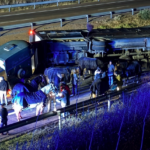
Removing the horses from the overturned vehicle was complicated. Photo credit: Eurotruckstar on Facebook

Nothing can be more distressing than seeing an injured animal on the road, but when that animal is a highly trained horse worth potentially hundreds of thousands of euros, the consequences can be devastating. Ten horses belonging to Diego Ventura, one of the world’s leading bullfighters on horseback, were involved in a serious lorry accident with two of his star horses among the most badly injured.

The lorry overturned near Trujillo in Cáceres province in the early hours of Monday, October 19, as it returned from Zaragoza following the final bullfight of the season. Brillante and Fouto suffered the most serious injuries, while the other horses also sustained injuries of varying severity. 

A difficult rescue on the A-5

The accident happened at kilometre 266 of the A-5, near Santa Cruz de la Sierra, as the vehicle travelled south towards Badajoz. The horses were returning from Zaragoza, where Ventura had performed at the Feria del Pilar on Sunday evening. The lorry was carrying ten horses, along with two drivers and two members of the stable staff. Ventura himself was not travelling in the vehicle. When news of the accident reached his team, his manager Andrés Caballero travelled from Madrid to the scene. Members of the stable staff were helped by people travelling in a vehicle carrying horses belonging to Portuguese rider Rui Fernandes, which was following behind. Ventura later went to the scene himself. 

Removing the horses from the overturned vehicle was complicated by the internal partitions used to keep them separated during transport. All ten animals were injured, with Brillante and Fouto reported to be in the most serious condition. Initial reports said neither was in danger of dying, although further veterinary examinations were needed to establish the full extent of their injuries. 

The driver suffered minor injuries, while a Guardia Civil traffic officer was taken to Cáceres University Hospital after being kicked in the knee by one of the horses. The officer had been attempting to move the animal away from the carriageway. The crash forced the closure of the A-5 towards Badajoz. Traffic was diverted from kilometre 248 onto the A-58, before joining the A-66 towards Mérida. The road reopened around lunchtime after the lorry was removed and the carriageway cleared. The cause of the overturning had not been established in the initial reports but it is believed that the driver fell asleep at the wheel.

Who is Diego Ventura?

Born in Lisbon in 1982, Diego Ventura is a prominent figure in rejoneo, the form of bullfighting in which a rider performs on horseback. He built his career in Spain and became a regular name at major bullrings, including Madrid’s Las Ventas. His performances have earned him a substantial following among fans, and he is known for his extensive stable of specialist horses. 

In rejoneo, horses are trained to work close to a bull during a performance, responding to the rider’s cues as they turn, approach and move away from the animal. Different horses may have different roles in the ring, and developing one capable of performing at this level takes years of training. A proven horse is therefore not easily replaced: its value lies not just in its physical qualities, but in its experience and the partnership it has developed with its rider.

What can a rejoneo horse be worth?

There is no confirmed public valuation for Brillante or Fouto, so their individual worth cannot be stated reliably. However, horses trained for elite rejoneo can command substantial sums, depending on their breeding, ability, training and record in the ring. In a 2011 interview with Mexican newspaper El Economista, Ventura discussed the high value of horses in his profession, citing figures of around €400,000 to €500,000 for an animal with the qualities required at that level but that of course is a historical estimate, not a current appraisal of either horse involved in the crash. 

The cost of a professional stable extends well beyond buying the horses. Their care involves specialist training, feed, veterinary treatment, transport and experienced staff. An injury can also mean months of rehabilitation, depending on its severity, with no guarantee that a horse will be able to return to the ring. For now, the priority is the veterinary care of the ten injured horses, particularly Brillante and Fouto. Their recovery will depend on the injuries they have sustained and how they respond to treatment.

%

Mijas Sows 33,000 Super Seed Balls

Published

on

mijas-sows-33,000-super-seed-balls

Mayor Ana Mata sowing superseeds. Credit: Ayto

Mijas distributes 33,000 super-seeds across its Sierra to regenerate plant life scorched by wildfires and combat creeping desertification.

In a hands-on bid to reverse decades of environmental damage, the Spanish town of Mijas has distributed more than 33,000 “supersemillas” across its Sierra, aiming to regenerate plant life scorched by wildfires and threatened by creeping desertification.

The plan, led by the Ayuntamiento de Mijas in partnership with the local firm Exploramás, relies on a centuries-old Japanese technique known as nendo dango. Volunteers crafted small balls of clay, natural fertilizer, substrate and meadow seeds. Once scattered on the ground, the clay casing shields the seeds from birds, wind and sun until rainfall gradually dissolves it, allowing germination without any need for planting or irrigation. A similar nendo dango approach has already been used on the Costa del Sol dunes.

Deployment of seeds follows successful experiments

The second phase of the project saw the seed balls dispersed around the former Los Arenales quarry near Mijas Pueblo and in the Hipódromo area, zones still recovering from recent fires. The effort builds on an earlier workshop held between 20 and 21 October at Cortijo Don Elías, where roughly 700 residents, students and association members rolled the balls by hand. Participants included pupils from the Las Lagunas, Sierra de Mijas, Torre Almenara and Villa de Mijas institutes, students from Kampus Formación, and members of the Fuenmijas Parkinson’s association and Afesol.

Organisers had originally planned for 27,000 seed balls; the final tally exceeded 33,000, a figure chosen in part to symbolically represent the workforce of General Electric, which supported the social action through Exploramás.

Mayor Ana Mata takes part

Mayor Ana Mata joined Environment Councillor Marco Cortés and Education Councillor Juan José Torres for the distribution. She described the Sierra’s recovery as a collective responsibility and stressed that involving schools, associations and businesses turns a practical restoration project into broader environmental education. This latest action continues broader volunteer-led efforts to revive the fire-damaged forests of the Sierra de Mijas.

“When administrations, companies, young people and social groups work together, we achieve results that go far beyond a single environmental action,” Mata said. “We are also teaching values and respect for nature.”

By combining traditional low-tech methods with broad community participation, Mijas is betting that a few tens of thousands of carefully made seed balls can help tip the balance toward greener slopes and greater resilience against the Mediterranean’s intensifying dry spells.

Continue Reading

%

US Flights Resume After Nationwide Ground Stop But Travellers Still Face Delays

Published

on

us-flights-resume-after-nationwide-ground-stop-but-travellers-still-face-delays

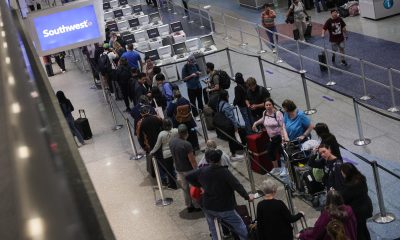
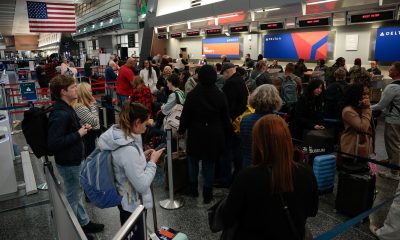
Los Angeles LAX brought to standstill. Credit: Rosemarie Mosteller – Shutterstock

Travellers flying between Europe and the United States on Saturday, 14 November, should check their flight status before leaving for the airport. US departures began to resume on Friday after the Federal Aviation Administration lifted a nationwide ground stop, but US Transport Secretary Sean Duffy warned that schedules would take time to recover. Passengers connecting through a US airport should check both legs of their journey.

The FAA halted departures across the United States on Friday, 13 November, after communications problems affected several regional air traffic control centres. The stop lasted more than four hours. Hundreds of flights were diverted, and more than 11,000 US flights were delayed or cancelled on Friday, according to FlightAware figures reported by The Guardian.

The disruption reached Europe on Friday night. British Airways cancelled its 10.30pm flight from Heathrow to New York. Passengers travelling between Spain and the United States should check directly with their airline for the latest departure time and any changes to onward connections.

Duffy attributed the outage to an overload in ageing communications equipment. Friday’s halt was the first nationwide ground stop since January 2023, when a separate FAA computer system failure led the agency to pause departures across the country.

The @FAAnews issued a nationwide ground stop for all U.S. airports following a communication issue impacting all Air Route Traffic Control Centers. FAA technicians are investigating the issue. We will provide immediate updates as we have them.

— Secretary Sean Duffy (@SecDuffy) November 13, 2026

Sign up for personalised news

Subscribe to our Euro Weekly News alerts to get the latest stories into your inbox!

By signing up, you will create a Euro Weekly News account if you don’t already have one. Review our Privacy Policy for more information about our privacy practices.

Continue Reading

%

Mercedes Freezes Spending & Weighs Factory Closures

Published

on

mercedes-freezes-spending-&-weighs-factory-closures

Mercedes production line. Credit: Alexander Gafarro – Shutterstock

Mercedes freezes all new spending at German plants and weighs factory closures after stalled labour talks, high costs and a sharp drop in China sales.

Mercedes-Benz has stopped every further investment at its German factories and is now checking which sites it can still keep open. Production chief Michael Schiebe told staff in an internal interview that the board had “jointly decided to halt all further investments in our German locations” because current costs make new spending impossible.

Labour director Britta Seeger said a quick deal with the works council and IG Metall looks unlikely. She added that the company must examine “concretely and in detail which locations we can still afford in Germany” and that plant closures would now have to be looked at more seriously, even though management wants to avoid them.

Why the investment freeze has happened now

Talks over cutting labour costs have dragged on for months without progress. Mercedes wants longer working hours without extra pay and other productivity steps so German plants can compete. Schiebe pointed out that an hour of production work in Germany can cost up to five times as much as at Eastern European sites. CEO Ola Källenius has used a simple cost index to show the gap: Germany at 100, the United States around 80, Hungary at 30, Romania at 20 and China between 10 and 20.

Without an agreement, future models could be built only outside Germany. Existing projects already under way will continue for the moment.

China weakness and wider industry pressure

Falling sales in China have made the cost problem harder to ignore. Deliveries there dropped by roughly 30 per cent in recent quarters as luxury demand cooled and local Chinese brands offered cheaper electric cars. Mercedes has already cut its full-year profit guidance for the cars division to 2–3 per cent and launched a wider savings programme.

Tariffs, price pressure and high energy costs in Europe have added to the strain. The German auto industry as a whole has shed tens of thousands of jobs over the past year. Suppliers such as Bosch have also cut hours and pay for thousands of workers, while Volkswagen is locked in its own tough talks over possible plant closures.

European plants outside Germany are not affected

Mercedes plants in other European countries are not covered by the freeze. The company’s expanded factory in Kecskemét, Hungary, and the van plant in Vitoria-Gasteiz, Spain, continue as normal and have received recent investment. Management has made clear that lower-cost European sites remain part of its production plans.

No specific German factory has been named for possible closure yet. Workers at sites including Sindelfingen, Rastatt, Bremen and several powertrain plants now face months of uncertainty while talks continue. IG Metall has rejected the company’s demands and plans further warning strikes.

Mercedes still says it prefers a negotiated solution, but the investment stop shows how far the company is prepared to go if German costs stay high. Readers in Spain who follow the European car industry can track further developments on the Euro Weekly News site, including earlier coverage of German job losses and the latest EU moves on petrol and diesel cars.

Continue Reading
Advertisement
Advertisement

Spanish Real Estate Agents

Tags

Trending

Copyright © 2017 Spanish Property & News