Connect with us

%

Ten Years After Brexit, Britons In Spain Are Still Counting The Cost Of Lost Freedom

Published

on

ten-years-after-brexit,-britons-in-spain-are-still-counting-the-cost-of-lost-freedom

Why’d you have to go and make it feel so complicated? 10 years on from Brexit. Credit: M-Production / Shutterstock

Ten years after UK voters went to the polls on June 23, 2016, British life in Spain has not disappeared. But residency documents, 90-day limits, property shifts, trade friction and family care worries now shape a relationship that once felt far simpler.

How the Brexit vote still shapes British life in Spain

When the UK voted to leave the European Union on June 23, 2016, much of the public debate centred on trade, sovereignty, immigration and Westminster politics.

For British residents in Spain, the longer story became more practical. The vote did not instantly change daily life, and Britain did not formally leave the EU until January 2020. But over the decade that followed, the meaning of being British in Spain changed.

Living, retiring, working, staying with family or caring for elderly relatives in Spain is no longer something British citizens can assume in the same way EU citizens can.

Paul Michael, 67, a British resident in Cádiz who has lived in Spain for more than 23 years, said the first noticeable shift was the need to prove a status that had once felt settled.

“Despite living legally in Spain for many years, I suddenly had to deal with changes in my status as a British resident in Spain and residency paperwork,” he told Euro Weekly News.

How freedom of movement became forms, cards and calendar counting

Before Brexit, UK citizens could move to Spain under EU freedom of movement rules. Since the end of the transition period, British citizens arriving to live in Spain are generally treated as non-EU nationals and must meet visa, residency and documentation requirements.

For those already legally resident before the cut-off, the Withdrawal Agreement protected many existing rights. But even protected residents still had to make sure they could prove their position.

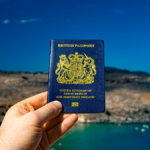
Spain’s TIE, the Tarjeta de Identidad de Extranjero, or foreigner identity card, became an important document for British residents proving post-Brexit status.

Paul said this is what many people in the UK failed to understand.

“Some people underestimate the value of freedom of movement because they never used it themselves,” he said. “The right to live and work in Spain changed overnight. Many thought Brexit was just about trade arrangements and politics.”

That distinction matters, and still shapes who can live, work, retire or stay long-term in Spain.

How 90-day limits changed second homes, family visits and care

For British citizens without residency or a long-stay visa, Spain sits inside the Schengen 90-day rule. That generally limits visa-free stays in Spain and most other Schengen countries to 90 days in any 180-day period.

Maureen Smith, a British resident who moved to Spain in 1990 and lived around Sotogrande and Pueblo Nuevo for more than three decades, said the referendum result was a shock.

“Brexit was a disaster and we couldn’t believe the result,” she said.

For Smith, one of the clearest practical changes was the loss of automatic movement between the UK, Spain and the wider EU.

“The 90-day rule for villa owners was bad,” she said. “There was no freedom of movement and more hassle at airports.”

She said Brexit also affected feelings of security among some long-term residents, even those who had worked, raised families and built stable lives in Spain.

“I felt insecure even though I had a full-time job at school and a pension,” she said.

Care has become one of the most sensitive post-Brexit issues. Recent reporting has highlighted British families struggling to care for elderly relatives in Spain because UK-based relatives cannot simply stay indefinitely without residency or a visa.

Smith, who returned to the UK for family health reasons, said Spain had been “a great place to bring up children”, but that ageing could change the calculation.

“For older people, if they lose a partner, life is very different,” she said.

How the Costas changed without losing their British base

The South and Eastern coasts of the Iberian Peninsula have long been shorthand for British life in Spain, and British buyers have not disappeared. But post-Brexit, new British arrivals face a different legal path from EU citizens buying, retiring or working in Spain.

There is evidence of change, but the figures do not show a simple British retreat.

Spain’s General Council of Notaries said foreigners accounted for 18.4 per cent of free-market home purchases in Spain in the second half of 2025. British and Moroccan buyers were the two largest foreign groups, followed by Italians and Germans.

Paul said claims that British communities have faded away can be exaggerated.

“There is still a large British community here,” he said. “There are fewer new British arrivals than before Brexit because it has made moving to and working in Spain far more complicated. But there are still many large British communities.”

How tourism stayed strong while the wider relationship grew more complex

The numbers also show a split between visiting Spain and building a life there.

Spain received a record 96.8 million international tourists in 2025, according to Spain’s National Statistics Institute. British visitors remained a central part of Spain’s tourism market, with official monthly data repeatedly showing the UK among the leading source countries.

That suggests Brexit has not broken the UK-Spain travel habit. But holidays are not the same as residency.

How British residents in Spain now need to plan differently

British residents covered by the Withdrawal Agreement should keep residency documents up to date, including the TIE where applicable. Second-home owners and regular visitors need to track Schengen days carefully. Families with elderly relatives in Spain may need legal advice before assuming a UK-based son, daughter or carer can stay long-term.

For new arrivals, the old idea of trying Spain first and sorting paperwork later is far more difficult than it used to be.

For British residents in Spain, Brexit’s anniversary marks a decade in which a familiar way of life survived, but became less automatic, less flexible and much more dependent on paperwork and ever-changing rules and regulations. 

%

Jet2 Winter Flights To Mallorca From The UK

Published

on

jet2-winter-flights-to-mallorca-from-the-uk

Jet2 has added more winter flights to Mallorca from the UK as part of its 2027/28 programme. Credit : Markus Mainka, Shutterstock

Jet2 has put more winter flights to Mallorca on sale for 2027/28, with the island served from ten UK airports including Manchester, Birmingham, Bristol, Edinburgh and London Stansted. The airline’s biggest winter sun programme yet includes almost 4.5 million seats across 181 routes, as British holidaymakers continue booking sunny escapes further ahead, even for destinations once seen mainly as summer favourites.

Mallorca in winter used to be a quieter affair. The beaches were calmer, hotels closed earlier, and many British travellers still thought of the island as a place for July, August and school holiday getaways. That picture has been changing for a while, and Jet2’s latest announcement gives another sign of how far things have moved.

The UK airline and tour operator has opened its Winter 2027/28 programme early, with flights and holidays now on sale across 17 winter sun destinations. Mallorca is firmly included, with services from Birmingham, Bristol, Edinburgh, East Midlands, Glasgow, Leeds Bradford, Liverpool, Manchester, Newcastle and London Stansted.

For travellers, it means more choice from regional airports. For Mallorca, it means another push towards a longer tourism season, beyond the usual summer rush.

Mallorca gets a strong place in Jet2’s winter programme

Jet2 says the winter programme is its largest ever, with almost 4.5 million seats on sale from 14 UK bases.

The wider schedule covers Spain, the Canary Islands, the Balearics, Portugal, Turkey, Malta, Morocco, Cyprus and Egypt. It also includes Jet2’s first full winter season to Sharm El Sheikh and Hurghada.

Even with hotter winter destinations in the mix, Mallorca remains a major part of the offer. That says plenty about the island’s pull with UK travellers.

It may not promise the same winter heat as Egypt or the Canaries, but Mallorca has something else working in its favour. It is close, familiar and easy. Flights are short, Palma works well for weekend breaks, and many visitors already know the island well enough to book without much hesitation.

That familiarity matters when people are planning holidays months, or even years, ahead.

Why British travellers are looking at Mallorca outside summer

Mallorca’s appeal in winter is different from its summer image. This is not the Mallorca of packed beaches, busy beach clubs and airport queues in peak August. Winter visitors are more likely to be looking for mild weather, a few days in Palma, quieter coastal walks, cycling, hiking, food, shopping or simply a break from the British cold.

For many, that is exactly the attraction. The island is still recognisably Mallorca, but slower. Restaurants are easier to book, roads are less crowded, and Palma feels more relaxed than it does in the middle of summer.

That kind of trip fits well with the way many British holidaymakers now travel. Not every escape has to be a full week by the pool. A four-night winter break, a half-term getaway or a few days of sunshine in February can be enough.

Jet2 appears to be betting on that demand continuing.

Which UK airports will serve Mallorca?

The airline says Mallorca will be served in Winter 2027/28 from ten UK airports: Birmingham, Bristol, Edinburgh, East Midlands, Glasgow, Leeds Bradford, Liverpool, Manchester, Newcastle and London Stansted.

That list is important because it shows this is not only a London market. Jet2 has built much of its success around regional airports, and Mallorca remains one of the destinations that works well from across the UK.

Manchester, the airline’s largest base, will offer more than 700,000 winter seats across the overall winter sun programme. Birmingham will have more than 540,000, while London Stansted will offer more than 430,000.

Mallorca is part of that wider winter push, rather than a small add-on.

Jet2 chief executive Steve Heapy said the programme had been launched early to give customers and independent travel agents more choice and flexibility. Further winter announcements, including ski, city breaks and Iceland programmes, are expected in the coming weeks.

A longer season for Mallorca

For Mallorca’s tourism sector, extra winter flights are about more than airport numbers.

More seats from the UK can help hotels, restaurants and local businesses stay active outside the busiest summer months. That matters on an island where the debate around tourism often focuses on overcrowding in July and August, while other parts of the year remain much quieter.

Winter tourism will not replace summer tourism. It is not meant to. But every extra route helps spread demand a little further across the year. It also helps shift how the island is seen by British travellers.

Mallorca is still one of Europe’s classic summer destinations. That will not change. But with airlines putting more winter capacity on sale and holidaymakers booking earlier, the island is becoming something else too.

A place Brits are increasingly willing to book when the UK weather turns cold.

Continue Reading

%

Why Your Weekly Shop In Spain Feels More Expensive Than Last Year

Published

on

why-your-weekly-shop-in-spain-feels-more-expensive-than-last-year

, food prices in the country have continued to rise over the past year. Photo credit: Guillem de Balanzo/Shutterstock

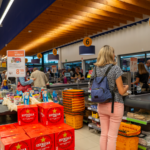
If you have noticed your supermarket bill going up even though you are buying the same things, you are not imagining it. Basic food items in Spain have risen again over the past year and it is showing most clearly in the weekly shop.

Eggs, coffee, vegetables and other everyday essentials are all more expensive than they were a year ago. None of it feels dramatic on its own, but it builds up quickly. A few cents extra on several products becomes several euros more at the till without you really changing anything.

According to Spain’s National Statistics Institute (INE), food prices in the country have continued to rise over the past year, with categories such as eggs, coffee and fresh vegetables among those recording the strongest increases in the consumer price index. That is what most people are noticing. Not one big jump, just steady increases across normal shopping baskets.

Eggs, coffee and vegetables are driving most of the increase

Eggs are one of the clearest examples of recent price rises. Coffee has followed a similar pattern, moving up again after already expensive periods in previous years. Fresh vegetables have also increased, partly because supply changes with seasons and weather conditions.

Even supermarkets own brand products, which many people rely on to keep costs down, have not stayed stable. They have moved up alongside branded items, which means switching brands does not always reduce the total anymore.

The impact is most obvious because these are not occasional purchases. They are part of almost every weekly shop. Milk, bread, fruit, pasta, oil and vegetables form the base of most households’ spending. When those go up together, it is noticeable straight away.

Why the same items now cost more without obvious changes

There is no single reason behind the increase. It comes from several pressures feeding into the final price. Production costs have risen, transport is more expensive, energy costs have been higher and supply chains have been under strain at different points. When those costs increase, supermarkets eventually pass them on. Even if the rise happens gradually, it still reaches the customer.

What makes it harder to notice in real time is that prices do not move in a straight line. Some weeks nothing changes, then suddenly a few key items jump at once.

Why your receipt keeps changing even when your shopping does not

One of the most frustrating parts is that there is no single moment where prices clearly go up. It happens in small steps. One week eggs are more expensive. A few weeks later vegetables change. Then coffee shifts again. Because it is spread out across different products, it never feels like one clear increase.

Instead, it shows up as a slightly higher total at the end of your shop. If you compare receipts from a year ago, the difference is often there, but it is made up of lots of small changes rather than one big jump. That is why many people feel like their budget is being stretched without really knowing when it started.

What a typical weekly shop looks like now

For a standard basket including milk, eggs, bread, pasta, fruit, vegetables, coffee and cooking basics, the total is usually higher than it was last year even if nothing extra is added. It is not that people are buying more. It is that the same list costs more to complete.

Even small increases across multiple items make a difference over time. A few euros extra each week adds up across a month, especially for households on fixed incomes. This is why food inflation is often felt slowly rather than suddenly.

Why prices are unlikely to drop back quickly

Food prices tend to stay high once they have risen. Even if production or transport costs ease, retail prices do not usually return to previous levels. Supermarkets operate on tight margins and adjust slowly. When costs go up, prices rise. When costs stabilise, prices tend to stay where they are.

That means households often adjust to a new normal rather than seeing prices fall back. It is one of the reasons the weekly shop feels permanently higher once it has changed.

What people actually notice at the supermarket

Most shoppers are not tracking inflation data or price charts. They notice something simpler. The same items they always buy now cost more at checkout.

Nothing about the shopping list has changed. The routine is the same. The products are the same. The only difference is the total at the end. And that is what sticks.

Continue Reading

%

Fugitive Wanted On Terrorism Charges Nabbed In Estepona

Published

on

fugitive-wanted-on-terrorism-charges-nabbed-in-estepona

Suspected Moroccan terrorist nabbed at Estepona beach bar. Credit: Turismo Estepona

Police made a dramatic arrest on the Costa del Sol after spotting a wanted man during routine duties. Officers from Estepona Local Police detained the suspect this week at the entrance to Playa del Cristo beach, right by an exclusive beach club access road. Patrol members noticed two men of North African origin entering a vehicle previously flagged to authorities. They carried out identity checks to process an administrative report on the vehicle.

International warrant leads to detention

Investigators soon discovered that one occupant faced an international search order from Belgium, together with an arrest warrant. The man had successfully evaded capture since July last year and had been in hiding in Estepona. Belgian authorities were looking for him over alleged offences connected to terrorism and crimes against individuals. Officers took him into custody immediately Malaga Hoy reports.

National Police later confirmed to reporters that the individual remained subject to a return decision, with Belgium as the requesting authority for those specific charges.

Companion questioned but released

Checks on the second man revealed prior police references possibly tied to terrorism matters. Authorities found no active warrant or judicial order against him, so they released the individual without charges.

Additional items were found in the vehicle

A search of the car uncovered documents belonging to a third party, including a Spanish national identity card and an accreditation for reduced mobility. When questioned, both occupants denied knowledge of how the papers ended up in their possession. One man said he planned to travel to Morocco and had entered Spain via Tarifa around four or five days earlier.

Ongoing enquiries continue

Officers handed the seized documents and case details to competent services for further examination. Meanwhile, the detained fugitive moved to National Police station, where they are more equipped to deal with serious criminals. Procedures now are going forward according to the Belgian arrest warrant.

This incident draws attention to continued cross-border efforts against terrorism suspects on Spain’s Costa del Sol. Local forces maintain vigilance in popular coastal areas frequented by international visitors and residents. Cooperation between Spanish and European authorities plays a key role in such operations, helping track individuals wanted abroad.

Continue Reading
Advertisement
Advertisement

Spanish Real Estate Agents

Tags

Trending

Copyright © 2017 Spanish Property & News