
ElPais
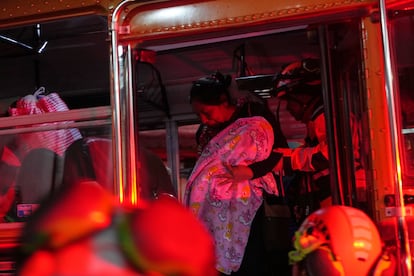
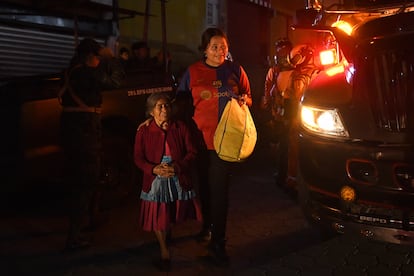
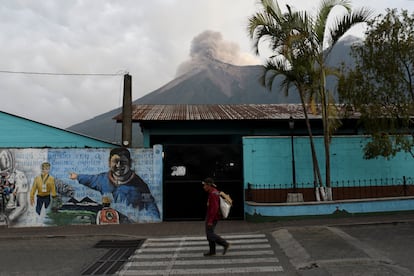
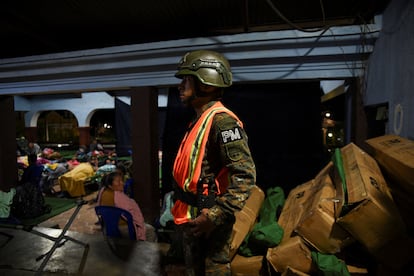
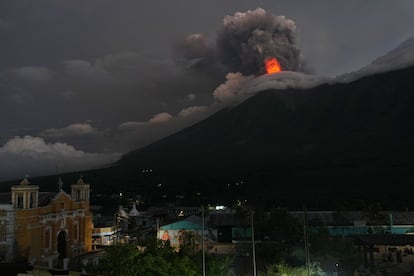
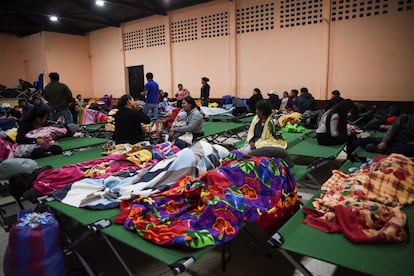
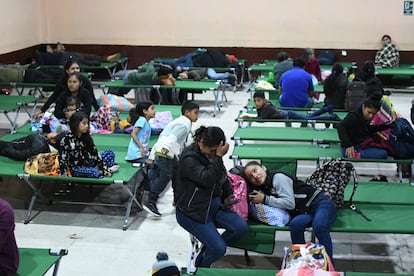
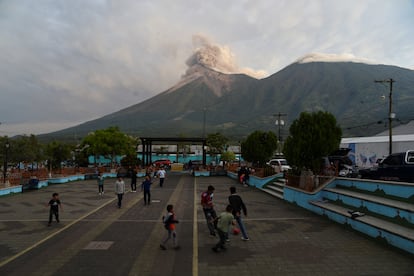
The Fuego Volcano Eruption In Pictures

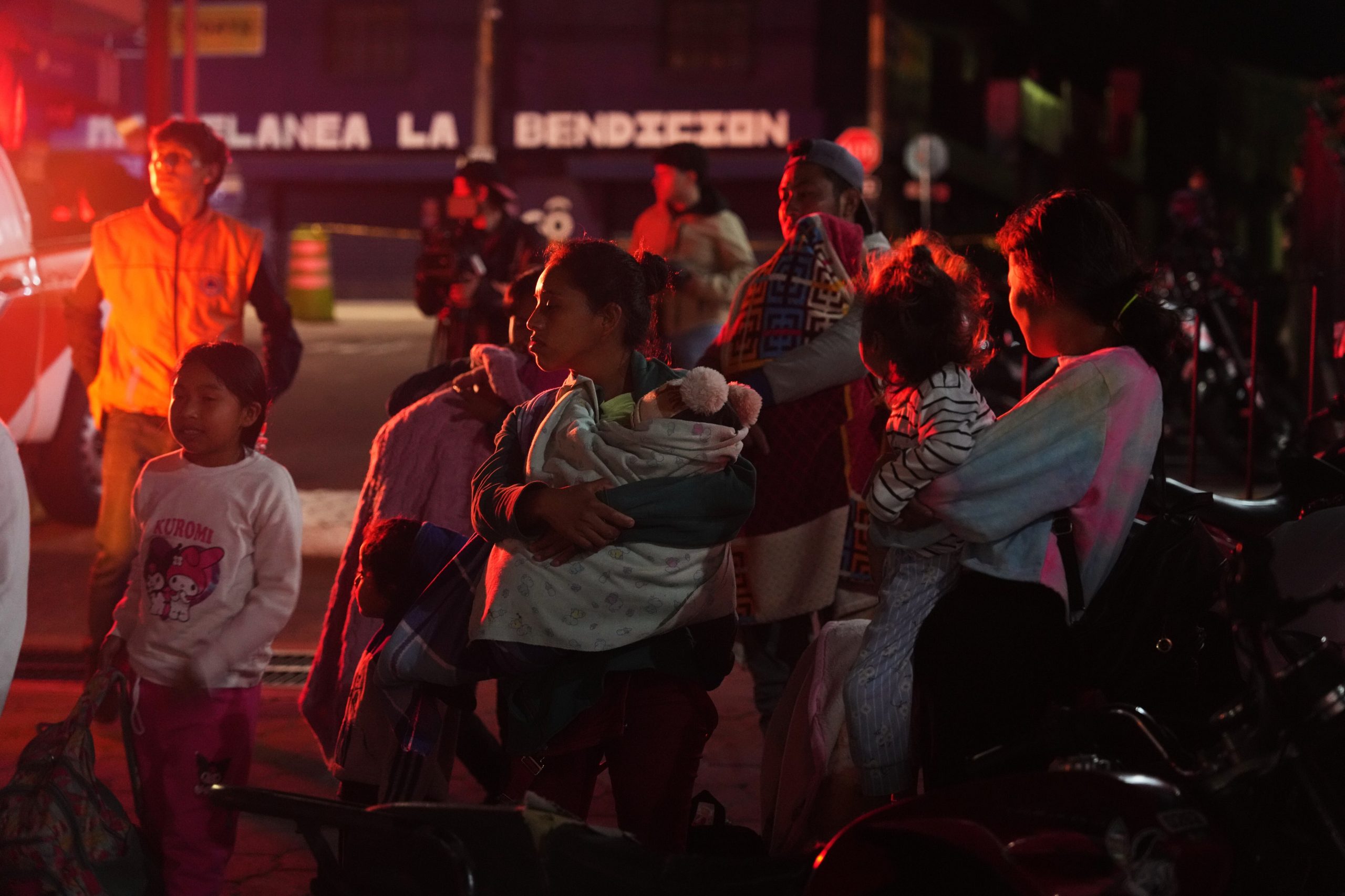
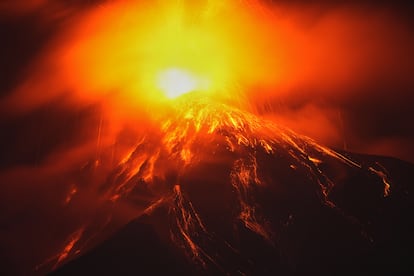
10 fotos
Guatemala declares an orange alert over the eruption of the most active volcano in Central America; hundreds of families from nearby communities were evacuated in the early hours of Tuesday because of intense activity that includes ash, gas, and lava fragments



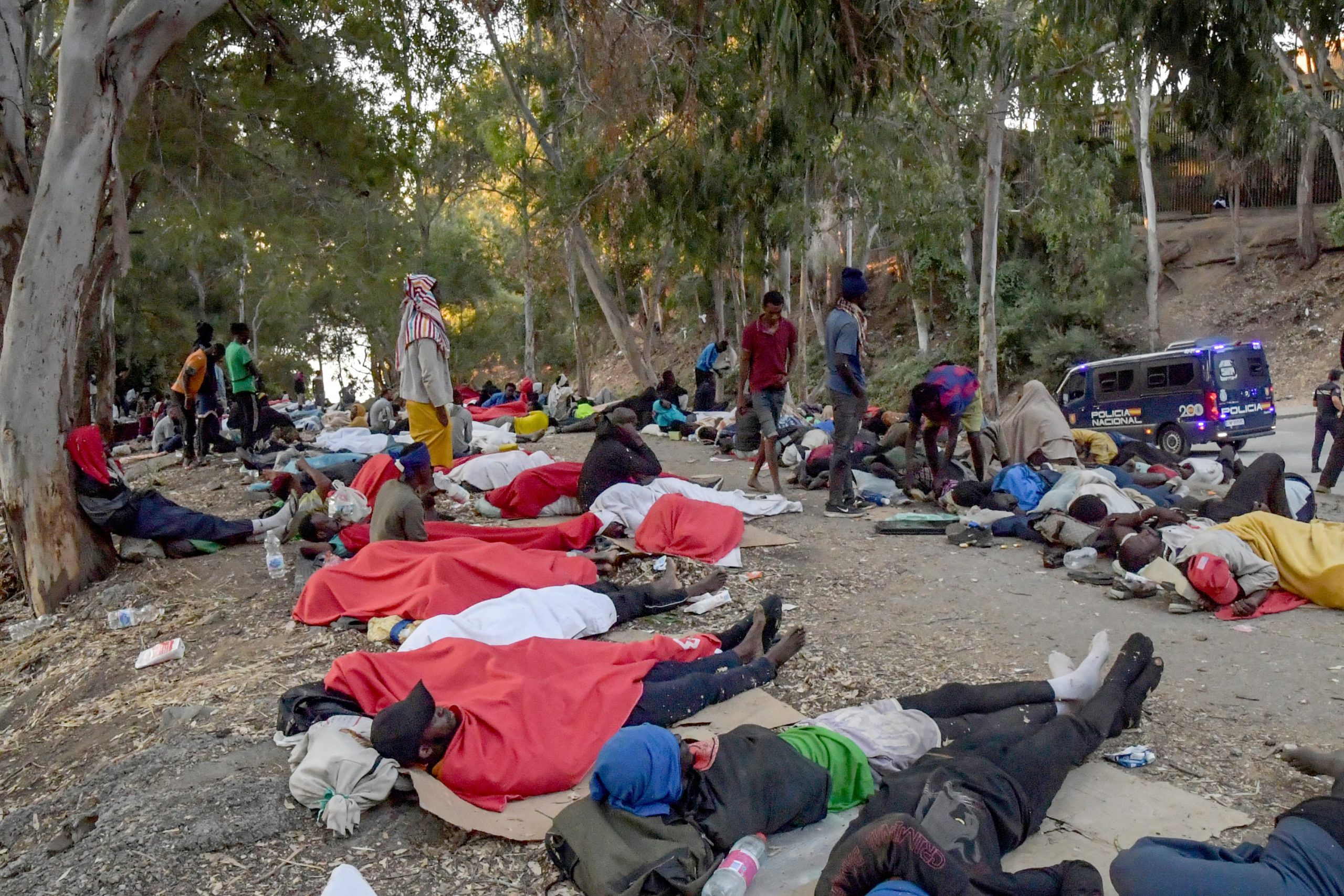
“Most of the kids who are sharing the thing about storming Ceuta on August 15, I swear they won’t get anywhere,” reads a Facebook message in a group for “those interested in migration from Morocco to occupied Ceuta” with nearly 23,000 members, which has grown by more than 6,000 in the past week, according to the platform’s own data. This message is just one example of the hundreds this newspaper has seen, mainly on WhatsApp and Facebook, talking about a possible new mass influx into the Spanish exclave on August 15. Thousands of young Moroccans are debating whether it’s real, whether it’s worth it, whether it’s feasible, or whether it’s all designed to deceive minors. “Is your life really worth so little? Leave the people of Ceuta alone. Enough is enough: the young people who left and those who are missing — their parents are devastated,” the message continues.
The date August 15 is not just a rumor: “Brothers, 8/15/2026,” says a WhatsApp message in a 35-member group called “Migration to Ceuta and Melilla” created last Thursday. This newspaper privately asked the creator of one of these groups if the goal was to try to enter Ceuta on August 15. “Yes, or even more than that,” he replied. When asked if it would be safe, if there would be a lot of people, or if there would be deportations, he simply replied, “God only knows. Come on, join the group and ask.” All of these messages and conversations on social media are in Arabic.

There are lots of mentions of August 15 on social media. The comments are a mix of enthusiasm: “See you there on the 15th. Be there on time,” “I’m heading up from Marrakesh to the north to experience that day.” But there are even more comments expressing suspicion or caution: “Don’t take any risks — the situation is still tense. I probably won’t go; I’ll go at the end of the month, when things have cooled down. Are they really that stupid? The first time caught them off guard, but now they’ve got it all figured out. Be patient, wait, and take advantage of a lapse in security,” says a member of a 123-member group. The rumor has spread to such an extent that in one of the WhatsApp chats, someone posted a message from the far-right Spanish party Se Acabó La Fiesta with screenshots about August 15. In another, a man claiming to be Spanish, named Ángel, wrote: “We’re going to kick you out of Spain.”
EL PAÍS accessed five Facebook groups with nearly 400,000 members and nine WhatsApp groups with several hundred. An investigation by fact-checking organization Maldita found 10 groups with 422,560 members, other smaller ones on WhatsApp, as well as scattered posts on Instagram. The August 15 rumor could also be a way to draw people from other cities to the Ceuta area so they might then be tempted to buy a spot from a trafficking gang on an inflatable or small boat.
One example of the doubts and tone on WhatsApp is this Tuesday conversation among several users: “Hello, brothers. Is there something on the 18th?” “Or the 30th? Or in 2030? Haha,” “they say the 15th,” “for the kids who are in Agadir, write to me. Are you going on the 15th? You won’t find transport. I’m next to the customs gate,” “photos to see,” “send us a video, brother,” “brothers, don’t stay: let everyone do their own thing; whoever wants to go up and do the hrig [illegal migration], let them look after themselves,” “kids, those of you passing through Beni Ensar, the Melilla entrance: explain the plan, how to cross there,” “I entered and the Guardia Civil returned me,” “but everyone is going to cross from Fnideq [Castillejos],” “nobody is going to cross through Melilla, brother. Those who are there are all in Fnideq,” “we, brother, go by the fence,” “how do you cross the fence? Explain it to us.”
“Social media is practically the only source of information these young people have about Spain,” says María Guevara, a researcher at Pablo de Olavide University in Seville. “Moroccan youth are very connected to one another, on a peer-to-peer basis. They keep each other well informed about the different options. They tend to talk only about the positive aspects of the migration process; no one wants to be seen as a crybaby. It’s possible they heard there was an opportunity, but I’ve almost never seen anyone here cross by swimming — only on a small boat,” she explains.
On social networks, alongside messages about the possible day for the attempt, dozens of people post photos of missing relatives or try to understand how to cross. One of the longest recent threads is a complex conversation about which type of inflatable boat is more useful, accompanied by an image more suited to children playing on the beach. “The Strait has a strong current, kayaks capsize. Better look for something serious; the sea is no laughing matter,” one person says. “I don’t advise you to go with that. I tried it: it capsizes quickly, and on top of that it can be punctured, it’s very thin,” another says. The list of risks in the Mediterranean Sea is not short: “Getting rammed by a ship, hitting a fish and having the boat deflate, or being capsized by an orca. And then there’s the swell and the watchtower. The probability is no more than 1%,” warns another.
Conspiracy theories about what happened last week or whether the sea barrier can be overcome by swimming open other lines of debate. “My husband went out to pray and saw someone running, without understanding what was going on. Around nine o’clock, I heard a commotion outside; I peeked out and saw kids running. I already knew people were crossing, but every so often I’d see five or six of them running down the street. Someone asked them what was going on, and one boy said, “Ceuta is open.” And he kept telling it to the next person, until chaos broke out. Cell phones made it all easier,” a woman explains on Facebook.
Sign up for our weekly newsletter to get more English-language news coverage from EL PAÍS USA Edition

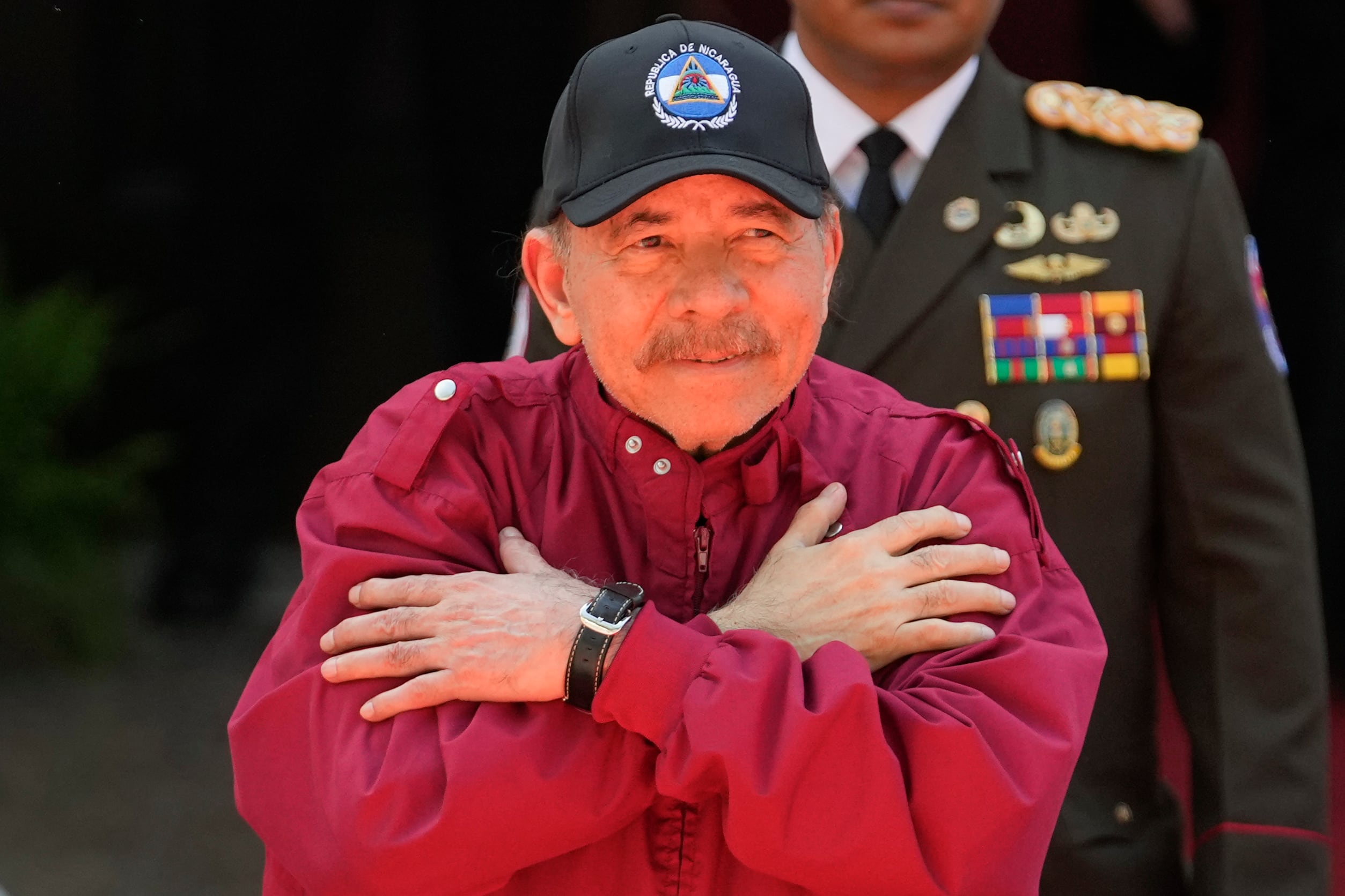
Former guerrilla fighter and Nicaraguan historian Mónica Baltodano — who risked her life in her youth to overthrow the Somoza dictatorship — was stunned by the announcement made by Daniel Ortega on July 19: “I first reacted with astonishment. The elections they have organized have been questionable, if not clearly fraudulent, for decades, so the words were nothing more than an expression of the brazenness with which they have been running the government for some time,” says the ex-guerrilla commander, who is living in exile in Costa Rica.
That the death sentence for electoral processes was pronounced precisely on the day that commemorates the triumph of the Sandinista Revolution completed the bitterest irony: the same date that in 1979 promised the birth of democracy in the country served, almost half a century later, to definitively bury its last vestiges. Ortega is not only placing a tombstone on Nicaragua’s already drowned democracy, he is also cementing the region’s last dictatorship, sealing the country’s autocratic drift and paving the way for a new family dynasty. “It is the antithesis of what that struggle meant, of the aims and commitments of a fight that cost so many lives. Announcing that on the anniversary of the end of a dictatorship is like a mockery,” Baltodano says.
Over nearly two decades in power, Ortega has consolidated his autocratic regime through a gradual strategy of institutional capture and systematic repression. He has co-opted the independence of the judiciary, the Supreme Electoral Council, and the National Assembly. He pushed constitutional reforms to eliminate term limits and establish his indefinite reappointment. Recurrent fraud and the outlawing of opposition parties have been his means of undermining elections. The elderly former guerrilla, now 80, also implemented a de facto police state after the violent repression of the 2018 protests that demanded an end to the regime.
Ortega imprisoned the main presidential pre-candidates, civic leaders, journalists, and members of the Catholic Church prior to the 2021 elections, which he said he won with more than 75% of the vote. He also ordered the mass closure and confiscation of NGOs, media outlets, and independent universities. He has stripped thousands of dissidents — labeled “traitors to the homeland” — of their citizenship and rights and forced them into exile. All of this has resulted in the absolute centralization of power alongside his wife and co-president, Rosario Murillo, who has styled herself the regime’s heir.
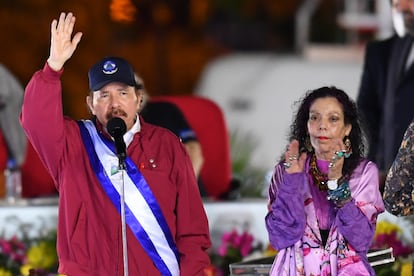
For Baltodano, Ortega’s latest move is nothing more than formalizing what in practice was already in operation. However, she warns that the legal engineering the regime plans to use to finalize the autocratic model remains to be seen, comparing it to totalitarian schemes such as North Korea’s. The National Assembly — Nicaragua’s parliament, completely controlled by Ortega — is preparing to approve the constitutional reforms necessary to implement the leader’s plan to end elections. “Democracy in Nicaragua no longer exists, but this is the final nail in the coffin. I still have doubts about the route they will take. It could be the creation of sham bodies, like a large assembly that ratifies Ortega in power but that really doesn’t function as such, and is a masquerade,” Baltodano says.
The historian emphasizes that the underlying aim is not only to neutralize any vestige of institutionalism, but to definitively strangle the opposition in exile and those stripped of their nationality. “What is beyond doubt is that whatever they propose will serve a purpose: to guarantee perpetuity or to make it even harder to remove them from power. They want to create an absolute impossibility for the opposition in exile to have any chance of considering participation in elections,” she explains.
Family succession
With the opposition totally blocked under a regime without elections, the question generating the most debate is the process of familial succession of power. Although Ortega said he expects to govern for another 10 years, his advanced age raises doubts about his real ability to remain at the head of the regime. That leaves his wife, the esoteric Murillo, who has long yearned to rule Nicaragua. After her come their nine children. On the feasibility of imposing the presidential couple’s offspring in power — in a dynastic style reminiscent of the Somoza dynasty they once fought — Baltodano notes important qualifications: “I don’t think conditions exist for the army to accept a dynastic dictatorship inherited by the children,” she says.
So far the Nicaraguan military has maintained an unbreakable loyalty to Ortega, despite Murillo having launched a purge against key figures tied to the military apparatus, such as Bayardo Arce Castaño, one of the nine commanders of the Sandinista revolution and historically close to Ortega, or Humberto Ortega, former military strategist of the Sandinistas and army chief who died in 2024 at 77 years of age while held under house arrest by his older brother and sister-in-law.
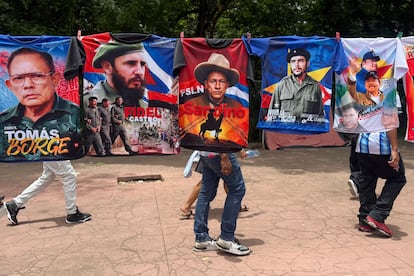
Despite the repressive apparatus and the image of monolithic control, Baltodano stresses that within the state structure, the police, and the armed forces, there is a latent discontent that the regime only manages to contain through coercive subjugation. “They are operating through terror, but discontent exists. I do not doubt there are disagreements within the military, the police, among state employees. There is no way this can be sustained for long without new outbreaks of rebellion,” the historian predicts.
Orlando Pérez, professor of political science at the University of North Texas at Dallas, stresses that the Ortega–Murillo plan seeks to establish the line of succession in the co-president and, later, in their children, particularly Laureano Ortega Murillo, the regime’s liaison with the governments of Russia and China. However, he warns that the viability of a family dynasty runs into a key domestic actor: the armed forces. “The question I ask, and that many analysts ask, is whether the Nicaraguan army would allow that succession. I think it is the only institution within Nicaragua that could ultimately act as some moderating power,” he says.
Despite that potential role, the political scientist clarifies that the military institution has suffered a constant degradation in its autonomy: “Ortega and Murillo have purged the vast majority of high- and mid-ranking officers and have hollowed out the army’s professionalism, creating a force bent and subordinated to the family. Today they are totally subordinate to the regime.”
At the center of succession bets is a system unique in Latin America: a country governed by a family, a situation not seen for several decades when the region was ruled by military regimes. “Nicaragua is a sui generis case,” says Katya Salazar, executive director of the Foundation for Due Process, based in Washington. “I think in other eras of history it could be classified as a monarchy, because it is not government. The presidential couple does what they want and this decision that there will be no more elections is part of that madness,” she asserts.
The Washington paradox
Ortega’s definitive blow to democracy comes in a turbulent regional context, with pressure from the administration of U.S. President Donald Trump on neighboring regimes such as Cuba’s and a complex international scenario. However, what stands out is Washington’s tepid reaction to Ortega’s new escalation. Baltodano points to a cold calculation by the U.S. leader: “The calculation is precisely that Nicaragua is not in the international spotlight. It has completely fallen to the background. Ortega saw, for example, that the United States has no problem dealing with dictators in Venezuela, as long as their economic problems or control over oil are resolved.”
Unlike other crisis hotspots in the region or the Middle East, Nicaragua currently occupies a secondary place on the U.S. diplomatic agenda. According to Pérez, the U.S. government faces pragmatic limitations and contradictions in its dealings with Managua, where rhetoric clashes with areas of functional cooperation. “The U.S. government and Nicaragua’s government continue to cooperate, for example, on migration. In addition, the United States buys gold from Nicaragua, which is an important export, and Nicaragua remains a CAFTA-DR member,” the specialist explains, referring to the free trade agreement between the U.S., Central America, and the Dominican Republic.
According to Pérez’s analysis, the only major punitive measure left for Washington would be to expel Nicaragua from that agreement, although it is an option with undesirable side effects for the entire region. “That is the last lever that can be pulled, but it would have repercussions not only on Nicaragua but on the other members. It would sharply affect maquila workers, the textile supply chain in Honduras, Nicaragua, and Costa Rica, and create strong migratory pressures. That is why I see it as difficult,” he says.
Added to this is a weighty sociopolitical reality in the United States: the Nicaraguan diaspora lacks the electoral muscle and influence enjoyed by Cuban or Venezuelan communities in Washington and in key states such as Florida.
Katya Salazar also asks what measures the United States can take when its government repeatedly states an intention to end authoritarian regimes in the region. “The question is whether the United States follows the Monroe Doctrine — or Donroe now, as it has with the rest of the region — and whether it will decide to do something like it did in Venezuela. Nicaragua survives thanks to trade with North American countries. Is the United States willing to cut that off, to affect that? Is Canada willing to limit that?” she asks.
While the U.S. government is stretched across multiple fronts (Iran is a nightmare that could ultimately hurt Trump with voters), Ortega has managed to impose his one-party, family regime without resistance. The last dictatorship in Latin America. “What happens in Nicaragua is a case far removed from the rest of the region. I would say it is more a case for psychiatry,” says Salazar. In a world whose eyes are on other crises, Salazar does not rule out that Ortega could get away with it. “This will end the day those characters die,” she concludes.
Sign up for our weekly newsletter to get more English-language news coverage from EL PAÍS USA Edition
Alain de Botton
Alain De Botton: ‘The Hardest Part About Being Single Is That You Never Stop Thinking About Love’

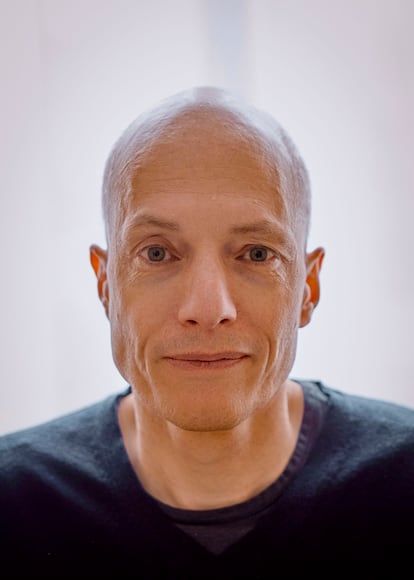
Alain de Botton, 56, welcomes EL PAIS in a home undergoing renovation. He gives meticulous instructions to the builders with a smile. He explains that his former partner lives four doors down. Both of their buildings stick out among the Victorian homes in their London neighborhood of Camden. He says he’s finishing work on another home in Mallorca. He fell in love with the Spanish island 15 years ago. “It will be strange to live there. I’ve never spent time by a tree,” he says. “But I’m getting ready for the journey.” In the foyer, there are vases of flowers. Also, a Seneca quote carved into stone: “What need is there to weep over parts of life? The whole of it calls for tears.” He sees me reading it and offers an interpretation: “If your expectations are realistic, you won’t need to cry.”
Question. Are you prepared for the worst?
Answer. No one is. But if you get to 56, you know the ups and downs of life. That’s why at this age, we like flowers.
Q. Flowers?
A. They speak to a moment of plenty. Young people aren’t satisfied with that moment alone.
Q. At 23 years old, you sold two million copies of Essays in Love. What did you know about the subject back then?
A. A 23-year-old person knows something that people of 56 have probably forgotten. Technical experience grows, but not the emotional. Love was new, extraordinary and intense.
Q. Twenty-one years later, you wrote The True Hard Work of Love.
A. I had learned about the perversion of love. We get into relationships that work against us. It is the story of Adam and Eve: they’re in paradise, yet they make their lives miserable.
Q. Why is that?
A. Perhaps it can only be understood through psychoanalysis. The way in which we love always goes back to the way we were loved as children. The same way we don’t remember how we learned to talk, we learn the language of love unconsciously, and that echoes. Imagine your parents scolded you all the time. What do you do if you break a glass? You keep quiet. Imagine that you no longer want to have sex, and you keep quiet so that no one gets mad.
Q. The protagonist in your book keeps quiet until he explodes.
A. I identify with that. I understand those who go quiet and those who get mad.
Q. Were you a silent child?
A. Yes. I didn’t like rough-and-tumble games or the company of boys. I preferred to sit with the girls and play dolls. From the age of eight until my teenage years, I lived in boarding schools. It was a difficult experience. I had a military education, a holdover from the British Empire that taught children to be little soldiers. To not cry or communicate emotions.
Q. What did you learn?
A. Patience. I was waiting to be rescued. Also, to care for the place where I live. And to protect my freedom, I don’t want anyone to tell me what to do.
Q. What rescued you?
A. I survived. Curiosity kept me alive.
Q. What interested you?
A. I saw that my parents weren’t happy. Individually, and also together. And I didn’t understand why. My father was born in Alexandria. He came from a Sephardic family that had fled Spain. When he had to leave Egypt, he went to Switzerland and met my mother. That’s where I grew up. They worked in finance. They were professionally successful, but at home they lived in a state of torment and anxiety. That could be why I became used to holding my tongue. Also, to self-analysis. It was a survival tactic. I needed to understand what made me sad, to try to avoid it.
Q. As a writer, you venture into philosophy, art, architecture —
A. Everything can help us understand ourselves better. That’s why we founded the School of Life, my business. There are 50 of us teaching people how to look at the world. The idea came to me after reading Pierre Hadot, who studied the philosophical schools and realized that the Platonic Academy, Aristotle’s Lyceum and The Garden of Epicurus were businesses. That appealed to the entrepreneur in me. It was a desire to make what interests me into a community, since the writer is a solitary being. We founded the school in Bloomsbury, between a kebab shop and a hair salon.
Q. Is the street a university?
A. Of course. I grew up in a snobby world in which knowledge is limited to the great universities. And… I don’t think that’s healthy. The university does not own knowledge. In Cambridge, I supposedly got one of the best educations the United Kingdom can offer. It was terrible. I was an idiot at the beginning and an idiot at the end. I didn’t learn anything that helped me to question the world. I had to do it on my own. Academia carries a poison: it doesn’t challenge you to think anything without having read 1,000 books about what other people think.
Q. Is philosophy self-awareness?
A. It is many things. The Greek translation of the word, “love of knowledge,” is interpretable. If you ask a taxi driver, their response will be something similar. But if you ask the question at Oxford University, the response will derail you and will be completely abstract. I get letters from young people who are excited to study philosophy. They think they will learn to live, think and love. I warn them that they’re not going to learn that.
Q. Do you criticize intellectualism?
A. Wisdom does not require a specific vocabulary. My parents did not raise me on their own. They hired a nanny who was a key part of my life. She didn’t have much formal education, but she was intelligent and lovable. She was the most important adult in my childhood. A friend once told me, “You write books that your father and your nanny could understand.” She was the queen of asking why. In the United Kingdom, T.S. Eliot said that culture must be preserved by the elite. Perhaps because I grew up in Switzerland, I don’t believe in that. Switzerland is a wealthy but dignified society.
Q. It has its contradictions. It stays neutral and banks money, no questions asked.
A. Outwardly, the Swiss are boring. But they value security, right up until they cut the rope. You cannot live surrounded by high mountains without being affected by them.
Q. Why do you live in London?
A. Because of the English. By the time I was 12, I’d had enough of French. French culture is narrow. They are at odds with the modern world.
Q. You’ve become a psychotherapist.
A. I trained for four years at the University of London, after getting psychoanalysis myself for a decade, five times a week.
Q. How did psychoanalysis change you?
A. You open doors and closets. It laid the way to my becoming a psychotherapist. If you don’t know yourself, you can’t know, or help, anyone else. Now I have clients.
Q. You call them clients?
A. Psychoanalysis has patients. Psychotherapy, clients.
Q. Who can pay for psychoanalysis five times a week for 10 years?
A. It’s a luxury, but not in NW3 [the postal code of his London neighborhood]. [Sigmund] Freud lived here. A psychoanalyst lives in every other house. I know because the three analysts I went to all lived within a few minutes of one another.

Q. How did you decide which therapist worked for you?
A. Therapy is an art, not a science. With one, I understood my inner landscape. I centered myself. And they gave me the confidence to try becoming a therapist. As a child, I had a very sparse emotional education.
Q. Have you been better with your own children?
A. Probably, but I can’t bear my children suffering. I think I haven’t prepared them for the world. We have gone from having a demanding childhood to overprotecting our kids.
Q. You link beauty to the good life.
A. In German Switzerland, design is key. Think of the company Vitra or Peter Zumthor. That simple architecture defends an idea of beauty for all. Everything is beautiful: schools, the station, the hospital. And everything is well-made.
Q. Was your house beautiful?
A. Yes. We lived in a flat that had an exposed concrete floor. Raw, simple, but I felt it to be solid. The building had a bomb shelter where my sister and I played. I think that’s where I developed my love for materials. Later on in England, everything seemed frail to me. That could be why I have dedicated myself to building simple houses, to bring something of my childhood to this country.
Q. Do you make your living as a developer?
A. To a large extent. I have built modern housing, and I have learned to appreciate tradition, updating it. I am not interested in perpetuating it.
Q. You’ve said that people should begin relationships by explaining where their madness lies. Where is yours?
A. I’m like the sea: deep down I’m calm, but on the surface I’m very turbulent. I often wonder why everything affects me so deeply. I experience everything at a level ten when I should probably experience it at a six. Intensity is a form of madness. I’m extreme even in love. My madness shows itself because I’m drawn to difficult situations, suffering, and complicated people who don’t give me exactly what I think I need: calm.
Q. Are you sure you’re looking for peace?
A. Perhaps not. But peace is where I want to live.
Q. Your house is very orderly.
A. We decorate our homes not as we are, but as we wish to be. Think of the painter Agnes Martin. She was a schizophrenic and tormented woman. In contrast, her canvases are pure order. Their power comes from not being calm paintings. They are paintings that are trying to create calm. That’s what makes them so moving.
Q. You make mutually exclusive arguments: either polyamory or boredom. Either safe sex or excitement.
A. The mind has a natural temptation to break itself. Naomi Klein has written that babies imagine two mothers: one good and one bad. When they are frustrated, they kill the bad mother. When content, they embrace the good one. Until they realize that the mother is one: sometimes good, other times not. Maturity brings with it a certain kind of depression, that of reality. But that is in the medium term. I am still an extreme person, but I seek the middle position through humor.
Q. Can humor be used as a way of not feeling?
A. Without a doubt. To cover up something painful.
Q. You have written that marriage is a prank we play on the person we supposedly love.
A. Bringing anyone deeply into one’s world is to torment them. To wound is to be wounded. It is easier to be a good friend. If they deceive you… you let them go. In love, we should do what good friends do: not take anything for granted. “How wonderful, my partner didn’t make me cry today.” Getting married is choosing someone to suffer with.
Q. Why do we do it?
A. Fear of being alone? The hardest thing about being single is that you never stop thinking about love. It’s the same as when you have no money: you never think about anything else.
Q. You are separated.
A. That’s why. Love steals so much time. You have dates and… I don’t know how it works in Spain, but in a city like London, you only meet people through apps, and that makes contact difficult, because there are too many possibilities. A young woman gets, in an hour, more than 200 match requests. The amount of work she has to do to rule out those offers requires time. Before, when you met someone who interested you, you put effort into it. Getting to know, understand, and love someone is an effort. Not a blessing.
Q. Is there skill in loving?
A. Of course: listening, asking for forgiveness. You don’t have to agree. But you do have to listen. That should be taught in primary school.
Q. Do you listen?
A. In love, a good part of dialogue is defensive. “I didn’t say that. I don’t agree.” That is poison to a relationship. We live in sophisticated societies, but we don’t learn how to utilize the basic tools of love.
Q. You wrote that alcohol and Christianity were the great European narcotics.
A. I am interested in the great void that religion has left. Religions did a lot of good things: build communities, search for beauty. The seriousness of art and architecture is due to religion. Today, art is confusing. Why? Because religion has disappeared. We no longer know what it is to form part of a group. I wonder what can spiritually inspire us. The figure of Jesus Christ set an example by avoiding a simple “yes” or “no” and offering a third way. The ancient Greeks avoided extremes.
Q. But they had slaves…
A. Every era of the world, and in every era of a person, there are lessons that teach us something. Studying history should mean studying the position of the spirit in the evolution of humanity. Today we know more, but are we wiser? In Greece, they read less, but they reflected more. We lack their clarity.
Q. Michel de Montaigne wrote that in friendship, joyfulness is more important than intelligence.
A. Intelligence is the openness to experience. A good friend tells the truth. If someone says, “I had a sexual fantasy,” and you respond with “You had what?” no one will ever tell you anything. Helping others to explore themselves is what a psychotherapist does, in a friendly way. With some people, listening is one of life’s pleasures. With others, you feel that they have no room left to listen to other people’s complications. It is difficult to have friends. I have three. Two men and one woman. They are all interested in introspection. And they all have a mixture of darkness and humor.
Q. Why are you so interested in darkness?
A. That’s what we are, right? It’s the media’s game: famous people are fascinating. And when they die… it turns out they weren’t, that they were unorganized, treated their family poorly… The story of the fall from perfection is a very unrealistic game that many people play.
Q. You’ve said that your priority has been more to enjoy than to tell the truth.
A. That’s why I became a writer. There is more freedom in writing than talking. Any dialogue departs from trying to please the other.
Q. How much love should one have for themself?
A. It’s possible that love is not the right word. How about generosity? Tolerance? Love yourself is the American message. No, I am content with being joyful. There comes a moment in which self-love becomes indulgence. A little bit of dissatisfaction is important. Human beings are lazy creatures: we don’t think until there’s a problem. In the lives of artists, there are periods of intense creativity. It’s often related to working through a problem. And there are periods during which nothing happens. If you think about The Beatles, between 19 and 28 years of age, they produced some of the best songs in the world. And then?
Q. Did Paul McCartney have fewer problems than John Lennon?
A. The album that caused the breakup, Let It Be, tells us something about human nature. We have moments of communion with life and others… of isolation. Isn’t that so? I have seen it with friends. When problems arise, they become better friends: more humble, better able to listen. That said, some problems destroy people.
Q. A strict routine or comfortable life?
A. [Arthur] Schopenhauer and [Friedrich] Nietzsche venerated discomfort, but [Gustave] Flaubert advocated living as a bourgeois to create as an artist.
Q. Did Marcel Proust change your life?
A. Very much so. Proust’s work tells you, “Art is not a dream, it is an awakening.” And also, “I’ve worked hard, you can too. Try it again.”
Sign up for our weekly newsletter to get more English-language news coverage from EL PAÍS USA Edition

Horse-Drawn Carriage Overturns In Busy Fuengirola Square

The Fuego Volcano Eruption In Pictures

‘See You There On August 15′: Thousands Of Moroccans Debate A New Mass Influx Into Ceuta


-

 Latest2 weeks ago
Can Spanish Property Owners Cut Off Utilities To Squatters?
-

 Amazon2 weeks ago
Un Tangle Teezer De Viaje: El Cepillo De Pelo Perfecto Para Tu Neceser De Vacaciones
-

 New Developments2 weeks ago
Luxury Villas For Sale, Estepona – ProjectL1
-

 ChatGPT2 weeks ago
Food-Related Scams Are Flooding Social Media With Hyper-Realistic AI-Generated Videos
-

 Andalucia2 weeks ago
Man Arrested For Assaulting Six-Month Pregnant Partner At Malaga Airport
-
Latest1 week ago
Spanish Wildfires Intrude On Holidaying Foreign Visitors
-
ElPais2 weeks ago
Spain Moves Forward With Law Granting Citizenship To Sahrawis
-

 Barcelona2 weeks ago
Cleaner Air May Be Adding Fuel To Spain’s Scorching Summer Heatwaves, Researchers Claim – But Are They Correct?