Connect with us

ElPais

The Science Behind The Feeling That Childhood Summers Never End

Published

on

the-science-behind-the-feeling-that-childhood-summers-never-end

A two-year-old boy watches, mesmerized, as ants march in a line across the sand. He pokes at them with a stick; some climb up his arm. He feels the tingling sensation, then blows on them and watches the ants disappear. He continues observing.

A few feet away, his parents watch him from their hammocks while they chat, snack from their picnic baskets, listen to the radio and send text messages.

What’s happening in the child’s brain? And what’s happening in his parents’ brains?

“They’re functioning in radically different ways,” replies Charo Rueda, a professor of psychology specializing in neurocognitive development, who has written books and papers on improving children’s attention spans.

“The child is in a state of full attention, focusing on a specific stimulus; he’s able to prioritize it over many other things that surround him, such as the sound of the sea, the wind, the temperature, or his father’s radio,” explains Rueda. The parents, on the other hand, are in a much more superficial state of divided attention. Adults develop this capacity in order to navigate multiple everyday contexts with ease. However, according to neuroscience, this comes at a cost.

“For the child, this way of looking at the world activates intense communication between different brain networks,” Rueda explains. This won’t just allow the boy to recognize the ants when he sees them again, but also to relate them to other insects and to new elements he discovers. “It’s a marvelous and tremendously enriching system for learning capacity, consciousness and memory.”

During that trip to the beach, chronological time will pass… however, the way each person experiences it will be very different. And so will the way they remember that day at the beach years later. “The child will likely retain the memory of having discovered the ants. On another day, he’ll remember some frogs, or a fish jumping out of the water,” says Juan Antonio Madrid, professor of Physiology and an expert in chronobiology.

Thus, little by little, the child will build a map of rich, varied, and meaningful memories. The most interesting thing is that “the richer a memory is, the greater the feeling of time lived,” the expert summarizes. “That’s why, when summer ends, and he looks back on it, the child will have the impression of having lived a great deal.”

The art of cultivating a sense of novelty

Something different happens with parents. “That day probably didn’t produce any new learning or have a special emotional impact for them. So, it’s very possible that their brains will end up discarding that memory,” Madrid explains. They’ll remember fewer distinct episodes and perceive those same days as a much shorter period.

One of the reasons why time seems to expand during childhood is because children live surrounded by novelty and pay intense attention to anything that sparks their curiosity. Weeks seem incredibly long; summers, almost endless. But in adulthood, the opposite happens: much of daily life becomes predictable. The brain stops registering many events as being relevant experiences. When we look back, memories appear much more compressed.

“Life satisfaction depends a lot on your memories and how you’ve lived your time,” says Juan Antonio Madrid, who believes that the feeling of a “fulfilling life” doesn’t necessarily require constant travel or chasing extraordinary experiences. “Sometimes, it’s enough to completely immerse yourself in an activity,” he points out.

Painting, playing an instrument, teaching a class, or tending a garden can profoundly alter your perception of time. This deep attention also leaves a mark on your memory. And, according to the researcher, this sense of novelty can continue to be cultivated throughout your life. “If I’ve seen a lavender field a hundred times, I can still linger over the scent, the texture of the flowers, or details that I previously overlooked,” he says.

This renewed perspective, like contemplation or meditation, allows us to recapture some of the intensity with which children discover the world. Each day, the brain decides what deserves to be remembered and what doesn’t. “Attention and emotion are two fundamental ingredients for building lasting memories,” explains Ignacio Morgado, a professor of psychobiology and a memory expert.

According to him, novelty plays an essential role in memory, because the brain interprets this information as potentially useful in the future and prioritizes it. Furthermore, discovering something for the first time usually triggers an emotional response, however subtle.

“Emotion is the glue that makes the things we experience stick in our brains,” says Morgado. That’s why many people remember, with remarkable precision, their first day of high school, their first kiss, their first job, or their first paycheck. The first time leaves a particularly strong impression; the second, somewhat less so. And, the researcher adds: “The 50th time, probably not at all.”

How does technology affect our perception of time?

In an age dominated by screens, all of this raises an inevitable question: what happens when the brain receives an almost uninterrupted flow of brief, rapid, and constantly changing stimuli?

“Today, children are subjected to a very different pace of stimulation than they were 30 or 40 years ago,” Charo Rueda notes. Cartoons, videos and apps present images, sounds and scene changes at a speed far exceeding that of everyday interactions. Some research shows that, immediately after consuming highly accelerated content, performance in executive functions related to attention span decreases. “We’re training the brain to process information at an increasingly fast pace,” she explains.

As a result, natural stimuli can seem comparatively slow or unappealing. The researcher believes that this change could also affect how children experience the passage of time. However, she acknowledges that further studies are needed to prove this.

The hypothesis is that a life marked by overstimulation and a constant jump between stimuli could hinder the sustained attention span required to build our deepest memories. Juan Antonio Madrid shares this concern. “Many hours in front of screens fly by; we like it because it captivates us, but then they fade from our memory. It’s as if we never lived those hours.”

The real risk, he argues, isn’t just losing the ability to concentrate, but impoverishing the memories we use, years later, to reconstruct our own life stories. Experts wonder how this transformation will affect children who are growing up surrounded by increasingly rapid stimuli. “I wonder what their memories and attention spans will be like when they’re 50-years-old,” Madrid sighs. “We have to learn to protect them, because information overload also impoverishes us.”

The answer, according to experts, does not lie in giving up technology, but in preserving spaces for connection. “Looking each other in the eye, conversing without interruptions, observing our surroundings with curiosity…” Charo Rueda lists. Ultimately, it’s about recovering that uniquely human way of discovering the world with the excitement and curiosity of a child.

Sign up for our weekly newsletter to get more English-language news coverage from EL PAÍS USA Edition

Continue Reading
Click to comment

Leave a Reply

Your email address will not be published.

Argentina

Maradona Death Trial Upended By Bizarre Error: Experts Analyzed His Father’s Clinical Records

Published

on

maradona-death-trial-upended-by-bizarre-error:-experts-analyzed-his-father’s-clinical-records

The sidewalks outside the San Isidro courts, on the outskirts of Buenos Aires, were once again filled with television cameras, journalists, and onlookers on Thursday morning. After a first failed attempt, these courts are hosting a second trial to determine responsibility for Diego Maradona’s death in November 2020. Now, a new element has cast doubt over the process. The lawyer for one of the accused warned that some of the clinical analyses examined by the medical panel did not belong to the soccer legend but to his father, who was also called Diego Maradona. As a result, a central part of the evidence will have to be reviewed and risks being declared null and void.

Nicolás D’Albora, who represents defendant Nancy Forlini — home care coordinator for the healthcare company Swiss Medical — was the one who pointed out the mistake. It is notable because he was the person who sent the information to the court, but he said he merely forwarded the data without checking it. “There was an inadvertent error by the Swiss Medical laboratory and we noticed it when we were preparing the cross-examination, because there were values that did not match a hospital admission. There we saw the same name, but the membership number and clinical record number did not correspond,” D’Albora said; he is also legal counsel for Swiss Medical.

The medical panel’s report is a key part of a large body of evidence assembled by the San Isidro prosecutor’s office to charge eight people with simple homicide with eventual intent, a crime that carries a sentence of between eight and 25 years in prison. They are all healthcare workers who were responsible for caring for the Argentine World Cup-winning idol while he remained under home hospitalization at his residence in Tigre, in the northern Greater Buenos Aires area. It is known that the footballer died of pulmonary edema resulting from acute heart failure, three weeks after surgery for a chronic subdural hematoma, but the question to be determined is whether the care he received at home was adequate.

In the medical board’s report, signed by 22 professionals, 17 of them assert that medical negligence played a role in Maradona’s death. It has now come to light that some of the laboratory test results reviewed did not belong to Maradona, and the court will have to decide how to proceed.

In that context, prosecutor Patricio Ferrari asked to search the administrative offices of Swiss Medical and two clinics where Maradona was treated to seize his actual medical record. The prosecutor said the healthcare company tried to “deceive them” to “derail the trial.” “They are not going to be able to,” he said during a very tense hearing, in a climate similar to May 2025, when the possibility emerged that former judge Julieta Makintach was making a documentary about the case without authorization — an issue that ended with the trial’s annulment and the magistrate’s removal.

Sign up for our weekly newsletter to get more English-language news coverage from EL PAÍS USA Edition

Continue Reading

Andalucia

Andalusia’s Rivers Are Being Destroyed By Tourism: ‘You Don’t See Anything, It’s All Dead’

Published

on

andalusia’s-rivers-are-being-destroyed-by-tourism:-‘you-don’t-see-anything,-it’s-all-dead’

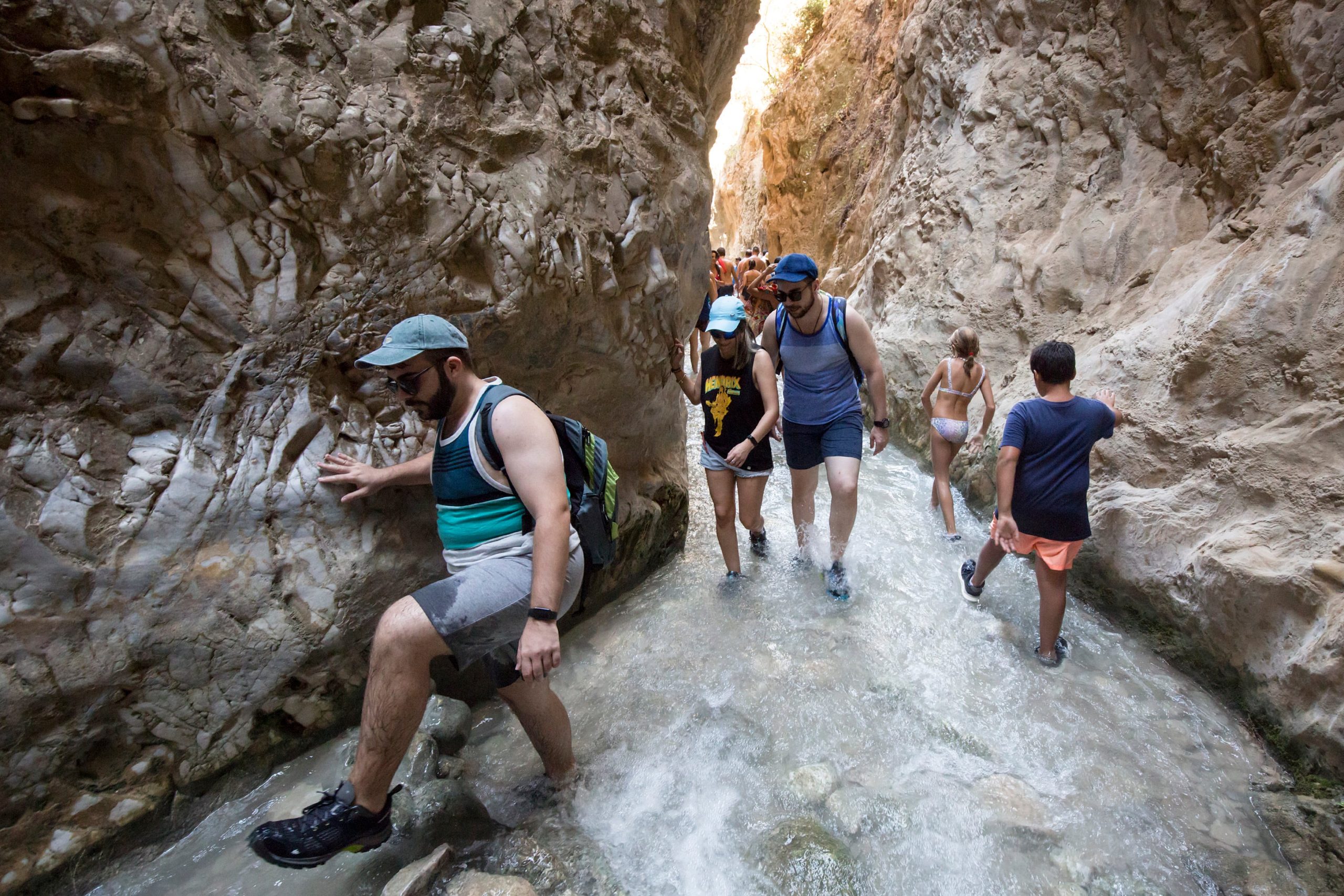
Refreshing, clear, clean water. Narrow gorges, waterfalls and pools amid dense vegetation. The Chíllar River, in Nerja (Málaga province, population 22,187), offers almost everything a summer visitor could want, including easy parking and little technical difficulty. That is why up to 3,000 people a day trampled through it. It became a fairground. For that reason Nerja Town Hall banned entry in August 2023 and, although visiting is still not permitted, the regional government of Andalusia is already planning to reopen it, with some limits. Two companies are bidding to manage the area amid widespread criticism over the major impact renewed human presence will have on biodiversity. “Tourist activity destroys its life,” sums up Rafael Yus, spokesperson for the NGO Ecologists in Action, who warns that the same risk threatens many other rivers across the region because of tourism pressure.

Today the area around the Chíllar is calm. The crowds are gone, but some people still access the route due to lack of awareness and scarce enforcement, which is shared between Nerja’s local police force and the handful of national park rangers — 18 officers for a protected area of 40,600 hectares. Beyond the ecological issues, the authorities decided to close access after warnings from the Environment Prosecutor’s Office and the Wildfire Prevention Plan, which flagged the risk to people in case of a fire. Among other issues, the only escape route would be via the river, making it impossible to know if someone had become trapped by the flames. Since then, the authorities’ idea has been to reduce river capacity through private management. Two companies, Travelnatura and Sando, have already put in bids and envisage a maximum of 500 visitors a day, although the regional government’s original proposal was almost half that: 300. The first bid offers tickets at €10 ($11.70) and the second at €4.90. Both promise constant channel maintenance and emergency protocols. During the last major cleanup, in 2017, 450 kilos of waste and thousands of pairs of shoes hanging from local wiring were removed.

The process to decide which company will get the contract is expected to be long, between one and two years. Those who know the area hope that time will be used to reconsider the project for a river designated a Fluvial Natural Reserve. “Trampling the riverbed and banks, because there is no other place to walk, kills everything. And nothing would happen if it stayed closed longer: since 2023 no one has protested,” says Yus, who stresses that Ecologists in Action has submitted objections to the reopening, arguing for protection based on the existing biodiversity sanctuary. “It is one of the few streams in the area that has water year-round and its ecosystem is very interesting. It should have the highest protection,” confirms Andrés Vicente Pérez Latorre, associate professor in the Department of Botany and Plant Physiology at the University of Málaga, who believes allowing 500 people a day “is destructive.” “Perhaps five visitors a day with naturalist roles, never tourists, should be allowed,” he recommends.

Baltasar Cabezudo is also a botanist who has worked across Andalusia. He knows the territory well and says the Chíllar’s surroundings are “singular.” He thinks the management options proposed are “a scam” with no purpose other than tourism exploitation. “There are about 50 species that are very fragile to trampling, pollution, and people’s urine, because it should be remembered that there are no toilets there,” he warns.

“There used to be herons in the upper course, lots of fish, crayfish, dragonflies… Now you put an underwater camera in and you don’t see larvae, you don’t see anything, it’s all dead,” says a source well-versed in the matter who prefers not to give their name for fear of reprisals. “They killed the Chíllar River and they won’t stop: the same will happen to many others that have become fashionable now,” they add.

From the Río Verde to the Cebollón

They are, indeed, not small in number. It is easy to find hundreds of Instagram posts about pools, ponds, and rivers set in postcard paradises across Andalusia. And behind those images come thousands of people, as happens at Río Verde, near Otívar (Granada), at the eastern end of the Sierras de Tejeda, Almijara and Alhama Natural Park. The huge number of visitors in recent years has forced the Andalusian government to limit access to 100 vehicles a day. Regulation is enforced by the Sociedad Cooperativa de Cázulas, owner of the land crossed by the track that leads to the riverbed. It charges €5 per person and €5 per car. In summer it fills almost daily on weekdays; on Saturdays and Sundays the limit is reached before 11.00 a.m. The route is usually taken along the river bank, but beyond the turquoise pools many visitors also walk inside the channel — like canyoning groups led by active tourism companies — affecting the ecosystem. Injuries are also common. Civil Guard figures for Granada this summer recorded the rescue of up to 12 people who could not continue the route due to injuries.
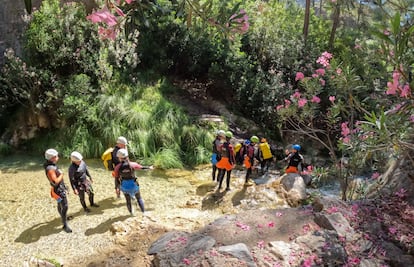
In the same province, the Dúrcal River is also suffering, as Ecologists in Action likewise denounced. “No natural area can withstand these mass visits for such a prolonged time,” the organization stressed in a strong statement then, which also pointed to species and habitat loss in the Castril and Lanjarón rivers in the Sierra Nevada. Further south, near Fornes, walking inside the channel of the Cebollón River is already prohibited, although the bank can be traversed and swimming is allowed at the dam waterfall, according to the Andalusian authority. There are also restrictions at others such as Río de la Miel, Majaceite and Bocaleones (all in Cádiz). At the latter, in the heart of the Sierra de Grazalema Natural Park, ecologists also lament more than 50 people a day — the quota imposed by the administration — and music, shouting, or dogs that turn the spot “into a theme park.” Despite all these complaints, there is no specific plan from the regional government for managing these rivers.

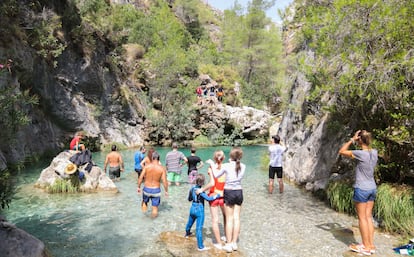
Back in Málaga, the situation is similar at rivers such as Patalamara (Cómpeta), Cástor and Padrón (Estepona), Higuerón (Frigiliana) or the pool at the Cueva del Gato (Benaoján), where families bring inflatable mattresses and leave lots of trash. Also the Genal, where dams are built without permits to create pools that affect wildlife. More serious is the situation of the Guadalmina (Benahavís), just a step from Marbella and saturated all summer. Further inland, in the Sierra de las Nieves National Park, the Turón River also offers a trail with several pools, which the regional government has banned vehicle access to, so now they can only be reached on foot. “It is a filter that has greatly improved the situation,” says Helios Muñoz, biologist and technician for the regional municipal association.
“No choice but to regulate”

Even so, the problems persist. “There are families with children who catch fish in containers, there are unleashed dogs, there are people who leave trash everywhere. When I go I am fighting with visitors all the time and, because of that, I’ve decided not to return until after the summer,” says Mariló Narváez, mayor of El Burgo (population 1,761). She also criticizes those who choose to walk in the channel itself, because of the damage it causes the ecosystem. “In the end we ask for nothing more than awareness. You can come for a swim, spend the day, but always respecting the surroundings,” she says, warning that more and more people are choosing to go upstream beyond the dams, something no one used to do. The practice puts the upper Turón at risk; it has been declared a Fluvial Natural Reserve due to limited human intervention, which favors the presence of endemic fish such as the Málaga chub, as well as crayfish and otters. A national park project has driven the installation of two cameras to monitor capacity, which may help improve management.
“There are many of us and Andalusia gets a lot of tourism. We all want to enjoy nature, which can absorb disturbances but also has its limits. There is no choice but to regulate; it is essential,” says Antonio Herrera, manager of environmental consultancy Mediodes and member of the board of the Nueva Cultura del Agua Foundation. “The effects on river ecosystems of so many people are enormous. From trash to sunscreens and many other pollutants. You just have to regulate and also raise awareness, educate, explain clearly why those measures are taken,” Herrera urges the administrations. He proposes initiatives such as prior — free — permits that the regional government requires for routes like the pinsapar in Grazalema or the Río Bailón trail, in the Sierras Subbéticas Natural Park, which serve precisely to control visitor numbers.

Sign up for our weekly newsletter to get more English-language news coverage from EL PAÍS USA Edition

Continue Reading

ElPais

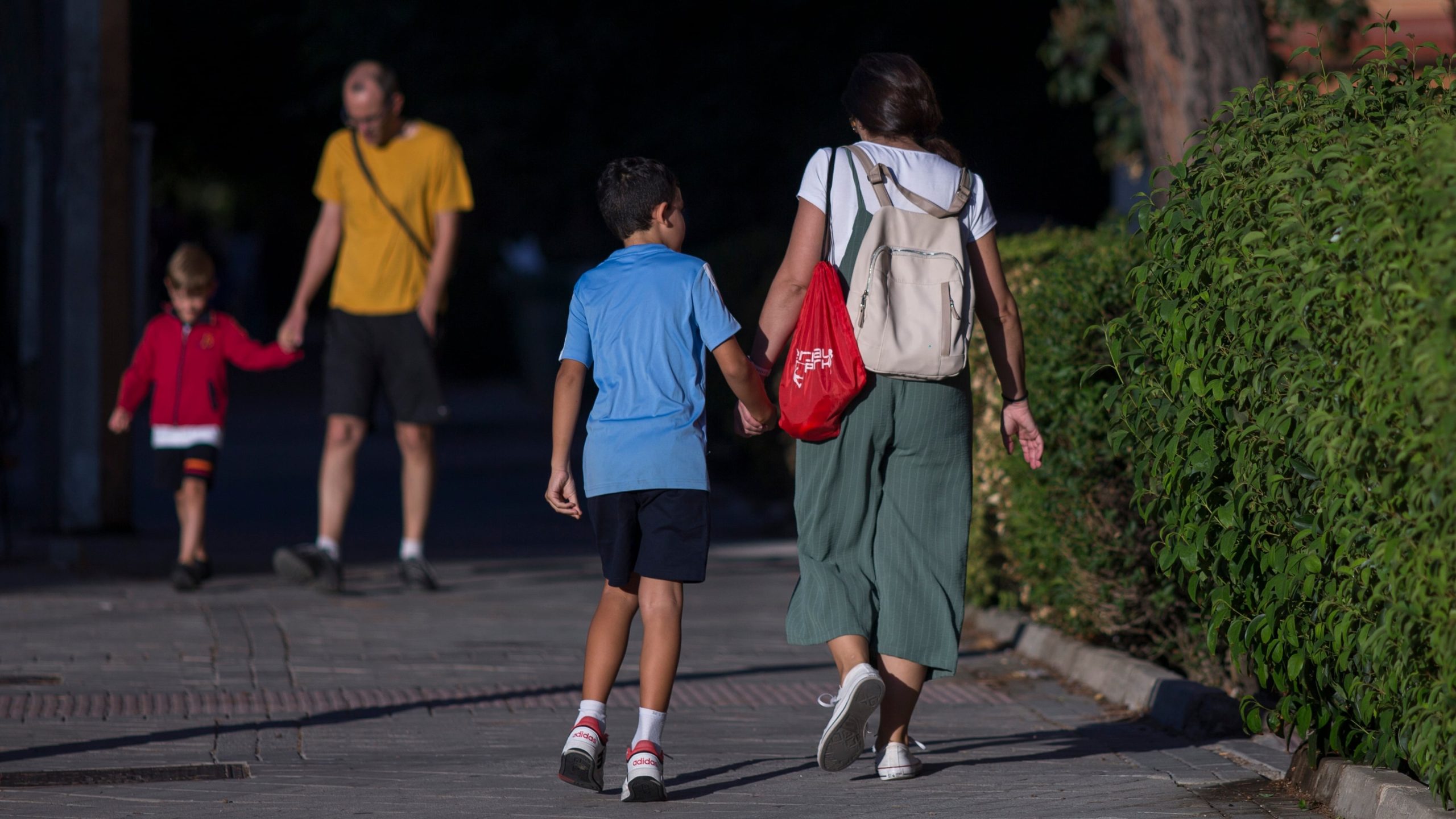
The Parenthood Paradox: Parents Are Less Joyful But Feel More Fulfilled

Published

on

the-parenthood-paradox:-parents-are-less-joyful-but-feel-more-fulfilled

When studied together, parenthood and happiness form two clearly distinct layers. In the foreground are sleepless nights and financial juggling. Endless negotiations and untimely crying. Pressing doubts and disappointments, real or imagined. The repeated, blunt collision with the reality of curtailed freedom.

At the same time, something solid tends to take root in the background: the conviction that being a father or mother holds a higher purpose that justifies its inconveniences. Maybe it is a sense of transcendence. Or the organic bond of parental love. Or a collapse of the ego, that terrible sense of importance we give ourselves.

Research over recent decades has confirmed what is called the parenthood paradox. It is a robust phenomenon that crosses ages and cultural contexts. With nuances, scientists ask the same question: are parents happier compared with people who don’t have children? The answer is: it depends. If happiness is understood as greater calm and less daily stress, children are clearly contraindicated. But if it is about establishing a lasting purpose that endures life’s ups and downs, having children does not seem like a bad idea.

New publications in recent months help map the inner workings of parental happiness. They aim to better understand why offspring so disrupt everyday well-being and, nonetheless, why it can be worth having them. On average, of course, with all the caveats one might want. From parents who remain zen in the face of a tantrum to others who feel unfulfilled simply for being parents.

A study using data from 10 countries, including Spain, draws on classical Greece and distinguishes between hedonic well-being (more positive than negative emotions) and eudaimonic well-being (something like virtuous flourishing). Parenthood, it concludes, slightly increases the latter — especially among women — and leaves the former almost unchanged (which partly contradicts the parenthood paradox). Its author, evolutionary psychology professor Menealaos Apostolou, explained by videoconference that a key factor in both is the relationship between the father and the mother. In other words, parents will feel better or worse depending on how they get along with each other (or with their partners, assuming they have them), and not so much because of parenting dynamics.

From the University of Berlin, Laura Buchinger emphasizes in another recent study what she calls fertility mismatch: having more children than one would have liked. Parents who planned (for example) to have a single child and, for various reasons, ended up with three. Those, Buchinger found, report lower levels of well-being. Among the rest (people without children and parents who hit their target), differences are not significant.

Incidentally, in 2019 Christoph Becker also looked at quantitative variables. But instead of how many, he focused on when parental joy usually crystallizes: when children leave home. Without the obligation to care for them and as parents age, the hope emerges that children will bring joy and lend a hand in hard times. With the kids emancipated, parents, to put it in utilitarian terms, enjoy the return on their investment.

The Scandinavian exception

Also from Germany, a study published last year corroborated the parenthood paradox “with an especially large sample [43,000 individuals from 30 European countries],” notes its lead author Ansgar Hudde. The phenomenon repeats itself everywhere with one exception: the Nordic countries, where parents are happier both day to day and in a more existential sense. For Hudde, the Scandinavian case has much to do with “public policies that smooth the path to parenthood: better work–life balance, working hours that end earlier, easier access to reduced schedules…” At the other end of the spectrum are mothers in vulnerable situations in eastern Europe. That is where motherhood most shatters peace of mind. “Economic conditions matter a lot, especially when, as is common in those countries, you are expected to work and also take care of the children and household chores.”

From the European Institute of Perinatal Mental Health, Ibone Olza argues that despite progress, in Spain “childcare still falls more heavily on mothers.” She agrees that having children “contains a very deep component of fulfillment,” while also “involving a lot of renunciation and considerable sacrifice,” especially in a society “that makes it very hard in terms of rhythms for happy parenting.” In her view, that parenting requires “presence at a slow pace.”

Olza also laments that “the idea of community as a support network” is disappearing, replaced today by “outsourcing: if you can afford it, you pay someone when you can’t be there.” She says another factor explaining the hardships of parenthood is the “absence of prior caregiving experiences, whether caring for an elderly person or tending a garden.” “Raising children is caring,” she continues, “and those earlier experiences helped us tolerate frustration better and be more flexible. Now it’s common to begin parenting without having ever cared for anyone and with very unrealistic expectations.”

Susana Gacituaga, who offers parent-focused therapy in her psychology practice, says some people come to her as preparation for a child’s birth. “I tell them to wait for the baby to arrive, since they themselves will change and what they do beforehand matters little.” Gacituaga says that when one becomes a parent, one “reconfigures priorities and new fears are activated.” In a way, another person is born from the birth of the child. “But society forces us to remain the same person, and that produces an internal clash.”

In Gacituaga’s clinic, couple conflicts often surface that stem from “opposed parenting models that in turn reflect different ways of understanding life and become evident when children arrive.” Complaints also abound about the small and big worries involved in caring for children. “I try to help them understand and discover that behind all this there is something that provides profound well-being.” Sometimes, she adds, integrating the parenthood paradox requires “deep work.” In that introspection surprising things may move. Things that can help us grow as parents, or simply as people.

Sign up for our weekly newsletter to get more English-language news coverage from EL PAÍS USA Edition

Continue Reading

Trending

Copyright © 2017 Spanish Property & News