Connect with us

Donald Trump

The Year In Which Leo XIV Became The Moral Antagonist Of The Far Right

Published

on

the-year-in-which-leo-xiv-became-the-moral-antagonist-of-the-far-right

A week before the conclave to elect a new pope that began on May 7, 2025, 120 major Catholic donors from the United States met at the luxurious St. Regis Hotel in the center of Rome, on the invitation of the Papal Foundation. This organization was created in 1988 by John Paul II, in line with Ronald Reagan during the Cold War and following the establishment of relations between the two countries in 1984. It was created to overcome the Vatican’s financial scandals and channel money to the Holy See from the U.S., the country that is the largest benefactor of the Catholic Church: it is estimated that this foundation has donated $250 million up to 2024. But that was until Francis’ pontificate: at that point, the flow dropped drastically, as Jorge Mario Bergoglio was seen by conservatives as a communist pope who hated the United States.

The Vatican coffers were facing an emergency (a $90 million operational deficit in 2023), and this matter was discussed at the meeting organized by the Papal Foundation’s president, Cardinal Timothy Dolan of New York, a friend of Trump’s and leader of the conservative faction in the conclave. Those present at the meeting were willing to reopen the flow of funds, “so long as we have the right pope,” one of the participants told The Times UK.

This decidedly unspiritual factor—money—played a significant role in the conclave’s election of the first American pope, according to several analysts. Among them is Massimo Franco of Corriere della Sera, who has dedicated a book to the subject, “Papi, dollari e guerre” (Popes, Dollars, and Wars). He believes it was one of the three major issues that determined the conclave’s outcome. Furthermore, he reveals that during the preliminary meetings, amidst a lengthy financial discussion to find the right candidate, the conservative German Cardinal Gerhard Müller grew weary and exclaimed: “We have to elect the successor of Peter, not of Judas!”

The other two priorities were to quell the divisions within a highly polarized Church, and to restore shared governance of the institution, without the excessive authority for which Francis was criticized. Franco also notes that the 10 U.S. cardinals, ideologically divided in two, met in the preceding days at the Pontifical North American College and agreed to support Prevost.

What remains unclear, a year after his election, is whether Leo XIV was ultimately the pope some had hoped for. Starting with Donald Trump, who on April 13th finally lashed out at him: “Leo should be thankful because, as everyone knows, he was a shocking surprise. He wasn’t on any list to be Pope, and was only put there by the Church because he was an American, and they thought that would be the best way to deal with President Donald J. Trump. If I wasn’t in the White House, Leo wouldn’t be in the Vatican.”

One of the first people to realize they’d been had was Steve Bannon, the ideologue of the MAGA movement, who had conspired to bring down Francis, as the Epstein papers revealed. Just days after his election, he labeled Prevost a pope of the “deep Church,” a euphemism for the “deep state,” which this movement considers the root of all evil. Prevost’s candidacy had been well-concealed, and the ultraconservative American world detected the danger too late. This led to accusations in the final days before the conclave that Prevost had covered up child abuse during his time as bishop in Chiclayo, Peru.

The speech to the diplomatic corps

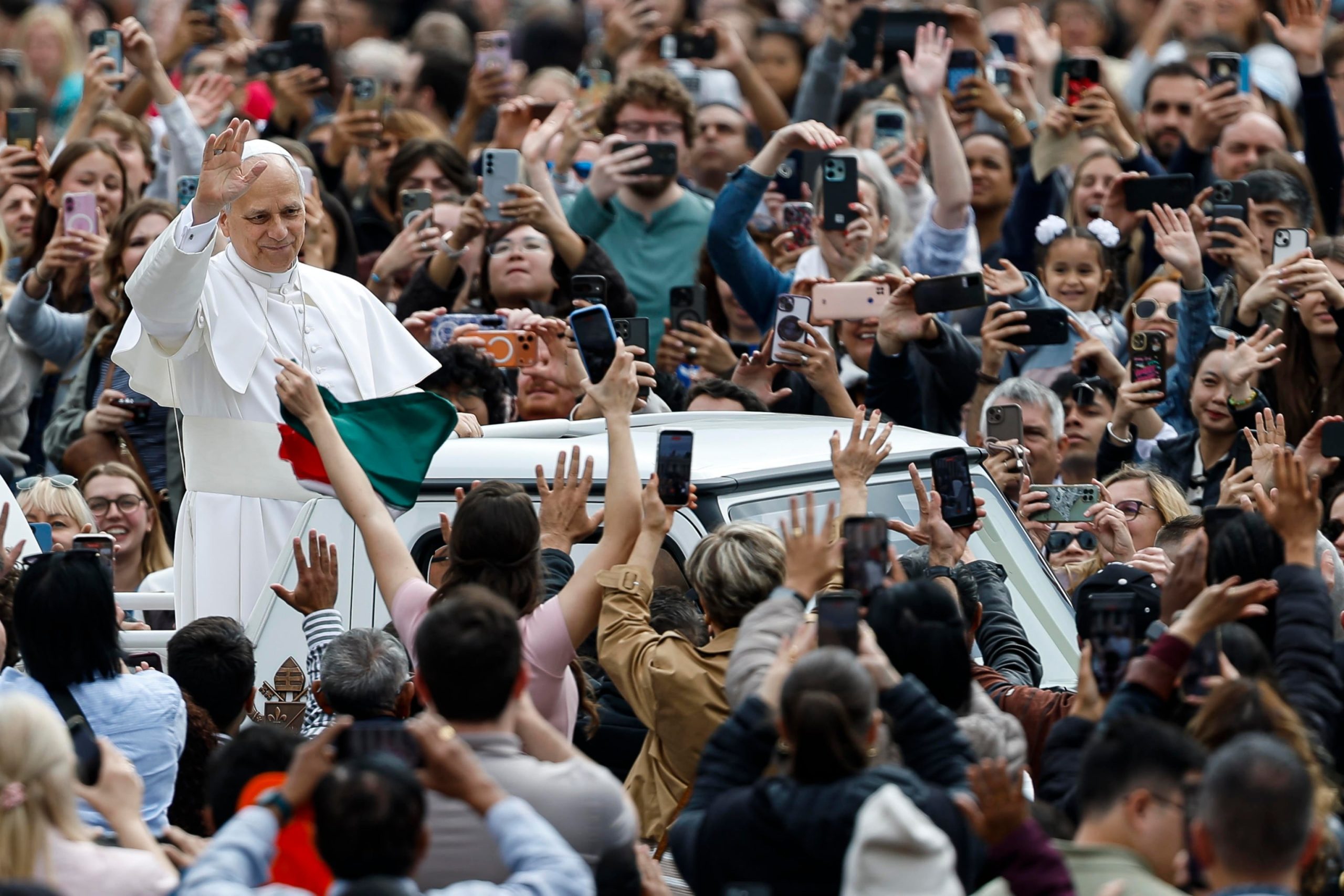
Leo XIV’s first priority was to heal wounds. He signaled a return to tradition in his vestments, protocol, and above all, by making it clear that he would return to the papal apartments. He also revived Vatican diplomacy, which under Francis had become more personal. Throughout 2025, he remained an enigma, learning the ropes and studying the situation. He also chose trusted aides to feel protected. But after moving cautiously for a few months, beginning with his address to the diplomatic corps accredited to the Holy See on January 9, 2026, he began to reveal himself as a strong global leader against far-right populism, starting with its main exponent, his fellow American Donald Trump. “It is clear that Trump then recognizes the danger posed by the Pope’s underlying ethical and political stance, which places him in an antagonistic position,” notes Vatican expert Marco Politi.

This is what the Pope said in that speech: “In our time, the weakness of multilateralism is a particular cause for concern at the international level. A diplomacy that promotes dialogue and seeks consensus among all parties is being replaced by a diplomacy based on force, by either individuals or groups of allies. War is back in vogue and a zeal for war is spreading. (…) Peace is sought through weapons as a condition for asserting one’s own dominion. This gravely threatens the rule of law, which is the foundation of all peaceful civil coexistence.” He continued along these lines until his clash with Trump.

The truth is that Prévost is the first pope with a truly international vision, having traveled the world and learned several languages ​​before his papacy. He is the first modern pope who has been a missionary. And he is certainly the first American pontiff, an antidote in these Trumpian times, just as John Paul II was an antidote against communism. Leo XIV is ”animated by a strong political passion (…), by the condemnation of the idolatry of force, and by an aversion to autocrats,” wrote Lucio Caracciolo, a geopolitical analyst, in La Repubblica. When, on April 7, Prévost condemned Trump’s threat to obliterate Iran overnight, he even called on Americans to take action by contacting their political leaders.

A year after his election, it’s clear that the decision to nominate Prevost was meticulously planned in the preceding months, skillfully and discreetly managed as a consensus option between progressives and conservatives, since no single group could muster enough votes to push a candidate through. “It’s obvious, because otherwise, such a swift election in such a polarized situation is inexplicable,” says Giovanni Maria Vian, a historian and former editor of L’Osservatore Romano. He also believes that the financial factor played a significant role, and that Prevost, as a mathematician and longtime head of the Augustinians, could be a capable manager. “The last pope who balanced the books was Pius XI; after him, they’ve all been a disaster,” he notes. “We are at the beginning of a pontificate that promises to be long, interesting, and decidedly reformist. More through actions than words, although the words are clear.”

The secrets of the conclave vote

In recent months, the secrets of the conclave have been gradually revealed. According to Vatican sources consulted by EL PAÍS, the candidacy of Pietro Parolin, Secretary of State under Francis, initially garnered less support than anticipated; the Hungarian Peter Erdo, candidate of the more traditional wing, reached 21 votes, but with no possibility of gaining further support; by contrast, Prevost burst onto the scene with a surprising number of votes, almost 50, which then attracted further support. He was backed by cardinals from the U.S., Latin America, Spain, and many Asian countries.

In reality, continuity won. Those who voted for Prevost—and Francis was the first to do so—were looking for someone who would follow in the last pope’s footsteps, but without his excesses. “From what I’ve gathered from many who voted for him, they’re happy,” says Elisabetta Piqué. “They’re seeing, for example, that he’s implementing synodality; he’ll convene them once a year. Francis started many processes, and now Leo XIV is continuing them and bringing them down to earth. Those who are unhappy are the group that wanted to reverse course.”

Now Prevost has reached cruising speed. David Gibson, dean of the Center on Religion and Culture at Fordham Catholic University in New York, floated an interesting idea in an article published in The New York Times in January: “Leo is not looking for a fight with Mr. Trump; he is looking past him.” In other words, he is defending basic pillars of coexistence so that they remain standing after the populist cyclone has passed: against nationalism and individualism, he proclaims universal values, the Christian message, human rights, and international norms.

Sign up for our weekly newsletter to get more English-language news coverage from EL PAÍS USA Edition

Ataque contra Irán

E

Published

on

e

Please enable JS and disable any ad blocker

Continue Reading

Bill Clinton

United States To Revoke Passports Of Parents With Child Support Debts

Published

on

united-states-to-revoke-passports-of-parents-with-child-support-debts

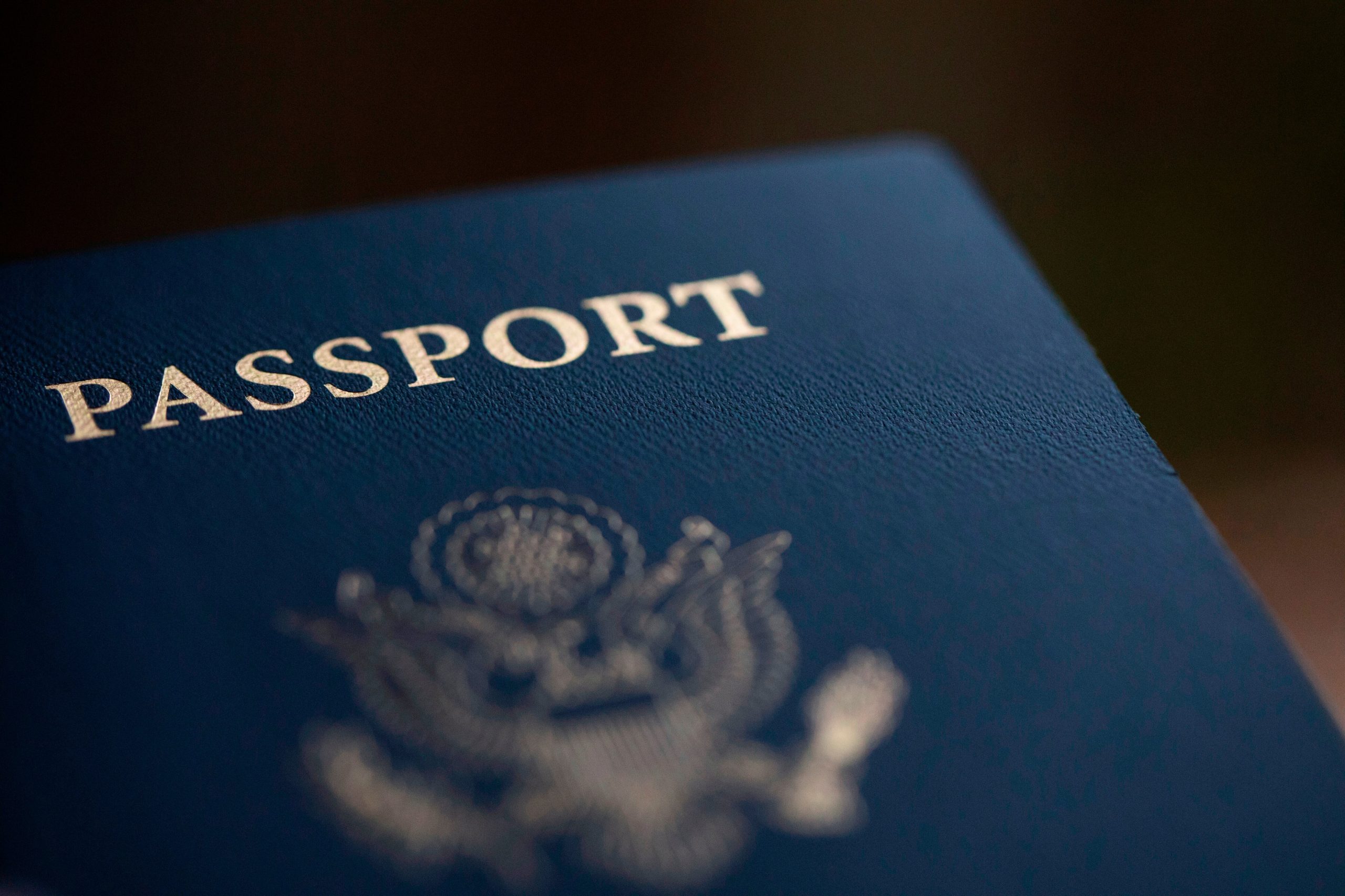
Parents who fail to pay child support will face significant penalties. The U.S. Department of State will begin revoking the passports of citizens with significant child support debts, as part of a policy the Trump administration introduced as an effort to strengthen enforcement of federal laws and compel those with overdue payments to catch up.

The measure will take effect on May 8 and, in the initial phase, will target individuals who owe $100,000 or more in overdue child support payments, according to information released by the Department of Health and Human Services (HHS). According to figures cited by the Associated Press, approximately 2,700 passport holders would initially fall into that category.

However, the federal government confirmed that the program will be expanded to include any citizen with debts exceeding $2,500, the threshold established by a federal law passed in 1996. Until now, that provision had been applied on a limited basis and primarily affected people attempting to apply for or renew a passport.

“Under President Trump, the Department of State is using commonsense tools to support American families and strengthen compliance with U.S. laws,” the State Department said in a statement released Thursday. The agency added that the policy aims to prevent those who owe significant amounts in child support from “neglecting their legal and moral obligations to their children.”

The legislation authorizing these sanctions was included in the Personal Responsibility and Work Opportunity Act, signed by then-president Bill Clinton in 1996. The law authorizes the secretary of state to “revoke, restrict, or limit a passport” for individuals identified by the federal government as delinquent in child support payments.

Although laws vary by state, deliberate nonpayment of child support can lead to criminal consequences in certain cases, along with sanctions such as wage garnishment, license suspension, or restrictions on obtaining a passport. In countries such as Spain and Colombia, repeated failure to pay child support can constitute a crime and result in criminal penalties, in addition to civil measures such as asset seizures.

In 2005, another law lowered the threshold for enforcement from $5,000 to $2,500. Despite this, the provision had rarely been used to revoke passports that had already been issued. Generally, the penalty consisted of blocking new applications or renewals.

Under the new system, the Department of Health and Human Services will notify the State Department of all individuals with arrears exceeding $2,500. Those who already have a passport could lose it even if they are not currently involved in any immigration or consular proceedings.

The government asserts that the program has already proven to be an effective tool for recovering overdue payments. According to data from the State Department, since the policy began to be implemented more systematically in 1998, states have recovered approximately $657 million in outstanding payments. More than $156 million has reportedly been collected over the past five years through more than 24,000 one-time payments.

Officials also noted that, since the AP reported in February on plans to expand the program, “hundreds of parents took action and settled their arrears with state authorities after it became known that the Department of State would begin proactively revoking passports.”

“While we can’t confirm the causation in all of those cases, we are taking this action precisely to impel these parents to do the right thing by their children and by U.S. law,” the State Department added.

The Trump administration urged anyone with child support debts to resolve their situation as soon as possible to avoid losing access to their passport. “Any American with significant child support debt should arrange payment to the relevant state or states now to prevent passport revocation,” the agency stated.

Once revoked, the document will no longer be valid for travel, and the affected individual will not be able to obtain a new one until the outstanding payment is made and the relevant state authorities confirm that there is no longer a debt on record with HHS.

The State Department also indicated that those who are outside the United States at the time of revocation must go to a U.S. embassy or consulate to request an emergency document that will allow them to return to the country.

So far, the agency has not specified how many people might be affected when the policy is expanded to the general threshold of $2,500, although officials acknowledged that the number could rise by several thousand.

Sign up for our weekly newsletter to get more English-language news coverage from EL PAÍS USA Edition
Continue Reading

Donald Trump

Trump Administration Begins Declassifying Documents On UFOs And ‘extraterrestrial Life’

Published

on

trump-administration-begins-declassifying-documents-on-ufos-and-‘extraterrestrial-life’

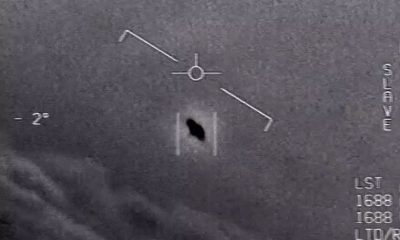
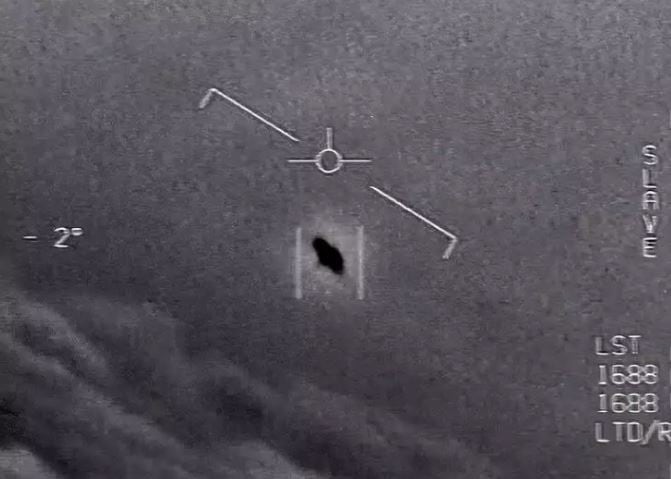
The Department of Defense began on Friday to comply with President Donald Trump’s order to release documents held by the U.S. government containing information on Unidentified Aerial Phenomena (UAP). This first declassification includes dozens of PDF documents and images — but no sensational revelations about the existence of extraterrestrial life. Authorities have uploaded these files to a department website, war.gov/ufo, a URL that uses the classic designation UFO (Unidentified Flying Object), which has been superseded in recent years in the fields of defense and science due to the popular connotations of the acronym. Materials will be uploaded on a weekly basis, authorities have promised.

Visitors to the website, designed with a retro-tech feel and white lettering on a black background, are greeted by a collection of photos, also in black and white. They are captioned with images such as “Infrared still image (Black Hot) captured of unidentified object(s) over western United States in September of 2025” or “Actual site photo with FBI rendered graphic overlay depicting corroborating eyewitness reports from September 2023.” Overlaid on the image is a drawing of “an apparent ellipsoid bronze metallic object materializing out of a bright light in the sky, 130-195 feet in length, and disappearing instantaneously.”

The first set contains images captured on film during the Apollo 7 (1969) and Apollo 17 (1972) space missions, photographs taken from the Moon on that last mission — never before seen — and the transcript of the communications between the pilots of that spacecraft.

In this document, one of the crew members describes to the command center “bright particles or fragments or something that go drifting by as we maneuver.” “There are a lot of large objects out in front of my window, down there; they’re just bright. From Ron [Evans]’s window, the sight looks like the Fourth of July,” reads the PDF, a very American reference to the fireworks that are a tradition on Independence Day.

New Year’s Eve 1999

There are also FBI photographs from New Year’s Eve 1999. In them, unidentified aircraft can be seen alongside U.S. military planes.

“While past administrations sought to discredit or dissuade the American people [from seeking proof of the existence of these phenomena], President Trump is focused on providing maximum transparency to the public, who can ultimately make up their own minds about the information contained in these files,” the Pentagon press release accompanying the disclosure states. “While all of the files have been reviewed for security purposes, many of the materials have not yet been analyzed for resolution of any anomalies.”

In February, days before launching the war against Iran alongside Israel, Trump announced in a message on his social media platform, Truth, his intention to release materials like those published this Friday. “Based on the tremendous interest shown, I will be directing the Secretary of War, and other relevant Departments and Agencies, to begin the process of identifying and releasing Government files related to alien and extraterrestrial life, unidentified aerial phenomena (UAP), and unidentified flying objects (UFOs), and any and all other information connected to these highly complex, but extremely interesting and important, matters” the Republican wrote on his social media account.

The declassification comes almost four months later. Trump has demonstrated in the past his penchant for smokescreens, and this latest move, at this point in his second term, has been met by his critics with suspicion that it is just another attempt to divert attention. It is unclear whether it will work this time: presidential approval ratings are at record lows, due to the war and the rise in gasoline prices.

The United States’ fascination with UFOs is nothing new; it dates back to 1947, the year a pilot named Kenneth Arnold described a string of nine bright, unidentified objects flying at tremendous speed over Mount Rainier, south of Seattle. His description introduced the expression “flying saucer” into popular speech.

Exactly 70 years later, the publication of a 2017 article in The New York Times brought the issue back into the public eye. The article revealed the existence of a confidential Pentagon program that, since 2007, had been studying UAP military sightings. As a result of that revelation, the Department of Defense decided in 2020 to release a series of videos from 2004 and 2015 depicting encounters between military pilots and unidentified flying objects, given that they were already circulating freely online.

Trump’s announcement and the recent resurgence of Washington’s interest in extraterrestrial life are also related to the release last November of a documentary titled The Age of Disclosure. It differs from other non-fiction films exploring ufology due to its generous budget, meticulous production values, and cast: rather than featuring fringe activists, the film includes testimonies from dozens of high-ranking officials, military officers, scientists, and influential politicians in Washington. “We are not alone,” they repeat time and again. Among them is Secretary of State Marco Rubio, who asserts that UAP sightings “are not science fiction.”

Sign up for our weekly newsletter to get more English-language news coverage from EL PAÍS USA Edition

Continue Reading

Trending

Copyright © 2017 Spanish Property & News