Connect with us

%

Three Irish Tourists Killed

Published

on

three-irish-tourists-killed

Three Irish tourists killed in devastating Málaga motorway crash

By Lottie Verrier • Published: 29 Jun 2026 • 9:53 • 1 minute read
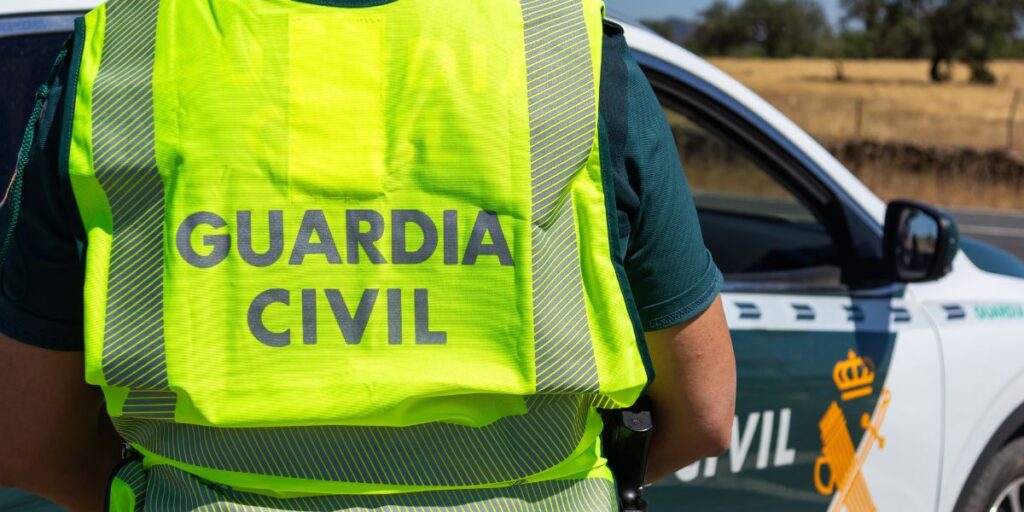
Three irish tourists killed and another injured

Three irish tourists killed and another injured Credit: Shutterstock/Ivanb.photo

Three Irish nationals have died and another person has been seriously injured following a devastating motorway crash on Spain’s Costa del Sol.

Google News

Follow Euro Weekly News on Google News

Get breaking news from Spain, travel updates, and expat stories directly on your Google News feed.

Follow on Google News

Sign up for personalised news

Subscribe to our Euro Weekly News alerts to get the latest stories into your inbox!

By signing up, you will create a Euro Weekly News account if you don’t already have one. Review our Privacy Policy for more information about our privacy practices.


%

The Kind Of Abuse No One Sees Is Now Being Treated As A Crime In The Netherlands

Published

on

the-kind-of-abuse-no-one-sees-is-now-being-treated-as-a-crime-in-the-netherlands

Psychological abuse is being treated as a pattern of behaviour rather than a single event. Photo credit: KieferPix/Shutterstock

For many people, the idea of abuse is still linked to something visible. A raised voice, a confrontation, or injuries that can be explained and seen. But for others, it looks very different. It can be quiet, gradual and almost impossible to describe from the outside. It might be a partner who wants to know where you are all the time. Who questions your friends. Who checks your phone. Who slowly starts to make decisions feel less like your own.

Nothing may ever look dramatic enough for anyone else to notice, but over time, life begins to feel smaller, more controlled, and harder to step away from. In the Netherlands, that kind of behaviour is now being brought into focus in a way it never has before. Psychological abuse and coercive control are moving towards being treated as crimes in their own right, even when no physical violence is involved.

When control replaces love

Psychological abuse rarely arrives as something obvious. It often begins with behaviour that is easy to dismiss at first. A partner becomes overly jealous. They want to know where you are all the time. They start questioning your friends, your family, your decisions. Slowly, the space you once had in your own life begins to shrink.

Over time, this can turn into something more suffocating. Access to money is restricted. Social contact is controlled. Movements are monitored. Small choices become something that needs approval. Many victims describe it not as one dramatic moment, but as a gradual loss of independence they only fully recognise once they are already deep inside it.

Because there are no visible injuries, it is often misunderstood from the outside. Friends may not see it. Even the person experiencing it may struggle to find the right words for what is happening.

Why invisible abuse is being taken more seriously

The shift taking place in the Netherlands is built around a simple idea: abuse should not only be recognised when it turns physical. Psychological abuse and coercive control are now being treated as patterns of behaviour that can trap victims long before violence escalates. That includes intimidation, isolation, constant surveillance, threats, humiliation and emotional manipulation.

One of the key reasons behind this approach is timing. In many domestic abuse cases, controlling behaviour has been identified as an early warning sign that situations can escalate into physical violence later on. Recognising those patterns earlier gives authorities a chance to intervene before harm becomes more serious.

It also reflects a growing understanding that many victims never report what they are going through because they cannot easily “prove” it in the traditional sense. Without visible injuries, the abuse can remain hidden for years.

How this compares with Spain

Spain already has some of Europe’s strongest domestic violence protections, with laws recognising both physical and psychological harm within relationships. However, psychological abuse is generally dealt with as part of other domestic violence offences rather than as a standalone crime focused specifically on coercive control patterns.

The discussion now emerging in Europe raises a broader question about whether more countries should explicitly define controlling behaviour itself as a separate offence, rather than relying on broader categories of domestic abuse once harm has already escalated. For victims, the distinction is important. It can affect how early intervention happens, how cases are investigated, and how patterns of behaviour are understood in court.

A change in how abuse is understood

Across Europe, there is a gradual shift in how people talk about domestic abuse. It is no longer seen only through the lens of physical violence, but increasingly as a spectrum of behaviours that can begin with control, isolation and psychological pressure. The impact on victims can be long-lasting, affecting confidence, independence and mental health even after a relationship has ended.

The Netherlands’ move has added momentum to that conversation, highlighting how different countries are starting to approach the issue in different ways. Whether Spain follows a similar path or not, the debate itself reflects a changing reality: abuse is not always visible, and it does not always arrive in the form people expect.

When harm is real even if it cannot be seen

For many who have experienced psychological abuse, the hardest part is not what happened during the relationship, but what comes after. Explaining something that left no physical trace can be difficult. Being believed can take time. And rebuilding independence often happens slowly, long after the control has ended.

That is why this change matters. It challenges the idea that harm must be visible to be real, and it places focus on patterns of behaviour that can quietly shape someone’s entire life. Even without bruises, broken bones or public scenes, the impact can be profound. And as more countries begin to recognise that reality, the definition of abuse itself is starting to change.

Continue Reading

%

Lorry Snags Power Cable On A-7 In Mijas

Published

on

lorry-snags-power-cable-on-a-7-in-mijas

A lorry became tangled in overhead power lines on the A-7 near Mijas on Tuesday, June 30 morning, leaving drivers exposed to live cables on the road and triggering tailbacks that disrupted residents and commuters for hours.

What happened on the A-7 near Calahonda

Emergency services received calls from members of the public at around 8.20am after a lorry struck overhead cables on the Marbella-bound carriageway near kilometre 1022, close to Calahonda. Officials believe the downed cable affected four vehicles in total, with drivers forced to stop suddenly close to a live wire on the carriageway.

Both the right-hand and left-hand lanes were shut at the scene, causing massive congestion stretching up to four kilometres back from the first Mijas junction. Commuters faced lengthy delays during the busy morning rush, unable to pass the danger zone safely.

Major risk to drivers and nearby residents

Live overhead cables falling onto a motorway carry an obvious electrocution risk to drivers and to anyone attempting to move stranded vehicles or assist others nearby. Residents in surrounding areas faced disruption too, with the closure cutting off a key route through Mijas during peak travel hours.

Guardia Civil officers, firefighters and Endesa technicians attended the scene to secure the area, given the danger of wires remaining energised after such a collision. Thankfully, despite the nature of the incident, no injuries have been reported among those involved.

Emergency response and clean-up

Endesa staff worked to assess and remove the damaged cabling with traffic officers managing stranded vehicles and rerouting drivers around the hazard. Authorities have not yet confirmed what caused the lorry to make contact with the lines, nor how long repairs to the damaged power infrastructure may take.

Separate lorry incident near Marbella

Elsewhere on the A-7, a lorry tyre blew out shortly before 7am near kilometre 1045, on the Cadiz-bound carriageway towards Marbella. Debris partially blocked the right-hand lane, producing a separate jam of roughly 1.5 kilometres during peak rush hour traffic, not a good morning for drivers across the Costa del Sol.

Continue Reading

%

Petrol Station In Spain Sparks Chaos After Wrong Fuel Is Mistakenly Dispensed For Hours

Published

on

petrol-station-in-spain-sparks-chaos-after-wrong-fuel-is-mistakenly-dispensed-for-hours

Fuel contamination incidents like this are rare. Photo credit: Dayow/Shutterstock

Imagine pulling into a petrol station to do something as simple as refuelling your car, then a few kilometres down the road, your engine check engine light turns on, followed by the engine failing in what was previously a perfectly functional vehicle. This is what has happened to dozens of drivers after visiting a petrol station in the Galician town of Ribadeo.

What should have been a routine stop turned into an extended fuel error that left vehicles being filled with the wrong fuel for several hours, with motorists unknowingly continuing their journeys until problems began to appear.

At a time when every litre matters and fuel prices remain a daily pressure across Spain, the incident has carried particular weight. For those affected, it is not just the mistake itself, but the disruption that followed and the frustration of something so routine turning into an avoidable problem.

A routine stop that turned into a hidden problem

The incident took place at the Repsol El Jardín station in Ribadeo, where a fuel delivery error during tanker unloading led to diesel contaminating the petrol 95 supply tanks. For over hours four hours, the pumps labelled as petrol were dispensing fuel that was not what drivers believed they were buying.

Because the issue originated in the underground storage system rather than at the pump itself, customers and employees had no way of knowing anything was wrong at the time of refuelling. Many simply carried on with their day as normal. It was only later, when engines began to behave differently, warning lights appeared or vehicles broke down, that the scale of the issue started to become clear.

Drivers now facing disruption at a difficult time

For those affected, the problem goes beyond inconvenience. Modern engines are sensitive to fuel contamination, and even a short drive with the wrong mixture can lead to mechanical issues that require draining systems, replacing filters or carrying out full diagnostics. That means the aftermath of a few minutes at the pump can turn into days without a car, unexpected garage bills, and disruption to work and family life.

Even though the station has confirmed it will cover repair costs linked to the incident, drivers are still left dealing with the immediate reality of being without transport and the uncertainty that comes with waiting for assessments and repairs. But for many compensation does not remove the stress of breakdowns, missed commitments or the time lost trying to resolve the situation.

What happens when diesel enters a petrol system

Fuel contamination incidents like this are rare, but when they occur, the impact on vehicles can vary significantly depending on how far the car was driven before the issue was discovered. In petrol engines, diesel can interfere with combustion, leading to poor performance, engine misfires or complete failure to start.

In some cases, the fuel system must be fully flushed before the vehicle can be safely used again. In other cases, the car needs to be completely scrapped. That uncertainty is part of what makes incidents like Ribadeo so disruptive. Some drivers may escape with minimal damage, while others face more extensive mechanical work, with no immediate way of knowing which category they fall into.

Rising fuel prices make the impact harder to absorb

The frustration among the motorists is being felt but for many other reasons. Fuel prices remain a constant concern for many households in Spain, and transport is one of the few unavoidable necessary expenses in daily life. When costs are already high, any additional burden, even temporary, feels heavier.

A routine refuel is supposed to be predictable, instead, some drivers in Ribadeo are now dealing with an unexpected chain of consequences that started with what should have been a normal stop. For many, it is not just about what went wrong, but how quickly everyday stability can be disrupted by a single operational failure.

Station response and investigation

The petrol station has acknowledged the incident and confirmed that it will take responsibility for the costs associated with repairs resulting from the error. Efforts are also underway to identify affected customers and manage claims, including reviewing transaction records and CCTV where necessary. The cause has been traced to a fuel delivery issue during tanker unloading, which led to diesel entering the petrol 95 storage system and affecting multiple pumps for a period of around four hours before being detected and resolved.

A quick stop for fuel turned into a situation that has left drivers dealing with inconvenience, financial uncertainty and disruption that no one plans for when they pull into a petrol station. As the investigation continues and repairs are handled, those affected are left with a simple reminder: even the most routine parts of daily life are only ever one mistake away from becoming something far more difficult to manage.

Continue Reading
Advertisement
Advertisement

Spanish Real Estate Agents

Tags

Trending

Copyright © 2017 Spanish Property & News