
bacteria
Toby Kiers, Biologist: ‘Fungi Can Teach Us To Make Decisions Differently’

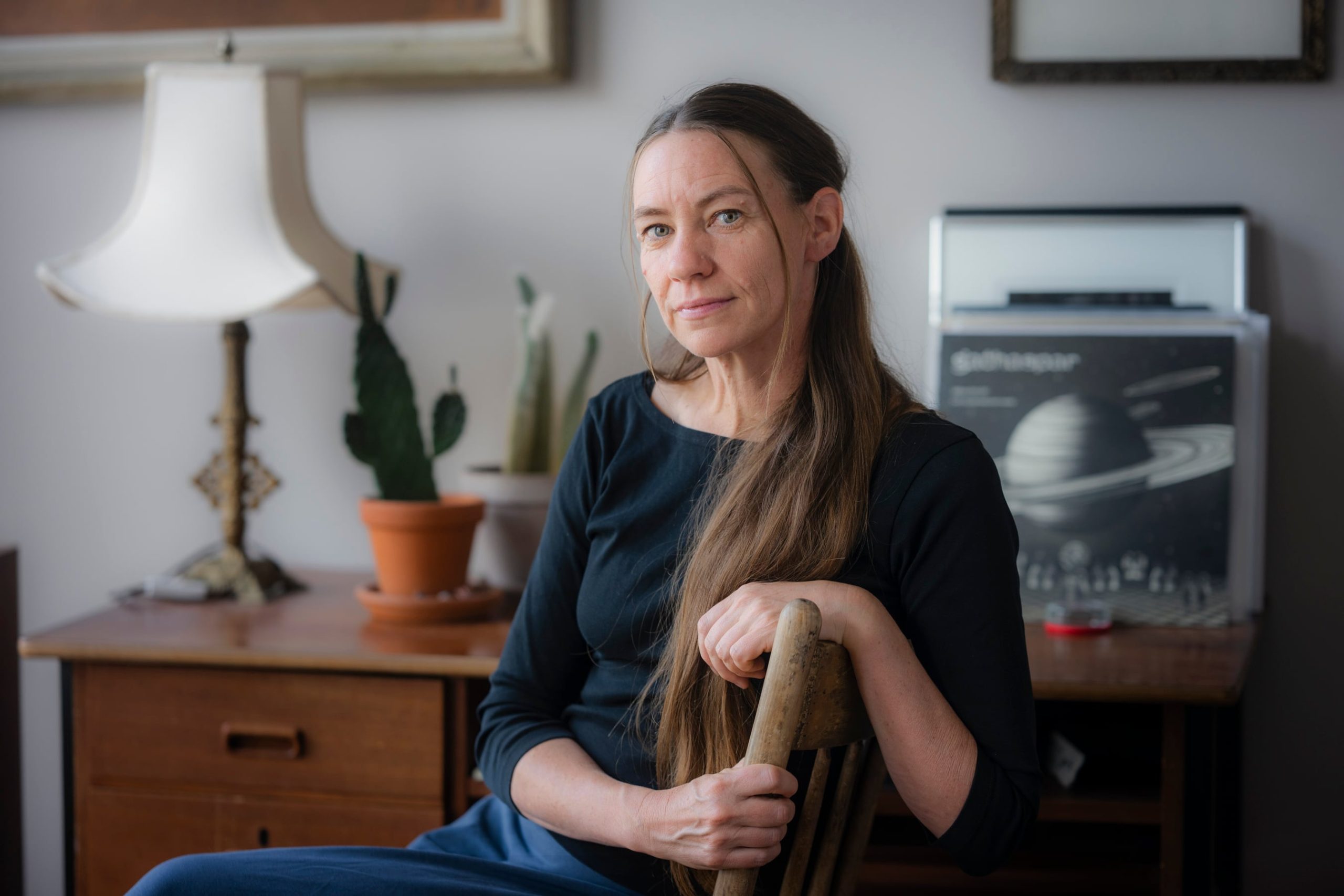
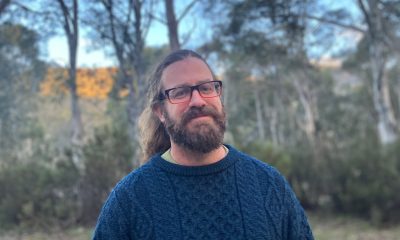
Born in New York but raised in a small town in Connecticut, in the northeastern United States, Toby Kiers, 50, spent her afternoons outdoors searching for morel mushrooms with her sister. That early passion led her to study field biology. It also explains why she soon grew tired of the laboratory and left the classroom behind to explore, firsthand, the underground world of Panama’s forests.
Three decades later, Kiers has become the youngest scientist ever to receive the 2026 Tyler Prize for Environmental Achievement, widely regarded as the Nobel Prize for the environment.
Her research on mycorrhizal fungi — which live in association with plant roots and exchange resources with them — investigates how an organism with no apparent brain can make decisions and process information. Her work is opening a new frontier of knowledge by studying, for the first time, how these fungal networks operate and the biological rules that govern them.
In the process, Kiers and her team have shown that these networks play a crucial role in the global carbon cycle. Today, her academic work goes hand in hand with a broader mission: securing the same international legal protections for fungi that already exist for animals and plants.
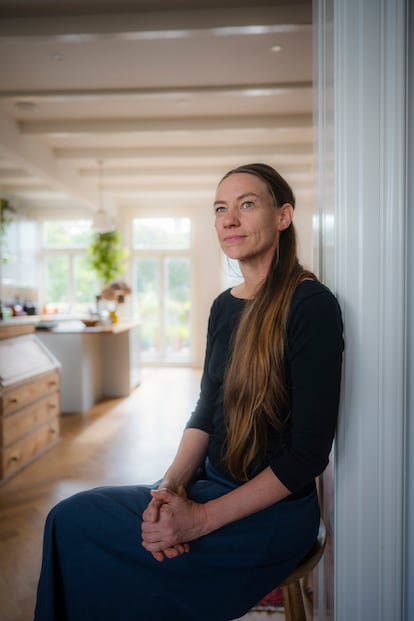
The biologist champions a creative approach to science that challenges the view of the world found in textbooks, and describes her own outlook as punk. She welcomes us into her home in Amsterdam’s central De Pijp neighborhood. A month ago, she returned from Vancouver Island, Canada, and in the coming months she will head to New Zealand and then Georgia to collect samples. Kiers is a professor of Ecology and Evolution at Vrije Universiteit Amsterdam, where she leads a research team, but she cannot imagine doing science without getting her hands dirty in the field.
Question. You dropped out of college at 19, although you later returned to your studies.
Answer. I was studying at a very small college in Maine, United States, and was eager to work in field biology, but classes frustrated me, so I dropped out. I didn’t have a defined plan, but I landed an internship at the Smithsonian Tropical Research Institute and moved to an island in the middle of the Panama Canal. There I was the youngest person and I had enormous enthusiasm and ambition. Most scientists studied what was happening aboveground — the primates, the birds, the plants — but I wanted to know whether that world had a reflection belowground. I remember standing beneath those huge tropical trees and wondering what they looked like under the soil. No one had really tried to understand the web that held those forests together. So I started a very simple project, and that is when I first saw these mycorrhizal fungi. I was fascinated. They were captivatingly beautiful.
Q. What has changed in the last 30 years?
A. Last week, I saw that an artist was exhibiting illustrations in the subway network inspired by the New York City map to depict the interactions between plants and fungi. We didn’t understand how important, diverse and densely interconnected these networks were. When I began studying them, we had just come out of an era in which they were considered pathogens that harmed plants. Now we understand they are part of one of the planet’s circulatory systems.
Q. Why have fungi been such a neglected area of scientific research?
A. It’s estimated there are between two and three million fungal species on Earth, and barely 1% have been identified. They’re hard to see and short-lived. Most people associate them with what they know—food, pathogens or psychedelics. People are unaware of the extent to which they support everything we see above the land surface.
Q. What role do fungal networks play in the functioning of the planet?
A. To start with, fungi are fundamental for moving carbon into the deep layers of soil. Ninety percent of all plant species on Earth form connections with mycorrhizal fungi. One of our studies showed that plants process and transfer 13 billion tons of CO₂ a year to fungal networks — roughly one-third of the emissions from fossil fuels. Moreover, once carbon reaches the network, fungi use it to build their own bodies and, in doing so, create a living physical structure that holds soil together. They are also essential for supplying the phosphorus that plant communities need to survive, and for providing water to plant communities in deserts and arid zones. Again, they act in ways that allow the roots of a plant community to access resources they could not reach on their own, and they do so because they receive carbon in return. Soil health and the resilience of the ecosystems above depend on these underground interactions. That is why we are so concerned about the loss of these networks.
Q. Are they at risk?
A. In general, fungi are very resilient. But they are constantly under pressure from forces such as urban development. If living soils are covered with concrete, the fungi die. That is why urban expansion and agricultural intensification are so damaging, especially through the use of fungicides, which by definition kill them. In Europe, for example, large amounts of fertilizers end up in rainwater and raise nitrogen levels. As a result, even forests that are not being logged or actively managed can receive so much nitrogen that fungal diversity declines simply because of what comes down in the rain.
Q. Your research challenges the traditional idea that nature is a realm of cooperation and coexistence.
A. I find the narrative that organisms either cooperate or break that pact and compete very frustrating. We need to move beyond that view. The reality is much more interesting and subtle. My work has focused precisely on studying how organisms exchange resources to understand these symbioses. At one moment, for example, when resources are abundant, an organism may receive more than it gives. But in another situation, when external resources are scarce, it may give far more than it receives. Everything is in constant flow.
Q. One of your studies found that fungi displayed a kind of generosity, moving phosphorus, an essential nutrient, from resource-rich areas to poorer ones, almost like a Robin Hood figure.
A. We were very surprised to observe that, but if we take a step further and ask why they do it from the fungus’s perspective, we find they received more carbon in the places with less phosphorus. So for them it’s a strategically advantageous exchange. I’m uncomfortable trying to fit these behaviors into an anthropocentric interpretation like Robin Hood. I think the most important thing about our work is trying to adopt the fungi’s own perspective. Much of the research so far has focused on what happens aboveground in ecosystems. We try to invert the approach and ask: why do fungi make these exchanges in different places and times? That is what makes this field so exciting — many questions remain because no one had framed them this way.
Q. How does an organism without a brain make decisions?
A. Fungi are constantly assessing their environment and growing their bodies in different ways. We can imagine them as a network of highways. Inside them, nutrients flow in both directions, like traffic. Fungi sense the environment with their entire bodies; that information is integrated somehow at their various growing tips and allows them to grow or stop growing, speed up or slow down growth, begin reproducing, fuse… These are behaviors we can now begin to track directly. Together with a team at the Netherlands Institute for the Physics of Living Matter (AMOLF) we are developing amazing imaging robots that let us follow the development of a fungus’s body and the decisions it makes over time.
Q. What has technology contributed to your research?
A. Before, we used to make predictions in a way; it was a sort of black box: we’d design an experiment, allocate the resources, and then see where they ended up. But now we can track the path of carbon in real time and see how these resources reach a fork and take the left path or the right, or split exactly in half. And we are watching it live, in real time. When I say we observe the inner life of fungi, I mean it literally. We are seeing how something that lacks a brain like ours makes decisions and processes information. That is why I feel we are at a true boundary of knowledge.
Q. Why is it important to know how a fungus makes decisions?
A. We have a very anthropocentric view when it comes to understanding how information is processed. Why do we assume the human way of deciding is the best? There are many ways of deciding, but we know very little about these decentralized systems. It’s worth understanding them because they have been shaped by natural selection and evolution over hundreds of millions of years, and they could potentially teach us alternative ways to make decisions.
Q. In 2021, you founded the Society for the Protection of Underground Networks (SPUN) to help secure, among other goals, international protections for underground fungi.
A. The question is how we can work with governments to protect underground ecosystems from the threats we have discussed. It’s about helping provide datasets so that, at local and international scales, governments can consider how to protect these underground communities that will be essential for the future restoration of ecosystems. There are fungi that have developed remarkable adaptations and can survive in the Gobi Desert in Mongolia, where some of the most extreme drought and temperature conditions — both cold and hot — on Earth are found.
Q. SPUN has created a kind of Google Maps for fungi.
A. The subterranean atlas allows us to identify fungal biodiversity hotspots underground. The goal was to ask: where is the Amazon of the underground world? Where are the mycorrhizal fungal communities with the greatest biodiversity on the planet? In some cases they were in surprising places, like the pampas region and certain areas of Brazil—places we hadn’t identified as critical for biodiversity protection. Ninety percent of the hotspot locations are outside currently protected areas. In other words, only 10% have protection.
Q. How did you map that biodiversity at a global scale?
A. It’s an intensive process. SPUN was founded on the idea of decentralized science, following the example of the fungi themselves. We award small grants to scientists worldwide who map the fungal communities in their territories, and those data are then incorporated into large global models that use machine learning. But we also map uncertainty. The farther we move from a place where an actual sample has been collected, the lower the certainty of our predictions. We want the data to be rigorous, so we clearly indicate where we have a high degree of confidence and where more data are needed. By identifying those areas, we try to find local scientists willing to map them. It’s an iterative process: everything adds up and, little by little, our view of the world changes.
Q. You have described your approach as “punk science.”
A. Science is, by nature, creative. It arises from asking hard questions, recognizing uncertainty and ensuring people are willing to question limits and go beyond them. It’s about breaking with the way of understanding the world you find in textbooks. Even giving resources to local scientists to study what they observe in their surroundings challenges the system. Science is usually organized top-down: someone sets what must be done and how, and others execute it. But we propose bringing together different communities, even those that have never participated in scientific research, and asking: what are you observing that is different? On the other hand, everyone wants science to be some kind of robotic, perfect work of art, you know? But it’s not like that. It’s a messy process, full of imperfections.
Q. When your children were young, you took them with you on field expeditions as a way of challenging academic conventions.
A. I tried again to challenge the system and the assumed way science should be done. Expeditions are generally led by men. My husband and I pushed back against that idea: we wanted to show that women could lead expeditions and that those women could be mothers. But the most important thing is that creative element. Behind a desk you can formulate all kinds of hypotheses about how the world works, but when you go into the field you see things differently. And children see them more differently than you do. Those different perspectives take you down unexpected paths. For my scientific work, it has always been an advantage, never an obstacle.
Q. What did you learn from them on those expeditions?
A. I started testing soils because my children ate dirt. I don’t recommend that to readers [laughs], but it’s really interesting; it’s about using all the senses. Humans are very focused on sight, but there are many other ways to interact with the environment. My children also asked questions like: ‘How do fungi sleep? Do they dream?’ Those are questions you could easily dismiss, but the issue of sleep and circadian rhythms is precisely what one of my doctoral students began working on. We can observe flow patterns within fungal networks and study whether they change following a day–night cycle.
Q. And now, do they share your fascination with fungi?
A. They are not as fascinated by fungi per se as by nature. My daughter wants to be a marine biologist and my son spends a lot of time hiking. Both have discovered a nonhuman world that interests them and in which they feel comfortable exploring. It’s mostly about opening the senses to all those interactions that are happening and that we can feel more part of if we simply slow down. Perhaps this generation is starting to rebel a bit against electronic devices; who knows what will happen with artificial intelligence. The expression “touch grass” has become fashionable, which I think captures something of their lives: physically touching grass in a way that changes how you see the world.
Sign up for our weekly newsletter to get more English-language news coverage from EL PAÍS USA Edition



Born In A Barn: Why The Olive Press Had To Exist

Blurred Hindsight: ‘Current’ Property Stats Only Depict A Picture Of The Past

Dils Lucas Fox 2027 Market Report: Slower Sales But Further Price Rises Expected In Spain


-

 New Developments3 weeks ago
Luxury Villas For Sale, Estepona – ProjectL1
-

 New Developments2 weeks ago
The San Roque Club – Townhouses For Sale
-

 New Developments4 weeks ago
How To Get A Tourist Rental Licence In Andalusia (Spain) – Step-By-Step Guide 2025
-
Age Concern Marbella - San Pedro4 weeks ago
Halloween lunch sells out as 51 join Marbella get-together
-

 %4 weeks ago
Spain Orders Replacement Of Eight Million Gas Meters: New Rules, Costs And Deadlines
-
countryside3 weeks ago
Rural revival: Five Almeria villages make moving inland easier and more enticing
-
Costa del Sol4 weeks ago
Where are they? Expat questions local police presence
-
costa blanca live music3 weeks ago
Beatles tribute: The Liverpool Band returns to Orihuela Costa