Connect with us

Donald Trump

Trump Proposes Suspending The Gasoline Tax To Avoid A Political Crisis Over Fuel Prices

Published

on

trump-proposes-suspending-the-gasoline-tax-to-avoid-a-political-crisis-over-fuel-prices

Gasoline has become Donald Trump’s Achilles’ heel. Fuel prices are a matter of national concern in a country where citizens often commute long distances to work and where cars, with their larger engines, tend to consume more fuel than elsewhere. The war in Iran has driven up oil prices, and the tension in the energy markets has spilled over to the pumps, where gasoline has become more than 50% more expensive since the start of the conflict. Against this backdrop, the U.S. president announced this week that he will propose temporarily suspending the federal gasoline tax. The measure has been described by members of the Democratic opposition as a publicity stunt to divert attention from the rising cost of living for Americans. Other legislators from both parties support the proposal to ease the financial burden on citizens.

Trump’s idea gained traction on Monday in an interview with CBS News, where he floated the idea of ​​suspending the federal gasoline tax. “I think it’s a great idea,” he said. “Yup, we’re going to take off the gas tax for a period of time, and when gas goes down, we’ll let it phase back in.”

The president is suffering a serious setback in the polls due to the fallout from the Iran war. His approval rating is at its lowest point of his two terms, below 40%, according to surveys conducted by various media outlets, with just six months to go before the midterm elections, where his political future hinges on the outcome.

That’s why Trump later insisted on this idea to reporters covering the White House, though he neglected to mention that he needs congressional approval for such a significant measure. Capitol Hill doesn’t seem to favor these kinds of initiatives, given historical precedent. Democratic President Joe Biden already tried, unsuccessfully, to suspend the federal gas tax for three months in the summer of 2022, when gasoline prices were above five dollars a gallon at the start of the war in Ukraine. The only time the United States reduced the tax was in 1934, when Congress cut it by half a cent at the end of Prohibition, as The Washington Post points out.

And even if Trump were to manage the feat of convincing Congress to suspend the gas tax, the effect on consumers would be minimal.

Little room for families

Fuel prices are primarily determined by the cost of oil, which is set in international markets. According to the U.S. Energy Information Administration (EIA), crude oil accounts for 51% of the total price of gasoline. Refining costs make up about one-fifth of the final price; marketing, distribution, and advertising costs account for approximately 11%. And taxes, both federal and state taxes account for 18%.

The federal tax is 18.3 cents per gallon for gasoline and 28.3 cents per gallon for diesel. The EIA explains that there is also a 0.1 cent per gallon state tax on both fuels.

The problem with suspending these taxes is that their revenue is tied to a fund for road maintenance, the Highway Trust Fund. A calculation by the Bipartisan Policy Center, an influential think tank, concludes that a five-month suspension of federal taxes would reduce revenue by $17 billion, representing a 46% drop in the Trust’s annual budget. The cut could therefore further increase the public deficit, affect investment, and worsen the already deteriorating state of the highway network.

Counterproductive decision

Furthermore, some economists warn that Trump’s proposed tax cuts would not achieve their objective because gasoline prices are also determined by many retailers who, during inflationary periods like the current one, avoid passing on savings to consumers in an attempt to offset losses from decreased demand, according to a report from the Wharton School. They also explain that suspending the tax rates would incentivize Americans to drive more in the lead-up to the summer vacation season, when many take road trips. This would increase demand in the face of a supply shortage, which, in turn, would drive prices upward.

The truth is that the conflict in the Middle East is becoming a major headache for Trump. When he ordered the bombing of Tehran on February 28, he expected the military operation to last only four or five weeks, but two and a half months later the war seems to be at a standstill with no end in sight. The president has acknowledged that the truce between the United States and Iran is “on life support” after the failure of peace talks.

The consequence is a surge in oil prices, which have been under extreme pressure since the start of the attack by Washington and Tel Aviv on Iran. The Islamic Revolutionary Guard Corps (IRGC) blocked the Strait of Hormuz, a strategic waterway through which a fifth of the world’s oil and liquefied natural gas passes. It is also a critical route for raw materials essential to the pharmaceutical and food industries, particularly for fertilizers. In retaliation, the United States imposed a blockade on Iranian ports, further exacerbating the situation in global energy markets. Oil has risen from below $70 per barrel to nearly $110.

And the energy spiral is impacting the pumps. Gasoline, the most popular fuel in the United States, has gone from selling for an average of just under $3 per gallon (the equivalent of 3.78 liters) to more than $4.5, representing a 55% increase. It’s the steepest rise in fuel prices in 30 years. Diesel is also skyrocketing. It’s approaching the all-time high set in the summer of 2022, during the height of the Russian invasion of Ukraine, when it reached $5.8 per gallon. Since the outbreak of the war, diesel has become 50% more expensive, putting a dent in the pockets of truckers.

Some states are already easing restrictions

Some states, such as Georgia, Utah, Kentucky and Indiana, have already suspended or reduced their gasoline taxes.

Although a majority in Congress appears to reject the idea, lawmakers from both parties have backed Trump’s proposal, and the president’s influence among Republicans, who control both houses, should not be underestimated. Republican Senator Josh Hawley of Missouri was quick to announce that he will introduce a bill to suspend the federal gas tax. His fellow Republican, Representative Anna Paulina Luna of Florida, is also preparing to introduce legislation in the House of Representatives to advance the president’s plan.

Senate Majority Leader John Thune, who had previously expressed reluctance, has opened the door to considering it. Meanwhile, Democratic senators such as Richard Blumenthal and Mark Kelly have emerged as strong advocates for the initiative to provide relief to families.

Sign up for our weekly newsletter to get more English-language news coverage from EL PAÍS USA Edition

Continue Reading
Click to comment

Leave a Reply

Your email address will not be published.

America

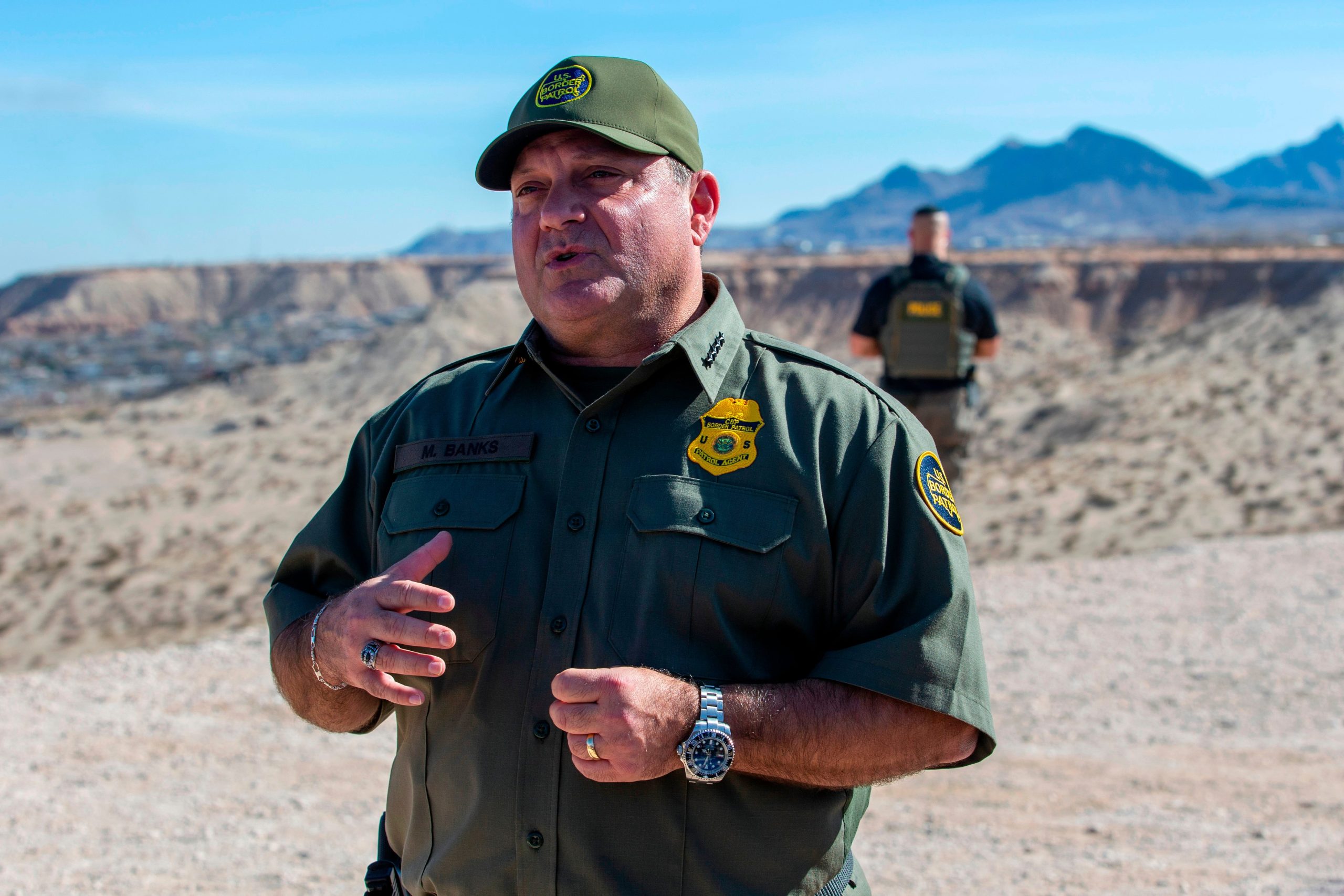
Renuncia El Jefe De La Patrulla Fronteriza De Estados Unidos, Michael Banks

Published

on

renuncia-el-jefe-de-la-patrulla-fronteriza-de-estados-unidos,-michael-banks

El jefe de la Patrulla Fronteriza de Estados Unidos, Michael Banks, presentó este jueves su renuncia, efectiva de inmediato. “Simplemente ha llegado el momento”, dijo el funcionario a la cadena Fox News. La marcha de Banks se produce en un momento en el que el Departamento de Seguridad Nacional pretende cambiar la imagen de las agencias migratorias encargadas de implementar la política del presidente Donald Trump.

El nuevo secretario de Seguridad Nacional, Markwayne Mullin, llegó al cargo a finales de marzo con la intención de rebajar el desprestigio del Servicio de Inmigración y Control de Aduanas (ICE, por las siglas en inglés) y la Patrulla Fronteriza tras el año de Kristi Noem al frente del departamento. Mullin ha disminuido las operaciones más dramáticas que caracterizaron el mandato de Noem y que fueron ampliamente criticadas por la ciudadanía, pero mantiene el objetivo de deportaciones masivas de Trump.

“Siento que he vuelto a poner el barco en el rumbo correcto: de ser la frontera más insegura, desastrosa y caótica, a ser la frontera más segura que este país haya visto jamás”, afirmó Banks a la cadena Fox. “Es hora de ceder las riendas; 37 años… Es hora de disfrutar de la familia y de la vida”.

Antes de que Trump lo pusiera al frente de la Patrulla Fronteriza, Banks ocupó el puesto de zar de la frontera en Texas bajo el mandato del gobernador Greg Abbott. Su nombramiento generó interrogantes debido a su falta de experiencia ejecutiva de alto nivel, pero había destacado por su liderazgo en la Operación Lone Star (Estrella Solitaria) de Texas, una iniciativa de seguridad fronteriza en el Estado.

Bajo la dirección de Banks, la Patrulla Fronteriza ha cambiado de funciones como parte de la ofensiva contra los migrantes emprendida por la Administración Trump. Nada más regresar a la Casa Blanca, en enero de 2025, una de las primeras medidas que adoptó el republicano fue cerrar la frontera sur con México. Las entradas de migrantes se redujeron drásticamente, lo que disminuyó la labor de los agentes fronterizos. En cambio, los funcionarios del ICE no daban abasto para cumplir con los objetivos de detenciones y deportaciones de Trump. La Patrulla Fronteriza pasó entonces a participar en las operaciones en el interior del país.

La agresividad de los agentes fronterizos, menos entrenados para la tarea, superó a la utilizada por los propios funcionarios del ICE. Las actuaciones más alarmantes ocurrieron durante la Operación Metro Surge, en Minneapolis en enero, que estuvieron dirigidas por el controvertido Gregory Bovino. Banks vio su autoridad diezmada porque Bovino respondía directamente a la entonces secretaria Noem, saltando a su superior de la agencia. Animados por Bovino, los agentes de la Patrulla Fronteriza utilizaron gases lacrimógenos y bolas de pimienta contra los manifestantes que protestaban por sus métodos.

El caso más grave fue la muerte a tiros del ciudadano Alex Pretti a manos de agentes de la Patrulla Fronteriza durante una de las manifestaciones. Su fallecimiento, después de que también en Minneapolis la ciudadana estadounidense Renée Good muriera por disparos lanzados por agentes del ICE, llevó la indignación de la población a su punto álgido, lo que propició que Bovino fuera relegado.

La renuncia de Banks se produce semanas después de que The Washington Examiner publicara un artículo en el que varios compañeros del alto funcionario declararon que Banks realizaba viajes a Colombia y Tailandia con regularidad para ir con prostitutas, de lo que se jactaba. Según el medio, la Oficina de Aduanas y Protección Fronteriza investigó la conducta poco ética de Banks y cerró el caso años atrás.

Continue Reading

America

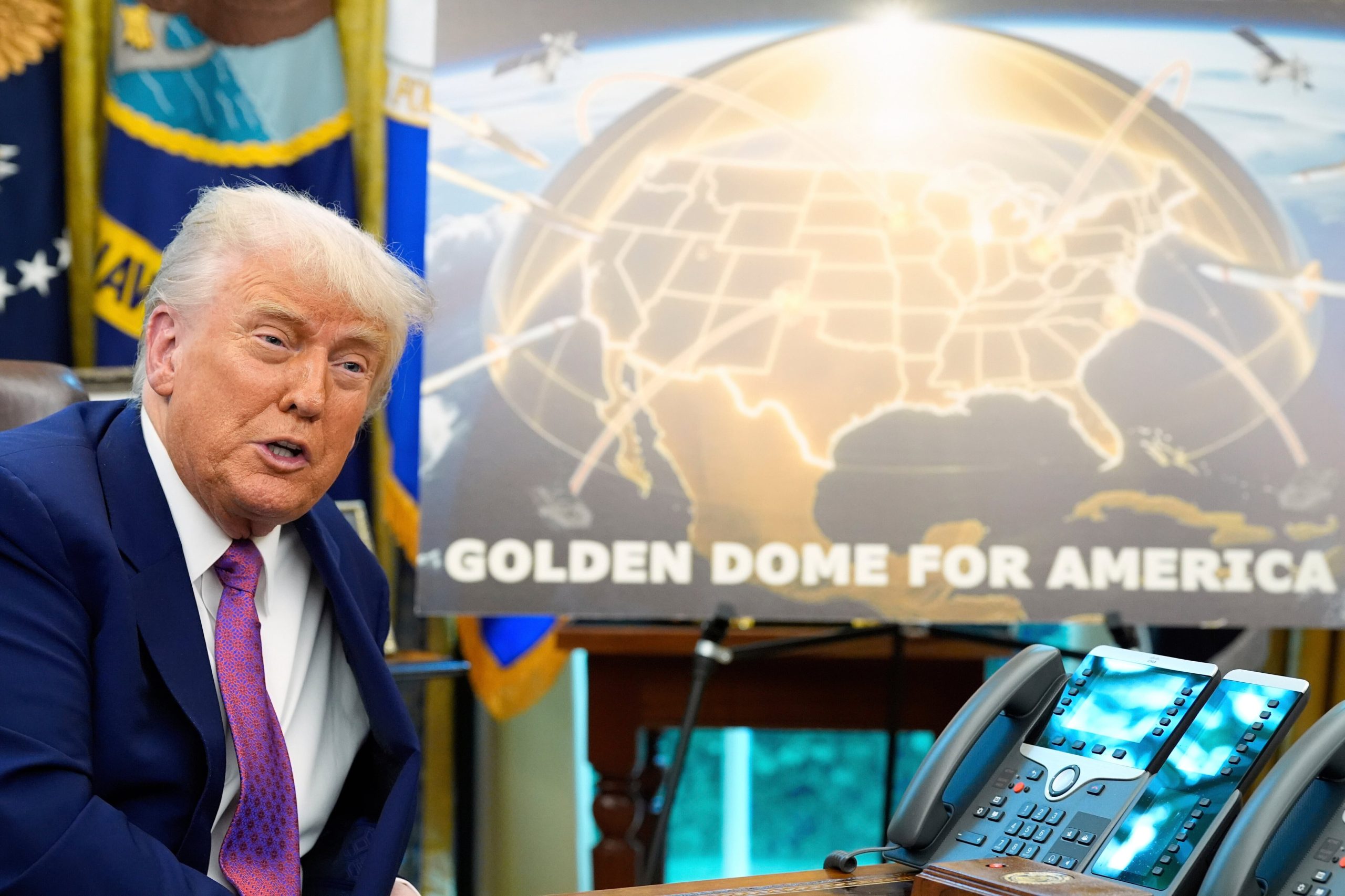
The ‘Golden Dome’: What We Know About Trump’s Trillion-Dollar Defense Project

Published

on

the-‘golden-dome’:-what-we-know-about-trump’s-trillion-dollar-defense-project

The idea sounds like something out of a science fiction movie: thousands of satellites orbiting Earth, space-based sensors tracking missiles in real time, and weapons capable of destroying threats just seconds after launch. But behind the spectacular “Golden Dome” project promoted by President Donald Trump are serious doubts about its feasibility.

A new analysis by the Congressional Budget Office (CBO) has estimated that the system could cost up to $1.2 trillion over two decades — a figure nearly seven times higher than the $175 billion Trump initially promised. And even with that monumental expense, experts warn that the shield might not stop a massive attack from Russia or China.

The actual cost

Trump presented the “Golden Dome” as a revolutionary defense system capable of protecting the United States from advanced aerial threats, including ballistic, hypersonic, and cruise missiles. The project was launched via an executive order signed during the first week of his second term.

At the time, the president assured that the system would be fully operational before the end of his term in January 2029. He also stated that the total cost would be around $175 billion.

However, the new CBO report paints a much more costly picture of the project. The nonpartisan agency estimated that developing, deploying, and operating the system over 20 years could drive costs up to $1.2 trillion. Acquisition costs alone would exceed $1 trillion.

The CBO itself clarified that the estimate does not represent a definitive government design, as the Pentagon has not yet detailed exactly how the system will function or how many components it will include. The report notes that this is “one illustrative approach rather than an estimate of a specific Administration proposal.”

A space shield inspired by Israel

The “Golden Dome” concept is partly inspired by Israel’s “Iron Dome,” the well-known multi-layered system that intercepts rockets and short-range missiles launched from Gaza, Lebanon, or Iran.

However, while Israel protects a relatively small territory against regional threats, Trump’s project aims to cover the entire continental United States, as well as Alaska and Hawaii, against far more sophisticated weapons.

The proposed architecture includes ground-based and space-based capabilities to detect, track, and intercept missiles at various stages of flight. A significant portion of the cost would come precisely from that space-based component.

According to the CBO, about 70% of the acquisition cost would go toward space-based interceptors and a constellation of approximately 7,800 satellites. An orbital system needed to destroy just ten incoming ballistic missiles alone would cost nearly $720 billion.

Trump justified the plan by arguing that strategic threats have evolved dangerously over the past few decades. In his executive order, he stated: “Over the past 40 years, rather than lessening, the threat from next-generation strategic weapons has become more intense and complex.”

Doubts about its effectiveness

Beyond the cost, the report also raised doubts about the system’s true capabilities. The CBO concluded that the “Golden Dome” could effectively respond to a limited attack by countries with lesser capabilities, such as North Korea. But the picture changes when facing military powers comparable to the United States.

The analysis warns that the system “could be overwhelmed by a full-scale attack mounted by a peer or near-peer adversary,” referring to countries such as Russia or China. In other words, even with a multibillion-dollar investment, the shield could become overwhelmed by a massive missile launch.

That possibility fuels the skepticism that already existed among military experts and lawmakers regarding the technical feasibility of the project. Several officials have warned that current U.S. missile defense systems have failed to keep pace with new technologies developed by potential adversaries, especially in the field of hypersonic missiles.

There are also doubts about the timeline. Trump said he wanted to see the system operational before the end of his term, but experts consider it extremely difficult to build an infrastructure of that magnitude in less than four years.

The political debate and multimillion-dollar contracts

Despite criticism, the government has already begun allocating resources to the project. Congress previously approved approximately $24 billion for initiatives related to the “Golden Dome,” while the Pentagon requested an additional $17 billion in future budget allocations.

In addition, companies in the defense and aerospace sectors have already secured major contracts. SpaceX and Lockheed Martin received contracts worth up to $3.2 billion to develop prototypes of space interceptors.

General Michael Guetlein, the project’s director, recently defended the initiative before lawmakers and dismissed the most alarmist estimates. As he explained, many external estimates simply take the cost of previous systems and multiply it. “That is not what Golden Dome is doing,” the general stated. “We are laser-focused on affordability.”

However, even he acknowledged that the space component poses enormous financial risks. During a hearing last month, he warned that if the space interceptors cannot be produced at a reasonable cost, they will not go into production.

Meanwhile, Democratic critics argue that the program could turn into a massive windfall for military contractors. Senator Jeff Merkley, who requested the CBO report, called the bill “nothing more than a massive giveaway to defense contractors paid for entirely by working Americans.”

Sign up for our weekly newsletter to get more English-language news coverage from EL PAÍS USA Edition
Continue Reading

Alexandria Ocasio-Cortez

US Lawmakers Demand The Pentagon Suspend Its Alleged Anti-Drug Operations In Ecuador

Published

on

us-lawmakers-demand-the-pentagon-suspend-its-alleged-anti-drug-operations-in-ecuador

A group of U.S. lawmakers has called on the Pentagon to immediately suspend joint military operations with Ecuadorian forces in the north of the country, targeting drug trafficking “terrorist organizations” active in the area. In a letter sent to Defense Secretary Pete Hegseth and seen by EL PAÍS, the legislators demand that the mission be halted pending an investigation into the incidents and ask for clarification of the legal basis for U.S. involvement, which has not been authorized by Congress.

The letter, spearheaded by Democratic representatives Chuy García, Greg Casar, and Sara Jacobs, is signed by around 20 lawmakers, mostly from the party’s progressive wing, including Alexandria Ocasio-Cortez and Ro Khanna. It is also backed by human rights organisations such as Amnesty International USA, the Centre for Economic and Policy Research (CEPR), and the Washington Office on Latin America (WOLA). It was made public at the start of a two-day visit to Washington by Ecuadorian President Daniel Noboa, who is due to meet Vice President J. D. Vance and OAS Secretary General Albert Ramdin, among others.

“We are deeply concerned by reports of serious human rights violations and the bombing of what appear to have been civilian facilities during joint U.S.-Ecuador military operations conducted in northern Ecuador in early March,” reads the letter, which gives the Pentagon 10 days, until May 22, to respond.

The lawmakers refer to a joint operation announced by U.S. Southern Command (SouthCom), which oversees U.S. forces in Latin America, on March 3 against “designated terrorist organizations in Ecuador.” Six days later, U.S. President Donald Trump informed Congress that U.S. forces had taken part on March 6 in military actions against “the facilities of narco-terrorists affiliated with a designated terrorist organization.” The administration has provided no further details, meaning that “the scope of U.S. military involvement in Ecuador remains unclear, both to Congress and the American public,” the lawmakers warn.

They also cite statements from senior Pentagon officials pointing to a more extensive U.S. role in the operation. Acting Assistant Secretary of Defense for Western Hemisphere Affairs Joseph Humire told the House Armed Services Committee that on March 3, the Pentagon supported, “at the request of Ecuador,” bilateral kinetic actions against cartels in the border region. “The joint effort, named ‘Operation Total Extermination,’ is the start of a military offensive by Ecuador against transnational criminal organizations with the support of the U.S.”

Meanwhile, SouthCom commander General Francis Donovan told the Senate Armed Services Committee on March 19 that “special operations forces, including both ground forces and air forces, could quickly plan with the Ecuadorians to ensure that any use of force fell within our requirements.” He added: “[I was] very impressed on how the Ecuadorians operated on both those operations… very professional planning. I took part in both, observing both.”

A report published in late March by The New York Times suggested that one of the targets may have been a cattle farm used for milk production, with no known links to drug trafficking or organized crime. The report cited witnesses who said that Ecuadorian military personnel attacked and questioned unarmed civilians, set fire to homes, and carried out acts of torture on March 3 at the site that was bombed three days later.

The operations took place in the border region between Ecuador and Colombia, described in the letter as “highly sensitive and volatile.” Military activity there risks fuelling cross-border tensions that could escalate into a broader armed confrontation, they warn. “Indeed, in mid-March, the discovery of an unexploded Ecuadorian bomb that was found on the Colombian side of the border caused a diplomatic crisis between the two countries,” the letter states.

Beyond these incidents, lawmakers express concern about closer ties between the U.S. military and the government of Daniel Noboa, a close ally of President Trump, whom they accuse of an “alarming authoritarian and anti-democratic drift.” They cite, among other developments, “the violent repression of Indigenous-led protests,” public threats against the Constitutional Court, and the freezing of civil society organizations’ bank accounts.

The letter says: “Ecuadorians have endured more than two years of a prolonged state of emergency, marked by the military’s domestic deployment to combat so-called ‘narco-terrorists.’ This militarized strategy has failed to reduce drug trafficking or violence,” argue the lawmakers. “Ecuador recorded its highest homicide rate on record last year,” they add — more than 9,200 deaths in total.

The letter concludes: “The United States cannot credibly claim to promote the rule of law while supporting or enabling abusive practices abroad. Nor can it afford to escalate military operations in a volatile border region without mandatory Congressional authorization, clear safeguards, accountability, and respect for human rights.”

Sign up for our weekly newsletter to get more English-language news coverage from EL PAÍS USA Edition

Continue Reading

Trending

Copyright © 2017 Spanish Property & News