
Donald Trump
Trump puts himself on a US passport in unprecedented presidential first

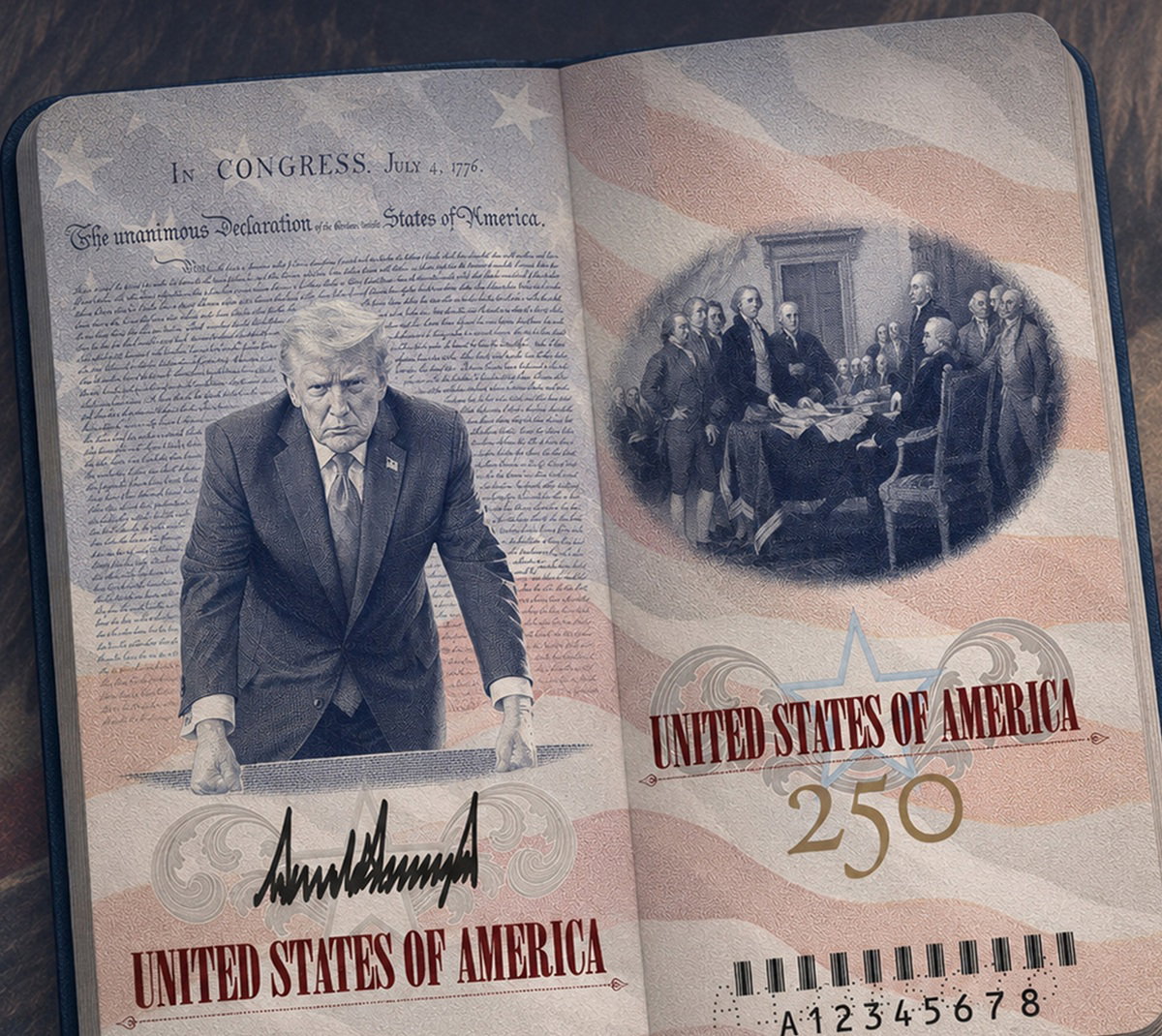
Trump’s commemorative passport marks the 250th anniversary of American independence.
Credit : X – The White House
@WhiteHouse
For generations, American passports have carried the symbols of the United States rather than the face of the president occupying the White House. Donald Trump has now broken with that tradition.
On Friday, June 26, the US president shared the design of a limited edition passport created for the 250th anniversary of the Declaration of Independence. The commemorative document features Trump’s own portrait, making him the first sitting American president to appear on a US passport while still in office.
The image appeared on Trump’s Truth Social account alongside a short message: ‘The new United States Passport that says ‘Welcome, but behave yourself!’
The announcement was brief, but it immediately prompted questions about the passport itself, why it carries the president’s image and whether it represents another step in Trump’s effort to leave a visible mark on America’s national symbols.
The passport was supposed to celebrate America’s birthday. Instead, everyone is talking about the photo
The design is unmistakably patriotic.
Trump is pictured sitting behind the Resolute Desk, with the text of the Declaration of Independence forming the background. His signature appears beneath the portrait, which closely resembles an official White House photograph taken by presidential photographer Daniel Torok.
Turn the page and the theme continues. An illustration of the signing of the Declaration of Independence in 1776 sits above the words ‘United States of America 250,’ a reference to the country’s semiquincentennial celebrations next year.
The White House later reposted the design, calling it the ‘Patriot Passport.’
What has not been explained is how the passport will actually be used. At the time of writing, the State Department had not provided details on whether it will be issued to travellers, produced in limited numbers or simply form part of the broader America250 commemorations.
That uncertainty has only added to the interest surrounding it.
Why this small design choice has become such a big story
Presidents regularly appear on campaign posters, commemorative coins and official portraits.
Passports are different. They are government documents carried by millions of citizens and are generally designed to stay politically neutral. That is why historians point out that no serving US president has previously appeared on an American passport.
That fact alone explains why the images spread so quickly.
Supporters see the design as a patriotic keepsake produced for one of the biggest anniversaries in American history.
Critics see something else.
Some argue that official state documents should celebrate the country rather than the politician temporarily leading it. Others say the passport fits a wider pattern in which Trump has attached his name or image to high profile government projects.
The debate has grown because this is not the only example. Reports have also indicated that future US banknotes will carry Donald Trump’s signature, something that would also be unprecedented for a serving president.
Taken together, the moves have revived accusations from political opponents that Trump is increasingly placing his personal stamp on national institutions.
His supporters reject that criticism, saying there is nothing unusual about a president taking a leading role in celebrating the country’s 250th anniversary.
The biggest mystery isn’t the portrait. It’s who will actually get one
For all the attention the passport has received, one basic question remains unanswered.
Can ordinary Americans apply for one?
At the moment, nobody outside the administration knows.
Neither the White House nor the State Department has explained how many will be produced, who will receive them or whether they will function like an ordinary passport.
That means the document has become famous before anyone has even seen one in person.
Perhaps that is fitting. Passports are normally discussed because of visa rules, border controls or new security features. This one has entered the headlines for an entirely different reason.
Long before it reaches anyone’s pocket, it has already become part of America’s political conversation.











Donald Trump
Republican Sheriffs In Maryland Rebel Against Ban On Cooperating With ICE: ‘It Does A Lot Of Damage To Public Safety’



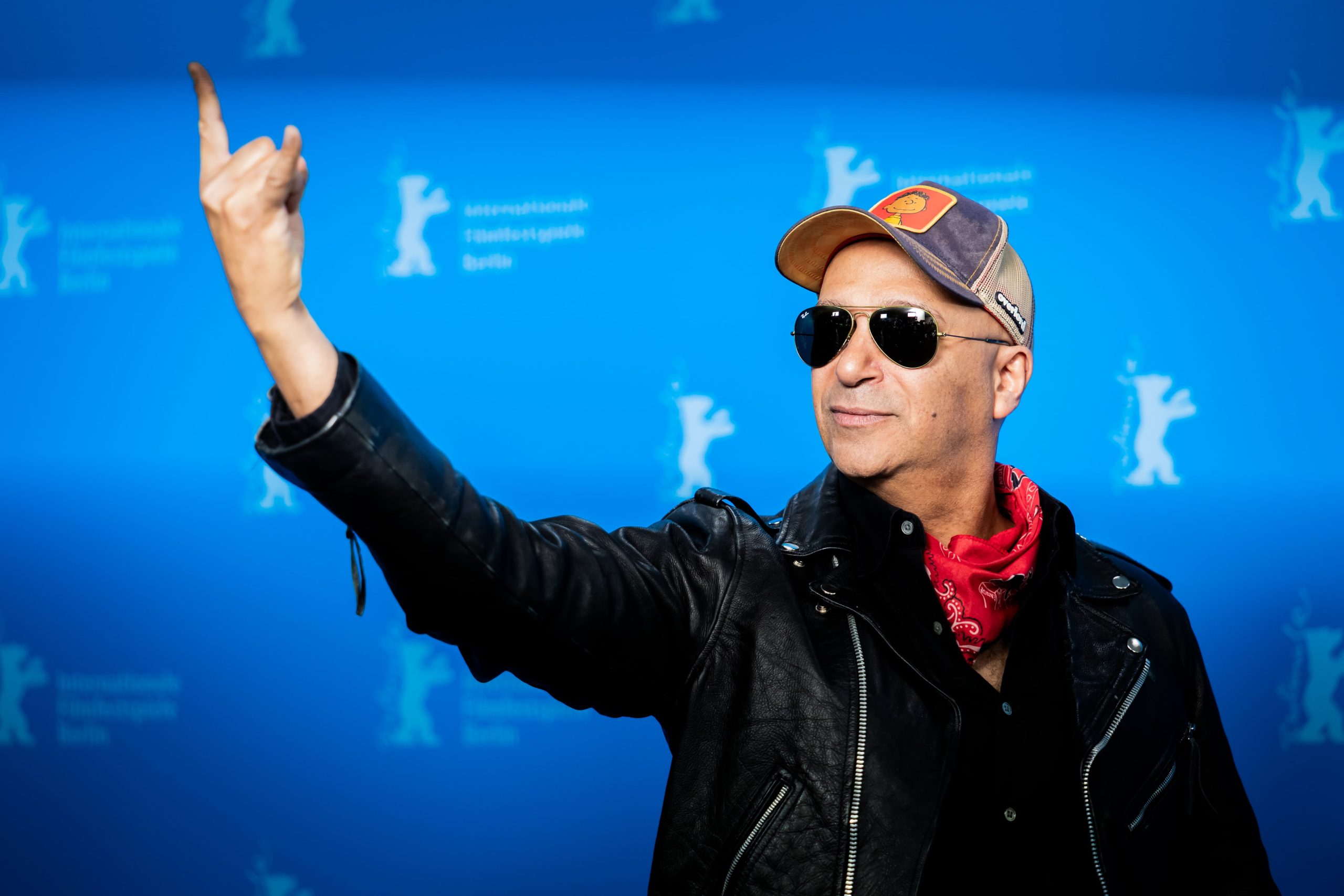
Tom Morello likes to use a word that many musicians stopped uttering long ago: resistance. The 62-year-old singer uses it naturally, the way he would when talking about songs, chords or the road. On June 27, he will perform at the BBK Legends festival in Bilbao, and in a video call interview, he sums up the spirit of the event: “It will be a celebration of the guitar and of resistance.”
More than three decades have passed since Rage Against the Machine, the band with which he rose to fame, made a seismic impact on popular culture, and he still sees no contradiction whatsoever between the two: music and rebellion.
Rock and roll has seemed, since its beginnings, synonymous with fun; while politics is, for many, just the opposite — a drag. The guitarist disagrees: “Rock music has been extremely political from the beginning. The idea of a white artist like Elvis Presley singing with the voice of a Black artist and turning white audiences on to Black music was an incredibly political statement, even if the lyrics were about love. John Coltrane’s music, purely instrumental, challenges the conventions and norms of how you can play an instrument or how you can view jazz, and in the same way, it challenges conventions in society.”
On March 31, Morello joined Bruce Springsteen on a tour of 19 large venues titled Land of Hope and Dreams, driven by that same insurgent instinct. “They were a lot of fun, but also very serious politically, because I believe that as an artist, your responsibility is not to hide who you are in what you do.”
On October 3, he will rejoin Springsteen at the Power to the People concert in Columbia, Maryland, very close to Washington, organized by Morello and also featuring Foo Fighters, Joan Baez, Serj Tankian (System of a Down), Cypress Hill, Dave Matthews, and Jack Black, among others.
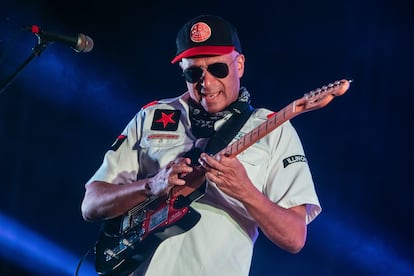
He takes his convictions so far that one starts to wonder whether he sees himself as a musician or as an activist who uses music the way others use a megaphone.
“I didn’t choose to be a guitarist,” he replies. “The guitar chose me. It was a calling, almost religious. But once I had that calling, I had to find a way to bring my convictions into my vocation. I was seized by being a guitarist, but also by having a revolutionary perspective on the world, and I tried to find a way where I could be as effective as possible while playing guitar solos.”
Revolution… Morello gives the solemn word a everyday, almost domestic feel. “It means not accepting things as they are and not allowing unjust human relationships to become normalized. In my view, it’s revolutionary to entertain and to confront an audience with an onslaught of joy and justice.”
He adds: “Most of my biggest influences regarding music and social commitment weren’t musicians but political activists: the Black Panthers, the Weather Underground, anti-colonial movements in the Third World, the Lincoln brigades that fought in Spain against the fascists.”
As for musicians, he cites Woody Guthrie, Public Enemy and System of a Down. “I can’t conceive of music separated from political activism. Life is something you must engage in.”
He’s far from happy with the United States under Trump. “I’m worried about a lot of things; it’s a long list. I think we are facing someone who wants to be the dictator of democracy every day, from his terrible foreign policy to the tactics of pursuing immigrants in their own homes,” he says. “Probably worse than all that is the anti-intellectualism and anti-science stance, which leads to policies that are undoing decades of environmental work and helping push the planet toward destruction. America is a much more dangerous place than it used to be. It’s a very, very dangerous time, and I wish I could retire and sit on a beach, but that’s not going to happen soon. There’s still work to do.”
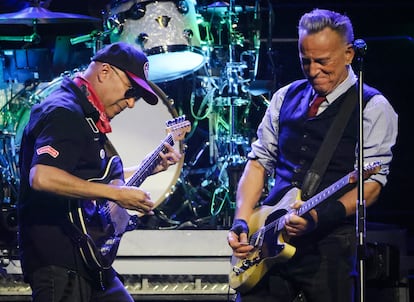
Over three decades in music, he has repeated that idea in many different ways, but rarely as combatively as now. “If there has been a message throughout my career, it is that the world is not going to change itself,” he says. “It is our responsibility to make it change. History is not something that happens; it is something we make. When the world has changed in progressive, radical or even revolutionary ways, it has been because of people no different from those reading this now. The people who have changed the world don’t have more courage, power, money or intelligence than the readers of this interview.”
Behind that conviction is also a personal experience. Born in New York in 1964, the son of a Kenyan diplomat and a teacher with Italian and Irish roots, Morello grew up in Libertyville, Illinois, in a predominantly white community. “I didn’t have to read political philosophers to learn about human relationships and injustice,” he says. “I encountered them on the playground when I was four or five. The idea that there was hate, ignorance and injustice in the world came to me very early.”
His mother, also an activist, was a key figure in his upbringing (his father returned to Kenya when Tom was still a baby. “She never made me feel inferior in any way, even though the world was trying to tell me I was,” he recalls. “I always had a very strong heart thanks to the support and love of my family.”
Long before becoming one of the most recognizable guitarists in contemporary rock, he was a teenager obsessed with the instrument. For years, he tried to follow the same path as the great virtuosos of the 1980s. “At first I was a very fast guitarist, heavily influenced by Randy Rhoads, Eddie Van Halen and people like that,” he says.
His search changed direction when he stopped trying to sound like others. “It wasn’t until the beginning of Rage Against the Machine that I began to find my own voice on the instrument. I began identifying as the band’s DJ. I diverted my attention from traditional guitarists toward animal or mechanical sounds, trying to recreate the sounds of industry and nature.”
It was a decision that ended up defining his entire career: “That, combined with the big heavy riffs of my favorite bands like Black Sabbath and Led Zeppelin, led me to find an authentic voice on the instrument.”
For Morello, what separates a great guitarist from a merely good one is personality. “One of the things that impresses me most about guitarists is when they have their own voice on the instrument,” he says. “Sometimes that can mean playing many notes very quickly, other times playing with feeling, other times producing otherworldly sounds you’ve never heard before.”
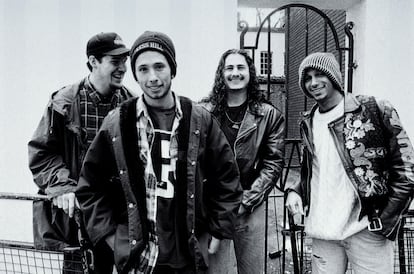
At 62, he continues to seek new challenges. The next will come in the form of a record. “It will be my 22nd album, but the first solo rock album as Tom Morello. I wanted to make an album with all the riffs in the style of Rage Against the Machine and Audioslave [the group he formed after the former’s breakup] and the lyrical depth of Bruce Springsteen, Bob Dylan and Roger Waters. I wanted to take the weight and power of the rock of my whole life and bring it to 2026 to make a modern, heavy album that is as devastating musically as it is politically relevant.” His son Roman, also a guitarist, is part of the project.
When asked to choose a Rage Against the Machine song to explain the present, he doesn’t think twice: “The first that comes to mind is Killing in the Name. Frederick Douglass [a slave and later abolitionist in the mid-19th century] wrote in his autobiography that the day he was freed was not when his chains were removed; it was the day the master said yes and he said no. And that is Killing in the Name: a refusal of illegitimate authority. You don’t need to submit to illegitimate authority. Whether in your home, at your school, your workplace or your country. You can always rise up against it.”
But not everything in Morello’s life has been so serious. In 1986, freshly graduated from Harvard, where he studied social sciences, he worked as a stripper at bachelorette parties in Los Angeles to make some money. “I wanted to sell Iron Maiden T-shirts, and I didn’t even get that job,” he says. “I didn’t pass any audition; I got in through a friend. It’s a job like any other. There’s an old saying: the rent isn’t going to pay itself,” he jokes.
Sign up for our weekly newsletter to get more English-language news coverage from EL PAÍS USA Edition

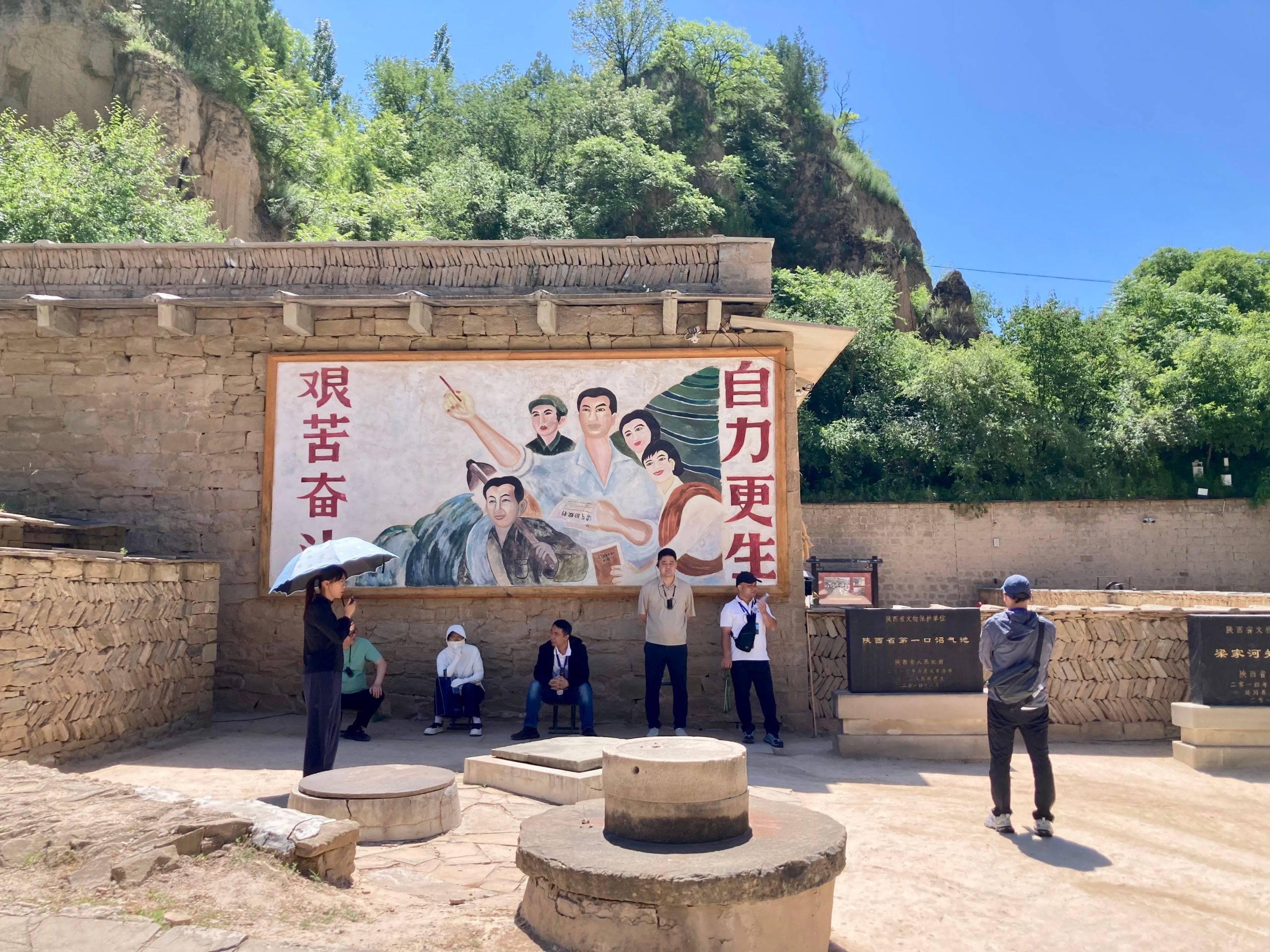
In Liangjiahe, a rural village surrounded by clay-colored hills, a well helps explain who Xi Jinping is and what he wants. Xi is the president who has led China, the world’s second-largest economy, for nearly 14 years; the leader who defied Donald Trump’s tariff wall; the one visited by heads of state and government from around the world; the man world leaders travel to meet; the absolute figure no one in the Chinese Communist Party — a Leninist organization with more than 100 million members that controls every sphere of a superpower of over 1.4 billion people — now dares to challenge.
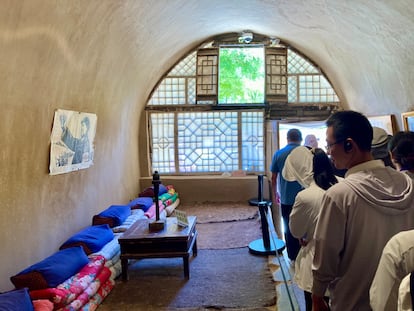
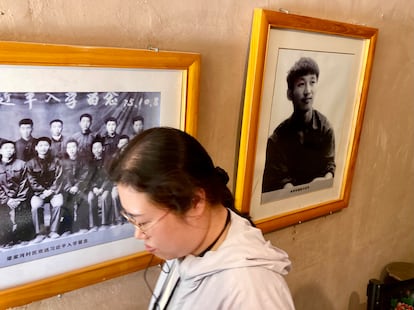
Xi, who recently turned 73, helped dig the well in Liangjiahe more than half a century ago. Dubbed the “well of the young intellectuals,” a plaque recalls how “Jinping” — his given name — led the village in 1973 to solve its chronic water shortage. The teenager had been sent to this remote village in Shaanxi province, where locals still lived in caves, as part of the re‑education campaigns during Mao Zedong’s devastating Cultural Revolution.
He arrived in 1969 at age 15. He struggled to fit in, but it was here — after enduring all manner of hardship — that he found his calling to serve the people and the party. A mural depicts a young Xi with the message: “Hard work; self‑reliance.” That is the metaphor of the well, the message emphasized by propaganda in Liangjiahe: Xi dug “with his legs completely submerged in muddy water,” a panel recalls.
Today, the site is a popular destination for so-called “red tourism,” although, more than ordinary tourists, it draws visitors tied to the ideological training of Chinese Communist Party members. “Here he learned the spirit of overcoming the harshest conditions,” a guide explains to one such group, shepherded by a “leadership school” specializing in “Xi Jinping Thought.” This, too, is a hallmark of his era. Under his rule, education related to the president and his worldview has been reinforced at every level, from schools to the highest ranks. It is an ongoing instruction designed to counter what Xi sees as the “historical nihilism” that brought down the Soviet Union.
“The knife is sharpened on a stone; people are strengthened by adversity,” he said of his seven years in the village in 2002, when he was a promising governor of Fujian province. Two decades later, in 2022, as he was about to be reelected party general secretary for a historic third term, Xi urged perseverance in the “spirit of struggle” developed “in the face of abrupt changes in the international situation” and “the blackmail, obstacles, blockades and maximum pressure from abroad.”
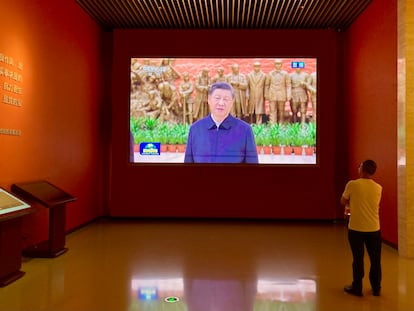
U.S. historian Joseph Torigian believes the Chinese leader was the answer to the idea that contact with the West would lead China to open up in the style of liberal democracies. “Xi believes, instead, in the need to harden the regime against political and economic pressure; to change course and show that there are alternatives to the Western system,” he says by phone.
Torigian, a senior fellow at the Council on Foreign Relations, is an expert on Xi’s father, Xi Zhongxun, a revolutionary leader who fought alongside Mao, and has published a book on him called The Party’s Interest Come First. Xi’s son is what is commonly known as a “princeling,” the offspring of the generation of communists who founded the People’s Republic and rose to senior positions once in Beijing.
They were turbulent years in any case. Xi’s father rose to vice premier only to be purged later. He would spend years in isolation while his son faced the wrath of the Red Guards because of his family background and was sent to the countryside. But he continued to believe in the system: from the village, Xi sent a dozen letters to the Party until they admitted him.
From Liangjiahe, he returned to Beijing to study chemical engineering at the prestigious Tsinghua University. With Mao’s death in 1976, the years of reform and opening under Deng Xiaoping began. His father returned to public life. The era of rapid growth was beginning, and many princelings set about making up for lost time, enjoying themselves and absorbing Western influences. Xi, by contrast, “chose to survive by becoming redder than the red,” a friend later told the U.S. Embassy, according to a WikiLeaks diplomatic cable.
His first notable post was as secretary to the defense minister; he later pursued a career away from Beijing. In 1985, as a local official in Hebei province, he traveled to the U.S. state of Iowa as part of a delegation to learn agricultural techniques and strengthen ties. For a couple of nights, he even experienced what it was like to sleep in the bedroom of a young American decorated with Star Trek memorabilia. “A pleasant, charming and intelligent leader; very curious about many aspects of agriculture, food processing and life in the United States,” recalls Luca Berrone, an Italian‑American businessman who organized that trip.
They spent two weeks together, and Berrone would not connect the dots again until 2011, when Xi was vice president and the apparent heir. Since then, Berrone has been invited to a dozen meetings with the Chinese president, who often cites his Iowa trip as an example of the importance of people‑to‑people ties to avoid conflict. “I think he does not seek a confrontational position, but rather genuine mutually beneficial cooperation,” Berrone says. “He respects the United States a lot.”
It is true that Xi’s only daughter, who has left almost no public trace, graduated from Harvard in 2014. But four decades after that Iowa visit, China is no longer the student, but a disruptive power competing on equal terms in the economic, military and technological spheres — and that has changed things.
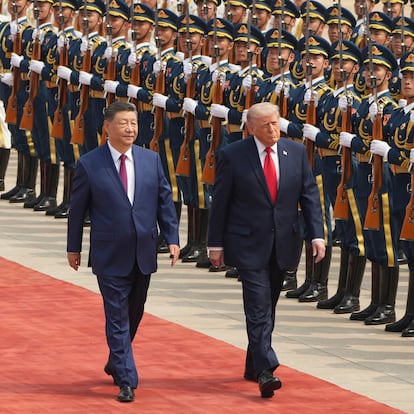
During the bruising trade clash of 2025, Beijing showed the tools it had prepared to protect its interests by restricting critical resources. When Trump landed in China in May for a summit with Xi, the choreography was staged to convey that the two nations were negotiating on equal footing. The cordial détente was sealed with a formula proposed by the Chinese leader that softens the Cold War premise of co‑existence between powers: “constructive strategic stability.”
“He is a very strong leader who should not be underestimated,” says Rafael Dezcallar, former Spanish ambassador to Beijing and author of El ascenso de China (The Rise of China). “He wants to place China where it belongs, as a great power capable of competing with the United States, never again subjected to its influence or dominance, self‑sufficient in technology and in fundamental matters.” On the domestic front: “He has managed to put the party under his control.”
Xi was chosen as a consensus figure by those within the Party who believed that firm leadership was needed to rein in years of excesses. As soon as he took office, he launched an anti-corruption campaign that is still ongoing. Since 2012, more than seven million public officials have been found guilty and sanctioned by disciplinary inspection and supervisory bodies. The crackdown has extended from the grassroots level to the very top, reaching ministers and the military leadership.
This is compounded by a marked anti-hedonistic impulse, reflected in measures such as banning alcohol, luxury dishes, and cigarettes at official banquets. “Calvinist communism,” as a European diplomatic source based in Beijing describes it. For Xi, the source adds, Westernization amounts to paganism.
Xi has reinstated ideology and repositioned the Party at the center. His ideology, officially inscribed in the Constitution alongside Mao’s and Deng’s, is cited in every political speech. He is also a bestselling author: the three best‑selling books in China in 2025 were volumes compiling Xi’s ideas, according to Chinese media.
Wang Yiwei, vice president of the Academy of Xi Jinping Thought on Socialism with Chinese Characteristics for a New Era (the convoluted official name of his ideology), summarizes the president’s vision as “Xivilization.” He sees it as a new phase of “traditional Leninism” that confronted the capitalist system. “Now we have changed: whether socialism, capitalism or any other ism, all have a shared future.” And it draws not only on Karl Marx. “We have synergies with China’s classical culture and civilization.”
Torigian also believes that Xi’s sense of history leads him to fuse present-day Communist China with its past: he is mindful of the repeated collapse of imperial dynasties and witnessed, in his youth, the fall of communism around the world. This prompts him to ask: “How do you immortalize his vision? How do you ensure that what he believes the country needs survives not only while he lives but into the future? How do you prevent institutions from decaying and ultimately collapsing?” With no apparent successor for now, most analysts believe he will remain in power beyond 2030.
During his tenure, a heavy hand has been the answer to dissent. He has launched campaigns against anything that smells of divergence in civil society and has imposed firm control over Xinjiang, Tibet, and Hong Kong. It is hard to gauge his approval in an authoritarian country where surveys about the leader are not published, and technological surveillance reaches unimaginable levels. Simply uttering his name in public elicits respect, and it is not uncommon for people, when referring to the president, to lower their voices or speak in euphemisms.
If you ask people about Xi, the response is usually positive. “We only have one president, not like abroad,” says a taxi driver in Yan’an, the city nearest Liangjiahe and another hub of red tourism. Yan’an was where Mao ended the Long March in 1935, and its streets mix communist monuments with a bustling provincial life.
“Xi is not bad, but he still has a long way to reach Mao’s level,” replies Bai Guanglin, a 76‑year‑old farmer, at the city’s revolutionary museum. His granddaughter, Bai Yuxin, 28, a high‑school teacher, adds: “He has contributed a lot economically and in foreign relations.”
Yan’an was also the destination Xi chose for his first trip after being reelected in 2022. Alongside the other six members of the Politburo Standing Committee — the Party’s top decision-making body — he visited the caves where Mao once lived, toured the museum, and in his speeches called for “hard work” and a “fighting spirit,” while recalling those seven years he spent in the village.
Sign up for our weekly newsletter to get more English-language news coverage from EL PAÍS USA Edition
Spain tourists renting cars this summer warned over deposits, damage and hidden fees
Fuengirola goes ahead with major housing project with 300 new homes in Cerro del Agua
Trump puts himself on a US passport in unprecedented presidential first
Dinosaurs are roaring over to Estepona this summer in a massive 5,000m² exhibition

Families Caring For Elderly Parents In Spain Say Brexit Has Left Them With Impossible Choices

Max Verstappen rules out Nurburgring return after 24 hour-heartbreak


-
Costa del Sol1 week ago
Dinosaurs are roaring over to Estepona this summer in a massive 5,000m² exhibition
-
 %1 week ago
Families Caring For Elderly Parents In Spain Say Brexit Has Left Them With Impossible Choices
-
 Uncategorized2 weeks ago
Max Verstappen rules out Nurburgring return after 24 hour-heartbreak
-

 %1 week ago
One Of Spain’s Top Supermarkets Has Just Been Ranked Among Europe’s Most Innovative In A Major New Report
-
Costa Blanca North1 week ago
Denia launches new La Marineta music festival this summer with Fangoria and Nil Moliner
-
Latest1 week ago
KEY POINTS: What Changes About Life In Spain In July 2026
-
Latest2 weeks ago
400,000 More Migrants Than Forecast Apply For Spain’s Residency Amnesty
-
 ElPais1 week ago
Primary Elections In New York, Maryland, And Utah: Date And How To Vote