
America
Un Ejecutivo De ‘The New York Times’ Es Asesinado A Tiros Y Sus Suegros Son Los Principales Sospechosos





America
MLB Seeks To Bring A Game To Grand Teton, Drawing Criticism Over Construction In A National Park

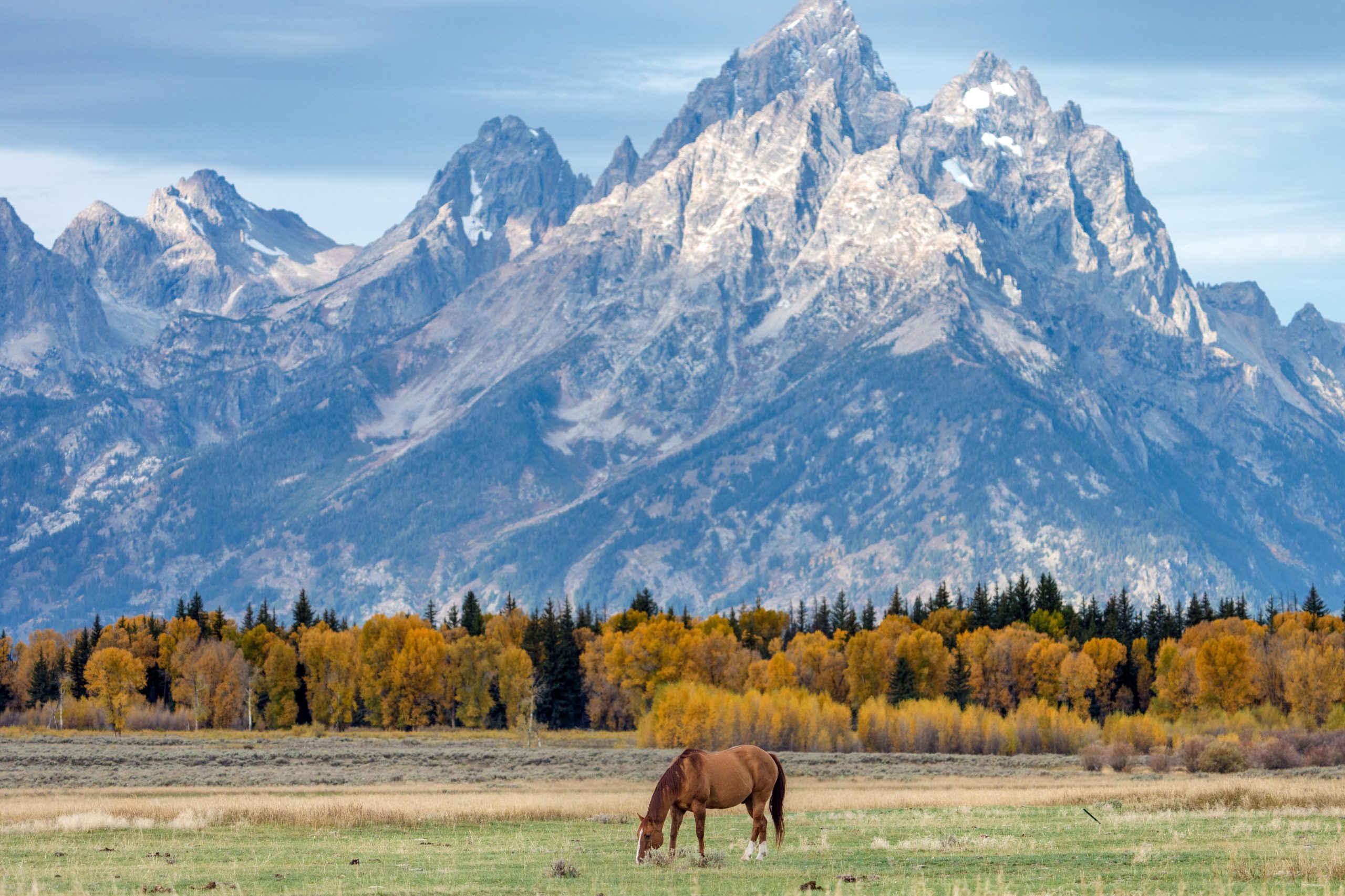
The mountains of Grand Teton could become the backdrop for a Major League Baseball game. The proposal is only on the table for now, but it has already drawn opposition from local officials and environmental groups because bringing baseball there would require building — even if only temporarily — a field inside one of the most important national parks in the United States.
MLB approached the Donald Trump administration to ask whether it would be possible to host a game there, according to league and White House officials. The proposal is part of the league’s search for venues beyond its usual stadiums for special games, a strategy that in recent years has taken Major League Baseball to fields in Iowa, a motorsports venue and other unconventional locations.
According to a report by The Washington Post, Frank Lands, deputy director of the National Park Service (NPS), recently visited Grand Teton and looked at three potential locations for a baseball field inside the park. The league asked “if it was possible to host a game at a national park, similar to the Field of Dreams game,” referring to the games played in Iowa.
The administration has distanced itself from the idea, clarifying: “This is not a Presidential directive, nor is it being directed by the White House. It’s also not being driven by the Department of Interior.” It added that the proposal is not a government priority. The NPS has not granted any permits, and MLB has not yet made any decision.

Major League Baseball has spent several years expanding the list of venues where it plays regular-season games outside its 30 traditional stadiums. The best-known experiment began with the Field of Dreams games in Dyersville, Iowa, inspired by the 1989 movie. The league returned there this year and plans to hold another game in August 2027.
It has also organized games at Rickwood Field in Birmingham, Alabama, and Bristol Motor Speedway in Tennessee. In the latter case, the 2025 game was even accompanied by food shortages at concession stands.
Bringing that concept to Grand Teton, however, presents a key difference. The park has broad stretches of flat land in Jackson Hole, with the Teton mountains as a backdrop, but any baseball field would require some type of infrastructure inside a protected area. One of the locations considered would be land that has already been disturbed and is used to store materials and equipment. Such areas, known within the parks as “bone yards,” could reduce the impact on areas that remain in their natural state.
But if the idea moves forward, the game would not happen immediately. The Athletic reported that 2028 would be the earliest possible date. For now, there is no National Park Service permit and no decision from MLB.
Opposition in Wyoming
Mike Gierau, a Democratic state senator who represents Jackson and areas near Grand Teton, told Cowboy State Daily that he is a baseball fan and considers both the sport and national parks to be two great American symbols, but he rejected the possibility of building a field inside the park. He called the proposal “absolutely abhorrent” and said parks should be preserved for their scenic and natural values rather than turned into venues for this type of infrastructure.
Environmental groups have also spoken out against the proposal. Chris Kassar, director of the Sierra Club’s Wyoming chapter, said in a statement that Americans want to strengthen protections for these spaces and that using bulldozers to build a stadium would move in the opposite direction.
Rob Wallace, a former deputy secretary of the Interior during Trump’s first administration and a Teton County resident, also questioned whether the project could move forward. He told the outlet that the protections governing the park would make hosting a game there extremely difficult.
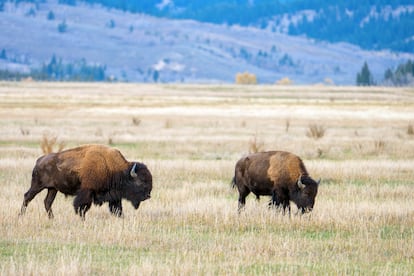
Betsy Buffington, regional director of the National Parks Conservation Association, told The Washington Post that Grand Teton is not an appropriate location for a stadium and called the idea “ludicrous. Crazy. Ridiculous.” The park is home, among other species, to bears, wolves, bison, elk, and pronghorns.
America
El Gobierno Evita Responder A Un Informe De CBS Que Reaviva La Posibilidad De Una Acción Militar En Cuba

America
ICE Wasted Millions Of Dollars On Its Expansion Of Detention Centers, According To A Government Report
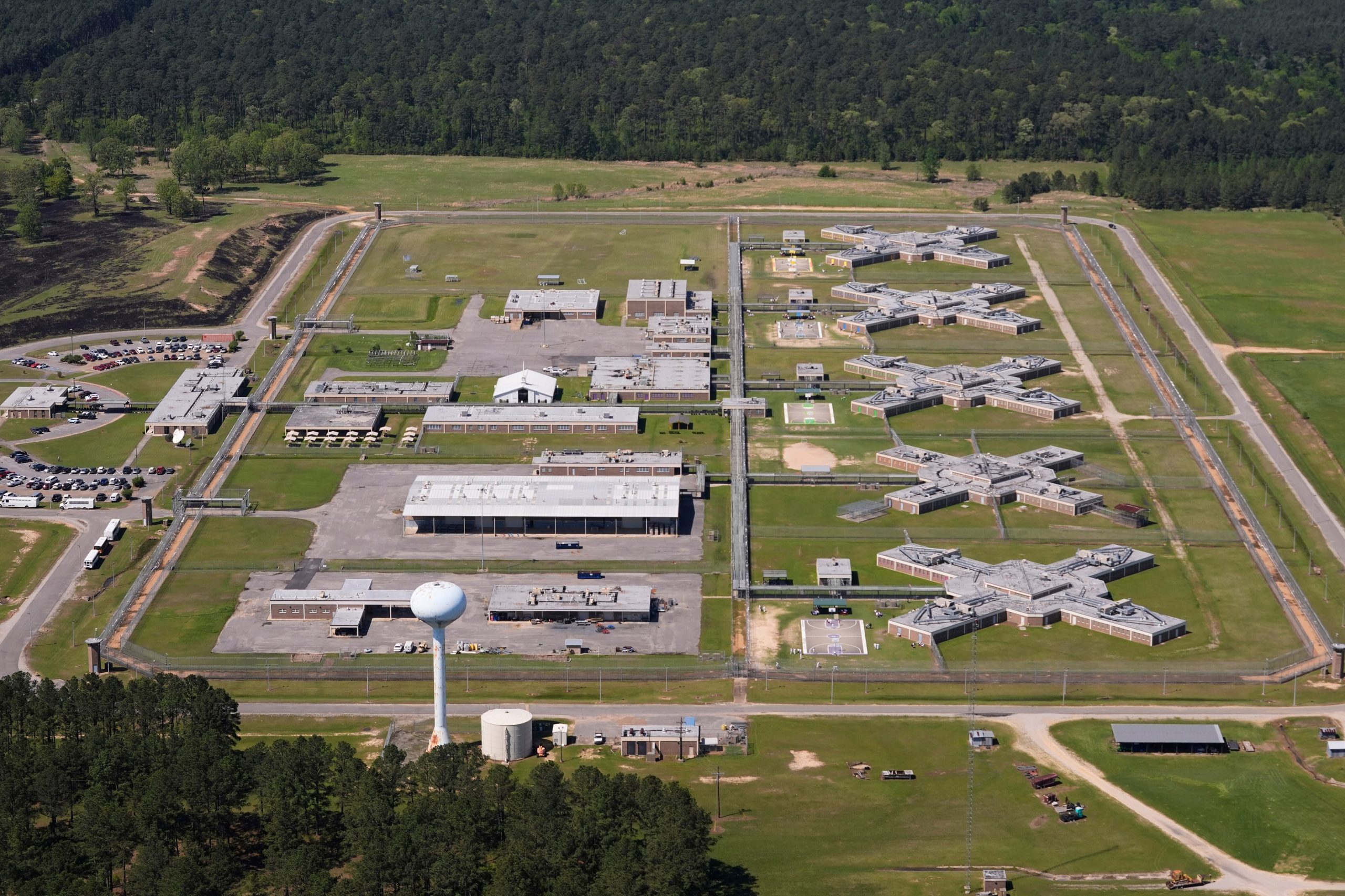
Millions of dollars earmarked to expand U.S. immigration detention capacity ended up in warehouses that will now be sold, in tents that never housed a detainee, and in food purchased for empty facilities. These are the findings of a report by the Government Accountability Office (GAO), which documents how the rapid expansion of U.S. Immigration and Customs Enforcement (ICE) has left behind abandoned projects, sunk costs, and new financial commitments.
The report, released Thursday, notes that the agency undertook six major initiatives without a comprehensive strategic plan to determine where it needed to expand its capacity, how much it would cost to maintain it, and which facilities would actually be necessary. The lack of planning led to course corrections, stalled projects, and wasted resources just as ICE prepares to manage tens of billions of additional dollars.
The expansion accelerated during Donald Trump’s second term. The number of people in ICE custody rose from about 39,000 detainees in January 2025 to approximately 67,000 on July 30, 2026. At the same time, Congress approved $45 billion to increase the agency’s detention capacity as part of the legislation known as the One Big Beautiful Bill Act.

One of the clearest examples of the spending questioned by the GAO involves the warehouses that ICE acquired to convert into detention centers. The agency spent approximately $1.07 billion to purchase 11 facilities but later decided to put seven of them up for sale. None of the warehouses ever housed detainees.
The operation also resulted in nearly $20 million in unrecoverable expenses related to services, security, utilities, and other costs associated with the properties. The other four warehouses have not yet begun to house migrants either. At two of them, located in Arizona and Maryland, renovation plans were put on hold due to legal challenges, while the investment needed to bring them up to standard was estimated at hundreds of millions of dollars.
Meanwhile, in Guantánamo, ICE spent $2.85 million on tents with a capacity for about 5,000 people, but never used them to house detainees because the facilities did not meet federal standards. By June, the average number of migrants detained there was just 16 people per day.
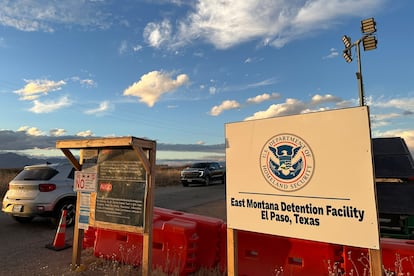
Another instance occurred at Camp East Montana in El Paso, Texas. The government purchased $7.1 million worth of food that it ultimately did not need for the facility. In addition, it spent another $11.5 million on services over a two-week period while the center remained empty.
In Florida, the federal government allocated up to $608 million to reimburse the state for the costs of operating the facility known as Alligator Alcatraz. According to the report, the cost per detainee reached $249 per day, compared to the $92 that ICE normally pays—a difference of 171 percent. The facility closed in June.
ICE also used facilities operated by the Federal Bureau of Prisons. The agreement covers eight centers and requires the immigration agency to cover the full cost of maintaining them, including expenses related to overtime and temporary staff. The average cost amounts to $182 per day per detainee.
While some of these projects were abandoned or put on hold, ICE continued to purchase existing facilities. In July, the agency acquired two private detention centers in California for $1.47 billion, and in August, it purchased two more in Kansas and Minnesota for $734 million. The GAO noted that ICE had not assessed how much it would cost to maintain those facilities in the long term.
The federal agency believes that the absence of an overall strategy has contributed to the agency moving forward with, halting, and modifying projects without sufficient planning. Heather MacLeod, the GAO’s director for Homeland Security and Justice, summed up the problem by noting that the lack of planning had led to “stops and starts” that ultimately resulted in waste.
The Department of Homeland Security, for its part, has defended the pace at which ICE is expanding its capacity and has noted that the new funding approved by Congress allows the agency to move forward with its operations.
Almost 400 motorists caught in bizarre German speed camera trap

Almost 400 Motorists Caught In Bizarre German Speed Camera Trap
España – Croacia En Directo | Yamal, Sobre Su Segundo Gol A Livakovic: “Lo Conozco De Los Entrenos”

Detenido Un Hombre Por La Muerte De Una Mujer De 47 Años En El Distrito De Arganzuela De Madrid

Heartbreaking Instagram post reveals death of F1 star

The Azcatitlan Codex Returns To Mexico From Europe After Nearly Two Centuries


-
 Arganzuela2 weeks ago
Detenido Un Hombre Por La Muerte De Una Mujer De 47 Años En El Distrito De Arganzuela De Madrid
-
 Uncategorized2 weeks ago
Heartbreaking Instagram post reveals death of F1 star
-
 Claudia Sheinbaum2 weeks ago
The Azcatitlan Codex Returns To Mexico From Europe After Nearly Two Centuries
-

 basque country1 week ago
British Actress Naomi Watts Attacks Ageism In Hollywood As She Picks Up Prestigious Donostia Award At San Sebastian Film Festival
-
Best airlines2 weeks ago
Spanish airline Vueling named Europe’s best low-cost carrier for 2026
-

 %2 weeks ago
Mallorca Property Overrun By Wild Goats
-
2026 wildfires2 weeks ago
Spain’s wildfire toll revealed as almost 300,000 hectares go up in flames
-

 America2 weeks ago
Delcy Rodríguez Se Reunirá Con Trump En Nueva York En Un Gesto Inédito De Acercamiento