Connect with us

%

Viral Video In Spain Sparks Fury Over Drivers Who ‘have No Idea How To Drive’

Published

on

viral-video-in-spain-sparks-fury-over-drivers-who-‘have-no-idea-how-to-drive’

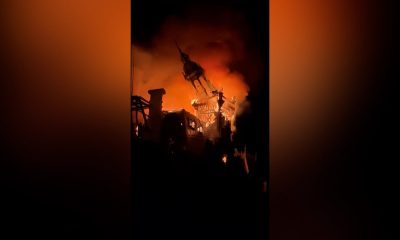
The incident has exposed a common source of confusion on Spanish roads. Photo credit: @Pacoxo on X

There are few things more infuriating than driving along in Spain and watching another motorist cut across your path as if the rules of the road simply do not apply to them. Roundabouts are a particularly familiar battleground, with drivers changing lanes without warning, taking exits from the wrong position and apparently expecting everyone else to get out of the way.

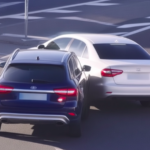
Now, a crash between two cars at a roundabout has prompted another furious debate online, after footage showed one driver attempting to leave the junction from an inside lane while another continued around it in the outside lane. The video, shared on X, has attracted attention from motorists arguing over who was responsible. But according to Spanish traffic regulations, the key mistake was made by the driver trying to exit directly from the inner lane. 

Who was in the wrong in the Spanish roundabout crash?

The incident has exposed a common source of confusion on Spanish roads: being in the correct lane to travel around a roundabout does not necessarily mean you can leave it from that position. Under Article 74.2 of Spain’s General Traffic Regulations, a driver changing lanes must respect the priority of vehicles already travelling in the lane they want to enter. The Dirección General de Tráfico (DGT) also makes clear that, as a general rule, drivers must leave a roundabout from the outside, right-hand lane. Cutting across from an inner lane can put a vehicle directly in the path of another motorist who is continuing around the junction.

That does not mean drivers must take the first exit simply because they are travelling in the outside lane. A motorist can continue around the roundabout in that lane, provided they do so safely and in accordance with the road layout and traffic conditions. Drivers intending to take a later exit can use an inner lane where appropriate, but must move into the outside lane in good time, signalling and giving way to vehicles already there. If traffic prevents a safe lane change before the exit, the DGT’s advice is simple: go around again rather than force your way across. 

Rotonda de dos carriles. El de adentro quiere salir y el de afuera quiere seguir girando 💥

¿Quién es responsable por el choque según la ley? https://t.co/q5hrQ0lr1H

— Derecho enZapatillas (@dzapatillas) October 4, 2026

Do Spanish drivers really know how to use roundabouts?

It’s the question we’ve all been asking and the frustration expressed online is not new. The DGT has repeatedly warned that motorists continue to misunderstand the rules for entering, navigating and exiting roundabouts, despite these junctions having been part of Spain’s road network for decades, which leads to the question: How did they get their driving license?

A 2015 study by road-safety training association Formaster, reported by 20minutos, found that 80 per cent of drivers made mistakes when using roundabouts. The most common problem was not knowing which lane to use to exit, while crossing lanes in a straight line was identified as particularly dangerous. Those figures are historical, rather than a measure of current driving behaviour. 

More recent figures underline why the issue matters. According to data from the DGT cited in a study by Automovilistas Europeos Asociados (AEA), 309 people died and more than 54,000 were injured in crashes at roundabouts between 2020 and 2024. In 2024 alone, 59 people died and 10,758 were injured in these collisions.  Those figures do not prove that Spanish drivers are worse than motorists elsewhere. They do, however, show that mistakes at roundabouts can have serious consequences, rather than simply causing an irritating moment in traffic.

The driving habits that put everyone at risk

The problem is not unique to Spain, and a viral clip cannot tell us how well the country’s motorists drive overall but we can judge by it. Anyone using the roads knows how quickly a small mistake can turn into a dangerous situation when another driver fails to anticipate traffic or refuses to give way. Roundabouts demand more than knowing which exit to take. Drivers must check their mirrors, judge the position and speed of other vehicles, signal their intentions and change lanes without cutting across someone else’s path.

The DGT advises motorists to approach slowly, give priority to vehicles already on the roundabout and choose their position according to their intended exit. If they cannot get into the correct lane safely, taking another circuit is far better than risking a collision. For drivers caught up in the daily frustrations of Spanish traffic, it is a reminder that being in a hurry does not give anyone the right to force their way through a junction. And when a roundabout becomes a test of who is willing to give way, it is often everyone else on the road who pays the price.

%

Santa Pola Museo Del Mar

Published

on

santa-pola-museo-del-mar

Santa Pola’s Sea Museum. Credit: Ayuntamiento de Santa Pola.

Santa Pola’s Museo del Mar is heading towards a record-breaking year after welcoming 133,145 visits so far in 2026. The figure is already closing in on the almost 150,000 visits recorded throughout the whole of last year, with the museum’s network of historic and cultural attractions continuing to draw visitors to the coastal town.

Museo del Mar approaches annual visitor record

Santa Pola’s Museo del Mar is heading towards a record year after attracting 133,145 visits so far in 2026, already approaching the almost 150,000 recorded during the whole of last year.

The museum complex includes its main exhibitions inside the Castillo Fortaleza, covering the history and ethnography of the sea and fishing, music, archaeology and local history.

The castle also hosts a changing programme of national and international art exhibitions, adding to the range of attractions available within the historic building.

Museum network extends beyond Castillo Fortaleza

Several external sites form part of the museum, including the Mediterranean Aquarium, the preserved Esteban Gonzalez fishing boat and Portus Ilicitanus, the Roman port which operates as an open-air museum.

Visits remain free, including guided activities, workshops, concerts and talks.

The combination of permanent exhibitions, archaeological attractions and cultural activities means the Museo del Mar extends well beyond a traditional museum building, with different sites exploring Santa Pola’s history and its close relationship with the Mediterranean.

Aquarium and fishing boat closed for improvements

Two attractions are currently temporarily closed. The Aquarium is undergoing improvements and new museum installations, while the Esteban Gonzalez is receiving major restoration work to its hull.

Both are expected to reopen in December.

Portus Ilicitanus has also experienced temporary closures during archaeological excavations and work to install a protective shaded structure over part of the remains.

La Picola will join museum network in 2027

The museum network is set to expand again in 2027 with the addition of the La Picola archaeological site.

The Iberian and Roman site is being prepared for visitors through a €1.25 million project fully funded by Spain’s Ministry of Industry and Tourism.

Its addition will give visitors another archaeological attraction to explore as part of Santa Pola’s growing museum network, while the strong visitor figures recorded during 2026 put the Museo del Mar within reach of surpassing last year’s total.

Continue Reading

%

Woman Missing After Being Swept Into Torrent

Published

on

woman-missing-after-being-swept-into-torrent

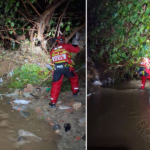
In their latest update on Sunday 18 morning, firefighters said they had maintained the search throughout the night without any change in the situation Credit: X/BombersCat

Emergency services launched a major search operation in north-eastern Spain after a woman reportedly fell into a rain-swollen stream during torrential downpours, prompting fears she may have been swept away by the powerful current.

The incident happened in Cabrera de Mar, in Barcelona province, on Saturday evening, October 17, as heavy rainfall affected parts of Catalonia.

Firefighters from the Bombers de la Generalitat were mobilised after receiving an emergency alert at 7.41pm reporting that a person had fallen into a riera, a normally smaller watercourse that can become dangerously fast-flowing during periods of intense rain.

Six firefighting units were initially deployed to search for the missing woman, with the operation involving Catalonia’s regional police, the Mossos d’Esquadra, and Spain’s Maritime Rescue service.

The search was continuing in the latest reports, with no confirmed outcome available at the time of publication.

Emergency teams continue to search for missing woman

The operation brought together several emergency services to locate the woman following the reported fall.

The firefighters confirmed the deployment in a post on social media, announcing that crews were working alongside the Mossos d’Esquadra and Salvamento Marítimo.

The involvement of maritime rescue teams highlights the potential danger posed by fast-moving watercourses during severe weather, particularly where a stream flows towards the coast.

The incident occurred in the Maresme area, a coastal region north-east of Barcelona that experienced particularly heavy rainfall on Saturday afternoon and evening. The Vallès Oriental area was also among the parts of Catalonia that recorded significant precipitation during the same period.

Firefighters confirmed on Sunday morning, October 18, that the search had continued throughout the night and into the early hours, but there had been no new developments.

Heavy rain raises concerns across Catalonia

The search operation unfolded as thunderstorms and intense rainfall affected several areas of Catalonia, raising concerns about sudden flooding and dangerous conditions near waterways.

A riera can appear relatively harmless during dry weather but may fill rapidly when heavy rain falls, creating strong currents capable of carrying away people and vehicles.

Such watercourses are a particular hazard during Mediterranean storms, when intense rainfall can fall over a short period and cause water levels to rise quickly. Emergency authorities have repeatedly warned residents to avoid attempting to cross flooded streams, rivers and underpasses during periods of heavy rain. Even shallow-looking water can conceal a strong current, while the depth and speed of the flow may change rapidly as further rain arrives upstream.

Search comes amid severe weather

The incident adds to concerns about the impact of the unsettled weather affecting north-eastern Spain.

The Maresme, where Cabrera de Mar is located, was among the areas experiencing the heaviest rainfall on Saturday, according to reports. Emergency crews faced the challenge of searching in conditions made more difficult by the weather and the possibility of fast-moving water.

Continue Reading

%

Czech Football Coach Goes Viral For Avoiding Reporter’s Gaze To Keep His Wife Happy

Published

on

czech-football-coach-goes-viral-for-avoiding-reporter’s-gaze-to-keep-his-wife-happy

Everyone watching the footage was discussing the manager’s self-control. Photo credit: Komsan Loonprom/Shutterstock

One football manager appears to have mastered the art of keeping his eyes on anything except the woman standing in front of him. And after explaining why, he has won himself an army of online admirers who reckon he knows exactly what he is doing. David Oulehla, manager of Czech second-division side FK Viagem Ústí nad Labem, went viral after a post-match interview with club reporter Sabina Jáksová. 

His team had just lost 3–2 to Opava, but the result was quickly forgotten as viewers noticed his apparent determination not to look directly at the woman asking him questions. The reason became the talking point of the internet. Oulehla later explained that his wife was waiting for him at home, and he had no intention of taking any unnecessary risks. “My wife is waiting for me at home,”  and, judging by the footage, he was taking that very seriously.

‘Poor man is fighting for his life’

The interview attracted attention partly because Jáksová was wearing an extremely revealing a top with much of her breasts visible, viewers were quick to notice that Oulehla seemed to be directing his gaze everywhere except towards the reporter. Online, plenty of men appeared to admire his determination to avoid trouble at home. One commenter joked, “man’s wife was watching he wasn’t going to take any risks”, while another suggested, “I don’t think it was the eye contact he was avoiding”. one man even suggested ” He worked harder in this interview than the whole team during the game” with a third summing up the situation with the comment, “poor man is fighting for his life”.

The reactions played on the idea that Oulehla was less concerned about the interview itself than about what might happen when he got home if his wife saw him looking in the wrong direction. Another popular interpretation was that it was not eye contact he was trying to avoid at all. The jokes continued, with viewers imagining the consequences if he had allowed his eyes to wander for even a second. In the court of social media, Oulehla had apparently been handed a test of marital loyalty, and the safest strategy was to keep looking at the nearest available wall. His football team might not have got the result it wanted, but his post-match interview was proving a much bigger success online.

Reporter’s outfit sparks a separate debate

While many viewers were amused by Oulehla’s apparent self-control, others focused on Jáksová’s clothing. Some critics argued that her top was inappropriate for a professional football interview, with comments suggesting she looked as though she had “forgotten to put a blouse on” or was dressed as though she were wearing her underwear.

The criticism centred on how much of her breasts were visible, with some viewers apparently struggling to understand why she had chosen the outfit for a professional interview. Others questioned why so much attention was being paid to her appearance when she was simply carrying out her job. The debate added another layer to the viral clip, which had already prompted jokes about the manager’s apparent determination to keep his eyes firmly elsewhere.

‘I was concentrating on what he was saying’

Jáksová has defended her approach to dressing, explaining that she does not consider herself to be dressing provocatively. She has also said that looking smart, wearing attractive clothes and putting on heels are normal choices for women in the Czech Republic. The reporter also said she had not even noticed that Oulehla was avoiding her gaze during the interview because she was concentrating on what he was saying.

The moment that thousands of viewers turned into an internet spectacle was not necessarily as awkward for the two people involved as it appeared from the outside. Oulehla was trying to discuss football whilst being presented with distractions. Jáksová was trying to conduct an interview. The internet, meanwhile, had other ideas. And his explanation about his wife gave the clip a punchline that practically wrote itself. After all, losing a match is one thing. Having to explain to your wife why you were staring at the reporter afterwards might be an entirely different kind of defeat.

Continue Reading

Trending

Copyright © 2017 Spanish Property & News