
Adif
What Is The LZB Signaling System, One Of The Key Factors In The Fatal Train Accident In Spain?

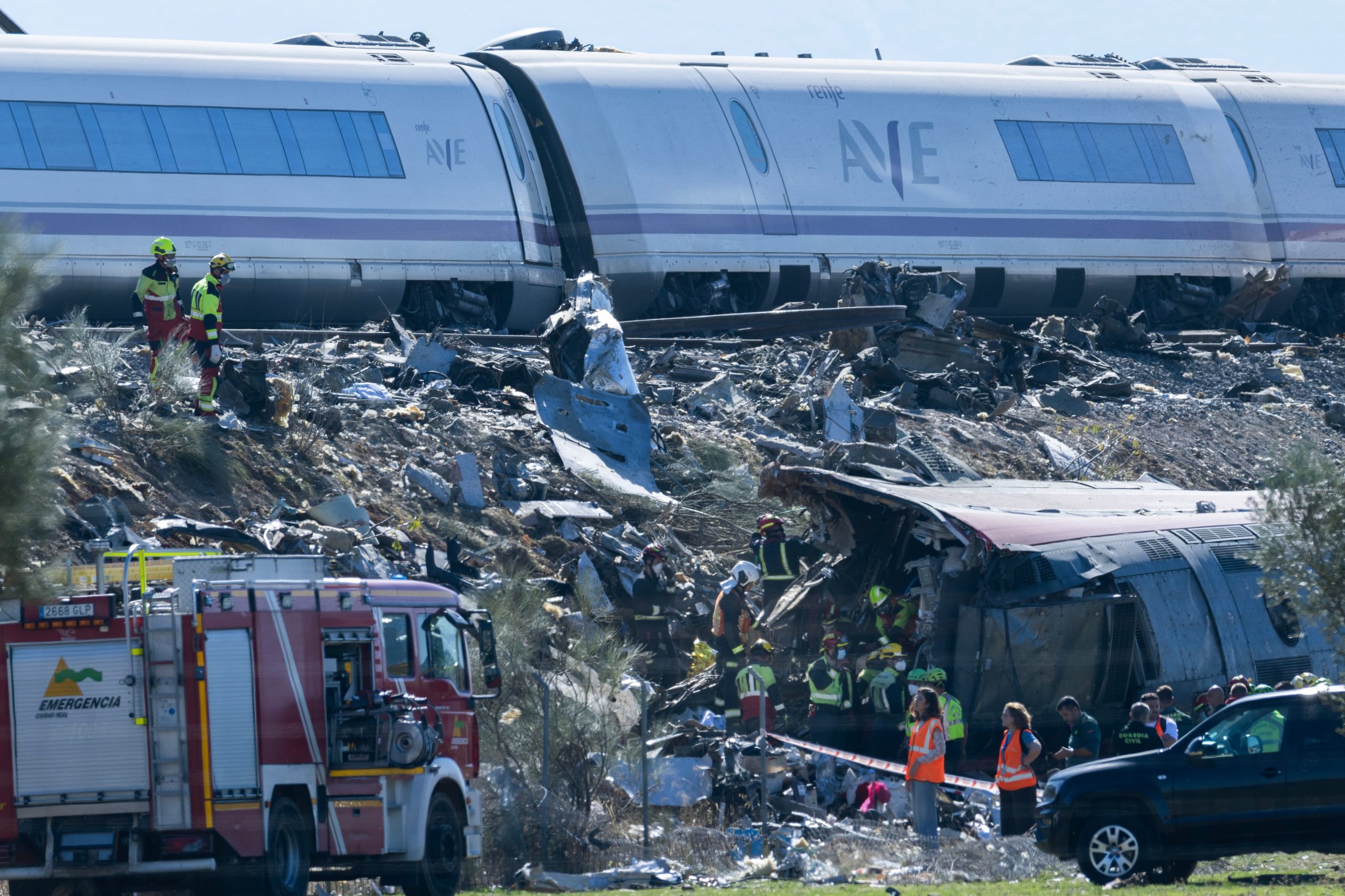









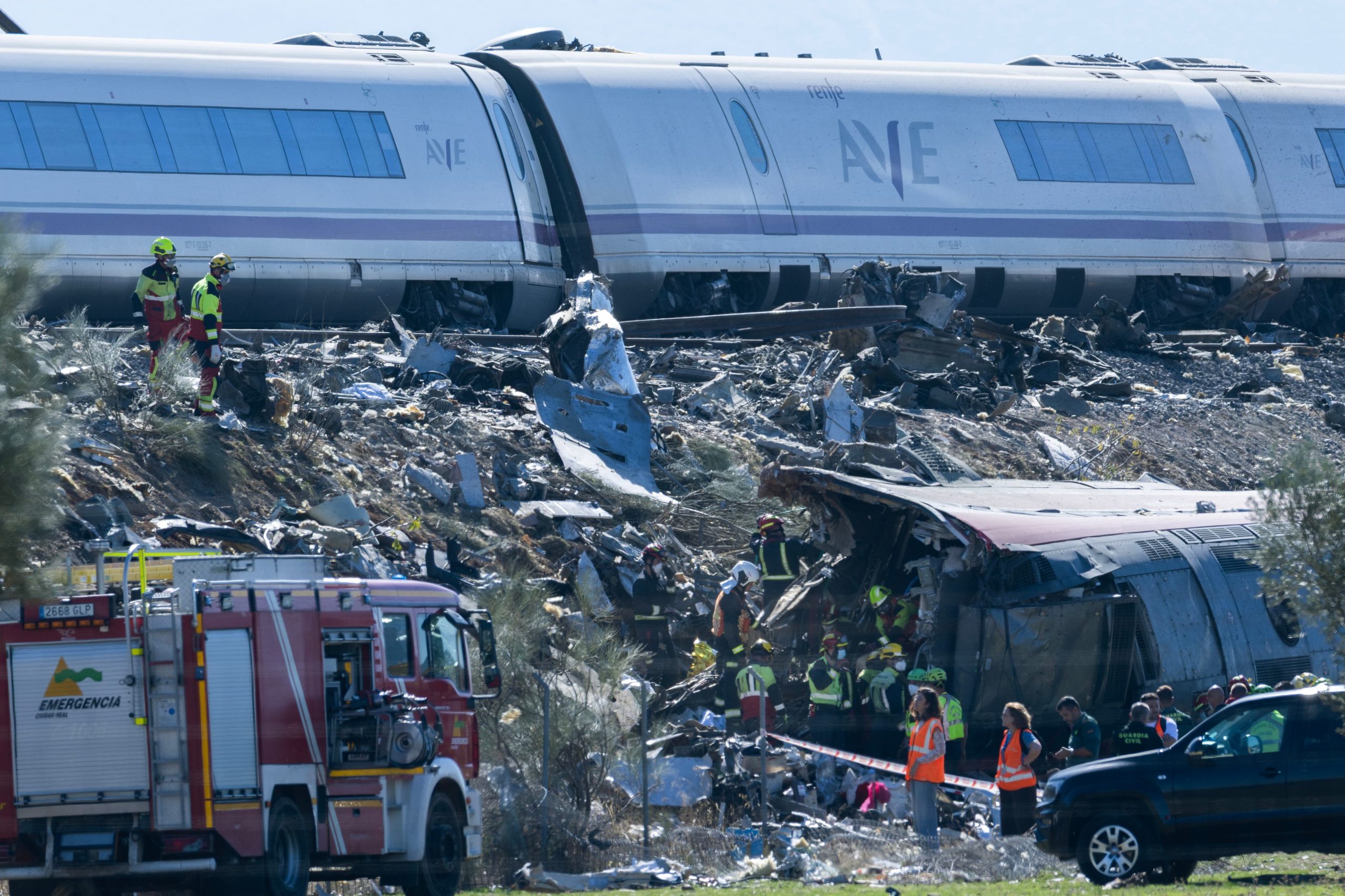
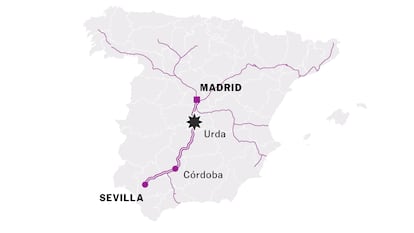
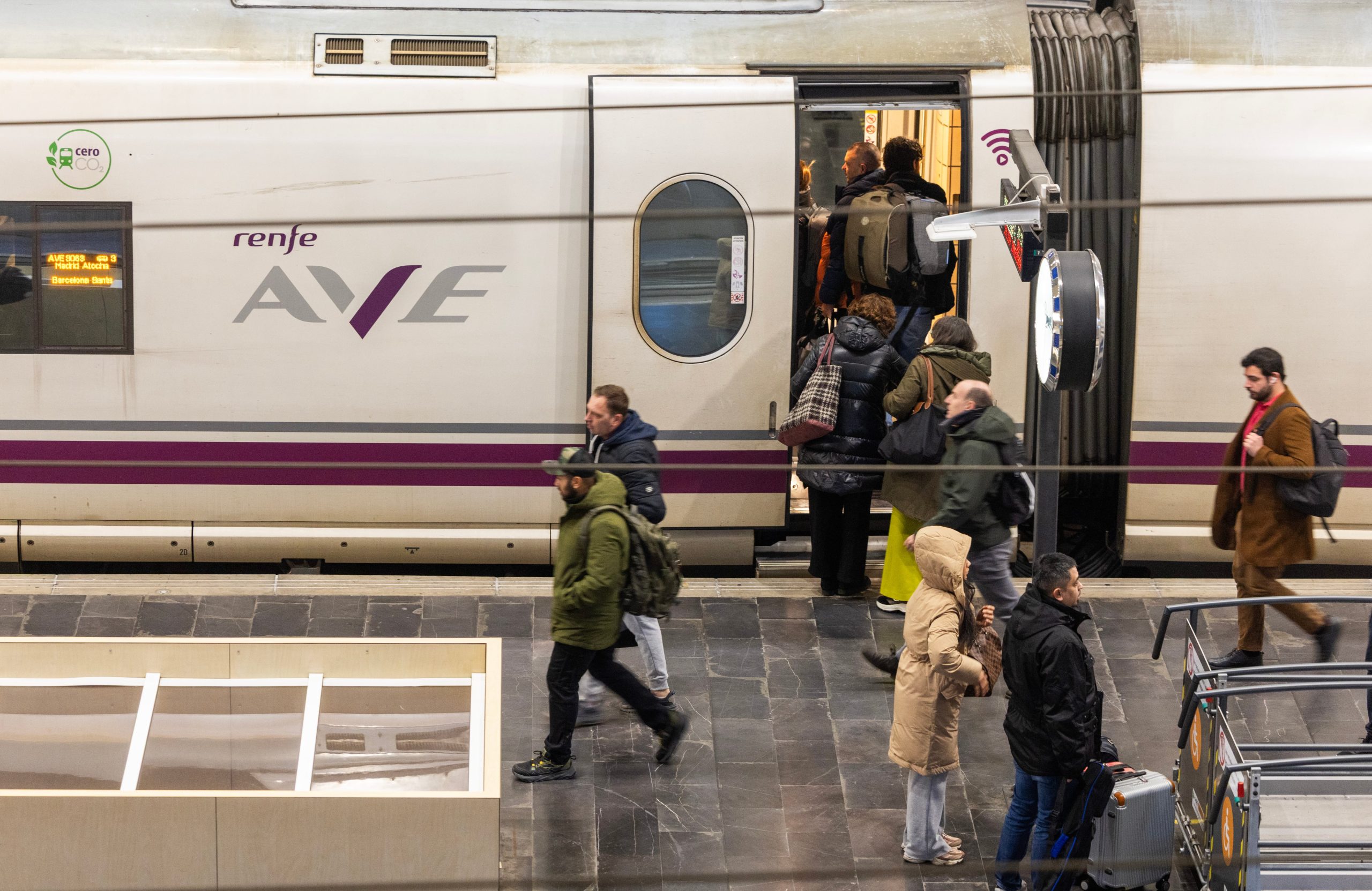
At least 64 people have died in a train accident that occurred Wednesday morning near Urda station in Toledo, Spain, according to the government, which fears there may be more fatalities. “It could be worse than Adamuz [the rail accident in Córdoba that claimed 46 lives on January 18],” government sources said. The authorities also said 80 people had been injured, 50 of them seriously. At least 55 people had been transferred to hospitals in the area, the regional government of Castilla-La Mancha confirmed.
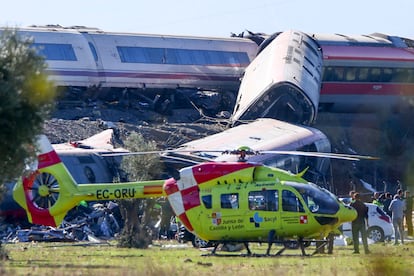
An AVE high-speed train collided with an Iryo train that was stopped on the tracks, according to sources from the emergency services, who indicated that two cars fell down an embankment. According to initial reports, the AVE train may have struck the Iryo train from behind, causing two cars of the latter train to derail.
Spanish state rail company Renfe has reported that train service between Madrid, Ciudad Real, and Andalusia has been suspended. The government and the opposition have canceled their schedules for Wednesday after receiving news of the accident.
“I am in constant contact with the Minister of Transportation and the premier of Castilla-La Mancha. Emergency services are working on the ground to assist those affected and ensure their safety, in coordination with all the relevant authorities. My thoughts, solidarity, and support go out to all the victims and their families,” posted Prime Minister Pedro Sánchez on X.
Among the passengers was former Popular Party labor minister Fátima Báñez, whose condition remains unknown. “I can’t give you any information [about Báñez], but we’re in contact with her family, who are already in the area. We’re gathering information,” said Antonio Sanz, the regional minister for the presidency and head of emergency management in Andalusia.
“A human error by an [state-owned railway infrastructure company] Adif operator in response to a malfunction in the main signaling system is the likely cause of the accident,” government sources said. This safety system is automated, but when it fails, it switches to manual mode. That is why the trains came to a stop when the automatic safety system failed, and service resumed under human control — and that is where the error occurred, according to initial analyses.
Rafael Escudero, spokesperson for the Railway Union, said that the accident was “very unusual.” Speaking to Antena 3 radio, he noted that there is no passenger stop in that area, that train traffic is monitored in real time, and that the train also receives real-time information on the condition of the tracks; if there is an obstacle — such as another train — it would stop.
‘What I encountered was horrific’
A passenger traveling in one of the rear cars of one of the trains told EL PAÍS that he felt a “strong impact” about 40 minutes into the trip. The collision occurred at kilometer marker 118, between the towns of Mora, Orgaz, and Urda (Toledo). The Renfe train involved in the accident had stopped and slowed down minutes earlier due to a traffic problem on the line. The explanation points to human error, because when the safety system failed, about eight trains in the area came to a stop; they were then ordered to move, but the Iryo train was unable to do so and remained stationary.
Another passenger, Miguel Ángel Pérez, who had already exited the train, told state broadcaster TVE by phone that the accident was “terrible, indescribable.” He was travelling in the last car of Renfe’s AVE 2080, which was carrying a total of 397 passengers. “We’ve come to realize the immense gravity” of what happened, he admitted. “With the huge impact and the rattling, we started clinging to our seats,” he said. “We were able to get out of the car by breaking the windows,” he noted before hanging up because he was being asked to provide his ID to authorities.
Ambulances and hearses continued to arrive at and leave the scene of the accident later Wednesday morning, where not all the bodies have yet been recovered. In the area, a priest from Consuegra — just a few miles from the crash site — says he arrived at 10 a.m. and administered last rites to two people near the tracks. “What I encountered was horrific — many victims in very bad condition. Most of them were young people. I had never faced a situation like this before.”
According to initial analyses, an operator at the Atocha control center in Madrid mistakenly ordered the Renfe train to proceed even though the Iryo was blocking the track; this ultimately led to a rear-end collision — at a speed yet to be determined — between the Renfe train and the Iryo, which caused the accident. Investigations are ongoing, but these are the initial findings from technical experts, according to government sources.
The spokesperson for the regional government of Castilla-La Mancha, Esther Padilla, confirmed on TVE that there were numerous fatalities, but announced that the number “will most certainly rise.” “The Military Emergency Unit (UME) has offered its assistance, as have Castilla-León, Madrid, Andalusia, and Navarre — the latter being the most recent to join the effort,” Padilla added.
Although there is no official confirmation of fatalities at this time, this accident brings to mind the derailment of two high-speed trains in Adamuz (Córdoba) on January 18, which was the most serious train accident in Spain since 2013, when an Alvia train connecting Madrid with Ferrol derailed on a curve in Angrois, near Santiago de Compostela, due to excessive speed. Eighty people died and another 145 were injured.
The worst accident in Spanish railway history is considered to be the one that occurred in Torre del Bierzo (León) on January 3, 1944. It involved a collision inside a tunnel between an express train, a shunting locomotive, and a freight train, resulting in an official death toll of 78. However, it is believed that the actual number of fatalities was concealed by the Franco regime. Other accidents with a high number of casualties occurred in El Cuervo (Seville) on July 21, 1972, when a head-on collision between a railbus operating on the Cádiz–Seville route and an express train from Madrid resulted in 86 deaths and 112 injuries; and on the Valencia Metro on July 3, 2006, when a Metrovalencia subway train derailed due to high speed on a curve, resulting in 43 deaths and 47 injuries.
Members of the Adamuz victims’ association have said they want to help and share their experience following the events of January 18. José Manuel, a member of the association’s board of directors and a relative of one of the women injured in the previous accident, put it this way: “Every step they take from here on out has consequences they are not yet able to fully assess.”
Sign up for our weekly newsletter to get more English-language news coverage from EL PAÍS USA Edition
Adif
Óscar Puente Admite Que Las Elecciones Pueden Alterar El Traspaso De La R1 De Rodalies A La Generalitat


Adif
El Incendio De Un Tren Interrumpe La Circulación En La Línea De Alta Velocidad Madrid-Barcelona


La avería de un tren de alta velocidad de Renfe entre las localidades zaragozanas de Ricla y Plasencia de Jalón ha motivado la interrupción de la circulación en la línea Madrid-Barcelona poco después de las 16.00 horas, concretamente en el tramo entre Calatayud y Zaragoza. La incidencia en día festivo y en plenas fiestas del Pilar en Zaragoza amenaza con provocar fuertes demoras en los servicios que operan tanto la citada Renfe como Iryo y Ouigo.

F1 owner Liberty Media faces rider revolt over Qatar Grand Prix safety fears

Toledo Train Disaster: People & Their Testimonies
Spain’s Transport Minister Blames Rail Crash On ‘inexplicable Human Error’


-

 New Developments4 weeks ago
Luxury Villas For Sale, Estepona – ProjectL1
-
Blackout preparedness4 weeks ago
Brussels takes action against Spain over failure to update blackout plan
-
EU4 weeks ago
EU nicotine crackdown sparks warning that ex-smokers could be driven back to cigarettes
-
 Housing access / crisis / affordability4 weeks ago
Radical Housing Decrees Defeated As Snap Election Talk Grows
-

 Uncategorized4 weeks ago
Lewis Hamilton F1 wish could come true as stunning plans for new track revealed
-
British tourists arrested in Magaluf4 weeks ago
British tourists arrested after taxi driver left bloodied in Magaluf
-

 %3 weeks ago
Spain Payslip Change Coming In January 2027
-
Catalonia3 weeks ago
Why the rain opened a hole in front of Granollers’ courts