Connect with us

%

Young Voices Shaping Dénia

Published

on

young-voices-shaping-denia

Young voices shaping Dénia: Podcast tackles mental health and important isues

By Lottie Verrier • Published: 25 Jul 2026 • 10:49 • 2 minutes read
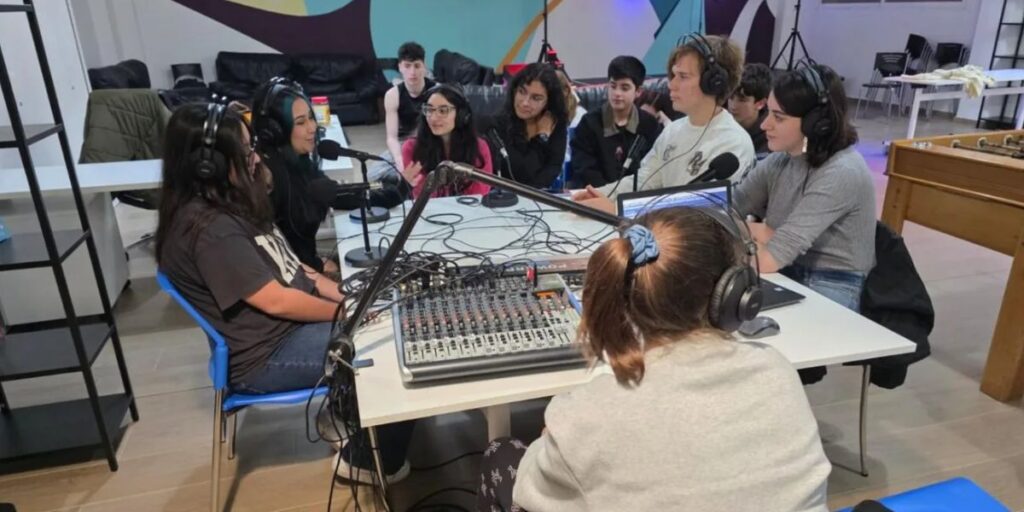
The second season of Pòdcast Jove has now come to an end after 15 episodes, establishing itself as an important platform where local teenagers and young adults can discuss the issues affecting their daily live

Young voices Credit: PodcastJove

Google News

Follow Euro Weekly News on Google News

Get breaking news from Spain, travel updates, and expat stories directly on your Google News feed.

Follow on Google News

Sign up for personalised news

Subscribe to our Euro Weekly News alerts to get the latest stories into your inbox!

By signing up, you will create a Euro Weekly News account if you don’t already have one. Review our Privacy Policy for more information about our privacy practices.


%

New Car Scam Targeting Elderly Drivers

Published

on

new-car-scam-targeting-elderly-drivers

A small knock against your car is an unlucky moment on an otherwise ordinary drive, the kind of thing you’d be frustrated at, deal with and move on from. Recently, however for dozens of drivers, that same small knock has turned into a nightmare that emptied their bank accounts.

An “accidental” collision

Officers from Portugal’s Public Security Police (PSP) have flagged a new twist on the fake traffic accident scam, after more than 50 complaints landed on their desks in just one single month reporting cumulative losses exceeding €200,000 . Criminals stage a minor knock between two vehicles on purpose, choosing a moment and location that allows them to approach a driver directly. Greater Lisbon has seen the bulk of reported cases so far.

Once the bump has happened, fraudsters turn hostile and aggressive fast. Loud accusations and a confrontational manner are used to fluster the driver, who is told they caused the collision and now faces losing points off their licence or a lengthy insurance dispute. Anxiety builds quickly, and that’s exactly the goal the scammers want.

How the card swap catches drivers out

A supposed way out gets offered almost immediately, choose to pay a modest sum on the spot and the whole matter disappears. Scammers carry a portable card reader or a phone rigged to take contactless payments, making the transaction feel routine rather than suspicious.

Real theft happens the instant a PIN gets entered. While attention stays fixed on the keypad, an accomplice swaps the genuine bank card for a near-identical fake one. Scammers then leave the scene and use the authentic card to withdraw huge sums before anyone realises what’s missing, let alone manages to freeze the account.

Older drivers targeted deliberately

According to the PSP victims aged between 70 and 90 who were driving alone make up most of the cases recorded. Criminals appear to be selecting older motorists specifically, betting on hesitation, politeness and unfamiliarity with this particular con working in their favour.

What police want drivers to do

Handing a bank card to anyone else should never happen, regardless of pressure applied or excuses given, officers insist. Suspicious situations call for an immediate call to police rather than a hurried payment.

Anyone caught out is urged to note whatever details they can, including the suspects’ appearance, vehicle model and registration plate, then report the incident without delay. Families are also being encouraged to pass this warning on to elderly parents and grandparents and friends. A five-minute conversation now could prevent a much costlier one later.

Continue Reading

%

Murcia Man’s Honesty Rewarded After Returning Sorolla Painting Worth €150,000

Published

on

murcia-man’s-honesty-rewarded-after-returning-sorolla-painting-worth-e150,000

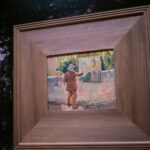
the reward was not about replacing the value of the painting. Photo credit: Oscar Gonzalez Fuentes/Shutterstock

Andrés Hurtado, the Murcia man who made headlines last month after mistakenly taking what he believed was a painting with a beautiful frame from the pavement while on holiday in Sevilla, has received a €1,000 reward after returning the artwork, later identified as a valuable Joaquín Sorolla piece. What began as an unusual holiday discovery has now ended with recognition for Hurtado’s decision to hand the painting back, despite its estimated value of around €150,000.

The reward, sent by the owner’s family through Bizum, was a gesture of gratitude for returning a piece of Spanish artistic heritage rather than attempting to profit from it. The latest chapter of the story has shifted the focus away from the painting’s surprising discovery and towards the choice that followed, one that has earned praise across Spain.

A reward for choosing honesty

The €1,000 payment represents only a small fraction of the artwork’s estimated value, but the gesture was not intended to match the painting’s market price. Instead, it recognised a decision that could easily have ended very differently. With the artwork believed to be worth thousands of euros, keeping it or attempting to sell it could have turned the story into a legal dispute rather than one about honesty.

Hurtado’s decision to return the Sorolla artwork has been praised by those who see the case as an example of integrity at a time when valuable discoveries can often lead to disagreements over ownership. For Hurtado, the reward was not about replacing the value of the painting, but about acknowledging the importance of returning something that was not his.

A valuable piece of Spanish art preserved

The artwork is linked to one of Spain’s most internationally recognised painters. Known as the “master of light”, Sorolla created hundreds of works during his career, capturing Spanish landscapes, portraits and scenes of everyday life. His paintings remain highly valued around the world, with collectors and museums continuing to seek his work.

The return of the painting means it can remain with its rightful owner and continue to be preserved as part of Spain’s artistic heritage. The recovery of the unique piece of artwork shows why privately owned works of historical and cultural value must be protected, as their importance is not only measured by their financial worth.

A different ending to a surprising discovery

Stories involving valuable finds often end with disputes, investigations or attempts to profit from unexpected discoveries. This case has taken a different path. Instead of becoming a battle over ownership, the Sorolla painting story has ended with the artwork returned and the person who handed it back receiving recognition.

The contrast between the painting’s estimated value and the reward received has become one of the most talked-about parts of the story. A work of art worth around €150,000 resulted in a €1,000 payment, but it also brought attention to the man who chose honesty over opportunity. The case has become a reminder that the value of an object and the value of an action are not always measured in the same way.

For Spain’s art world, the most important outcome is that a piece connected to one of the country’s greatest painters has been recovered and returned to its rightful owner. For Hurtado, the reward represents recognition for a decision that protected a valuable piece of cultural history. In the end, the story is not only about a valuable Sorolla painting. It is about what happened when one person had the chance to benefit from an unexpected discovery and chose to do the right thing instead.

Continue Reading

%

Ronda’s Ancient Mountain Harvest

Published

on

ronda’s-ancient-mountain-harvest

High in the hills above Ronda, workers armed with specialised axes are carrying out a harvest that hasn’t changed in generations

Traditional mountain harvest powers local economy

Forest bark is turning into valuable income for Ronda this summer. Publicly owned cork oak estates are undergoing their seasonal stripping, bringing a welcome cash injection for town hall spending and community projects. Last year’s harvest brought in more than €600,000 for public funds, showing just how important this yearly event is for local taxpayers. Town hall leaders have officially launched la saca del corcho, the traditional cork harvest, with target yields expected to hit nearly 490,000 kilograms of raw bark.

Essential income for town council finances

Forecasting estimates that workers will extract at least 10,650 quintales castellanos from local trees, which in old Spanish trade metrics, one quintal equals roughly 46 kilograms. Activity focuses on Las Majadas de Ronda and El Berrueco woodlands, situated in the Los Alcornocales Natural Park within the Cortes de la Frontera boundary.

Generating roughly 1,200 individual day-shifts for local workers, the harvest provides vital summer work for regional families. Experienced cork strippers work with specialised axes to slice away bark without damaging the living tree underneath. Stripped trees then require a strict ten-year recovery period before another harvest can happen. Rugged terrain makes heavy machinery unusable, requiring traditional muleteers and working pack animals to carry harvested slabs out from deep ravines.

Balancing forestry with local livestock needs

Local officials don’t just let the trees do all the financial heavy lifting. Town hall planners cleverly combine cork stripping with cattle grazing rights, pasture rentals, and routine timber thinning throughout the calendar year. Reinvesting the woodland profits keeps the mountains looking pristine while quietly footing the bill for practical everyday needs, like fixing potholed rural lanes, clearing summer firebreaks and keeping local parks shipshape for everyone to enjoy.

Continue Reading

Trending

Copyright © 2017 Spanish Property & News