Connect with us

%

Young Woman Left Horrified After Gibraltar Restaurant Receipt Carries Shocking Racist Slur

Published

on

young-woman-left-horrified-after-gibraltar-restaurant-receipt-carries-shocking-racist-slur

The mother explained that her daughter had visited the restaurant with a friends. Photo credit: Syreeta Alcock on Facebook

A meal out with a friend ended on an appalling note for a young woman in Gibraltar after she found a racist insult written on her restaurant receipt. Her mother shared a photograph of the message online, prompting an angry response from residents and questions about how it had been allowed to appear on a customer’s bill.

The words, written in Spanish, read: ‘Moro de mierda vuelve a tu pais’, a deeply offensive insult telling a Moroccan person to go back to their country. The mother explained that her daughter had visited the restaurant with a friend a couple of days earlier. She said the family would not be returning to the establishment. 

Restaurant’s explanation sparks further criticism

The incident quickly drew attention on social media, with commenters questioning whether the restaurant had taken sufficient action and whether the matter should be reported to the Royal Gibraltar Police.

The restaurant, identified as Chatzz, subsequently issued a statement describing the message as an ‘in-joke’ between two members of staff. It said the employee responsible had been dismissed. That explanation has not convinced everyone. Several people questioned how a remark of that nature could be dismissed as a private joke when it had ended up on a customer’s receipt. Others wanted to know why only one member of staff had lost their job if two employees had been involved.

Customers threaten to boycott restaurant

The reaction has also reached beyond the original post, with some people saying they will no longer eat at Chatzz or other restaurants operated by the same group. One commenter said their family would be avoiding the establishment after reading the company’s explanation. Another questioned whether the employee responsible might simply be moved to a different restaurant within the group. Others called on the customer to report the incident to the Royal Gibraltar Police (RGP), while several demanded a fuller apology from the business.

There were also calls for customers to check their receipts before leaving the restaurant, with people concerned that the incident might not be an isolated occurrence. However, there is no evidence that similar messages have appeared on other customers’ bills. One particularly disturbing comment speculated about whether the daughter’s food could have been interfered with. No evidence has been provided to support that suggestion, and it remains speculation rather than an allegation established by the customer.

Questions remain over the company’s response

The incident has put the restaurant’s handling of the matter under scrutiny, particularly its description of the message as an internal joke. Even if the words were originally exchanged between colleagues, they appeared on a customer’s receipt and were seen by someone who had no part in the alleged joke. The daughter and her friend were customers, not participants in the exchange.

The mother’s decision to share the receipt has also prompted wider discussion about racism and the treatment of people of Moroccan and North African origin in Gibraltar. For the family involved, the response is straightforward: they will not be returning to Chatzz. Whether the company’s explanation and the dismissal of one employee will be enough to reassure other customers remains to be seen. The restaurant has been approached for comment. This article will be updated if a response is received

%

Spanish Supermarket Launches New Mobile Shopping System To Cut Supermarket Checkout Queues

Published

on

spanish-supermarket-launches-new-mobile-shopping-system-to-cut-supermarket-checkout-queues

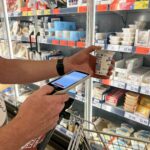
If you do your weekly supermarket shop, you’ll know that getting everything into the trolley is only half the job. There is still the queue, unloading all those groceries at the till waiting for them to be scanned and then packing everything up again. Alcampo is offering shoppers another way to do it, allowing them to scan their own shopping with their mobile phones as they walk around the store. The service, called AutoScan, lets customers scan each product before putting it into their trolley or basket.

Instead of waiting until they reach the checkout, they can build their shopping basket on their phone as they move through the aisles.  When they have finished, the contents can be transferred to the till without scanning every item again. AutoScan is integrated into the existing Club Alcampo app and was developed with shopreme, a company specialising in digital self-checkout technology. Customers do not need to download a separate app, but they must be Club Alcampo members.

AutoScan is being introduced across Alcampo stores

The service was first introduced in July this year, with an initial rollout covering around 40 stores in Madrid, Cataluña and Castilla-La Mancha. Alcampo plans to extend AutoScan progressively across its Spanish network before the end of 2026. 

It has not announced a confirmed date for when every branch will have the service, so customers should check whether it is available at their local supermarket. Traditional tills remain available for customers who would rather shop as they always have. AutoScan is an additional option, not a replacement for the existing checkout arrangements.

How to scan your shopping with your phone

To use AutoScan, shoppers need the Club Alcampo app on their mobile and must be inside a participating store. They can start a shopping session by scanning the code displayed in the supermarket or using the geolocation function available in the app. The phone’s camera is then used to read the barcode on each product. Shoppers scan an item before placing it in the trolley or basket, and it is added to their digital shopping list. They can continue doing this throughout the shop, rather than having to remember everything they have picked up.

Once they have finished, they select the payment option in the app. A QR code is generated, which transfers the digital basket to the checkout. There is an important detail for anyone expecting a completely phone-based payment system: AutoScan does not mean customers necessarily pay directly through the app. Payment is still completed at a checkout. 

In stores with Alcampo’s Cajamiga self-service tills, shoppers can use one of those machines. Where that facility is not available, they need to go to an assisted checkout. The difference is that the products have already been scanned during the shop. Customers do not have to unload the trolley and put every item through the checkout scanner again before paying.

Staff will still be available to help

Alcampo says employees will be on hand to explain how the service works and help customers who have difficulty using it. Store staff have received specific training to support shoppers using AutoScan and deal with problems during the process.

The range of products available through the service may vary according to the store, its format and the merchandise it stocks. That means the experience may not be identical in every branch, even where AutoScan is available. Customers who do not want to use the app can continue to shop and pay through the existing checkout facilities.

Alcampo’s move towards mobile shopping

The partnership with shopreme brings mobile scanning into Alcampo’s existing app and links the digital basket with the supermarket’s checkout systems. Shopreme says its technology is used in more than 2,000 stores across 12 countries.

For Alcampo, the service adds another digital option without requiring customers to use a separate application or a supermarket-issued scanner. The retailer expects to have AutoScan in all its Spanish stores before the end of 2026. Until then, customers will need to check whether their local branch has introduced the service before setting off with their shopping list.

Continue Reading

%

8 Towns & Villages Affected By Electricity Cuts

Published

on

8-towns-&-villages-affected-by-electricity-cuts

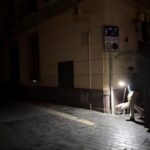
Malaga blacked out. Credit: Antonio Baeza FB

Residents across Malaga Province have been hit by electricity cuts, with faults affecting up to eight municipalities and more than 1,100 customers caught up in a separate overnight outage in Campanillas.

The latest problems were reported on Sunday, November 1, with interruptions affecting parts of Malaga city, Alhaurin de la Torre, Alhaurin el Grande, Marbella, Velez-Malaga, Nerja, Benamargosa and Benamocarra, with the interruptions attributed to faults on the local electricity distribution network.

The worst individual incident was reported in Santa Rosalía-Maqueda, in the Campanillas district of Malaga, where residents lost their electricity at approximately 9pm on Saturday, October 31.

According to the distribution network’s recorded data, 1,141 homes were initially affected. The initial restoration estimate provided by Endesa was 11am on Sunday, but residents were still reporting problems after that deadline. The other interruptions were recorded in separate locations, rather than being part of one province-wide blackout.

Where are the latest power cuts?

According to electricity distributor e-distribución, a subsidiary of Endesa, the reported faults covered several neighbourhoods and streets.

In Malaga city, affected locations included the historic centre, Camino Suárez, Calle Tomás de Cózar, near Plaza de La Merced, Calle Dos Aceras, Calle Hilera and the area around Calle Venegas.

Other reported locations included:

  • Alhaurin de la Torre: Calle de Las Eras.
  • Alhaurin el Grande: Parts of the San Anton neighbourhood, near Calle Molinos de Arriba.
  • Marbella: Costabella, including Calle Costa del Sol.
  • Velez-Malaga: Around Calle Aloe Vera and Rio Seco.
  • Nerja: Avenida Castilla Pérez.
  • Benamargosa and Benamocarra: Further interruptions were reported in both municipalities.

The faults were described as separate incidents affecting local sections of the distribution network. Not every resident in the eight municipalities was without electricity.

Residents can check the official e-distribución breakdown map for updates and estimated restoration times. The company’s free breakdown telephone number is 900 878 212.

Possible transformer fire behind overnight outage

The prolonged interruption in Santa Rosalía-Maqueda is being investigated separately. Local reports suggest that the incident may have involved a fire at an electrical transformer, with residents describing smoke and what they believed was an explosion near electrical equipment.

However, the precise circumstances have not been officially confirmed. The interruption began at approximately 9pm on Saturday, with e-distribución’s recorded start time given as 9.14pm. More than 1,100 customers were listed as affected.

The original restoration estimate of 11am on Sunday was not met, leaving residents concerned about how long repairs might take.

The incident is particularly concerning because residents had already complained about repeated electricity interruptions in the area. In May, there were almost daily power cuts in Santa Rosalía-Maqueda, usually lasting around four minutes and occurring around lunchtime.

Endesa subsequently installed additional protection equipment at the Campanillas substation in an attempt to resolve those earlier problems.

Why are electricity problems becoming a concern in Malaga?

The latest interruptions come against a background of growing concern about the capacity of Malaga’s electricity infrastructure. The province has experienced rapid residential, commercial and tourism development, but the expansion of its electricity distribution network has struggled to keep pace.

In October, Malaga Mayor Francisco de la Torre warned that insufficient electricity capacity was holding back major residential and industrial developments. Around 13,500 planned homes in Malaga city were reported to be affected by a lack of available electricity capacity.

The president of Malaga’s provincial government, Francisco Salado, also warned that the shortage was affecting investment and economic development, with approximately 25,000 homes across the province reportedly facing electricity supply constraints.

The problem is not necessarily a shortage of electricity being generated. Rather, there are concerns about the capacity of the transmission and distribution infrastructure to transport and deliver enough power where it is needed.

The issue is part of a wider national problem. EWN previously examined how electricity grid saturation is affecting Spain’s energy transition, with limited network capacity delaying new connections for businesses and renewable energy projects.

Overloaded transformers have already caused blackouts

There have also been examples of electricity interruptions directly linked to overloaded local networks. In July, approximately 300 residents in the Las Cañadas area of Mijas and neighbouring Fuengirola lost electricity following an overload in the low-voltage network.

Endesa attributed the incident to rising temperatures and increased electricity consumption. Malaga had recorded a then-record electricity demand of 1,490 megawatts on the Thursday before the interruption.

The company subsequently planned a new transformer centre to increase capacity and improve reliability in the neighbourhood. The incident provoked residents to protest on the streets.

New electricity infrastructure will take years

The wider capacity problem is unlikely to disappear any time soon. Plans announced for the province include two new electrical substations and the expansion of an existing one in Cartama.

The projects are intended to provide additional capacity for Malaga city, Antequera and the growing Guadalhorce Valley, including the Malaga TechPark.

The Spanish Government’s proposed electricity network plan to 2030 includes a new Malaga Centro substation, another in Antequera and an expansion of the Cartama facility.

The projects will take time to complete, however, and some infrastructure improvements could be several years away. For residents currently experiencing interruptions, that offers little immediate reassurance.

The latest incidents have again raised questions about whether electricity networks are receiving sufficient investment to cope with Malaga’s expanding population, housing developments and growing demand for power.

Continue Reading

%

Torrox Improves Safety With 11 Defibrillators

Published

on

torrox-improves-safety-with-11-defibrillators

Oscar Medina oversees installation of new AEDs. Credit: OMFB

New emergency life-saving equipment has been installed across the town to help save lives in the event of sudden cardiac arrest.

Torrox is stepping up its public safety measures after installing 11 new defibrillators in educational establishments and centres for older residents.

Mayor Óscar Medina announced the installation on Sunday, November 1, saying the new-generation devices would help make the municipality better prepared to deal with cardiac emergencies.

The plan is intended to improve safety in places where children, teachers, older residents and staff spend much of their time, providing the means to respond more quickly if somebody suffers a sudden cardiac arrest.

New defibrillators across Torrox

Medina shared the announcement on his Facebook account, describing the project as an important step towards making Torrox a municipality with greater cardiac protection.

The equipment consists of automated external defibrillators (AEDs), which can analyse a person’s heart rhythm and deliver an electric shock when necessary.

These devices are designed to be used by members of the public and provide spoken instructions to guide someone through the process. They can be particularly important when used quickly, together with cardiopulmonary resuscitation (CPR), while emergency services are on their way.

Every minute can count during a cardiac arrest, making access to defibrillators in public buildings and community facilities particularly valuable. A similar expansion of public access to the equipment was reported in Velez-Malaga, where 70 new defibrillators were announced.

Training is also important

The announcement follows previous efforts by Torrox to improve local emergency response capabilities. The town has also supported training for Civil Protection volunteers, with 15 members receiving certificates following instruction at the Provincial Fire and Civil Protection School. Civil Protection training in the Axarquia has previously brought together volunteers from several local areas, including Torrox.

Having trained people available to use the equipment can make an important difference when an emergency occurs. That said, the newest models are designed in such a way that anyone can use them in an emergency, rather than waiting for ambulance staff the arrive. The equipment has easy-to-understand spoken instructions and is programmed not to discharge an electric current is it detects a heartbeat, including that of someone touching the body of the victim. Spoken instructions are often also given in English.

The latest installation is another step in improving access to life-saving equipment across the town, particularly in facilities used by vulnerable members of the community. Nerja previously installed five mobile defibrillators to improve emergency cover along its coastline.

A practical investment in community safety

Although the mayor has confirmed that 11 devices have been installed, further details about their individual locations and whether staff at all the participating centres have received practical training have not yet been provided.

The Junta de Andalucia’s guidance on automated external defibrillators explains the regional requirements for installation, registration and use of the equipment.

The council’s investment reflects the importance of making emergency equipment accessible beyond hospitals and medical centres.

For families, school communities and older residents in Torrox, the new installations offer an additional level of reassurance should a cardiac emergency occur. In Spain, anyone needing emergency assistance can call 112, the national emergency number.

Continue Reading

Trending

Copyright © 2017 Spanish Property & News