Connect with us

Donald Trump

Trump Administration Begins Declassifying Documents On UFOs And ‘extraterrestrial Life’

Published

on

trump-administration-begins-declassifying-documents-on-ufos-and-‘extraterrestrial-life’

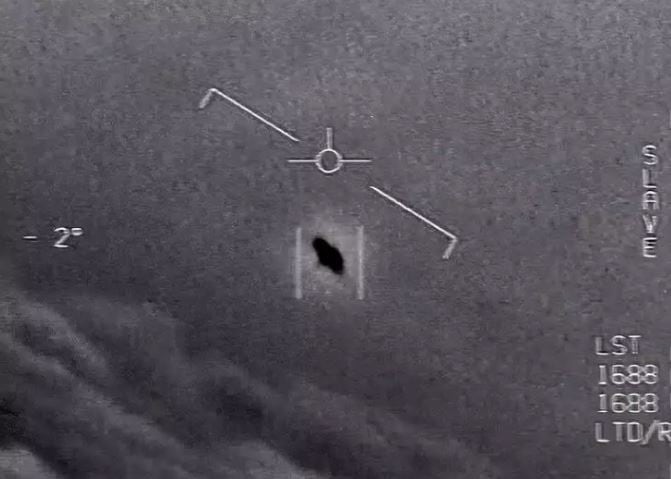
The Department of Defense began on Friday to comply with President Donald Trump’s order to release documents held by the U.S. government containing information on Unidentified Aerial Phenomena (UAP). This first declassification includes dozens of PDF documents and images — but no sensational revelations about the existence of extraterrestrial life. Authorities have uploaded these files to a department website, war.gov/ufo, a URL that uses the classic designation UFO (Unidentified Flying Object), which has been superseded in recent years in the fields of defense and science due to the popular connotations of the acronym. Materials will be uploaded on a weekly basis, authorities have promised.

Visitors to the website, designed with a retro-tech feel and white lettering on a black background, are greeted by a collection of photos, also in black and white. They are captioned with images such as “Infrared still image (Black Hot) captured of unidentified object(s) over western United States in September of 2025” or “Actual site photo with FBI rendered graphic overlay depicting corroborating eyewitness reports from September 2023.” Overlaid on the image is a drawing of “an apparent ellipsoid bronze metallic object materializing out of a bright light in the sky, 130-195 feet in length, and disappearing instantaneously.”

The first set contains images captured on film during the Apollo 7 (1969) and Apollo 17 (1972) space missions, photographs taken from the Moon on that last mission — never before seen — and the transcript of the communications between the pilots of that spacecraft.

In this document, one of the crew members describes to the command center “bright particles or fragments or something that go drifting by as we maneuver.” “There are a lot of large objects out in front of my window, down there; they’re just bright. From Ron [Evans]’s window, the sight looks like the Fourth of July,” reads the PDF, a very American reference to the fireworks that are a tradition on Independence Day.

New Year’s Eve 1999

There are also FBI photographs from New Year’s Eve 1999. In them, unidentified aircraft can be seen alongside U.S. military planes.

“While past administrations sought to discredit or dissuade the American people [from seeking proof of the existence of these phenomena], President Trump is focused on providing maximum transparency to the public, who can ultimately make up their own minds about the information contained in these files,” the Pentagon press release accompanying the disclosure states. “While all of the files have been reviewed for security purposes, many of the materials have not yet been analyzed for resolution of any anomalies.”

In February, days before launching the war against Iran alongside Israel, Trump announced in a message on his social media platform, Truth, his intention to release materials like those published this Friday. “Based on the tremendous interest shown, I will be directing the Secretary of War, and other relevant Departments and Agencies, to begin the process of identifying and releasing Government files related to alien and extraterrestrial life, unidentified aerial phenomena (UAP), and unidentified flying objects (UFOs), and any and all other information connected to these highly complex, but extremely interesting and important, matters” the Republican wrote on his social media account.

The declassification comes almost four months later. Trump has demonstrated in the past his penchant for smokescreens, and this latest move, at this point in his second term, has been met by his critics with suspicion that it is just another attempt to divert attention. It is unclear whether it will work this time: presidential approval ratings are at record lows, due to the war and the rise in gasoline prices.

The United States’ fascination with UFOs is nothing new; it dates back to 1947, the year a pilot named Kenneth Arnold described a string of nine bright, unidentified objects flying at tremendous speed over Mount Rainier, south of Seattle. His description introduced the expression “flying saucer” into popular speech.

Exactly 70 years later, the publication of a 2017 article in The New York Times brought the issue back into the public eye. The article revealed the existence of a confidential Pentagon program that, since 2007, had been studying UAP military sightings. As a result of that revelation, the Department of Defense decided in 2020 to release a series of videos from 2004 and 2015 depicting encounters between military pilots and unidentified flying objects, given that they were already circulating freely online.

Trump’s announcement and the recent resurgence of Washington’s interest in extraterrestrial life are also related to the release last November of a documentary titled The Age of Disclosure. It differs from other non-fiction films exploring ufology due to its generous budget, meticulous production values, and cast: rather than featuring fringe activists, the film includes testimonies from dozens of high-ranking officials, military officers, scientists, and influential politicians in Washington. “We are not alone,” they repeat time and again. Among them is Secretary of State Marco Rubio, who asserts that UAP sightings “are not science fiction.”

Sign up for our weekly newsletter to get more English-language news coverage from EL PAÍS USA Edition

Continue Reading
Click to comment

Leave a Reply

Your email address will not be published.

Bill Clinton

United States To Revoke Passports Of Parents With Child Support Debts

Published

on

united-states-to-revoke-passports-of-parents-with-child-support-debts

Parents who fail to pay child support will face significant penalties. The U.S. Department of State will begin revoking the passports of citizens with significant child support debts, as part of a policy the Trump administration introduced as an effort to strengthen enforcement of federal laws and compel those with overdue payments to catch up.

The measure will take effect on May 8 and, in the initial phase, will target individuals who owe $100,000 or more in overdue child support payments, according to information released by the Department of Health and Human Services (HHS). According to figures cited by the Associated Press, approximately 2,700 passport holders would initially fall into that category.

However, the federal government confirmed that the program will be expanded to include any citizen with debts exceeding $2,500, the threshold established by a federal law passed in 1996. Until now, that provision had been applied on a limited basis and primarily affected people attempting to apply for or renew a passport.

“Under President Trump, the Department of State is using commonsense tools to support American families and strengthen compliance with U.S. laws,” the State Department said in a statement released Thursday. The agency added that the policy aims to prevent those who owe significant amounts in child support from “neglecting their legal and moral obligations to their children.”

The legislation authorizing these sanctions was included in the Personal Responsibility and Work Opportunity Act, signed by then-president Bill Clinton in 1996. The law authorizes the secretary of state to “revoke, restrict, or limit a passport” for individuals identified by the federal government as delinquent in child support payments.

Although laws vary by state, deliberate nonpayment of child support can lead to criminal consequences in certain cases, along with sanctions such as wage garnishment, license suspension, or restrictions on obtaining a passport. In countries such as Spain and Colombia, repeated failure to pay child support can constitute a crime and result in criminal penalties, in addition to civil measures such as asset seizures.

In 2005, another law lowered the threshold for enforcement from $5,000 to $2,500. Despite this, the provision had rarely been used to revoke passports that had already been issued. Generally, the penalty consisted of blocking new applications or renewals.

Under the new system, the Department of Health and Human Services will notify the State Department of all individuals with arrears exceeding $2,500. Those who already have a passport could lose it even if they are not currently involved in any immigration or consular proceedings.

The government asserts that the program has already proven to be an effective tool for recovering overdue payments. According to data from the State Department, since the policy began to be implemented more systematically in 1998, states have recovered approximately $657 million in outstanding payments. More than $156 million has reportedly been collected over the past five years through more than 24,000 one-time payments.

Officials also noted that, since the AP reported in February on plans to expand the program, “hundreds of parents took action and settled their arrears with state authorities after it became known that the Department of State would begin proactively revoking passports.”

“While we can’t confirm the causation in all of those cases, we are taking this action precisely to impel these parents to do the right thing by their children and by U.S. law,” the State Department added.

The Trump administration urged anyone with child support debts to resolve their situation as soon as possible to avoid losing access to their passport. “Any American with significant child support debt should arrange payment to the relevant state or states now to prevent passport revocation,” the agency stated.

Once revoked, the document will no longer be valid for travel, and the affected individual will not be able to obtain a new one until the outstanding payment is made and the relevant state authorities confirm that there is no longer a debt on record with HHS.

The State Department also indicated that those who are outside the United States at the time of revocation must go to a U.S. embassy or consulate to request an emergency document that will allow them to return to the country.

So far, the agency has not specified how many people might be affected when the policy is expanded to the general threshold of $2,500, although officials acknowledged that the number could rise by several thousand.

Sign up for our weekly newsletter to get more English-language news coverage from EL PAÍS USA Edition

Continue Reading

America

Otro Tribunal Federal Frena La Política Del ICE Para Detener A Migrantes Sin Derecho A Fianza

Published

on

otro-tribunal-federal-frena-la-politica-del-ice-para-detener-a-migrantes-sin-derecho-a-fianza

Una corte federal de apelaciones rechazó este miércoles la política impulsada por la Administración de Donald Trump que permite a agentes migratorios detener sin posibilidad de fianza a prácticamente cualquier persona indocumentada en proceso de deportación, incluso si ha vivido durante años en Estados Unidos sin antecedentes penales.

La decisión del Tribunal de Apelaciones del 11º Circuito, con sede en Atlanta y jurisdicción sobre Florida, Georgia y Alabama, representa otro revés judicial para la interpretación que el Servicio de Inmigración y Control de Aduanas (ICE) adoptó el año pasado sobre la ley migratoria de 1996. Bajo esa nueva interpretación, cualquier persona que hubiera ingresado al país sin autorización podía ser considerada automáticamente como “solicitante de admisión” y, por tanto, quedar sujeta a detención obligatoria mientras avanza su caso migratorio.

El fallo fue emitido por un panel dividido de tres jueces. La mayoría sostuvo que el Gobierno federal excedió el alcance de la ley al intentar aplicar de manera masiva una disposición originalmente diseñada para personas recién llegadas a la frontera.

“En pocas palabras, la redacción que el Congreso ha optado por utilizar no otorga al Poder Ejecutivo la facultad ilimitada de detener, sin posibilidad de fianza, a todo extranjero no admitido que se encuentre en el país”, escribió el juez Stanley Marcus en la opinión mayoritaria. El magistrado agregó que “en ninguna parte del texto” de la ley de 1996 “encuentra esa interpretación un fundamento sólido”.

Durante décadas, administraciones de ambos partidos interpretaron la legislación como una herramienta enfocada en personas detenidas poco después de cruzar la frontera. Quienes ya vivían dentro del país, muchas veces desde hacía años, podían solicitar una audiencia de fianza ante un juez migratorio antes de permanecer detenidos por el ICE.

Sin embargo, la reinterpretación adoptada en julio de 2025 amplió drásticamente el alcance de la medida. Desde entonces, personas con trabajos estables, familias estadounidenses y sin historial criminal podían quedar detenidas automáticamente mientras enfrentaban procesos de deportación. La política también provocó un incremento considerable en la población detenida por el ICE, y el número de personas bajo custodia migratoria superó las 70.000 a principios de este año.

La decisión del 11º Circuito se produce después de que dos tribunales de apelaciones respaldaran la política del Gobierno de Trump y otros dos la rechazaran. Un quinto tribunal terminó dividido, sin alcanzar una mayoría clara.

Esa fractura judicial aumenta la posibilidad de que la disputa llegue próximamente al Tribunal Supremo, que probablemente tendrá la última palabra sobre la legalidad de la política de detención obligatoria.

La decisión también llega después de una ola de demandas presentadas por migrantes detenidos en distintos puntos del país. Cientos de tribunales federales han fallado en contra de la interpretación impulsada por la Administración Trump, en muchos casos a través de peticiones de habeas corpus presentadas por personas que buscan recuperar su libertad mientras avanzan sus procedimientos migratorios. El Departamento de Justicia no ha hecho declaraciones sobre el fallo.

La jueza Barbara Lagoa, designada por Trump, votó en contra de la decisión de la mayoría y defendió la postura de la Administración. En su opinión disidente, argumentó que el tamaño de la población afectada refleja años de falta de aplicación estricta de la ley migratoria, no un exceso de la interpretación actual. “El hecho de que el Poder Ejecutivo no haga cumplir una ley no puede limitar su significado de manera retroactiva”, escribió Lagoa. “En todo caso, el crecimiento de la población pone de relieve las consecuencias de la falta de aplicación de la ley, más que el alcance previsto de la misma”.

Continue Reading

Donald Trump

Spain’s UFC hero leaves Trump stunned at the White House. One comment changed the mood instantly

Published

on

By

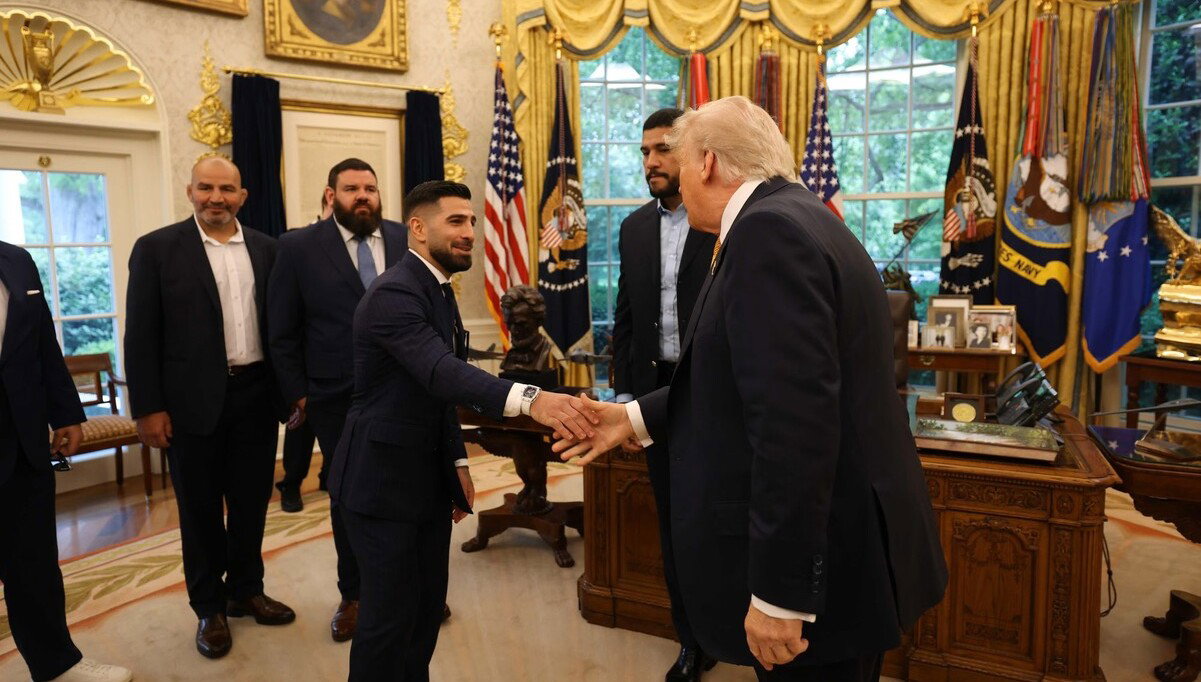
Spanish UFC champion Ilia Topuria went viral after an unexpected exchange with U.S. President Donald Trump during a White House meeting. A joking comment from Topuria about Trump being “so kind” quickly spread online and turned the unusual meeting into one of the most talked-about sports moments of the week. 

Ilia Topuria’s White House joke about Donald Trump goes viral

During the Oval Office meeting, Ilia Topuria delivered the comment that quickly turned the White House visit into a viral social media moment. 

The chemistry between the two was set weeks ago when Topuria jokingly warned  “Don’t blink or start fixing your hair, because it’s going to be over quickly. Come with your hair done, don’t waste any time because it will be done quickly.”

The remark, teasing at Trump’s famously recognisable hairstyle, rapidly spread across TikTok, Instagram and X.

Topuria later admitted he “never thought” the U.S. president would be “so kind,” while Trump praised the Spanish-Georgian fighter as one of the toughest athletes in UFC. Throughout the visit, Topuria appeared relaxed and smiling as cameras followed the unusual crossover. 

What is the UFC White House event

The UFC plans to stage an outdoor fight event on the White House grounds on June 14, 2026, officially called UFC Freedom 250, as part of celebrations for the 250th anniversary of the United States.

The card (A “card” in MMA is the entire lineup of scheduled fights for a specific event) is scheduled to be headlined by Topuria against American fighter Justin Gaethje in a lightweight title fight.

The “White House fight,” will take place at an infrastructure (a temporary 20,000+ seat arena) being built on The Ellipse, the park area just south of the White House fence, a highly unusual sporting spectacle ever connected to the White House.

Why Ilia Topuria is such a huge star in Spain

Topuria  is now one of Spain’s most famous and recognisable international athletes after rising to the top of the UFC.

The Spanish-Georgian fighter helped push mixed martial arts into the mainstream in Spain, with bars and sports venues now regularly showing UFC events overnight. Many younger fans now follow UFC in the same way previous generations followed boxing.

Why the reaction online has been so intense

Part of the fascination came from seeing two completely different worlds collide, Spanish MMA and American politics. Some fans described the moment as historic for Spanish sport. Others were simply shocked to see a UFC press event taking place inside the White House itself.

What happens next for Ilia Topuria

More official details about the UFC White House event are expected later this year as Topuria continues preparing for what could be one of the most watched UFC events ever. 

Continue Reading
Advertisement
Advertisement

Spanish Real Estate Agents

Tags

Trending

Copyright © 2017 Spanish Property & News