Connect with us

Latest

From The ‘Gibraltar Of Valencia’ To The High Alpujarra Gateway: These Are The Three Most Affordable Holiday Destinations Across Spain This Summer


Published

on

from-the-‘gibraltar-of-valencia’-to-the-high-alpujarra-gateway:-these-are-the-three-most-affordable-holiday-destinations-across-spain-this-summer

AFD

German Intelligence Services Consider The Far Right A Danger To Democracy

Published

on

german-intelligence-services-consider-the-far-right-a-danger-to-democracy

Far-right extremism remains the “greatest threat” to the liberal democratic order in Germany, according to the latest report from the Federal Office for the Protection of the Constitution (BfV), the country’s domestic intelligence service.

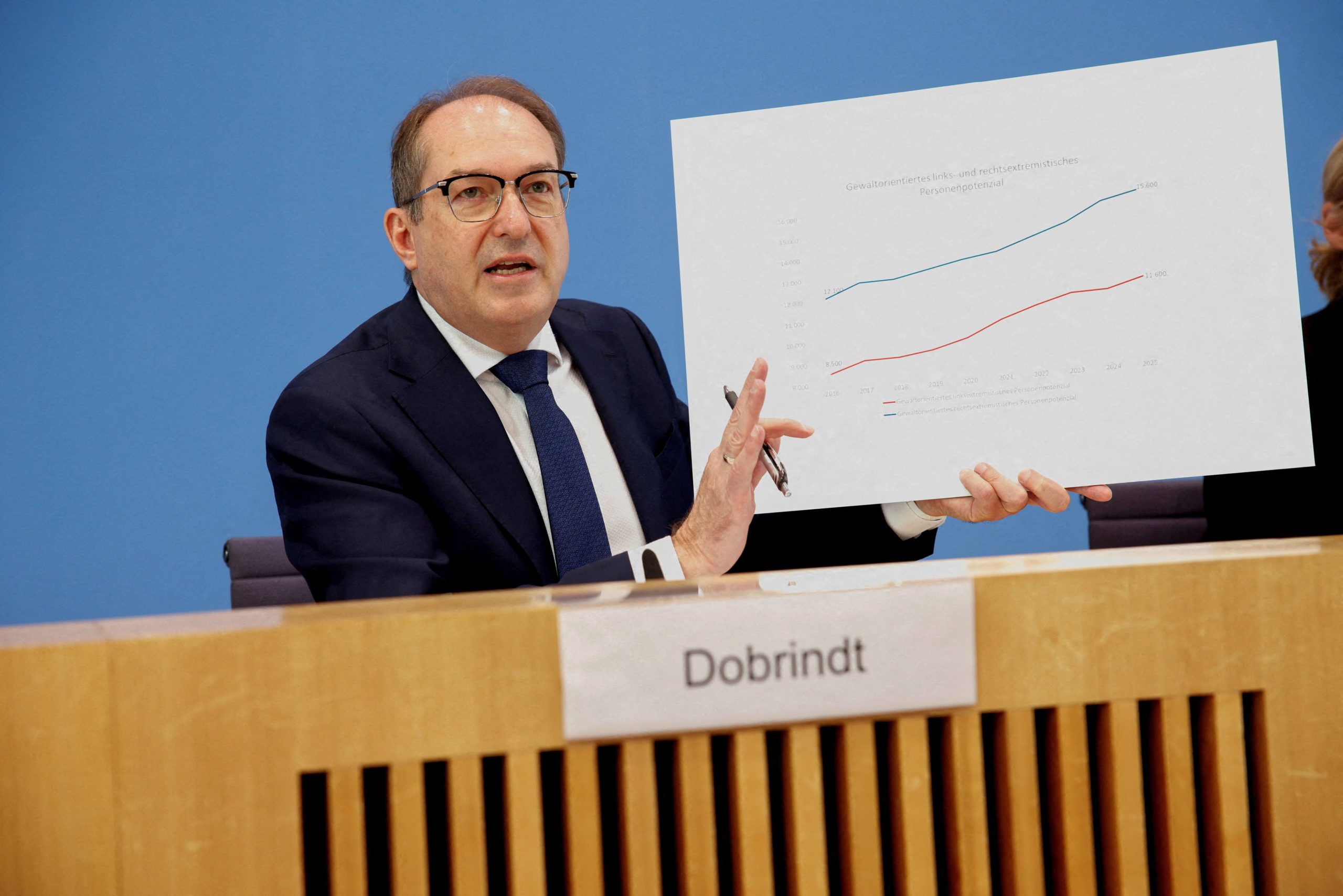
“Germany is under pressure,” Interior Minister Alexander Dobrindt warned Tuesday as he presented the 2025 report in Berlin. “The adversaries of our democratic and unitary constitutional order come from both outside and inside. They operate both offline and online. They act visibly and covertly.”

According to the intelligence services, Germany sits at the center of a “network of hybrid threats.” “From abroad, we see sabotage and espionage. From within, we face pressure from extremism in all its forms, both online and on the streets,” the minister said, painting a bleak picture in which foreign espionage is on the rise, reports and indications of attack preparations are increasing, and more people are willing to resort to violence. The number of extremists, on both the far right and far left, has also grown.

BfV president Sinan Selen, for his part, pointed to three distinct trends the agency has observed in the country: young people are being selectively recruited and radicalized; recruitment is taking place mainly online; and artificial intelligence is increasingly being used to spread extremist ideologies. “This applies to cyberattacks and information manipulation as well as to far-right music and the planning of Islamist attacks,” he explained, noting that the Islamic State urges its followers to familiarize themselves with AI.

Ultimately, however, Germany’s main threat comes from within its own population. According to the report, the number of far-right extremists increased by more than 8,000 over the past year, reaching nearly 60,000. Much of this increase is linked to the growing membership of Alternative for Germany (AfD), a party currently under surveillance by the intelligence services as a “suspected case.” The party stated in October that it had reached 70,000 members. Of those, around 28,000 are considered right-wing extremists, according to BfV estimates.

Despite the threat posed by circles linked to what Dobrindt described as “an extremist party,” the minister declined to comment on a legal opinion published last week by the Society for Civil Rights (GFF), which argues that there are good prospects for seeking a ban on AfD. He also refused to speculate on what might happen if AfD enters the government of Saxony-Anhalt after September, as current polls suggest. Instead, he recommended focusing on “doing everything politically possible to make it feasible to secure a majority in a regional parliament without AfD.” AfD’s participation in a state government would pose “a security risk,” as Thuringia’s Interior Minister, Georg Maier, recently warned, because the party would gain access to intelligence services and could potentially leak information.

The threat also comes, albeit to a lesser extent, from left-wing extremists willing to use violence. Their number has risen to 42,200, while the number considered prone to violence has reached a new record of 11,600. Dobrindt cited as examples the arson attacks on Berlin’s power grid in September 2025 and January 2026, which left large parts of the city without electricity during a severe cold spell. According to the BfV report, this increase is also linked to the rise of far-right extremism. “Given what this milieu perceives as a rightward shift in society, militant anti-fascism is likely to continue playing a significant role, and a high number of crimes and violent acts can be expected to persist,” the report states.

Germany has long struggled with espionage. “Acts of sabotage by foreign states targeting us are part of the daily threat. The greatest threat currently comes from Russia,” the interior minister said, noting that they observe Russian services increasingly using so-called “low-level agents” or “disposable agents” to carry out sabotage or espionage activities.

“Russia considers Germany a key adversary in Europe and, as part of hybrid operations on the continent, uses the full range of instruments at its disposal. These include cyberattacks and isolation measures, information manipulation and influence operations, as well as sabotage and espionage of targets related to alleged attack plans,” Selen added.

According to German intelligence, Russia has for years invested “considerably” to exert illegitimate influence over public opinion in Germany, focusing especially on the extremes of the political spectrum. Germany also faces espionage from China and Iran.

Sign up for our weekly newsletter to get more English-language news coverage from EL PAÍS USA Edition

Continue Reading

Alphabet

Tech Giants Lose $2 Trillion In SpaceX’s IPO Month: ‘The Valuations Were Unsustainable’

Published

on

tech-giants-lose-$2-trillion-in-spacex’s-ipo-month:-‘the-valuations-were-unsustainable’

Big technology companies suffered a reality check in June that led to a sharp stock market decline. The so-called Magnificent Seven (Nvidia, Apple, Microsoft, Alphabet, Meta, Amazon, and Tesla) lost 10% of their value, marking their biggest correction since March 2025. In absolute terms, this represents a loss of $2.3 trillion in market capitalization, coinciding with the month of SpaceX’s IPO, a flagship public offering of an era and an all-time record both in terms of the amount raised ($75 billion) and the company’s valuation ($2.1 trillion).

Although the technology companies’ financial results remain exceptional, many investors have begun to express doubts about the enthusiasm surrounding artificial intelligence. Alfonso de Benito, chief investment officer at Dunas Capital — an asset manager overseeing more than $5 billion — explains that “the valuation of the U.S. stock market was unsustainable, mainly because of technology companies.” The fund manager notes that the share prices of AI-related firms “implied not only that revenues would continue growing in coming years at the current rapid pace, but that growth would actually accelerate.”

One trend visible in the sector is the rotation from hyperscalers — companies developing data centers to process AI workloads, such as Amazon, Meta, and Microsoft — toward firms specializing in manufacturing microchips, such as Nvidia. The latter has gained 4.5% year-to-date (despite the June correction), while Microsoft has fallen 24%. In the AI gold rush, increasing numbers of investors prefer to invest in the manufacturers of the “shovels and picks” rather than in the mining company that might discover the richest vein.

This year’s stock performance among chip and memory manufacturers has been striking. SanDisk has risen by roughly 760%, Intel has tripled in value, and South Korea’s SK Hynix has gained 300%. Demand for processing cards remains extremely high, and memory shortages are expected to continue through 2028.

Data centers

The investment that technology giants are making in data centers is unprecedented. According to data gathered by ING, the five hyperscalers — which include Alphabet and Oracle — have committed capital expenditures totaling $713 billion in 2026, $907 billion in 2027, $991 billion in 2028, and more than $1 trillion in 2029. Demand for chips is therefore effectively guaranteed. The question, however, is whether corporate AI investments will prove as profitable as expected.

Francisco Quintana, ING’s head of market strategy, believes they will. He argues that enthusiasm for AI is unlikely to fade, though he adds a caveat. “The IPOs of Anthropic and OpenAI [two major AI players behind applications such as ChatGPT and Claude] will test investors’ appetite, but we expect demand to be sufficient, because the trend in recent years has been almost the opposite: companies choosing to leave public stock markets,” the expert reflects.

One factor helping to explain stock market behavior in 2026 is capital flows. Despite geopolitical tensions in the Persian Gulf, money has continued to flow into equity funds. José García-Zárate, head of research at Morningstar, explains that “there have been very strong inflows this year into U.S. equity exchange-traded funds [ETFs], unlike last year, when Europe attracted greater attention.”

For many experts, investment through passive ETFs that track stock market indices represents “dumb money,” because it does not distinguish between expensive and cheap stocks. Any capital flowing into such funds must be used to purchase the companies included in the index. At the same time, increasing numbers of retail investors are buying shares directly. In the SpaceX IPO, 25% of the shares offered were reserved for retail investors, making millions of people shareholders in a company trading at extraordinary valuation multiples and facing significant business uncertainty. Some industry professionals consider it a “meme stock.”

One message increasingly communicated by private banks to their wealthy clients is the need to diversify portfolios and reduce dependence on the volatile investment appetite surrounding AI. Mark Haefele, chief investment officer at UBS Global Wealth Management, believes that “investors should consider more defensive areas within the AI ecosystem, such as data center operators and certain payment companies, as well as other structural themes such as energy.”

Another factor affecting technology stock prices is interest rates. Because these companies are expected to generate large profits in the future, their current valuation depends heavily on the discount rate applied to future cash flows. Quintana of ING recalls that “at the end of 2025, several interest-rate cuts were expected, which would have provided a boost for technology stocks. However, the war in the Middle East has changed the stance of central bankers, and markets are now expecting rate increases.” In fact, the European Central Bank (ECB) has already begun raising rates.

The strategist sums up the situation with a football analogy: “Technology companies started the World Cup with the pitch heavily tilted in their favor, but now the field has leveled out.”

Sign up for our weekly newsletter to get more English-language news coverage from EL PAÍS USA Edition

Continue Reading

America

Última Hora Del Terremoto En Venezuela, En Directo | El Gobierno De Venezuela Eleva A 1.943 Los Fallecidos Por El Terremoto Y A 10.571 Los Heridos

Published

on

By

ultima-hora-del-terremoto-en-venezuela,-en-directo-|-el-gobierno-de-venezuela-eleva-a-1943-los-fallecidos-por-el-terremoto-y-a-10.571-los-heridos

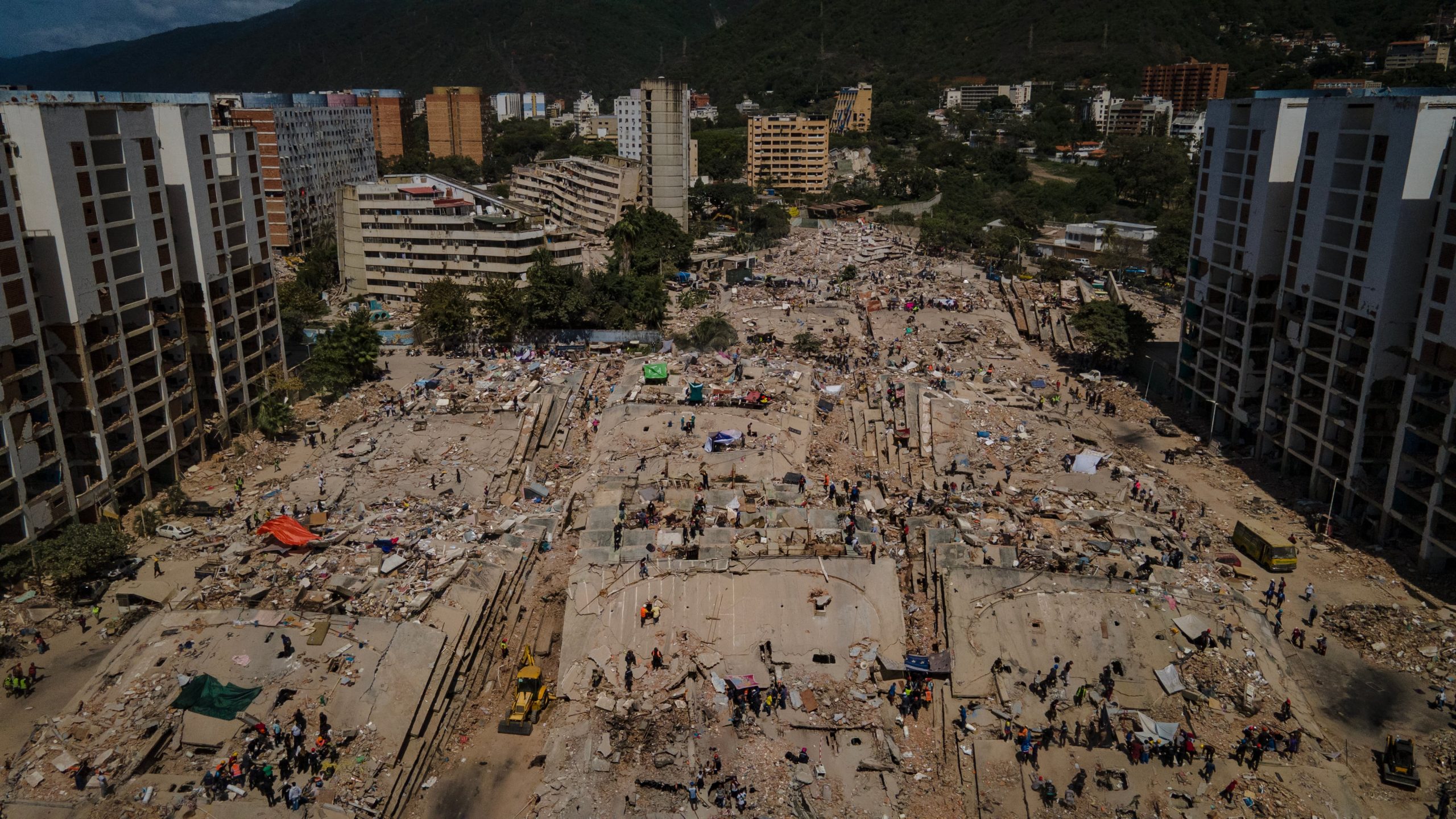
Vista aérea de edificios colapsados en La Guaira (Venezuela).

El presidente del Parlamento venezolano, Jorge Rodríguez, ha comunicado este martes, seis días después del doble terremoto que sacudió el norte del país el pasado miércoles, que la cifra de fallecidos por la catástrofe se sitúa ya en 1.943 personas y la de heridos en 10.571. Se trata de una brusca subida en ambas cifras con respecto al día anterior: un alza de 224 muertos y de más de 5.500 heridos. Del total de víctimas mortales, 19 son españoles, según ha informado el ministro de Asuntos Exteriores de España, José Manuel Albares, que ha añadido que sigue habiendo 131 desaparecidos y 12 localizados bajo los escombros. Los daños causados por los dos terremotos en viviendas y activos económicos, como vehículos, edificios o comercios, tienen una estimación preliminar de 6.700 millones de dólares (5.800 millones de euros), según una evaluación satelital basada en el Análisis Digital Rápido del Programa de Naciones Unidas para el Desarrollo (PNUD). Las autoridades venezolanas han informado de que hay 855 edificios afectados, de los cuales 189 han sufrido “un colapso total”.

Seguir leyendo

Continue Reading
Advertisement
Advertisement

Spanish Real Estate Agents

Tags

Trending

Copyright © 2017 Spanish Property & News