
America
The Open Wounds Of Guatemala’s Civil War: 68 Victims Of Genocide Identified

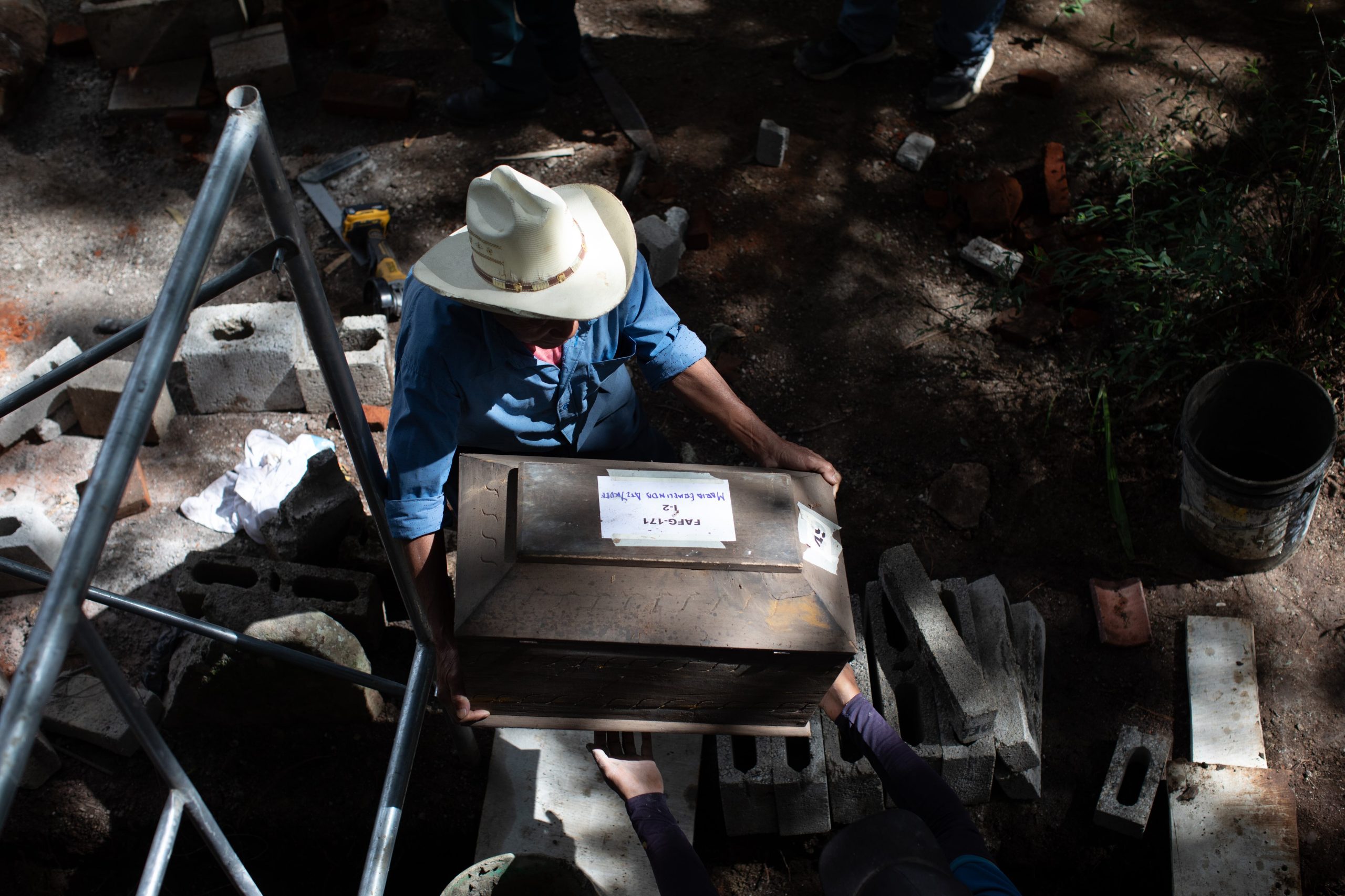
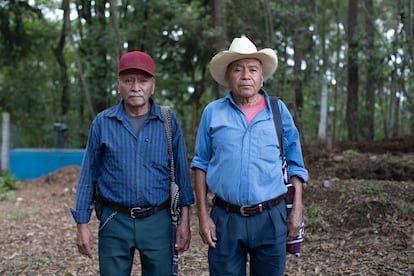
Simeón Atz Tzutuj, a 76-year-old farmer, lost his three daughters and his pregnant wife in an attack by the Guatemalan Army in Chimaltenango, a Kaqchikel Maya community located 41 miles west of the capital.
“The soldier arrived at my house and my wife came out. ‘Stand up, María, daughter of a great whore!’ he shouted. It was in 1982. I saw him from a distance. She came out of the house. They shot her here,” he says, pointing to his forehead.
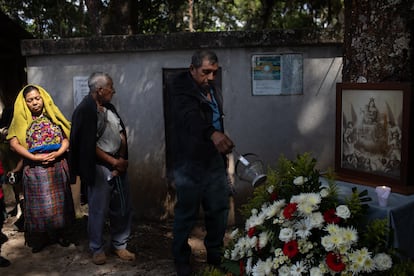
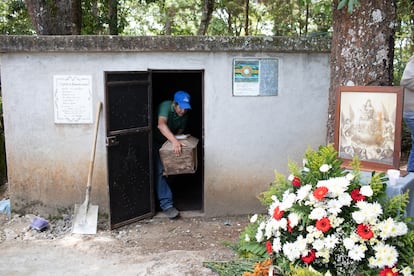
Atz Tzutuj is one of the relatives who attended the burial ceremony at the general cemetery of Pacoj, in San Martín Jilotepeque, where on Monday the remains of 68 victims of Guatemala’s internal armed conflict — killed between 1981 and 1982 in the region — were laid to rest.
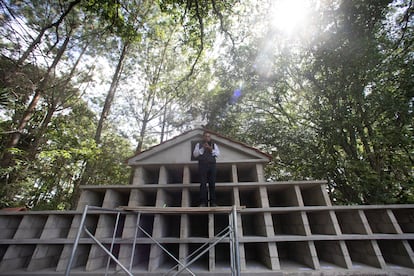
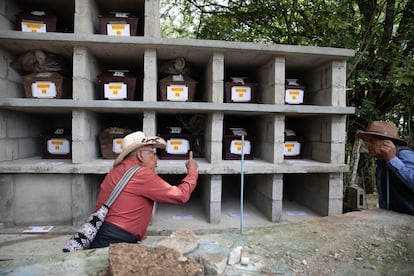
The Association for Justice and Reconciliation (AJR) and the Center for Forensic Analysis and Applied Sciences (CAFCA) organized the burial 44 years after the massacre. The remains of the victims, most of them men, had been kept in small wooden coffins, while others were stored in transparent plastic bags, stacked inside a small vault. They had remained there for 20 years until the two organizations, frustrated by the state’s failure to fulfill its promises, sought international assistance and, with support from relatives, managed to build individual burial niches.
“We rebuilt the damaged coffins and replaced those beyond repair. We have grouped family members together. They are now catalogued, and each person will have an individual plaque, along with a general memorial listing all the victims,” says José Silvio Tay, an adviser to the AJR board.
This is the second burial ceremony held in Chimaltenango, following the one organized in 2018, when the remains of 172 people were recovered from the military outpost in San Juan Comalapa, now transformed into the Landscapes of Memory Memorial. Tay says that the municipalities of San Martín Jilotepeque, Poaquil and Comalapa, all in Chimaltenango, accounted for the largest number of deaths at the site during Guatemala’s 36-year civil war (1960–1996).
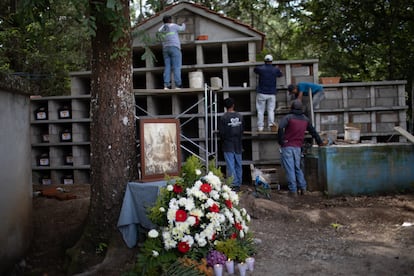
What is known in Guatemala as the internal armed conflict left a deep scar on the country’s history. The darkest chapter of the war came in the 1980s, when the Guatemalan state implemented a brutal “scorched earth” strategy in the country’s western regions. This counterinsurgency policy bore down relentlessly on civilians and systematically targeted Indigenous Maya communities.
The signing of the Peace Accords in December 1996 brought an end to the hostilities, but it also opened a complex and still unfinished process of memory, justice and reparations. According to the Historical Clarification Commission (CEH), the war left more than 200,000 people dead or disappeared. The commission attributed more than 90% of human rights violations to state and paramilitary forces and described the massacres carried out in Maya territories as acts of genocide.
The San Martín massacre
On February 12, 1982, the army, under the command of then-president Fernando Romeo Lucas García, entered San Martín Jilotepeque and executed dozens of men, women and children. García was overthrown the following month by coup leader General Efraín Ríos Montt.
“It happened on a Friday. My brothers,who were still very young, tried to defend themselves. Some wrapped themselves in jackets. Others hid under the bed, but the army had no mercy and killed them. Only my mother survived. She was the one who gave us all the information,” says Cleto Martín Yool, a 65-year-old farmer.
That February day, several members of the Martín Yool family, along with other residents of the community, were dragged from their homes and executed together. Their mother survived by pretending to be dead as she lay on the ground. Cleto escaped the massacre because he was working in the sugar-cane harvests in the south of the country. When he returned home that weekend, he learned that his brothers and uncles had been killed.
He, too, came to the cemetery on Monday to accompany the reburial of 11 relatives. “I feel happy that finally we can light a candle and pray for each of our relatives separately; that will be an advantage,” says Martín Yool. “This was my late father’s struggle for reparation and it was never fulfilled until AJR took it upon itself to make it happen.”
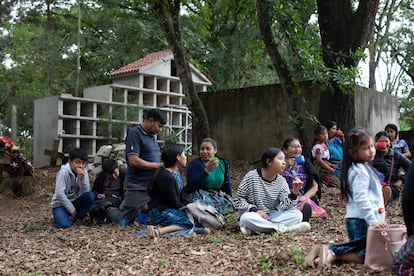
Despite national and international investigations and complaints over human rights abuses, Lucas García was never brought to trial. His brother, Manuel Benedicto Lucas García, who served as army chief of staff between 1981 and 1982, was arrested in 2016 on charges of enforced disappearances and crimes against humanity. In 2018, he was sentenced to 58 years in prison in the Molina Theissen case. In 2024, proceedings began against him in the Ixil genocide trial, but the case never reached a verdict. Ríos Montt, who died in 2018, was convicted of genocide. During his rule, from March 1982 to August 1983, massacres left thousands of Maya Ixil people dead.
The burial ceremony began at 9 a.m. in the cemetery, attended by relatives and human rights organizations. It opened with a religious service, followed by the opening of the vault where the remains had been stored. The coffins were then passed hand to hand and carried one by one to the newly built niches. The process was expected to continue for at least another day. The AJR plans to hold an official handover ceremony for the niches on July 15, and will invite the entire community to take part.
Byron García, a consultant with the Center for Forensic Analysis and Applied Sciences (CAFCA), said the community spent years demanding a dignified resting place for its dead. Between 1998 and 2020, several exhumations were carried out, but many of the remains were placed in cardboard boxes that gradually deteriorated. During the tenure of former attorney general Consuelo Porras, numerous cases seeking to prosecute military officers accused of crimes against humanity during the internal armed conflict were suspended.
The community continues to demand that these cases be fully investigated. Although they face a long road ahead because many witnesses have already died, the community hopes that victims’ relatives can unite to present a more comprehensive case file to the Human Rights Attorney’s General Office.
“San Martín Jilotepeque was a town where cooperatives were developing at the time, working on soil restoration and water management, and this coincided with the years of the armed conflict,” Tay explains. “They [the military] thought these were defensive trenches and that people were organizing to become guerrillas. Although it is true that many young people from this town did join the guerrilla movement.”
Teodoro Atz Tzutuj, 70, Simeón’s brother, has never forgotten the horror his family endured. “I was cutting a pine tree, trimming its branches, and I heard the gunfire. I thought they were fireworks, but it was not the season for that. I came up to look for my family and they had killed my brother’s wife and two of my children,” he says.
Today, he says he feels a measure of peace knowing that his relatives can finally rest in a dignified burial niche — a place where he can visit them.
Sign up for our weekly newsletter to get more English-language news coverage from EL PAÍS USA Edition








America
Taylor Swift Enseña Botánica: Una Universidad De Brasil Acusa A Otra De España De Plagiar Un Método Pedagógico



Brasil, curso 2021. Un puñado de alumnos adolescentes confinados por la pandemia se asoma con desgana a la pantalla desde sus casas. Tienen clase de Biología. La profesora Gláucia Silva, de 32 años, sabe que es urgente encontrar alguna estrategia que los enganche al temario de Biología. Toca plantas. En esas está cuando recuerda una conexión nada obvia que le vino a la cabeza en 2020 al ver un vídeo de Taylor Swift (Silva es una swiftie, una fan de la estadounidense). En Cardigan, la diva toca un piano de cola totalmente cubierto de musgo. Cuenta Silva en una entrevista que ahí empezó a germinar su proyecto para enseñar botánica con vídeos de la artista, que culminó en una ponencia en el Congreso Internacional de Botánica, en Madrid en 2024, y en un artículo científico publicado en 2025 en Annals of Botany.
Africa
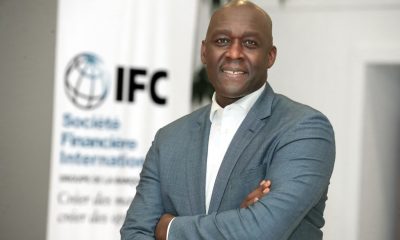
Makhtar Diop, Head Of The IFC, The World Bank’s Financial Arm: ‘We Want To Use Madrid To Channel More Private Investment To Emerging Markets’

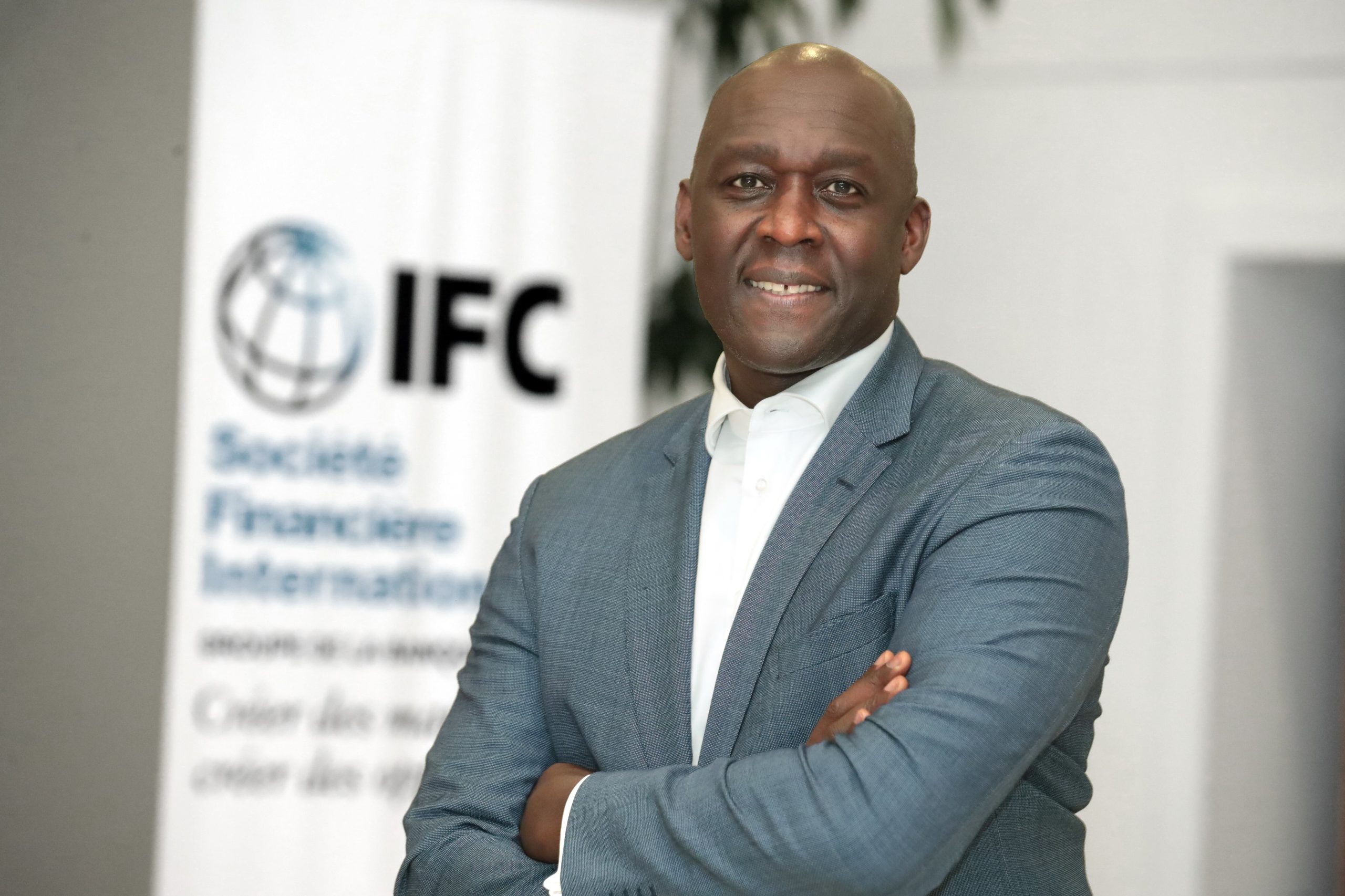
Makhtar Diop traveled to Spain this weekend to attend the opening on Monday of the World Bank’s new office in Madrid. The economist, who was born in Dakar in Senegal, turned 66 on Saturday — so when he arrives in Spain, he will have two reasons to celebrate. Diop served as Senegal’s Minister of Economy and Finance at the start of the century. He has since had a stellar career in multilateral institutions: he has worked at the International Monetary Fund (IMF) and the World Bank, where he rose to become managing director of the International Finance Corporation (IFC), the world’s largest development institution focused on the private sector in developing countries. It is known as the World Bank’s financial arm.
Diop, one of the most influential African voices in Washington’s peculiar ecosystem of technocrats, is a jazz and karate enthusiast. He receives EL PAÍS in his office a few blocks from the White House, and explains that the decision to open the new office reflects the growing interest of Spanish companies in investing in developing countries through the institution.
Question. This morning, I asked ChatGPT about the International Finance Corporation, and it replied that it was that it is probably the least well-known part of the World Bank Group, but also one of the most influential. What exactly is the IFC and what role does it play within the World Bank?
Answer. The World Bank Group is made up of several institutions. The World Bank was created right after World War II to finance the reconstruction effort, particularly in Europe. At the time, it was thought the public sector should lead that effort, which is why the International Bank for Reconstruction and Development (IBRD) and the International Development Association (IDA) were established first. Later, it became clear that the private sector was also critical in creating wealth, growth and jobs once reconstruction was underway. That shift in thinking coincided with the creation of the IFC. It was set up to address what could be done to help the private sector invest and develop in emerging countries. Over time, it became clear that attracting private investment was not easy and that investors needed political stability and risk guarantees. That is why MIGA, the World Bank Group’s political risk insurance agency, was created. Today, the IFC is the premier institution in bringing private-sector investment to emerging markets. We help countries change policies to be more business-friendly, improve regulation and encourage competition to attract private investment.
Q. How would you define your work?
A. It consists both of investing directly with our own resources and, increasingly, mobilizing third-party capital. That is one of the major transformations we are undertaking. When I arrived five years ago, for every dollar we invested from our balance sheet, we mobilized roughly another dollar. Today, we mobilize three dollars for every dollar of our own and our target is to increase that capacity even more. But I want to stress something important: we do not promote private investment for its own sake. Our ultimate objective is to create jobs. Sustainable, resilient and lasting jobs.
Q. You say private capital is fundamental. How do you persuade companies to invest in development?
A. Three years ago, we launched the Private Sector Investment Lab, where we brought together some of the world’s leading financial sector figures. The question was simple: you manage trillions of dollars in assets. What would you need to invest more in emerging markets? The answers were very clear. First was the predictability of public policies. These investments are long-term and require political and regulatory stability. Second was guarantees. Many investors see emerging markets as high risk and look for mechanisms to protect themselves. Third is financing in local currency to reduce risks from exchange-rate volatility. Fourth is inequality and lack of domestic capital. Many companies have growth potential but lack the capital to scale. And finally, investors need partners who know those markets well and can help them navigate complex environments.
That is precisely what the IFC provides. In addition, we have an AAA credit rating, which is extremely valuable because it allows us to finance ourselves on very favorable terms and to act as a reference partner for other investors.
Q. And how does Spain fit into this strategy?
A. Spain has become one of our most important partners. It is currently the third-largest European source of investments we channel to emerging markets. I have visited Spain several times and have met with the prime minister and the finance minister. Spain has also shown a strong commitment to international development. In the most recent replenishment of resources for the World Bank’s development funds (the IDA), Spain increased its contribution by roughly 40%. The IFC has a long-term committed portfolio of about $5 billion with Spanish companies, making Spain one of its key partners in Europe.
Q. Why did the World Bank Group decide this was the right moment to open an office in Spain?
A. Because we observed that our project portfolio with Spanish companies, such as banks like Santander, BBVA and Caixabank or energy firms like Iberdrola or Acciona, kept growing. There came a point when it no longer made sense to manage it from Paris or other European capitals. We needed to be closer to companies to maintain a day-to-day conversation. Approximately 72% of the Spanish investments we support go to Latin America.
We also work intensively with Spanish banks: 70% of our investment with Spanish companies is with banks, and another third is with leading companies in sectors such as infrastructure, water, renewable energy and power [like Iberdrola and Acciona]. Spain has become a champion in solar energy. We have also seen growing interest from other international institutions in settling in Madrid and a willingness from Spanish authorities to participate in major debates about global development. Finally, we are seeing more Spanish companies interested in expanding into emerging markets — not only in finance but also in the real economy.
Q. Spain is often described as a bridge to Latin America and one of the European countries closest to Africa. How much did that influence the decision?
A. It was a critical factor. Spain maintains very close historical, economic and cultural ties with both Latin America and Africa. It also plays an increasingly important role in issues related to labor mobility and workforce training. Europe faces a significant demographic challenge. Countries like Spain and Italy have very low birth rates and increasingly aging populations. That means labor will be an essential resource in the coming years. That is why we work with Spain on initiatives related to vocational training and temporary mobility of workers. The idea is that people from developing countries can gain experience and skills in Spain for a set period and then return to their countries of origin. That process can generate benefits for both sides. Workers gain knowledge and experience in advanced markets and, when they return, can create more competitive small and medium-sized enterprises able to generate better quality jobs.
In addition, some of the sectors we have identified as priorities for job creation are areas where Spain has enormous expertise. One is healthcare. Another is agriculture. And a very important one is tourism. Spain receives about 100 million visitors a year. We want to leverage that experience to help other countries develop their own tourism sectors. Spain can also contribute a great deal in other areas, such as solar energy and efficient water management. And, of course, it plays a strategic role as a bridge between Europe and North Africa. Integrating the power grids between the two regions can contribute to the energy transition and improve supply security.
Q. What kinds of projects will the Spanish office specifically promote?
A. A very important part of our work is carried out with the financial sector. One of our goals is to facilitate financing for small and medium-sized enterprises. In many cases, we take on part of the risk so banks can expand credit to this segment. We also work on women’s access to finance, on agriculture, on green finance and on the energy transition. In addition, we develop numerous infrastructure projects and collaborate with Spanish companies in sectors such as water, renewable energy and transport. We also provide guarantees for international trade operations and develop innovative instruments for managing and transferring financial risks.
Q. What goals do you have for the Spanish office over the next five years?
A. We want to increase the volume of investments channeled through Spanish companies to emerging markets. Currently, a large part of our activity is concentrated in infrastructure and financial services. We want to expand that presence into other sectors, especially manufacturing, agriculture and services. We also want to mobilize more resources from Spanish capital markets and secure a more active participation from the country’s financial institutions in our financing operations.
Q. One last question about artificial intelligence. From the perspective of developing countries, what opportunities and risks do you see?
A. It is a very important issue. We cannot expect developing countries to build their own large AI models. That requires enormous amounts of energy, advanced infrastructure and highly skilled personnel. However, there is another, much more promising area: what we call small AI. These are relatively simple applications that require fewer computational resources but can transform the lives of millions. In agriculture, for example, a farmer can photograph a sick plant and immediately receive information about the problem and the appropriate treatment. In healthcare, AI tools can help identify diseases and improve access to diagnostics in rural areas.
In addition, these technologies can significantly increase the productivity of small businesses, helping them with administrative, accounting or commercial tasks. That is why I am relatively optimistic about AI’s impact on developing countries. In the short term, employment risks may be greater in advanced economies, where there are many administrative jobs susceptible to automation. Sectors that will continue to have strong demand for labor are those that require direct human interaction, such as healthcare or elder care.
Sign up for our weekly newsletter to get more English-language news coverage from EL PAÍS USA Edition

El Atlético De Madrid Anuncia El Fichaje De Grimaldo

Última Hora De La Actualidad Política, En Directo | Marlaska, Sobre Los Manejos De Leire Díez: “En Mi Ministerio, A Diferencia De Otros, Actuamos Bajo El Principio De Legalidad”

Sanchez Gaffe: PM Hails Spain’s Safest Region As Also Its Least-Foreign During Launch Of €505m Migrant Integration Plan
Dinosaurs are roaring over to Estepona this summer in a massive 5,000m² exhibition

Families Caring For Elderly Parents In Spain Say Brexit Has Left Them With Impossible Choices
Denia launches new La Marineta music festival this summer with Fangoria and Nil Moliner


-
Costa del Sol1 week ago
Dinosaurs are roaring over to Estepona this summer in a massive 5,000m² exhibition
-
 %2 weeks ago
Families Caring For Elderly Parents In Spain Say Brexit Has Left Them With Impossible Choices
-
Costa Blanca North2 weeks ago
Denia launches new La Marineta music festival this summer with Fangoria and Nil Moliner
-

 %2 weeks ago
One Of Spain’s Top Supermarkets Has Just Been Ranked Among Europe’s Most Innovative In A Major New Report
-
 ElPais2 weeks ago
Primary Elections In New York, Maryland, And Utah: Date And How To Vote
-
Finland2 weeks ago
Finns abroad keep Juhannus traditions alive on Spanish coast in 2026
-
Latest2 weeks ago
KEY POINTS: What Changes About Life In Spain In July 2026
-
Costa del Sol1 week ago
Local community gets ready for its annual Calahonda Day celebration on June 27