Connect with us

Barcelona

Brett Christophers, Economic Geographer: ‘In Contemporary Capitalism, The Right To Housing Does Not Exist’

Published

on

brett-christophers,-economic-geographer:-‘in-contemporary-capitalism,-the-right-to-housing-does-not-exist’

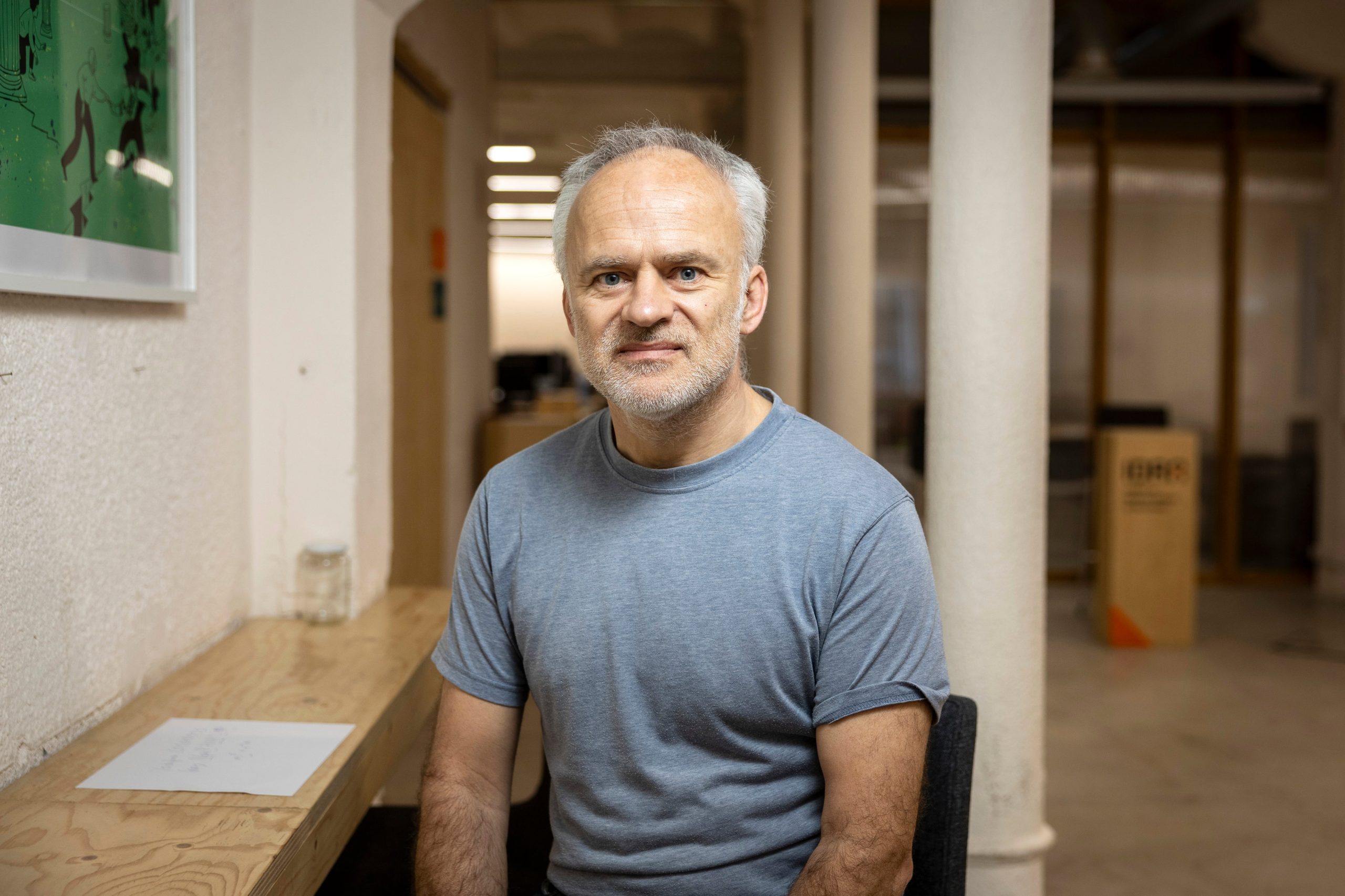
Brett Christophers, 55, has spent years studying the strategies of large corporations. He began by examining big investment banks such as JP Morgan and Goldman Sachs. But he soon noticed those names being pushed aside on the agendas of politicians and influencers by investment firms like BlackRock and Blackstone. It was not sudden: for decades they had quietly gained ground, and now control almost every aspect of a citizen’s daily life — the home they live in, the water they wash with, the road or railway they use to get to work, or the hospital they visit for an emergency. That is what Christophers, an economic geographer at the Institute for Housing and Urban Research at Uppsala University (Sweden), has been documenting in multiple studies and, more recently, in books such as Our Lives in Their Portfolios: Why Asset Managers Own the World and Rentier Capitalism: Who Owns the Economy, and Who Pays for It?.

This interview took place at the Barcelona Institute for Urban Research, where Christophers gave a lecture on housing, and it led to a subsequent conversation in the wake of a wave of public outrage sparked by the eviction of Maricarmen Abascal, who at 87 was forcibly evicted from her Madrid home by a real estate investment firm. A deep student of anti-capitalist movements, Christophers says he is nonetheless surprised by the resistance the funds have met among affected neighbors in Spain, and by the broad public rejection of treating people’s homes as financial products. “Housing has always been a financial asset. For many, the main one, if not the only one. But in recent years that balance has been broken.”

Question. Is Maricarmen’s eviction the result of housing becoming just another investment product?

Answer. Yes. The more often the market value of housing takes precedence over its use value, the more likely these situations become. That has been a key trend in recent decades, not only in Spain but worldwide. This case is a particularly striking example of a much broader phenomenon. And although it is especially shocking, the underlying dynamics are already a central component of contemporary urban social life in Spain.

Q. The Spanish government has rolled out a package of measures to prevent new cases like Maricarmen’s. There was talk of banning so-called “vulture funds” from buying homes, although the measure was eventually diluted. Would that ban have been enough?

A. Such a ban could blunt the sharpest edges of the problem, but it would not make it disappear. After all, there are many other types of investors that also engage in harmful practices, as Maricarmen’s case itself shows. The deeper problem is the extreme commodification of housing, together with a state that neither offers a meaningful alternative to the market nor regulates it effectively.

It is important to be honest about the scale of the challenge posed by cases like Maricarmen’s”

Q. But Spain enshrines housing as a constitutional right.

A. In practice it is not, because it is not guaranteed. The proof is that there are people who are homeless. In contemporary capitalism there is a right to buy housing, but not a right to housing. That right has been financialized.

Q. In recent years you have focused on unraveling the strategies of the funds. How have they evolved?

A. Their operation involves a manager investing other people’s money that previously went into stocks or bonds. But from the 1980s and ’90s they began buying real estate and key infrastructure on which society and our daily lives depend: energy, transportation, water, sewage. Since then, they decide who can use that infrastructure and how much they must pay.

Q. That major takeoff happened with the rise of neoliberal governments under Margaret Thatcher and Ronald Reagan. Was that a coincidence?

A. That was crucial. Neoliberalism’s guiding principle is that the public sector should do as little as possible because the private sector is supposedly more effective and efficient and that will make prices fall. But in the U.K., where almost everything has been privatized, prices have risen. And privatizations have only accelerated: 40 years ago those managers administered about $1 trillion globally. Today, more than $100 trillion.

Q. Follow the money: the savings of a teacher or a firefighter in Massachusetts end up invested in an apartment block in Madrid or Barcelona where neighbors are evicted. Are those savers aware of how their capital is being used?

A. It is true that if those investments perform well, the pensions of teachers and firefighters benefit. But I’m sure that teacher would not be very happy to know their gains come from higher rents and the eviction of people in Madrid or Barcelona. They do not know because, between one end and the other, the chain has many links.

Q. And how is the money distributed along that chain?

A. The firefighter or teacher does not receive it. Suppose a Blackstone fund has $1 billion. Of that, perhaps 2% comes from workers’ pensions. The rest comes, for example, from bank executives, who have more wealth, or even sovereign wealth funds, such as Saudi Arabia’s.

Q. You have studied the work of British Marxist geographer and social theorist David Harvey, who argues that modern cities have become vehicles for capital accumulation. Is the influence of the funds widening inequality in major cities?

A. Undoubtedly, inequality is growing and societies are more urban. And these actors act as custodians of the wealth of those who already own wealth. In today’s society, wealth is distributed very unevenly. These managers reproduce and amplify that inequality.

If capitalism ever falls, it will not be because of protests, but because of its internal contradictions”

Q. Maricarmen’s case has reignited protests in Spain. Could it be a catalyst?

A. Perhaps. But housing has already politically mobilized the population in Spain, including young people, for the last 15 years—maybe more than anywhere else in the world—and yet cases as severe as Maricarmen’s continue to occur. That is why I think it is important to be honest about the scale of the challenge.

Q. What role should activism play?

A. Protesting as an explicitly anticapitalist platform is counterproductive because it alienates allies who might sympathize with your concerns and because it is too broad and diffuse a target. Fighting capitalism is like trying to catch the wind. If capitalism ever falls, it will not be because of protests, but because of its internal contradictions as a way of organizing society.

Sign up for our weekly newsletter to get more English-language news coverage from EL PAÍS USA Edition

AP-7

WATCH: Three Highway Robbers Arrested In Barcelona After Guardia Civil Officer Is Shot Four Times In Hail Of Gunfire


Published

on

watch:-three-highway-robbers-arrested-in-barcelona-after-guardia-civil-officer-is-shot-four-times-in-hail-of-gunfire

Guardia Civil officers shot by a gang in BarcelonaFootage shared on social media shows the hair-raising moment the plain-clothes pair were wounded after confronting five suspects accused of stealing lorry cargo.

Continue Reading

Agencia Tributaria

Where are Spain’s richest and poorest towns? See how your municipality compares

Published

on

By

Madrid and Barcelona feature particularly heavily among the highest-income municipalities. Photo credit: Kirk Fisher/Shutterstock

If you have ever wondered whether the place you call home is actually as well-off as it feels, Spain’s latest income figures offer a way to check. The numbers vary dramatically from one municipality to another, with the average declared gross income in the richest town more than six times that of the lowest-ranked municipality.

The latest figures from Spain’s Tax Agency were published on September 30, and cover income declared for 2024. They allow residents to compare municipalities across the country. The national average gross income declared through IRPF reached €33,239 that year, after rising by around 6 per cent. Average disposable income reached €26,616, up 5.5 per cent.  But where you live makes a surprisingly large difference.

The richest municipalities in Spain

At the top of the table is Pozuelo de Alarcón in Madrid, where the average declared gross income was €92,564 in 2024. That was followed by Benahavís in Málaga, at €79,041, and Boadilla del Monte in Madrid, at €76,478.

The rest of the top ten were:

  • Matadepera, Barcelona: €76,238 
  • Sant Just Desvern, Barcelona: €69,706 
  • Sant Cugat del Vallès, Barcelona: €69,096 
  • Alcobendas, Madrid: €68,574 
  • Alella, Barcelona: €66,847 
  • Torrelodones, Madrid: €66,236 
  • Cabrils, Barcelona: €65,126 

The figures cover municipalities with more than 1,000 inhabitants in Spain’s common tax regime, so this is not a ranking of every tiny village in Spain. The Basque Country and Navarra are excluded because they operate under separate tax systems. 

Madrid and Barcelona feature particularly heavily among the highest-income municipalities, with several affluent commuter towns appearing near the top rather than the centres of the two major cities themselves. That is worth remembering when looking at headline figures about the wealthiest parts of Spain. Different datasets can produce different rankings because they measure different things. The Tax Agency figures here refer specifically to average gross income declared by IRPF taxpayers, rather than an individual’s salary. 

And at the other end?

The difference becomes particularly striking when the table is turned upside down. Guadahortuna in Granada had the lowest average declared gross income among the municipalities included in the latest statistics, at €14,514. Next came La Parra in Badajoz, at €15,384, followed by Benamargosa in Málaga, at €15,502. That puts Guadahortuna at less than half the national average of €33,239.

The figures also show how dramatically income can vary between municipalities in different parts of Spain. At the top of the table, several municipalities around Madrid and Barcelona record average declared incomes above €65,000, while the lowest-ranked municipalities are below €16,000.

What about the provinces?

The same pattern appears when the figures are examined geographically, although the municipal figures can be very different from the averages for an entire province. The latest municipal figures show particularly high-income areas concentrated around Madrid, Barcelona and parts of Málaga, with Benahavís standing out because of its extraordinary jump between 2023 and 2024.

The Costa del Sol municipality recorded an average gross income of €79,041 in 2024, compared with €43,159 the previous year. That represents an increase of 83.14 per cent in just one year and moved Benahavís from 56th place nationally to second.  For anyone living in Andalucía, that makes the municipal figures particularly interesting. The region contains municipalities with very different income levels, while a single average for the entire region can hide substantial differences between individual towns.

The figures are also useful alongside other measures of household pressure. EWN has previously looked at how rising everyday costs are affecting people living in Spain, with basic household spending taking an increasing share of income. Spain’s rising cost of living Housing creates another major difference between locations. EWN has also reported on the growing income requirements facing people trying to buy property in Spain, with the amount needed varying sharply between cities and regions. Buying a home in Spain is slipping further out of reach

So where does your municipality sit?

The Tax Agency’s IRPF statistics by municipality allow people to go beyond the national headlines and look at individual municipalities with more than 1,000 inhabitants. The database provides figures including gross and estimated disposable income for municipalities across the common tax regime.  That means you can check the figures for your own town rather than assuming that the average for your province or autonomous community tells the whole story.

It is also worth remembering what the number does, and does not, mean. A municipal average is not the salary that every resident receives, nor does it tell you what an individual household has left after rent, mortgage payments, energy bills and other costs. It does, however, provide a snapshot of how declared income differs across the places where people live. And the gap is substantial: €92,564 in Spain’s highest-income municipality compared with €14,514 in the lowest.

Continue Reading

%

Where Are Spain’s Richest And Poorest Towns? See How Your Municipality Compares

Published

on

where-are-spain’s-richest-and-poorest-towns?-see-how-your-municipality-compares

Madrid and Barcelona feature particularly heavily among the highest-income municipalities. Photo credit: Kirk Fisher/Shutterstock

If you have ever wondered whether the place you call home is actually as well-off as it feels, Spain’s latest income figures offer a way to check. The numbers vary dramatically from one municipality to another, with the average declared gross income in the richest town more than six times that of the lowest-ranked municipality.

The latest figures from Spain’s Tax Agency were published on September 30, and cover income declared for 2024. They allow residents to compare municipalities across the country. The national average gross income declared through IRPF reached €33,239 that year, after rising by around 6 per cent. Average disposable income reached €26,616, up 5.5 per cent.  But where you live makes a surprisingly large difference.

The richest municipalities in Spain

At the top of the table is Pozuelo de Alarcón in Madrid, where the average declared gross income was €92,564 in 2024. That was followed by Benahavís in Málaga, at €79,041, and Boadilla del Monte in Madrid, at €76,478.

The rest of the top ten were:

  • Matadepera, Barcelona: €76,238 
  • Sant Just Desvern, Barcelona: €69,706 
  • Sant Cugat del Vallès, Barcelona: €69,096 
  • Alcobendas, Madrid: €68,574 
  • Alella, Barcelona: €66,847 
  • Torrelodones, Madrid: €66,236 
  • Cabrils, Barcelona: €65,126 

The figures cover municipalities with more than 1,000 inhabitants in Spain’s common tax regime, so this is not a ranking of every tiny village in Spain. The Basque Country and Navarra are excluded because they operate under separate tax systems. 

Madrid and Barcelona feature particularly heavily among the highest-income municipalities, with several affluent commuter towns appearing near the top rather than the centres of the two major cities themselves. That is worth remembering when looking at headline figures about the wealthiest parts of Spain. Different datasets can produce different rankings because they measure different things. The Tax Agency figures here refer specifically to average gross income declared by IRPF taxpayers, rather than an individual’s salary. 

And at the other end?

The difference becomes particularly striking when the table is turned upside down. Guadahortuna in Granada had the lowest average declared gross income among the municipalities included in the latest statistics, at €14,514. Next came La Parra in Badajoz, at €15,384, followed by Benamargosa in Málaga, at €15,502. That puts Guadahortuna at less than half the national average of €33,239.

The figures also show how dramatically income can vary between municipalities in different parts of Spain. At the top of the table, several municipalities around Madrid and Barcelona record average declared incomes above €65,000, while the lowest-ranked municipalities are below €16,000.

What about the provinces?

The same pattern appears when the figures are examined geographically, although the municipal figures can be very different from the averages for an entire province. The latest municipal figures show particularly high-income areas concentrated around Madrid, Barcelona and parts of Málaga, with Benahavís standing out because of its extraordinary jump between 2023 and 2024.

The Costa del Sol municipality recorded an average gross income of €79,041 in 2024, compared with €43,159 the previous year. That represents an increase of 83.14 per cent in just one year and moved Benahavís from 56th place nationally to second.  For anyone living in Andalucía, that makes the municipal figures particularly interesting. The region contains municipalities with very different income levels, while a single average for the entire region can hide substantial differences between individual towns.

The figures are also useful alongside other measures of household pressure. EWN has previously looked at how rising everyday costs are affecting people living in Spain, with basic household spending taking an increasing share of income. Spain’s rising cost of living Housing creates another major difference between locations. EWN has also reported on the growing income requirements facing people trying to buy property in Spain, with the amount needed varying sharply between cities and regions. Buying a home in Spain is slipping further out of reach

So where does your municipality sit?

The Tax Agency’s IRPF statistics by municipality allow people to go beyond the national headlines and look at individual municipalities with more than 1,000 inhabitants. The database provides figures including gross and estimated disposable income for municipalities across the common tax regime.  That means you can check the figures for your own town rather than assuming that the average for your province or autonomous community tells the whole story.

It is also worth remembering what the number does, and does not, mean. A municipal average is not the salary that every resident receives, nor does it tell you what an individual household has left after rent, mortgage payments, energy bills and other costs. It does, however, provide a snapshot of how declared income differs across the places where people live. And the gap is substantial: €92,564 in Spain’s highest-income municipality compared with €14,514 in the lowest.

Continue Reading
Advertisement
Advertisement

Spanish Real Estate Agents

Tags

Trending

Copyright © 2017 Spanish Property & News