Connect with us

ElPais

Palmer Luckey And Ben Lamm, The Billionaire Geeks Behind Military Superdogs

Published

on

palmer-luckey-and-ben-lamm,-the-billionaire-geeks-behind-military-superdogs

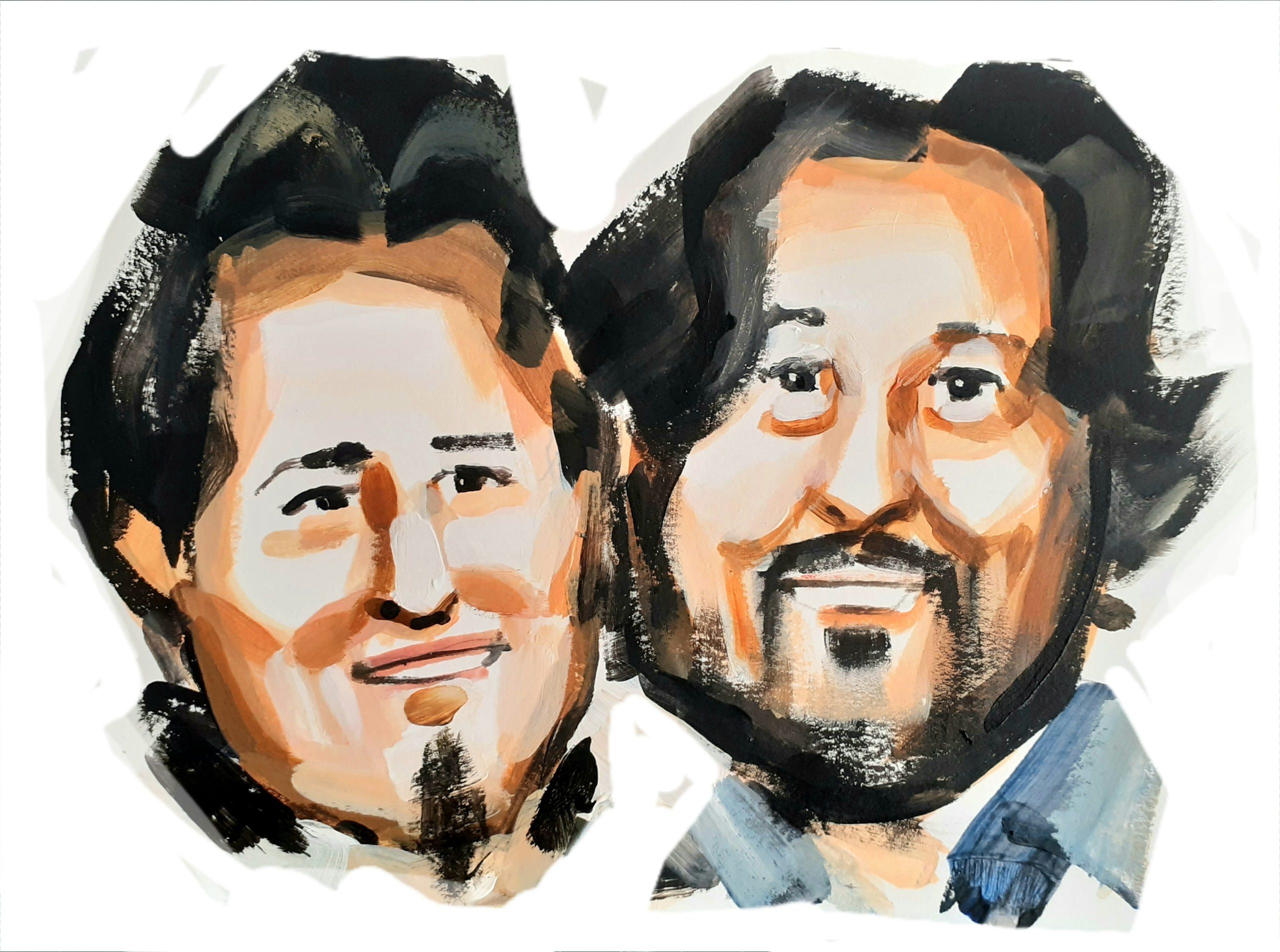
We live in strange times, when a concept straight out of a B movie can become a billion-dollar business. Palmer Luckey, founder of Oculus and Anduril Industries, and Ben Lamm, founder of Colossal Biosciences, two young billionaire geeks, have joined forces in a new company, Warhound, with the goal of creating the ultimate war dog.

The idea is to combine Colossal’s genetic-engineering expertise with Anduril’s defense technology to design, breed and train canine units for the military, law enforcement agencies and emergency-response teams, reducing dependence on dogs bred in Europe. According to the Financial Times, the company behind these future four-legged “RoboCops” is already valued at $1.2 billion after raising $200 million in seed funding.

Luckey, usually seen in Hawaiian shirts, cargo shorts and flip-flops, is one of those Silicon Valley prodigies whose story begins in a corner of his parents’ home, specifically in a trailer parked in the driveway. The eldest of four children, born to a car salesman and a mother who chose to homeschool him, he grew up reading science fiction by Jules Verne and Anne McCaffrey, became fascinated with anime, and developed an early passion for electronics and engineering.

At 15, he was taking courses at Golden West College in Huntington Beach. Two years later, he enrolled in journalism at California State University, Long Beach.

By then, Luckey was getting by in his parents’ trailer on a diet of burritos. He modified old gaming consoles to make them more portable and shared tips and experiments with fellow hardware and video-game enthusiasts on a forum he had founded himself.

One day, as he later told Tablet Magazine, he stopped asking what the next upgrade for his gaming PC should be and focused instead on the ultimate leap: virtual reality. He bought discontinued headsets and equipment in search of ways to improve latency and motion tracking, paying for them with money he earned cleaning boats.

He later worked as a cable technician on a project at the mixed-reality lab at the University of Southern California. Then, in 2012, at the age of 19, he built a prototype for a low-cost virtual-reality headset, the Oculus Rift. Video-game designer John Carmack got hold of one and showcased it at a trade fair later that year.

Luckey turned to crowdfunding, setting himself a target of raising $250,000. He ended up bringing in about $2.4 million. In 2014, Mark Zuckerberg, still convinced that virtual reality would be the next major technology boom, bought the company for $2 billion. Two years later, after controversy over his financial support for a pro-Trump group, Luckey was fired.

His favorite character from one of the anime series he watched as a child was the adopted son of an arms magnate who seizes his father’s empire and turns it into a giant immersive-gaming company. Luckey did the opposite, moving from virtual reality to military technology.

In 2017, just months after leaving Meta, he founded a company with four partners focused on developing military hardware and software. They called it Anduril, after the sword carried by one of the heroes in The Lord of the Rings.

His partner, Ben Lamm

Ben Lamm’s parents divorced when he was five. He was raised by his mother and grandmother between Texas and Arkansas. Summers were spent travelling with his father, who worked in international trade.

As a child, he paid other neighborhood kids half his allowance to mow the lawn for him. During high school, he worked at a Chili’s restaurant.

“I hated it so much I bribed the hostesses to not seat my section and, therefore, I made no money,” he later told Dallas Magazine. “I learned: The only way to succeed is to find a job/career you love.”

He studied Finance and Accounting at Baylor University in Waco and, during his final year of college, founded his first company, Simply Interactive, which specialized in e-learning software.

By the time he launched Colossal Biosciences in 2021, Lamm had already founded and sold five companies. He and his team hope to bring the wooly mammoth back to life within the next decade. Last year, they announced what they described as the revival of an extinct wolf species, although some experts later challenged that characterization.

Colossal pairs its ambition to revive extinct species and help preserve endangered ones with a business model built on commercializing its technologies and launching spin-off companies.

He is afraid of flying and, as he told Men’s Health, keeps a notebook by his bed to jot down ideas that come to him when he wakes up. He is a dog lover; he has two, named Barbie and Ken, and one of the things he hopes to do before he dies is discover a lost civilization.

“Raiders of the Lost Ark is my favorite movie of all time. Jurassic Park is one of my favorite movies of all time. Neither one of those two should surprise anyone,” he told the Austin Business Journal.

Married with two children, Lamm has a fortune that Forbes estimates at nearly $6 billion.

Luckey’s wealth is in a similar range. In 2019, he married his longtime girlfriend, whom he met at a student debate competition. He describes himself as a radical Zionist and, despite saying that having fewer than 2.1 children would make him a traitor to the nation, has only one child.

He is unconcerned with whether people see him as likable or cool. “I do care that they think that I am moral. I do care if they think that I am a reliable partner who is not going to stab them in the back,” he told Fortune.

Lamm says the best advice he was ever given was not to take advice. As he recalled in Dallas Magazine, Alex Seropian, the founder of video game company Bungie, once told him that “life’s too short to work with assholes,” a lesson that has made him “think twice.”

Now he and Luckey will put that approach into practice together.

A Pentagon veteran takes the helm

Neither Luckey nor Lamm will run Warhound day to day. Instead, the pair have recruited David Spirk, the former chief data officer at the U.S. Department of Defense, a former Palantir executive and a veteran of the U.S. Marine Corps, to serve as chief executive officer.

Sign up for our weekly newsletter to get more English-language news coverage from EL PAÍS USA Edition

Continue Reading
Click to comment

Leave a Reply

Your email address will not be published.

Australia

Saul Newman: ‘If You’re Elon Musk And You’ve Bought Everything, The Only Thing Left To Sell Is A Way To Escape Death’

Published

on

saul-newman:-‘if-you’re-elon-musk-and-you’ve-bought-everything,-the-only-thing-left-to-sell-is-a-way-to-escape-death’

Jiroemon Kimura was the oldest man in the world until his death in 2013. When he died, he had lived for 116 years and 54 days. His secret to longevity, the Japanese supercentenarian said, was to always eat light meals.

Kimura had eight children and a wife. He also had two official birth dates and was listed as having finished elementary school in three different years: 1907, 1909 and 1911. The story gets even stranger: some records indicate that, during his lifetime, Jiroemon Kimura admitted to lying about his age.

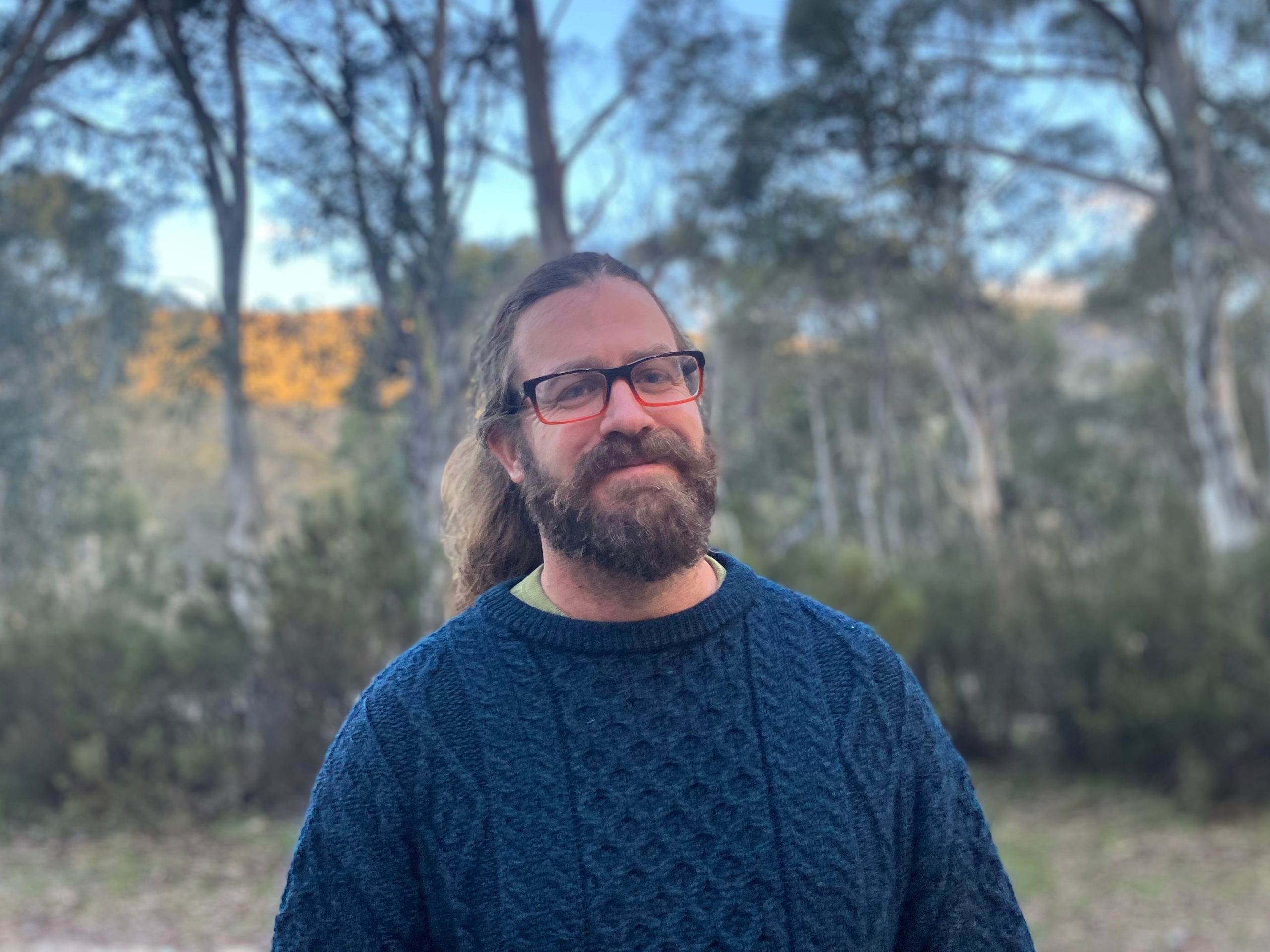
This is one of the many seemingly bizarre cases that Australian researcher Saul Justin Newman, 41, compiles in his book, titled Morbid: Debunking Modern Longevity Science (2026). He analyzes many of the myths surrounding studies of human longevity and the so-called “blue zones,” where people are said to live much longer than anywhere else on the planet.

Over the last decade, Newton’s research — which, back in 2024, earned him an Ig Nobel Prize in Demography — has led him to argue that the extraordinary cases of people living past 100 have less to do with genetics or diet than with statistical errors and the lack of reliable birth certificates.

In an interview with EL PAÍS via video call, the Australian researcher argues that the limit on human lifespan is simply something that fascinates people. “It’s much more important to increase average lifespan and quality of life, which is what medicine does,” he says.

Question. Are blue zones just a myth?

Answer. Just look at how some of them were discovered. A National Geographic editor told a reporter: “I need you to find me a Blue Zone in the United States.” And he goes and finds one on the road between his home and Las Vegas: a religious community in Loma Linda. This isn’t just a simple anecdote; the level of scientific evidence regarding blue zones is very low, and the conflicts of interest among the people who investigate them are very high. So, we really have no idea if blue zones actually exist. And that’s not surprising when you consider that, even today, a quarter of the world’s children don’t have a birth certificate. How are you going to determine where people live past 100 if birth records aren’t reliable?

Q. What’s the biggest scientific problem with the way that these blue zones have been presented to the public?

A. There’s a fundamental mathematical problem. Generally, in any statistical process, even the most precise one, there are measurement errors. There’s noise in the data. But in studies of human populations, this takes on enormous importance. Let’s say we want to analyze the longevity of 100,000 50-year-olds, but a group of 100 40-year-olds decides to falsify their documents in order to appear 50. It’s clear that the survival probability of this group will be higher, because they’re all 10 years younger. As time passes, the percentage of the population represented by the liars will increase. By the time they reach 100, this group of people — who are actually 90 — will likely represent almost the entire remaining living population. These are rare and random errors, but they cannot be ignored.

Q. Maybe these errors weren’t so rare a century ago.

A. Of course, they were much more common in birth certificates from 100 years ago. Currently, in America, something like 5% to 10% of the population has an inaccurate age. And since paperwork is the only way we have to verify a person’s age, we’re facing a problem that can’t be solved.

Q. How, then, did we end up identifying these places as blue zones?

A. The way to verify the age of a centenarian is to review their documents and trust that both the person reviewing them and the centenarian are telling the truth. However, in science, you should never accept something simply on faith. It’s a foundational principle: things must be proven. This sets up a situation in which it’s extremely easy for the process of declaring blue zones to become corrupted. In the book, I detail several cases of conflicts of interest, of people who validate data from centenarians and, at the same time, profit from it.

Q. Do you have to pay to be certified as a blue zone?

A. Some blue zones were identified by scientists. Some were declared by businessmen. But now, there’s an organization — Blue Zones — that sells certifications. A New York Times investigation revealed that prices range from $3 million to $40 million for the blue zone designation, but it’s difficult to verify the exact figures. It’s incredible, because the person handing out these certificates is the same one who — without any scientific training — found a blue zone while driving to Las Vegas.

Q. What made you suspect that there were inconsistencies with the data and the scientific process behind the blue zones?

A. Initially, what interested me most was the problem of the data quality, of the existence of these false centenarians. As I went through this process, I discovered worse and worse levels of data quality. The closer you look at it, the worse it is: you end up with entire populations of 100-year-olds effectively disappearing. The other day, Japan announced that it had just surpassed 100,000 people over the age of 100 for the first time. But back in 2010, a similar announcement was made, and shortly afterward, Japan acknowledged that thousands of those centenarians were only alive on paper. In reality, they’d been dead for a long time.

Q. Your book includes other similar cases.

A. In Greece, for example, where I did some investigative work in 2018, I found out that thousands of people listed as centenarians had died, but their families were still regularly collecting their pension checks. This isn’t anecdotal: the level of misinformation is just creeping everywhere. A few weeks ago, data from Sardinia’s blue zone was presented to the European Parliament in a debate on alcohol consumption and health. The objective was to defend the benefits of drinking wine. The person on the panel was Dr. Gianni Pes, the gentleman who’s been paid by Blue Zones for roughly 20 years now.

Q. I’m going to have to review my family data, because my grandmother had an aunt who lived to be 107 years old. But maybe the birth certificate is just incorrect…

A. There are many reasons why these errors occur. Failures in record-keeping, illiteracy, fraud attempts… In Italy, for example, there are many cases of people who falsified their documents to dodge the draft, especially before and during World War II.

Q. In the book, you write that those who hold longevity records are often people who drink and smoke excessively, hailing from the poorest neighborhoods of their cities. Why have we believed these records?

A. Because they’re charming people: how can we say “no” to an old person telling us their stories? We also like to believe in a mythical, distant place, where everything is wonderful and people live a long time, even if they smoke or drink excessively. Death is scary. But there’s this alternative narrative that someone puts in front of you, and it’s all too easy to believe

Q. We’ve long assumed that certain behaviors, such as having strong social ties or engaging in physical activity, help us live longer. Are these behaviors really supported by robust science?

A. Some are. It’s clear that exercise is better for your health. But others, like drinking alcohol every day, are crazy things to recommend. The fact is that the inhabitants of the blue zones, in many cases, don’t actually follow these behaviors. Okinawa, Japan, is the clearest example. They had the lowest rate of eating salad in the country, but were second-highest in alcohol consumption and the highest in KFC consumption. For many years, the population over the age of 75 had the worst body mass index (BMI) in the country. And yet, this remote island supposedly is home to the largest number of centenarians in Japan.

Q. Why is longevity so appealing to us? And, above all, why is it so marketable?

A. Because it sells itself. Nobody wants to die. Also, if the treatment or prescription you’re selling to live longer doesn’t work, nobody is going to leave a bad review. Nobody can go online and say, “It didn’t work, I died.” There are records of longevity-related frauds dating back more than 2,000 years.

Q. Earlier this year, Elon Musk said that aging is a problem we can solve. Do you think longevity research is experiencing a new boom thanks to tech moguls?

A. More money is being invested than ever before, and the results are worse than ever. If you’re Elon Musk, the richest man in the world, and you’ve bought everything, the only thing left to sell is a way to escape death. Some of the vendors have made an incredible amount of money without producing a single reliable result. I think it’s very interesting to see who’s investing in this business. Billionaires are, but you won’t find a single pharmaceutical company involved, even though having a drug capable of delaying death could become the best-selling medicine on the planet. Pfizer, Merck and other firms aren’t investing a thing.

Sign up for our weekly newsletter to get more English-language news coverage from EL PAÍS USA Edition

Continue Reading

Donald Trump

Narges Mohammadi, 2023 Nobel Peace Prize Winner: ‘Iranian Society No Longer Tolerates The Islamic Republic’

Published

on

narges-mohammadi,-2023-nobel-peace-prize-winner:-‘iranian-society-no-longer-tolerates-the-islamic-republic’

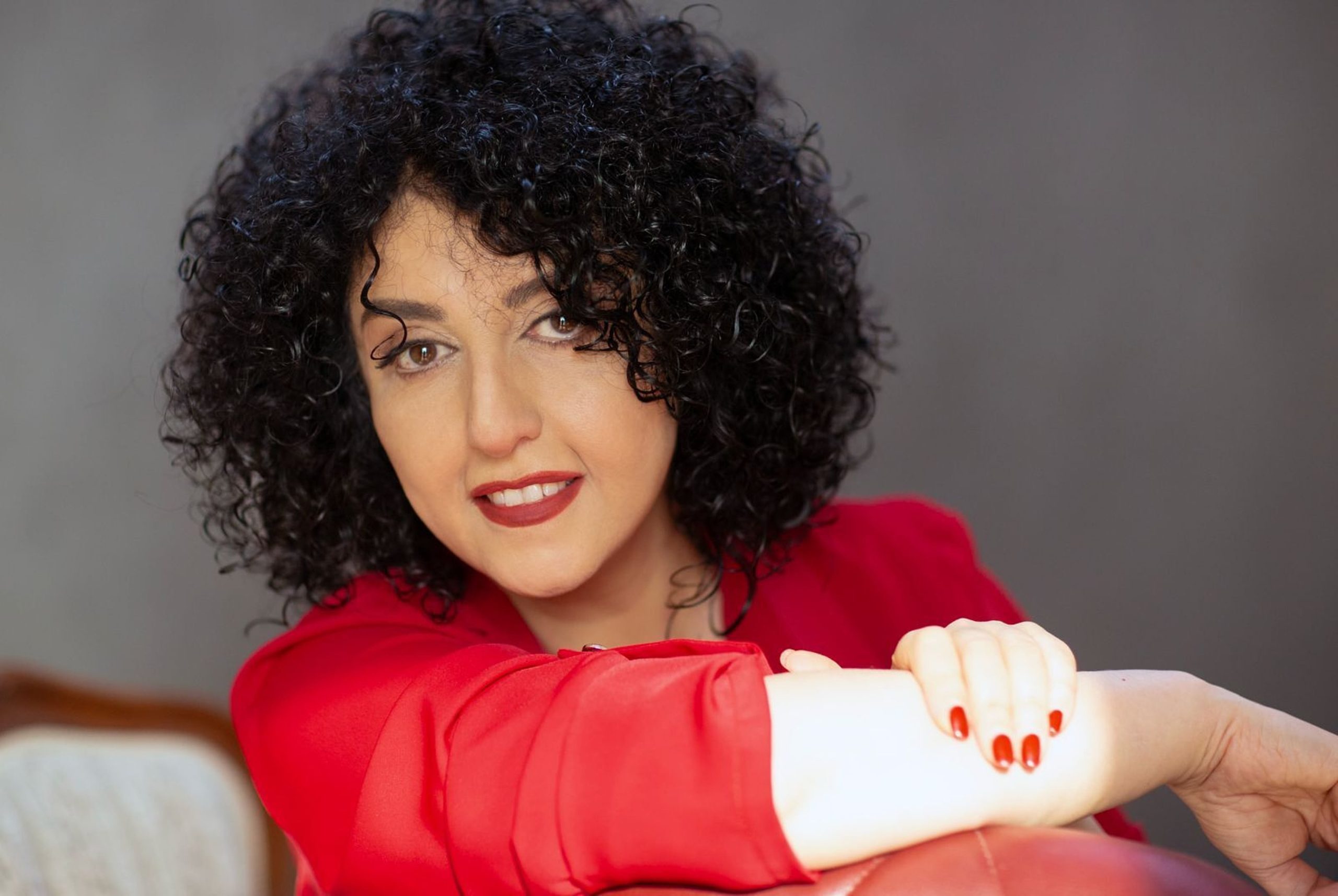
A statue of Justice presides, as if making a statement of principle, over the green room in Tehran where Narges Mohammadi, 54, appears for a video call with this newspaper. It is an act of courage in itself, given that the activist, who was awarded the 2023 Nobel Peace Prize for her struggle for human rights and women’s rights in Iran, still faces a prison sentence of at least 18 years.

Mohammadi’s freedom is only a reprieve, a suspension of her sentence granted in May after she suffered two heart attacks in prison. The activist has been arrested 14 times and tried on 10 occasions. In total, she has been sentenced to 44 years in prison and 154 lashes, and has spent 161 days in solitary confinement. She has paid another price as well: she has not embraced her 19-year-old twins, Ali and Kiana, since 2015, when they went into exile in Paris with their father.

Mohammadi recently published a memoir she wrote while in prison. The book, A Woman Never Stops Fighting: My Struggle for Freedom, Democracy and Human Rights in Iran, is a portrait of a woman who has spent decades going in and out of prison for refusing to give up her freedom.

Question. Your health scare led many to fear for your life. Aren’t you worried that giving this interview could send you back to prison?

Answer. During my last detention in Mashhad [in northeast Iran, on December 12, 2025], I suffered very serious injuries. I was hit repeatedly in the head and spent two months in solitary confinement. I was then transferred to another prison in Zanjan, where I received no medical care despite severe lung and heart problems. After my sentence was suspended, I was hospitalized in three provinces of Iran, and I remain under treatment. When I began writing this book in Evin [a Tehran prison notorious for holding political prisoners, from which Mohammadi secretly smuggled out her manuscript], I already knew it would have consequences for me, but I saw it as a duty.

Q. The Nobel Peace Prize was awarded to you while you were in that prison. What did it change for you?

A. Contrary to the common belief that the Nobel would make life easier for me in prison, the reality was the opposite. The pressure on me and my family intensified in different ways. The prison director himself told me that until I received the Nobel, the decision to provide me with the urgent medical care I needed was partly in his hands. After the prize was awarded, decisions such as taking me to the hospital were made by much higher state authorities. Treatment became draconian, and every statement or protest I joined while in prison brought new convictions [Mohammadi received several additional sentences while already serving time, including one of seven and a half years in prison].

Q. In your book, you describe solitary confinement as a tool of torture. In your case, that isolation led you to speak to the walls and the door of your cell.

A. Solitary confinement is one of the Islamic Republic’s main instruments of torture, and its purpose is to break a prisoner’s will so that they confess whatever they are being pressured to confess. That is the result of keeping a human being isolated for long periods, with no information from the outside world, no contact from their family, and no exposure to sunlight, which produces spiritual and psychological disintegration. Many prisoners confess while in isolation, a punishment sometimes accompanied by physical torture. Courts then hand down death sentences based on those coerced confessions. Hangings in Iran have increased greatly in recent times, and that makes clear the consequences of isolation. This form of imprisonment is the mother of executions in Iran.
Q. How does the Islamic Republic use the death penalty?

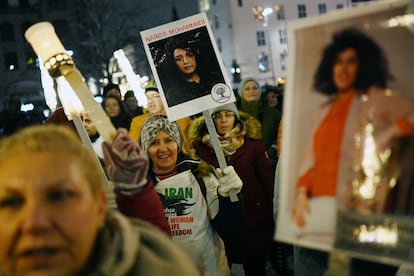
A. The death penalty is a wound in Iranian society that has lasted 47 years, since the early days of the Islamic Republic. You will know about the executions of the 1980s, but you may see them only as numbers [Amnesty International estimates that, in the summer of 1988 alone, around 4,500 people — many teenagers and leftist activists — were executed in Iran]. For Iranian society, that wound has never healed and continues to bleed with each new hanging. An execution is not only the killing of a human being, but a punishment for an entire society. Lately, Iranians wake up every morning to news of another hanging of a person who was often tried behind closed doors, without a lawyer and on ambiguous charges. Executions in Iran represent the slow death of our society.

Q. Some people are hanged in public…

A. Authoritarian political systems use any tool to oppress their own people. Do you think that such regimes are unaware of how inhuman such an act is? The reason is that they seek to terrorize a society that no longer tolerates the Islamic Republic. That political system therefore uses all forms of repression at its disposal, including executions and, in their most terrifying form, public executions. Each time social movements have organized protests and voiced their demands, instead of addressing those demands, the response has been repression, prison and executions.

Q. You attribute change in Iran to social movements.

A. Iranian society is one of the most dynamic in the world. In the last two decades, there have been women’s movements and movements of young people and students that have played a decisive role in creating social awareness. Those movements aspire to secure fundamental rights like those you enjoy: freedom, justice, democracy, equality and much more. And Iranian society has paid a very high price. Workers, young people, students, women and human rights and environmental activists have paid this price. The Iranian people are fighting to achieve democracy and confront tyranny and, although that path takes time, social movements have already achieved a fundamental transformation.

Q. Are you referring to the achievements of the Woman, Life, Freedom movement, sparked by the death of young Mahsa Amini in a police station in 2022 after being detained for wearing her veil improperly? Many Iranian women no longer wear the hijab.

A. That achievement by a movement led by Iranian women would have required decades of effort under different circumstances. However, with an inclusive social movement, we achieved that advance in far less time, though at a very high price because the repression was severe. That progress, which the regime has not been able to reverse, is one of the things that allow us to imagine a democratic future. The veil law has not been abolished, but that movement has succeeded in establishing a right. That is why the authorities want to destroy it.

Q. Your book praises the role of feminism in Iran.

A. The role of women in transforming Iranian society has been decisive throughout the country’s history, but especially in the last 50 years. Who led the first mass protest march right after the founding of the Islamic Republic, when Iranian women defied the system because they were being forced to wear the hijab? When Iranian women have resisted the compulsory use of the veil, what they have challenged is the domination of an authoritarian political system that wants to force women to wear the hijab to consolidate its control over that half of the population.

Q. What is the significance of this civil disobedience against the compulsory use of the hijab?

A. It represents a challenge to domination, tyranny and the usurpation of power. Women’s resistance to a theocratic autocracy should not be confined to the veil [as an item of clothing]. We are facing a strategic issue that is not limited to a religious matter or a women-only issue. It is a matter of deep political significance.

Q. What is your view of the war the United States and Israel have launched against Iran?

A. I experienced the Iran-Iraq war [1980–1988], as a child. It lasted eight years, and our country suffered enormous losses from which it has not yet recovered. The consequence of that war was also that no one listened to the voices of the thousands of people who were executed in Iran. The human rights and the rights of the Iranian people were forgotten. That bitter experience makes my hatred of wars grow every day.

Q. Has the war radicalized the regime?

A. The Islamic Republic has become more repressive under the shadow of war. Pressure from security agencies against civil, political, social and cultural activists, as well as against protesters, has increased. In the climate of insecurity that war creates, protests against human rights violations, executions, arrests and imprisonments cannot develop. Under these circumstances, social movements have been weakened.

Q. In your book, you denounce how the Islamic Republic tried to blackmail you by using your children. Do female activists suffer this kind of pressure more than their male counterparts?

A. Many activist parents who are imprisoned also suffer that pressure, but I believe what mothers endure is worse and reflects the regime’s discrimination against women. Essentially, we are dealing with a misogynistic regime whose nature is hostile to women, and that misogyny appears in every sphere.

Q. Iranian authorities have prevented you from visiting your children in Paris. Do you hope to see them again?

A. We must never lose hope, but that does not mean ignoring reality or suffering; it means continuing the struggle and not surrendering. One way or another, that struggle will bear fruit, and I hold onto the hope of seeing my children again one day. I don’t know when, but that moment will come.

Sign up for our weekly newsletter to get more English-language news coverage from EL PAÍS USA Edition


Continue Reading

Delcy Rodríguez

Venezuela, 10 Months Later: The Transition May Finally Be Underway

Published

on

venezuela,-10-months-later:-the-transition-may-finally-be-underway

Over the past 10 months, there has been no consensus among academics, political scientists, and observers on whether Venezuela had entered a transition process. One of the most cautious voices was historian Margarita López Maya. However, following María Corina Machado’s return to the country, the scholar has softened her doubts: “We are closer [to a transition] because the political leadership that can bring together the opposition forces and lead them to a possible democratization has arrived,” she says.

Predicting the course of the South American country is still as difficult as weather forecasting was 30 years ago. Even so, most analysts agree on two points: first, Machado’s arrival has sounded the starting gun for an early presidential campaign. Second, her return marks the milestone that has led many to conclude that the transition has now truly begun.

The public reception for Machado also invites comparisons. One of the cruel jokes that circulated whenever Henry Alviarez, coordinator of Vente Venezuela, announced a new date for her return, only to later acknowledge yet another failed attempt, was that it resembled the Second Coming of Christ. Judging by the images and the staging of recent days, the messianic reference no longer seems so exaggerated.

Men in tears, women embracing her, children asking for her blessing. It is an emotional atmosphere that swings between hope and helplessness, and one that confirms what opinion polls have been showing for some time. If elections were held tomorrow, María Corina Machado would win comfortably. Moreover, charisma appears to have become a stronger element of her leadership.

But there is still no date for those elections.

At her press conference on October 29, Machado insisted that the best timeframe for a presidential election is 2027, specifically July of next year. However, comments attributed to a “senior official” at the U.S. State Department pointed to a more distant timetable. And then there were the recent remarks by acting President Delcy Rodríguez who, in a recorded message broadcast before Machado’s press conference, once again assured Venezuelans that elections will be held in accordance with the Constitution.

The assertion is not without irony. After all, if there is one thing that has been systematically undermined in Venezuela in recent years, it is the constitutional order itself. Moreover, both the United States, in its role as facilitator and guarantor of the process, and Rodríguez and the rest of the ruling leadership have avoided formally declaring Nicolás Maduro’s permanent absence from office.

This is no minor detail. Under the Constitution, once such an absence is declared, a new presidential election must be called within 30 days if it occurs during the first three years of the term. If it happens later, the vice president is tasked with completing the remainder of the mandate. In 2013, after Hugo Chávez’s death, elections were held within the constitutionally mandated timeframe.

Political circles have been abuzz with the theory that the Rodríguez siblings, Delcy and her brother Jorge Rodríguez, are seeking to stretch the timeline for as long as possible to avoid a presidential election in the near term. In the opposition’s worst-case scenario, the process could be delayed to the point where a new vote would no longer be required, allowing Delcy Rodríguez to remain in power until 2030.

Machado’s return, however, appears to be disrupting those calculations.

Although it remains to be seen how much institutional influence she will wield in this new phase, there is no denying that she commands broad popular support. At the same time, she faces formidable opponents: sectors that have benefited from opaque business dealings and from alliances that thrive in the shadow of corruption, as well as political rivals and a fragmented opposition movement.

Since the disputed presidential election of July 28, 2024, I count myself among those who have tried to keep their distance from the waves of euphoria that periodically sweep the country. I did not celebrate on January 3, when Maduro was arrested; I have been cautious about the outcomes of the Negotiating Table established last June; I have questioned whether the much-discussed three-phase plan that some spokespersons repeat like a mantra even exists; and although I am glad Machado has finally managed to return to Venezuela, I am not joining the cheering without some reservations.

Not so much because of Machado herself, who deserves the acclaim, but because I continue to believe that the dictatorship’s capacity for adaptation is underestimated, as is the pragmatism it displays, free of any revolutionary nostalgia. Above all, the interests at stake demand a high degree of precision and political finesse.

It is a warning that Carlos Valero, a leader of the Un Nuevo Tiempo (A New Era) party, has voiced on several occasions. Valero acknowledges that hopes for change are now largely invested in María Corina Machado and that polls show more than 60% of Venezuelans want political alternation.

“But wanting it does not necessarily mean we will achieve it,” he warns.

He points to the many missed opportunities and to the opposition’s repeated failure to anticipate its adversary’s strategy, especially its ability to destroy, divide, or reinvent itself.

“The Russians have a role to play, too. And no one has yet discovered the formula for building an effective transition. Among other reasons, because every transition is different, and none can simply be copied from another,” he says.

Historian Pedro Benítez shares some of that caution. While he acknowledges that Venezuela is going through a period of political change, he still stops short of saying the country is fully in transition.

“That will probably become clear within a few years, if an alternation in power does in fact take place,” he argues.

One of the risks identified by López Maya is that Machado’s highly personalized leadership could foster sectarian dynamics that ultimately hinder the broad-based participation every democratic transition requires.

Valero takes a similar view, insisting that the Venezuelan landscape remains extraordinarily complex. A range of interests coexist and compete within it: the United States, the Venezuelan government, the different factions of the opposition, and actors who, despite sharing the goal of political change, still have deep disagreements with one another.

What is clear is that María Corina Machado’s return has altered the country’s political mood. If any event over the past 10 months has brought skeptics closer to concluding that a transition is underway, it is this homecoming. I count myself among those doubters who, for now, are willing to give it the benefit of the doubt.

Sign up for our weekly newsletter to get more English-language news coverage from EL PAÍS USA Edition

Continue Reading

Trending

Copyright © 2017 Spanish Property & News