Connect with us

Delcy Rodríguez

Venezuela, 10 Months Later: The Transition May Finally Be Underway

Published

on

venezuela,-10-months-later:-the-transition-may-finally-be-underway

Over the past 10 months, there has been no consensus among academics, political scientists, and observers on whether Venezuela had entered a transition process. One of the most cautious voices was historian Margarita López Maya. However, following María Corina Machado’s return to the country, the scholar has softened her doubts: “We are closer [to a transition] because the political leadership that can bring together the opposition forces and lead them to a possible democratization has arrived,” she says.

Predicting the course of the South American country is still as difficult as weather forecasting was 30 years ago. Even so, most analysts agree on two points: first, Machado’s arrival has sounded the starting gun for an early presidential campaign. Second, her return marks the milestone that has led many to conclude that the transition has now truly begun.

The public reception for Machado also invites comparisons. One of the cruel jokes that circulated whenever Henry Alviarez, coordinator of Vente Venezuela, announced a new date for her return, only to later acknowledge yet another failed attempt, was that it resembled the Second Coming of Christ. Judging by the images and the staging of recent days, the messianic reference no longer seems so exaggerated.

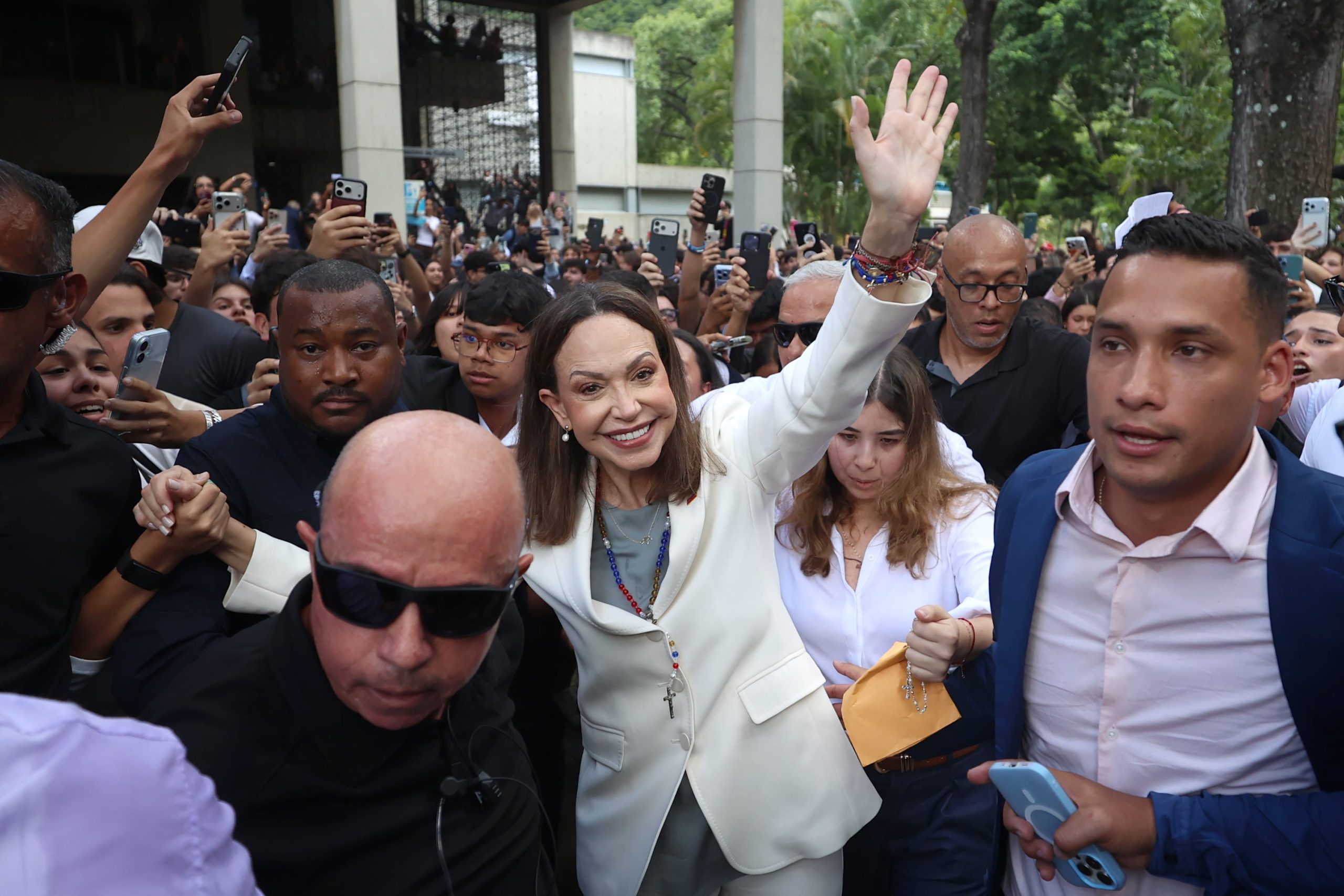
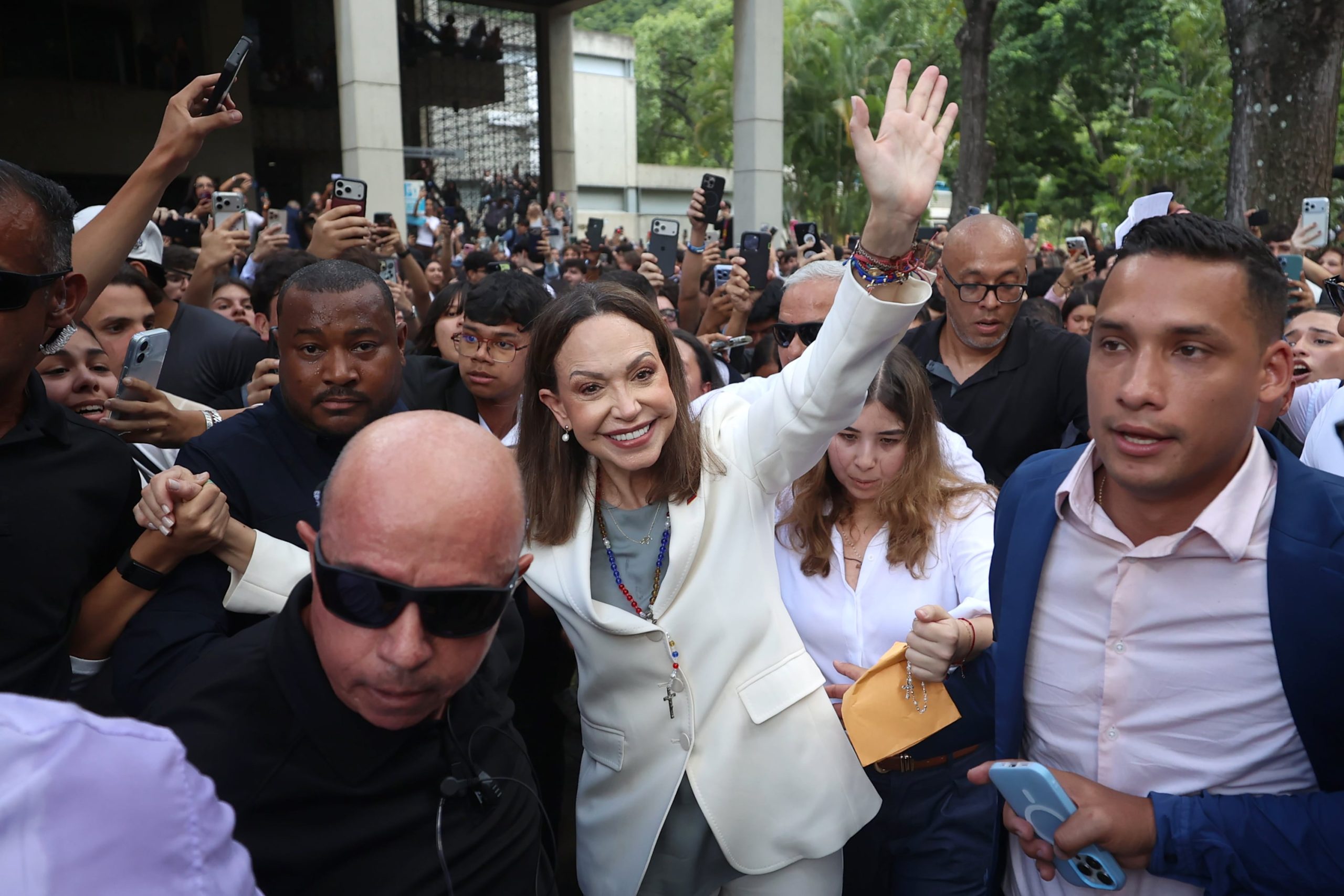
Men in tears, women embracing her, children asking for her blessing. It is an emotional atmosphere that swings between hope and helplessness, and one that confirms what opinion polls have been showing for some time. If elections were held tomorrow, María Corina Machado would win comfortably. Moreover, charisma appears to have become a stronger element of her leadership.

But there is still no date for those elections.

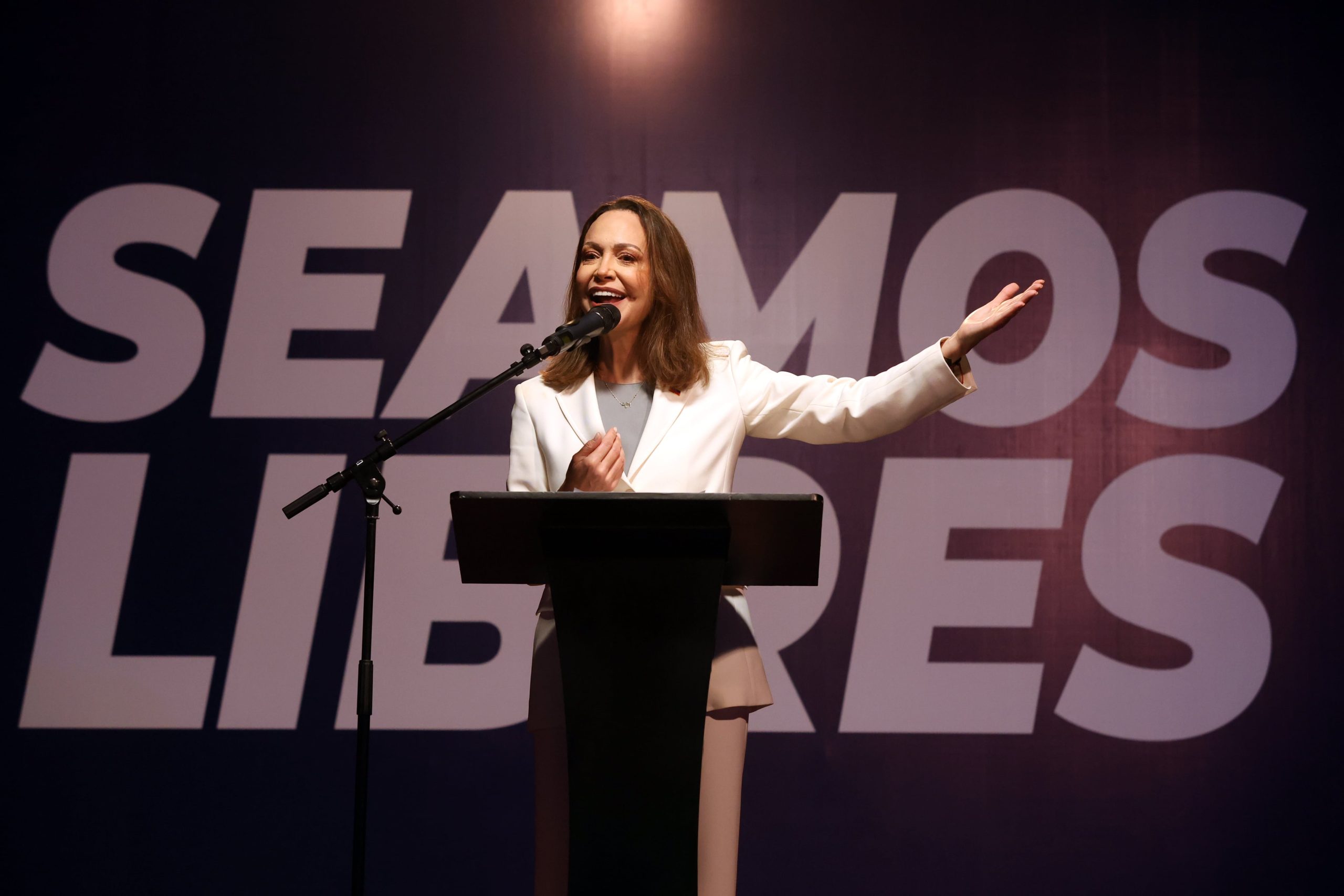
At her press conference on October 29, Machado insisted that the best timeframe for a presidential election is 2027, specifically July of next year. However, comments attributed to a “senior official” at the U.S. State Department pointed to a more distant timetable. And then there were the recent remarks by acting President Delcy Rodríguez who, in a recorded message broadcast before Machado’s press conference, once again assured Venezuelans that elections will be held in accordance with the Constitution.

The assertion is not without irony. After all, if there is one thing that has been systematically undermined in Venezuela in recent years, it is the constitutional order itself. Moreover, both the United States, in its role as facilitator and guarantor of the process, and Rodríguez and the rest of the ruling leadership have avoided formally declaring Nicolás Maduro’s permanent absence from office.

This is no minor detail. Under the Constitution, once such an absence is declared, a new presidential election must be called within 30 days if it occurs during the first three years of the term. If it happens later, the vice president is tasked with completing the remainder of the mandate. In 2013, after Hugo Chávez’s death, elections were held within the constitutionally mandated timeframe.

Political circles have been abuzz with the theory that the Rodríguez siblings, Delcy and her brother Jorge Rodríguez, are seeking to stretch the timeline for as long as possible to avoid a presidential election in the near term. In the opposition’s worst-case scenario, the process could be delayed to the point where a new vote would no longer be required, allowing Delcy Rodríguez to remain in power until 2030.

Machado’s return, however, appears to be disrupting those calculations.

Although it remains to be seen how much institutional influence she will wield in this new phase, there is no denying that she commands broad popular support. At the same time, she faces formidable opponents: sectors that have benefited from opaque business dealings and from alliances that thrive in the shadow of corruption, as well as political rivals and a fragmented opposition movement.

Since the disputed presidential election of July 28, 2024, I count myself among those who have tried to keep their distance from the waves of euphoria that periodically sweep the country. I did not celebrate on January 3, when Maduro was arrested; I have been cautious about the outcomes of the Negotiating Table established last June; I have questioned whether the much-discussed three-phase plan that some spokespersons repeat like a mantra even exists; and although I am glad Machado has finally managed to return to Venezuela, I am not joining the cheering without some reservations.

Not so much because of Machado herself, who deserves the acclaim, but because I continue to believe that the dictatorship’s capacity for adaptation is underestimated, as is the pragmatism it displays, free of any revolutionary nostalgia. Above all, the interests at stake demand a high degree of precision and political finesse.

It is a warning that Carlos Valero, a leader of the Un Nuevo Tiempo (A New Era) party, has voiced on several occasions. Valero acknowledges that hopes for change are now largely invested in María Corina Machado and that polls show more than 60% of Venezuelans want political alternation.

“But wanting it does not necessarily mean we will achieve it,” he warns.

He points to the many missed opportunities and to the opposition’s repeated failure to anticipate its adversary’s strategy, especially its ability to destroy, divide, or reinvent itself.

“The Russians have a role to play, too. And no one has yet discovered the formula for building an effective transition. Among other reasons, because every transition is different, and none can simply be copied from another,” he says.

Historian Pedro Benítez shares some of that caution. While he acknowledges that Venezuela is going through a period of political change, he still stops short of saying the country is fully in transition.

“That will probably become clear within a few years, if an alternation in power does in fact take place,” he argues.

One of the risks identified by López Maya is that Machado’s highly personalized leadership could foster sectarian dynamics that ultimately hinder the broad-based participation every democratic transition requires.

Valero takes a similar view, insisting that the Venezuelan landscape remains extraordinarily complex. A range of interests coexist and compete within it: the United States, the Venezuelan government, the different factions of the opposition, and actors who, despite sharing the goal of political change, still have deep disagreements with one another.

What is clear is that María Corina Machado’s return has altered the country’s political mood. If any event over the past 10 months has brought skeptics closer to concluding that a transition is underway, it is this homecoming. I count myself among those doubters who, for now, are willing to give it the benefit of the doubt.

Sign up for our weekly newsletter to get more English-language news coverage from EL PAÍS USA Edition

America

El Regreso De María Corina Machado Acelera El Ritmo De La Transición En Venezuela

Published

on

el-regreso-de-maria-corina-machado-acelera-el-ritmo-de-la-transicion-en-venezuela

María Corina Machado ha regresado a Venezuela —como ella misma lo ha afirmado— “a terminar la tarea”. A colocar el horizonte de una transición a la democracia en la mente de la ciudadanía, como una posibilidad cierta. En tan solo una semana en el país, el revuelo de su presencia y el calado de sus declaraciones han desplegado una ola de optimismo en amplios sectores. Su retorno ha obligado al Gobierno de Delcy Rodríguez, la presidenta encargada, a reiterar públicamente su agenda reformista, su promesa de mejoras económicas y su compromiso con la apertura política.

Seguir leyendo

Continue Reading

America

Venezuela, 10 Meses Después, Parece Que Empezó La Transición

Published

on

venezuela,-10-meses-despues,-parece-que-empezo-la-transicion

En los últimos diez meses no hubo consenso entre académicos, politólogos y observadores sobre si en Venezuela había comenzado un proceso de transición. Una de las voces más cautelosas era la de la historiadora Margarita López Maya. Sin embargo, tras el retorno de María Corina Machado al país, la académica matiza sus dudas: “Estamos más cerca [de una transición] porque llegó el liderazgo político que puede articular a las fuerzas opositoras y conducirlas a una posible democratización”, afirma.

Seguir leyendo

Continue Reading

Caracas

The Opposition Returns To The Streets In Venezuela After María Corina Machado’s Return: ‘She’s Coming To Step On The Accelerator’

Published

on

the-opposition-returns-to-the-streets-in-venezuela-after-maria-corina-machado’s-return:-‘she’s-coming-to-step-on-the-accelerator’

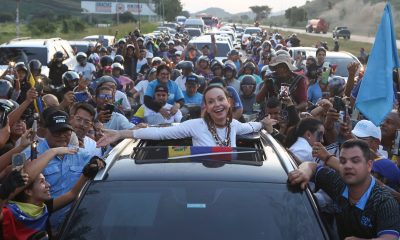
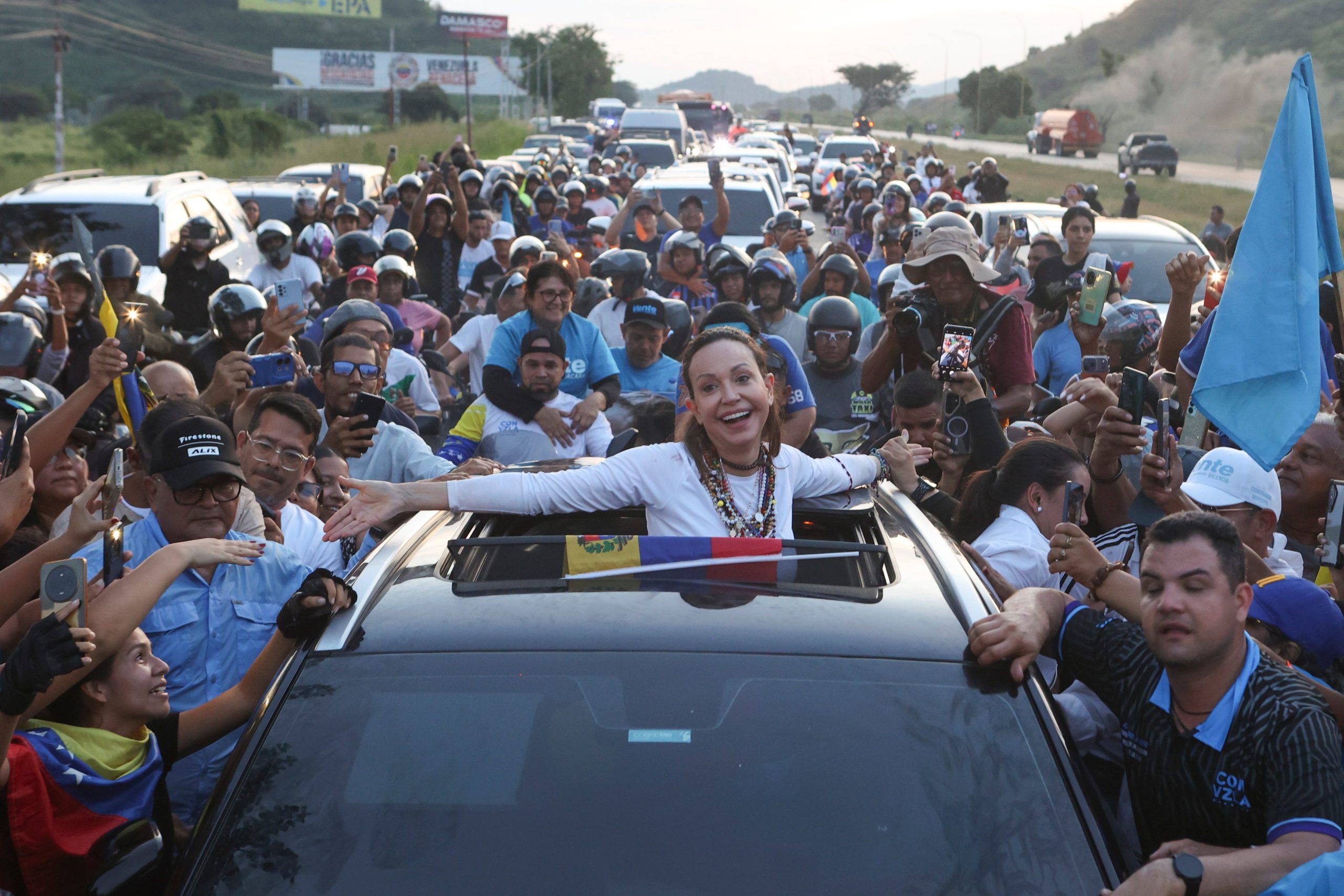
It was a long and emotional day for thousands of Venezuelans who could not believe it when they heard on Sunday morning that the opposition leader María Corina Machado had returned to Venezuela. When her message started circulating on cellphones — “I am here. With you.” — thousands of supporters of Machado and opponents of Chavismo began pouring into the streets to follow her slow march to the capital, Caracas, in an epic demonstration of Venezuelans shedding the fear of repression that had been holding them back for so long.

Machado, who reportedly entered the country via Colombia, took over 10 hours to reach the capital, flanked by enthusiastic supporters who surrounded her vehicle. The opposition leader did not make any statements, but her mere presence on the streets was enough to drum up enthusiasm among a population that is anxious for change following the U.S. invasion and capture of Nicolás Maduro in January.

Speaking from the United States, President Donald Trump said he didn’t know anything about Machado’s return to Venezuela. “I don’t know anything about it, but I think she’s a very nice woman. She gave me her Nobel Prize, so how can I say anything else? And I hope she’s safe, she’s a very nice woman. But we’re doing really well in Venezuela,” he said before a trip to speak at a campaign rally in Michigan.

Machado was received by thousands of people in Caracas. The crowds filled up several lanes of one of the country’s main highways as people danced, honked their horns and waved flags. The news had been a surprise to everyone. For many, it was a sign of hope in a year of change and perhaps the beginning of a political transition that is dragging on.

Opponents who follow Machado hope the process that began with the dialogue table between the members of the 2015 National Assembly and the interim government can now be accelerated. “Machado is coming to step on the accelerator,” said some of those who were waiting for her. Seferino Guadarrama, 64, a leader of Vente Venezuela, Machado’s party, says he cried when he learned Sunday morning that his “boss” had returned. A granddaughter who joined Machado’s caravan called him from Yaracuy to tell him. “Dinorah [Figuera, an exiled lawmaker who was part of the 2015 Assembly and was recently tapped to negotiate with Chavismo] was moving too slowly,” the activist says. He is celebrating this political milestone far from his town because a year ago he had to hide from political persecution.
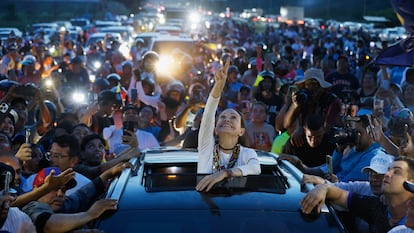
Hundreds of supporters gathered very close to Fuerte Tiuna, where Nicolás Maduro and his wife Cilia Flores were captured on January 3 during the United States’ Operation Absolute Resolve. That day, celebrations were muted by fear and uncertainty. People now see Machado’s return as an opportunity for an extended celebration. The atmosphere was one of jubilation and hope. “They had us cornered, unable to take to the streets,” Guadarrama says.

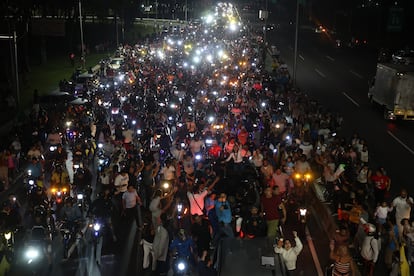
At least two lanes of the Valle-Coche highway, which serves as the city’s access from the country’s west, were filled with people, motorcycles and parked vehicles. Drivers passing through, including cargo trucks, joined the celebration by honking. People also gathered on the bridges adjacent to the road.

The enthusiasm of thousands of Venezuelans mixed in with all the questions regarding her return, and the surprising silence from the government, led by Delcy Rodríguez at the behest of the United States. The street celebrations were not met with repression; on the contrary, the sense of freedom was one that had not been felt for years. Machado advanced on the capital in a clear challege to Chavismo and even to Washington, which had sidelined her in the talks between the government and the opposition.
Marisol Morgado, a 64-year-old homemaker, came from the other side of the city to see the leader’s return; Machado had left the country clandestinely last December. “It took me by surprise,” the woman said, holding a flag. “She’s coming to organize it all, to get things working. There are a lot of people who are suffering,” she added, referring to the transition process.

Some political leaders also joined the gathering. Héctor Urgelles, secretary of Alianza Bravo Pueblo, a party that is allied with Machado’s, was among those who showed up. “A government’s legitimacy is only achieved through an election. That is why María Corina is coming,” said the politician, noting that people have lost their fear of returning to peaceful protest for change. “Things have changed a lot since January 3 and now we can be in the streets again,” Urgelles added.

Loredams Medina, 36, a resident of El Valle, ran out of her house because she wanted to see Machado. As the hours passed, the crowd grew and supporters began to occupy the highway in both directions. The woman was surprised to see such a large opposition demonstration in the west of the city, in the same parish where Maduro began his political career. “I’m very happy; I have the hope that she’s going to speed everything up,” Medina says. By “everything” she means the tasks of the dialogue table, such as appointing the Supreme Court, the new National Electoral Council and calling elections. “But I also feel uncertain about what will happen.”

Sign up for our weekly newsletter to get more English-language news coverage from EL PAÍS USA Edition

Continue Reading

Trending

Copyright © 2017 Spanish Property & News