Connect with us

Costa del Sol

No recovery service, no protocol: Málaga’s problem with stranded lorries exposed

Published

on

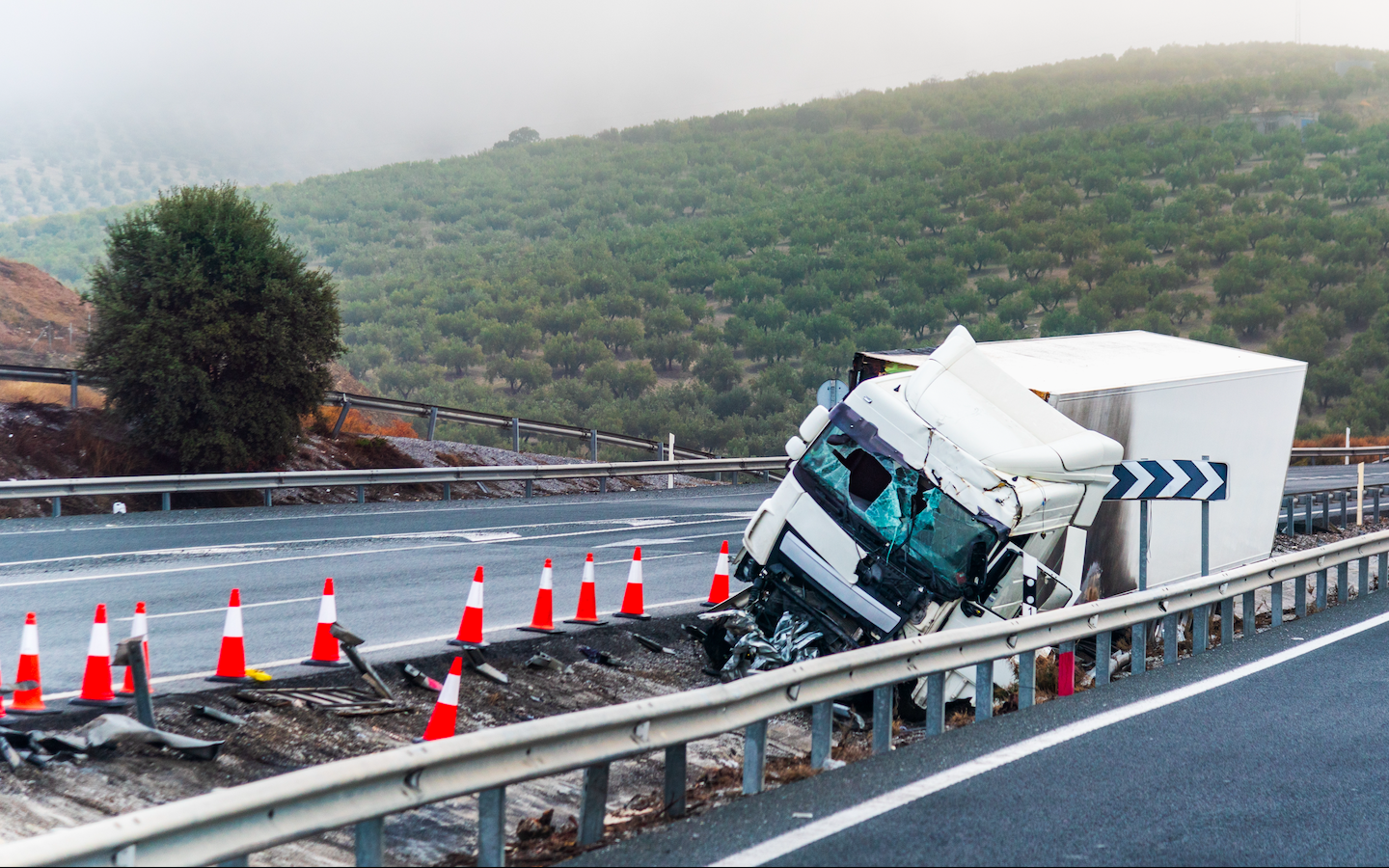
Recovery can cost thousands of euros. Photo credit: Miguel Perfectti/Shutterstock

A broken-down lorry can bring parts of Málaga to a standstill, leaving commuters trapped in traffic, workers late and families struggling to get where they need to be. Yet when a heavy goods vehicle is involved in an accident on the province’s main roads, there is no dedicated Government recovery service ready to remove it.

The problem is not simply a shortage of recovery vehicles, the Government has actually acknowledged that there is no specific protocol for removing heavy goods vehicles from roads such as the A-7, leaving the operation dependent on insurance cover, private companies and the availability of specialist equipment.

Why can removal take so long?

Unlike a regular car, a loaded lorry cannot necessarily be moved with a standard breakdown truck. Depending on its weight, position, cargo and damage, operators may need heavy-duty vehicles, cranes or machinery and a specialist team. The Guardia Civil can secure the scene, manage traffic and contact recovery companies, but it has no fleet of heavy recovery vehicles.

The DGT also has no public roadside assistance service for removing broken-down or accident-damaged lorries.  The process can slow down when the haulage company has no recovery cover. The insurer may need to authorise the work, a company must be found and a price agreed. Some operators are reluctant to take jobs involving foreign-registered lorries if payment is uncertain.

The cost of leaving a lorry stranded

Recovery can cost thousands of euros. In complicated cases, the bill can reach €20,000, according to industry sources cited in reporting on Málaga’s roads. The Government says removal is arranged through compulsory insurance, with response times depending on availability, vehicle type and condition.  The consequences reach beyond the driver and haulage company.

A lorry blocking a motorway can close lanes or force a diversion, pushing traffic onto surrounding roads. Commuters lose hours, deliveries are delayed and businesses wait for staff or supplies. A recent incident in the Carlos Haya tunnel, where an overturned lorry landed on a taxi, showed how difficult recovery can be in confined conditions. Two specialist companies were needed, and the cargo had to be removed before the vehicles could be cleared. The crash and its impact on the taxi driver can be read here. 

Calls for a different system

The issue was raised after lorry breakdowns caused long queues on Málaga’s roads in 2025. The PP asked the Government why there was no dedicated service for removing heavy vehicles. The Executive replied that there had never been a specific protocol.  The DGT has said it was studying alternatives, including agreements with private recovery firms.

However, motorists have no clear timetable for when any arrangement might be introduced. Málaga’s traffic volumes make the question pressing. When a heavy vehicle cannot be shifted quickly, disruption spreads beyond the stretch of road where the incident happened. Until a reliable system is in place, drivers may continue to face lengthy delays whenever a lorry becomes stranded on a key route during the morning rush hour.

Ana Mata

Mijas sows 33,000 Super Seed Balls to restore Sierra and fight desertification

Published

on

By

Mijas distributes 33,000 super-seeds across its Sierra to regenerate plant life scorched by wildfires and combat creeping desertification.

In a hands-on bid to reverse decades of environmental damage, the Spanish town of Mijas has distributed more than 33,000 “supersemillas” across its Sierra, aiming to regenerate plant life scorched by wildfires and threatened by creeping desertification.

The plan, led by the Ayuntamiento de Mijas in partnership with the local firm Exploramás, relies on a centuries-old Japanese technique known as nendo dango. Volunteers crafted small balls of clay, natural fertilizer, substrate and meadow seeds. Once scattered on the ground, the clay casing shields the seeds from birds, wind and sun until rainfall gradually dissolves it, allowing germination without any need for planting or irrigation. A similar nendo dango approach has already been used on the Costa del Sol dunes.

Deployment of seeds follows successful experiments

The second phase of the project saw the seed balls dispersed around the former Los Arenales quarry near Mijas Pueblo and in the Hipódromo area, zones still recovering from recent fires. The effort builds on an earlier workshop held between 20 and 21 October at Cortijo Don Elías, where roughly 700 residents, students and association members rolled the balls by hand. Participants included pupils from the Las Lagunas, Sierra de Mijas, Torre Almenara and Villa de Mijas institutes, students from Kampus Formación, and members of the Fuenmijas Parkinson’s association and Afesol.

Organisers had originally planned for 27,000 seed balls; the final tally exceeded 33,000, a figure chosen in part to symbolically represent the workforce of General Electric, which supported the social action through Exploramás.

Mayor Ana Mata takes part

Mayor Ana Mata joined Environment Councillor Marco Cortés and Education Councillor Juan José Torres for the distribution. She described the Sierra’s recovery as a collective responsibility and stressed that involving schools, associations and businesses turns a practical restoration project into broader environmental education. This latest action continues broader volunteer-led efforts to revive the fire-damaged forests of the Sierra de Mijas.

“When administrations, companies, young people and social groups work together, we achieve results that go far beyond a single environmental action,” Mata said. “We are also teaching values and respect for nature.”

By combining traditional low-tech methods with broad community participation, Mijas is betting that a few tens of thousands of carefully made seed balls can help tip the balance toward greener slopes and greater resilience against the Mediterranean’s intensifying dry spells.

Continue Reading

%

Concrete Falls From Los Boliches Railway Bridge

Published

on

concrete-falls-from-los-boliches-railway-bridge

Falling to rack and ruin in Fuengirola. Credit: EWN

Fuengirola residents demand action as railway bridge deteriorates despite repeated warnings.

Residents in Fuengirola are increasingly concerned about the condition of railway infrastructure after another incident involving falling concrete from the elevated railway structure near Los Boliches station on Tuesday, November 10.

An elderly local woman was walking close to the station when pieces of concrete reportedly began falling from the structure above her. Concerned that somebody could be seriously injured, she immediately contacted the emergency services.

Police vehicles and two fire engines arrived within minutes. Firefighters subsequently removed fallen concrete and other loose material from the structure in an attempt to reduce the danger to pedestrians and passing traffic.

Photographs taken at the scene show a substantial area of damaged concrete, with sections of reinforcing metal exposed and visible deterioration around the affected area. A hole approximately one metre long was also reported in the concrete structure supporting the railway.

The incident has once again raised questions about the maintenance of the coastal railway, particularly as the central government, who is legally responsible in this case, have reportedly been warned about the problem previously. Today, nothing but a strip of police tape warns of the danger of falling concrete.

Adif warned but concerns continue

According to information provided by another concerned resident, both Fuengirola Local Police and the town hall have notified Adif, the state-owned company responsible for Spain’s railway infrastructure, about the deterioration. However, the local Malaga government says that despite these notifications, the situation has not been properly addressed.

The latest emergency response involved firefighters removing loose material, but residents want to know whether a comprehensive structural inspection has been carried out and when permanent repairs will take place.

There were also initial concerns about whether trains should continue running while firefighters dealt with the situation. Services were reportedly allowed to continue, with Renfe ordering trains to reduce their speed when passing the affected section.

In a previous incident, a pedestrian narrowly avoided being struck when a piece of concrete fell from the elevated railway structure at Los Boliches station. Firefighters attended and Local Police recorded a formal statement.

Read the earlier report: Crumbling railway: Fuengirola pedestrian narrowly avoids falling concrete at Los Boliches Station.

The recurrence of falling concrete in the same station area, following the earlier incident, raises fresh questions about what action was taken after the first warning.

Costa del Sol infrastructure under scrutiny

Concerns about deteriorating infrastructure are not limited to Fuengirola. Several Costa del Sol mayors have been publicly demanding improvements to transport links and greater investment in infrastructure.

Mijas mayor Ana Mata recently criticised the lack of progress, saying that the area had effectively been left with infrastructure dating back to the 1980s.

Speaking at a mobility forum in Malaga on November 12, she said: “En materia de infraestructuras, nos hemos quedado en los años 80.” (In terms of infrastructure, we’re stuck in the 80s). Her comments reflected growing frustration about the pressure on roads and public transport as the population of the Costa del Sol has increased.

Estepona mayor José María García Urbano has also repeatedly called for improvements to the A-7, including better access arrangements and investment in the busy coastal road.

For residents, the concern is increasingly about whether essential infrastructure is being maintained sufficiently, rather than simply whether new projects are being delivered. Many locals now complain how it looks like it is all going to “rack and ruin.”

Railway disasters increase public concern

The latest Fuengirola incident comes at a particularly sensitive time for Spain’s railway network. The January Adamuz disaster, which claimed 46 lives, and the October 28 collision near Urda, which killed 69 people, have shaken public confidence in railway safety.

The consequences have extended to the highest levels of the Transport Ministry. Óscar Puente resigned as Transport Minister on November 3, accepting political responsibility for the Urda disaster. Adif president Luis Pedro Marco de la Peña subsequently resigned. The tragedies have also prompted renewed demands from railway workers for greater investment in maintenance and improved safety procedures.

Although there is no suggestion that the damage at Los Boliches is connected to either railway disaster, the latest incident has added to public anxiety about the condition of the country’s transport infrastructure.

For the resident who raised the alarm in Fuengirola, the concern is straightforward: people should not have to walk beneath a railway structure fearing that pieces of concrete could fall on them.

With previous warnings reportedly already passed to Adif, residents now want answers about inspections, repairs and who is ultimately responsible for ensuring that the structure is safe.

How many more warnings will it take before something is done?

Continue Reading

%

Chaparral 7 Walkers Arrive Home

Published

on

chaparral-7-walkers-arrive-home

Tired but happy after a wonderfully successful walk for local charities Credit: EWN

Tired legs, wide smiles and a welcome that only a close-knit community can give. The Chaparral 7 have finally arrived safely back in La Cala de Mijas, and the mood on the seafront was pure joy.

Chaparral 7 finish their 100-kilometre walk in La Cala

Seven friends set off from Nerja on Tuesday, November 10, determined to raise money for two much-loved animal rescue charities, ACE-SHIN and Donkey Dreamland. Four days, lots of laughs and 100 kilometres later, they reached the Torreon in La Cala de Mijas right on time at 3.45pm on Friday, November 13, to a crowd that had been waiting patiently to cheer them home.

Residents and visitors turned out in numbers, clapping, waving and snapping photos as the team came into view. Familiar faces joined the welcome too, with Jasmine Harman, Heather Mills and Mark Clattenburg on hand alongside a Channel 4 production team to greet the walkers across the finish line. Fabienne Paques from ACE-SHIN and Amaya Isert of Donkey Dreamland were both there as well with big smiles to join the welcome.

Rain had only just cleared, and the sun came out in time for the big moment. Remarkably, every one of the walkers looked fresh and in high spirits.

€17,000 so far raised for ACE-SHIN and Donkey Dreamland

Total raised stands at €17,000 at the time of writing, a figure that will go a long way for the animals in their care. ACE-SHIN, based in La Cala de Mijas, rescues and looks after animals in need, while Donkey Dreamland gives rescued and retired donkeys a safe and happy home.

Organisers had hoped to reach €20,000, and donations are still welcome for anyone who wants to help the team get there. Every euro goes towards the daily care of the animals who depend on these charities. Sponsors Runway Glass & Window Cleaning helped back the challenge from the start.

Rain, chiringuitos and plenty of laughs

Shaun, one of the team, told Euro Weekly News he was really happy, as was everyone else, and admitted he was glad it was not five days!!! Everyone did well, he said, even though the group had to battle four hours of on-and-off rain while walking past Malaga.

Spirits stayed high, helped along by regular dips in and out of chiringuito.. Despite the wet weather, Shaun described the whole experience as great.

How you can still support the Chaparral 7

The team were finishing up at the beach then heading on over to local’s favourite Biddy Mulligan’s Irish pub, where supporters could meet the walkers, join the raffle and give a little more to the two charities. Anyone who missed the finish can still donate through the Chaparral for Good website at chaparralforgood.com.

A rainy coastline, a big-hearted community and seven determined friends have shown once again what local people can achieve for animals in need.

Continue Reading

Trending

Copyright © 2017 Spanish Property & News