Connect with us

ElPais

When An American Influencer Recommends A Bar In Spain: Why Spaniards Are Fascinated By How Foreigners See Them

Published

on

when-an-american-influencer-recommends-a-bar-in-spain:-why-spaniards-are-fascinated-by-how-foreigners-see-them

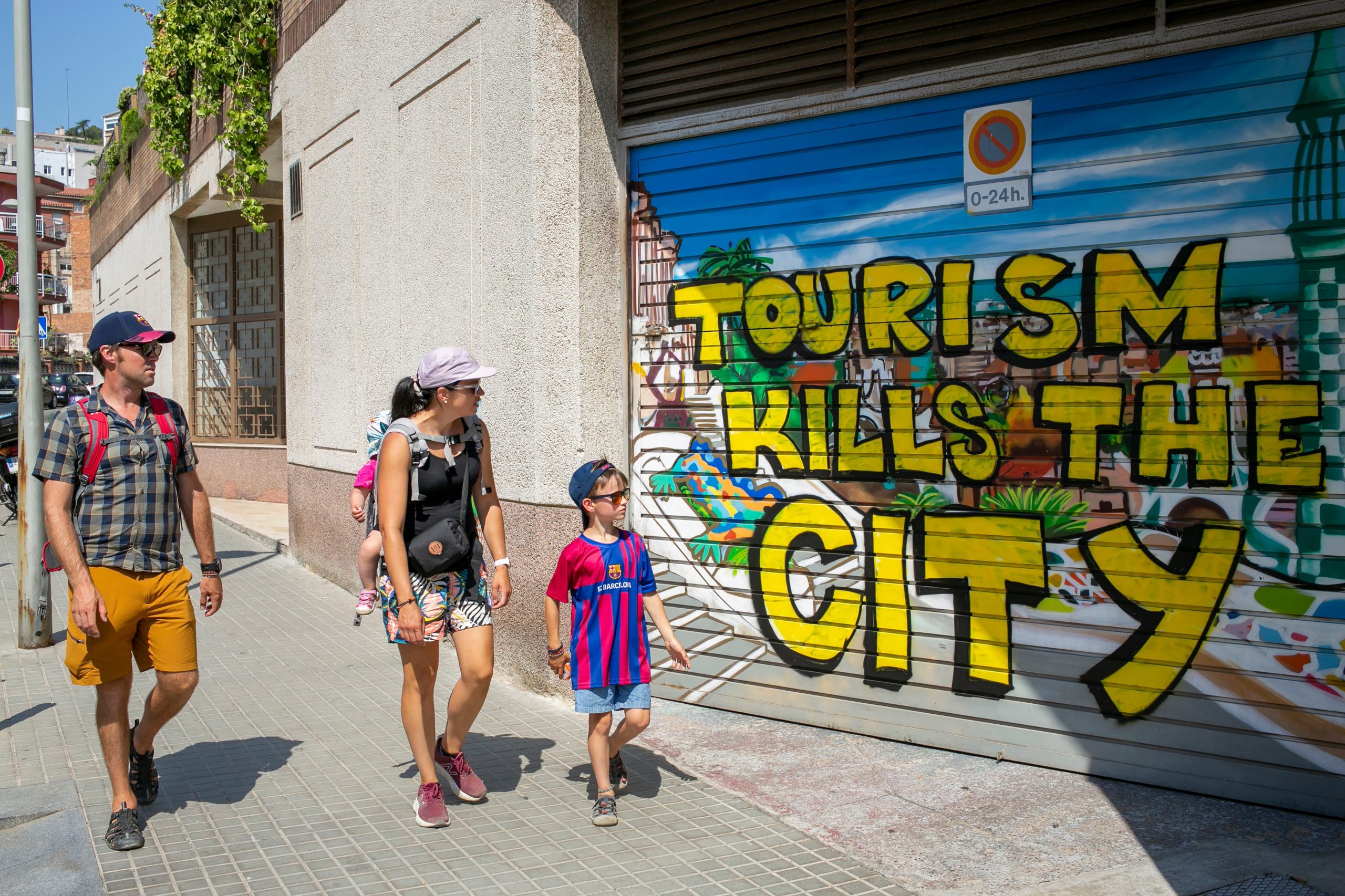
“What struck me most when I arrived is that Barcelona is crowded,” says Katie Boggs, a 26-year-old American content creator who uses her social media to record cultural differences with a humorous twist or to share her favorite corners of the Catalan capital. “I know it sounds funny to say this as an immigrant, but there’s a lot of tourism and that creates an artificial and low-quality vibe,” she adds. “Everything is so overproduced and so saturated with tourists that people don’t connect with Catalan culture.”

Boggs is clear that her videos have “completely changed” after four years in Spain: “I arrived with that mindset of a foreigner who finds everything incredibly cheap. Now I think it’s quite the opposite, and I never make those clips where you simply recommend moving here or advertise a café as the best in town.”

Like Boggs, thousands of Instagram and TikTok accounts record the daily lives of foreigners living in Spain on incomes higher than locals might expect. Some of these accounts are focused on humor, others on cultural outreach, and many are dedicated to promoting “authentic” spots — something which hospitality companies may pay for and tourists, travelers, expats, and immigrants may appreciate.

Something similar was going on during the first half of the 19th century when travel books on Spain became bestsellers in France. At that time, travelogues such as those by Alexandre Dumas (From Paris to Cádiz) and Théophile Gautier (Journey to Spain) became popular; then there was A Winter in Mallorca in which the French writer George Sand, who published under a pseudonym, recounted the months of 1839 that she spent on the island with her lover, the pianist Frédéric Chopin.

Today, social media is brimming with British and German recommendations of “the best Mallorcan spots”, unknowingly reproducing some of the clichés that were coined almost two centuries ago. If Sand flagged up the “slowness of the natives,” content creators refer to this laidback approach using adjectives such as “calm” and phrases such as a “Mediterranean lifestyle,” which amount to the same thing.

I consider myself an immigrant. I moved to Spain in 2019 with the intention of staying, and I think those terms [expat and immigrant] refer to both class and the intention – or lack thereof – to integrate

Maggie Dickmann

So, to avoid reviving old clichés or a scenario such as happens in the fifth season of Emily in Paris, when the town of Solitano loses its charm because the protagonist — a prototype of American influencers in Europe — attracts thousands of disrespectful visitors with viral posts, many foreign influencers are beginning to wonder what to say about Spanish cities. After all, phenomena like mass tourism and gentrification have impacted them as well.

From tourist to traveler and migrant to expat

“For me, the difference between tourist and traveler is tricky and has a lot to do with elitism and our need for distinction,” says anthropologist Amarna Miller, author of Beyond the Map, in which she argues that travel can continue to have positive impacts. “We associate the tourist with derogatory and somewhat caricatured categories, while the traveler is perceived as more refined,” she says. “It’s an absurd distinction, because whenever we’re using certain infrastructures – flights, buses, restaurants, hotels – we form part of the tourism industry whether we like it or not.”

Meanwhile, the boundary between immigrant and expat is actually a matter of class; many foreigners from highly developed countries like Maggie Dickmann, creator of @MurciaSecreto, want nothing to do with the expat label. “I consider myself an immigrant. I moved to Spain in 2019 with the intention of staying, and I think those terms refer to both class and the intention — or lack thereof — to integrate,” she says. “I always thought an expat was someone less willing to become a member of the local community. I suppose that translates to classism or privilege.”

Now that protests against mass tourism or gentrification are targeting foreigners on high incomes settling in Spain, Professor Paula Simó, from the University of Valencia, points out that the phenomenon is not necessarily negative but rather “becomes regressive when the housing supply is rigid and regulation weak because then profits are made on land prices with the cost of that passed on to tenants, and a risk of social segregation emerges,” she says. “It is important that the debate should be framed in terms of income, not passport. A high-income local produces similar effects on a housing-stressed district.”

Internet-optimized communication impoverishes the understanding of places, reduces their cultural complexity to a few visual codes, and turns residents into backdrops

Paula Simó, University of Valencia

People like Boggs or Dickmann are perfectly aware of this impact on housing; they themselves struggled to find an affordable place to live in Barcelona and Murcia. They are also aware of the inconveniences caused by mass tourism, but they believe careful communication is possible. “I fully understand the fear and the desire to protect your favorite local spots. I get comments like ‘Guiri, go home’ and worse [guiri being the word for a white, north European or American tourist].”

“But those nasty comments make me roll my eyes because those people don’t understand the purpose of my account and my content. Yes, it’s in English, but that’s only so it’s more accessible. In fact, the first two years of @MurciaSecreto were in Spanish because I started the account as a way to integrate. I only switched to English about a year ago because I realized there was a need for a bilingual gastronomic account in Murcia, and that’s when it started to grow. I think that’s evidence that many foreign visitors and residents want to participate more in Spanish life, but don’t have the tools to do so,” Dickmann explains.

That city doesn’t need another reel

At the Gates of Heaven, the name given to the Pura Lempuyang Luhur complex in east Bali, there is a well-known Instagram image of a lake that turns out to be an illusion created by a photographer who sits under an umbrella and holds a mirror underneath an iPhone to create the reflection. In reality, there is only a stone pavement. As journalist Kyle Chayka says in FilterWorld: How Algorithms Flattened Culture, the most popular destinations have been the subject of tricks designed to satisfy engagement metrics and achieve algorithm reward. “Internet-optimized communication impoverishes the understanding of places, reduces their cultural complexity to a few visual codes, and turns residents into backdrops,” says Paula Simó.

However, for people as active on social media as Amarna Miller, it’s possible to reach a compromise, and treat algorithms in the same way as any other mass media outlet might: “I don’t feel like a slave to the algorithm, because for me the message is more important than going viral,” she says. “That said, any piece of entertainment always respects certain parameters in order to reach the maximum number of viewers. And I don’t think that’s bad; the problem arises when clichés are used or when complex cultural issues are simplified.”

Although one might think that Spain, seen through the eyes of romantic travelers or given its own self-image as exotic — “Spain is different” — is now safe from simplification, what has happened is that the focus has merely been tweaked: “Now it is less about the primitive or picturesque and more about lifestyle. The recurring themes are siesta, partying, midnight dinners, street life, and above all, the low cost of living. Much of the appeal rests on economic asymmetry, because what is presented as quality of life is, in part, due to relative purchasing power versus lower local wages. The content is also designed for the audience of the country of origin, as a means of comparison,” explains Simó. That said, Simó perceives two important differences between now and the era of Dumas or Gerald Brenan: the first is that locals can correct or parody that content on social media, and the second is that some local content creators adopt those clichés because they have detected their algorithmic reward.

The popularity of these platforms both among Spaniards and foreigners is confirmed by how often traditional media cite the opinion of a foreign traveler to achieve viral headlines such as, “An American influencer reveals Spain’s best-kept secret” or “The American influencer stunned by the Málaga Fair.” That foreigners are the best Hispanists is almost another cliché – an idea that was promoted by a scene starring Glenn Close in the award-winning movie La Bola Negra, directed by Javier Calvo and Javier Ambrossi. Besides apparently being able to capture Spanish culture and customs in an easily digestible format, they are also capable of generating business.

David Díaz, head of social media at Minor Hotels, which has more than 84 establishments in Spain, explains that right now more than 60% of guests are inspired by social media to make the trip. He also says that his company has managed to access a different market thanks to influencers. Moreover, specialized creators, whether foreign or Spanish, “generate greater audience retention” and a real impact on the number of bookings, while more traditional national figures such as journalists affect brand image more. Dickmann points out that much of the feedback she receives comes from Murcia residents who have learned to see the restaurants in their city in a new light.

Although the most numerous accounts are those focused on spectacular views or affordable leisure in Spain, many content creators who have been established in the country for a while are exploring other types of content. Boggs’s advice: “Above all, research, learn the language, and don’t come thinking you’re super rich because everything is very cheap: that’s a terrible mentality.”

With this approach, there’s room for even the most traditional entertainment. Because sometimes it’s fun to see what surprises an American the most. For example, in Murcia, Dickmann talks about how genuinely warm and welcoming people are, while also mentioning “The Sidewalk Phalanx” — the lack of spatial awareness with groups of three occupying the entire sidewalk and people walking or stopping near you even when there’s space to give you a wider berth, treating “the street as an extension of the living room,” “the unfiltered gaze,” especially from the elderly, and “sheer devotion to [department store] El Corte Inglés,” and “the frenzy around Cortylandia.” She has our number.

Sign up for our weekly newsletter to get more English-language news coverage from EL PAÍS USA Edition

Anthropic

Elon Musk To Give Two Shares Of SpaceX To Every Child In The US In A Deal Worth $18 Billion

Published

on

elon-musk-to-give-two-shares-of-spacex-to-every-child-in-the-us-in-a-deal-worth-$18-billion

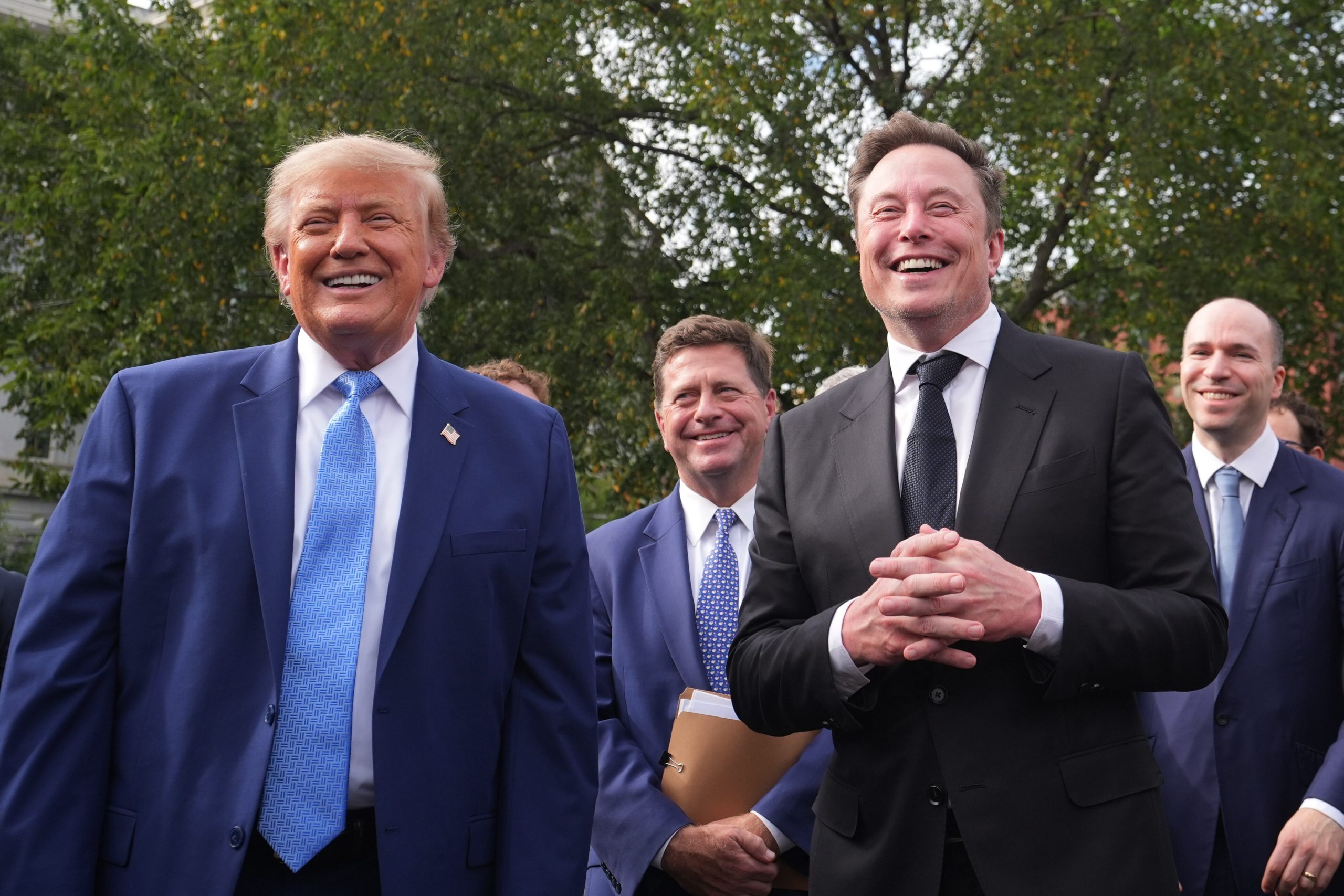
SpaceX and Elon Musk are once again making waves in the markets. First, the company confirmed its promise to give every child in the United States two shares — one from SpaceX itself and another from Musk personally — at a current market value of around $18.35 billion. Almost simultaneously, SpaceX announced that it has received permission from U.S. authorities to launch one million satellites as part of its plans to establish data centers in space.

SpaceX, which is currently in the process of evaluating a merger with Tesla and made its stock market debut on June 12 as the largest IPO in history (a title that was taken from it by Anthropic last week), reaffirmed its commitment to donate one newly issued Class A share for each active “Trump Account.” “As part of his pledge to donate one SpaceX share to every child in the United States, SpaceX CEO Elon Musk will personally match the number of shares donated by SpaceX,” the company said.

With approximately 72 million children in the United States, according to Census estimates, and based on SpaceX’s closing price on Wednesday, the donation would be worth $18.35 billion. The initial plan called for a donation of nearly $9 billion. The company also reported that its president and chief operating officer, Gwynne Shotwell, had separately announced a personal donation of more than two million shares.

Trump Accounts are tax-advantaged investment accounts for children, created under President Donald Trump’s own 2025 tax law. The program was officially launched in July, with a one-time government contribution of $1,000 for eligible children born between 2025 and 2028. Last month, the White House reported that nearly 70 million Trump Accounts had been created, including more than 60 million through automatic enrollment. Since its launch on July 4, more than $4.5 billion has been deposited.

In principle, Musk owns billions of SpaceX shares, and the company has billions of shares outstanding, so the donation would likely have little impact on him or investors. However, SpaceX has been hit hard in recent weeks by the crisis of confidence in the tech sector. Its stock has fallen about 13% since the initial pledge was made, amid a widespread sell-off of stocks related to artificial intelligence (AI).

One million satellites

In any case, the company continues its operations and expansion projects. The U.S. Federal Communications Commission (FCC) has authorized SpaceX to deploy a constellation of up to one million satellites designed to function as data centers in space. The decision marks the first authorization of its kind in the agency’s history and aims to facilitate the development of orbital computing infrastructure to meet the growing demand for AI.

FCC Chairman Brendan Carr called the decision historic and stated that it will enable the United States to lead the new era of supercomputing. The agency argued that the project will help drive the superintelligence economy and bring humanity closer to a Type II civilization on the Kardashev scale — one capable of harnessing all the energy of its star. Musk expressed his gratitude for the authorization and stated that the initiative will be a significant asset for the United States and the rest of the world.

SpaceX’s proposal involves installing computing modules in orbit that will directly harness solar energy and communicate with each other and with the company’s other infrastructure, including the Starlink network. The company maintains that space-based data centers will reduce energy and operating costs compared to ground-based facilities, which require large amounts of electricity and water to power and cool their equipment. The initiative takes on particular significance at a time when the expansion of artificial intelligence is driving a surge in investment in data centers and creating strain on energy consumption and water resources in the United States.

However, the project faces significant technological and economic challenges. A report by the U.S. Government Accountability Office (GAO), published in July, acknowledged that orbital data centers could reduce the need for land, electricity, and water on Earth, but warned of the engineering barriers posed by their development. Among these is the cooling of computer equipment, as dissipating the heat generated by processors in space poses a considerable technical challenge. The report also warned of the risk of collisions and the difficulties of managing such a sharp increase in the number of satellites in orbit.

The authorization sets out a phased timeline: SpaceX must begin deployment by November 2033, place at least 100,000 units into orbit by November 2035, and reach 50% of the authorized constellation by November 2038. However, it remains to be seen whether the company will actually deploy one million satellites. There are currently about 17,000 satellites in orbit, while Starlink, SpaceX’s communications network, has slightly more than 11,000. The project also depends on Musk’s ability to substantially reduce launch costs using Starship, the next-generation reusable rocket that is still under development. Amazon’s Leo satellite division and other competitors have questioned the feasibility of deploying infrastructure on such a massive scale.

Sign up for our weekly newsletter to get more English-language news coverage from EL PAÍS USA Edition

Continue Reading

Christopher Nolan

Soccer, As Portrayed In ‘The Odyssey’: A Women’s Sport Played With The Hands

Published

on

soccer,-as-portrayed-in-‘the-odyssey’:-a-women’s-sport-played-with-the-hands
Fragment of a funerary stele, found in Piraeus and dated to between 400 and 375 B.C.Album (Alamy)

In Book VI of the Odyssey (which has been in the public eye this year thanks to Christopher Nolan’s film), there is an episode that could be considered the origin of soccer and rugby: some girls are tossing a ball with their hands on the seashore. The ball lands next to a body lying there, battered from a shipwreck: Odysseus, asleep, discovered by Nausicaa and her maids. In a way, this is the rudimentary origin of what we know today as soccer. “Although those early games were also played with the feet, the ball was, above all, passed by hand. The rag ball would spin over the opponent’s head until it reached the end line,” recounts Alessandro Bertolino, a professor, writer, and archaeologist specializing in antiquity and Christianity, and a tutor at the Pontifical Roman Academy of Archaeology.

It took several centuries for this still-unrefined form of soccer to be revitalized. Specifically, it wasn’t until Rome’s conquest of Greece, in the 2nd century B.C. A radical and revolutionary shift. “A sort of modernization took place with Harpastum, which actually means strappo or porto via (theft and the act of initiating something). This gives us an idea of the new game,” adds Bertolino.

Unlike the naive rhetoric of the Odyssey, in Rome it evolved into an exclusively male activity, practiced, moreover, by Roman legionaries. It quickly spread throughout Europe. According to Bertolino, ancient sources describe a historic match between Rome and various peoples of Britannia, a former province of the Empire that encompassed present-day England and Wales. It took place in 264 A.D. and ended 1-0 in favor of the home side. “It is the first soccer match we know of with a definitive result,” Bertolino notes.

There was no turning back. The tradition never ceased. Harpastum, in a way, would evolve into Calcio storico fiorentino, played in the noble Piazza Santa Croce in Florence. Today, it is the theater that safeguards the art of war. Because yes, the CSF is a fierce battle without weapons. A tradition that admits no morality and whose first seed was sown on the seashore, on the island of the Phaeacians (Echeria). The mythical place where the goddess Athena appeared in a dream to Princess Nausicaa, daughter of King Alcinous. Yes, when she reminded her of her approaching wedding and that her bridal gown must be washed and purified. After the sacred rite, those revelatory young maidens emerged, passing the ball to one another without goals, without limits, without scoring, without much purpose, and without direction. Only a wayward shot ended with the ball in the sea. Then, a liberating cry from all of them to awaken the soul of Odysseus, the indomitable, tenacious, and graceful Achaean hero. An exhausted castaway, hidden among reeds and seaweed washed up by the water. Those were time immemorial when athletic sports and wrestling were practiced. There was poetry, and it was as vast as a cathedral.

Perhaps the first (non-)match is considered one of the most important lyrical episodes in ancient literature. Nausicaa represents the unfulfilled, the longing for something never experienced, the melancholy for an Odysseus who, upon seeing these teenage girls playing with a ball, chose to return to Ithaca, where Penelope and his son Telemachus awaited him.

It is no stretch to say that in that Homeric Greece, soccer was born as an art form. An epiphany that strives to preserve purity in the absence of compromise with hypocrisy or the system… That is why it seems necessary to rediscover the Odyssey and its landscapes. And also those protagonists who lived while people were experimenting with what would later become soccer. Indeed, today they are all asking for another turn. Every one of them. The Cyclops, Circe, or Menelaus, king of Sparta, husband of Helen, and younger brother of Agamemnon… All of them imbued this initiatory journey with an aura of magical and ethereal geography, albeit one roughly centered on the Mediterranean. The first dribble against the sea’s sap. A fantasy that should reclaim its innocence and its music, like the rhapsodies and the requiem.

Sign up for our weekly newsletter to get more English-language news coverage from EL PAÍS USA Edition

Continue Reading

America

In Miami, Food Banks Are Overflowing Ahead Of Thanksgiving

Published

on

in-miami,-food-banks-are-overflowing-ahead-of-thanksgiving

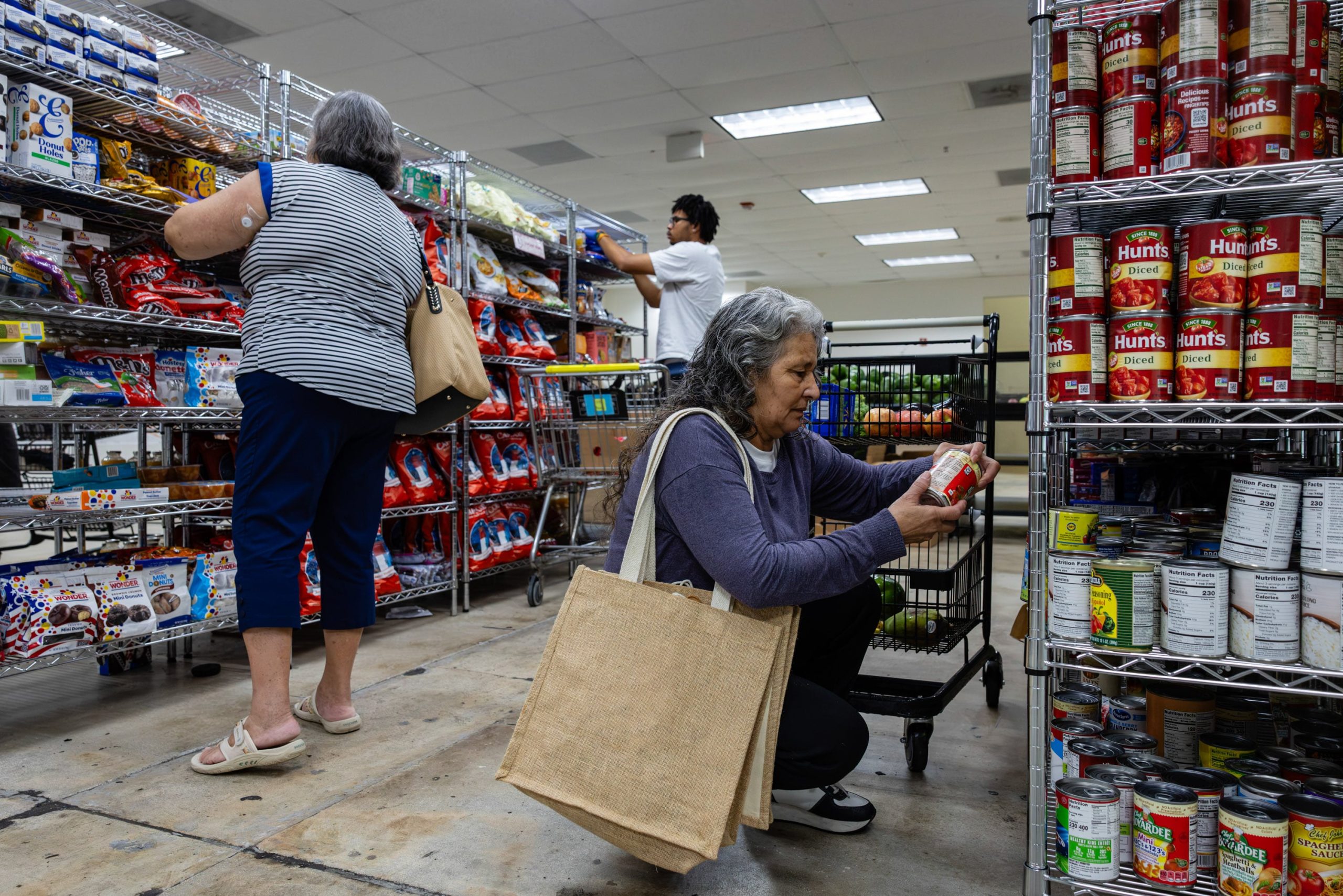
There are times of the year like Thanksgiving, when schools where some children receive food are closed, and the hunger crisis in Miami —one of the most expensive cities in the United States — is most noticeable. Despite heavy rains and the risk of flash flooding this Wednesday, hundreds of people, mostly working families, turned to free food pantries and food banks to secure a turkey and vegetables for the traditional dinner, and to offset the expenses that keep rising with inflation and the war against Iran.

At 60 years old and with three jobs, Sonia still needs to go at least once to pick up free food to complete the month’s diet. She cleans houses, takes care of children and pets, and earns $15 an hour. She bikes to work so she doesn’t have to spend on car, insurance, and fuel. What she earns goes to pay rent, electricity, and her son’s university in Chile, her home country. There she worked almost two decades as a secretary in a local government, and in the U.S. she has been changing fields as opportunities arise. She is now saving for dental treatment, which without health insurance costs thousands of dollars.

“I’ve been coming for about eight months and I keep seeing more people,” says Sonia, who prefers not to use her full name. She’s not surprised, because all the prices of all the products have gone up, “even at Dollar Tree,” the American store chain that boasted of selling all its products for one dollar.

The cost of living in Miami has risen so much that many families’ incomes are not enough to pay the minimum: shelter, food, and utilities.
In a 2026 survey conducted by Aspect Strategic for No Kid Hungry Florida, 82% of respondents said that the cost of food had increased more than their income in the past year. Around 70% indicated that their economic situation has worsened as a result of rising food prices, and 49% admitted to going into debt to cover that expense. One in two families also say they skip meals or eat less, and two out of three families have had to choose between buying food or paying essential bills.

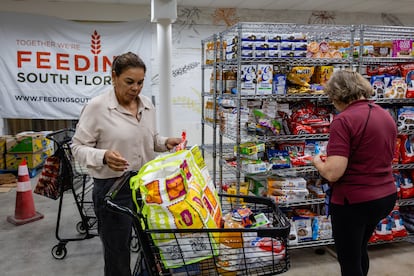
Demand for free food pantries has skyrocketed, explains Jessica Benites, chief of staff at Feeding South Florida, a nonprofit organization that receives and distributes donations in four counties in the region through 300 branches. “We are experiencing a very large increase in families coming to Florida to ask for food aid and we’ve had to expand our operations. Before, we served until 5:00 p.m., now we are serving until 8:00 p.m. We also had to increase Saturdays and Sundays to meet the very high demand we have now,” she says.

Federal and state aid for low-income families and elderly people to buy food has been reduced. Just over a year ago, the Donald Trump Administration approved the largest reduction of the Supplemental Nutrition Assistance Program (SNAP) since its creation in 1939. As a result, about two million people lost the benefit. In Florida alone, enrollment in the program fell by 22%, according to data calculated by the Associated Press agency.

The federal government’s immigration policy, which has set out to deport as many undocumented immigrants as possible, has also added pressure to the hunger crisis in the southern part of the state. Miami and the surrounding cities are home to the largest diasporas of Haitians and Venezuelans and other communities that have lost work permits and protections granted by TPS, the Temporary Protected Status that Trump has been chipping away at since returning to the White House.

On an average day, about 200 families look for food at Feeding South Florida’s largest location, in the Hallandale Beach area, about half an hour from downtown Miami. Many of them are immigrant families who have lost their work permits and mixed-status families—where at least one member has U.S. citizenship and access to public benefits—who have chosen not to apply for the SNAP benefit for fear of retaliation.

“Many people are already afraid to share the information, and sometimes people prefer not to apply because they feel exposed and don’t receive as much money as they used to,” says Benites. “And with TPS, people could work and can’t anymore, and when they lose their jobs, they have to look for organizations that can help them. In our case, with food.”

Sign up for our weekly newsletter to get more English-language news coverage from EL PAÍS USA Edition

Continue Reading

Trending

Copyright © 2017 Spanish Property & News