
Caracas
Chavismo And The Venezuelan Opposition Hold First Meeting Under US Supervision

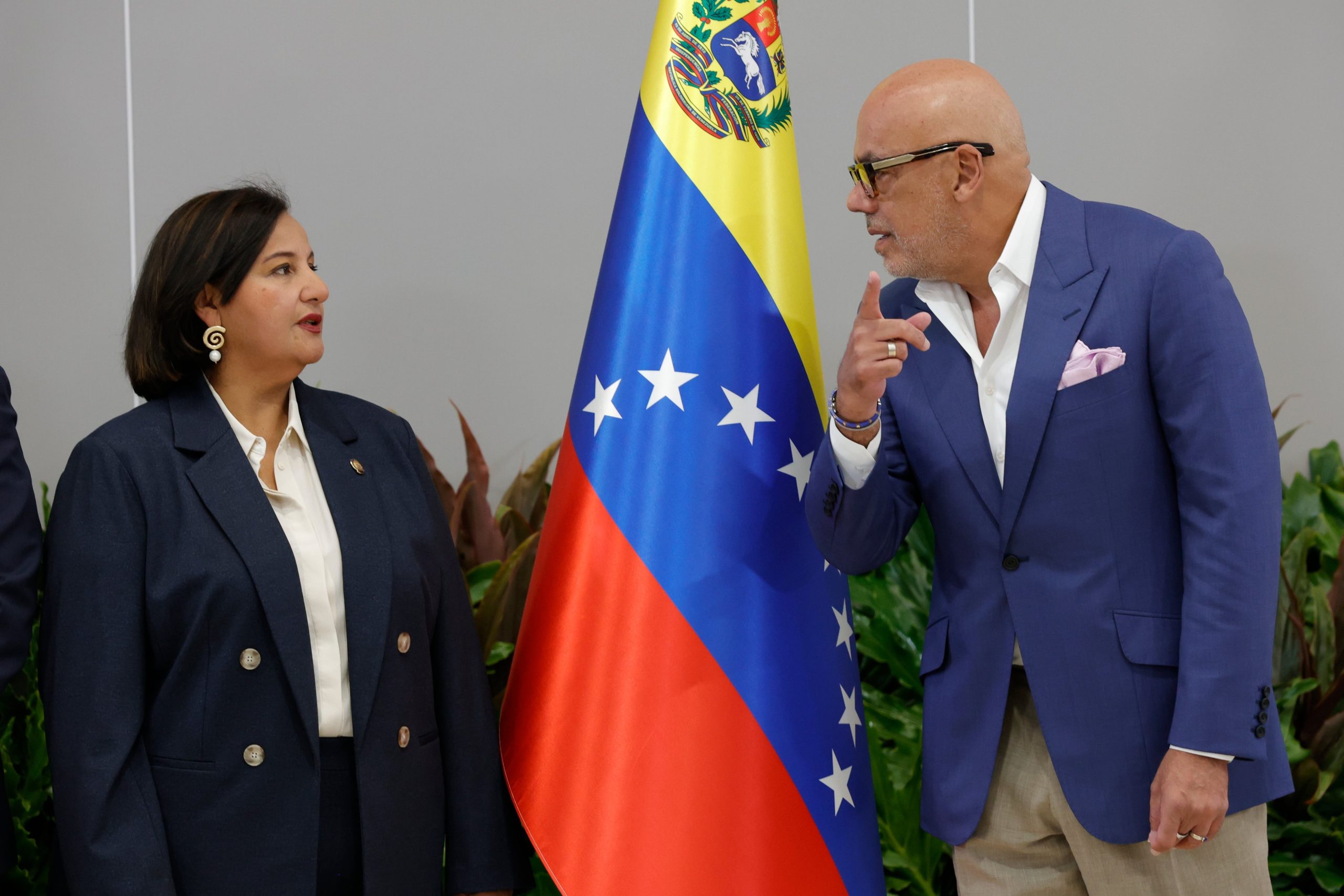
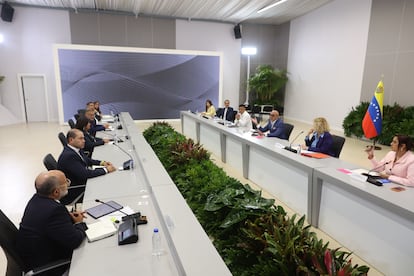
Talks between Delcy Rodríguez’s government and the opposition began Thursday behind closed doors with a meeting in Caracas between the president of the National Assembly, Jorge Rodríguez, and Dinorah Figuera, the opposition figure that Washington has chosen to lead the negotiations. Delegations from both sides met at the La Carlota Convention Center, where the United Socialist Party of Venezuela (PSUV) holds its press briefings, and posed unsmiling for the official photo. The press was not allowed access to the meeting. Later, in an identical statement published by both parties, they said their teams would remain in continuous working sessions until August 12, when they will decide whether to continue the talks.
“The parties subscribe to the principles of respect for national sovereignty, negotiation in good faith and the search for benefits for Venezuela,” states the document published by Jorge Rodríguez on social media. It adds: “A political, peaceful, democratic and constitutional solution; mutual recognition and respect between the parties; political equality and equal treatment at the table; verifiable fulfillment of commitments; protection of human rights and the political rights of all forces.”
The first meeting received the blessing of the United States. While the teams were together, the State Department issued a statement saying “these direct talks present a unique opportunity.” Washington has designed this dialogue and imposed Dinorah Figuera on the opposition to carry out the negotiations. On Thursday it said it remains “committed to supporting this Venezuelan-led process, which plays a key role in the President’s three-phase plan to bring about stabilization, economic recovery and political reconciliation, and a peaceful transition.” The statement urged Venezuelans to back the effort.
The opposition delegation included Marco Aurelio Quiñones, Desiree Barboza, Ramón López, Jorge Millán and Juan Miguel Matheus, leaders of Voluntad Popular and Primero Justicia and, together with Figuera, members of the 2015 National Assembly, the institution that the United States recognized during Donald Trump’s first administration as democratically elected after the opposition won its first electoral victory over Chavismo with a qualified majority, leading Juan Guaidó to set up an interim administration. On the Chavista side, representatives included the minister of University Education, Ana María San Juan, along with the lawmakers Jorge Arreaza, América Pérez, Génesis Garvett and Pedro Infante.
“Today we opened the process that will chart the course toward democracies and the reinstitutionalization of Venezuela between the deputies of the 2015 Assembly and representatives of the interim government,” Figuera wrote on her social media after the meeting. “We are working firmly for the democracy and freedom of Venezuelans.” Jorge Rodríguez also posted photos of the meeting with a shorter message: “The national dialogue begins with former deputies of the 2015 National Assembly.”
The gathering was designed in Marco Rubio’s office and has raised expectations that it could finally find a way out of the country’s political crisis. Within the opposition spectrum, however, the initiative has been seen as a negotiation between the Rodríguez family and Washington.
The topics up for discussion were announced on August 1, when the sides held a phone call. Assistance for those affected by the earthquakes, strengthening democracy and guarantees of political and civil rights are the three points on the agenda. Within those limits, it is understood that there will be a renewal of the electoral and judicial authorities, that bans on political parties will be lifted and that a calendar will be set for presidential, regional and parliamentary elections — the opposition’s main demand — in addition to the release of all political prisoners.
The meeting was convened after news emerged of the death under house arrest of Venezuelan-Uruguayan citizen José Breijo, 71, who had been imprisoned for two years for taking a photo and who this year was granted house arrest on humanitarian health grounds.
This new dialogue has met resistance. In particular, opposition sectors question the legitimacy of the representation. Longtime opposition leader María Corina Machado has been sidelined by a decision of the United States and to the satisfaction of Chavismo, which has readily accepted Figuera as a valid interlocutor. Machado has acknowledged she was not consulted about this initiative — which has been gestating since April — but said she will not be an obstacle to achieving its objectives. From the chavista side, Diosdado Cabello, the third pillar holding power since January 3, dismissed the process and said that “every day there are dialogues in this country.”
Sign up for our weekly newsletter to get more English-language news coverage from EL PAÍS USA Edition




Caracas
Searching For The Body Of ‘the Woman With The Pretty Nails,’ Rescued Alive After The Earthquakes In Venezuela
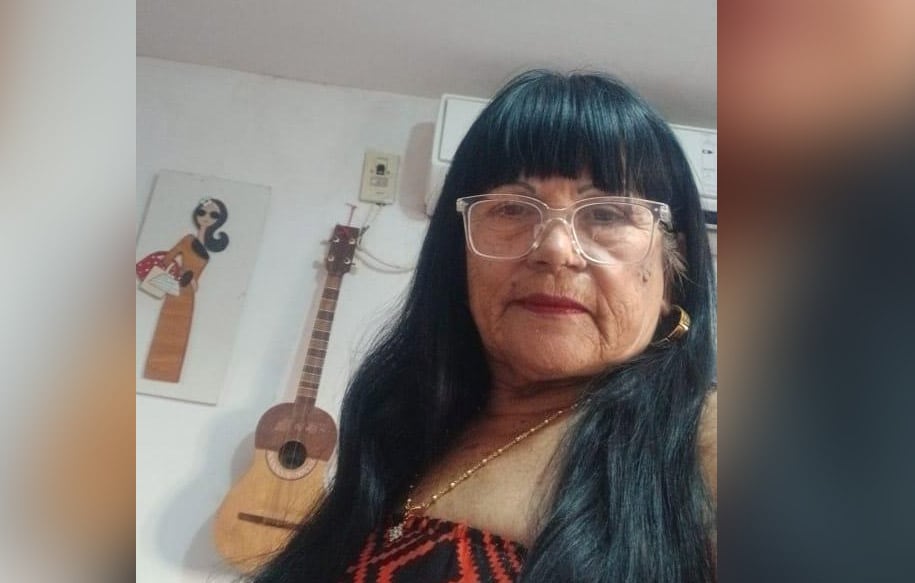
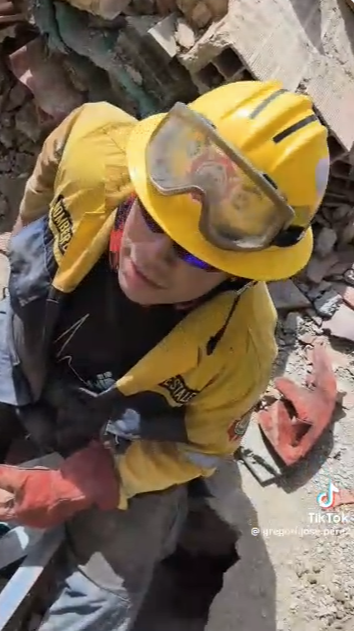
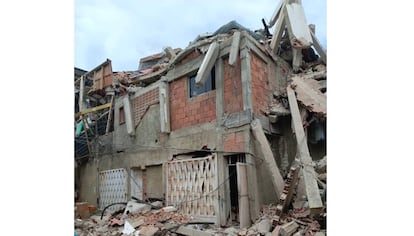
Crushed beneath the rubble, her face covered in dirt, Cristina Margarita Ramos displayed the same good humor she had faced life with. “I’m sorry, sir, but I have this blotch on my face,” she told one of the firefighters trying to pull her from the walls of her home after the June 24 earthquakes. “What you are is beautiful, and I love those nails,” the rescuer replied. Jokes about the compliment spread during the rescue amid such unusual circumstances. “We’ll get you out, ma’am. Trust us,” the firefighter added. The first thing Cristina, 71, managed to free was a hand with long, perfectly manicured nails. A retiree, karaoke enthusiast, seamstress, and mother of two migrant children in the United States who followed her rescue from afar in desperation and are now searching for her body, the family confirmed she died after being taken to a hospital.
00:35
Rescue of Cristina Margarita Ramos
It took 20 hours to pull her from the rubble of her home in Playa Grande, during which Cristina became known as “the woman with the pretty nails.” The exchange with her rescuer went viral in the hours after the disaster, among hundreds of videos showing the devastation. That day they first pulled out her husband, Jesús Enrique Magallanes, with Cristina’s help. She was lucid, spoke clearly and kept saying she was strong despite her age, her kidney disease, and a carcinoma on her face that had been diagnosed shortly before. The family has footage of Cristina being carried out on a stretcher from the ruined house, put into an ambulance and arriving at La Guaira Naval Hospital — where her husband had also been taken — after which they lost track of her.
After 37 days of uncertainty, a bitter discovery redirected the search that had gone on for weeks in hospitals, shelters, and morgues. Cristina’s siblings identified her in the photo albums of bodies that hundreds of families review daily on tablets at Los Silos in La Guaira — the storage warehouses at Venezuela’s second-largest commercial port that were converted into a forensic depot for the emergency. No familiar faces had appeared in earlier visits. A few days ago they recognized her by the moles on her face, her pretty nails and the clothes she was wearing: overalls, a T-shirt and socks. They reviewed the images to confirm it. Although there is a forensic photographic record, Cristina’s body does not appear.
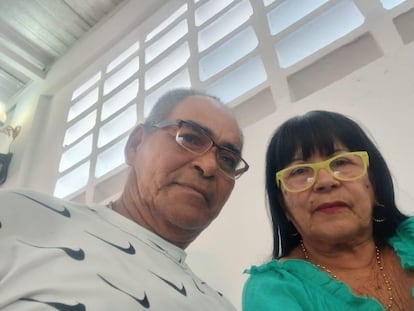
Cristina’s case is not the only one that reveals the lack of coordination during the early hours of the disaster and the poor handling of bodies; issues that have extended the suffering of many families and violate human rights standards. “My mother and I messaged several times a day. I know every detail of her life: what she was wearing, what she had eaten, how she felt. The first message I sent every day was to her,” says her daughter, Crisnel Mata, 52, by phone; she keeps reposting everyday memories of her mother. In her most recent videos she has called on Attorney General Larry Devoe and the director of the scientific police, Douglas Rico, to explain the disappearance of Cristina’s body. “We have a right to dignify the memory of our relatives. This is no longer just negligence; it is a lack of professionalism and empathy. It is very painful not to know what happened, how she died,” the daughter says, her life paralyzed for more than a month. “These past few days have been like being on a roller coaster that I don’t know how to get off of.”
The NGO Committee of Relatives of Caracazo Victims (Cofavic) has warned about the handling of mass deaths in the disaster. With experience from episodes such as the Caracazo social uprising and the La Guaira landslide, both in 1999, the organization points to a lack of transparency in the current process. The government has not reported numbers of missing people nor has it explained the procedures to follow in these cases, in which bodies have gone missing. A month after the earthquake, they stopped publishing the death toll; this Monday they updated it to 6,125, over 500 additional deaths since the last tally on July 24. The report, which will now be weekly, still does not break down victims by sex or age, has removed the number of people in shelters, and has added the tonnage of rubble collected.
“In this kind of disaster it is very important that there is transparency, that the information is reliable,” says lawyer and human rights defender Liliana Ortega, director of Cofavic. “There is no reliable public information that gives people confidence there are guarantees of technical competence, that the chain of custody of remains is preserved, or that information is respectful, timely, and understandable. It is necessary to develop an exhumation plan with a clear roadmap. The mistakes of the past cannot be repeated.”
Creating a genetic database — with premortem and postmortem data — and an official list of missing persons are key measures the expert warns are urgent. “The burden of identification cannot rest solely on visual recognition and the survivors. The country does not have the capacity to handle this alone; humanitarian aid must therefore include international technical support. A mistaken identification will trigger enormous distrust. This is essential so that the closure of mourning is dignified and reliable. Recovery and identification are not a bureaucratic procedure: they are a human-rights obligation the state must fulfill.”
Alerts about bodies going missing at the morgue are already circulating among families. Among those who go to identify bodies at Los Silos, the recommendation has spread to bring someone who can stay with the body, once found, while administrative procedures are completed.
Ortega insists that extracting bodies from under the rubble must be done by technical teams, not by civilians, as has been the case. The heavy machinery that has entered the collapsed buildings should be guided by forensic anthropologists. Controlled demolitions of structures began last week. The defender says there should be surveyors and geographers documenting on the ground the exact location of each body, with photographs of the clothing and the structure where it was found, so the remains of each victim can be individualized. “The first thing that should not have been done is the immediate cremation of bodies,” she adds.
“Every finding must be recorded with GPS coordinates, maps, photographs before, during and after, an anatomical description, depth, position of the body, associated objects and biological samples,” the organization specifies in a statement warning that international norms for managing corpses in natural disasters must be followed. “This must be treated from a humanitarian perspective: there is case law in the inter-American system and a series of international standards to meet. Because just as we see deep cracks in buildings, they are present in people. Those mourning processes are not easy to close if the truth about what happened is not known,” Ortega adds.
Crisnel and her family are still searching for that truth. “There has to be a reason, an exhumation of the body, a record of transfers from one hospital to another. My mother’s body has to appear. Why so much silence?” the daughter asks, having amplified the family’s desperation on her social networks. Week after week since June 24, she has navigated a maze of misinformation. Authorities at the health center to which rescuers took Cristina denied she had been there. They also denied that her stepfather had been admitted, although he was transferred to another institution to receive dialysis. More than a month after the tragedy, the man is recovering at home with one leg still swollen and without answers about Cristina. “It was hard to tell him the news, but talking with him these days he told me that when they were both under the rubble my mother told him to stay still, that when they got out they would go on vacation to Margarita,” Crisnel says. That is why she says the viral video of the woman with the pretty nails captured her mother’s essence. “That video is my mother.”
Sign up for our weekly newsletter to get more English-language news coverage from EL PAÍS USA Edition
Sóller’s new art night will transform the town square into an open-air gallery
Shocking pink on Cotobro beach: Rare flamingo stops traffic in Almuñecar
Guinness lost at sea 162 years ago could finally be brewed again


-

 New Developments2 weeks ago
Luxury Villas For Sale, Estepona – ProjectL1
-

 Amazon2 weeks ago
Un Tangle Teezer De Viaje: El Cepillo De Pelo Perfecto Para Tu Neceser De Vacaciones
-
Latest2 weeks ago
Spanish Wildfires Intrude On Holidaying Foreign Visitors
-

 Barcelona2 weeks ago
Cleaner Air May Be Adding Fuel To Spain’s Scorching Summer Heatwaves, Researchers Claim – But Are They Correct?
-

 New Developments2 weeks ago
Stylish 3-Bedroom Apartment With Panoramic Sea Views – Benalmádena
-
Costa Blanca North2 weeks ago
History comes alive as Marina Alta’s iconic human tower honours King Jaume I
-
Almeria2 weeks ago
Vera Triathlon returns with 300 spots and sprint and Olympic challenges
-
Travel2 weeks ago
Gatwick stinks! Water crisis shuts toilets and bars at both terminals – passengers warned to sort essentials at home before flying